
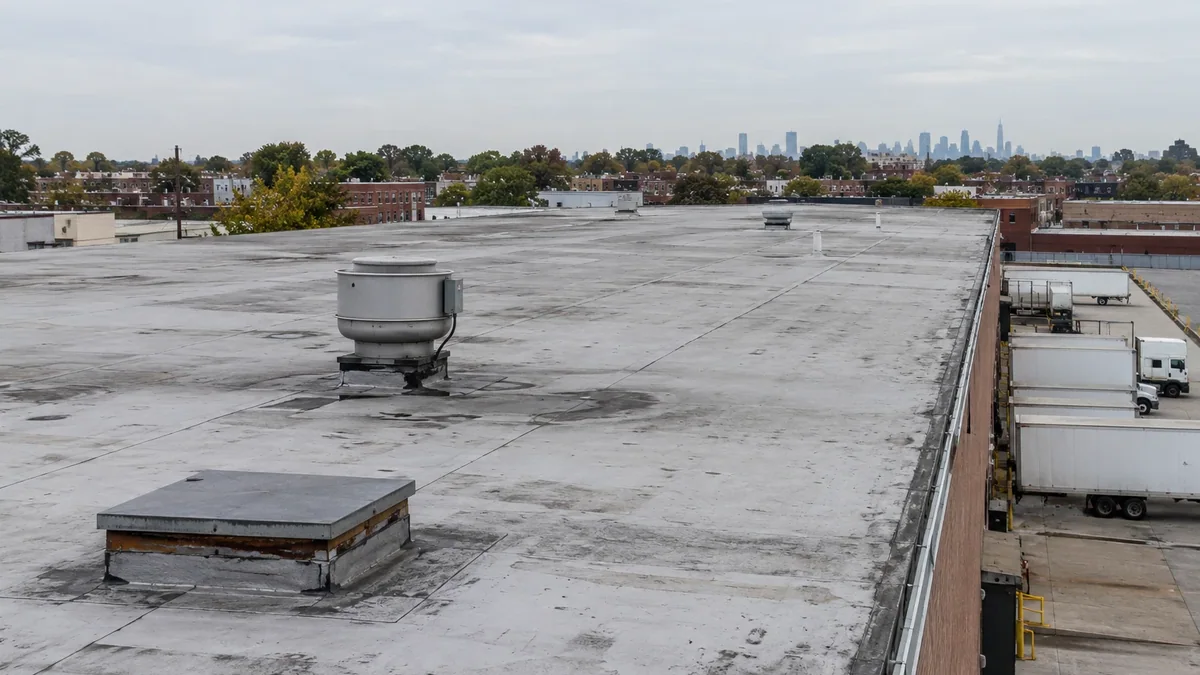
The operations manager of a warehouse meets the problem as a pallet of wrapped product with a wet corner, or a puddle at a dock door the floor drains cannot clear, and the immediate question is whether the roof, the apron or the dock seal is to blame. From the floor they look alike. In a logistics building a leak lands on inventory that belongs to someone else, which turns a roof problem into a claim. Logistics operators in Queens, NY bring us a wet pallet, and our commercial roof repair and replacement begins there, tracing the problem upward to the roof step by step.
Meet me at the dock door and we go up from there.
What does the operations team see, and how do they log it?
A wet pallet, a dripping rack beam, water at a dock door, a stained ceiling in the office or a sprinkler line with a rust streak. Each points somewhere different. A drip over the same rack position after every rain says the entry is fixed and near. Water at a dock door in wind-driven rain says the problem may be the seal or the canopy, not the roof.
Each event gets a bay number, a date, the weather, a photograph and a note of the stock affected. With that log we can match every wet spot to a patch of roof, and the operator knows which racking positions to avoid until it is dry. It also backs up the conversation with a customer whose product was damaged.
The underside of the deck is the last place to look and holds the final clue. Rust blooms, wet insulation and rows of condensation on the metal point away from an opening in the roof, whereas a dry underside under a stain that grows after rain puts the entry above.
What is happening on a big distribution roof?
A distribution roof is a very large flat area with few drains, a long run of parapet and a line of dock canopies. Water collects at the low points, and a blocked strainer holds it against the seams. Dock canopies tie into the main wall and carry water from two surfaces. Rooftop units for the office or the cooler add curbs and penetrations.
We check the drain nearest the wet area first, then the seams around it, then the canopy junctions along the dock wall, then the parapet flashing and the curbs. A distribution center roof tends to fail at one of those details long before the open field gives out.
Rooftop equipment is the other repeat source. Exhaust fans, makeup air units and refrigeration condensers each add penetrations, and a curb with a cracked cap or too low a base flashing can seep for years. Each penetration is numbered on the plan, each curb inspected, and any that are abandoned flagged for removal and capping.
Where does Queens logistics sit, and what does that say about roofs?
JFK Airport sprawls over 5,200 acres in Jamaica, and cargo there came to 1,557,067 US tons in 2025. Every rail shipment to Long Island passes through the rail hub formed by Fresh Pond and Fremont Yards in Glendale. Amazon leased space for a fulfillment center in Metro Mall in Middle Village in 2020, and the southern part of College Point includes a Pepsi-Cola distribution facility and furniture warehouses. The Long Island Expressway runs through Maspeth, Elmhurst, Rego Park, Corona and Flushing Meadows-Corona Park.
That is how freight moves through the borough and the kinds of buildings that handle it, though it says nothing about any one roof. A converted mall holds a fulfillment center under a different roof than a purpose-built warehouse does. Operators near Maspeth, Glendale or College Point start with a core and a scan.
Corridors shape the schedule. The Van Wyck Expressway and Grand Central Parkway meet the Long Island Expressway within Flushing Meadows-Corona Park, and the Whitestone Expressway bounds College Point. Deliveries for a large roof come by truck on those roads, and a staging area and a delivery window are agreed ahead.
How is the work staged so trucks keep moving?
A dock yard stays busy, and a roof crew cannot block it. We map the truck routes, mark staging away from the aprons and plan material lifts for quiet hours in the yard. The roof is worked in sections, each dried in before the shift ends, and the dock side is sequenced so doors and canopies remain in service.
Racking comes under protection. Under any open section of roof the stock is covered or moved, and the operator knows in advance which positions are affected. Fire safety is built into the plan: torches only where the building permits, a fire watch following hot work and sprinkler valves kept accessible. A neighboring warehouse roof follows the same routine.
Loading docks matter for the roof too. A dock canopy ties into the main wall and takes water from two roofs, and the wet pavement beneath it is a safety item. We probe the canopy flashing and mark any gap on the plan.
What do Queens storms and heat do to a logistics roof?
Most of the city's deaths from Hurricane Ida came in Queens on September 1, 2021, the day New York City issued its first flash flood emergency. During Hurricane Sandy, water stood six feet deep in Maspeth. On a wide flat roof, a drain that manages ordinary rain can choke in a cloudburst and let the water climb the parapet. Snow here averages roughly 29.8 inches a year, and the single biggest day, January 23, 2016, left 27.3 inches.
July afternoons average close to 85 degrees at Central Park, with a strong heat island around it, and heat reaches stock under a dark roof. Where the roof beneath is dry and sound, a reflective membrane lowers surface heat; a cooler or freezer roof also needs its own insulation check, as in cold storage roofing.
What is the next step for an operator?
Next comes a walk with the facility manager and a written rating. Drains are cleared, the roof is scanned and cored, and it is sorted into repair, recover and replacement, with a list of racking positions to watch until the work is finished. Operators with several buildings can rate each on one scale and sequence the spending, and the same file helps manufacturers who share a park and investors who own the buildings.
Questions Owners Ask
What building owners and managers usually ask before a roof visit.
Match it to the weather. A seal or canopy problem shows in wind-driven rain and at specific doors. A roof leak shows after any rain and grows with it. A hose test from the low side and a moisture scan separate the two.
Yes. Trucks and materials are staged away from the dock aprons, the roof is done in sections, each shift ends dry and racking beneath any open area is protected.
Keep the dated log, the photographs and our report. They show when the leak started, what caused it and what was done, which supports a claim to the landlord or insurer.
Twice a year at minimum, in late fall and early spring, and again after a major storm. Dated photographs go into the file.
Send photos of the wet spot and the nearest drain or dock canopy, plus the building address. Those let us explain, step by step, whether it is the roof, the canopy or the dock seal.
Related Roofing Work
Other pages that connect to Logistics and 3PL Operators.
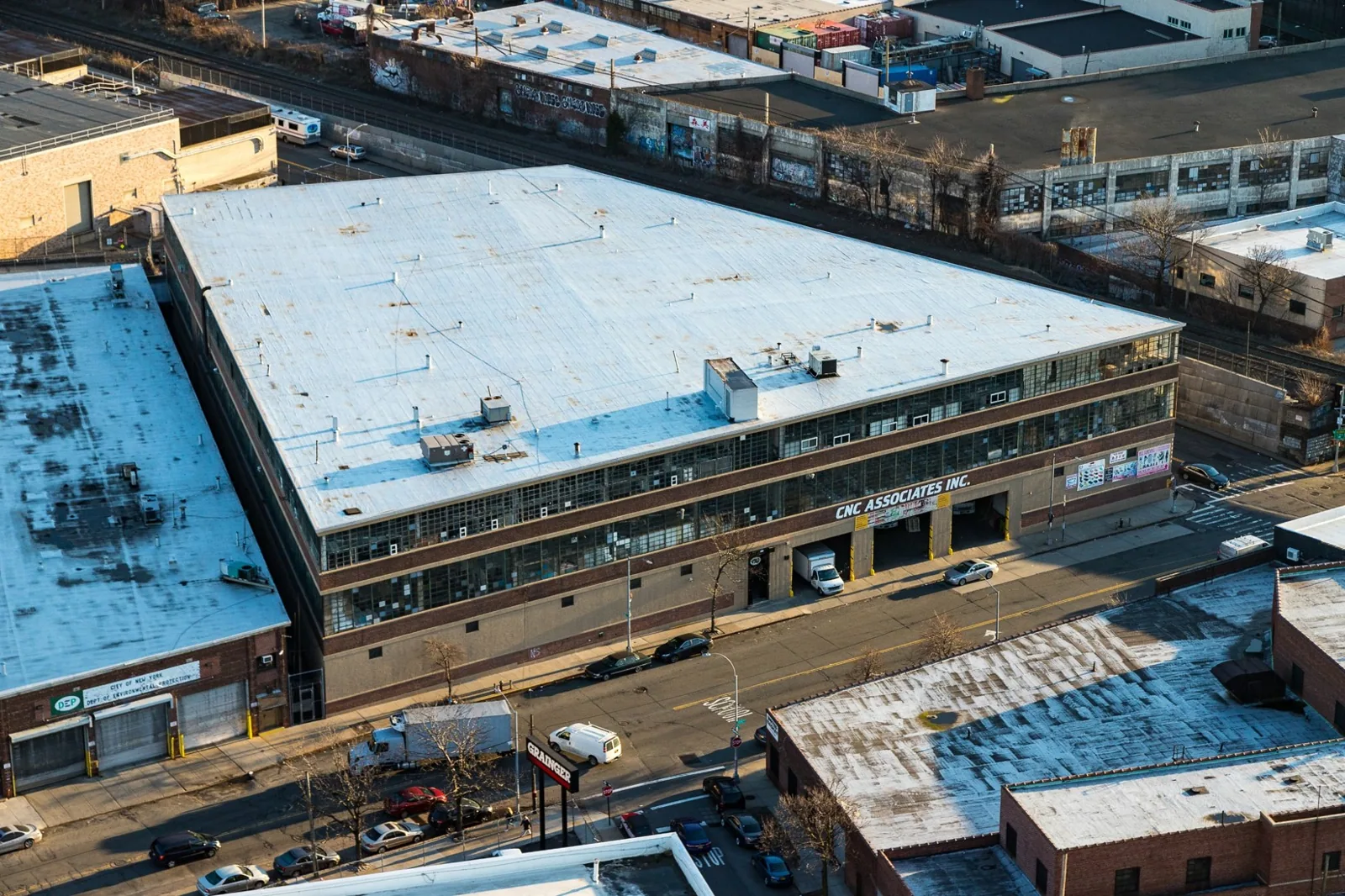
Distribution Center Roofing
Roof repair and replacement for Queens, NY distribution and fulfillment centers, including curbs, drains, dock-side details and work around peak shipping weeks.
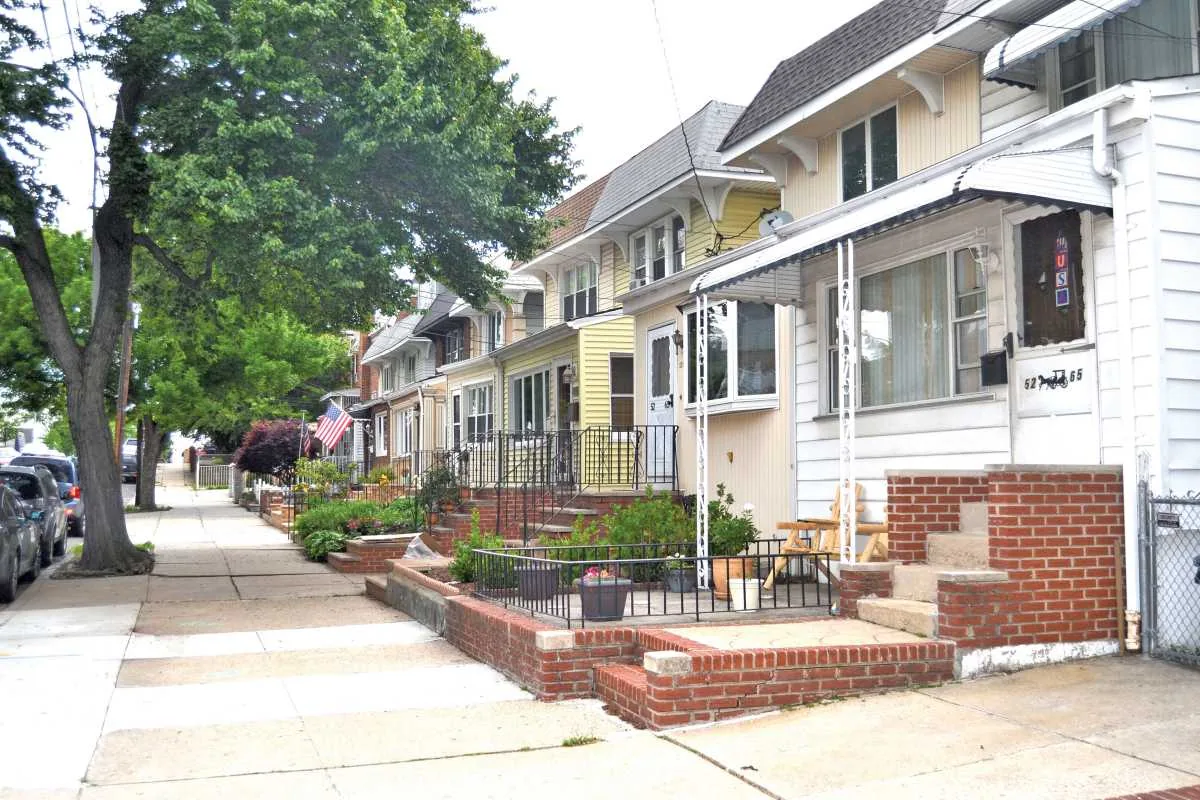
Maspeth
Commercial roof repair, recover and replacement in Maspeth, Queens, NY, for industrial lowland buildings, warehouses and Grand Avenue businesses.
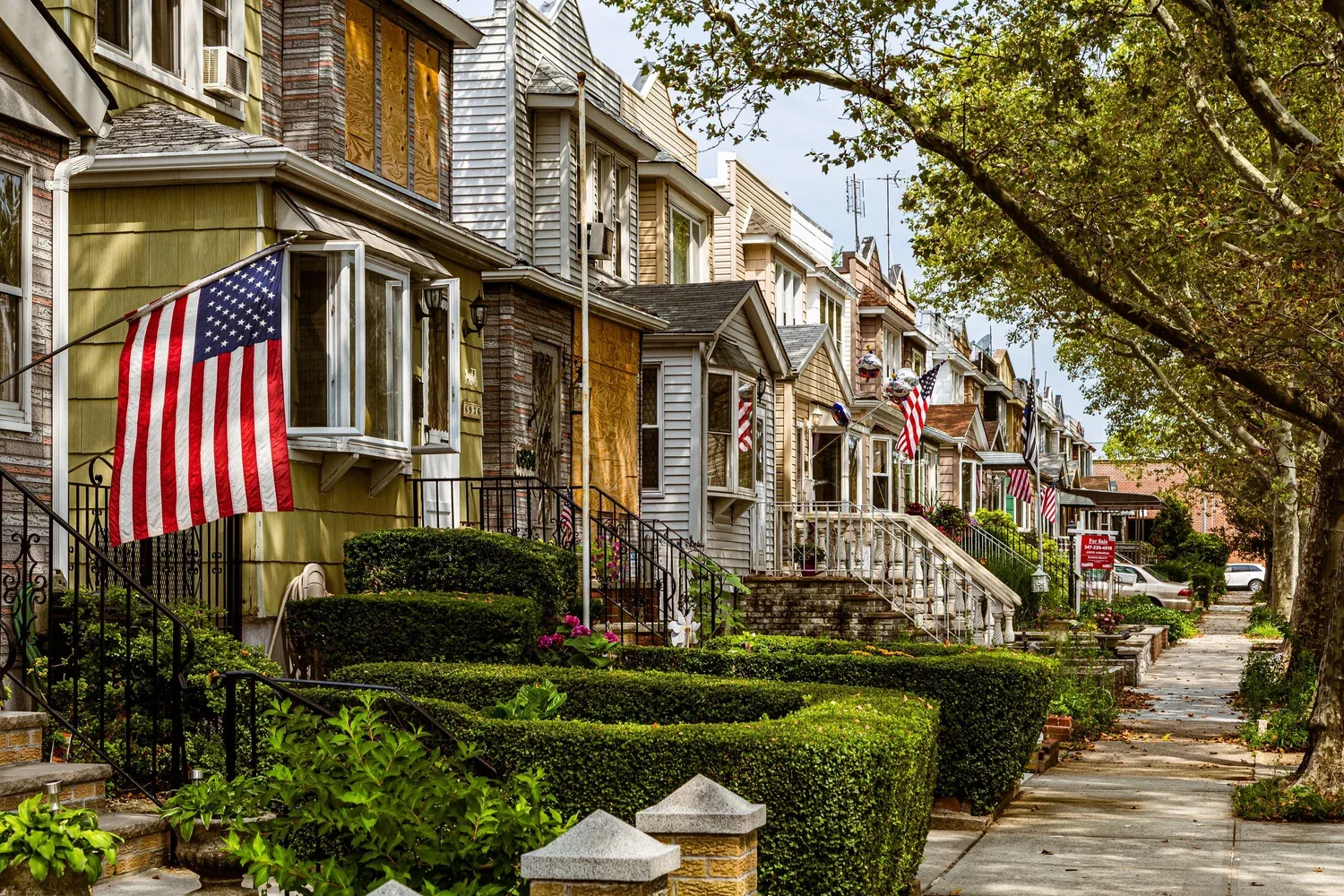
Glendale
Commercial roof repair and replacement in Glendale, Queens, NY: Woodhaven Boulevard big-box roofs, rail-yard industrial buildings and historic Kreischer brick.
Ready to Talk About Logistics and 3PL Operators?
Tell us about the building and what you are seeing. We will schedule a roof walk and send photos and a written scope.