
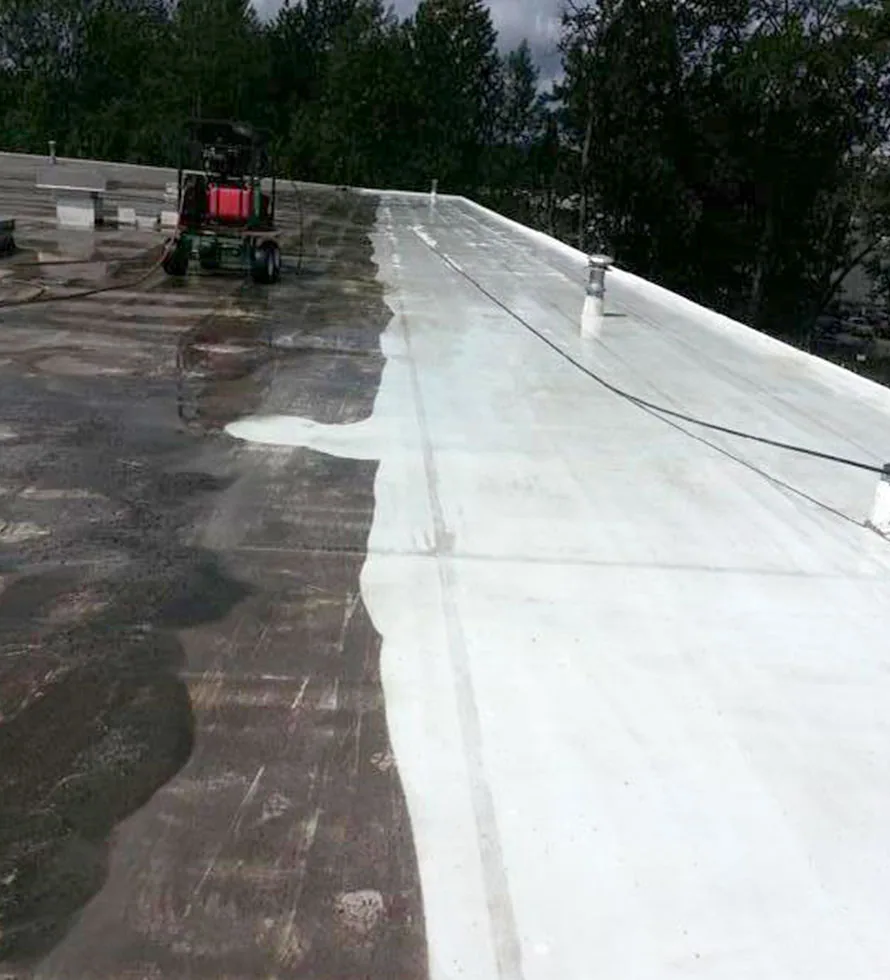
A white roof that has turned gray along one seam is telling you where it is failing. On a TPO roof the stain usually starts where dirt collects in a small channel, and the channel exists because a welded seam has lifted a fraction of an inch. Water finds it long before anyone sees a drip. The membrane itself is rarely the culprit. The weld, the flashing and the drain around it are where we start.
What is TPO, and why is it so common on flat roofs?
TPO stands for thermoplastic polyolefin, a single-ply sheet that softens under hot air and fuses to itself. Installers weld the seams with a hot-air welder, and the result is a continuous membrane with no tape or glue in the lap. The sheet comes in white and other light colors, and it is rolled out across the roof in wide strips.
It is common because it combines three things owners want: a reflective surface, a welded seam and a price that is often lower than other single-plies. The tradeoff is that the quality of the weld decides how long the roof lasts, so the crew matters as much as the sheet.
Compared with its neighbors, TPO sits in the middle. A PVC sheet resists grease and chemicals better and costs more. An EPDM membrane is a rubber sheet with glued or taped seams and a long record on large roofs. We pick by what the roof is exposed to and by who will be walking on it, not by habit.
How is TPO attached to the roof?
Walk it with me. Two methods are common. In a mechanically attached system, fasteners and plates secure the sheet along the seams, and the weld hides them. A fully adhered system glues the sheet down over its whole area, onto insulation or cover board. A third option, ballast, sets the sheet loose and holds it with stone, though that adds weight.
The choice follows the building. Mechanically attached sheets suit big, open roofs with strong decks. Fully adhered sheets suit roofs with lots of penetrations or odd shapes, and they resist flutter in wind. We check the deck, the insulation and the wind exposure before suggesting one. The insulation and cover board beneath the sheet matter as much as the sheet.
How do we check the seams?
The first step is a visual walk along every seam, looking for lifted edges, wrinkles and dark lines. The second is a seam probe, a small blunt tool run along the edge of the weld. A good weld resists the probe. A weak one opens. The third step is to mark every open spot with a paint stick and photograph it, so the repair crew goes straight to it.
Flashings get the same attention. The sheet has to turn up walls and around curbs, and the corners are where the stress concentrates. A cracked corner or a pulled-away strip is a leak waiting for the next rain. A seam failure repair usually means cleaning, re-welding and testing the spot, then checking the area around it for more.
Finally, we look at what the sheet is sitting on. A soft spot under a seam means wet insulation, and a repaired seam over wet insulation will fail again. A short moisture check after the seam work tells us whether the problem is the weld or the board beneath it.
Where does TPO fit best in Queens?
It fits low-slope roofs with a lot of open field. The Maspeth Industrial Center crosses industrial lowlands, the College Point Corporate Park spreads across about 550 acres, and the Degnon Terminal complex sits beside the 192-acre Sunnyside Yard. A warehouse or light industrial building in a district like those is a natural candidate for a white single-ply, as is a retail roof of the kind at Rego Center Phase II, with 950,000 square feet of retail on 62nd Drive.
A warehouse roof or a shopping center roof with many rooftop units needs good flashing at each curb, and TPO's flexible flashing sheets handle those shapes well. On a roof in Maspeth the lowland drainage question comes before the membrane question.
What do heat and sun do to a TPO roof?
A white membrane reflects most of the sunlight that reaches it, which keeps the roof surface cooler. Central Park's July afternoons average near 85 degrees, a heat island raises that, and LaGuardia, in Queens, touched 107 F on July 3, 1966. A cooler roof ages more slowly, and the rooftop units above it work against less heat.
Sun still takes its toll. Over years, a TPO sheet can lose plasticizers, harden and shrink, especially at flashings, where the sheet is pulled tight. We look for shrinkage, cracking at the corners and bridging at inside corners, which are early signs. Snow adds load and freeze-thaw stress: the city averages 29.8 inches a year, and one January 2016 day delivered 27.3.
Dirt is the other half of the story. A white sheet that has collected soot absorbs more heat and loses part of its advantage. Washing the roof every so often with mild cleaner brings back reflectivity and shows us the seams more clearly, so the cleaning doubles as an inspection.
What about ponding and drains?
Ponding is where most TPO problems begin. Standing water holds dirt, grows algae and sits on seams for days. Hurricane Ida's remnants prompted the first flash flood emergency the city had ever issued on September 1, 2021, and Queens recorded most of the deaths. A roof that cannot shed water that fast will hold ponds, and ponds punish seams.
We check the drain strainers, measure the depth of ponds a day after rain and look for dips in the deck. If drains are undersized or blocked, we fix that before the membrane. A ponding water repair may mean tapered insulation, a new drain or overflow scuppers. The next step is a plan, not a patch.
What is the next step?
Send photos of the stain, the seams near it and the nearest drain. We will walk the roof, probe the welds and tell you, step by step, whether a repair, a recover or a new TPO sheet fits, then discuss price.
Questions Owners Ask
What building owners and managers usually ask before a roof visit.
It depends on the installation, the thickness of the sheet, the drainage and the care it gets. A well-welded TPO roof with clear drains and regular maintenance can serve for many years. Poor seams or constant ponding shorten that. We judge by what we find on the roof.
Yes, if the membrane around the seam is sound. The seam is cleaned, a cover strip is welded across the open spot and the weld is tested. If seams are failing across the roof, repairing each one is poor value and replacement is the better path.
It can be. The sheet flashes around curbs well when the curbs are in good shape. We rebuild any damaged curbs first, add walkway pads along service paths and make sure the corners are formed properly.
Sometimes. The existing roof has to be dry and reasonably flat, and a cover board normally sits between the new sheet and the old surface. A moisture scan and core cuts tell us whether a recover is possible.
Send photos of the stain, the nearest seams and the worst drain, along with the roof's age. A record of past repairs helps us see patterns.
Related Roofing Work
Other pages that connect to TPO Roofing.
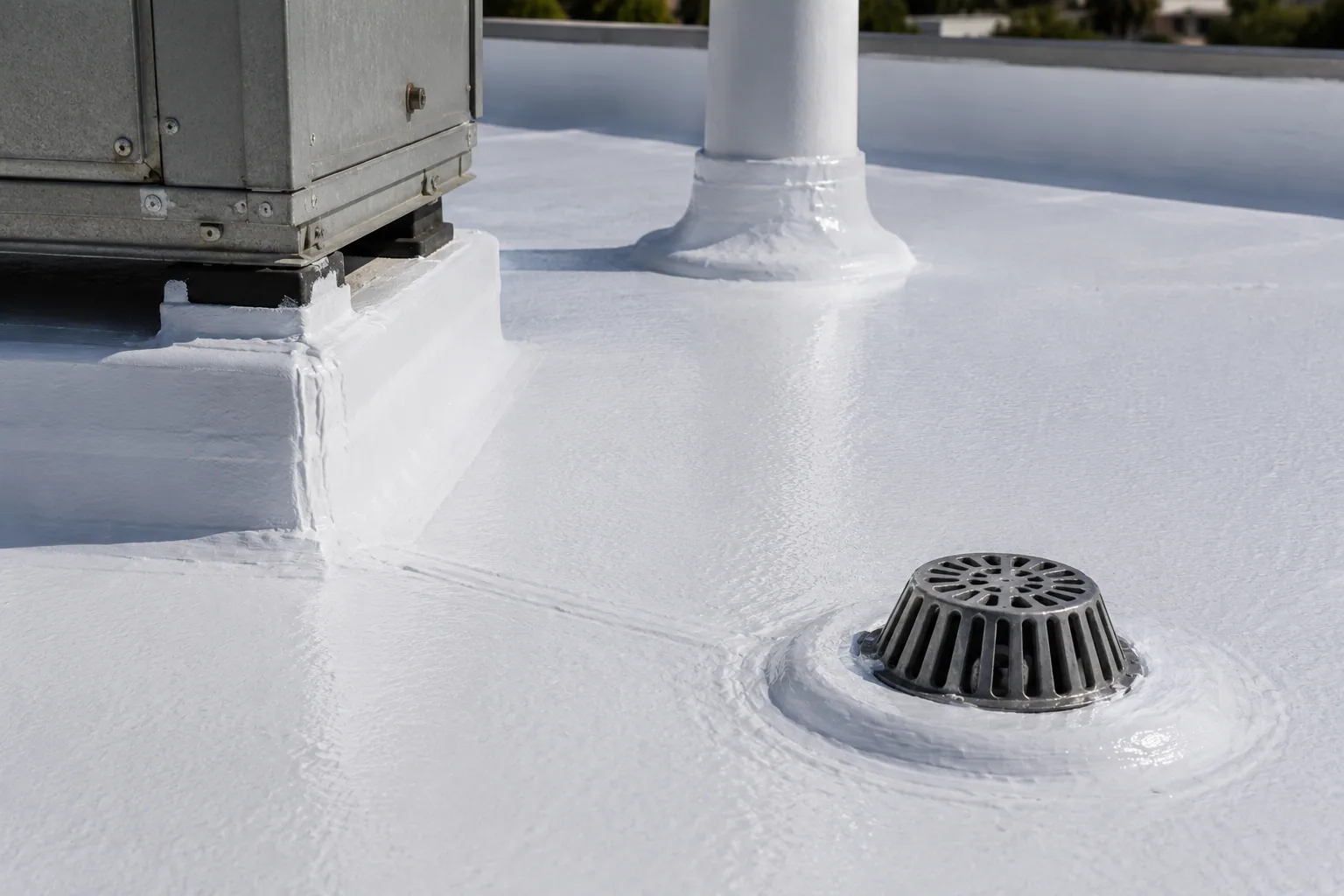
PVC Roofing
PVC roofing in Queens, NY: welded single-ply membranes for roofs that see grease, exhaust and chemicals, with repair, recover and replacement explained plainly.
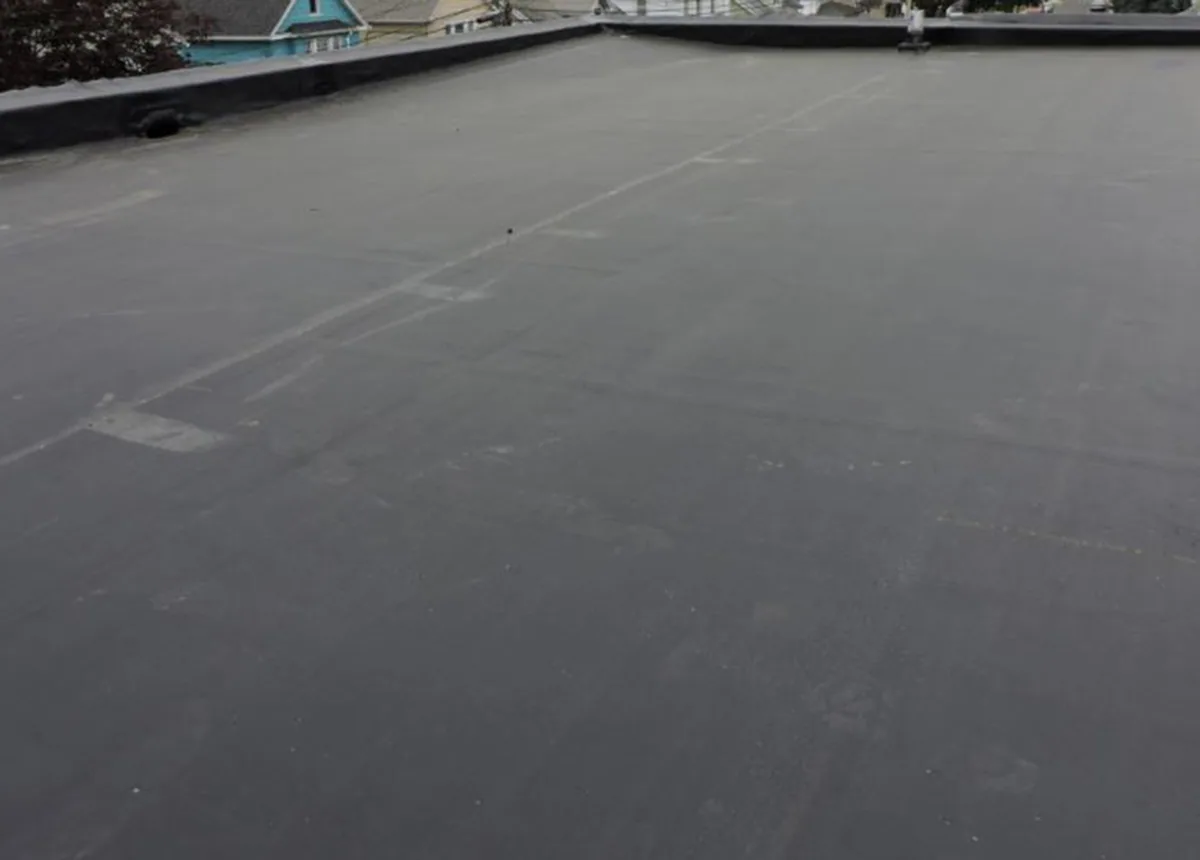
EPDM Roofing
EPDM rubber roofing in Queens, NY: adhered and ballasted membranes, seam and flashing repair, and when a black rubber roof is the right choice for a flat roof.
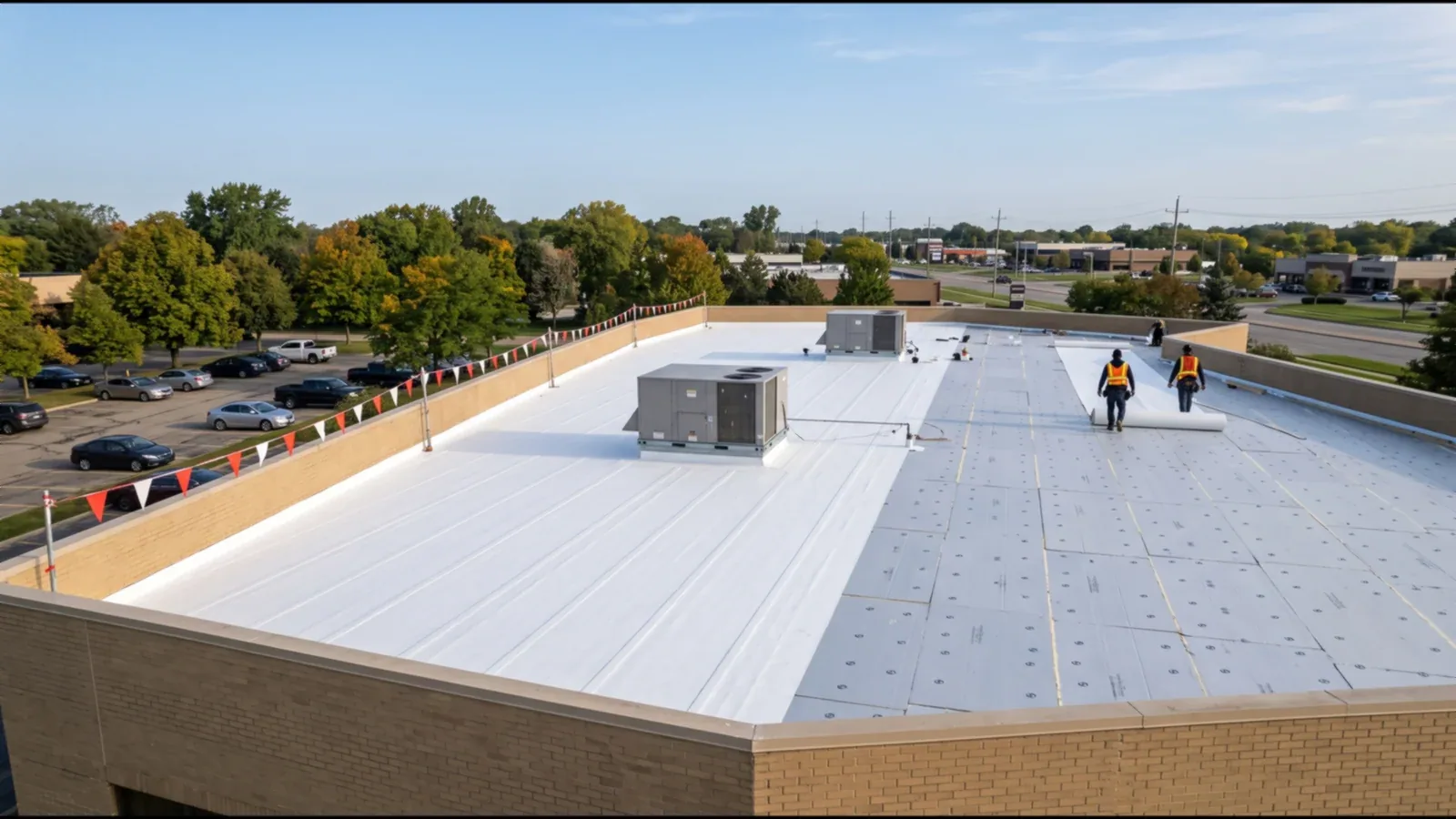
Roof Insulation and Cover Board
Roof insulation, tapered systems and cover board for commercial roofs in Queens, NY: wet insulation, slope, thermal value and what goes under the membrane.
Ready to Talk About TPO Roofing?
Tell us about the building and what you are seeing. We will schedule a roof walk and send photos and a written scope.