
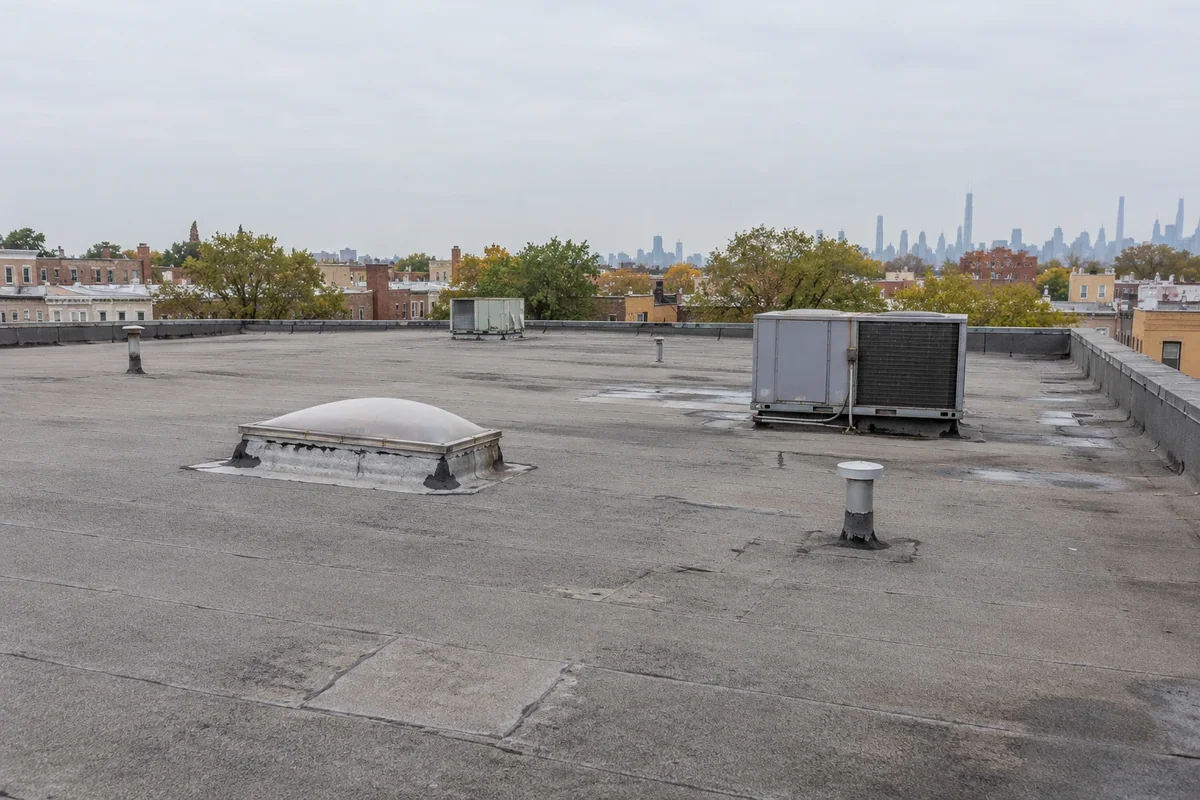
A plant manager sees a pool of water on the production floor after heavy rain, or a drip landing on a machine, and the first instinct is to set a bucket under it and keep running. A bucket buys a shift. It does not tell anyone where the water is coming in, how long it has been entering or how much of the roof insulation above is already saturated. For a manufacturer the cost of a leak is not the repair; it is downtime, scrapped product and the day the line stops. For plants in Queens, NY, commercial roof repair and replacement begins at the drip, and the cause is traced up to the roof step by step.
Come with me from the floor up through the roof deck.
What does the plant see first, and what should be logged?
The plant reports a drip, a wet floor, a rust stain on a beam, a stained insulation blanket or a sprinkler line that sweats, and each suggests a different entry. A drip that follows rain and lands in one spot means a fixed entry nearby. A drip on cold mornings above a hot process means condensation, and a rust streak under a roof penetration means that flashing has failed.
We ask the plant to log the bay, the date, the weather and the process running at the time, with a photograph. Matched against the roof plan, that log shows whether we are looking for one entry or several, and whether the cause is rain or process moisture rising from below. Treating the wrong one wastes the repair.
One more clue sits on the deck's underside. Rust blooms, wet insulation and condensation lines on the metal indicate something other than a roof opening, while a dry underside beneath a drip that grows after rain puts the entry above.
What is happening on a plant roof?
Manufacturing roofs carry more than weather. Process exhaust, makeup air, dust collection and cooling equipment sit on curbs that have to be flashed and kept tight. Hot, damp or chemical-laden air leaving a roof fan can attack the membrane around it, and a film of oil or solvent softens some materials. A roof over a wet process takes humidity from below as well as rain from above.
Curbs at the large units come first, since vibration wears out their sealant. Drains and strainers follow, because a wide plant roof sheds water through few outlets, and then the seams, the edge and the parapet flashing. A manufacturing plant roof that has been patched around equipment for years often wants a survey before any new repair.
Penetrations multiply over the years. Each new line of equipment adds a curb, a duct or a conduit run through the roof, and old ones are rarely removed when a line closes. We number every penetration on the plan, confirm which are live and recommend removing and capping the rest, which lightens the roof and removes leak points.
Where does Queens manufacturing sit, and what does that say about roofs?
Industry in Queens spreads across several districts. Industrial lowlands carry the Maspeth Industrial Center, which the freight-only LIRR Bushwick Branch crosses. About 550 acres at College Point were set aside for the corporate park founded in 1974, which held more than 200 companies by 2003. Long Island City holds many former factories and bakeries converted to new uses, and the Degnon Terminal in Sunnyside is a rail-served industrial complex built out largely by 1912. Businesses in Whitestone have included Lee Kum Kee, Glaceau and White Rock Beverages, and in New Hyde Park, Stock Drive Products and Sterling Instrument, now owned by Designatronics, still manufacture mechanical components.
That is where plants have stood and stand, not what any one roof is made of. An older plant may have a built-up roof with several recovers, and a newer one a single-ply membrane. Owners in Maspeth and College Point start with a core and a scan.
Conversions raise their own question. A former factory or bakery that now holds studios, offices or light manufacturing still wears the roof it had before its use changed. We check the existing assembly against the new use, since a roof designed for one kind of floor load and exhaust pattern may not suit another.
How do we work around production and shutdown windows?
The roof plan follows the production plan. We ask for planned shutdowns, shift patterns and any process that cannot stand dust, vibration or noise, and then place the loudest work in the quiet windows. Rooftop equipment that must be lifted or relocated is coordinated with the mechanical contractor, so the shutdown is short and planned.
The roof is worked in sections, each dried in by the end of the shift. Interior protection goes up over sensitive equipment, and fire safety is part of the plan: torches only where the building allows, fire watch after any hot work, extinguishers on the roof. For plants that cannot lose a day, occupied building reroofing in zones is the normal method.
Price follows access, the number of penetrations, the condition of the deck and the length of equipment shutdowns.
What do Queens storms and heat do to a plant roof?
Ida's remnants arrived on September 1, 2021, and the city's first flash flood emergency left Queens with most of the deaths. Hurricane Sandy left six feet of water in Maspeth. A cloudburst can overwhelm a drain that copes with ordinary rain, and on a wide plant roof the water rises against the parapet.
In an average year about 29.8 inches of snow arrive, 27.3 of them on January 23, 2016, and Central Park runs near 85 degrees on July afternoons. Heat adds to the load on process cooling, and a dark roof adds to the heat. We check drains and curbs before each season and note blisters and open laps after each hot summer.
What is the next step for a plant manager?
The next step is a walk with the plant engineer, then a written rating by roof area. Repairs come in order of urgency: curbs and drains first, then seams and edges. A recover or replacement is priced beside the repairs, with the assumptions listed. Owners of related buildings, such as a logistics operation or a flex industrial building, can be rated on the same scale, and the general contractors who coordinate plant projects get the same numbered plan.
Questions Owners Ask
What building owners and managers usually ask before a roof visit.
Compare the drip with the weather and the process schedule. Rain leaks follow storms, while process moisture follows production hours and cold mornings. A moisture scan and a view from under the deck distinguish them.
In most cases yes. We work in sections, dry in each shift, protect sensitive equipment and schedule the loudest stages for planned quiet windows.
We coordinate with the mechanical contractor, lift the unit, rebuild or raise the curb and set the unit back. The shutdown is planned in hours, not days, when the sequence is written ahead.
Oils, solvents and hot damp air soften some materials and shorten their life. We note what each unit discharges and check the surface around it for softening, staining or blisters, then choose a resistant sheet or a protective pad where needed.
Photos of the drip or stain, the nearest drain or a rooftop unit, plus the plant address and, if known, the roof age, will do. We can then say, in order, whether the drip is rain or process moisture.
Related Roofing Work
Other pages that connect to Manufacturers.
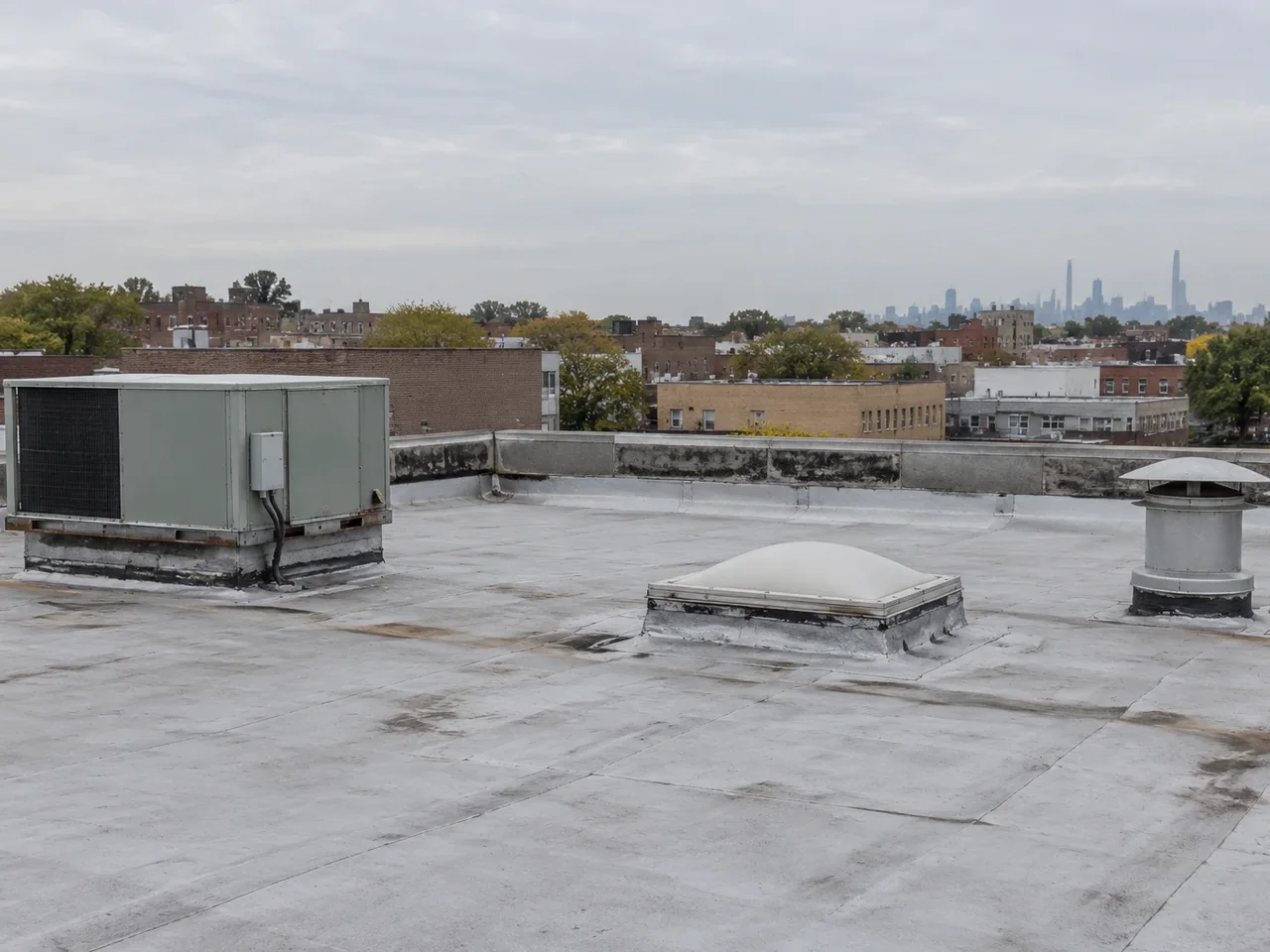
Manufacturing Plant Roofing
Roof repair and replacement for Queens, NY manufacturing plants, with exhaust, heat, process vents and production schedules planned into every step.
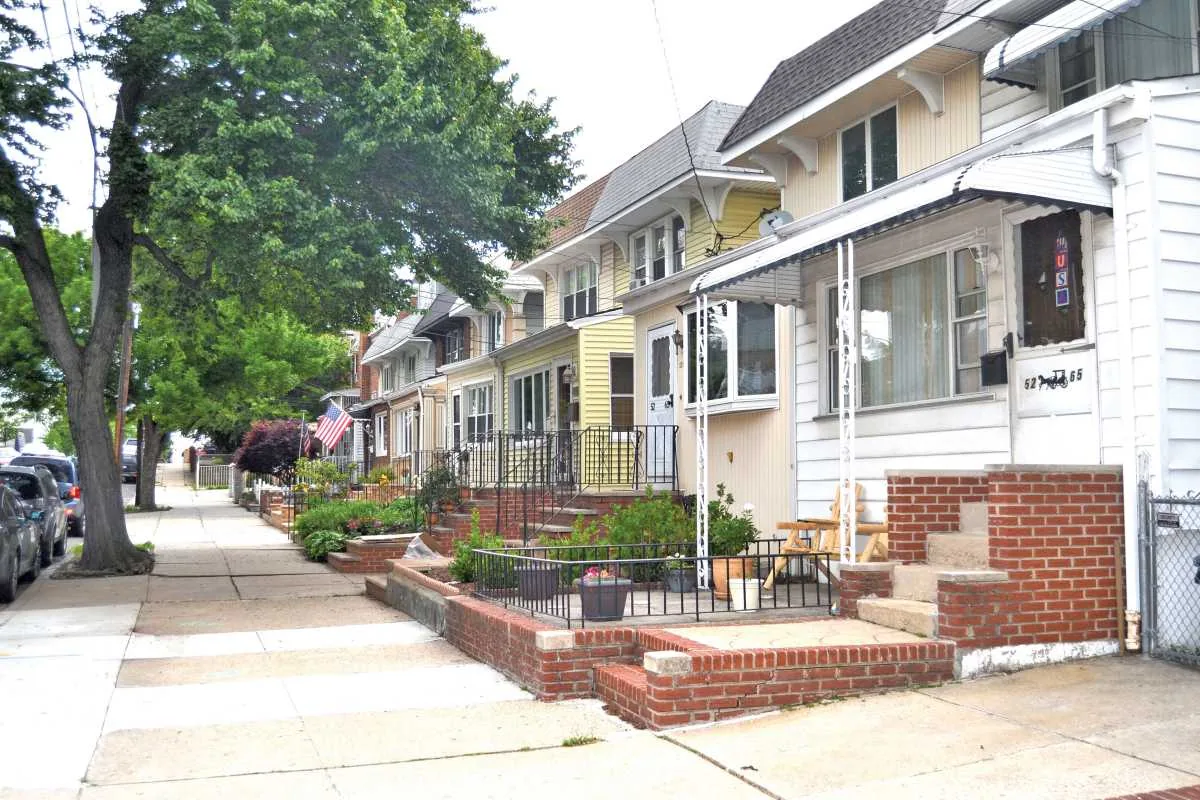
Maspeth
Commercial roof repair, recover and replacement in Maspeth, Queens, NY, for industrial lowland buildings, warehouses and Grand Avenue businesses.
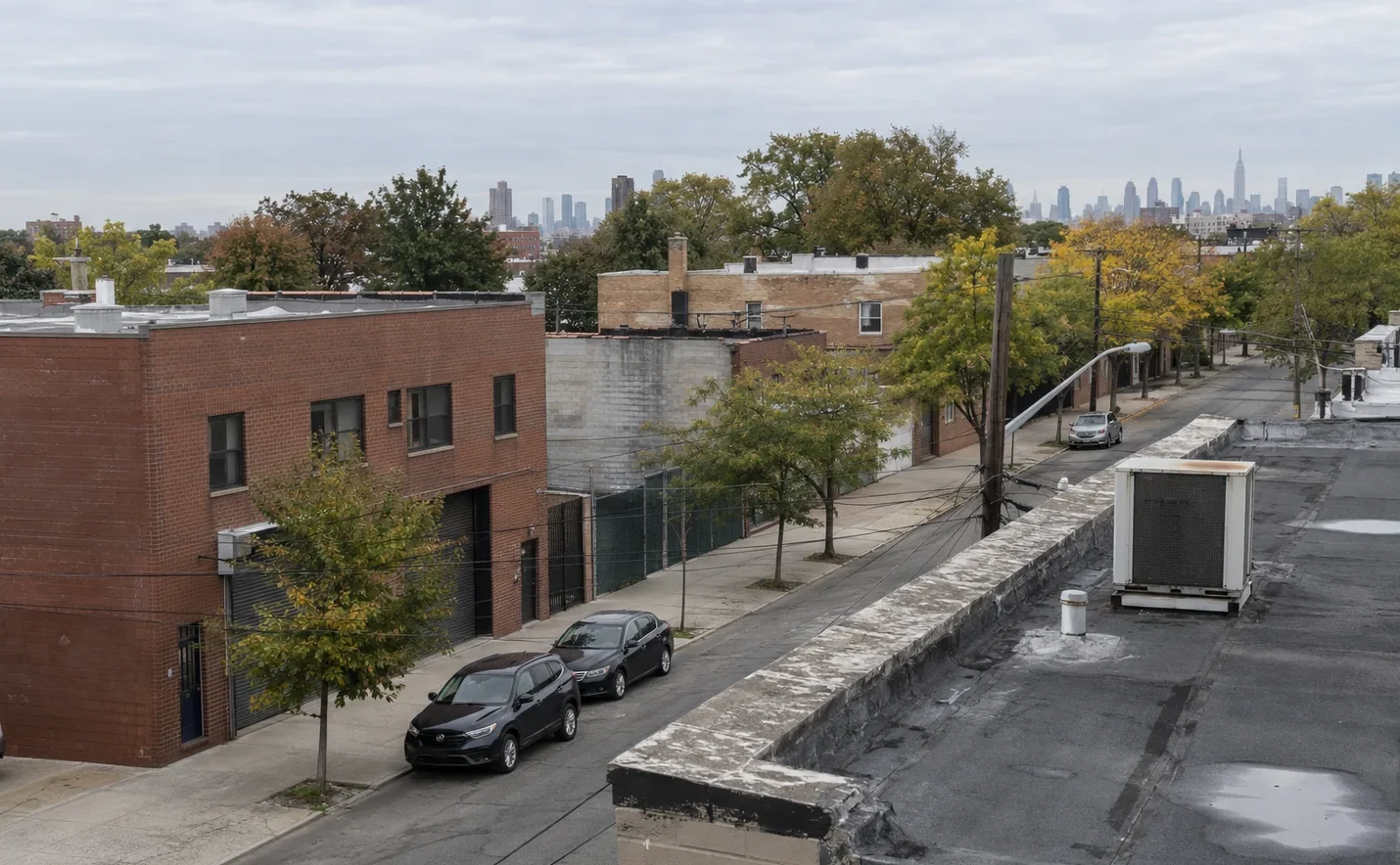
College Point
Commercial roof repair and replacement in College Point, Queens, NY: corporate park industrial roofs, distribution and warehouse buildings and strip retail.
Ready to Talk About Manufacturers?
Tell us about the building and what you are seeing. We will schedule a roof walk and send photos and a written scope.