
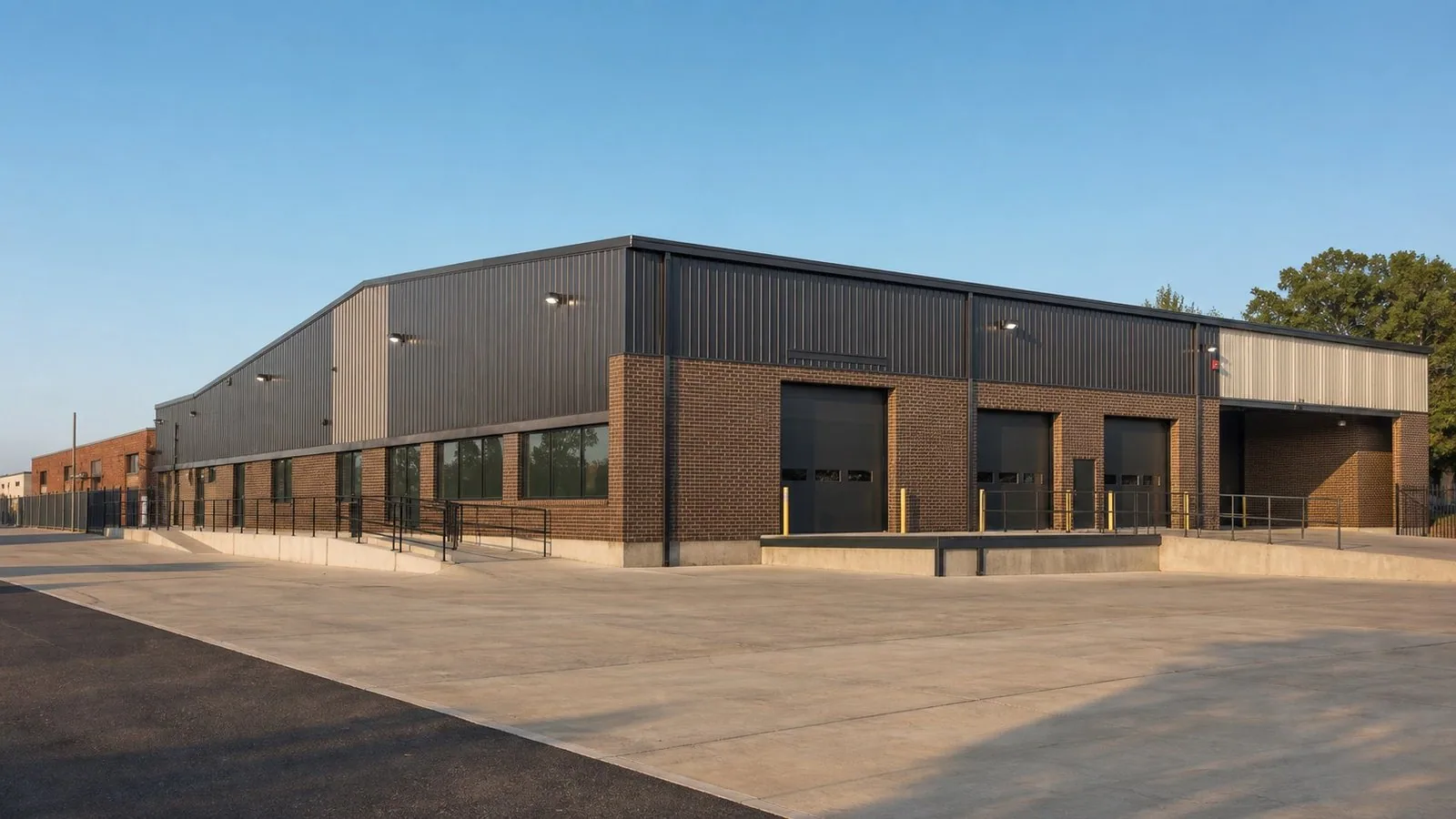
A warehouse manager in Queens, NY usually finds out about the roof the same way: a pallet of cartons at the back wall is soft at the bottom, and the stain on the ceiling above it is the size of a dinner table. The stain is where the water landed, not where it entered. On a long, low building the water can travel forty feet along the deck before it drips, so we start by looking for the wet spot on the roof and work backward to the opening, one step at a time. The cause is nearly always a drain, a seam or a wall flashing.
What does the owner see first?
Most owners notice one of three things. Ponding that is still standing a day after rain. A rusted line of fasteners along the deck, visible from the loading floor. Or a patch of daylight where a roof panel meets the wall. Each points to a different failure. Ponding points to drainage or deck sag. Rust points to a long-running leak. Daylight points to a flashing that has pulled loose.
We walk the roof with a clipboard, mark the soft spots and photograph the low points after a rain. That gives us a map of where the water goes, and the map decides the repair.
A fourth sign is easy to miss: gutters and downspouts at the building edge that overflow in light rain. That points to a clogged leader or an undersized outlet, and it is cheap to fix before the next storm.
Why do Maspeth and Long Island City warehouses see so much ponding?
The stretch of Maspeth from 43rd to 58th Street is mostly industrial lowlands, and the freight-only LIRR Bushwick Branch crosses the Maspeth Industrial Center. When Sandy hit in October 2012, water stood 6 feet deep in Maspeth. A roof is not under water, but a surge or a hard rain fills the storm sewers, and a roof drain that discharges into a full sewer backs up onto the deck.
That is why we check the leader and the connection to the sewer as well as the strainer. In Long Island City, older masonry industrial roofs sit beside newer buildings, and the shared walls between them are the next place water finds a way in.
How do we confirm where the water is going?
First, the drain. We lift the strainer, check the bowl and run a hose to see how fast the water leaves. Second, the seams: a probe along the lap tells us whether the membrane is still bonded or lifting. Third, the walls. We look at the counterflashing, the coping and the termination bar, because on a warehouse with tall walls, the flashing carries more water than the field does.
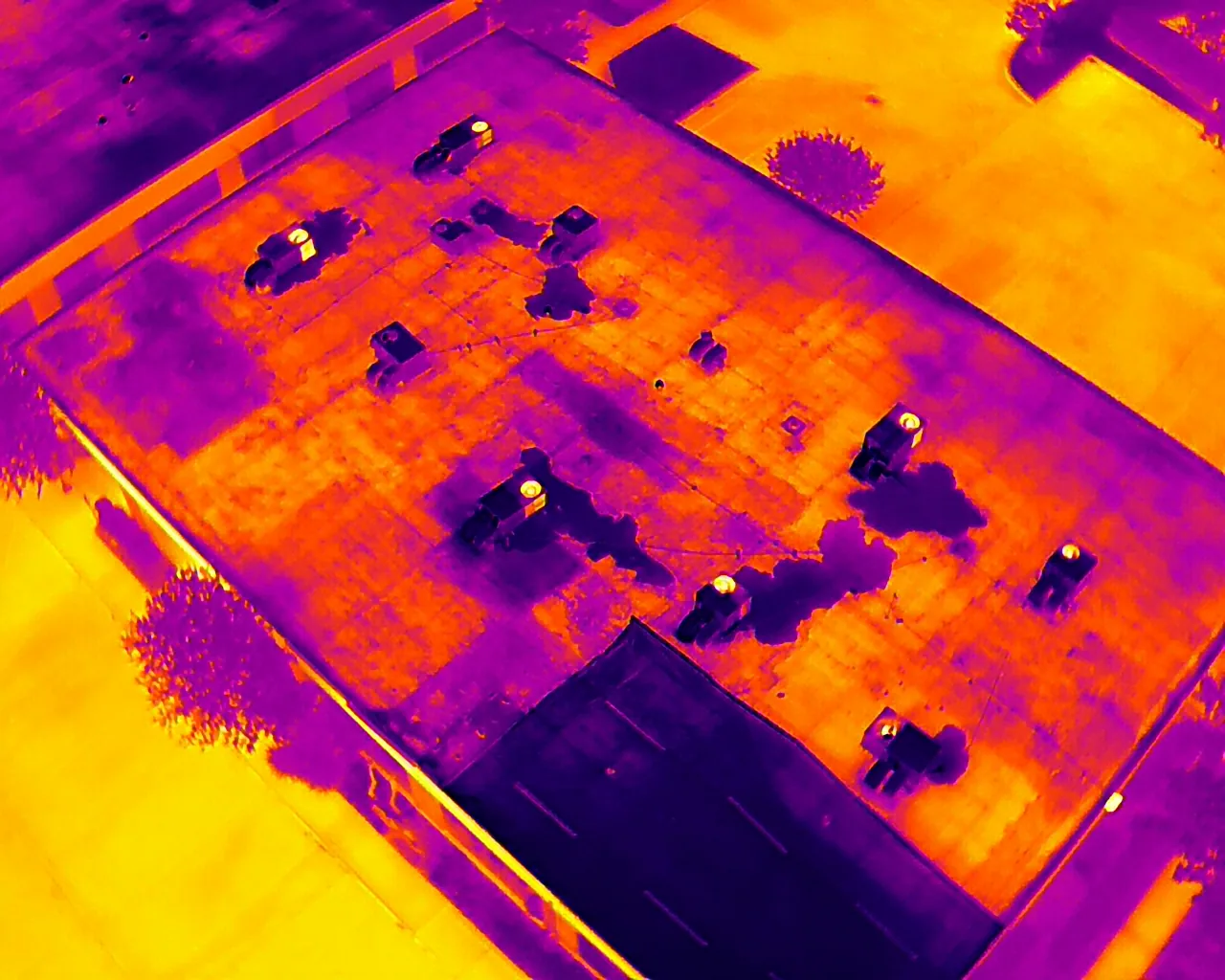
Where the history is unclear, an infrared moisture survey shows which areas hold water under the membrane. Cores confirm the findings, and we record the layers.
What are the repair options?
A dry roof with only a few failed details usually needs a targeted repair: clear the drains, replace the flashing, reseal the seam and recoat the exposed areas. When a roof has one layer and dry insulation, a recover over a cover board avoids paying for tear-off. For a roof with wet insulation or several layers, replacement is the right call, because the water has nowhere to go but into the building.
Warehouse roofs run to broad fields, so the choice of TPO or another system depends on the wind, the equipment and the budget.
How does a warehouse differ from a distribution or cold storage building?
The roof over plain storage is the simplest case. Fewer penetrations, less rooftop equipment and fewer tenants mean fewer details to fail. A distribution center adds conveyor exhaust, dock-door canopies and heavy unit traffic. A cold storage building adds refrigeration lines and vapor control. When a warehouse is converted to either use, the roof has to be re-read, because the loads and the moisture behavior change.
We ask what is stored, what is heated or cooled and what runs on the roof, then rate the roof against that use and not against the original one.
What does it cost to wait?
Waiting costs more than the repair on most warehouse roofs, for a simple reason. Wet insulation does not dry, and the longer it stays wet the more of the deck it damages. Rust in the deck turns a recover into a tear-off. Stock below the leak is lost, and a tenant with a damaged inventory claim has a legitimate dispute with the owner. Hurricane Ida's remnants on September 1, 2021 gave a drain almost no warning, and most of the city's deaths that night were in Queens.
What is the next step?
To book the first walk we need a photograph of the worst drain and the nearest wall, the street and the roof age if you know it. We walk the roof beside you, say in everyday terms what each part is doing and hand you a repair order, with price after that. For buildings in Maspeth or Long Island City, we plan the visit around dock traffic, so the loading schedule stays intact.
Questions Owners Ask
What building owners and managers usually ask before a roof visit.
Look at the insulation first. If a scan and a few cores show it is dry and the deck is sound, a repair or recover is likely. If the board is wet in broad areas, if the deck is rusted through or if the roof already carries several layers, replacement is the better value. We explain the finding with the core log and the scan images, so the choice is visible before any price.
No. Water travels along the deck, down a column or along a conduit before it drops, and the stain can sit a long way from the opening. On a warehouse the distance can be forty feet or more. That is why we trace the leak from the stain back through the insulation and across the membrane rather than patching at the stain.
Generally. Materials are staged away from the truck lanes, hoisting happens outside peak receiving hours and the roof is done in sections, each dried in the same day. We plan the sequence with the dock manager before the first day, and we protect pallets under the work area. Noise and dust are the main concerns, and we schedule the loudest tasks for slower periods.
Drains clear and flowing, seams probed and tight, flashings sealed at the top edge, and no standing water after a rain. We walk the roof with you, photograph each repair and mark the punch list. A warehouse owner should leave that walk knowing which areas were fixed, which were left alone and when we will look at them again.
Warehouses in Long Island City and Maspeth often share a wall or sit close to a neighbor. We expose the old flashing, check the masonry, install a new flashing with a termination bar and seal it. If the tie-in crosses a property line, we notify the neighbor before work begins, so the opening is not left exposed overnight.
Once a year at the least, in spring after the thaw, plus after any storm that brought heavy rain or wind. With about 30 inches of snow in a typical year, a freeze-thaw winter opens seams and cracks sealants. A spring walk catches the damage while it is still a patch and not a leak, and the written report goes into the building file.
Related Roofing Work
Other pages that connect to Warehouse Roofing.
Infrared Roof Moisture Surveys
Infrared scans and core-cut moisture surveys for Queens, NY commercial roofs that locate wet insulation before the owner commits to repair or replacement.
Commercial Roof Repair
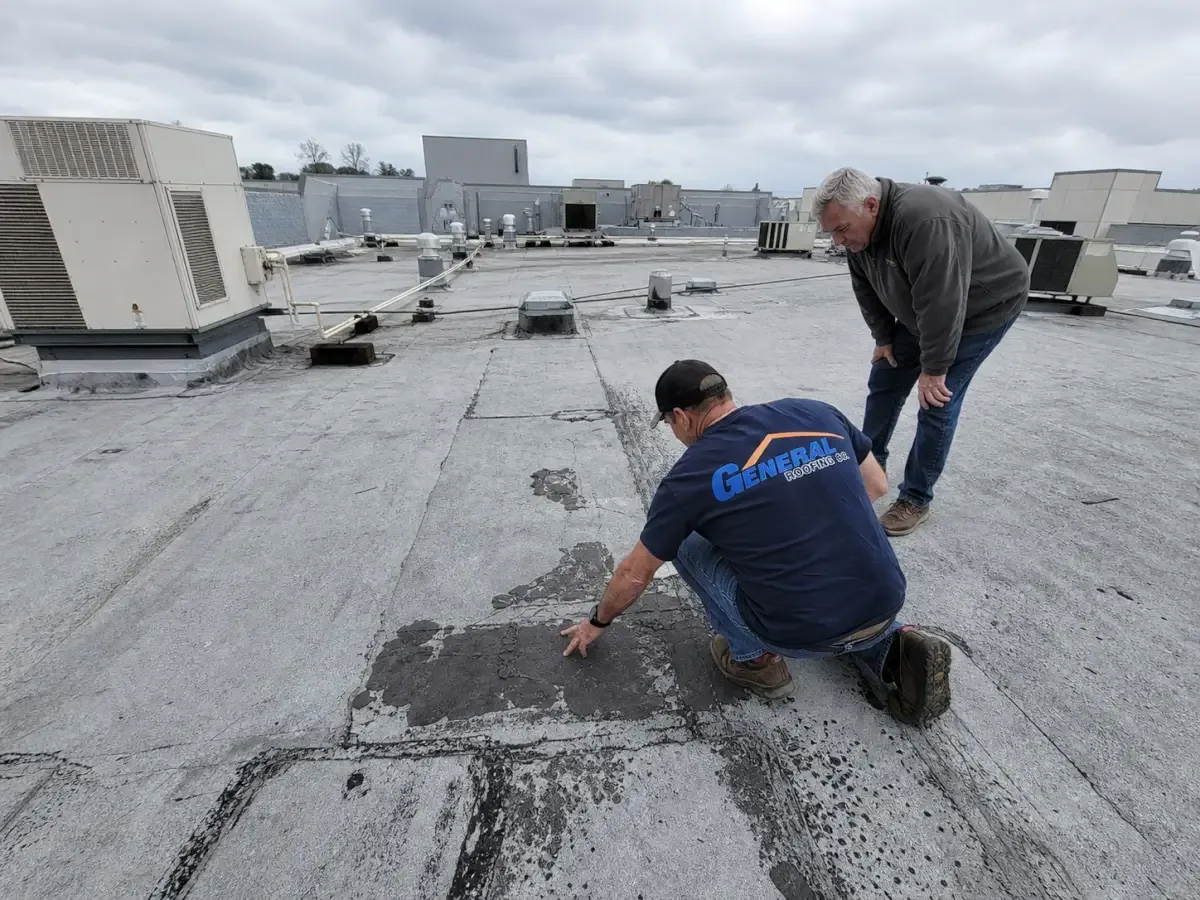
Planned repair of membranes, seams, flashing and details on Queens, NY commercial roofs, with each fix explained before the crew picks up a tool.
Roof Recover and Overlay Systems
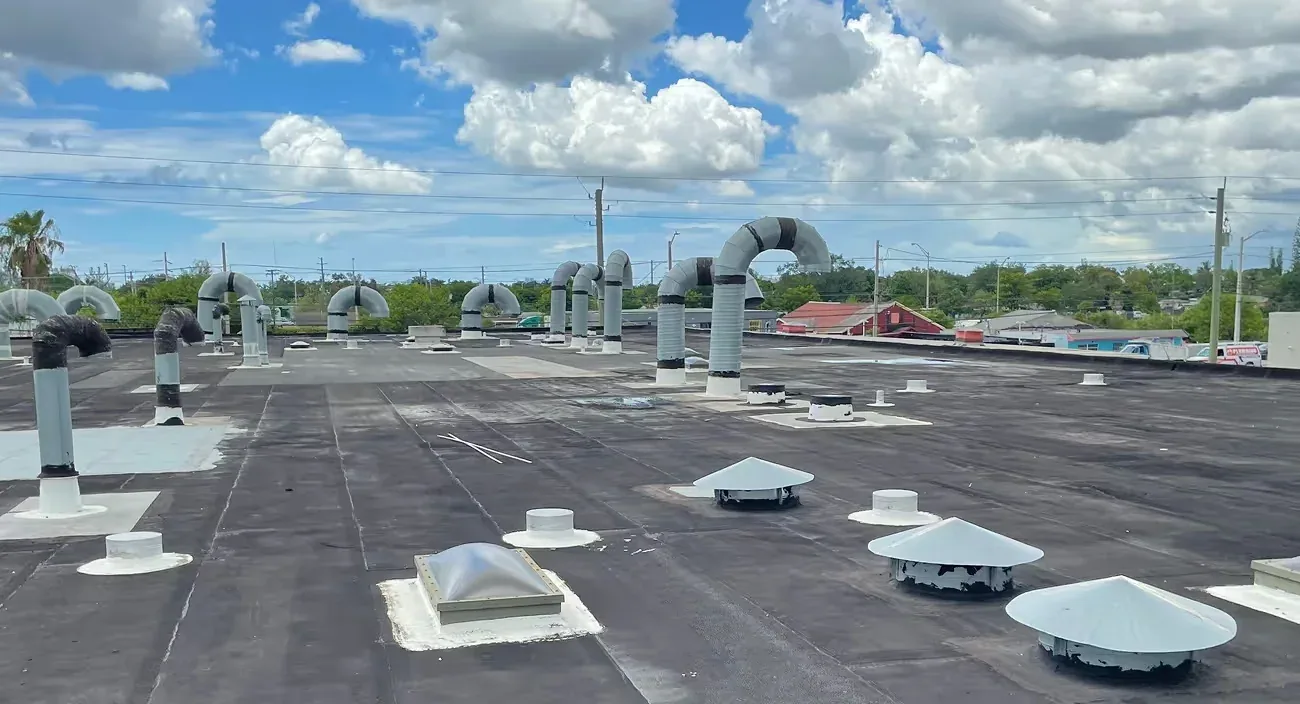
Recover a sound Queens, NY commercial roof without a full tear-off. We test for trapped moisture first and explain when an overlay makes sense.
Ready to Talk About Warehouse Roofing?
Tell us about the building and what you are seeing. We will schedule a roof walk and send photos and a written scope.