
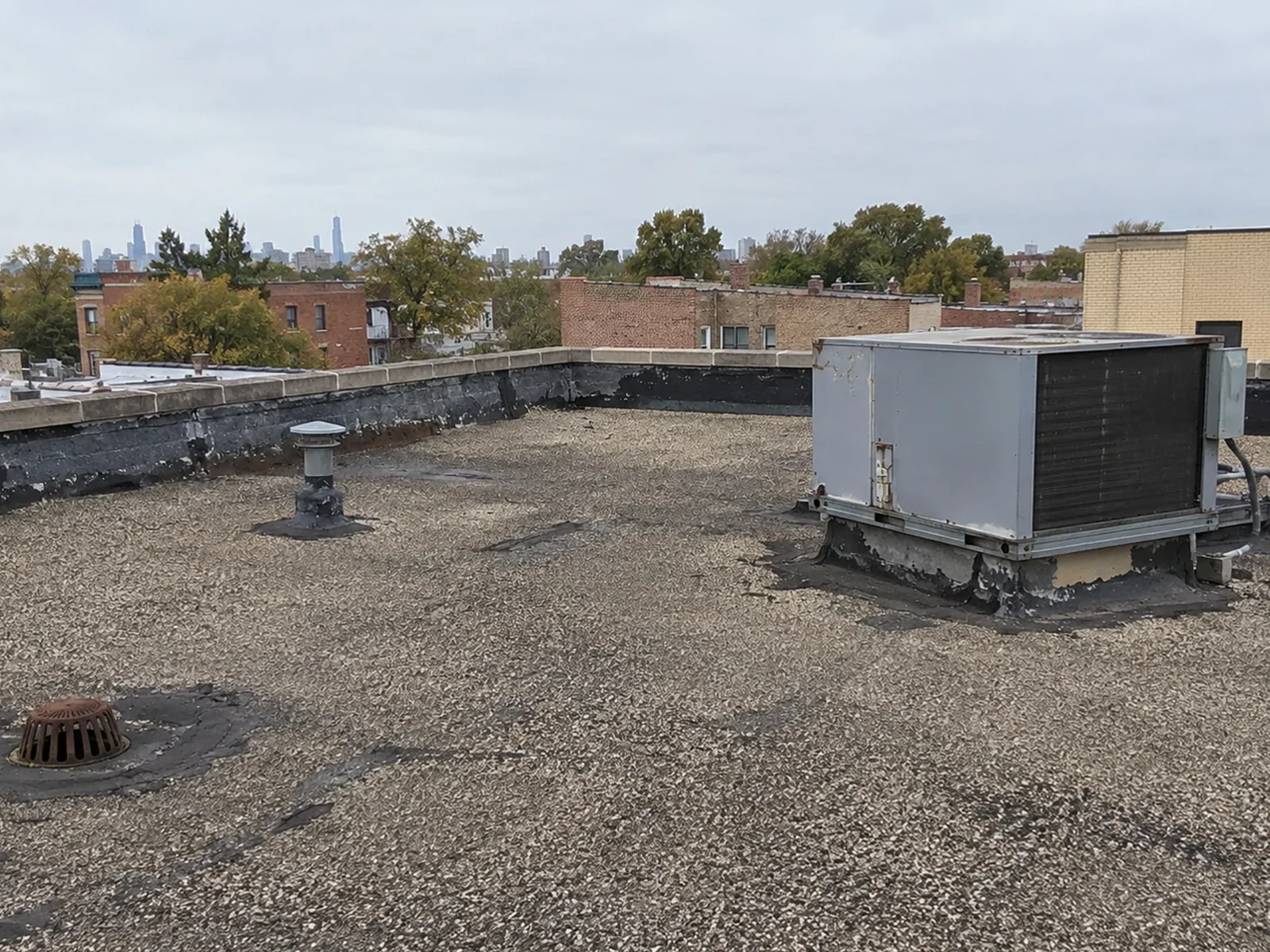
Pull back a handful of gravel on an old flat roof and look at what is under it. If the asphalt is dry, cracked and shiny in places, the roof is aging out. If it is soft, dark and wet, the roof has been holding water. Either way, the gravel is a clue to a system many Queens buildings still wear: a built-up roof, where layers of felt and asphalt are laid in sequence like pages in a book. Knowing how the pages are stacked tells us what can be saved.
What is a built-up roof?
A built-up roof, or BUR, gets assembled in place: reinforcing felt and asphalt, hot or cold, go down in alternating layers and a surface course finishes the stack. The classic surface is gravel set in a flood coat of asphalt. A newer version uses a granulated cap sheet instead. Each layer, or ply, adds thickness and redundancy, so a small flaw in one is covered by the others.
That redundancy is the system's strength. It is also why built-up roofs are so common on older flat buildings and why many of them have been patched many times. The base layers often still work, and the surface is what ages. Our job is to learn which part is which before recommending anything.
What does an aging BUR roof look like?
Walk it with me. The first step is the gravel: bare patches, piles near the drains and loose stone against the parapet. The second is the surface, where asphalt cracks into small blocks, a pattern known as alligatoring. The third is blisters and ridges, raised areas where moisture or air is trapped between plies, and splits that run across felt joints.
The fourth step is the edges. A built-up roof is stripped in at the flashing, with felts turned up the wall under metal. Those flashings dry, crack and pull away over time. A flashing failure repair rebuilds them, and without it the best field repair will leak at the wall again. We mark every one on the plan.
One more place to look is the drain sump. Over the years, a built-up roof gets patched around a drain until the bowl sits proud of the surface and water cannot reach it. We check the height of every drain against the surface and rebuild the sump so that water flows in rather than around. A reflective silicone coating can follow once the roof is dry, sound and drained.
What can be kept, and what must go?
The answer comes from moisture. If cores show dry felts and dry insulation, we may restore the roof with a new surface, a coating or a recover. If the layers hold water, they come off. Wet layers do not dry under a new membrane, and covering them just hides the problem.
A moisture survey and a few cores usually settle it. An infrared moisture survey shows where heat lingers in wet areas, and cores confirm the depth. Owners get a map with wet and dry zones, and the choice between repair, recover and replacement follows the map.
When a roof does come off, the replacement often looks different. A modified bitumen roof is the closest cousin to a built-up system, because it keeps the layered, asphalt-based logic with factory-made sheets. A single-ply sheet may suit a roof with fewer details. We lay out the options with their tradeoffs and price each against the moisture map.
Where does built-up roofing show up in Queens?
Look to the older buildings first. Ridgewood and Glendale carry early twentieth-century yellow-brick rowhouses and mill-era stock, with much of it inside historic districts, and the Maspeth blocks between 43rd and 58th Streets are industrial lowlands. Kew Gardens is mostly apartment houses of four to ten stories, with the Kew Bolmer, built in 1915, the first of them. Whether any of those roofs is still a built-up system is a question for a core cut, since many buildings of that age have been re-roofed with something else.
An owner of one should expect parapets, bulkheads and chimney stacks, each with its own flashing. On a rowhouse block in Ridgewood or an apartment roof in Kew Gardens, those details deserve as much attention as the field.
What about the gravel and the weight?
Gravel is ballast. It protects the asphalt from sun, holds the roof against wind and adds fire resistance. It also adds weight, hides the surface and migrates to the drains. We rake it back, clear strainers and fill bare areas as part of maintenance. On a roof near the edge, gravel can blow off in high wind, which exposes the surface and puts stone on the street.
Hurricane Sandy's gusts crossed the metro area at hurricane force in October 2012, and a gravel-surfaced roof wants its edges checked after wind like that. Before any new layer goes on, we confirm the structure can carry the weight of what is already there. A wind damage repair may include replacing a coping or gravel stop and resetting loose stone.
Pitch pans are the last old detail to check. Many built-up roofs have open metal pans around pipes and supports, filled with sealant that dries, shrinks and cracks. We refill them where they are still sound and replace them with boots or curb flashings where the pan has failed. A pitch pan that holds a pool of rainwater is a leak with a label on it.
How does BUR handle Queens weather?
Asphalt takes a beating from every season here. Summer afternoons near 85 degrees at Central Park, helped along by a heat island, soften the surface and draw out the oils. In winter the city's roughly 30 inches of snow a year, with a one-day record of 27.3 inches in January 2016, freezes in the same cracks. And a cloudburst on the scale of Hurricane Ida's, which on September 1, 2021 made the city declare a flash flood emergency for the first time, finds every pond a built-up roof has been holding.
For a built-up roof the response is drainage and surface: clear strainers, tested leaders, and a reflective coating or cap sheet to protect the asphalt. To start, send photos of the gravel, the nearest drain and the parapet flashing, with the roof's age, and we will go through what the layers are doing before we talk about cost.
Questions Owners Ask
What building owners and managers usually ask before a roof visit.
Yes, but many owners choose cold-applied adhesives or torch-free methods near occupied space. We select the method with the building, the neighbors and the fire rules in mind. A hot kettle on the roof needs a fire watch, a safe position and permits, and we plan those with the building manager.
Only when the existing layers are dry and the structure can carry the weight, and the code also caps how many layers a roof may hold. Cores and a moisture scan tell us whether a recover is possible. A recover over gravel needs the stone removed or covered, which adds a step.
Moisture or air trapped between plies expands in the sun and lifts the layers. A small blister can be cut and patched. Many blisters across the roof point to moisture throughout, which a scan can confirm. Cutting one open also shows whether the layers beneath are wet or dry.
A coating can extend a sound, dry roof by renewing the surface. It cannot fix wet felts or open flashings. We repair those first, then coat.
Send photos of the gravel, the nearest drain, the parapet flashing and the ceiling stain, plus the roof's age if you know it.
Related Roofing Work
Other pages that connect to Built-Up Roofing.
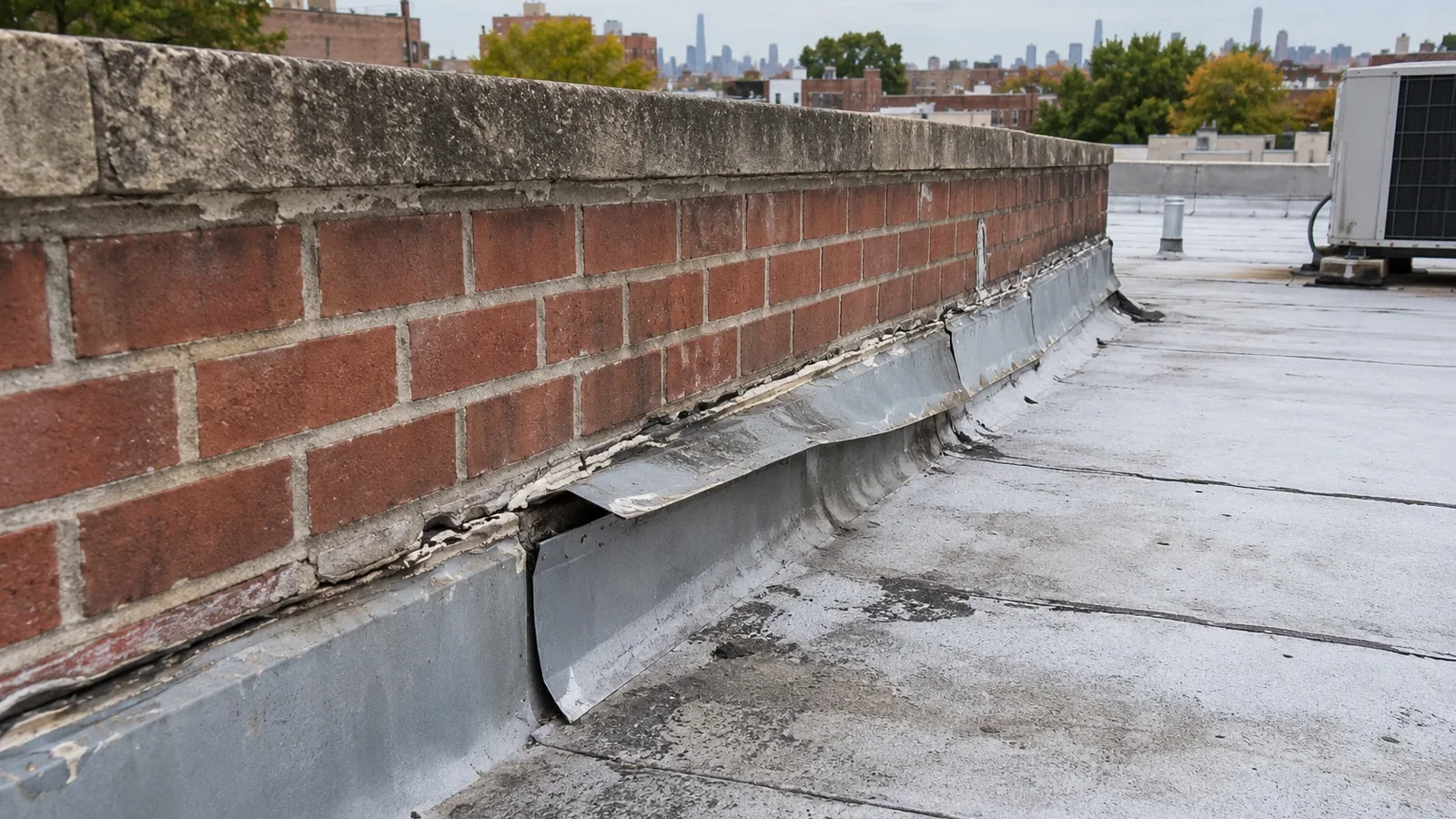
Flashing Failure Repair
Flashing failure repair in Queens, NY: cracked tar, lifted base flashing, open counterflashing and parapet leaks traced and rebuilt on commercial flat roofs.
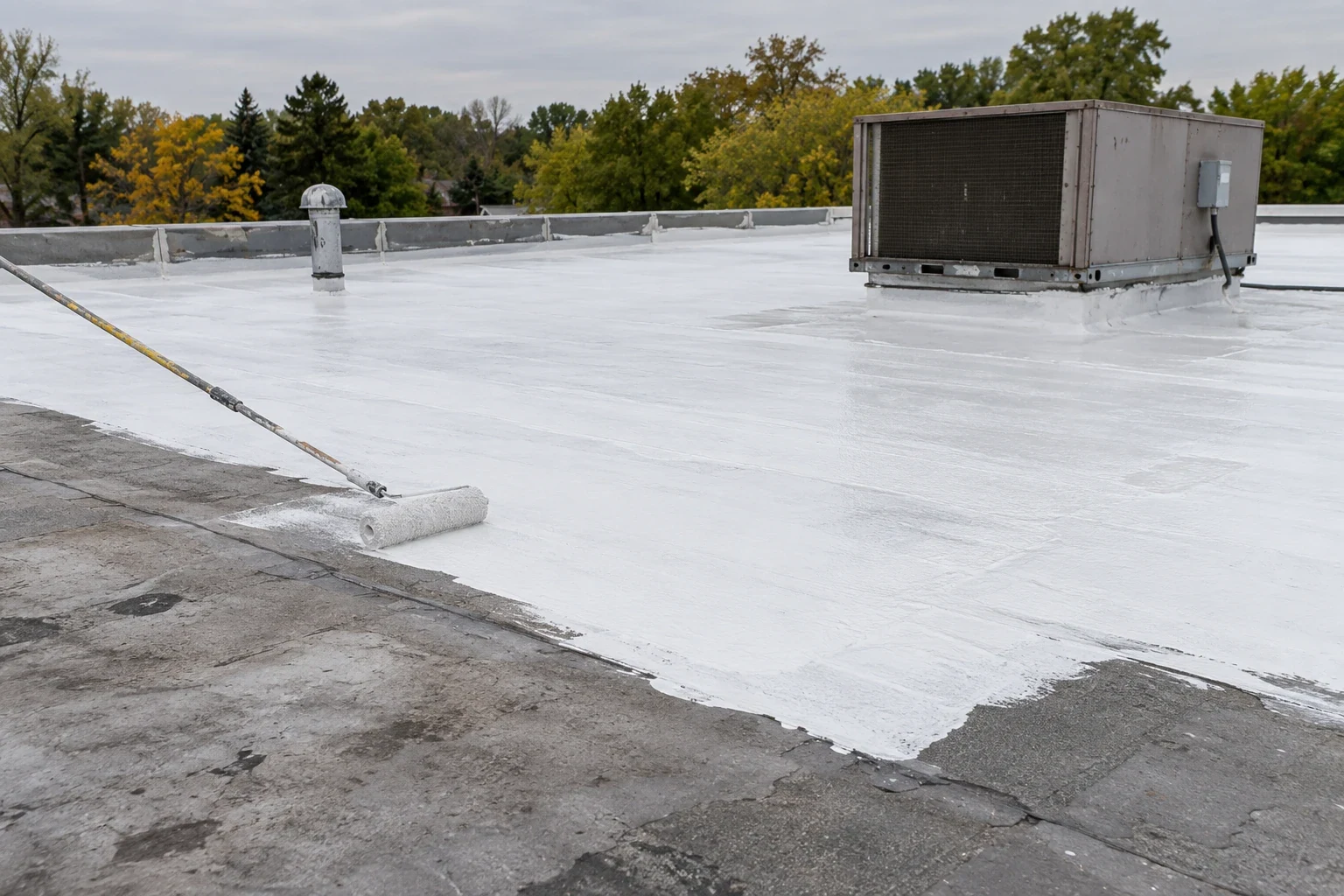
Silicone Roof Coatings
Silicone roof coatings in Queens, NY: liquid-applied reflective coatings for flat roofs that hold water, with testing, prep and recoat timing explained.
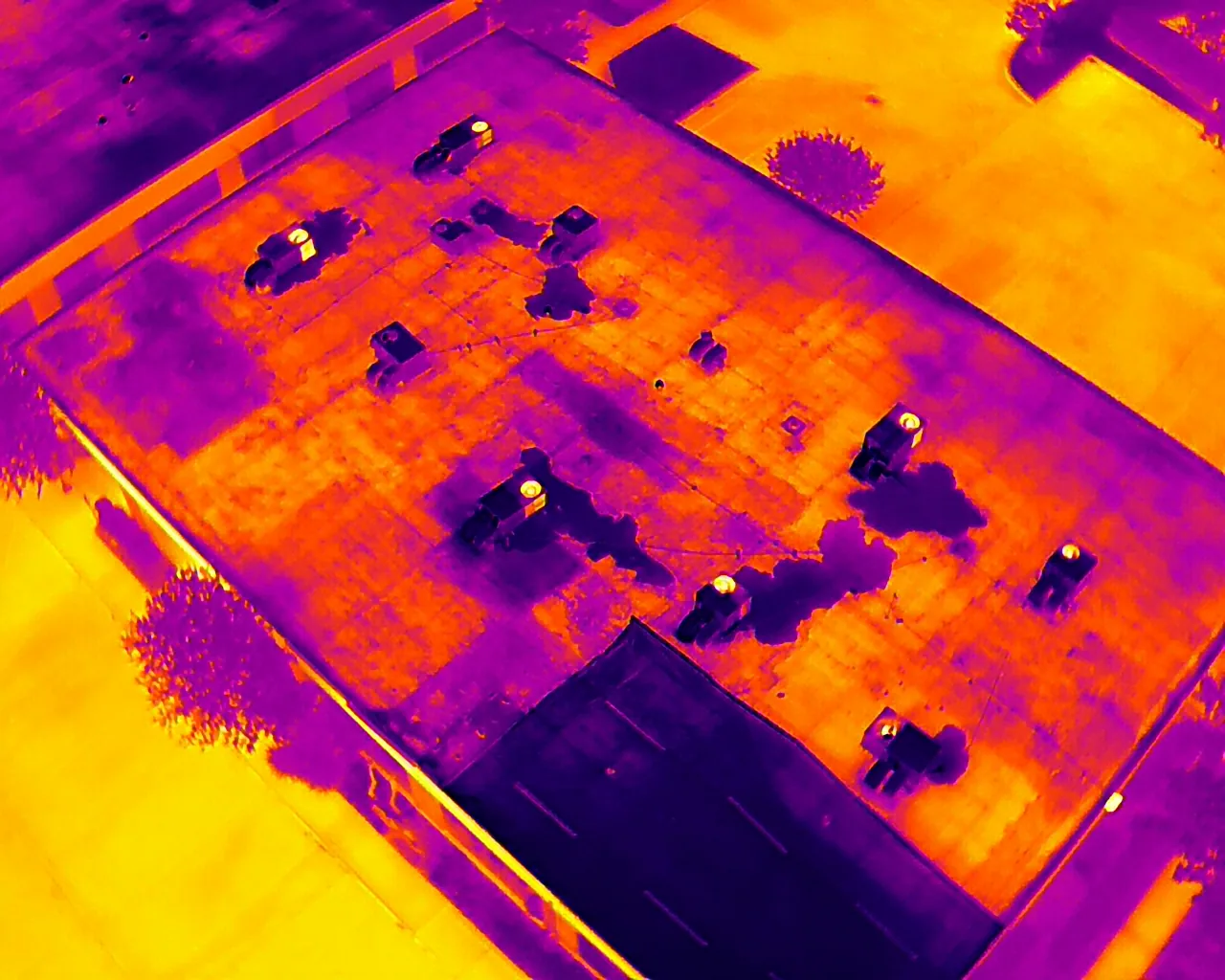
Infrared Roof Moisture Surveys
Infrared scans and core-cut moisture surveys for Queens, NY commercial roofs that locate wet insulation before the owner commits to repair or replacement.
Ready to Talk About Built-Up Roofing?
Tell us about the building and what you are seeing. We will schedule a roof walk and send photos and a written scope.