
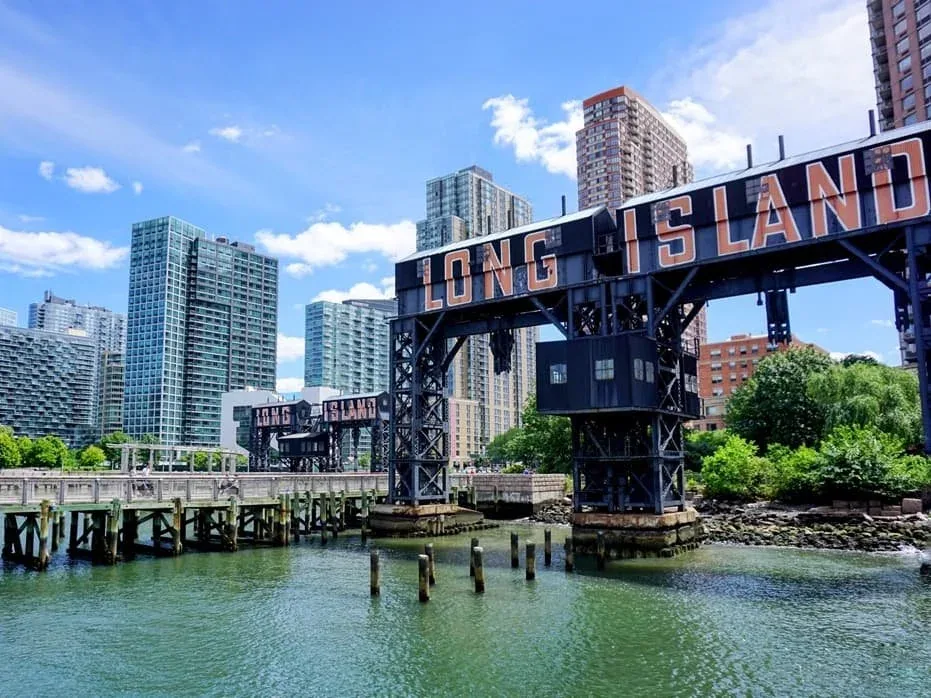
Two ages of roof sit side by side in Long Island City, Queens, NY: masonry industrial buildings from before the neighborhood was rezoned from industrial to residential in 2001, and mixed-use buildings that came after it. The first thing an owner of an older building usually notices is a stain at the top-floor wall after a hard rain, and the cause is rarely in the middle of the roof. We work on both kinds, and the work begins the same way, with a walk of the roof and a plain explanation of what each part is doing.
What do the roofs look like here?
Long Island City has converted many of its former factories and bakeries to new uses, so an older masonry industrial roof can sit beside a newer mixed-use building. Silvercup Studios occupies a former bakery, and the 1919 Standard Motor Products building now houses other tenants. On a neighborhood bounded by the East River and Newtown Creek, older masonry industrial roofs stand beside newer mixed-use buildings, and the two behave differently in weather. An older masonry roof commonly has a parapet and coping with a tar-based or modified membrane that years of patching have covered, while a newer one may carry a single-ply sheet, a terrace or an amenity deck.
We read the roof on its own terms, not by the building next door.
Film and television studios are part of the picture, with Silvercup Studios and Kaufman Astoria Studios both operating in Queens. A studio roof that leaks interrupts a shoot, so the standard for such a building is a dry roof and a quiet repair.
Where do these roofs fail first?
On older converted buildings, water gets in at the parapet and the roof-to-wall junction. Coping joints open, mortar weathers and the flashing pulls loose from the brick. On newer buildings, it gets in at the penetrations: pipes, drains, rail posts for terraces and curbs for mechanical units. A new roof is not immune: a penetration left unsealed or poorly flashed by a trade that came after the roofer is a common way for a young roof to leak.
Ponding is the second repeat problem, particularly on large flat roofs where a drain is partly blocked or the deck has settled. A pond that stays for a day or more ages the membrane and finds any weak seam.
How do we confirm what is wrong?
Our order never changes: drain, seams, walls. We probe the membrane around the stain, look at the coping and flashing and map every penetration. Wet insulation does not show on the surface, so an infrared moisture survey and a few cores tell us what the roof is holding. On taller buildings a drone survey reaches the upper walls and parapets without a lift. A written report with photographs ranks the repairs.
On an older converted building, cores also show the order of the layers and the condition of each. That tells us whether a patch will bond, whether a recover is possible and how deep a tear-off would go.
What does the river add to the weather?
A roof beside the East River and Newtown Creek catches wind off open water in every season, and the edge is where that wind lands first. The sky has its own surprises: January 23, 2016 brought 27.3 inches of snow in a single day, and on September 1, 2021 Hurricane Ida's remnants prompted the city's first flash flood emergency, with Queens suffering most of the deaths. Summer adds a strong heat island on top. Drains are looked at before winter, seams after the thaw and edge metal after a windy week.
How does access work around Queens Plaza and Vernon Boulevard?
Major roads run through the neighborhood, including the Queensboro Bridge approach, Queens Plaza, Queens Boulevard, Vernon Boulevard and 21st Street, and two LIRR stations, Long Island City and Hunterspoint Avenue, serve it. Those facts shape a roof job. Truck routes, hoist positions and delivery windows have to be planned around traffic, and a materials landing on a busy street needs notice. We map the staging side early and keep the sidewalk and entrances clear.
Tenants matter too. In a mixed-use building the residents, offices and studios below the roof each have different quiet hours, and we write the schedule around them.
The East Side Access tunnel opened in 2023 and serves the Long Island City station, so for roof work near the stations the plan allows for sidewalk protection and crowd control.
Which route fits an older or newer roof?
Old masonry buildings often need the repair route first: reflash the parapet, reset the coping, rebuild the drain sump. Where the membrane has worn but the insulation tests dry, a coating or a recover is worth pricing. Where the insulation is wet through, replacement is the only route that ends the leaks. Owners of converted factories sometimes weigh a terrace or a green roof against a plain membrane, and we set out the cost drivers for each. A walk always comes next.
What is the next step?
Photographs of the stain and the nearest drain, plus the building's street and, if known, the roof age, are the place to begin. Price comes after a description, in plain steps, of what the roof is doing. Owners with buildings in Astoria, which borders Long Island City, or in Sunnyside can combine visits, and owners of industrial buildings may compare a warehouse roof with a converted loft.
Questions Owners Ask
What building owners and managers usually ask before a roof visit.
A converted factory has an older deck, older walls and often several layers of past repairs. Its weak points are the parapet, the coping and the roof-to-wall flashing. A new building has a newer system, but more penetrations and amenities. We inspect each for its own failure pattern and quote the repair accordingly, so neither is treated like the other.
Usually, yes, with planning. We schedule loud work around shoots and screenings, keep fumes away from air intakes and finish each section the same day. For spaces that need absolute quiet, we agree on hours with the production manager beforehand. Cold-applied and welded methods make less odor and noise than open-flame methods, and we use them where the system allows.
Treat them as part of the waterproofing. Pavers, planters and railings sit on the membrane, and every post is a possible leak. We lift pavers in sections, inspect the membrane under them and rebuild the flashing at each post. If a deck is planned, a roof inspection first prevents a costly lift later.
Twice a year, once in spring after the thaw and once in fall before the leaves, we visit, and again after any severe storm. Wind off open water and heavy rain both test the edge and the drains, a short visit catches small problems while they are cheap, and the written report becomes the building's roof record.
Then the tie-in is a joint between two roofs. We expose the old flashing, check the masonry and install a new flashing with a termination bar and sealant. We notify the neighbor before work begins and agree how the opening will be protected overnight. A shared parapet that is repaired on only one side leaves the other owner's roof exposed, and we point that out early.
Related Roofing Work
Other pages that connect to Long Island City.
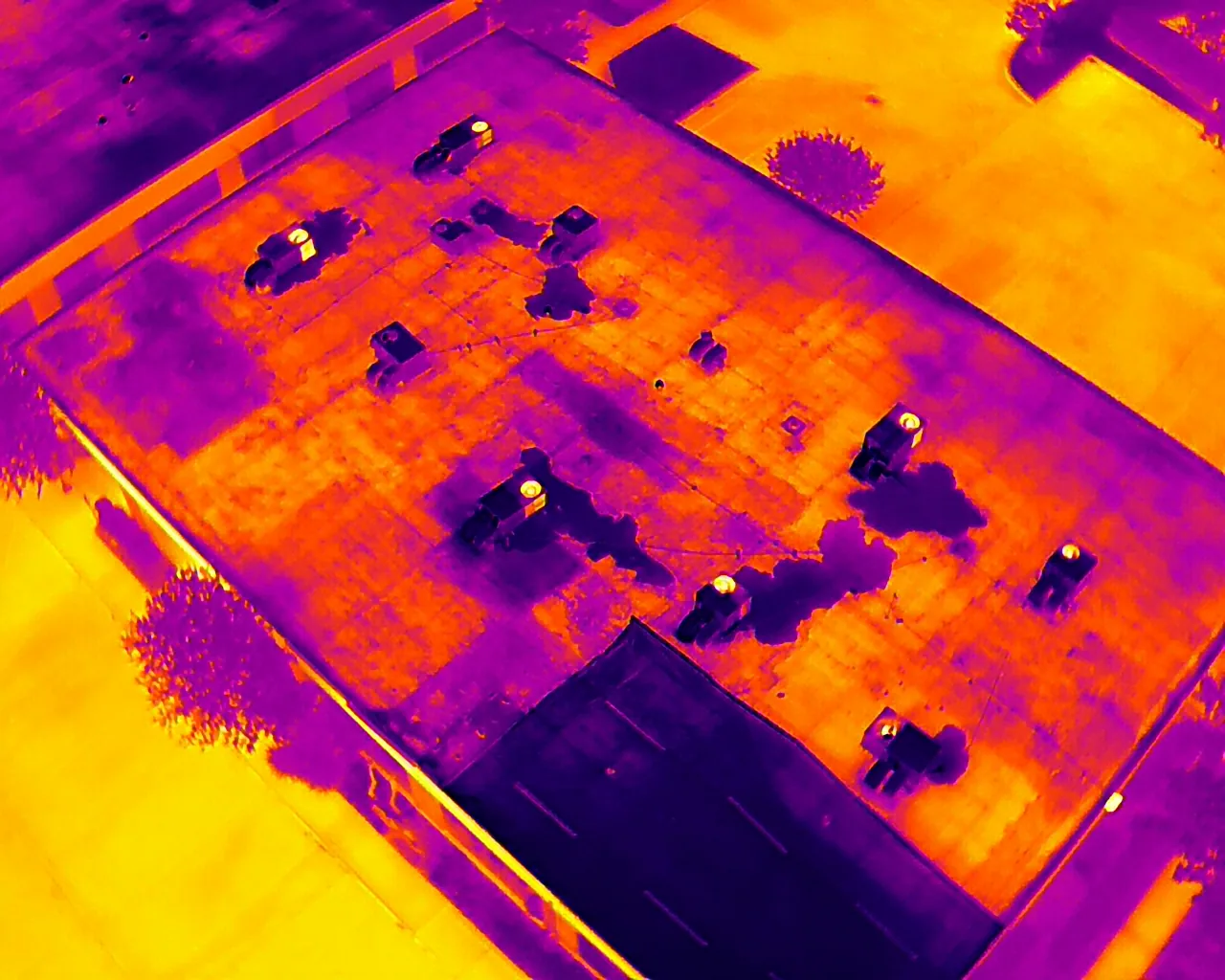
Infrared Roof Moisture Surveys
Infrared scans and core-cut moisture surveys for Queens, NY commercial roofs that locate wet insulation before the owner commits to repair or replacement.
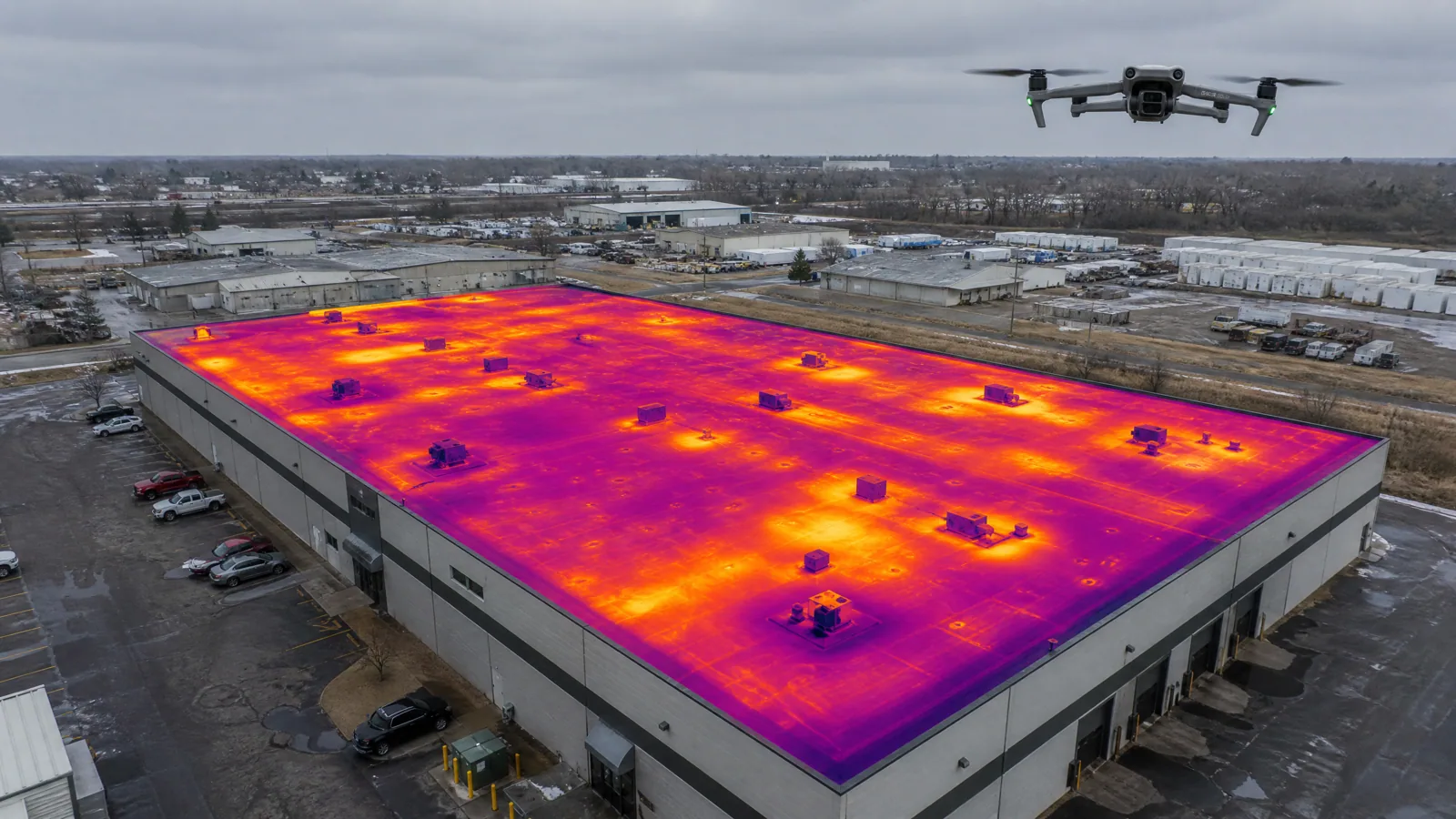
Drone Roof Inspections
Drone imaging for large or hard-to-reach commercial roofs in Queens, NY, with photographs and thermal data that guide a safer hands-on follow-up.
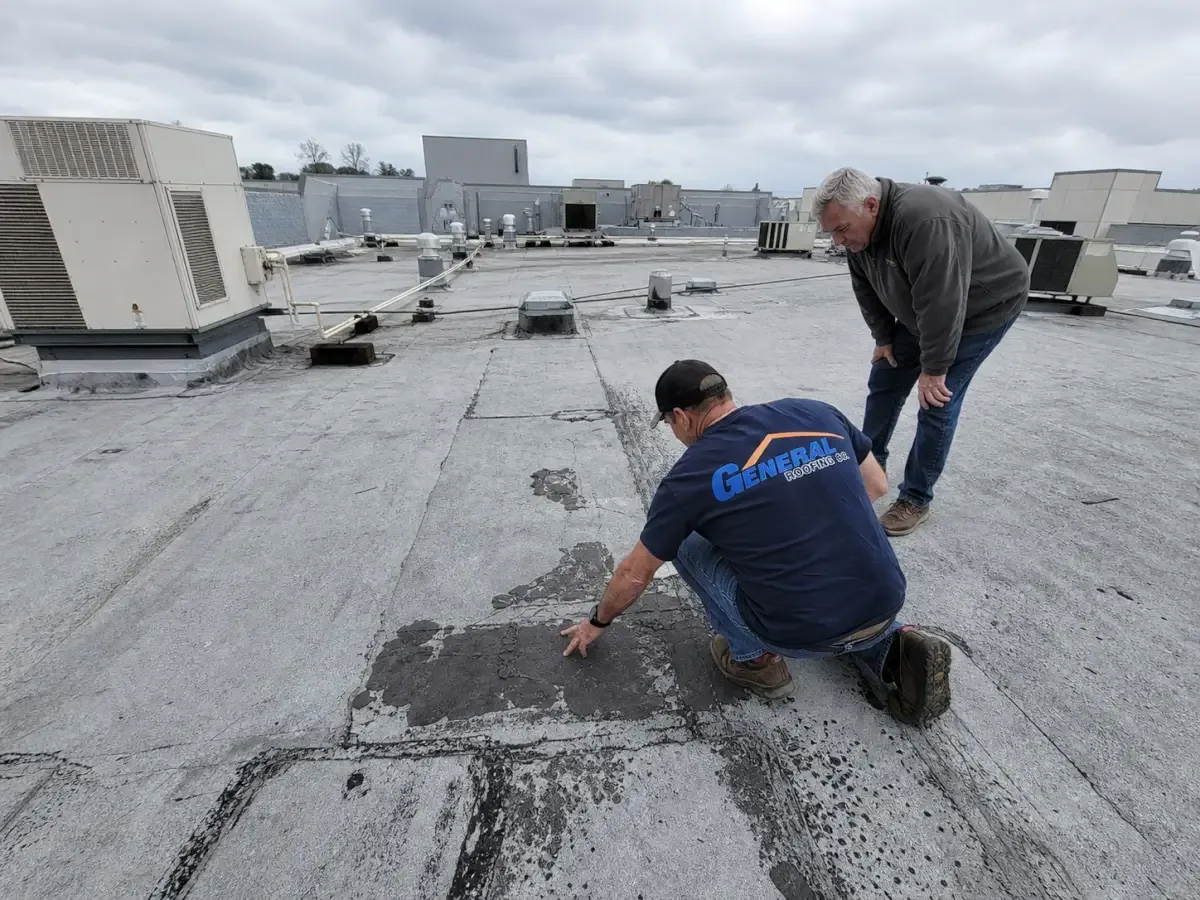
Commercial Roof Repair
Planned repair of membranes, seams, flashing and details on Queens, NY commercial roofs, with each fix explained before the crew picks up a tool.
Ready to Talk About Long Island City?
Tell us about the building and what you are seeing. We will schedule a roof walk and send photos and a written scope.