
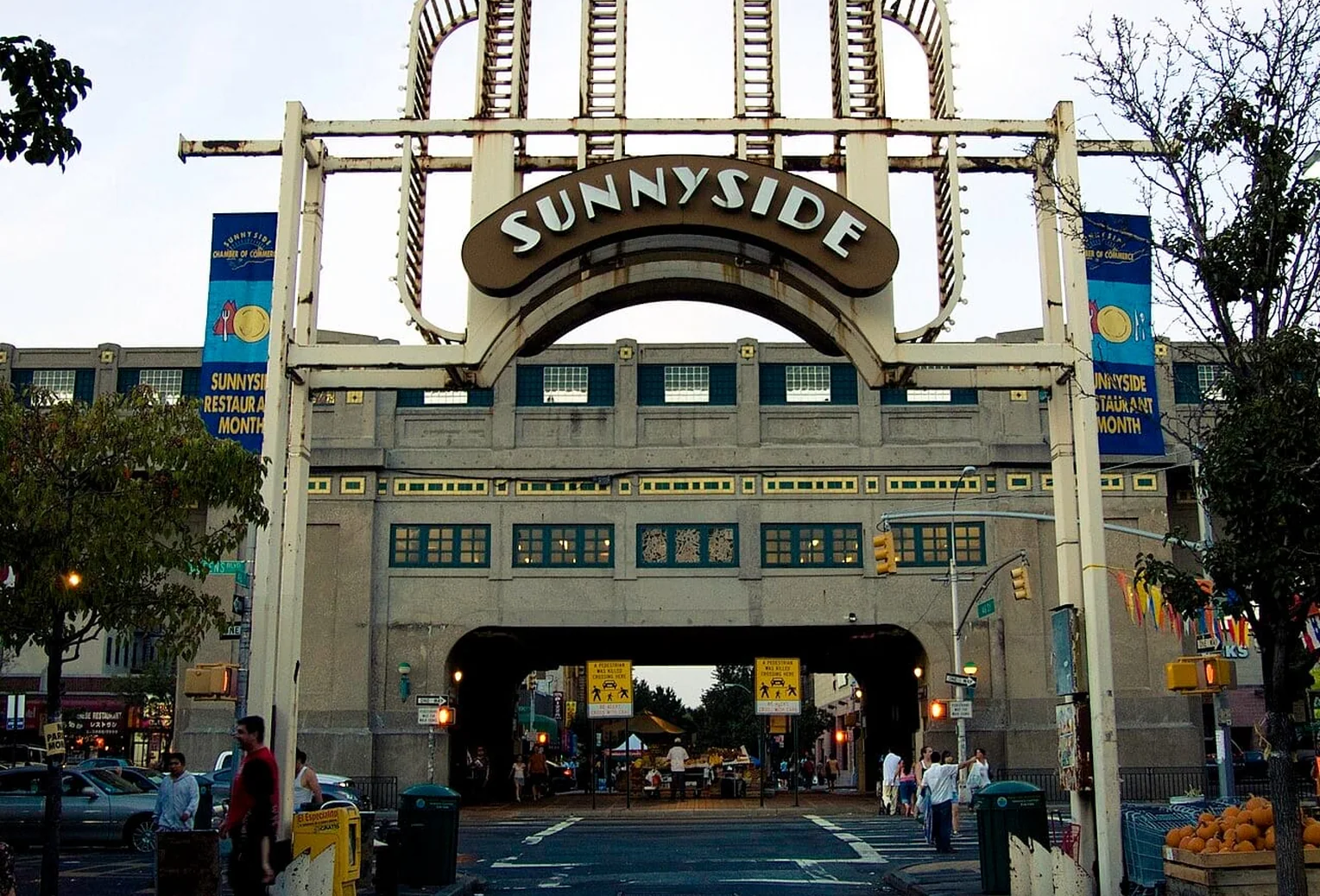
Most Sunnyside, Queens, NY building owners find the same failure first: water that pools beside a parapet and works its way behind the metal, usually showing as a damp line on an upper wall. The commercial roofs here include the flat tops of storefront buildings along Queens Boulevard and Greenpoint Avenue and the larger roofs of industrial buildings near the rail yard. We walk both kinds the same way, starting at the drain and working back, one step at a time, through the seams, the flashing and the details that cross the membrane.
What commercial roofs does Sunnyside have?
Sunnyside Yard is a 192-acre rail yard on the neighborhood's northern edge, opened in 1910 and owned by Amtrak and shared with NJ Transit. Next to it, the Degnon Terminal, a rail-served industrial complex, was largely built out by 1912. The main commercial corridors are Queens Boulevard, Greenpoint Avenue between 39th and 49th Streets, and Skillman Avenue with 43rd Avenue, and the Sunnyside Shines business district covers 92 properties along Queens Boulevard, Greenpoint Avenue and South Roosevelt Avenue.
Roofs along those streets may be the flat tops of low commercial buildings, while industrial roofs near the yard can be larger and older, and each is rated against its own construction.
The business district matters in practice: when 92 properties share a few corridors, a leak on one roof is often a story about a shared wall or a neighbor's drain, and the first call is to walk both sides of the line.
Where do these roofs fail first?
On storefront roofs, the weak points are the back scupper, the downspout and the wall where one building meets the next. A small roof with one drain has little margin when a cloudburst arrives. On industrial roofs, the weak points are seams along long runs, curbs under heavy equipment and the flashings at the parapet. Both kinds suffer when drains clog, because a pond that stands for a day presses on every seam and flashing under it.
The pattern in all of them is the same: water collects, finds a weak joint and travels along the deck until it drops. The stain is where it lands, not where it started.
Parapets on older storefront buildings need a closer look. Rain runs down inside the wall past a coping stone that has shifted a quarter inch or a crumbled mortar joint, and the stain appears weeks later at a window head or a ceiling corner far from the roof edge.
What does a rail yard change about a roof?
A building beside a large rail yard may live with heavy traffic and the dust, diesel residue and vibration that go with it. Deposits settle on membranes and in drains and soften some sealants, and vibration works fasteners loose over the years. Next to the yard these effects get checked: the surface is cleaned before testing, fasteners are inspected for backout and drains are cleared more often. A spring cleaning of the roof surface often cures what looks like a membrane problem.
The yard also shapes access. Streets near it carry heavy truck and rail-related traffic, so we plan hoist positions and delivery windows early, and we keep walkways clear for the crew and the public.
How do we confirm the cause?
Our walk begins at the stain and the drain. We probe the seams around the stain, check the leader below the drain and look hard at the parapet. For the part no one can see, an infrared moisture survey locates wet insulation and a few cores confirm it. On larger industrial roofs, a drone pass maps ponding and stained seams across the field in minutes. The owner receives a written report with photographs and a repair order.
Where an older roof has been patched many times, the cores also show the layers, which tells us whether a recover is allowed.
How hard do cloudbursts and snow hit these roofs?
Rain is the harder test. On September 1, 2021, Hurricane Ida's remnants triggered the first flash flood emergency in the city's records, and Queens took most of the deaths. A low commercial roof with one or two drains meets that kind of rain with very little margin, and a strainer that was half full in August is a pond by the time the storm peaks. Snow is slower but just as steady: the city averages close to 30 inches a year, and the thaw drives meltwater into every open seam. Our habit is a drain check in the fall, a seam walk in the spring and a look at the edge metal after any gusty week.
Which repair is right for the roof?
Rebuilt flashing, a cleared drain sump and resealed coping are small repairs that often settle a leak for years. A tired membrane over insulation that tests dry can take a coating or a recover. Insulation that tests wet, or leaks that return after patches, move the conversation to replacement. Price follows four things: layers to remove, wet insulation, difficulty of access and curbs to rebuild. The proposal names each one so two options can be compared fairly.
Storefront owners on Queens Boulevard and Skillman Avenue also ask about timing, and the answer is that most repairs fit between opening and closing, while a replacement is planned section by section.
What is the next step?
Photographs of the stain and the nearest drain, with the building's street and the roof age, are all we need to begin. We describe the roof's condition in plain steps, and price comes afterward. Visits can be combined for owners with buildings in Woodside or Long Island City, and owners of larger buildings may look at warehouse roofing as well.
A short first visit is followed by a written report with photographs and a ranked list.
Questions Owners Ask
What building owners and managers usually ask before a roof visit.
Because water that enters at the parapet runs down the inside of the wall before it shows. Open coping joints and weathered mortar let it in behind the metal. The stain appears on the wall surface weeks later. We check the coping and the flashing at the wall first, and repair them before touching the field of the roof.
Yes. We clear and test the drain, check the leader and add an overflow scupper where the parapet allows. We also taper the insulation toward the drain so water does not sit. These steps cost little compared with a leak in a shop.
It can. Buildings near heavy rail activity collect more debris in drains and more residue on the surface, so we suggest a spring walk and a fall drain check. The written report builds a record, and the record shows whether conditions are changing.
We keep entrances and sidewalks clear, stage materials in back lanes where possible and schedule noisy tasks before opening. We give shops a short notice and a contact. The plan is written with the owner before the first day.
Then cores are the first step. They show how many layers are on the roof and what condition each is in. We remove failed patches, repair the flashing and decide whether a coating, recover or replacement makes sense. A clear report replaces guesswork.
Related Roofing Work
Other pages that connect to Sunnyside.
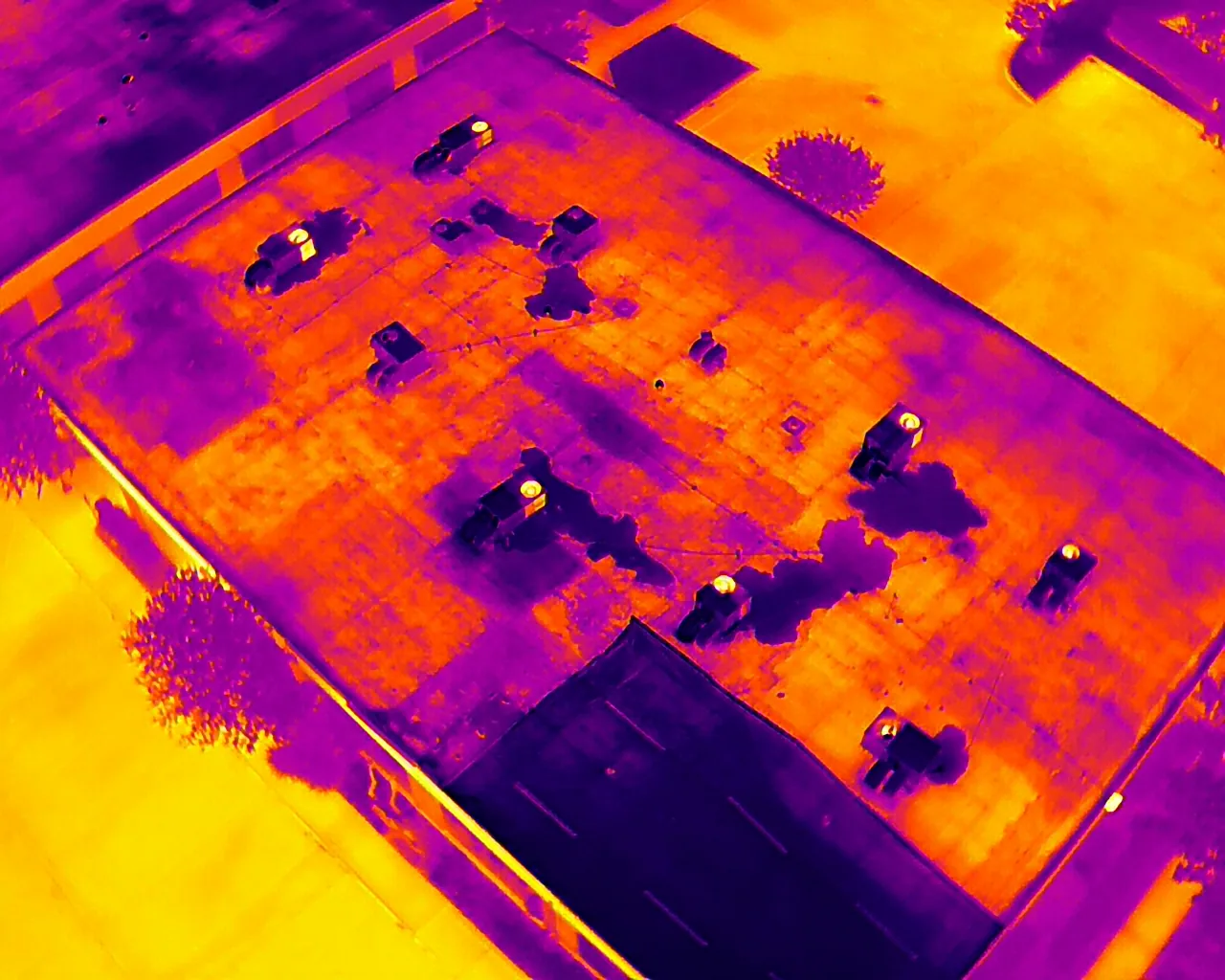
Infrared Roof Moisture Surveys
Infrared scans and core-cut moisture surveys for Queens, NY commercial roofs that locate wet insulation before the owner commits to repair or replacement.
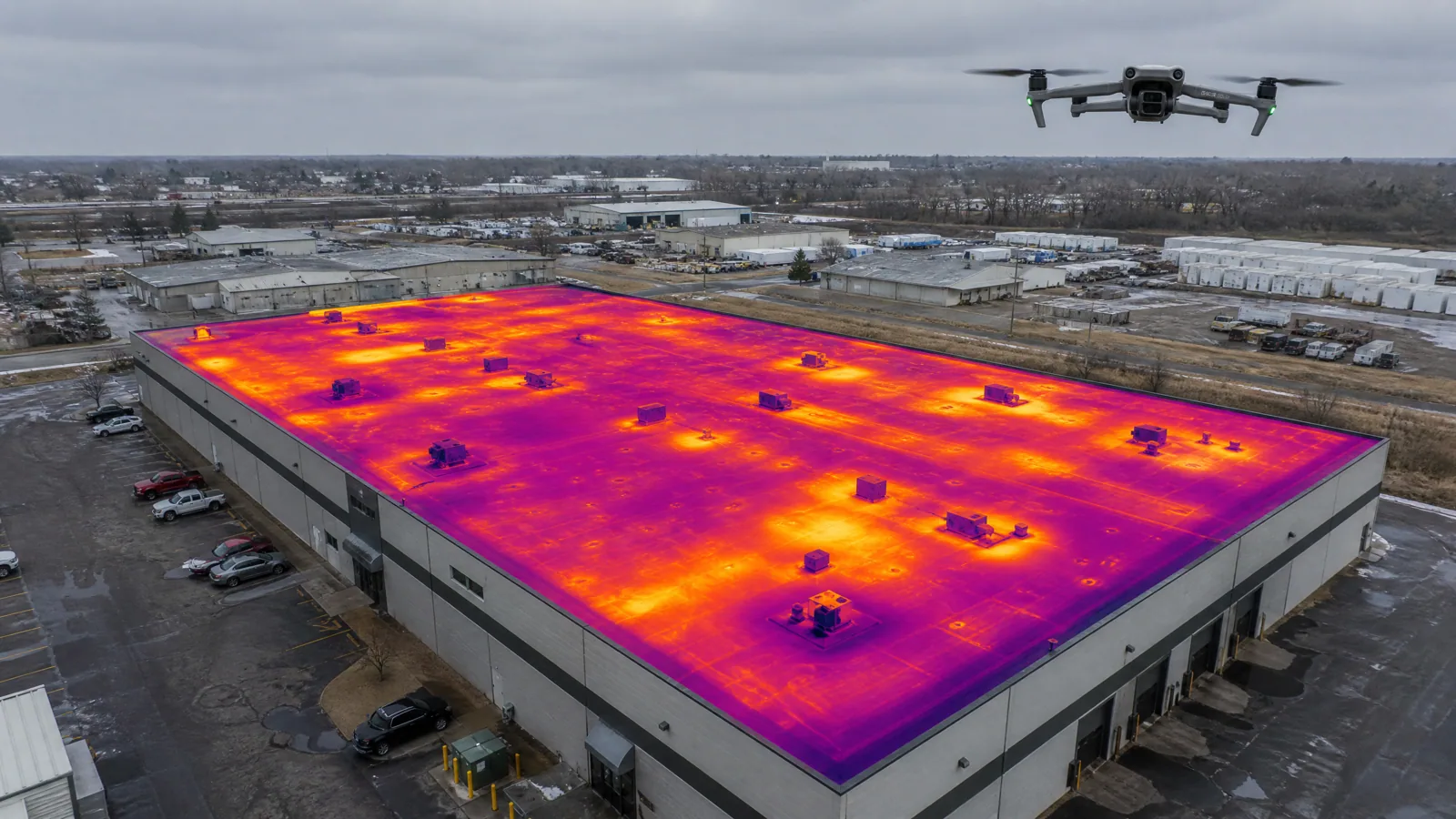
Drone Roof Inspections
Drone imaging for large or hard-to-reach commercial roofs in Queens, NY, with photographs and thermal data that guide a safer hands-on follow-up.
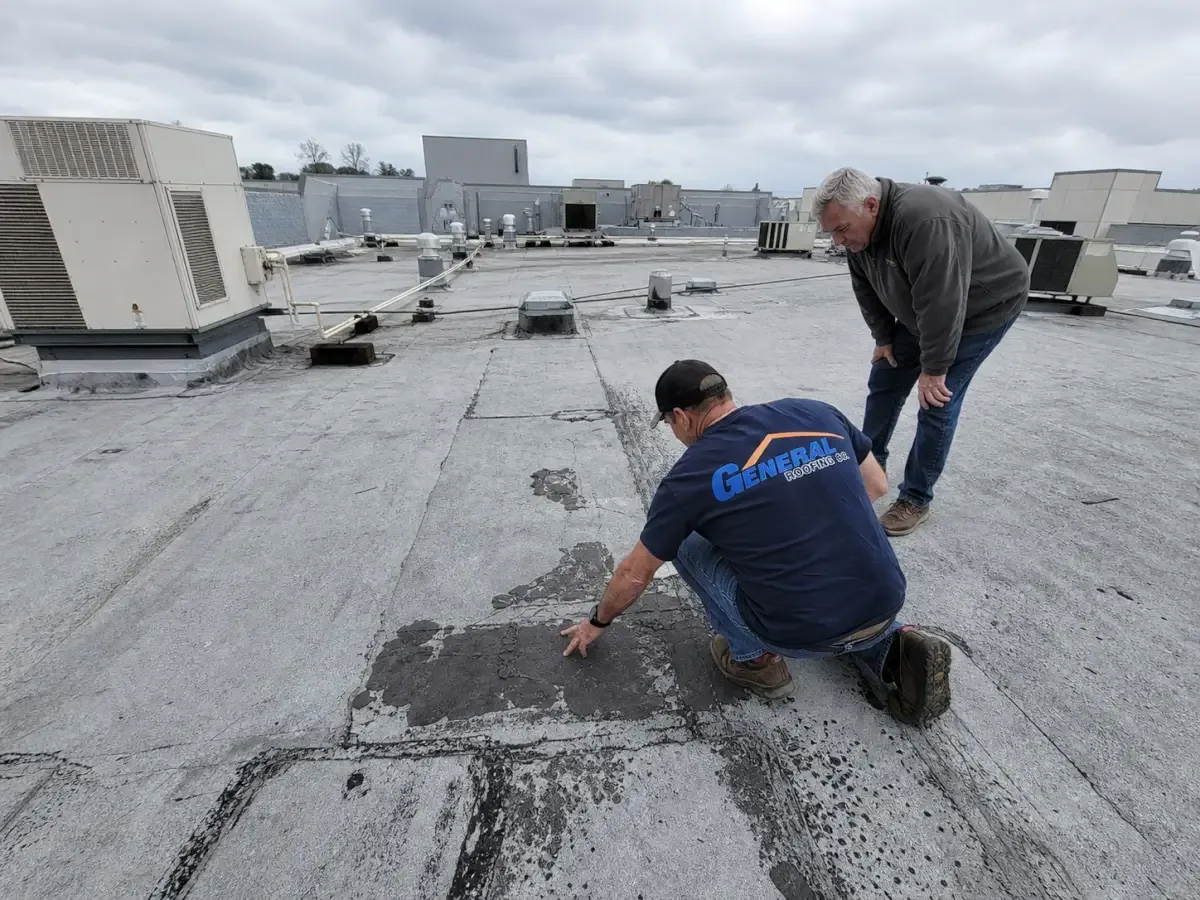
Commercial Roof Repair
Planned repair of membranes, seams, flashing and details on Queens, NY commercial roofs, with each fix explained before the crew picks up a tool.
Ready to Talk About Sunnyside?
Tell us about the building and what you are seeing. We will schedule a roof walk and send photos and a written scope.