
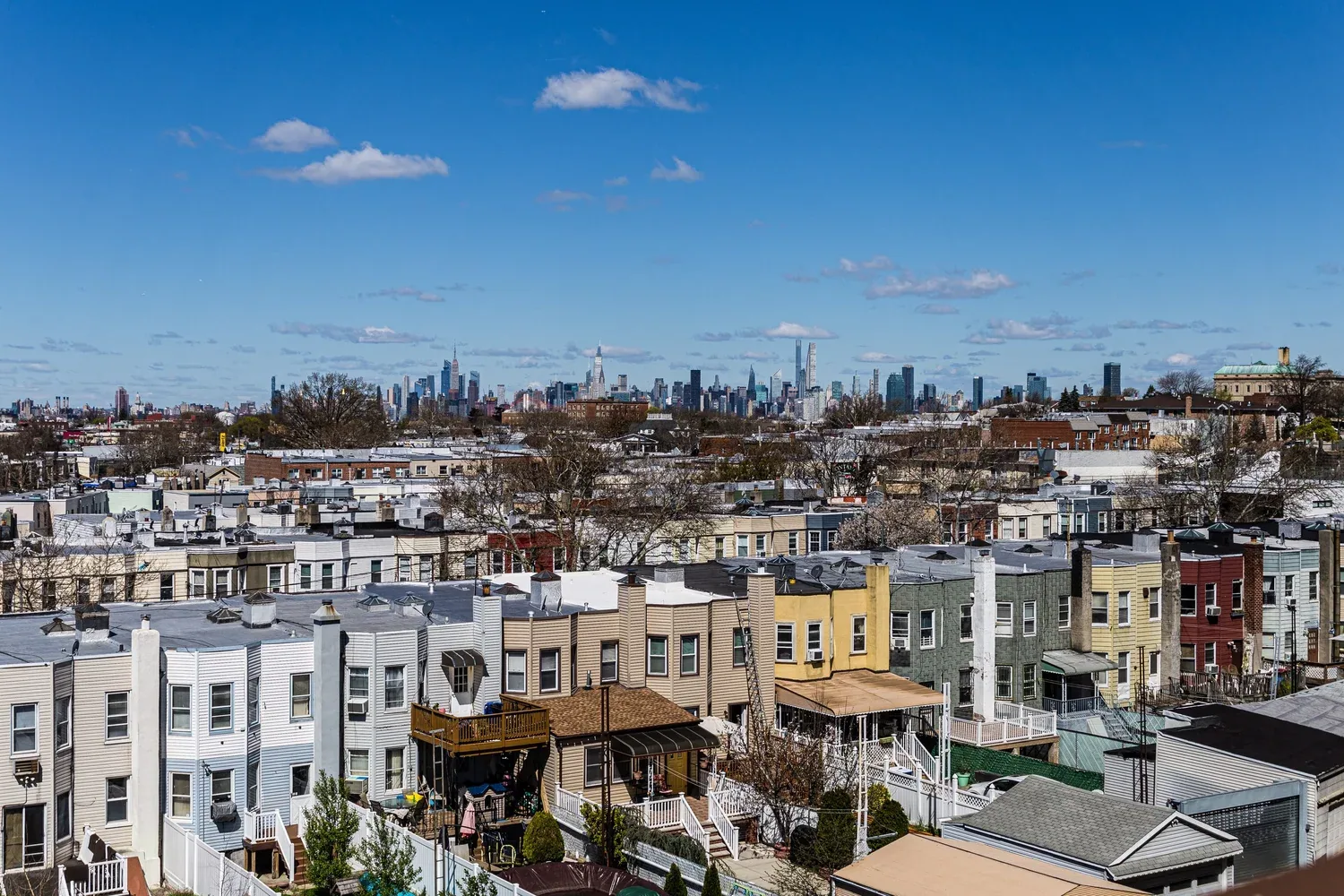
After the first heavy rain, a stain under a new tenant's ceiling is usually the old tenant's roof speaking. Retail roofs hold the equipment, penetrations and patches of everyone who came before, and in Middle Village, Queens, NY tenants have turned over on Metropolitan Avenue, where several commercial sites lie between Woodhaven Boulevard on the east and the Long Island Expressway on the north. At the drain we begin, and from there we work back through the seams and the curbs the last tenant left, a step at a time.
That order of checks holds for every commercial roof in the area, from a small storefront to a large retail building.
What does Middle Village's commercial corridor look like from above?
Kmart and Toys R Us have left Metro Mall, a three-story mall built between 1972 and 1974, and it now holds BJ's Wholesale Club and Raymour and Flanigan. Amazon leased space there for a fulfillment center in 2020, and the New York City Department of Correction runs a training academy in the mall. One building, but it shows how commercial space here changes hands: space built for one kind of tenant is asked to serve another, and the roof has to keep up.
The mall is not the whole area, and each commercial roof on Metropolitan Avenue is read on its own terms.
Metropolitan Avenue hosts several commercial sites, and we treat each one separately. A fulfillment tenant, a wholesale club and a furniture showroom put different demands on a roof, and the first walk is about which of those demands has left a mark.
What does reuse do to a roof?
A retail roof built for one kind of tenant is rarely ideal for the next. A discount store may have had a modest set of rooftop units. A warehouse club has refrigeration. A fulfillment operation may have conveyor exhaust and a lot of foot traffic for servicing. Each change means new curbs, new lines through the membrane and often a different load on the deck. The old penetrations are not always removed, and abandoned pipes and curbs are leak paths with no owner.
On a first walk we make a list of every curb and penetration, mark which are in use and recommend removing or sealing those that are not.
Sometimes the best news is a short list. A roof with few penetrations, sound seams and clear drains needs little more than a spring walk and a record. We say so, and we write the record, so the next tenant's survey starts from facts and not from guesses.
Where do these roofs fail first?
The usual places fail in the usual order. Drains clog and ponds form, seams open where ponds sit and where foot traffic wears the surface, curb flashings crack at the corners, and edge metal works loose in wind. On a multi-level building, the tie-ins between roof levels fail where the buildings move at different rates. Each failure shows itself inside as a stain, a drip or a damp smell, and the stain is rarely under the opening.
On big, mixed-use buildings the stain may also cross tenant lines, which makes the first question who owns which part of the roof. A roof plan marked by tenant space answers it.
Multi-level roofs add a special failure. Where a higher roof drains onto a lower one, the lower roof takes a stream of water in one spot, and the membrane there wears faster than anywhere else. We add a splash pad or a downspout extension at those points, which costs little and protects a lot.
How do we confirm what is happening?
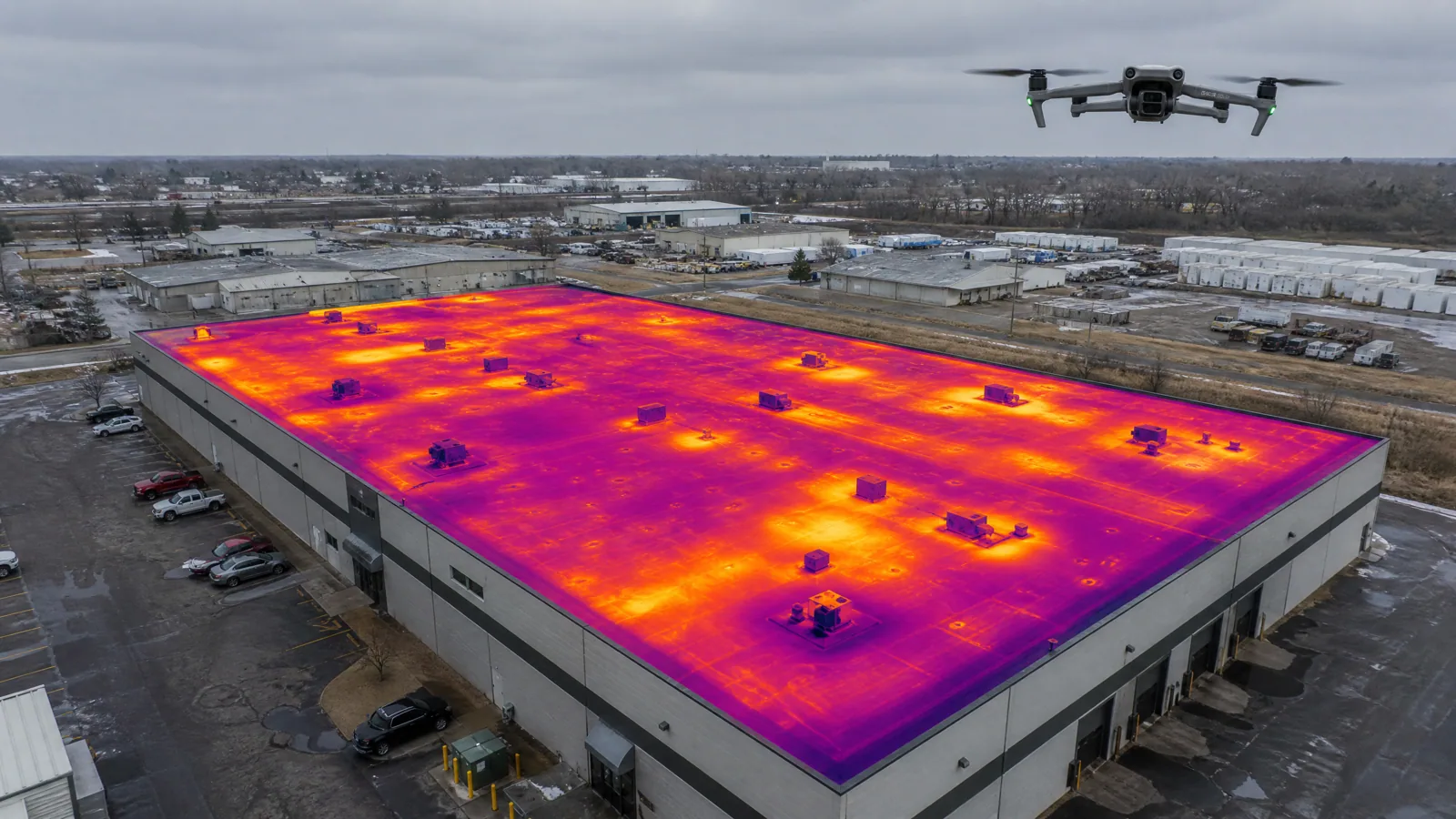
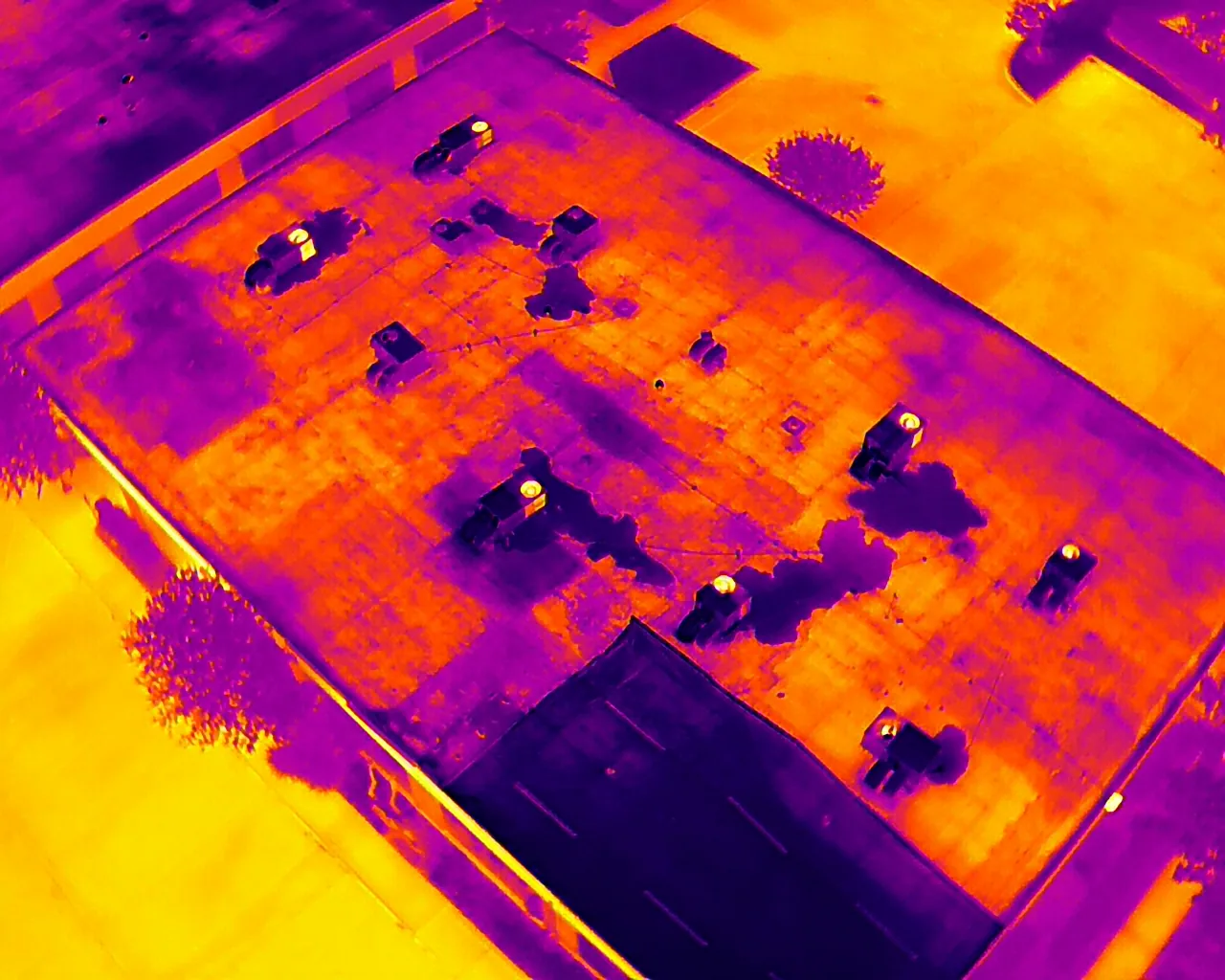
The stain map from the tenants and the manager tells us where to look; the roof tells us why. We probe seams, test drains with a hose and map every curb, including the ones nobody uses. A drone survey shows ponds across a large roof quickly, an infrared scan locates wet insulation and cores settle what is under the surface. The manager gets a written report with photographs that can go straight to the owner.
What can be done, and what does the weather add?
Failed details alone call for a repair; a sound membrane over dry insulation may be given a coating or a recover; wet insulation needs replacement. Weather adds limits of its own: the city's snow reached 27.3 inches in a day on January 23, 2016, and its summer heat island is strong, so a flat roof must carry load and shed heat as well as water. The city's first flash flood emergency, issued after Hurricane Ida's remnants on September 1, 2021, ended with most of the deaths in Queens.
What you pay depends on how many layers come off, how wet the insulation is, how easy the roof is to reach and how many curbs and lines need rebuilding, and the proposal writes each one down so options can be compared side by side. When a tenant is leaving, we plan the work to land in the vacant window if the lease allows.
What is the next step?
A walk is booked with photographs of the stain and the nearest drain, plus the street, the roof age if known and the tenant list. The walk comes first, then a plain account of what the roof is doing, then the numbers. Owners with nearby buildings in Glendale or Maspeth can combine visits, and owners of fulfillment space may compare distribution center roofing.
Questions Owners Ask
What building owners and managers usually ask before a roof visit.
Have it identified. Some units are still wired and useful, some are dead and some are tied into systems the new tenant needs. Dead units and abandoned lines should be removed and the curbs sealed or rebuilt. We list every unit and line on the roof plan, mark what is live and quote the removal work separately.
In practice it happens, which is why we recommend a rule: no equipment goes on the roof without notice and a roofer's review. Each new curb or line is a possible leak and a possible warranty problem. A short visit before the lift costs little compared with the repair afterward.
We schedule noisy tasks before opening or after closing, keep entrances and fire lanes clear, stage materials at the back and work in sections so each is dried in by day's end. The manager and the tenants receive a written plan before the first day.
When it adds equipment, exhaust or foot traffic. We review the roof for new loads, add walkway pads on service routes and check that drains can handle runoff from any added surface. A fulfillment tenant's busy season sets the calendar, so major work is planned for the quieter months.
Yes, it is the cheapest moment to do it. The outgoing tenant's equipment is still in place, the incoming tenant's plans are drawn and the landlord can settle who fixes what. A written report with photographs and a repair order gives both parties the same facts, and it avoids arguments months later.
It leaves a hole. An old pipe or conduit that is cut off and capped poorly lets water in every time it rains, and it can be hard to spot because the stain appears elsewhere. Removing the line and patching the deck properly costs little compared with the damage a slow leak does to a tenant's ceiling.
Related Roofing Work
Other pages that connect to Middle Village.
Drone Roof Inspections
Drone imaging for large or hard-to-reach commercial roofs in Queens, NY, with photographs and thermal data that guide a safer hands-on follow-up.
Infrared Roof Moisture Surveys
Infrared scans and core-cut moisture surveys for Queens, NY commercial roofs that locate wet insulation before the owner commits to repair or replacement.
Commercial Roof Repair
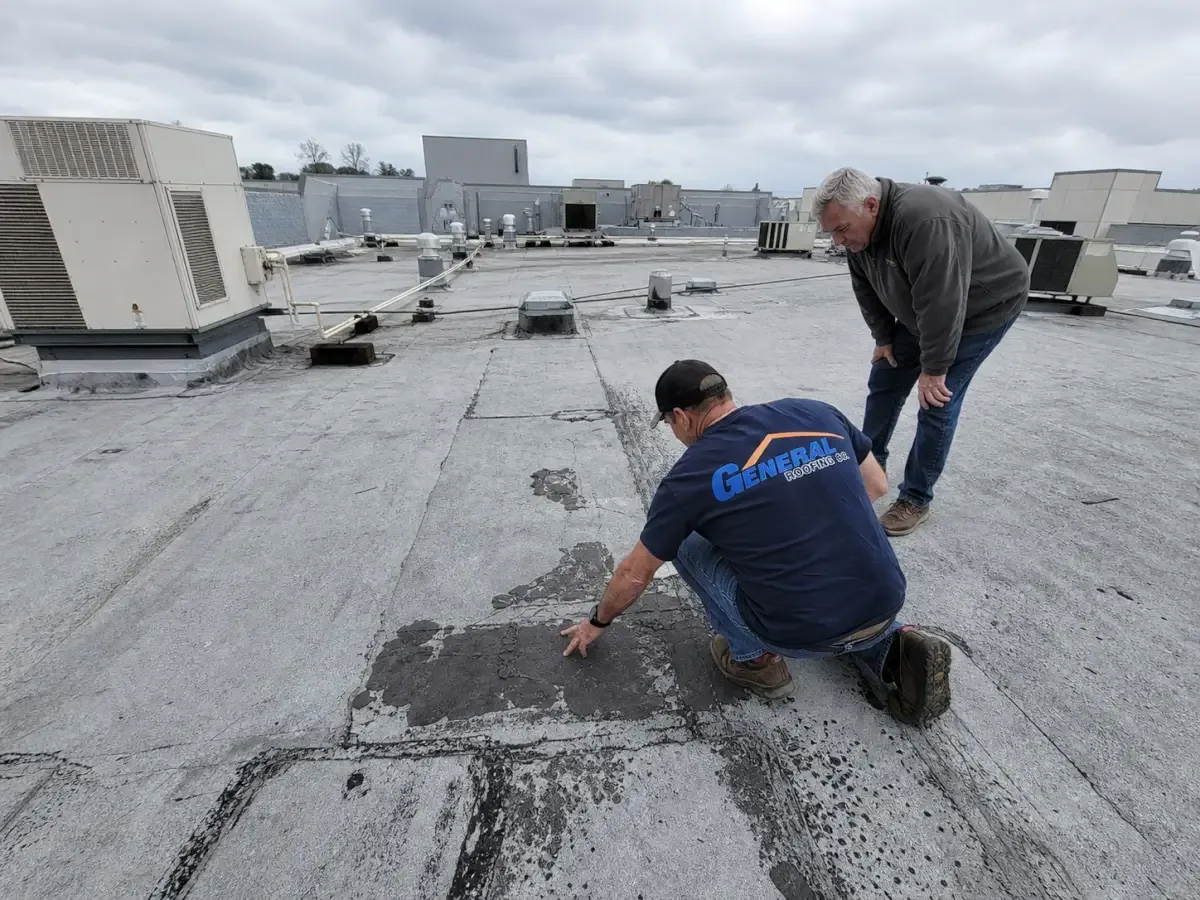
Planned repair of membranes, seams, flashing and details on Queens, NY commercial roofs, with each fix explained before the crew picks up a tool.
Ready to Talk About Middle Village?
Tell us about the building and what you are seeing. We will schedule a roof walk and send photos and a written scope.