
TPO Roofing
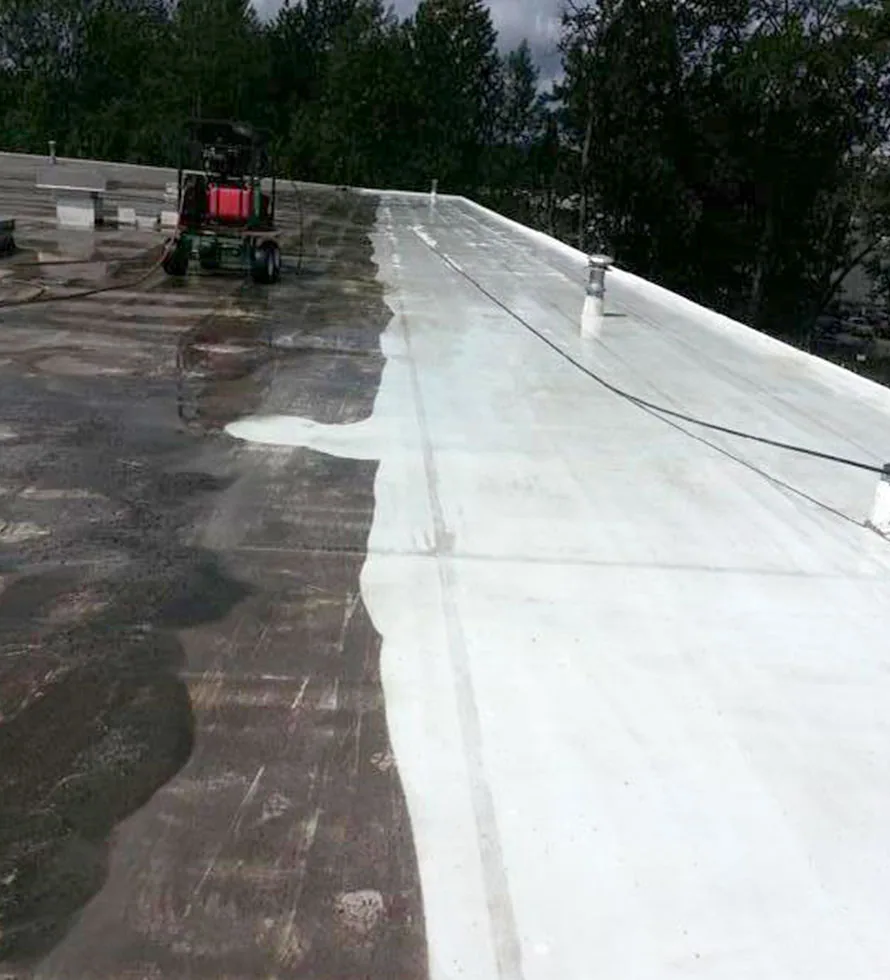
TPO roofing in Queens, NY: heat-welded white single-ply membranes for flat commercial roofs, with seam checks, repair and replacement explained step by step.
PVC Roofing
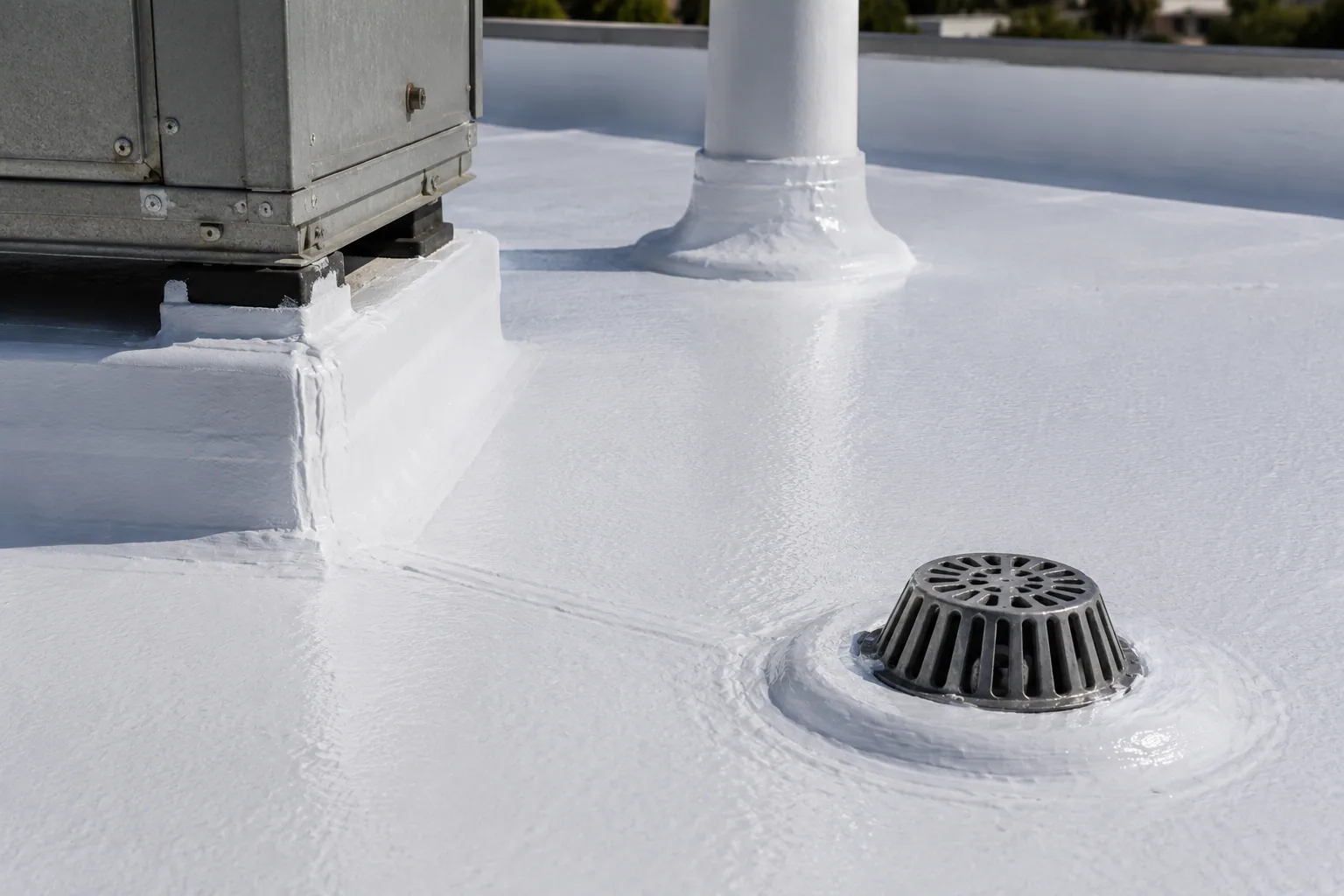
PVC roofing in Queens, NY: welded single-ply membranes for roofs that see grease, exhaust and chemicals, with repair, recover and replacement explained plainly.
EPDM Roofing
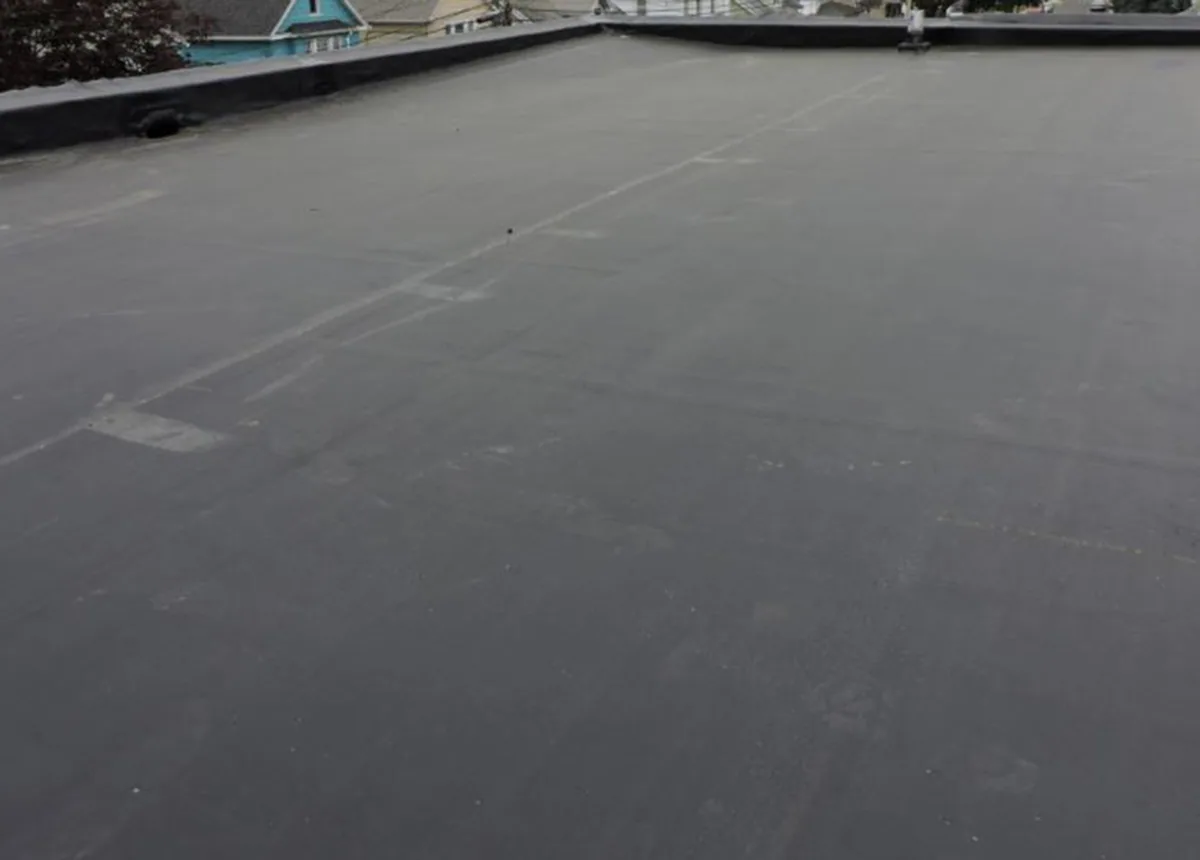
EPDM rubber roofing in Queens, NY: adhered and ballasted membranes, seam and flashing repair, and when a black rubber roof is the right choice for a flat roof.
KEE Roofing
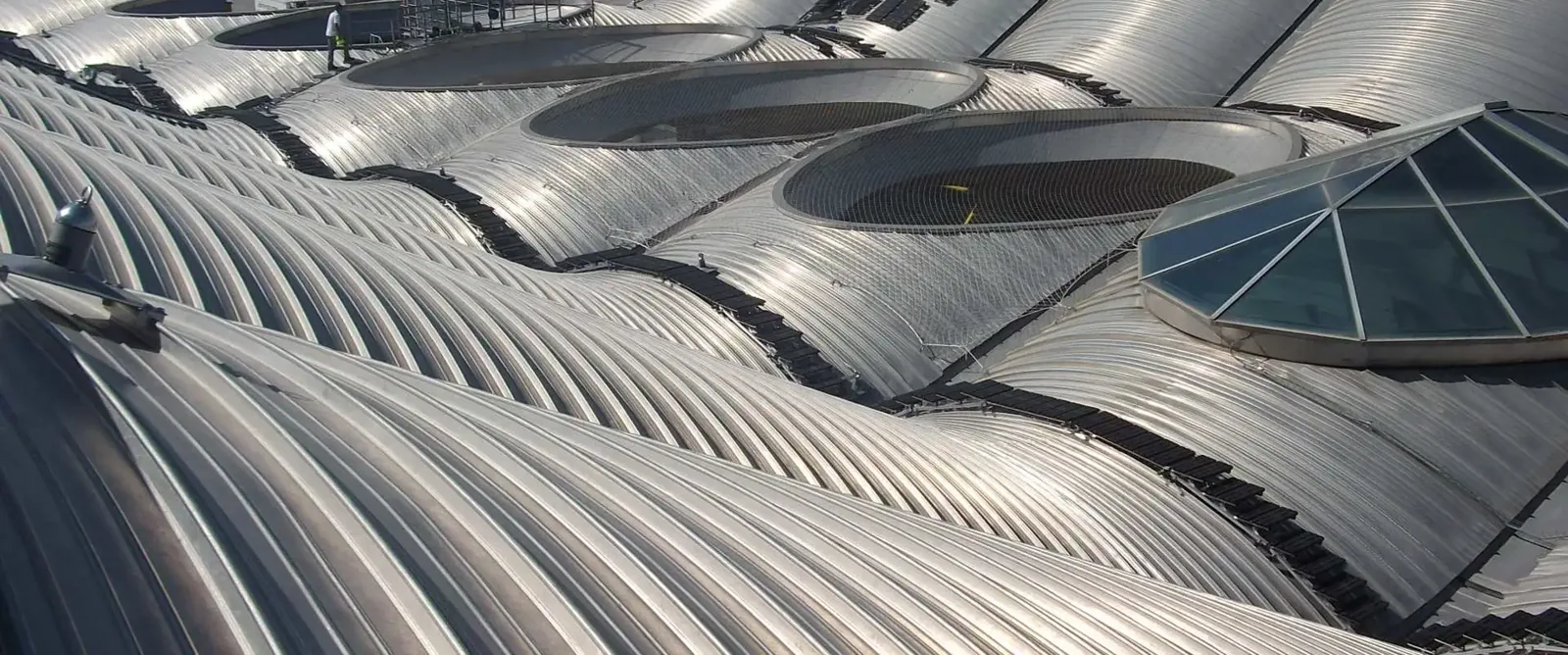
KEE and PVC-alloy roofing in Queens, NY: chemical-resistant welded membranes for kitchens, plants and mechanical roofs, explained step by step.
Modified Bitumen Roofing
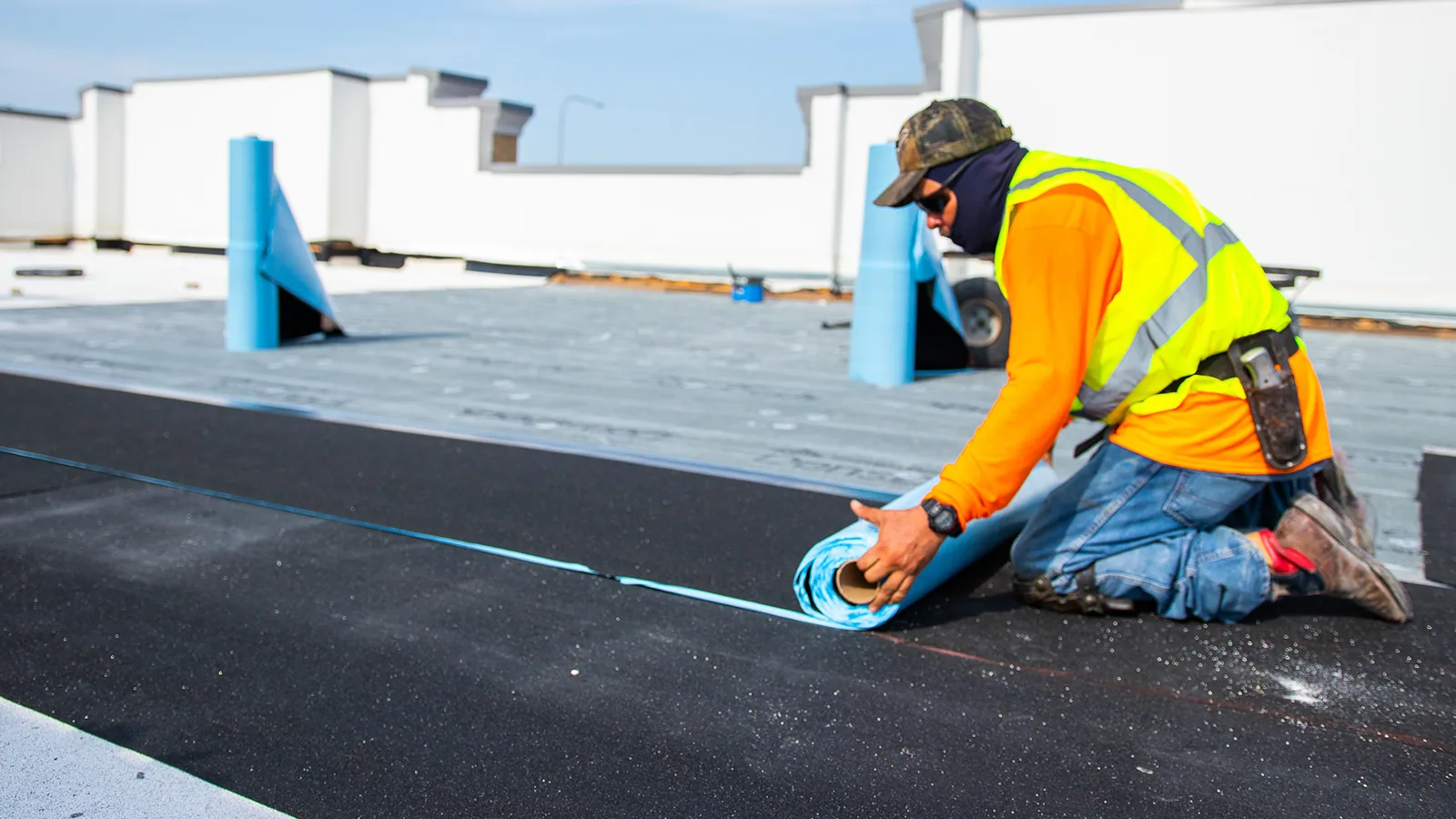
Modified bitumen roofing in Queens, NY: SBS and APP rolled membranes for old masonry and mill-era buildings, with lap, blister and flashing repair explained.
Built-Up Roofing
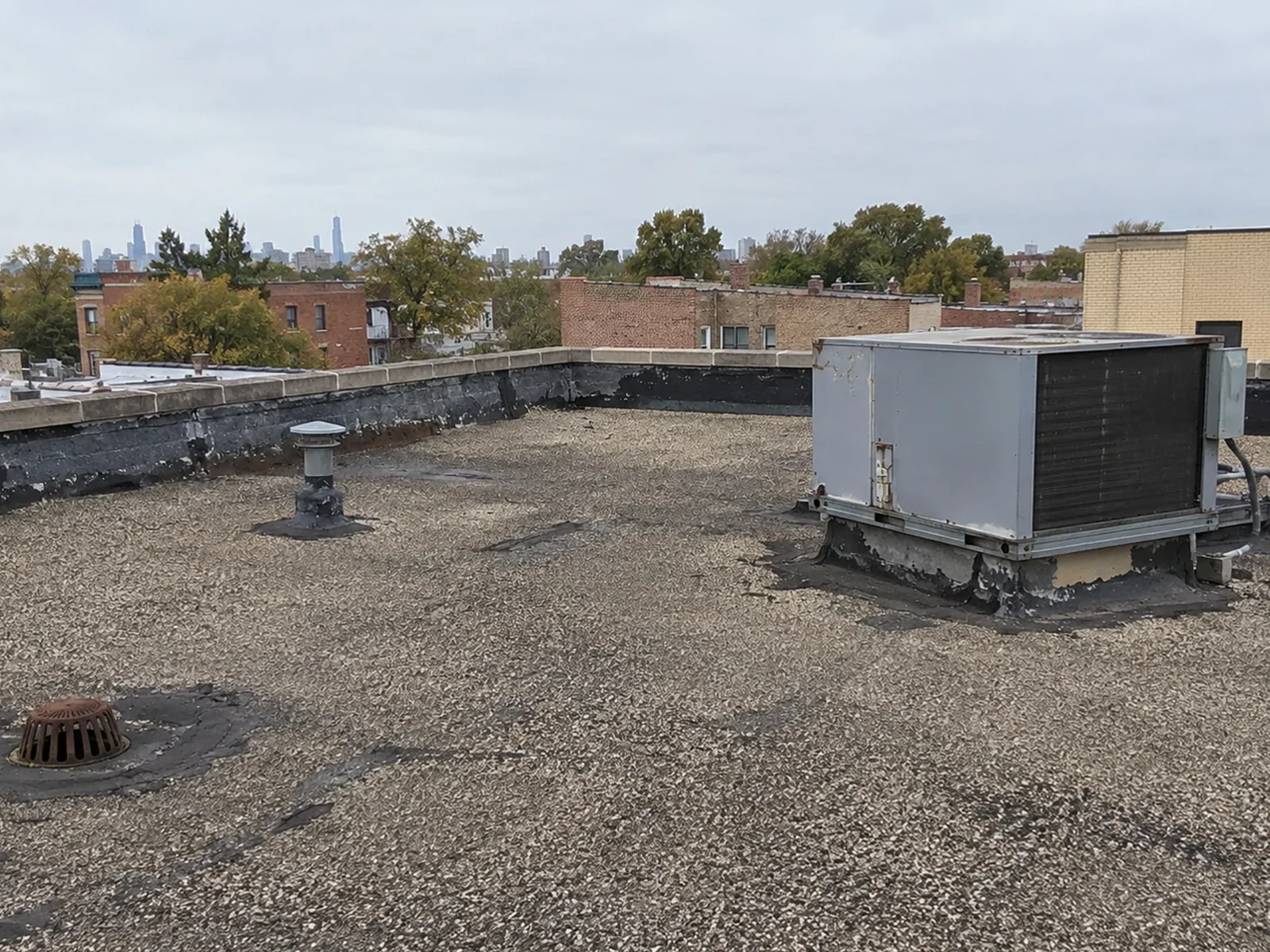
Built-up (BUR) roofing in Queens, NY: multi-ply tar-and-gravel and cap-sheet systems for older flat roofs, with blister, flashing and drain repair explained.
Standing Seam Metal Roofing
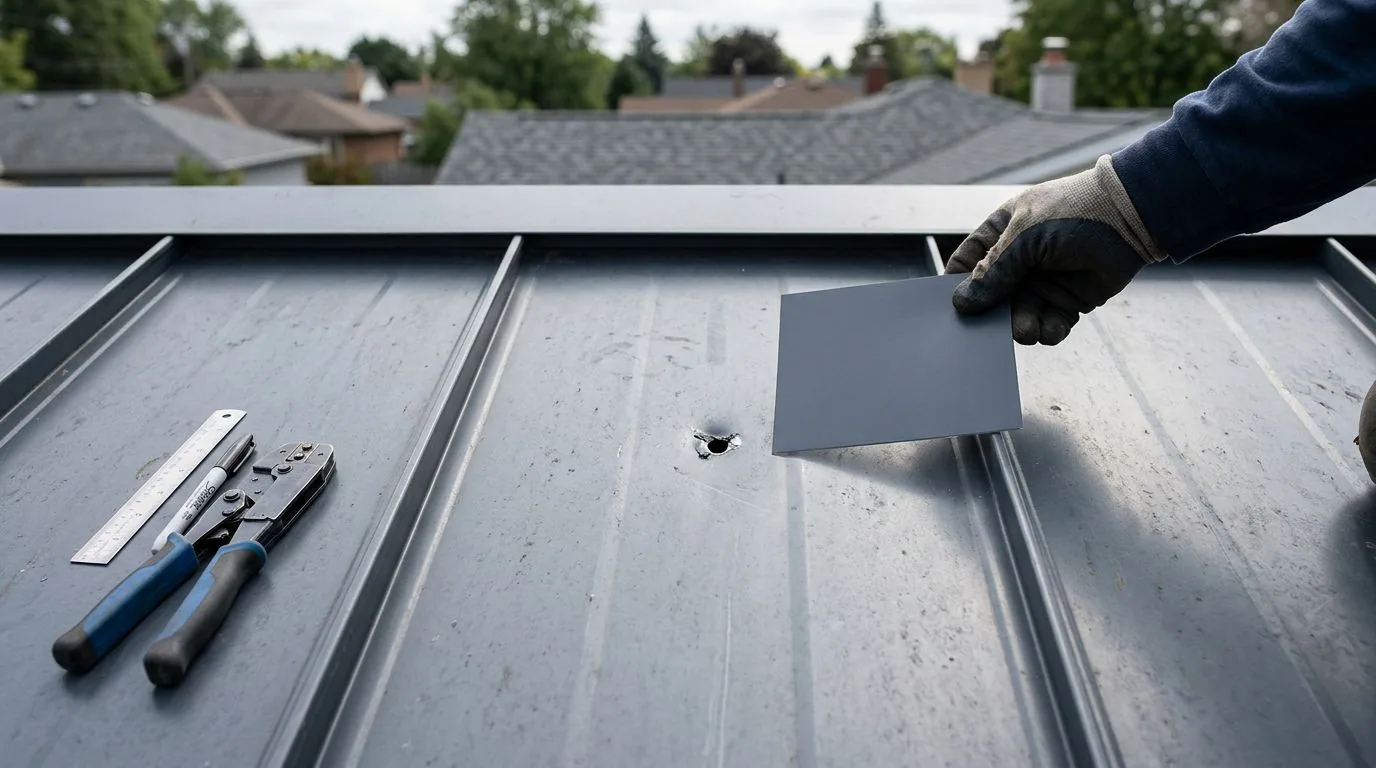
Standing seam metal roofing in Queens, NY: concealed-fastener panels for low-slope and pitched commercial roofs, with clip, seam and penetration checks.
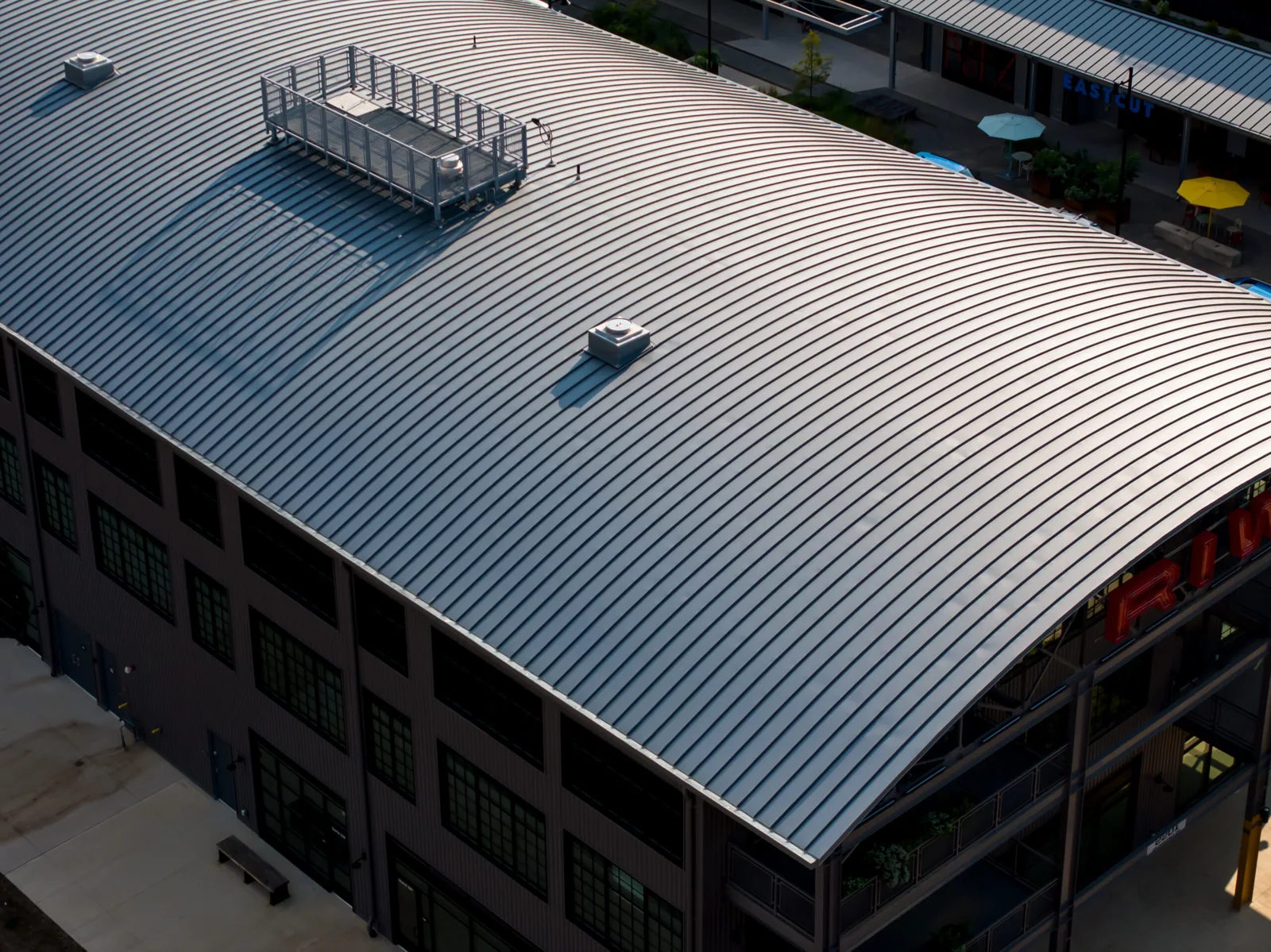
Metal Roof Retrofit and Restoration
Metal roof retrofit and restoration in Queens, NY: fixing backed-out fasteners and rusted laps on exposed-fastener roofs, or covering them with a new system.
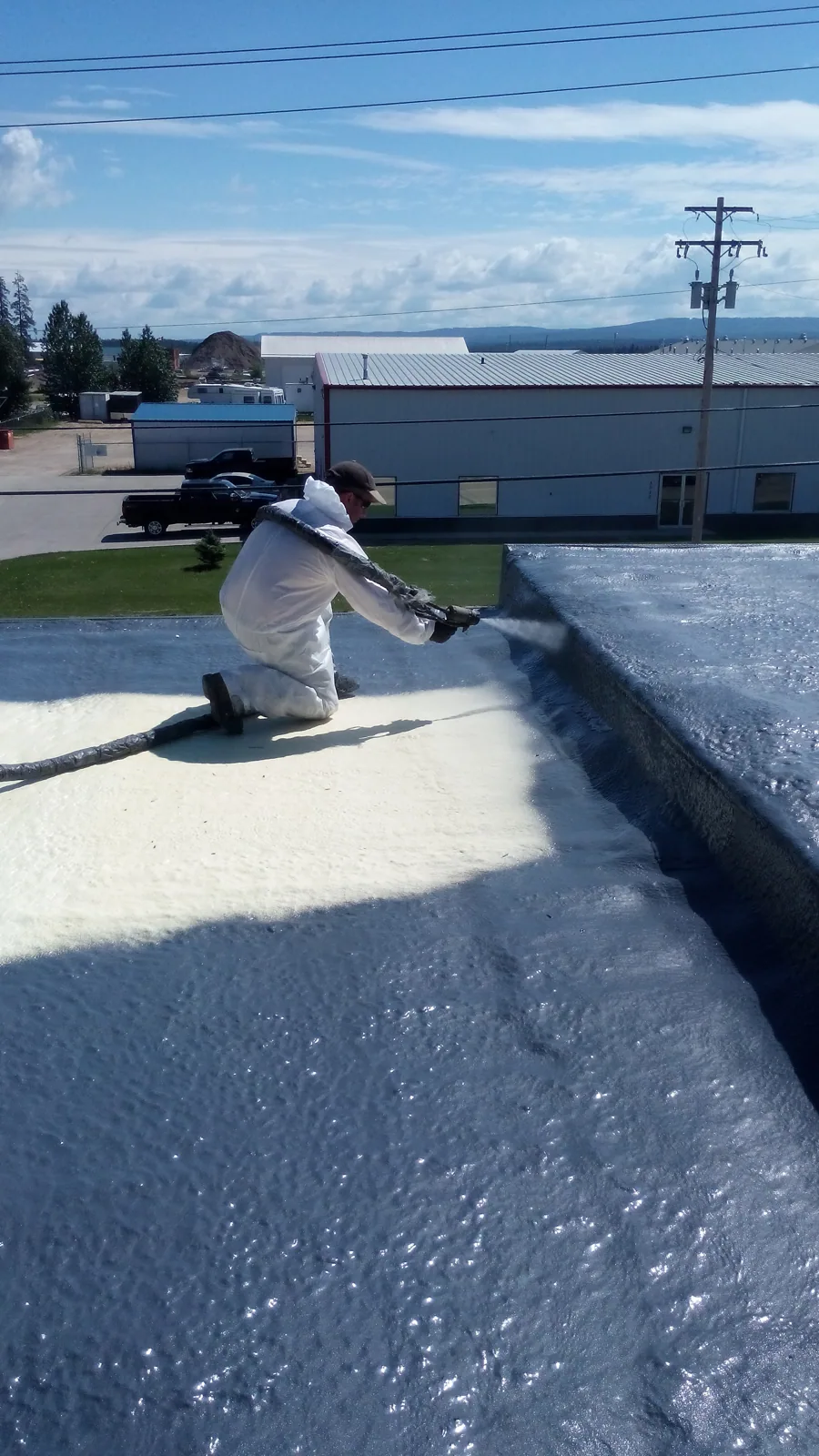
Spray Polyurethane Foam Roofing
Spray polyurethane foam (SPF) roofing in Queens, NY: continuous insulating roofs for odd shapes and tight details, with coating care and moisture checks.
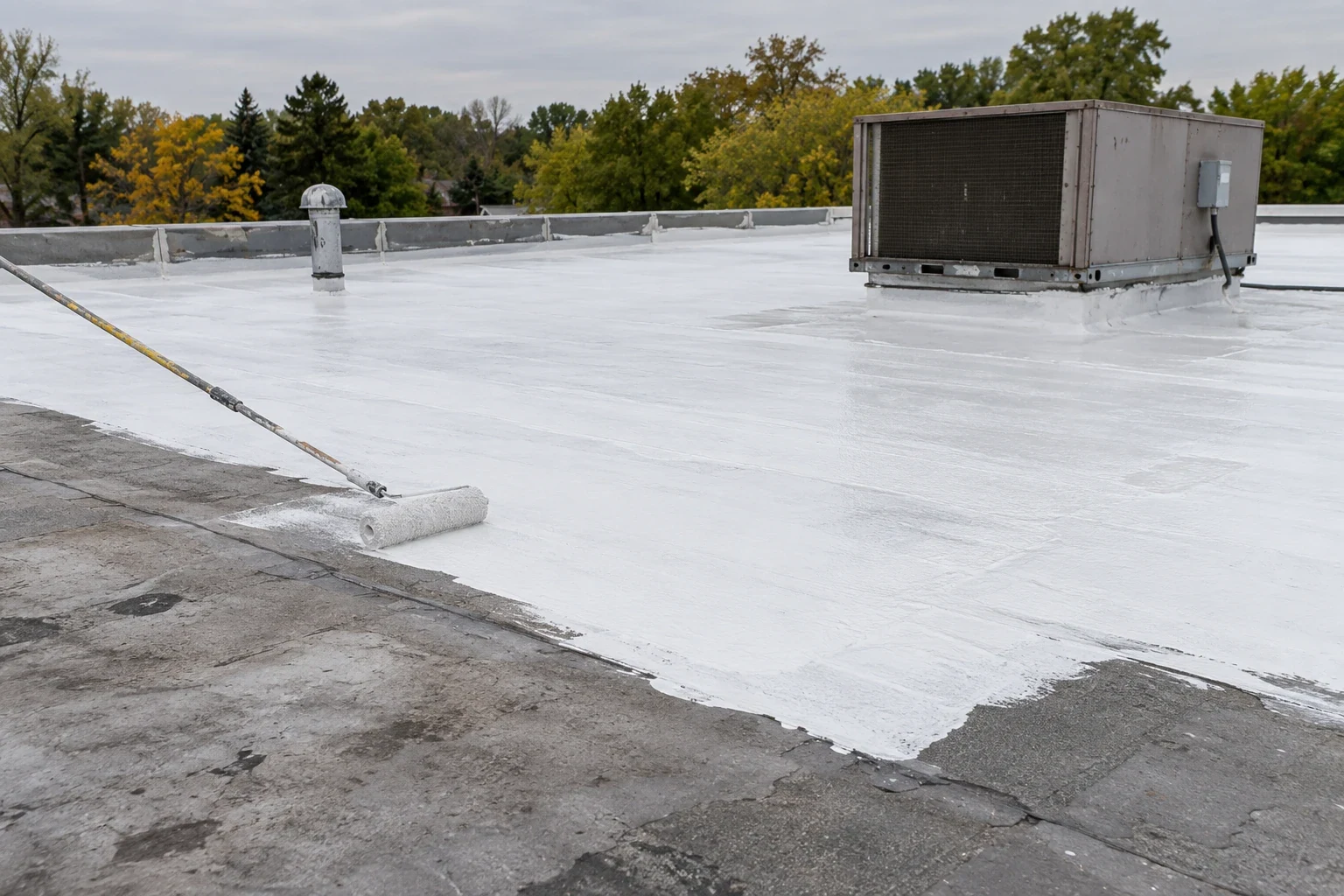
Silicone Roof Coatings
Silicone roof coatings in Queens, NY: liquid-applied reflective coatings for flat roofs that hold water, with testing, prep and recoat timing explained.
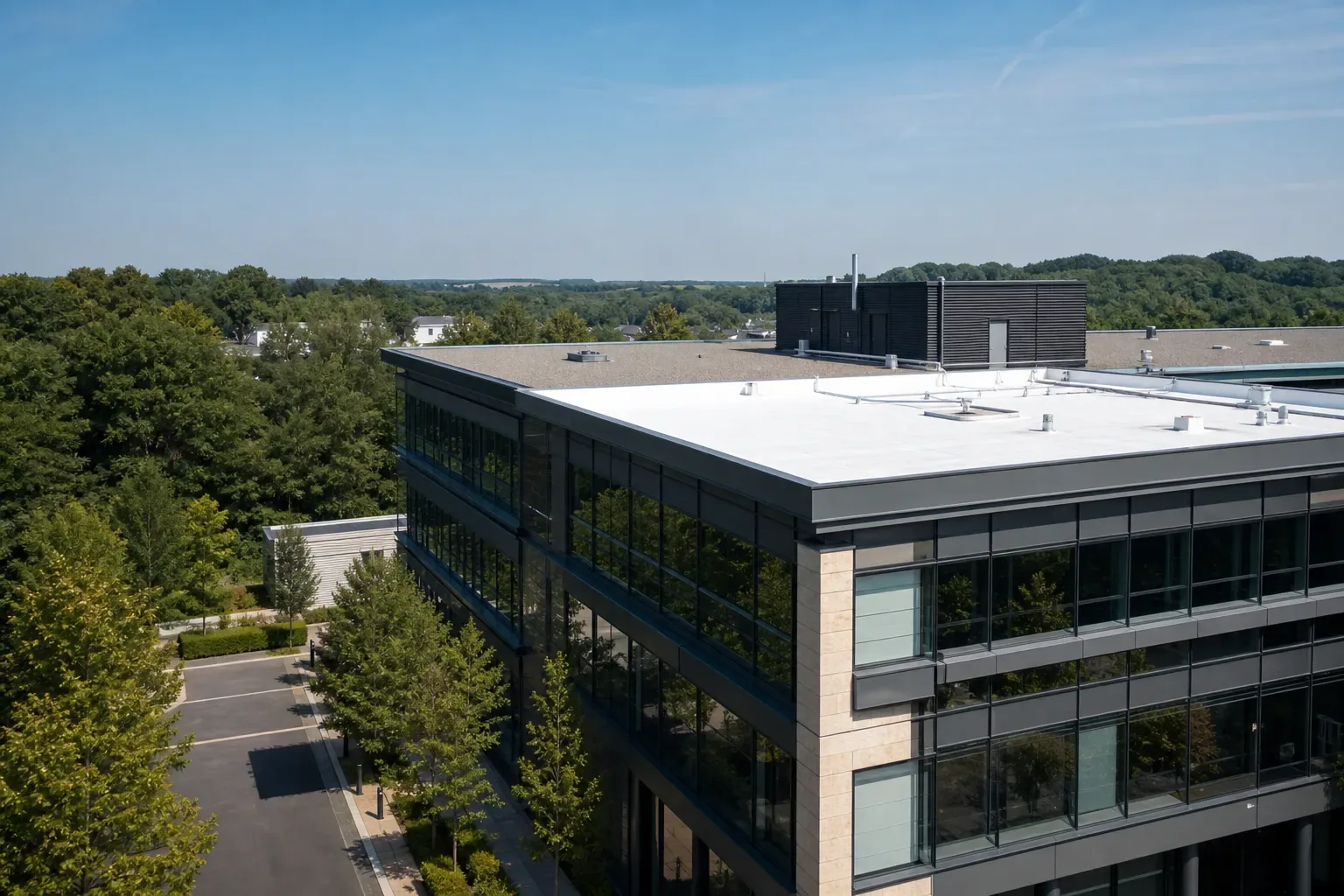
Acrylic Roof Coatings
Acrylic roof coatings in Queens, NY: water-based reflective coatings for dry, sound flat roofs, with weather windows, prep and recoat timing explained.
Most owners start with the name of a membrane and end up asking why their roof ponds. The better order is to start with the failure. A roof that ponds needs slope before it needs a new sheet. A roof that leaks at seams needs a membrane that welds. A roof on mill-era masonry in Ridgewood needs details that suit old parapets. We choose a roof system in Queens, NY by working back from what goes wrong on the building.
Which single-ply membranes suit a busy flat roof?
TPO and PVC are welded at the seams, which gives a continuous sheet around many penetrations. PVC resists grease, so it suits roofs near kitchen exhaust. EPDM is a rubber sheet that handles cold and movement, and KEE is a PVC-family sheet made for roofs exposed to chemicals and grease.
Welded seams are only as good as the weld, so we probe every seam after installation and test a sample by pulling it. A taped or adhered seam gets the same attention, because the lap is where a sheet roof most often opens.
When do layered systems make sense?
Older buildings often carry tar and felt, and some owners want to stay with something familiar. Built-up roofing builds alternating layers of felt and bitumen. Modified bitumen uses reinforced polymer sheets that are torched, mopped or self-adhered. Both take foot traffic and equipment well.
Yellow-brick rowhouses and mill-era buildings of the early twentieth century fill Ridgewood and Glendale, and a roof on masonry of that age may carry several layers. A core cut shows how many, and whether the lower ones are dry enough to stay under a recover.
Where do metal and foam fit?
Standing seam metal suits sloped sections. A metal retrofit goes over an existing roof where the structure allows. Spray polyurethane foam builds its own slope and seals around odd shapes.
Can a coating extend a roof?
A silicone coating tolerates ponded water, and an acrylic coating prefers a roof that drains. Both belong only on a dry, bonded roof, so a moisture scan comes first. Queens summers carry a strong urban heat island, and LaGuardia reported 107 degrees on July 3, 1966, so a reflective surface earns its keep.
Cleaning keeps a reflective surface reflective, so a coating comes with a washing schedule.
Commercial Roofing Questions
How is a system chosen for my roof?
We cut a core, scan for wet insulation and check slope, penetrations and parapet height. Those facts narrow the field to two or three systems, which we compare on cost, life and how each handles the equipment on the roof.
Which system handles ponding best?
None likes it. A welded single-ply or a silicone coating tolerates it better than most, but the first step is slope: tapered insulation, a reset drain or an added drain.
Can a new membrane go over the old one?
Sometimes. A recover needs dry insulation and a sound deck. We prove both with a scan and cores before proposing it.
Does Queens weather change the choice?
Yes. Heavy cloudbursts like the remnants of Hurricane Ida in 2021, freeze-thaw and summer heat favor systems that drain well, handle movement and shed heat.
Send us the address and a photo of the problem.
Tell us about the building. We will walk the roof, explain what it is doing and write up a scope before any price is discussed.