
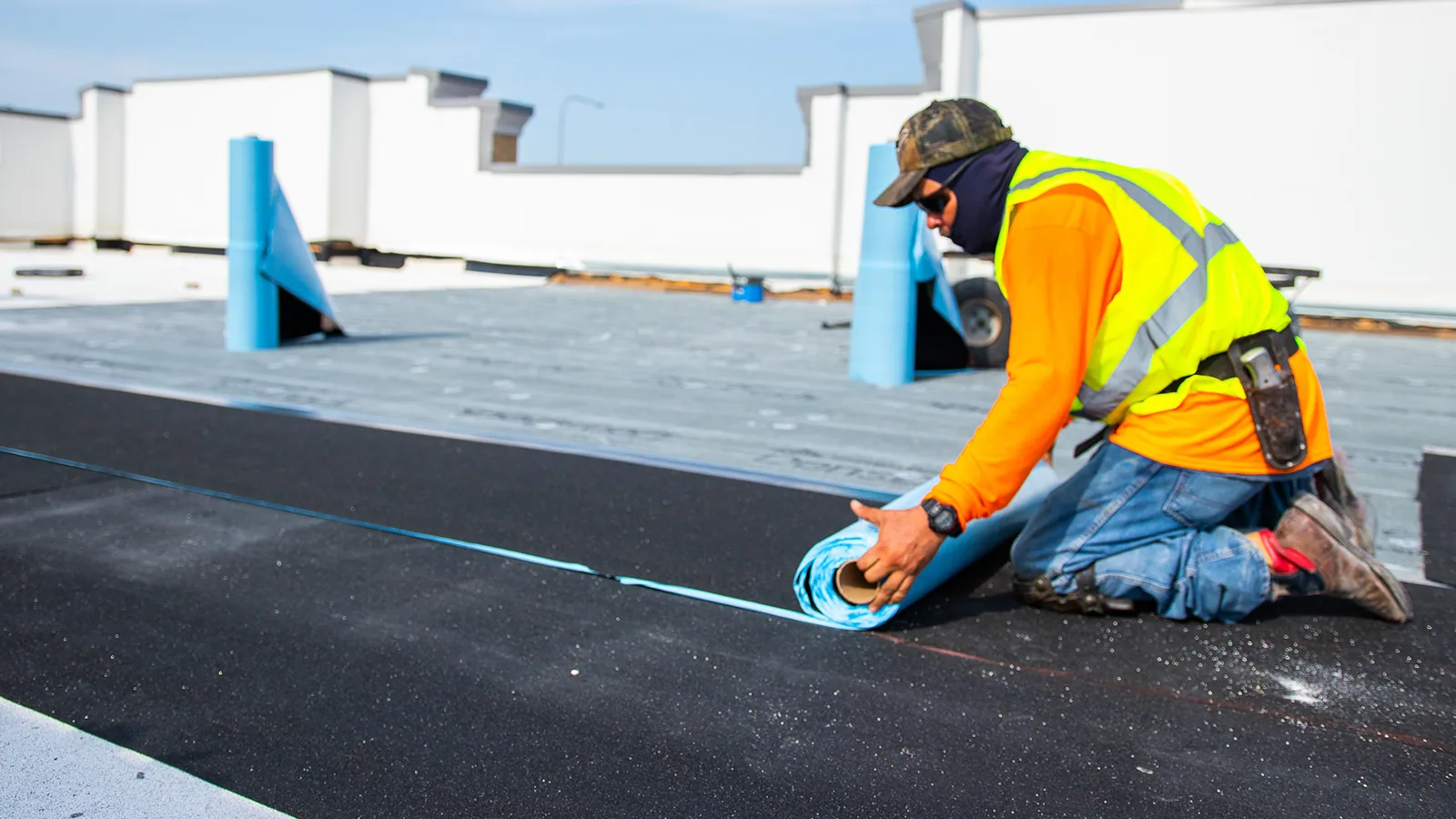
Bare black patches on a gray roof, with granules piled in the drain basket, are what most owners first see on an aging modified bitumen roof. The granules are the sacrificial surface. Once they wash away, the asphalt underneath is exposed to sun and begins to crack. Sometimes the cracks run along a lap, sometimes across a blister, and the first leak follows a few storms later. The sequence is slow enough that a walk now saves a replacement later.
What is modified bitumen?
Modified bitumen is asphalt blended with a polymer, then reinforced with a fabric and rolled into sheets. The two common types are SBS, which adds rubber and stays flexible in cold weather, and APP, which adds plastic and holds up well in heat. The sheets are laid in two or three plies and joined at the laps by torch, hot asphalt, cold adhesive or a self-adhering backing.
The result is a thick, layered roof that tolerates foot traffic and patches easily. It is a natural fit for old buildings with a built-up history, because it looks and behaves like the tar-and-gravel roofs it replaced. The tradeoff is that the laps and the flashings are the places where it fails.
Next to a built-up roof, modified bitumen is lighter and easier to detail, because the sheets are factory-made to a consistent thickness. Next to a single-ply sheet, it is heavier and more forgiving of rough handling. The choice depends on how much traffic the roof sees and how the building is used.
How is it installed, and why does the method matter?
Walk it with me. The base layer goes down first, fastened or adhered to the insulation or cover board. The cap sheet follows, overlapped so that every seam sits over a solid surface. How the laps are joined is the main choice. A torch melts the underside of the roll and fuses it to the layer below, which makes a strong bond but needs fire safety. Cold adhesive uses a brush-on or spray bond with no flame, and self-adhered sheets peel and stick.
In an occupied building or next to old wood framing, many owners prefer a torch-free method, and we install torch-free where the building calls for it. The insulation and cover board under the sheet protect the deck, whichever method is used.
The edge metal is the last piece. Gravel stops, coping and drip edges are fastened with sealed laps, and the membrane is stripped in under the metal so water cannot run behind it. On old masonry, we check that the wall is sound before the metal goes on, since a loose parapet pulls the new work apart.
What do we look for on an older modified bitumen roof?
The first thing is the surface: bare spots, cracked granules and alligatoring, a pattern of small cracks that looks like reptile skin. The second is the laps. We press along every one and look for open edges or tar bleed. The third is blisters, raised bubbles where moisture or air is trapped between plies. A small blister is a note on the plan. A blister that has split is a leak.
We also look at the flashings, which are the hardest part. Base flashings that climb a wall can slip, crack or pull loose, and the metal edge above them can open. A flashing failure repair usually starts with a new termination and a fresh strip of membrane. If only the flashing has failed, the field may still have years left.
Surface wear can sometimes be answered with a coating rather than a new roof. A white or reflective silicone coating over a sound, dry modified bitumen roof renews the surface and lowers the temperature, but only after seams are repaired and the moisture scan is clean. A coating that covers a wet roof traps the water, so we do not skip the scan.
Where does it fit in Queens?
It suits old masonry and industrial buildings. In Long Island City, former factories and bakeries have found new uses, Silvercup Studios in a former bakery and the 1919 Standard Motor Products building among them, and older masonry roofs stand next to newer mixed-use blocks. Beside Sunnyside Yard the Degnon Terminal was mostly built out by 1912, and early twentieth-century yellow-brick rowhouses and mill-era buildings fill Ridgewood and Glendale.
Tar and gravel was often the first roof on buildings of that age, and layered modified bitumen is the nearest modern relative. A flex industrial roof over mixed uses or a rowhouse apartment roof with chimneys and bulkheads is a good fit, and in Long Island City the old parapet is part of the detail.
Atlas Terminal in Glendale, an industrial park of 16 factories, was the neighborhood's largest former employer until it was demolished in 2004 and replaced by a shopping center. Sites change use, so the roof's expected life should be matched to the owner's plan for the building.
How does it handle Queens weather?
Heat, cold and cloudbursts all test it. Central Park's July afternoons reach near 85 degrees, and the heat island pushes roof surfaces hotter. The city's snow averages 29.8 inches a year, with one January 2016 day delivering 27.3. SBS stays flexible in the cold and APP resists the heat, so we choose by what the building faces.
Hurricane Ida's remnants on September 1, 2021 led to the first flash flood emergency the city ever declared, and most of the deaths were in Queens. Modified bitumen shrugs off water for a while, but ponding eventually works on the laps. A ponding water repair corrects the slope so that the laps stay dry.
What is the next step?
Send photos of the bare patches, the nearest drain and the flashing at the parapet, along with the roof's age and layers if you know them. We will walk the roof and say, in plain steps, whether a repair, a coating or a new membrane fits, and talk price afterward.
Questions Owners Ask
What building owners and managers usually ask before a roof visit.
It can be done safely with fire watch and the right procedures, but many owners and insurers prefer torch-free methods near combustible framing. We use cold-applied or self-adhered sheets when the building calls for it.
Small blisters can be cut open, dried and patched. Many blisters across a roof signal trapped moisture, and patching each is poor value. A moisture scan tells us which case we have. We also look for the source of the moisture, because a blister with no entry point usually means moisture was sealed in during construction.
Some granule loss is normal. When the asphalt shows through over wide areas, or the surface is cracking, the roof is aging out. A coating can sometimes restore it if the layers below are dry and sound.
Sometimes, if the old roof is dry and the gravel is removed or covered with a board. Cores show how many layers there are and whether they hold moisture. Gravel left in place can cut the new sheet, so a protection board goes between the two.
Send photos of the roof surface, the laps near the stain and the flashing at the parapet, plus the roof's age. A note on past torch repairs helps us choose a safe method.
Related Roofing Work
Other pages that connect to Modified Bitumen Roofing.
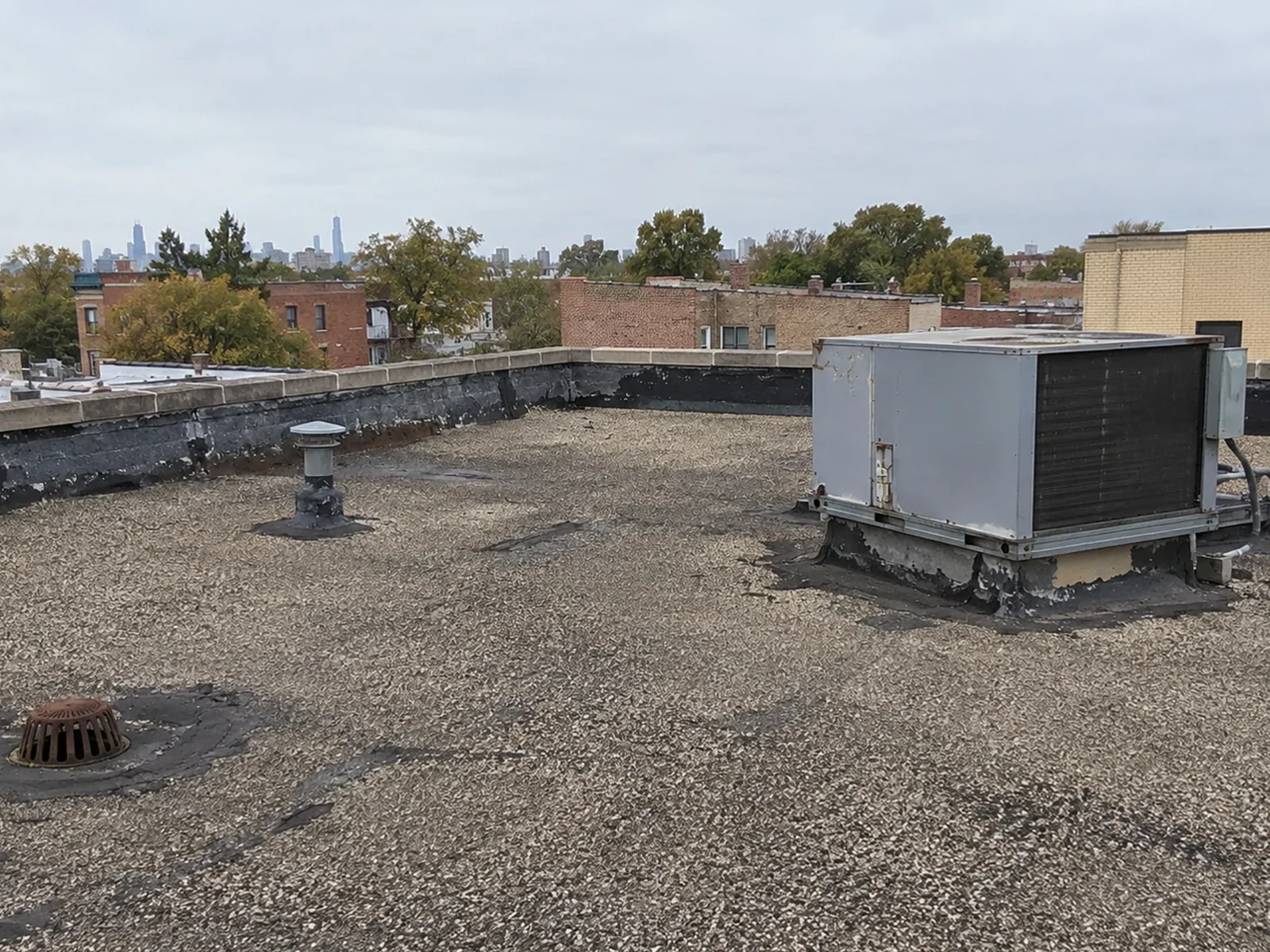
Built-Up Roofing
Built-up (BUR) roofing in Queens, NY: multi-ply tar-and-gravel and cap-sheet systems for older flat roofs, with blister, flashing and drain repair explained.
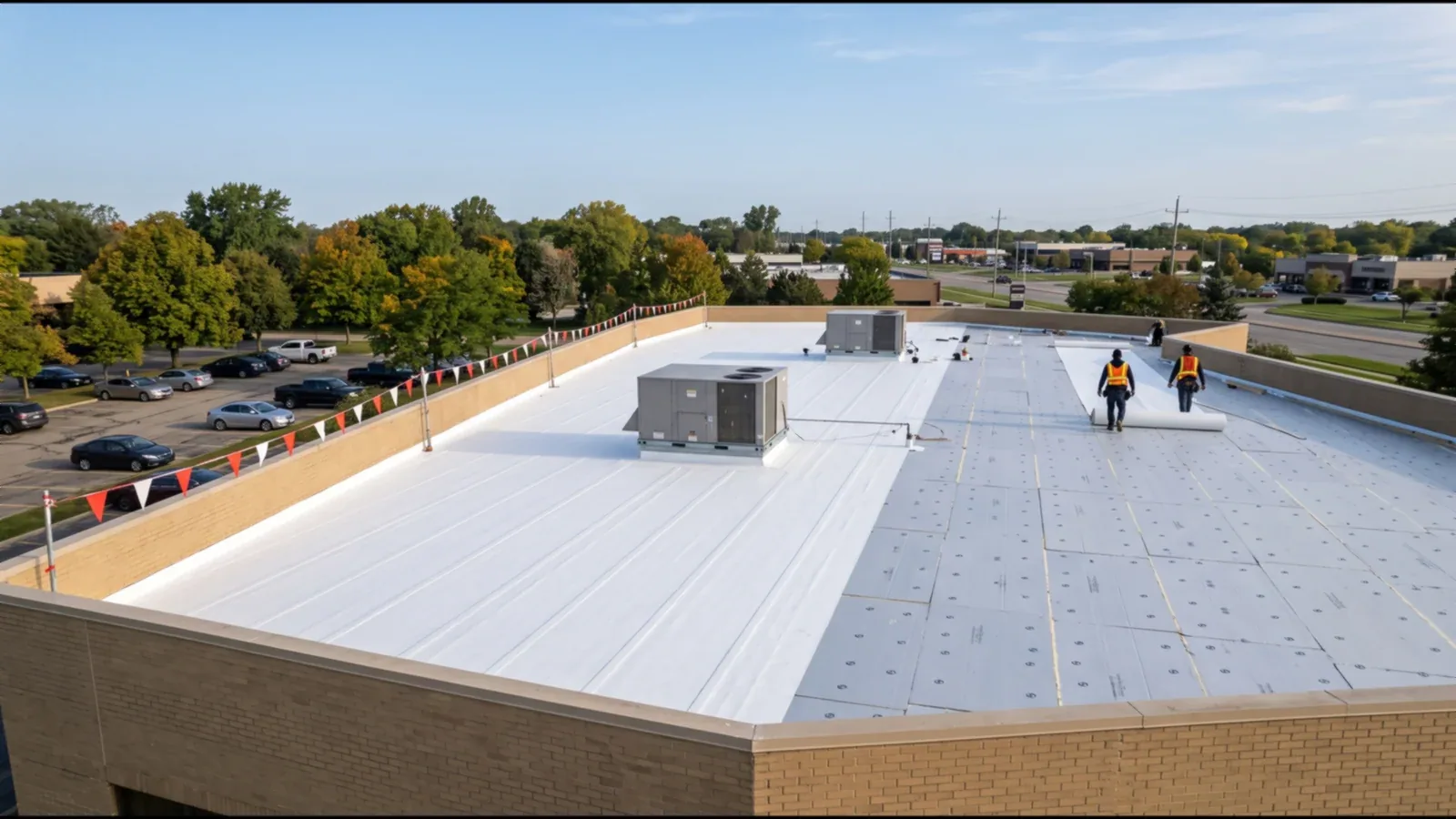
Roof Insulation and Cover Board
Roof insulation, tapered systems and cover board for commercial roofs in Queens, NY: wet insulation, slope, thermal value and what goes under the membrane.
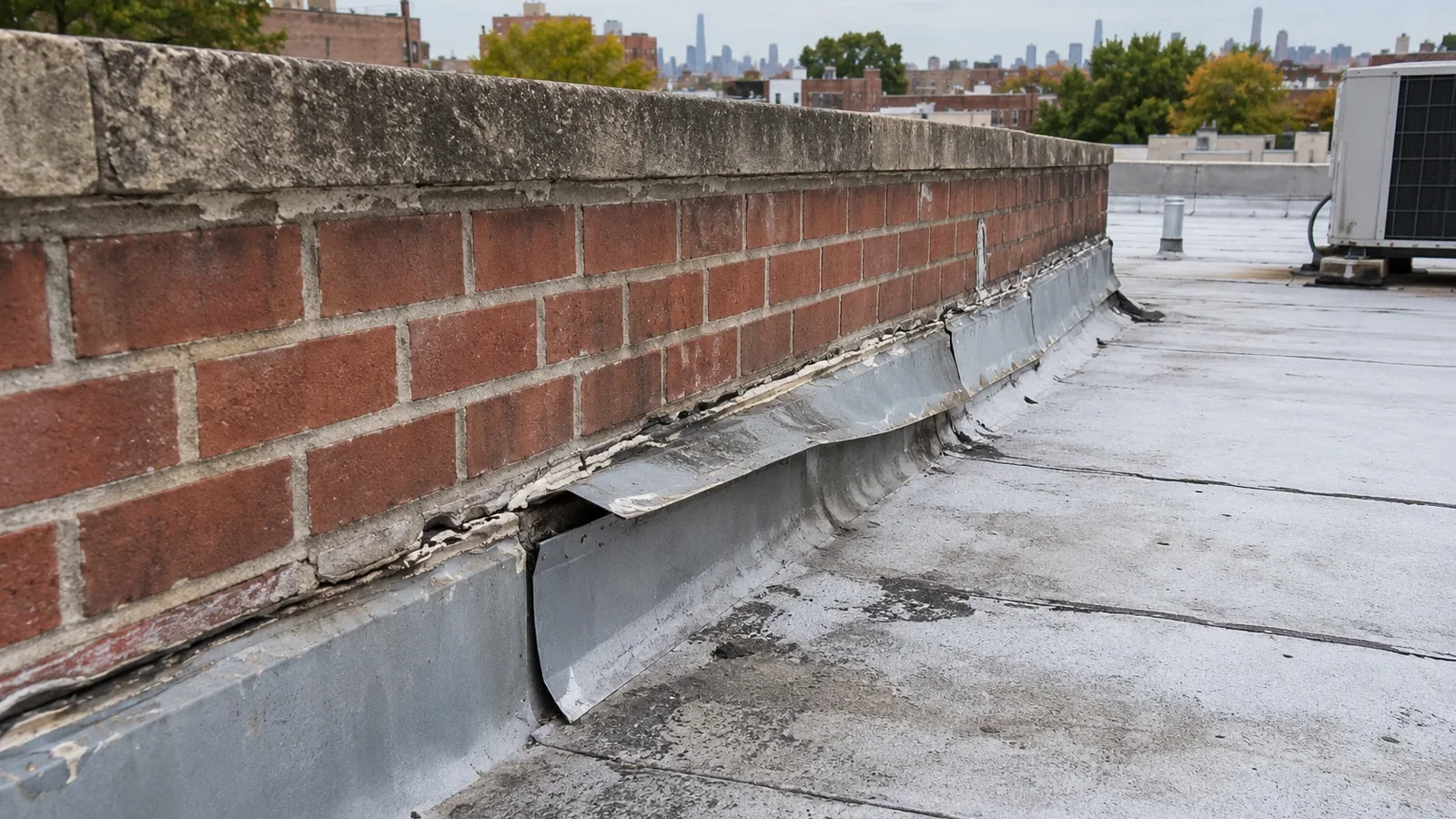
Flashing Failure Repair
Flashing failure repair in Queens, NY: cracked tar, lifted base flashing, open counterflashing and parapet leaks traced and rebuilt on commercial flat roofs.
Ready to Talk About Modified Bitumen Roofing?
Tell us about the building and what you are seeing. We will schedule a roof walk and send photos and a written scope.