
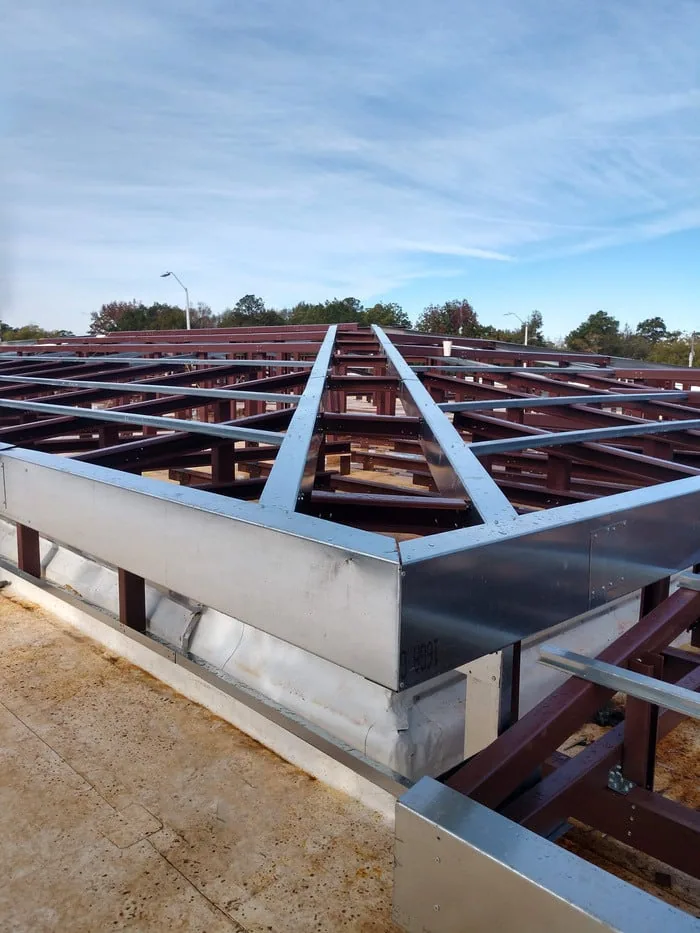
A soft spot underfoot is usually the first sign that a roof has stopped being repairable. Insulation that has held water for several seasons feels like wet cardboard, and no amount of surface patching will dry it. When a Queens, NY building reaches that point, the useful question is no longer how to stop one leak. It is how to take the assembly down to the deck and rebuild it so that water leaves quickly instead of sitting on top.
We replace low-slope commercial roofs on warehouses, mixed-use blocks, retail strips and institutional buildings across the borough. The sequence is always the same: find out what is wet, decide what stays, remove what must go, and rebuild the drainage first.
How do you know a roof is past repair?
Three findings, taken together, point toward replacement. The first is trapped moisture across a large share of the roof, not just near one drain. We confirm it with an infrared moisture survey and core cuts, because a membrane can look sound while the insulation under it is saturated. The second is a membrane that has lost its flexibility: seams that open when they are probed, surface cracking, or flashing that has pulled away from the wall. The third is a repair history that has grown from one patch a year to several, each in a different place.
Together they mean repair money is buying very little. We walk the roof with the owner, mark each finding on a plan, and show the cut cores so that the decision rests on what is physically in the roof. If the wet area is small and the membrane is young, we will say that a planned repair is the better spend.
Which Queens buildings are replacement candidates?
The borough has an unusual mix of roofs. In Maspeth, the industrial lowlands between 43rd and 58th Streets hold low-slope buildings beside the freight-only Bushwick Branch, and a similar flat-roof pattern shows up in the College Point Corporate Park, which was set at about 550 acres in 1974. Roofs that carry rooftop equipment and foot traffic tend to fail around curbs and penetrations before the field of the membrane gives out.
Older masonry presents a different problem. Ridgewood and Glendale contain mill-era factories and yellow Kreischer brick rowhouses, and a flat roof behind a brick parapet depends on the wall flashing at its edge. When that flashing has failed, water gets behind the metal and into the wall, and a new membrane over the old detail will fail in the same place. Replacement lets us rebuild the termination with new counterflashing set into a reglet.
What happens during the tear-off?
Tear-off starts with a protected perimeter, a staging plan for debris, and a decision about how much of the roof opens at once. On an occupied building we open only the area we can make watertight by the end of the shift. The old membrane and wet insulation come off, the deck is inspected, and any rusted steel, rotted wood or crushed panels are flagged before new material goes down.
Deck condition surprises owners most. A steel deck that has been wet for years can be corroded through at the flutes, and no fastener will hold in it. We photograph each repair area, show the owner what we found, and price the correction before closing it in. Then the insulation goes down in staggered layers, a cover board follows where the system calls for one, and edges and corners get closer fastening, because wind finds a loose perimeter first.
Why does drainage get decided before the membrane?
Water that cannot leave the roof becomes the owner's problem, whatever membrane sits underneath. Ida's remnants arrived on September 1, 2021 and triggered the first flash flood emergency the city had ever declared, with Queens suffering most of the deaths. A cloudburst of that kind tests every drain and scupper at the same moment. A strainer choked with leaves, or a sump higher than the surrounding field, turns heavy rain into standing water in minutes.
During replacement we study the slope, the position of each drain, and whether tapered insulation can move water toward the outlets. Where a roof ponds near a drain, tapered boards make the low point the drain itself. Work on roof drains and scuppers belongs in every replacement scope, because a perfect membrane over a bad drain still leaks at the sump.
Which membrane should replace the old one?
The choice follows the building. A heavily trafficked roof with many penetrations often suits reinforced TPO, whose welded seams resist constant movement. A roof exposed to grease or exhaust is a better match for PVC. Older buildings with many awkward flashings often do well with modified bitumen, which can be detailed by hand around corners.
Summer heat adds another consideration. A July afternoon at Central Park reaches about 85 degrees on average, and the city sits inside a strong heat island, so a reflective membrane can lower surface temperature and ease the load on rooftop air handlers. We settle reflectivity and energy-code questions with the owner before a product is selected.
What does waiting cost?
Waiting rarely saves money once a roof is wet. Saturated insulation stops insulating, adds weight, and can rust the deck and fasteners beneath it. Every additional season widens the area that must be removed. Snow adds to it. The city took 27.3 inches in a single day in January 2016, and a deck carrying water-logged insulation has less reserve for a load like.
A replacement planned for dry months can be sequenced in sections, with the building tight each night. An emergency replacement after a failure means fast purchasing and whatever weather arrives. If the roof cannot wait, our emergency response dries the building in first so the replacement can be planned properly.
What is the next step?
Send the address, the roof age if it is known, and a photograph of any stain or ponding. We will walk the roof, cut cores where needed, and put the findings in a short written scope that separates what must be replaced from what can stay. A property manager in Long Island City and a warehouse owner in College Point need different phasing, and the scope should show it.
Questions Owners Ask
What building owners and managers usually ask before a roof visit.
Sometimes, when the insulation stays dry. If the insulation is dry and the existing assembly can carry the extra weight, a recover can save the tear-off cost and reduce disruption inside the building. If the insulation is wet over a large area, covering it traps the water and the new roof inherits the damage. We resolve it with core cuts and an infrared survey before recommending either path. A recover is also limited by how many layers the building already carries.
Roof size, penetration count, deck repair and the area that can be open at once all move the schedule. A simple roof with clear access moves quickly. A roof with many curbs, a crowded parapet and an occupied floor beneath it takes longer, because each area must be closed in before the crew leaves. We give the owner a phased schedule with work areas on a plan and update it if the deck proves worse than expected.
We stop and show you. Corroded steel flutes, rotted wood and crushed panels are photographed, measured and priced as a separate line before anything is covered. Some owners prefer a unit price for deck replacement in the original scope, and we will write it that way. Closing in over a compromised deck shortens the life of a new roof, so we do not do it.
Drainage has to be part of the design for that to be true. Cloudbursts like the Ida storm overwhelm roofs whose drains sit above the lowest part of the surface or whose strainers are blocked. On replacement we can add tapered insulation, move or add drains and upsize scuppers, and we show the owner the drainage plan on paper. The membrane alone does not move water.
Related Roofing Work
Other pages that connect to Commercial Roof Replacement.
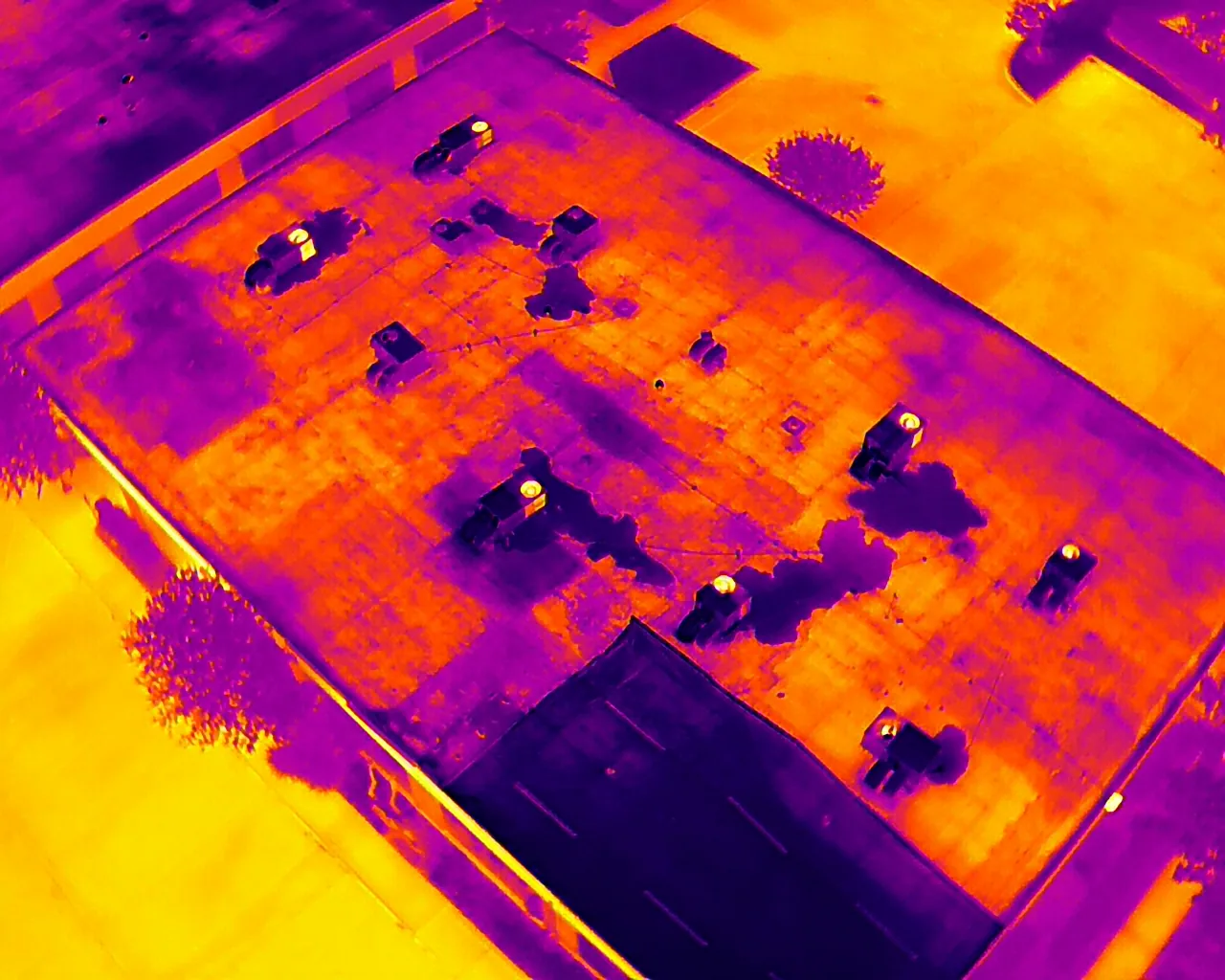
Infrared Roof Moisture Surveys
Infrared scans and core-cut moisture surveys for Queens, NY commercial roofs that locate wet insulation before the owner commits to repair or replacement.
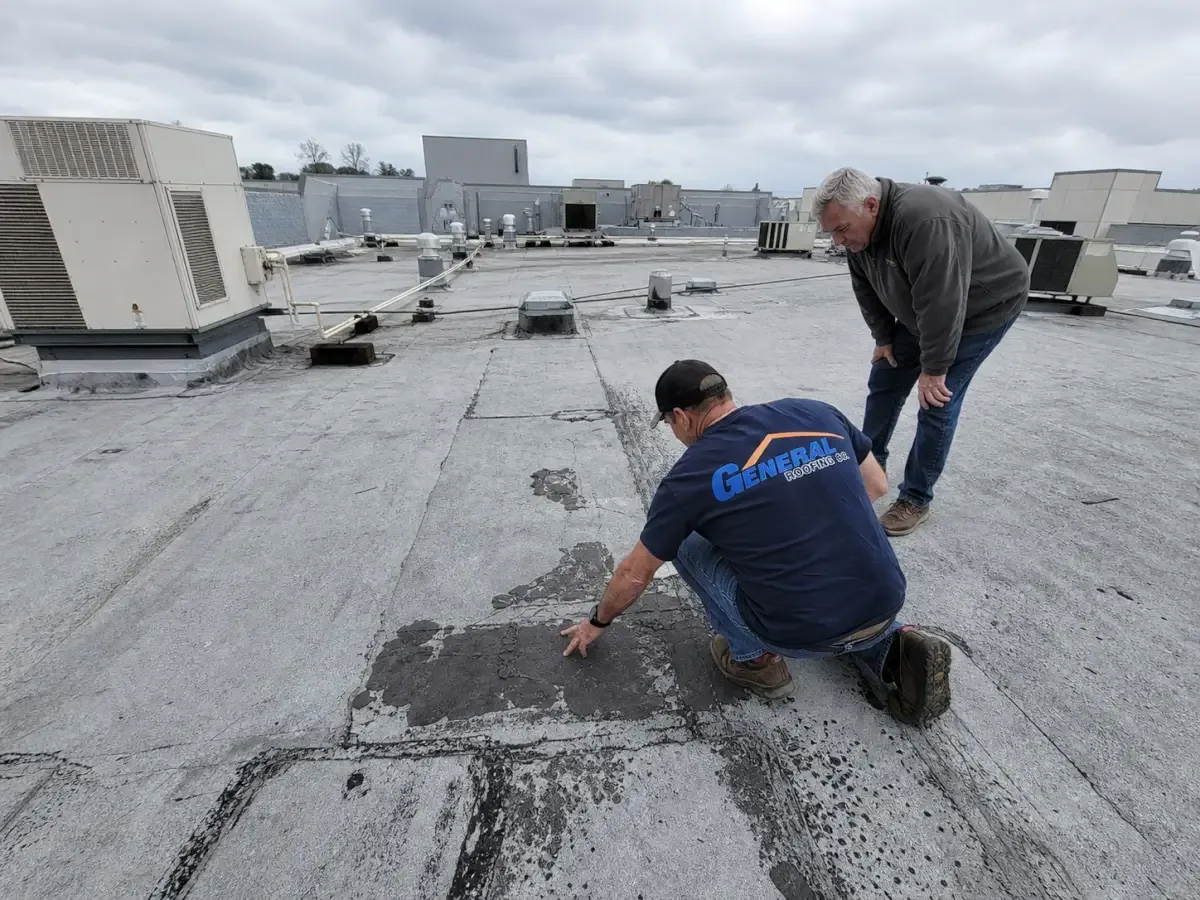
Commercial Roof Repair
Planned repair of membranes, seams, flashing and details on Queens, NY commercial roofs, with each fix explained before the crew picks up a tool.
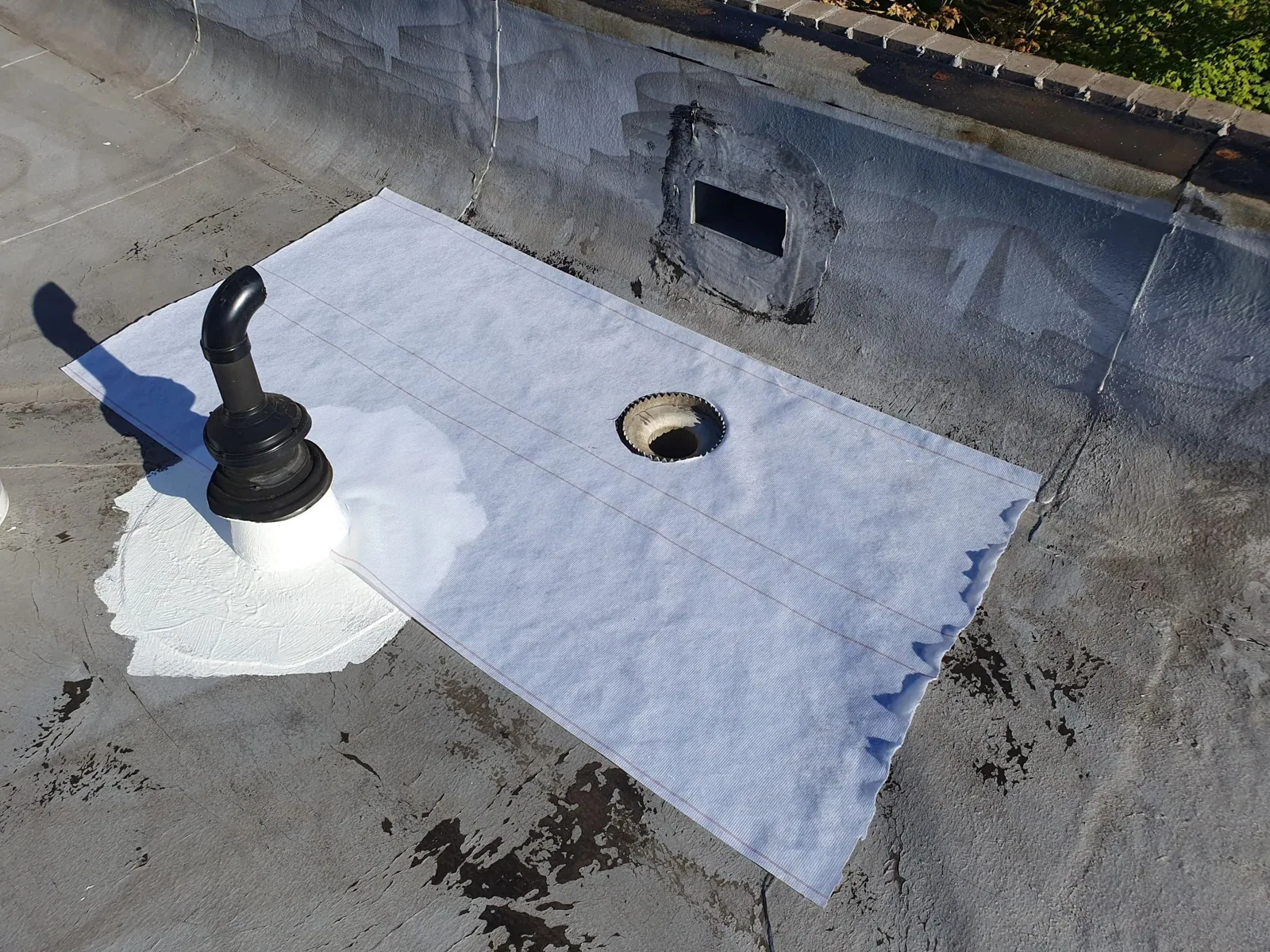
Roof Drains and Scuppers
Roof drain, scupper, cricket and ponding correction in Queens, NY: sizing, strainers, overflow paths and tapered fixes for flat roofs hit by cloudbursts.
Ready to Talk About Commercial Roof Replacement?
Tell us about the building and what you are seeing. We will schedule a roof walk and send photos and a written scope.