
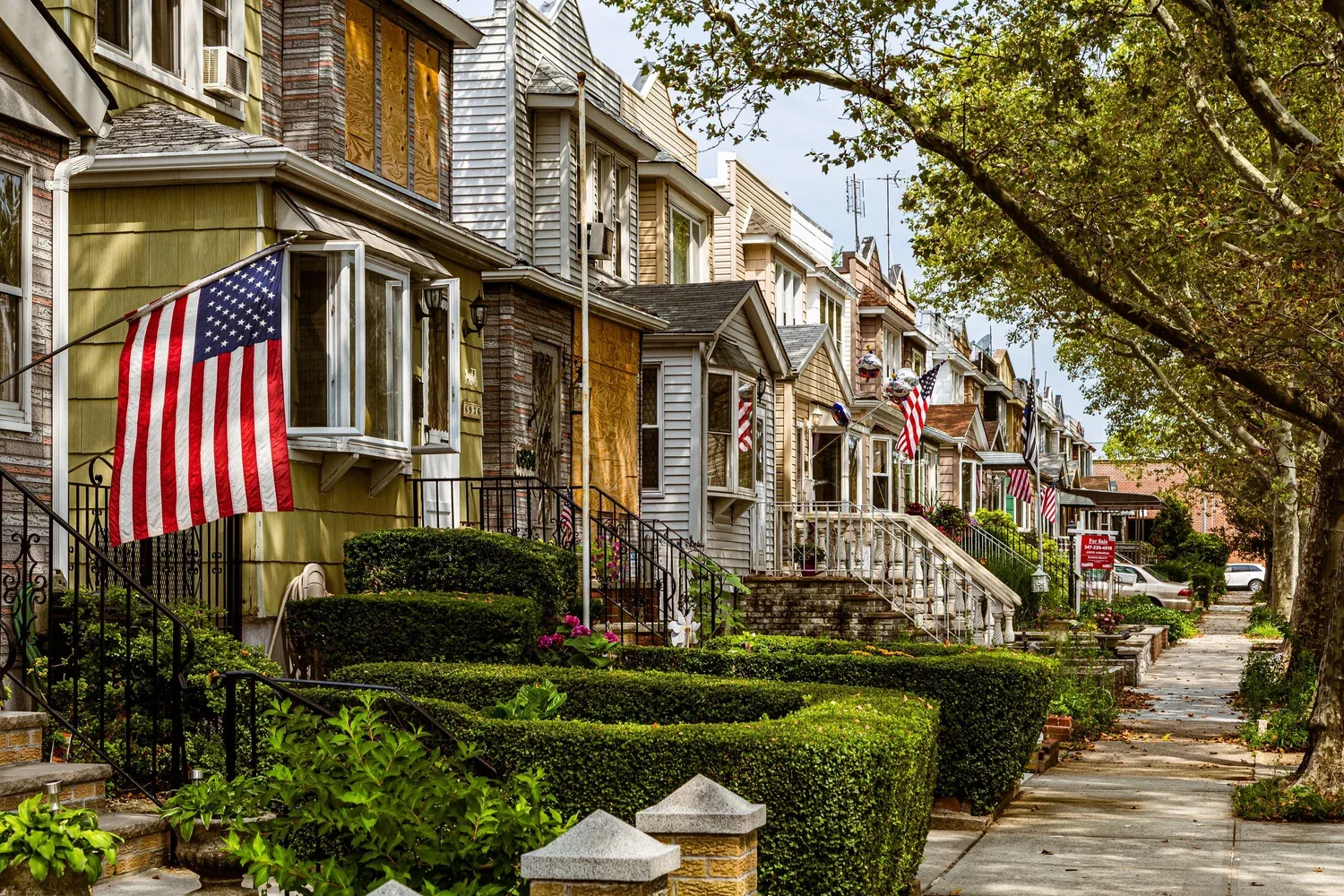
Three kinds of commercial roof define Glendale, Queens, NY: the wide flat roofs of the big-box stores on Woodhaven Boulevard, the industrial roofs around the rail yards, and the brick roofs of the older buildings in its historic districts. The first kind of owner tends to spot standing water near a rooftop unit, the second rust or a stain under a long seam, and the third a damp mark on an upper wall. Every walk starts at the drain, and from there we follow the water back, a step at a time, to the opening.
What commercial buildings shape Glendale's roofs?
Glendale's largest former employer was Atlas Terminal, an industrial park of 16 factories, until its demolition in 2004 and replacement by a shopping center. All goods shipped by rail to Long Island have to pass through the rail hub formed by Fresh Pond and Fremont Yards. Myrtle Avenue is the main thoroughfare, Woodhaven Boulevard is lined with big-box retailers such as Home Depot and Staples, and three historic districts in lower Glendale hold early twentieth-century buildings of distinctive yellow Kreischer brick.
A retail roof on the boulevard, a rail-side industrial roof and a historic brick roof behave differently, and a plan that treats them alike fails at least one of them.
What happens on a wide retail roof?
A big-box roof is a long, flat field with a few drains, a row of rooftop units and a parapet around the edge. Water leaves through the drains, and when a drain clogs or the deck sags between supports, a pond forms and stays. The pond ages the membrane, finds a weak seam and enters the building above the sales floor or the stock room. The units add curbs and lines that cross the membrane, and each crossing needs a sound flashing.
We check the drains and measure the ponds after rain, then work through the curbs and seams. A drone survey saves hours on a wide roof by mapping stained seams and low spots in minutes.
Skylights, where a store has them, are the next place to look. The curb and the glazing gasket on each one are repeat leak sources, and a dried gasket or a cracked curb corner lets water in at the first heavy rain. We rebuild the curb flashing and replace the gasket, or cover a skylight that has outlived its use.
What does a rail hub mean for nearby roofs?
Industrial buildings beside a major yard can see heavy truck activity, and a roof may pay for it in dirt. Dust and residue settle in drains and on seams, hide defects and hold moisture against the surface, and vibration can loosen fasteners over time. On a particular roof we look for each of these: the surface is cleaned before testing, fasteners are checked for backout and drains are cleared on a tighter cycle where debris is heavy.
On any industrial roof with long seam runs and equipment, a moisture survey tells us whether the insulation is still dry before we decide whether the roof can be repaired or must be replaced. An infrared moisture survey run at dusk, when wet areas hold their heat longest, is the quickest way to find out.
How do we treat the historic brick buildings?
Yellow Kreischer brick buildings in the lower-Glendale districts have walls that were built to last and roofs that were not. Their weak points are the parapet, the coping and the mortar. Water gets behind the metal, runs down inside the wall and appears as a stain below. We check the coping joints, repoint where mortar has failed and reflash the wall before touching the field of the roof. Because the districts are historic, visible details may need review, and we check the status early.
Freeze-thaw is the slow enemy of old masonry. Water that enters a joint in January expands as it freezes, pushes the mortar apart and lets more water in at the next thaw. The damage looks minor from the street and shows up inside as peeling paint and efflorescence, a white salt crust on the brick. When we see either, we treat the wall as part of the roof job and plan the repointing with the membrane work so the two do not undo each other.
Which repair route fits, and what does the weather add?
If only a handful of details have failed, a repair may be all that is needed; over dry insulation a sound membrane can be given a coating or a recover; and wet insulation calls for replacement. Price follows the layers, the moisture and the access. The weather brings about 30 inches of snow in an average year, a strong heat island in summer and, on September 1, 2021, Hurricane Ida's remnants and the city's first flash flood emergency.
The order of the work follows the water. We clear the drains first, then reflash the walls and curbs, then close the seams, then deal with the field. A large roof is done in sections, and each section is dried in by the end of the day. Before we leave, we walk the finished roof with the owner and mark off the punch list.
What is the next step?
To start, we want photographs of the worst pond or stain and of the drain closest to it, along with the street and, if known, the roof age. We tell you in plain steps what the roof is doing, and money comes afterward. Owners with buildings in Middle Village or Ridgewood can combine visits, and owners of retail space may want to look at big-box roofing.
Questions Owners Ask
What building owners and managers usually ask before a roof visit.
Time it. Water that clears within a day is a nuisance, while water that lingers two days or more points to a clogged drain, a backed-up leader or a low spot in the deck. A long-standing pond presses on seams and ages the membrane, so it is worth measuring and fixing, and we measure depth after rain and check the drain first.
It needs a roofer who looks at the wall as well as the roof. The parapet, the coping and the mortar are part of the waterproofing, and a new membrane cannot stop water that enters at the brick. We repair the masonry details alongside the roof, or coordinate with a mason when the wall needs more than repointing.
Tell the landlord before installation and ask for a roof review. Each new curb, line or conduit needs a flashing, and unreviewed equipment is a common cause of new leaks. A short visit before the lift prevents a repair afterward, and a photograph of the finished detail goes into the roof file.
Yes, with planning. Work goes section by section, each dried in the same day; dock lanes stay clear, loud tasks wait for quieter periods, the operations manager approves the sequence beforehand, and stock and equipment below the work area are covered.
That water is passing through the wall and leaving salts on the surface as it dries. The source is often the parapet, the coping or the roof flashing above. We trace the path upward, repair the opening and let the wall dry before any sealer or paint goes on. A coating over a wet wall traps the water and makes the damage worse.
We map every unit, curb and line, then decide which units can be lifted and which must stay. Curbs are rebuilt to a proper height, lines get new supports and the sheet is laid around them with pre-formed corners. We coordinate with the mechanical contractor so no unit is moved without a roofer present, and the finished work is photographed.
Related Roofing Work
Other pages that connect to Glendale.
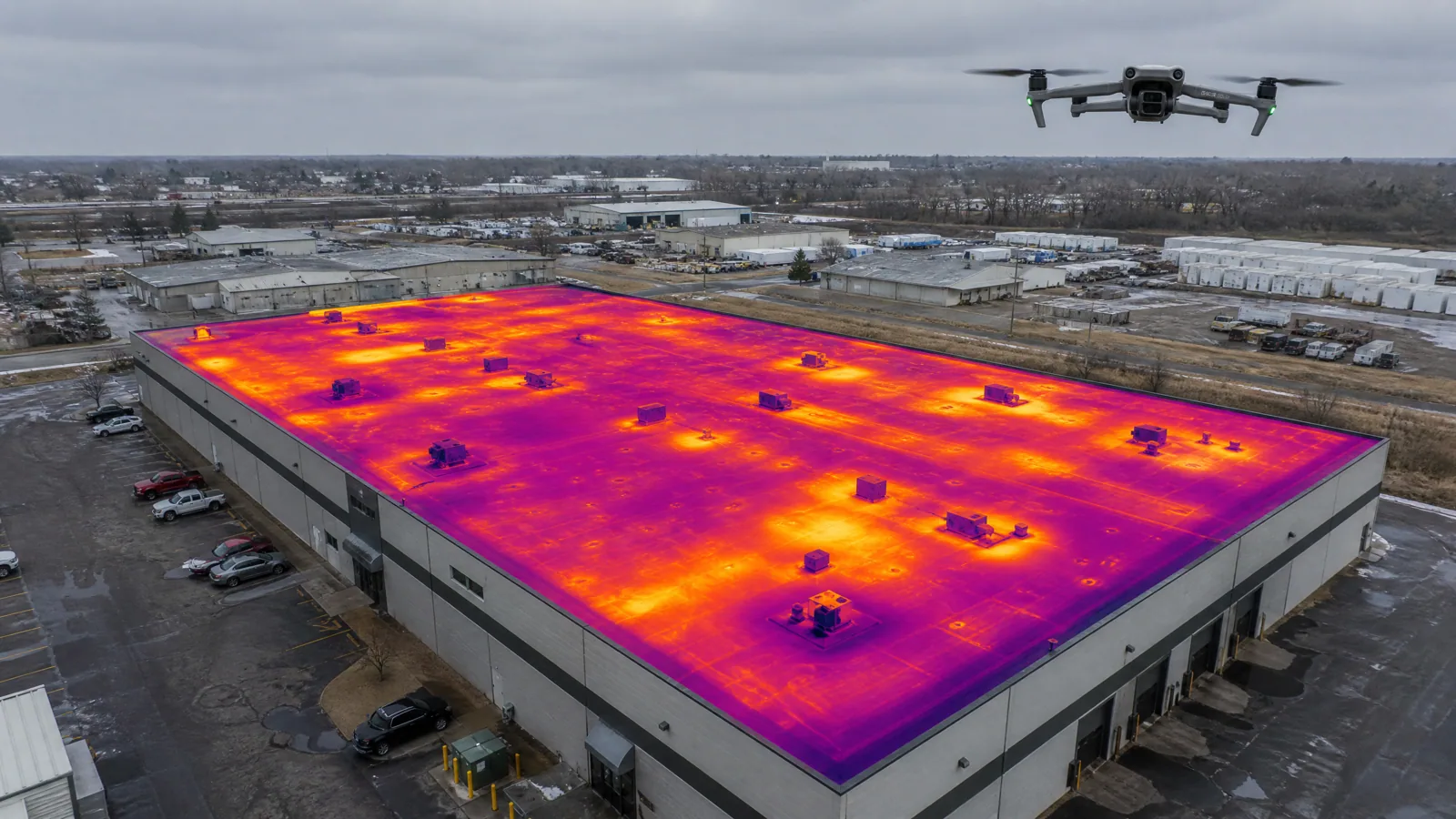
Drone Roof Inspections
Drone imaging for large or hard-to-reach commercial roofs in Queens, NY, with photographs and thermal data that guide a safer hands-on follow-up.
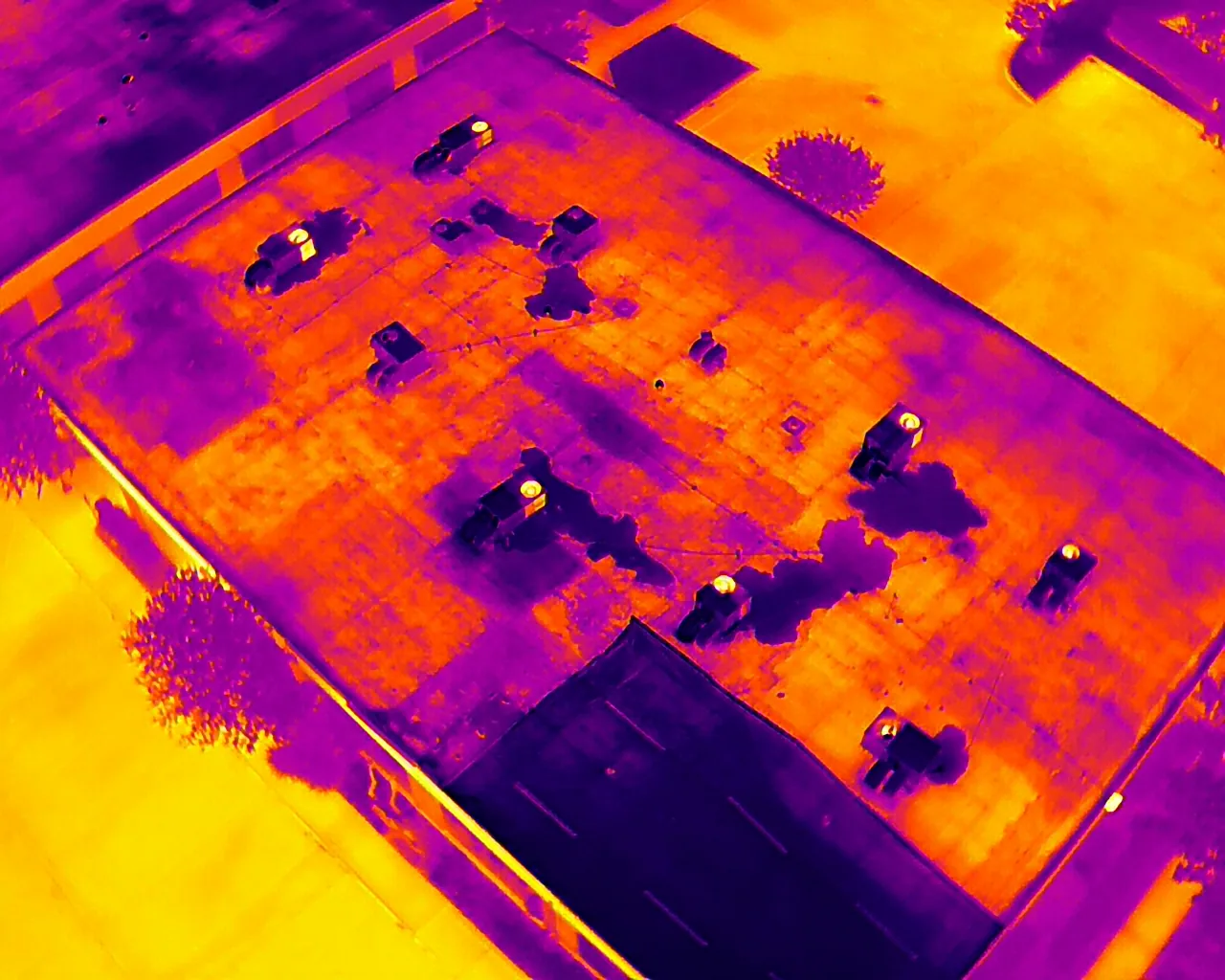
Infrared Roof Moisture Surveys
Infrared scans and core-cut moisture surveys for Queens, NY commercial roofs that locate wet insulation before the owner commits to repair or replacement.
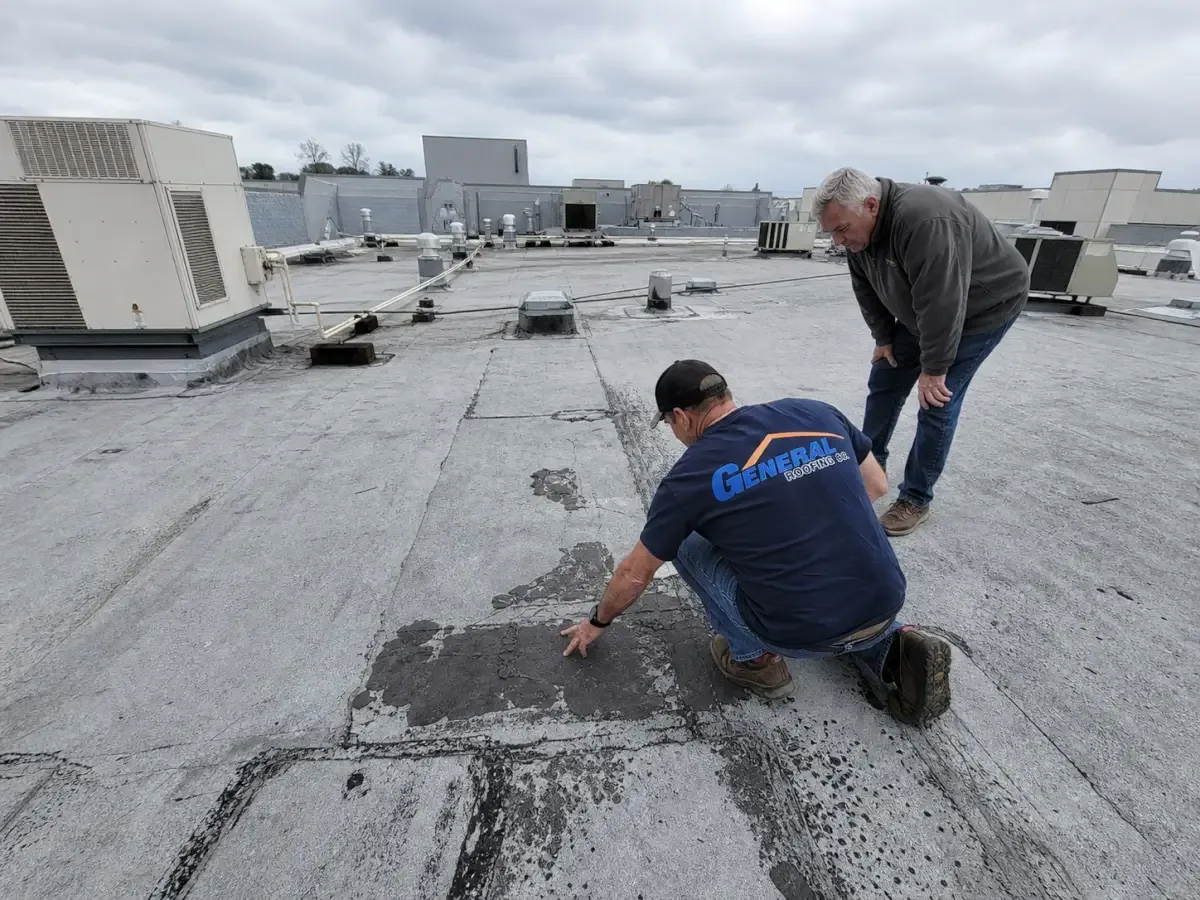
Commercial Roof Repair
Planned repair of membranes, seams, flashing and details on Queens, NY commercial roofs, with each fix explained before the crew picks up a tool.
Ready to Talk About Glendale?
Tell us about the building and what you are seeing. We will schedule a roof walk and send photos and a written scope.