
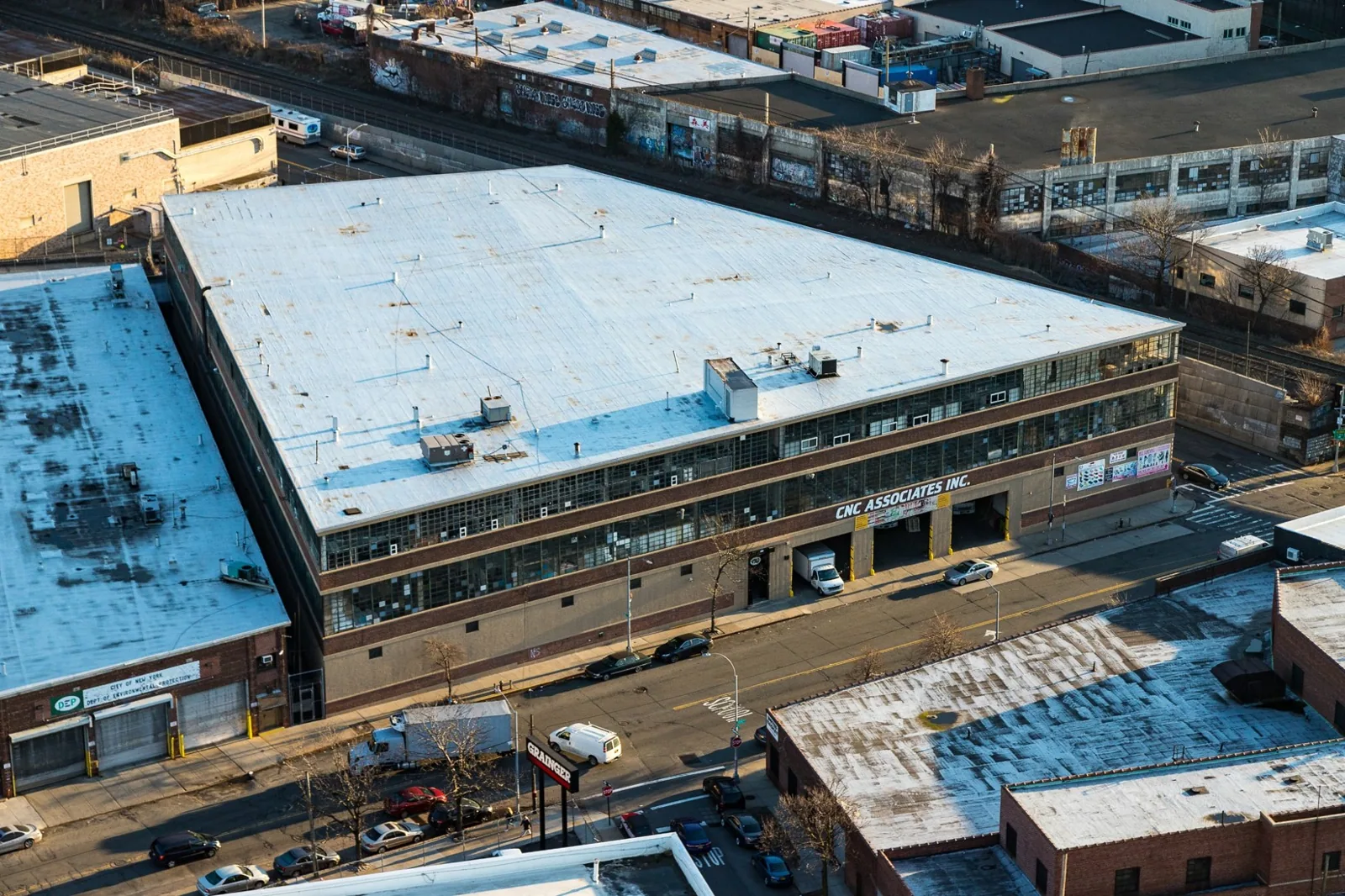
A puddle beside a rooftop unit that is still there on Thursday after Tuesday's rain is the first thing worth noticing on a fulfillment building. The roof is not holding the water on purpose. Either the drain nearest the unit is partly blocked, or the curb has pushed the insulation down, or the deck has sagged under the weight of the equipment. In Queens, NY, where distribution roofs often carry a busy line of units and wiring, we begin with that puddle and work out, one step at a time, why the water chose that spot.
Why does the roof leak near the equipment?
Every unit on the deck sits on a curb or a rail, and every curb has a flashing. Conduit, refrigerant lines and gas pipes cross the membrane between them, each with its own boot or support. A busy distribution roof can hold a long list of these details, and any one that has dried out, cracked or shifted is a leak waiting for a heavy rain. Foot traffic compounds the problem, because service crews walk the same path to the same units all year.
We map every curb, support and penetration, rate the flashing on each and mark the walk paths. The map shows which details to fix first and where a curb or support repair will pay back.
What do Queens distribution roofs have in common?
Freight is a large part of the local economy. On 5,200 acres in Jamaica, JFK Airport handled 1,557,067 US tons of cargo in 2025. Metro Mall in Middle Village, a three-story mall dating from 1972 to 1974, houses retail tenants and, from 2020, a fulfillment center leased by Amazon. The southern end of College Point has a Pepsi-Cola distribution facility and furniture warehouses, with the Whitestone Expressway along its southern edge.
Buildings that serve a dense market run hard. Peak weeks keep trucks and crews on site, and the roof gets less attention than the dock.
Rail adds to the picture. Fresh Pond and Fremont Yards in Glendale form the hub through which all goods shipped by rail to Long Island must pass, and a freight building near them, whether a dry warehouse or cold storage, faces the same roof questions about curbs, drains and dock-side edges.
Where does the water go after a cloudburst?
A long, flat roof relies on drains, and the drains rely on a clear path to the sewer. The 2021 flash flood emergency, the first the city ever issued, came with Ida's remnants and left most of its deaths in Queens, which shows how little a drain can promise in a cloudburst. On a distribution roof the first fix is simple: keep strainers clear, check the leaders and confirm that the secondary overflow is open and sized correctly. If the roof has no overflow, water that cannot drain will rise until it finds a parapet gap.
Where the deck has sagged, drain and scupper work may include adding a drain or a tapered insulation field so the water reaches an outlet.
What are the repair and replacement options?
Short of replacement, we repair the details first: curbs, boots, seams and drains. If the membrane is sound and the insulation is dry, a coating restoration can extend life and add reflectivity for summer heat. If the roof has aged out, a recover over dry insulation saves tear-off, and a full replacement resets the clock when moisture has spread. The decision comes from a scan and cores, not from the age on the paperwork.
On very large fields, we work in phases, drying in each section by the end of the day so the building is never exposed to weather overnight.
How do you work around peak shipping weeks?
The calendar of a distribution center is the calendar of the roof. We avoid heavy tear-off or hoisting in the weeks when trucks queue at the dock, and we stage materials where they do not block yard circulation. Crews coordinate with the yard manager on lane closures. A repair that stops an active leak goes in right away, because stock under a drip is the costliest loss. Bigger scopes wait for the slow weeks and are booked with the operations team months in advance.
What does replacement involve in New York City?
Replacement is design work as well as construction. Chapter 15 of the NYC Building Code, on roof assemblies and rooftop structures, governs the new assembly, which is not simply copied from the old one. That means checking the number of existing layers, specifying insulation and cover board to suit the deck, planning the slope to the drains and detailing every curb and edge. A distribution building that began life as a plain warehouse often needs more drainage and more curb height than the original roof had.
We put those decisions in writing before the contract, so the owner sees what the new roof will do differently from the one it replaces.
What is the next step?
Start with the street, the roof age and two photographs, one of the worst drain and one of the nearest unit. We walk the roof, say step by step what it is doing and hand you a ranked repair list before cost comes up. Buildings near College Point and Jamaica are scheduled by yard hours, so the work does not interrupt shipping.
Questions Owners Ask
What building owners and managers usually ask before a roof visit.
Often, yes. A curb leak usually comes from the corner flashing, the top sealant or the counterflashing, and we can rebuild those without disturbing the field. If the insulation around the curb is wet, the repair widens to that area. A hose test before and after tells us whether the repair worked, and we photograph the curb for the file.
We ask to be present when a unit is set. A new curb, a new conduit run or a new refrigerant line means new penetrations, and each one needs a proper flashing. We check that the unit's weight is spread by a rail or pad and that the walk path to it is protected. A short visit before the unit goes in avoids a long repair afterward. Written approval for each new penetration also keeps the roof file complete, which matters for the next owner.
We recommend a walk every spring and after any severe storm, with a short drain check in the fall. Heavy traffic and many penetrations make a distribution roof age faster than a simple storage roof. A written report with photographs creates a history, and the history is what lets an owner plan the replacement before an emergency forces it.
Sometimes. A sound membrane, tight seams and dry insulation are the conditions. Then the coating adds reflectivity and seals small defects, which counts in a city with a strong heat island, but it cannot cure wet insulation or open seams. Adhesion tests and a moisture scan come before the recommendation, and when replacement is the better spend we say so.
The roof itself does not feel the trucks, but the building does. Vibration loosens fasteners, curbs and sealants over time, and wear shows up first at the details. After a peak season we recommend a short walk to tighten and reseal what shifted. That small visit is far cheaper than a leak in stored inventory.
Related Roofing Work
Other pages that connect to Distribution Center Roofing.
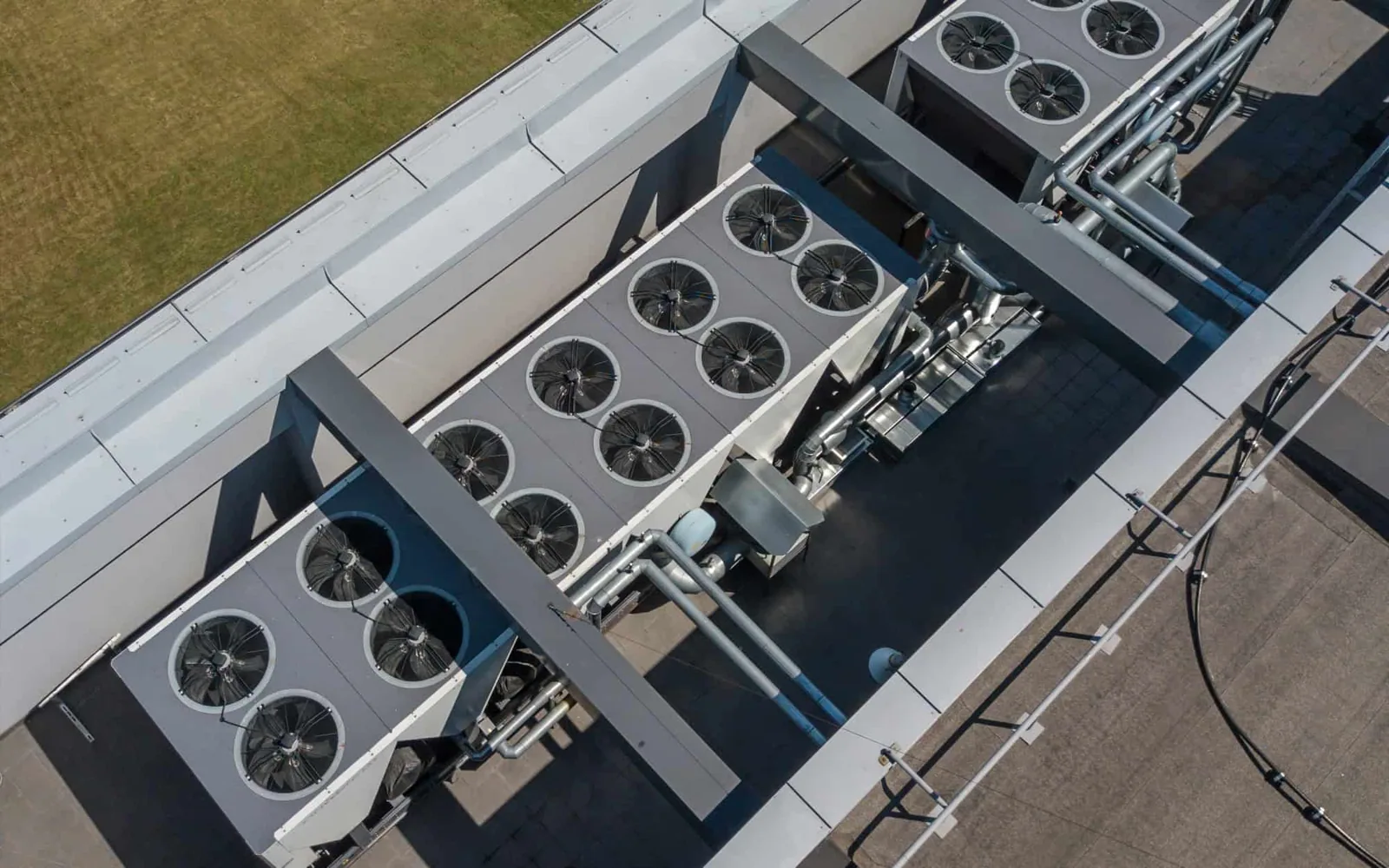
Rooftop Equipment Curbs and Supports
Rooftop unit curbs, equipment supports and pipe supports in Queens, NY: why they leak and how the flashing is rebuilt so new equipment does not hole the roof.
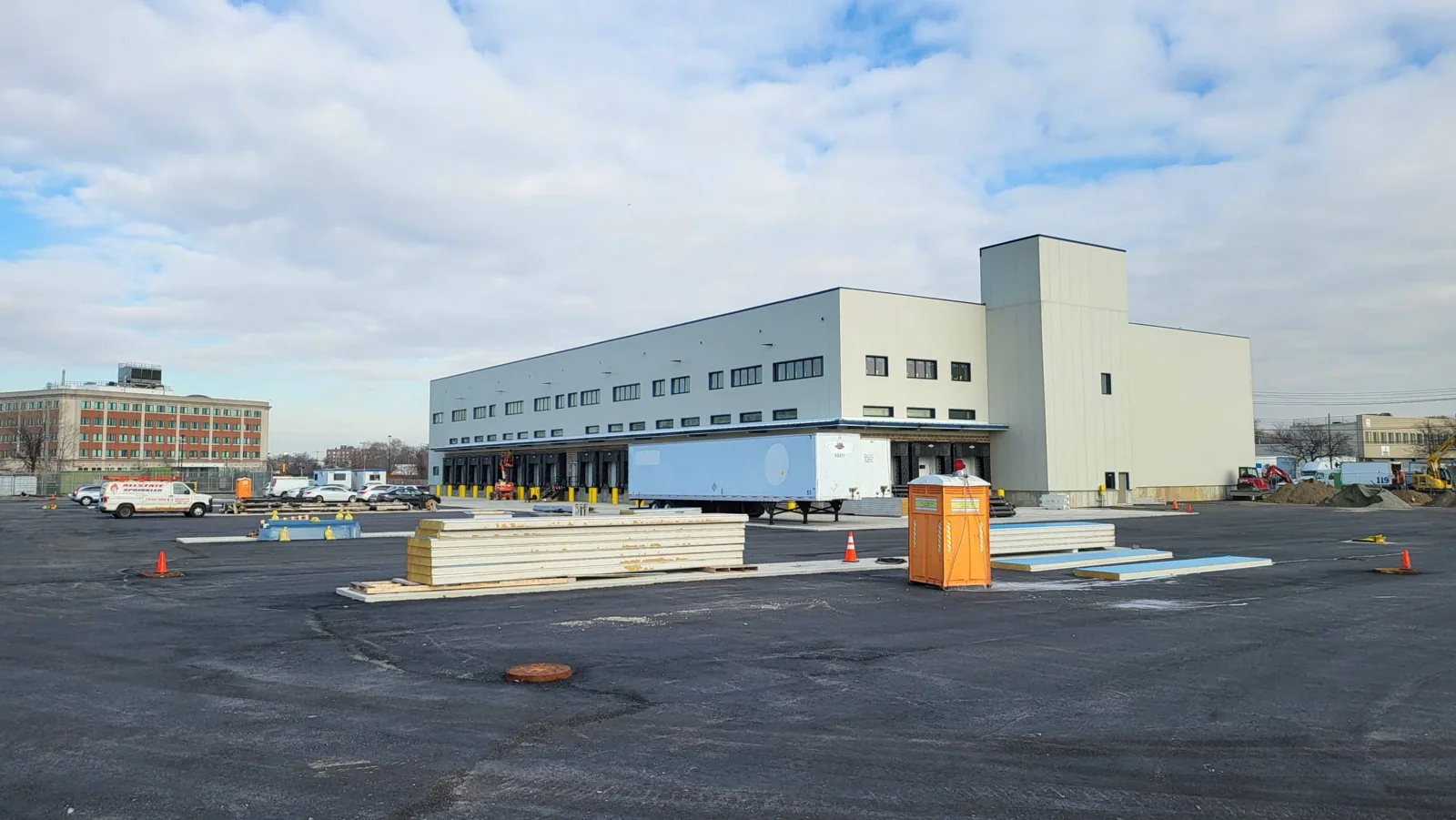
Cold Storage Roofing
Roofs for cold storage and freezer buildings in Queens, NY: frost, vapor control, wet insulation and the penetration details that decide how long they last.
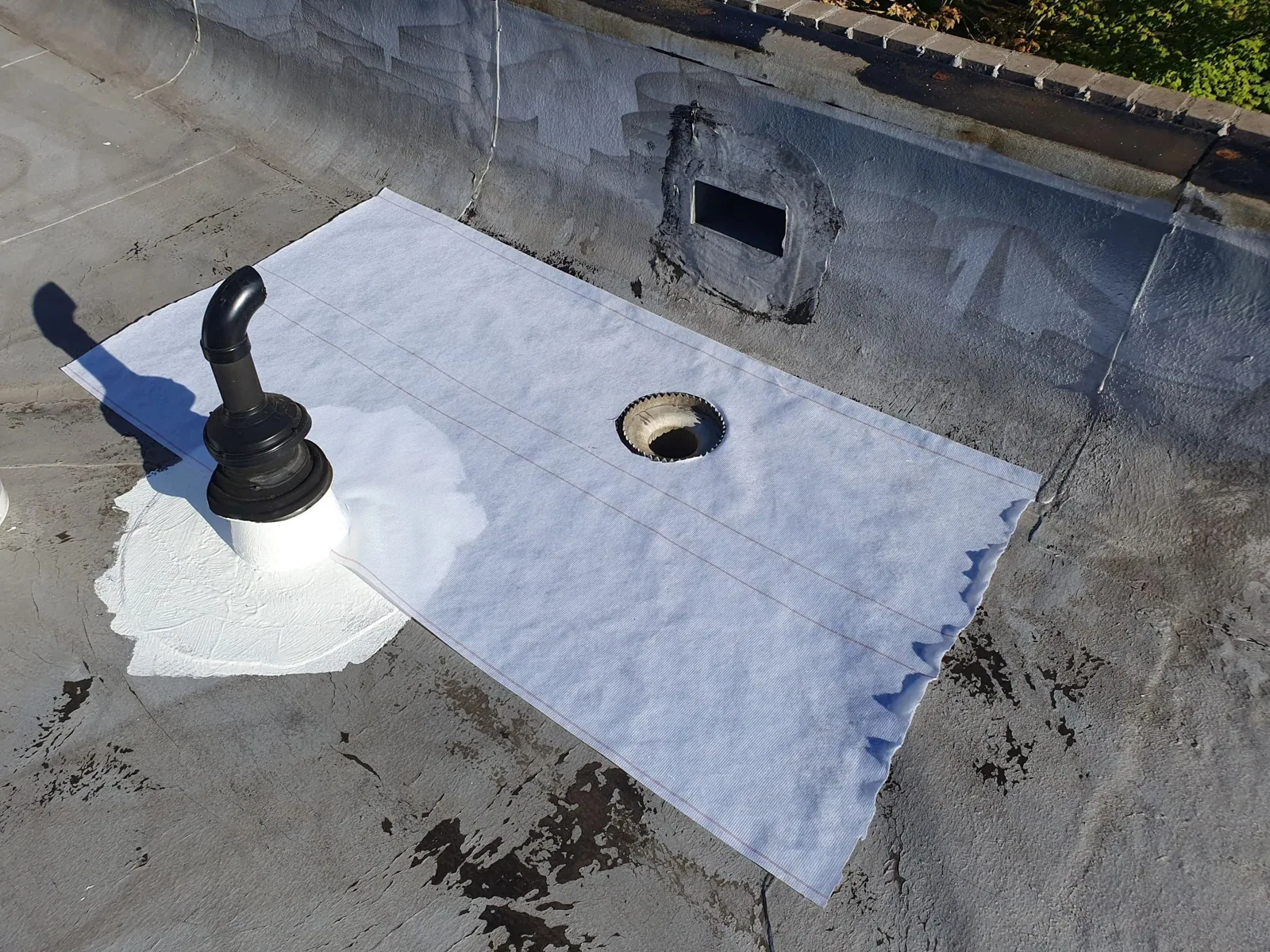
Roof Drains and Scuppers
Roof drain, scupper, cricket and ponding correction in Queens, NY: sizing, strainers, overflow paths and tapered fixes for flat roofs hit by cloudbursts.
Ready to Talk About Distribution Center Roofing?
Tell us about the building and what you are seeing. We will schedule a roof walk and send photos and a written scope.