
Roof Asset Management
Roof asset management in Queens, NY: a tracked inventory of roof age, condition and drainage across your buildings, so repairs and replacements follow facts.
Roof Capital Planning
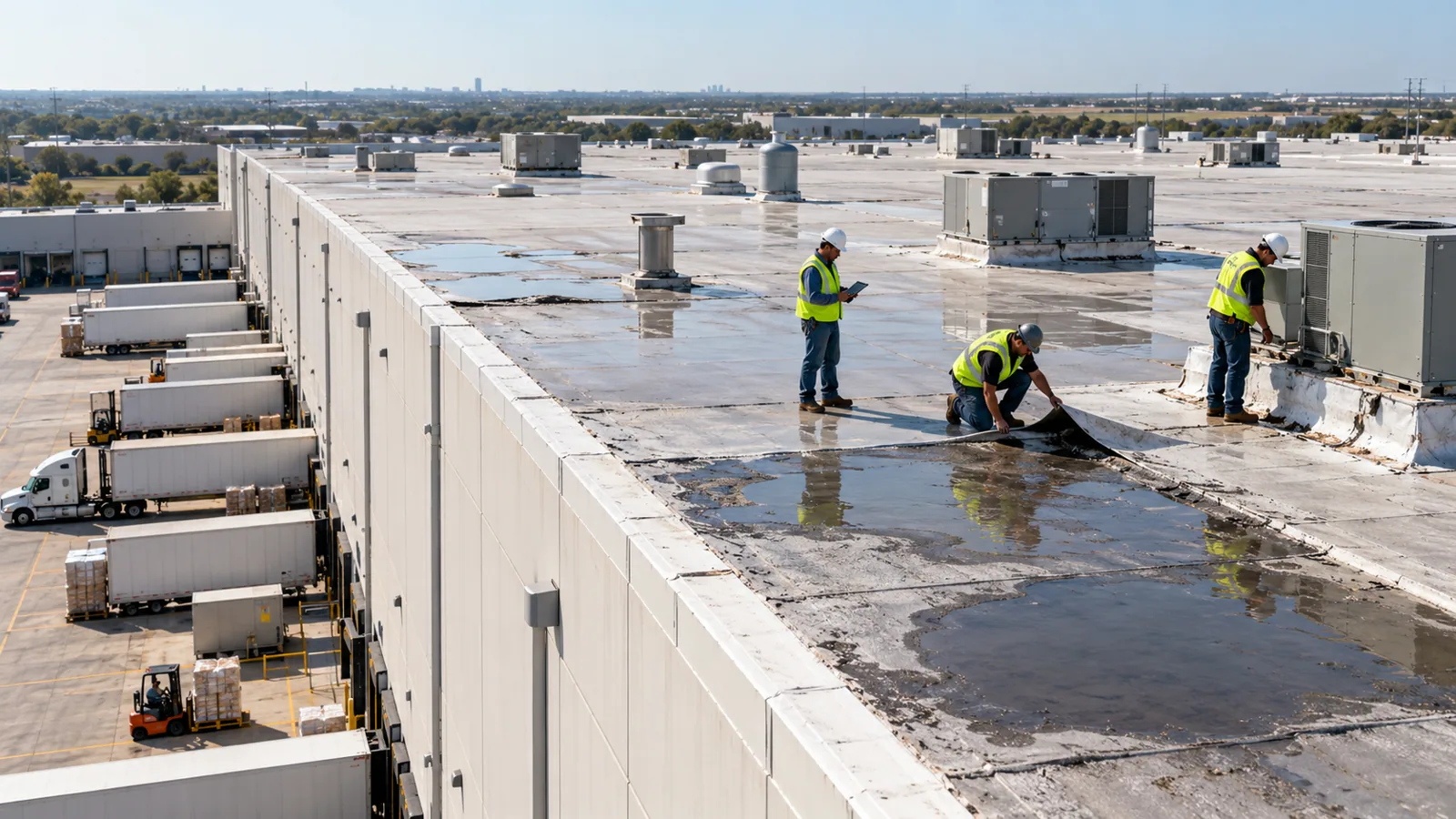
Roof capital planning in Queens, NY: budgets and replacement timing built from moisture data, condition ratings and building plans, so roof work is scheduled.

Roof Condition Reports
Written roof condition reports in Queens, NY: photographs, moisture findings, ratings and ranked recommendations an owner, lender or insurer can read.
Roof Warranty Management
Roof warranty management in Queens, NY: how to keep manufacturer warranties valid with records, approved repairs, maintenance and notice before rooftop work.

Due Diligence Roof Surveys
Due diligence roof surveys in Queens, NY: fast, documented roof assessments for acquisitions and refinancing, with remaining life, defects and reserve figures.

Multi-Site Roof Programs
Multi-site roof programs in Queens, NY: one inspection, repair and replacement program across many buildings, ranked by condition and scheduled by budget.
A roof that reaches a budget meeting as a surprise has usually been telling someone for years: a pond that never drained, a patch that came back, a stain on the same tile each spring. The planning side of our work for Queens, NY owners turns those signals into a record. The record says what the roof is, what shape it is in, and what each choice will cost, in words a board or lender can read.
What does a condition record contain?
A roof condition report rates each section, shows photographs of every drain and flashing and gives a remaining-life range. Roof asset management keeps those reports together over time, so the history of a roof does not leave with a manager.
Each finding carries a photograph, a place on the roof plan, a short cause and a priority. A manager who has never been on the roof can follow it, and a contractor bidding the work can price from it. The format is the same for a shop roof in Jamaica and a warehouse roof in Maspeth.
How does planning handle money and warranties?
A capital plan places repairs, restoration and replacement on a calendar with cost drivers beside each item. Warranty management tracks terms, inspection dates and notice requirements, because a missed notice can cost a claim.
Owners ask when to spend and how much. The plan answers with a sequence, not a single number: what to repair now, what to watch, and what to fund for later.
What helps at a sale, and across many buildings?
Due-diligence surveys fit a closing calendar and end with a ranked list of immediate and near-term items. An owner of several buildings can use multi-site roof programs to hold one standard across districts such as College Point Corporate Park, which covers about 550 acres.
For a closing, timing is tight. A survey can finish in days, with drain, parapet and flashing findings on top and an estimate of roof life behind them, so a lender reads the immediate items apart from the five-year list.
What weather does the plan allow for?
A plan for Queens has to allow for what the borough delivers: cloudbursts such as Hurricane Ida's remnants on September 1, 2021, Hurricane Sandy's six feet of water in Maspeth in 2012, about 29.8 inches of snow in a typical year and a strong heat island. Drains and edges come ahead of cosmetic work, since a storm tests those details first.
Commercial Roofing Questions
What goes into a condition report?
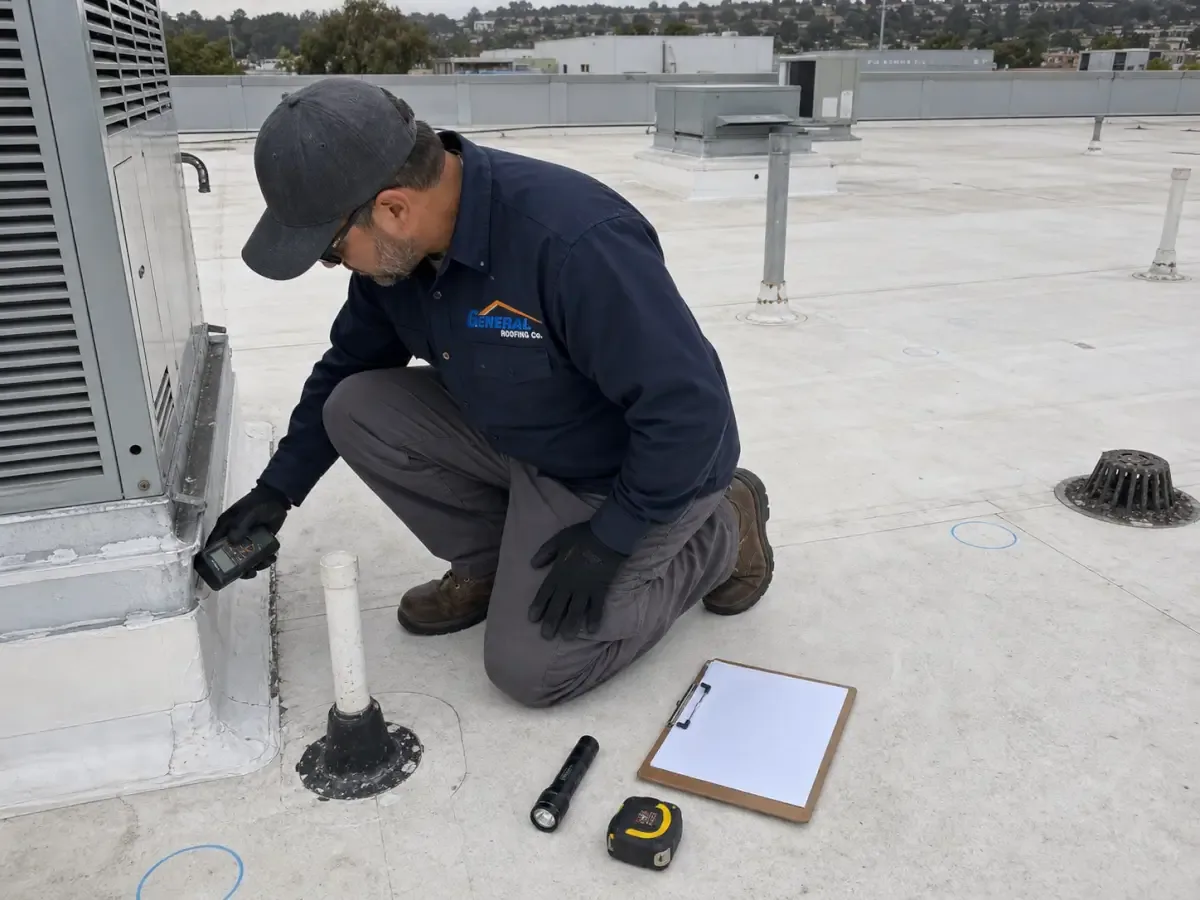
A walk of the whole roof, a count of drains and penetrations, photographs of each seam type and flashing, and a moisture scan where the roof is large or suspect. We then rate each section and give a plain scope.
Can a report serve a reserve study?
Yes. A section-by-section rating, a remaining-life range and a cost for each option are exactly what a reserve-study preparer needs, and they can be entered as they stand.
How often should the record be updated?
After every major repair and storm, plus a scheduled walk each spring and fall.
Who keeps the warranty paperwork?
The owner keeps the originals. We keep a copy with the roof record and track the inspection and notice dates.
Send us the address and a photo of the problem.
Tell us about the building. We will walk the roof, explain what it is doing and write up a scope before any price is discussed.