
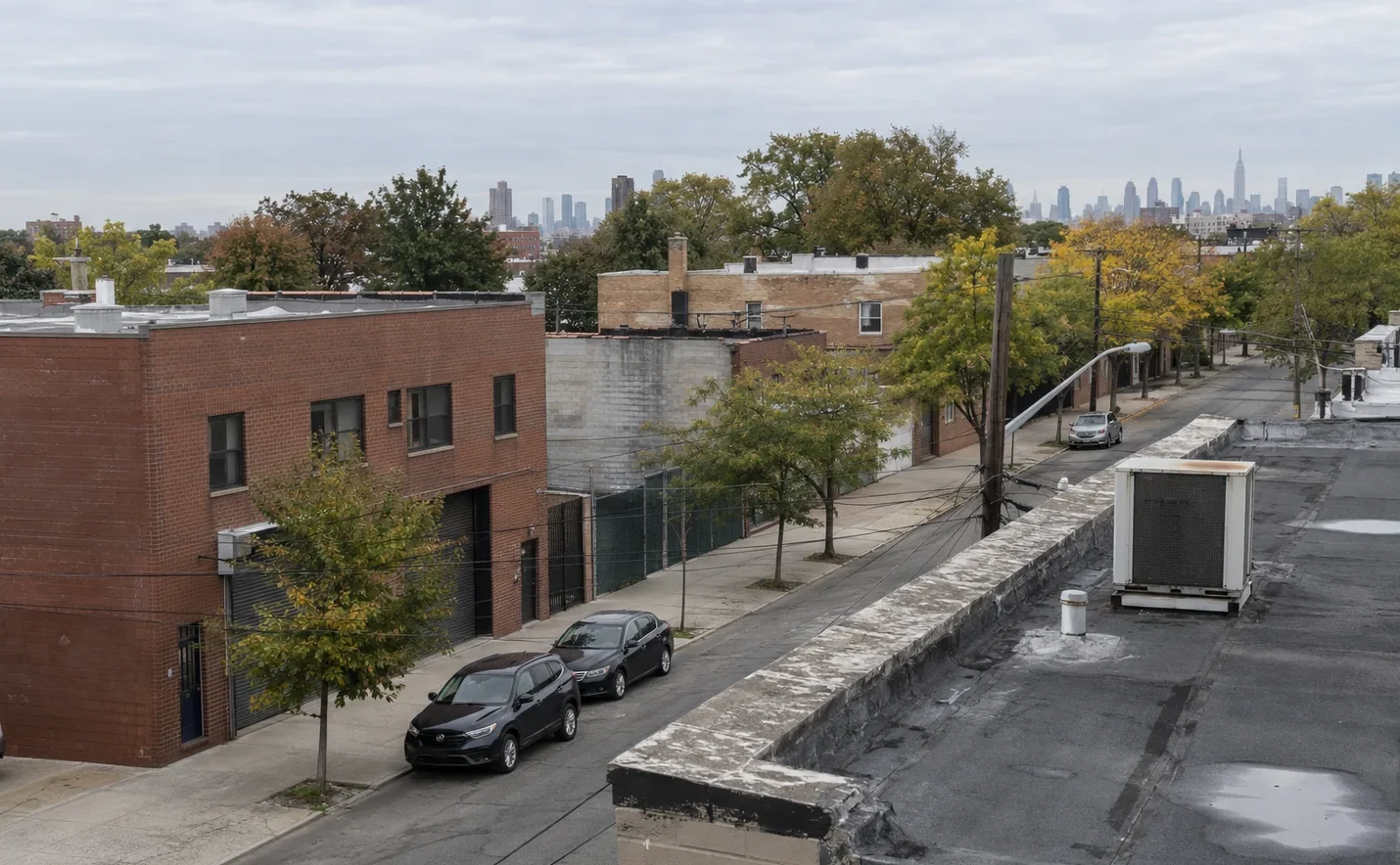
College Point, Queens, NY has roofs that run long, and so do their problems. A stain under a long seam, or water still pooled around a rooftop unit a day after rain, is how an owner in the corporate park first notices trouble. Founded in 1974 on about 550 acres, College Point Corporate Park sits among commercial roofs that cover plants, distribution and storage buildings and a strip of retail along 20th Avenue. We begin each walk the same way, at the drain, and trace the water back through seams, curbs and walls one step at a time.
What commercial roofs does College Point have?
More than 200 companies were in the corporate park by 2003. The southern end of the neighborhood is given over to contractors, furniture warehouses, a cement plant, oil storage and a Pepsi-Cola distribution facility. The New York Times printing plant opened in 1997 on the Whitestone Expressway, which bounds College Point on the south, and College Point Boulevard is one of its main streets. A strip mall on 20th Avenue includes Waldbaum's, Target and BJ's Wholesale Club.
That is a spread of uses: process industry, distribution, storage and retail. Each puts different demands on its roof, and we read each one on its own terms.
How do wide industrial roofs fail?
A plant or distribution building tends to have a wide roof with few drains, several rooftop units and long seam runs. Over so wide a field the deck can flex slightly between supports, and low spots form where water stands, ages the membrane and opens seams. Curbs under heavy units crack at the corners, edge metal works loose in wind, and one clogged drain can hold a large pond for days.
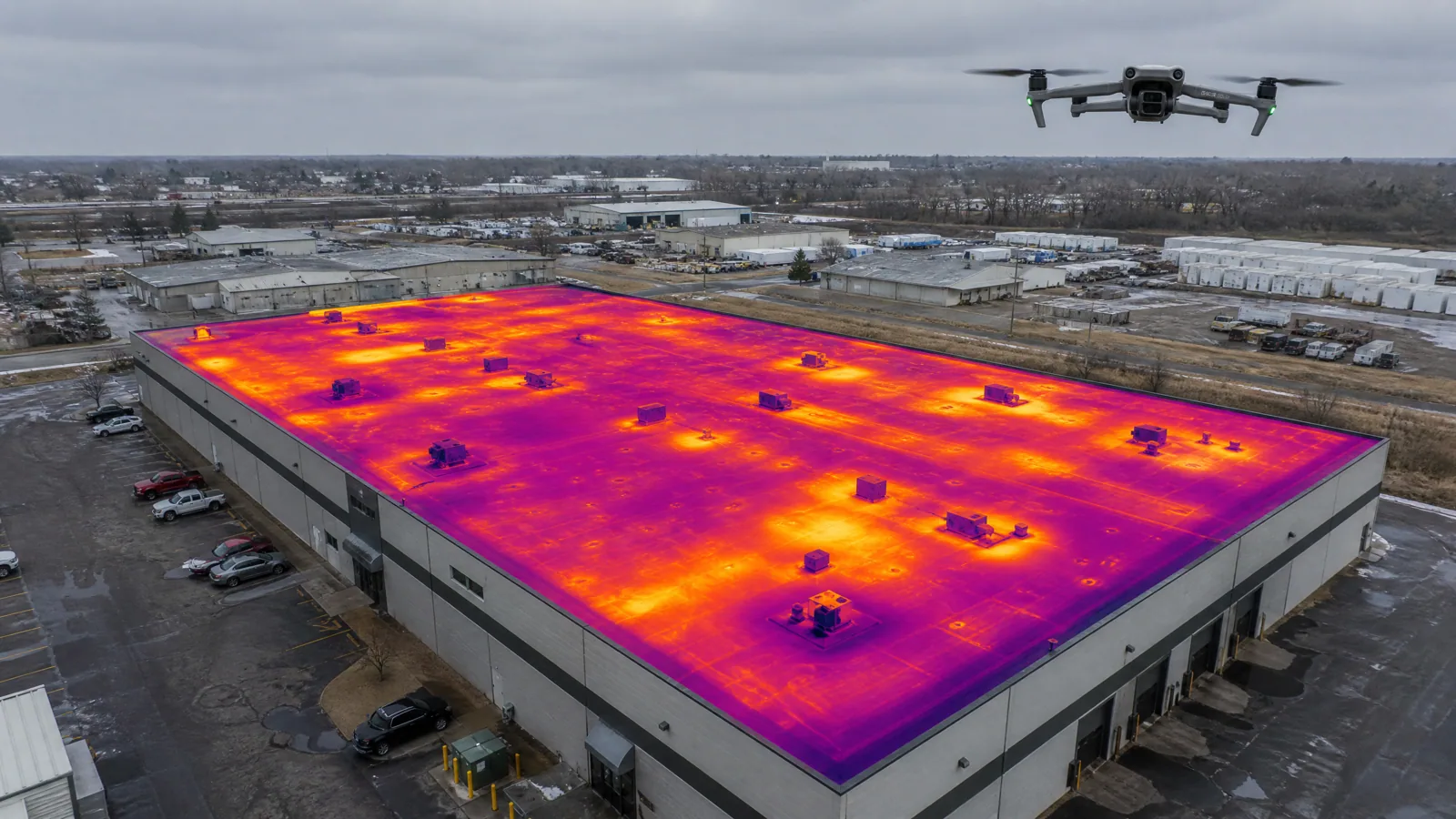
On a large roof a small problem hides until it is a big one, and a drone pass that maps ponds and stained seams in minutes shows us where to walk.
Rooftop units across a field this wide are the other repeat source. Each sits on a curb or rail, each has lines that cross the membrane and each has a walk path that wears. We map them, rate each flashing and add walkway pads on the routes that crews use most. If the units are heavy, we check the insulation under their supports for crushing and add bearing plates where it has happened. A low spot under a unit is a pond waiting for the next rain.
What does process industry do to a roof?
Where a plant exhausts air, steam or fumes through the roof, residue lands on the membrane near the stacks. Some materials soften, some sealants crack and some surfaces hold dirt that hides seams. We look for discoloration and softening around vents, test a small area and decide whether the sheet is suited to the exposure. Where the exposure is harsh, a chemically resistant single-ply or a splash zone around the stack protects the next roof.
Oil storage and cement operations in the southern part of the neighborhood can bring dust and, at some sites, fumes, and whether a particular building is affected is something a roof check determines.
A printing plant, a beverage distributor or a furniture warehouse each loads the roof differently. Printing and process lines add warm, humid exhaust. Distribution adds trucks, docks and often refrigeration. Furniture storage adds little on the roof but needs it very dry. We ask what runs inside and what runs on the roof before we choose a repair, because the answer decides the system.
What about the strip along 20th Avenue?
Retail roofs pose a different problem. With several tenants on a strip, one roof covers everyone, rooftop units have different owners, the landlord holds the roof, and a leak travels from one tenant to the next. Drawing the roof plan by tenant space lets everyone agree on who fixes what, with findings written so they can be shared.
Loud work on a retail roof waits for the hours before opening or after closing, while entrances and fire lanes stay open and materials are staged behind the building.
The stores on a strip like this one sell food and household goods, so a dry stockroom matters as much as a dry sales floor. We check the back of the building first, where scuppers, downspouts and the wall flashing do the most work, and we clear and test each drain before we move to the field.
How do we confirm the cause?
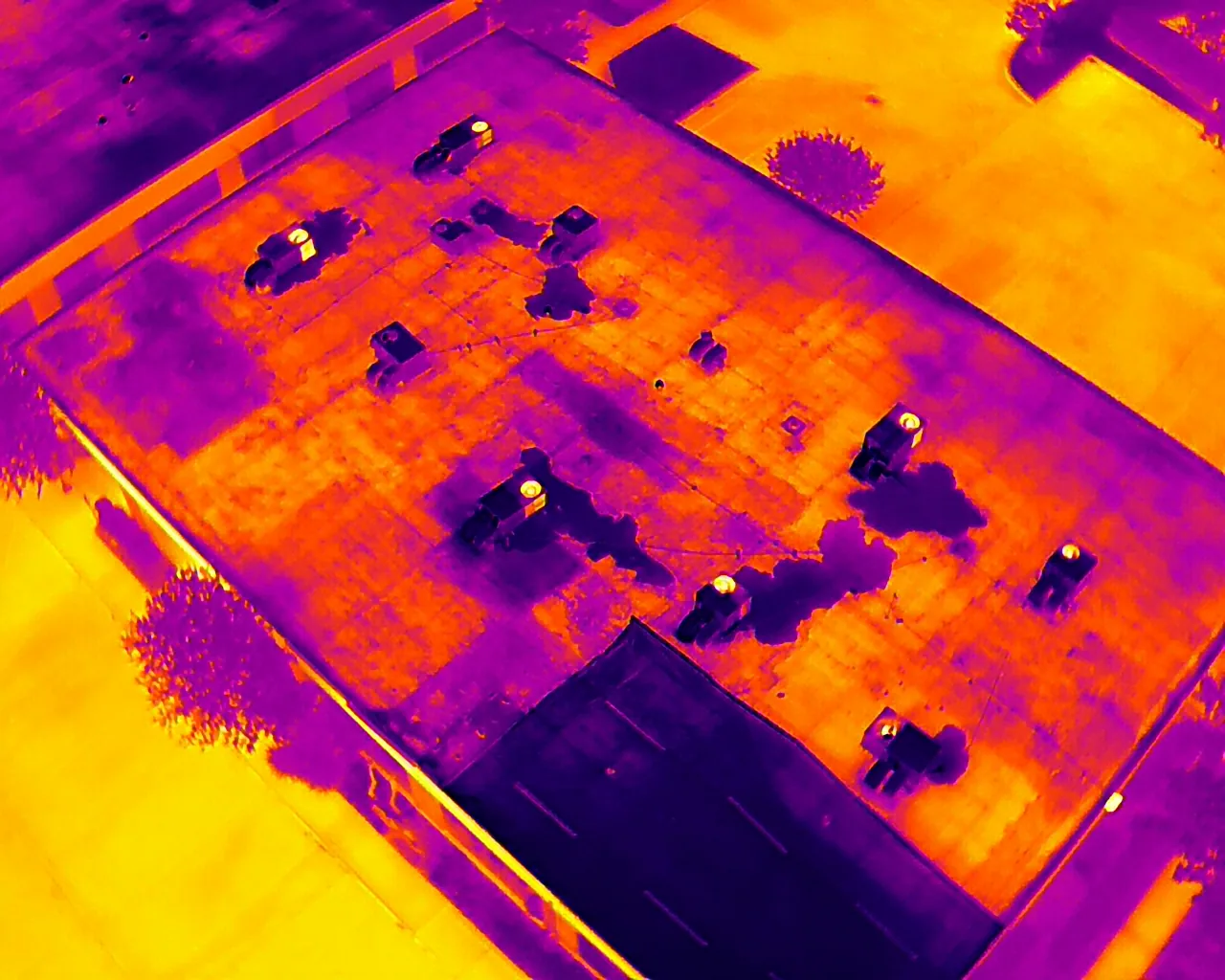
Size drives the method here. A drone survey shows ponds across the field before anyone steps on the membrane, and then we walk the problem areas on foot. We probe the seams, test the drains and map every curb. An infrared scan finds wet insulation and cores confirm it. The owner gets a work order and a record in one written report.
A large roof is divided into zones on the plan, and each zone is rated. The map shows where water stands, where seams are open and where insulation is wet, so the owner can spread the work over several budget years without losing sight of the whole roof.
What are the choices, and what is the next step?
When a few details have failed, a repair is enough. Wet insulation means replacement, while a sound membrane over dry insulation can be given a coating or a recover. Photographs of the stain and the nearest drain, along with the street and the roof age where known, get you a plain account of the roof's condition ahead of any price. Owners with buildings in Whitestone or Flushing can combine visits, and those with fulfillment space may compare distribution center roofing.
The price turns on the layers to remove, how wet the insulation is, how easily the roof can be reached and the curbs and lines to rebuild. Each gets its own line in the proposal, so the owner sees where the money goes.
Questions Owners Ask
What building owners and managers usually ask before a roof visit.
Moisture and condition decide it. A coating suits a sound membrane with dry insulation and tight seams. A recover suits a roof with one layer and dry insulation that has worn past the point where a coating holds. If the insulation is wet in broad areas, neither works. A scan and cores give a clear answer.
Usually. Sections are opened one at a time and dried in the same day, equipment below is protected and fumes are kept off the intakes. The operations manager approves the sequence, with loud tasks held for lighter periods, and where a line cannot tolerate dust or odor we use welded or cold-applied methods.
They open seams. Close to 30 inches of snow fall in New York City in an average year, and 27.3 inches fell on January 23, 2016 alone. Meltwater finds every open joint and refreezes there, so seams are walked after the thaw, drains cleared before winter and edge metal checked after a windy week.
To dirt and to wind, yes. Roads bring dust and diesel residue that settle in drains and on seams, and open ground around a road gives wind a clear path to the roof edge. We clean the surface before testing it, clear drains more often and check edge metal after windy weeks.
The worst stain from the floor, the nearest roof drain from the roof edge if access allows, and any rooftop unit near the stain. Add the date of the last rain. Those photographs tell us where to start and save time on the first walk.
Related Roofing Work
Other pages that connect to College Point.
Drone Roof Inspections
Drone imaging for large or hard-to-reach commercial roofs in Queens, NY, with photographs and thermal data that guide a safer hands-on follow-up.
Infrared Roof Moisture Surveys
Infrared scans and core-cut moisture surveys for Queens, NY commercial roofs that locate wet insulation before the owner commits to repair or replacement.
Commercial Roof Repair
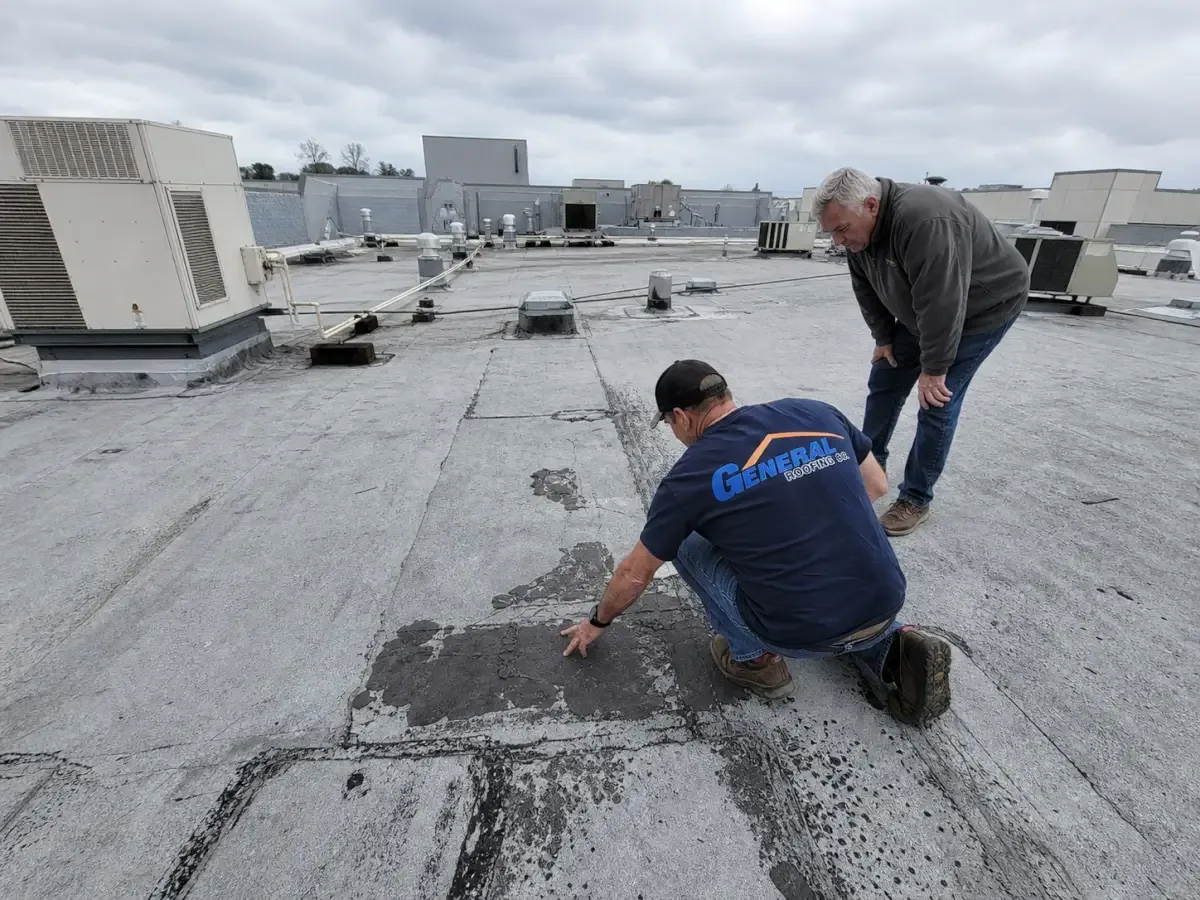
Planned repair of membranes, seams, flashing and details on Queens, NY commercial roofs, with each fix explained before the crew picks up a tool.
Ready to Talk About College Point?
Tell us about the building and what you are seeing. We will schedule a roof walk and send photos and a written scope.