
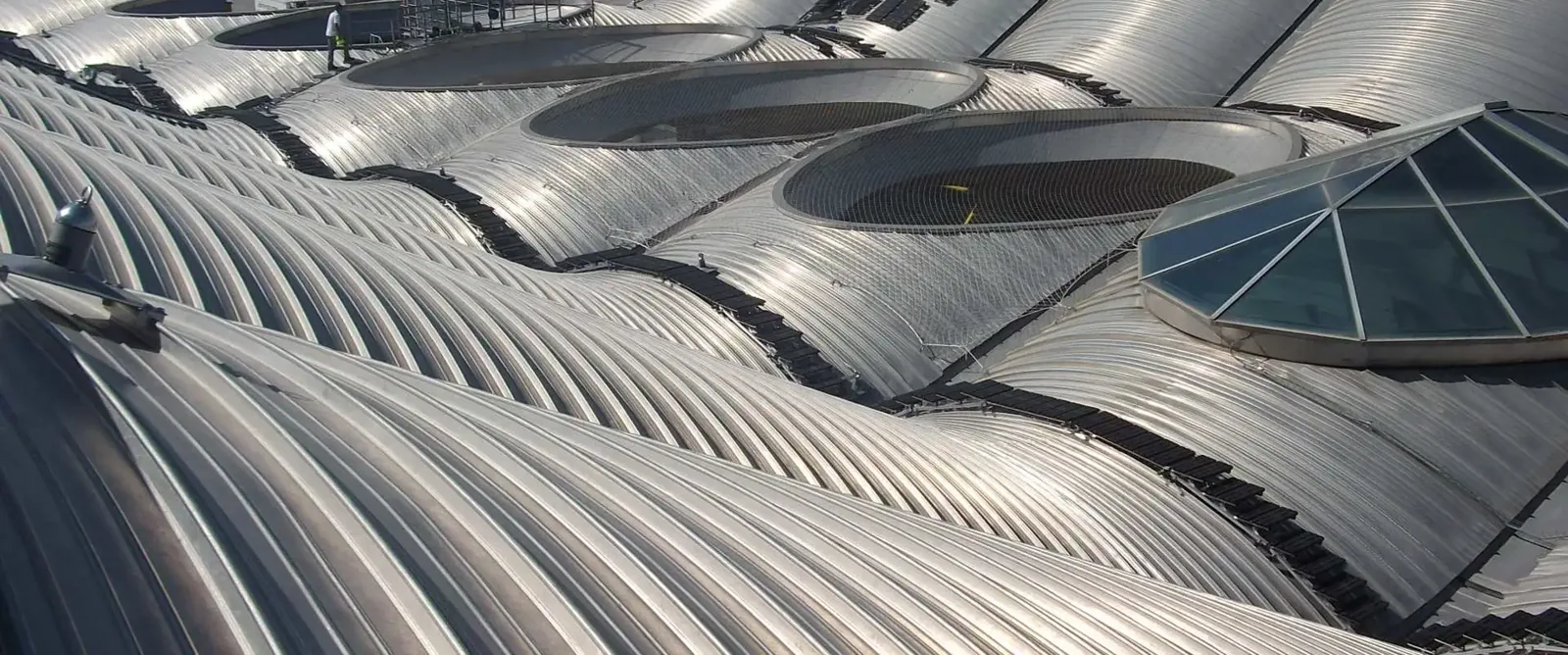
A roof that has gone stiff and brittle around its vents is usually a roof that was asked to resist something it could not. The sheet looks fine in the open field, then cracks like old plastic at the corners, and a hand pressed on the surface leaves a faint chalky residue. That pattern points to a membrane losing its softness under chemical or heat attack, and it is the situation a KEE membrane is made for. Before choosing one, though, it helps to understand what the letters stand for.
What is KEE, and how is it different from ordinary PVC?
KEE stands for ketone ethylene ester, a polymer blended into a PVC sheet to keep it flexible. Ordinary PVC relies on added plasticizers that can slowly migrate out of the membrane over many years, which stiffens it. A PVC-alloy sheet that uses a KEE polymer holds its flexibility with less loss, so the roof stays softer, welds well and resists many chemicals and oils.
The sheet is installed like other PVC sheets: rolled out, fastened or adhered and welded at the seams with hot air. The price is higher than a basic PVC roof or TPO, and the benefit appears over time and in harsh exposures. Where the roof faces little more than rain, the extra cost may not pay back.
It helps to compare it with TPO on the same roof. TPO is cheaper and fine for clean, quiet roofs. A KEE alloy costs more and justifies it only where the roof is working in a harsher setting. The point is to match the sheet to the exposure, so we ask what is vented, what drips and how hot the equipment runs before naming a product type.
When is KEE worth considering?
Walk it with me. Think about what lands on the roof. Kitchens, laboratories, plants with process vents, vehicle repair shops and buildings with oily rooftop equipment all drop aggressive substances onto the sheet. If those are present and the roof is expected to serve for a long time, a chemical-resistant alloy is worth pricing.
Think also about heat. A mechanical roof with hot exhaust ages sheets faster, and a sheet that holds its flexibility keeps its welds. Finally, think about the owner's plan. A building held for decades benefits from a membrane that stays supple, while a building to be sold soon may not. A manufacturing plant roof is a typical candidate.
Fire ratings come into it too. A building close to a property line, or one with a rated assembly, needs a sheet whose fire record supports the review, and PVC-based sheets have a good one. The owner's design team confirms the rating and we install what the drawings call for, with the project documents naming the assembly that applies under Chapter 15 of the NYC Building Code, the chapter on roof assemblies and rooftop structures.
Where does it fit in Queens?
It belongs on roofs that sit under vents and discharge. Willets Point earned the nickname Iron Triangle for its auto junkyards and repair shops, and a 2006 Hunter College study counted 225 businesses there. Demolition of the industrial section began in 2016 and construction of Etihad Park started in December 2024. An auto shop can send oil and solvent vapor onto the roof beside its vents, and that is exactly the exposure a chemical-resistant sheet is made for.
Other parts of Queens raise the same question. Jamaica Hospital and Queens Hospital Center are major Jamaica employers, and a hospital's mechanical roof is the kind that carries exhaust. The southern part of College Point has oil storage facilities, a cement plant and a Pepsi-Cola distribution facility. On a roof in Willets Point or College Point, the first thing to judge is what actually lands on the sheet.
How do we check an existing PVC-alloy roof?
The first step is to look at color and surface: chalking, discoloration or a glassy, hard surface suggest the sheet is aging. The second is to flex a clean corner gently. A supple sheet bends, while a brittle one cracks. The third is to probe every weld and check each flashing for hairline splits. We note the vents and the exhaust beside them, because the damage usually follows the discharge.
If the sheet is sound, a repair may be a welded cover strip or a patched flashing. If the roof is widely brittle, replacement is the sounder choice than patching. A heat and UV damage repair can extend the roof where the surface is damaged but the base is sound.
The last step is a record: dated photographs of each weld, vent and corner, with a sketch of the roof. A record like that lets the next inspection compare against this one, which is the best way to see how fast a sheet is aging and when to start budgeting for a new one.
How does it hold up in Queens weather?
A sheet that resists chemicals still has to live through the same year as every other roof. Central Park's July afternoons average close to 85 degrees, the heat island adds more, and LaGuardia, in Queens, once reached 107 F on July 3, 1966. Winter brings about 30 inches of snow in a typical year, and 27.3 inches fell on one day in January 2016.
Rain is the larger test. Hurricane Ida's remnants brought New York City its first flash flood emergency on September 1, 2021, with most of the deaths in Queens. Willets Point had no sidewalks or sewers as of 2013, and flooding there is common in heavy rain. A roof in such a district depends on its own drains, so they get sized and cleared with care. A ponding water repair is cheaper than a failed seam.
One more detail for low-lying and shoreline sites is wind. The gusts of Hurricane Sandy, at hurricane force over the whole metro area in October 2012, show why the perimeter is the first place wind works. Edge metal, termination bars and the first rows of fasteners keep the sheet from fluttering, and a flutter is the start of a seam failure.
What is the next step?
Send photos of the stiff or cracked area, the vent beside it and the nearest drain, plus a note on what the building vents. A walk of the roof will show whether a KEE or other alloy sheet is the right fit. Price comes after.
Questions Owners Ask
What building owners and managers usually ask before a roof visit.
It is a PVC-based sheet with a KEE polymer in the blend. It looks and installs like other PVC sheets, but it is formulated to stay flexible and resist more chemicals. The weld and the flashing details are still the keys to a tight roof.
Usually not. When nothing aggressive reaches the roof, a TPO or standard PVC sheet will do. KEE earns its cost where kitchens, plants, labs or oily equipment send material onto the roof.
Sometimes, with a separation layer and a dry base. The old roof must be dry, flat and compatible. We scan, core and test before recommending a recover.
We cut out the damaged section and weld in a new piece, or weld a cover strip over small cracks. If brittleness is spread across the roof, patching is poor value and we price a replacement.
Send photos of the stiff area, the vent or equipment beside it and the nearest drain, plus a note on what the building vents.
Related Roofing Work
Other pages that connect to KEE Roofing.
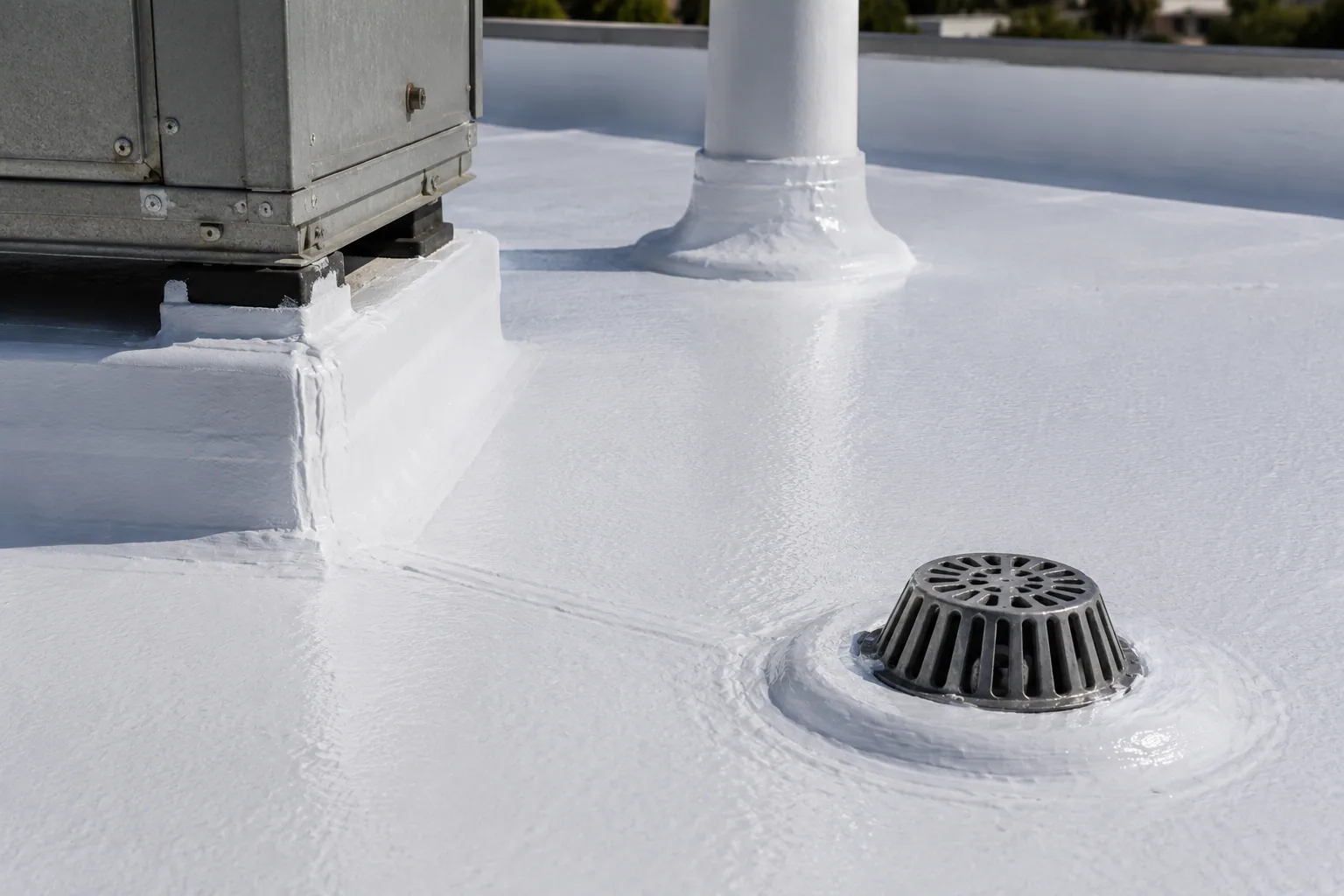
PVC Roofing
PVC roofing in Queens, NY: welded single-ply membranes for roofs that see grease, exhaust and chemicals, with repair, recover and replacement explained plainly.
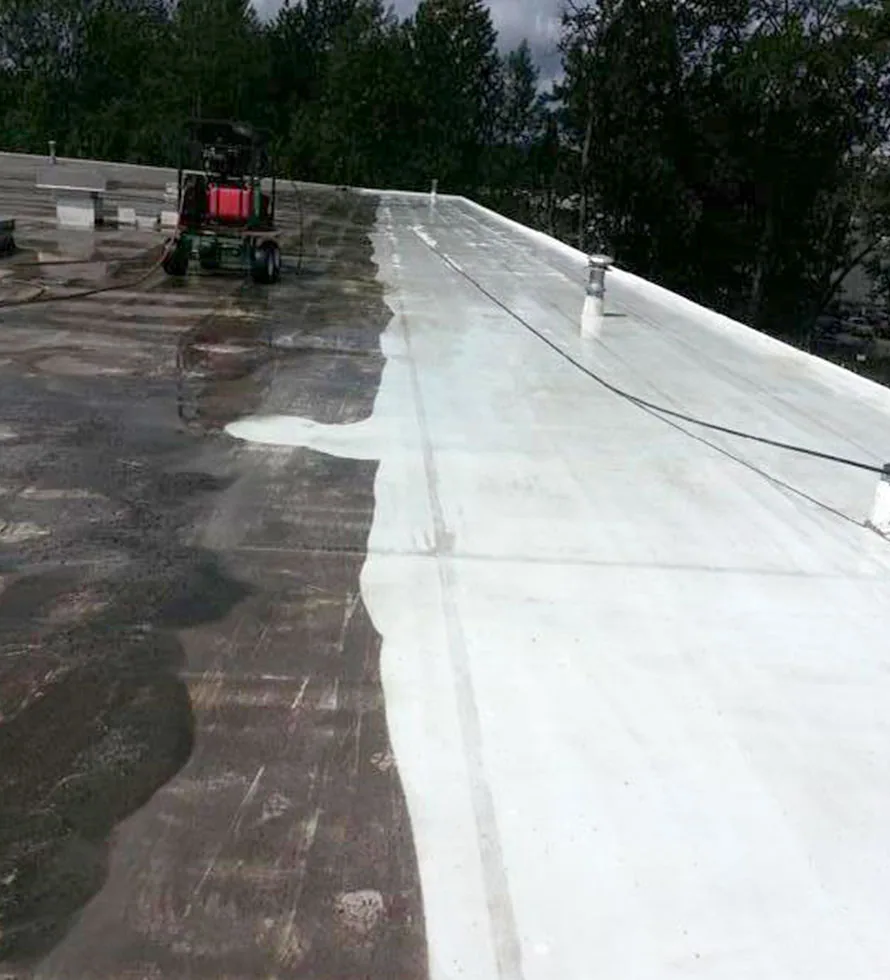
TPO Roofing
TPO roofing in Queens, NY: heat-welded white single-ply membranes for flat commercial roofs, with seam checks, repair and replacement explained step by step.
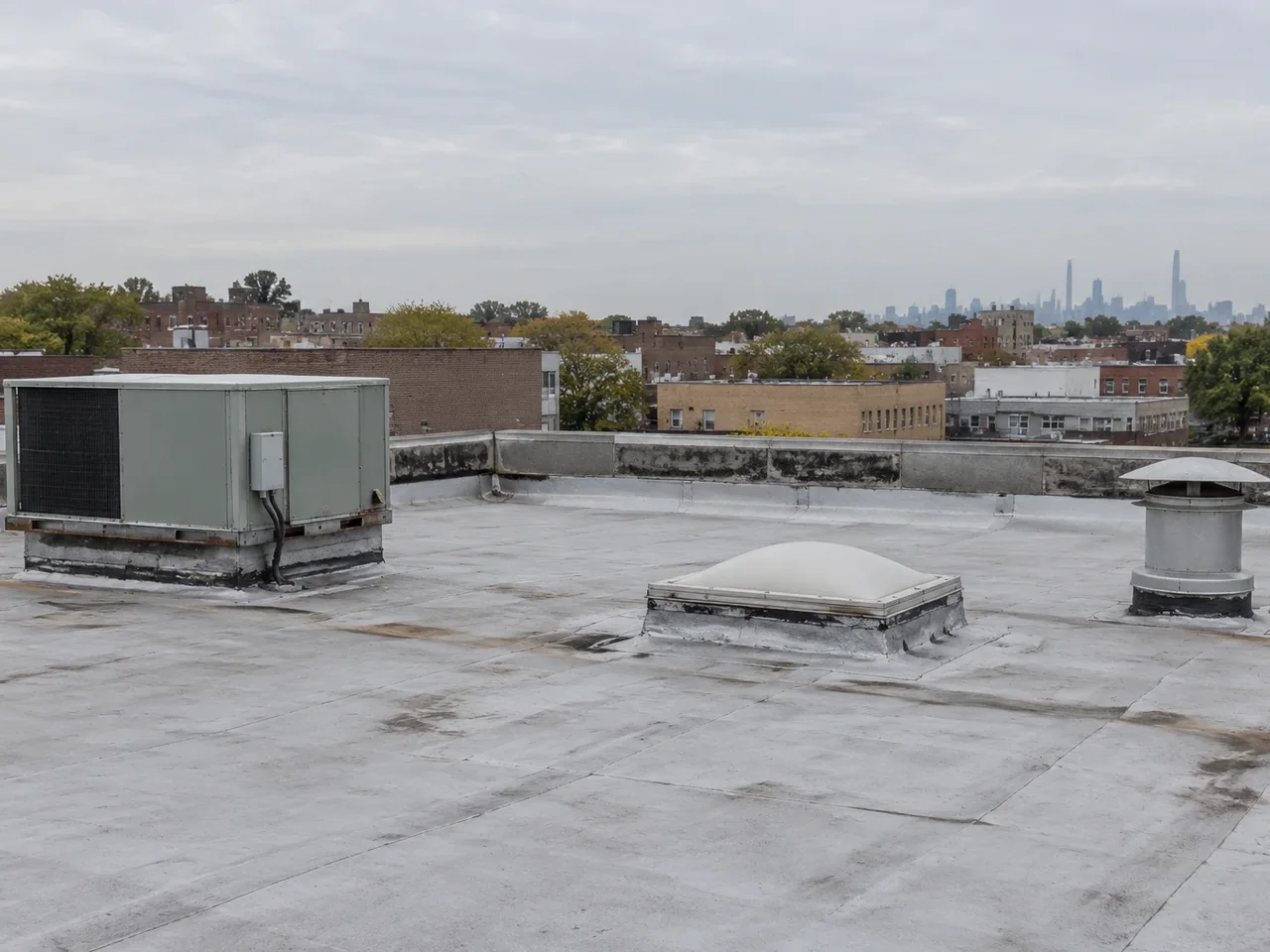
Manufacturing Plant Roofing
Roof repair and replacement for Queens, NY manufacturing plants, with exhaust, heat, process vents and production schedules planned into every step.
Ready to Talk About KEE Roofing?
Tell us about the building and what you are seeing. We will schedule a roof walk and send photos and a written scope.