
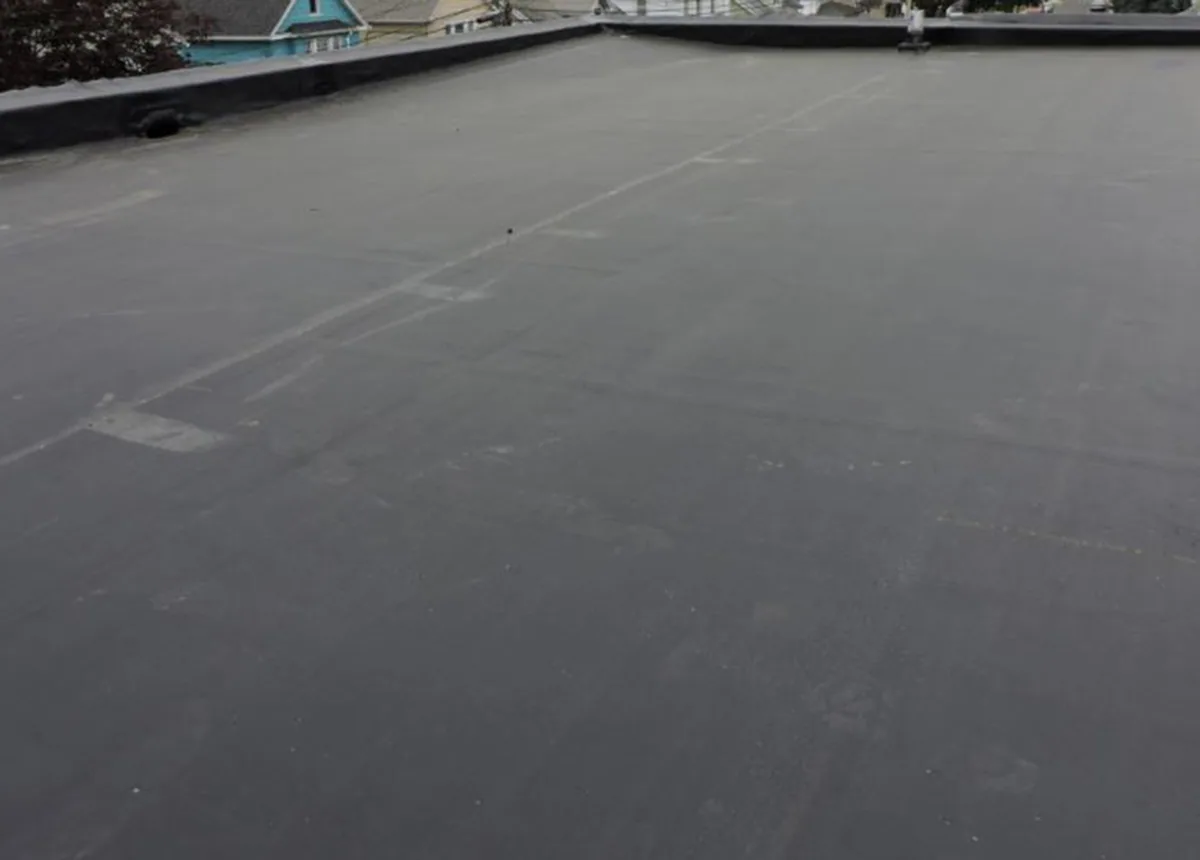
A black rubber roof that has pulled away from the parapet leaves a gap you can slide a hand into. That is the first thing an owner notices, usually after a windy week, and it is a clue rather than a verdict. EPDM stretches, shrinks and relaxes with the seasons, and where it is attached and how it is flashed decide whether it holds. The membrane itself has a long record. The edges are where it tells you it is tired.
What is EPDM, and what makes it different?
EPDM is ethylene propylene diene monomer, a synthetic rubber sheet made in wide rolls. It is cut to size, laid over the roof and joined at the seams with adhesive or a seam tape. Because the sheet is rubber, it stays flexible in cold weather and tolerates many years of sun, and it handles movement without cracking the way stiffer membranes can.
The seams are the tradeoff. Where a thermoplastic sheet is welded, EPDM is glued or taped, and the glue line is the part that ages. A well-made seam can last a long time, and a poorly made one starts to creep. For that reason, the seam is the first place we look on any rubber roof.
Cost drivers are plain. Thicker sheets cost more. Adhered systems take more labor than mechanically attached ones, and ballasted systems need stone delivered and spread. Access matters too: carrying rolls up a stair on a corner building costs more than craning them onto an open roof.
How is EPDM held down?
Walk it with me. Three methods are in use. In a fully adhered system the EPDM sheet is bonded with adhesive to the insulation or cover board over the whole surface, which suits roofs with odd shapes and heavy wind. Mechanically attached EPDM is fastened along the seams, which is fast on big, simple roofs. Ballasted EPDM is laid loose and held down by stone or pavers, which saves adhesive but adds weight.
Ballast is the one that surprises owners. It means the roof is carrying tons of stone, and the deck has to be built for it. Under the stones, the sheet is protected from sun but hidden from view, so a leak can be hard to find. Before we recommend ballast we check the structure and the drains, and we weigh it against an adhered system. The insulation and cover board under the sheet matter in all three.
What do we look for on an EPDM roof?
The first step is to walk the seams and press them, feeling for slack and lifted edges. The second is the flashing at walls and curbs, where the rubber has to climb and where shrinkage pulls the sheet away. The third is the field itself, where foot traffic and dropped tools make punctures. A membrane puncture repair is simple with a rubber patch, as long as the surface around it is clean and dry.
Ballast brings its own checks. Stone can scour the sheet, migrate toward the drain and clog it, and bare spots expose the rubber to sun. We rake the stone back, clear the strainers and look for pooled water beneath.
Seam tape deserves its own look. Tape that has been dirty when applied, or has been pulled by shrinkage, shows as a wavy line with a dark edge. We press it, and if it lifts, we clean the sheet, prime it and apply new tape with a roller. Where a seam is open along a long run, we cut the sheet back to a sound seam and reconnect it, because a short patch over a long failure only moves the gap.
Where does EPDM fit in Queens?
It suits small and awkward roofs well. Ridgewood has low-density commercial districts along Myrtle, Forest and Metropolitan Avenues and Fresh Pond Road, among rowhouses that are mostly early twentieth century. A flat roof over a corner store with apartments above is a typical EPDM candidate, because the sheet can be cut and flashed around chimneys, vents and parapets.
Bigger roofs can use it as well. Woodhaven Boulevard in Glendale hosts big-box retailers, and Metro Mall in Middle Village holds BJ's Wholesale Club and Raymour and Flanigan. A big-box store roof is usually a long, simple surface that suits a mechanically attached or ballasted sheet, while the small rooftops of Ridgewood and Glendale sit at the other end of that range.
How does EPDM handle heat, cold and cloudbursts?
Black rubber absorbs heat, so a dark EPDM roof runs hot in summer, and July afternoons at Central Park already average near 85 degrees before the heat island is counted. White EPDM is available for owners who want reflectivity, and a coating can lighten an older sheet. In winter the rubber stays supple, even in a city that averages 29.8 inches of snow a year and once took 27.3 inches in a single day.
Water is the larger issue. The first flash flood emergency in the city's history came with Hurricane Ida's remnants on September 1, 2021, and Queens had most of the deaths. Rubber tolerates ponding better than some sheets, but standing water still ages seams and flashings. A drain and scupper check is part of every EPDM walk.
A worn EPDM roof does not always need replacement. If the sheet is sound and dry, a reflective acrylic coating can lower the surface temperature and extend its service life. Coating is a surface fix, though, and it cannot repair a seam or dry a wet board, so the moisture scan always comes first.
What is the next step?
Send photos of the gap at the parapet, the nearest seam and the drain, along with the roof's age and whether it has stone on it. We will walk the roof and say, step by step, whether to repair, recoat or replace, and then turn to cost. If you are weighing rubber against a welded sheet, we will set it beside TPO for your roof.
Questions Owners Ask
What building owners and managers usually ask before a roof visit.
A well-installed sheet with sound seams and good flashings can last for many years. Seams, flashings and ponding decide the actual life. We judge by probing and by looking at the surface, not by the calendar. A roof with stone on it should have the stone pulled back at several spots so we can read the sheet underneath.
Often the answer is to rebuild the flashing. If the sheet has shrunk away from a wall, we cut it back, add a new flashing strip and re-adhere the edge. If shrinkage is widespread, replacement is the better value. We also check that the wall behind the flashing is sound, since a loose parapet pulls the new strip away again.
Only if the structure can carry it. We check the deck and the framing, and an engineer's review may be needed. For many older roofs, an adhered or mechanically attached sheet avoids the weight.
Sometimes. A sound, clean sheet can take a compatible coating that adds reflectivity. A roof with wet insulation, open seams or deep shrinkage needs repair first. We scan and probe before agreeing to coat. Coating over dirt fails early, so cleaning and priming are part of the job.
Send photos of any gap at the parapet, the seam nearest the stain and the drain, plus the roof's age. If stone is on the roof, tell us.
Related Roofing Work
Other pages that connect to EPDM Roofing.
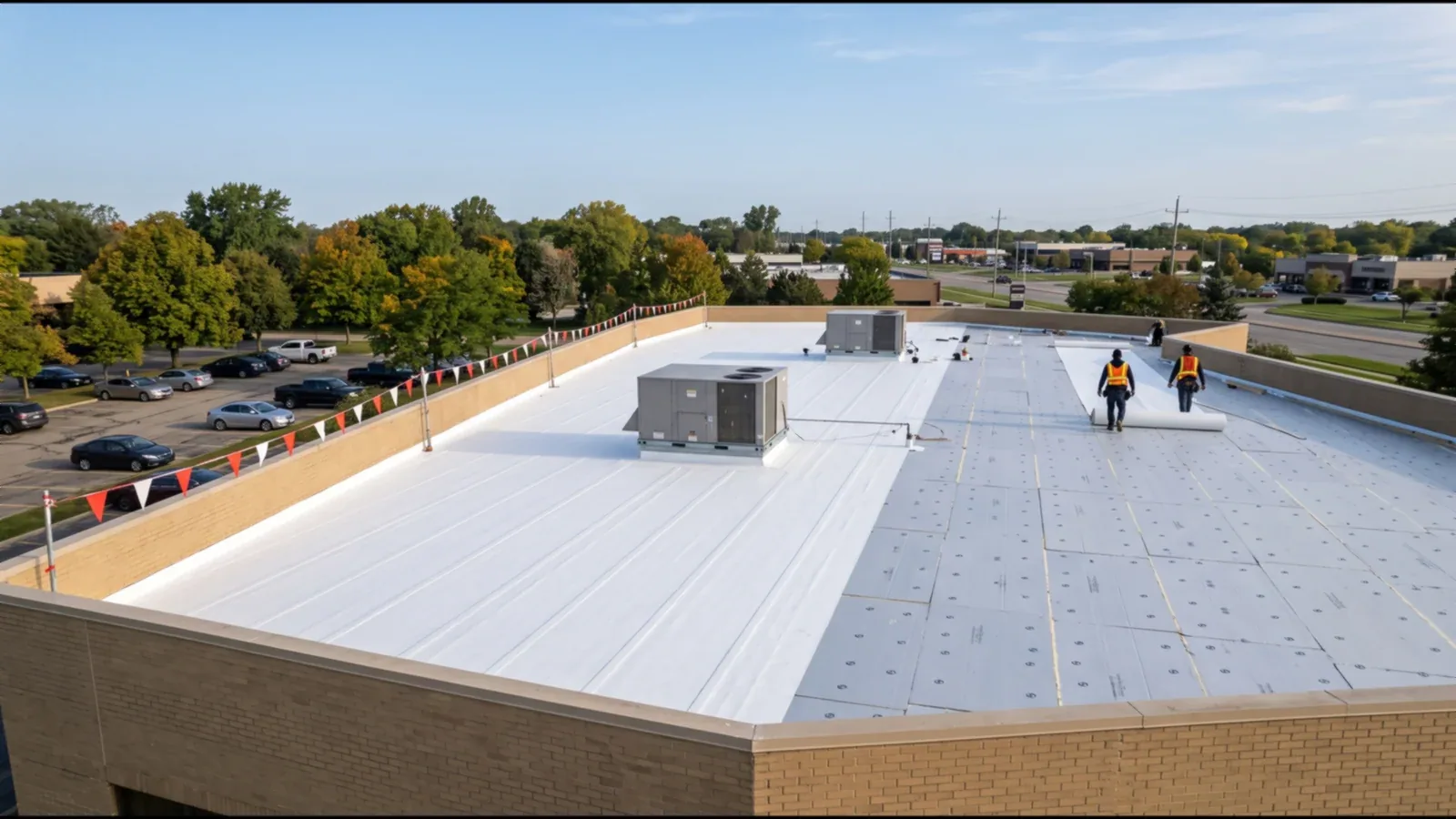
Roof Insulation and Cover Board
Roof insulation, tapered systems and cover board for commercial roofs in Queens, NY: wet insulation, slope, thermal value and what goes under the membrane.
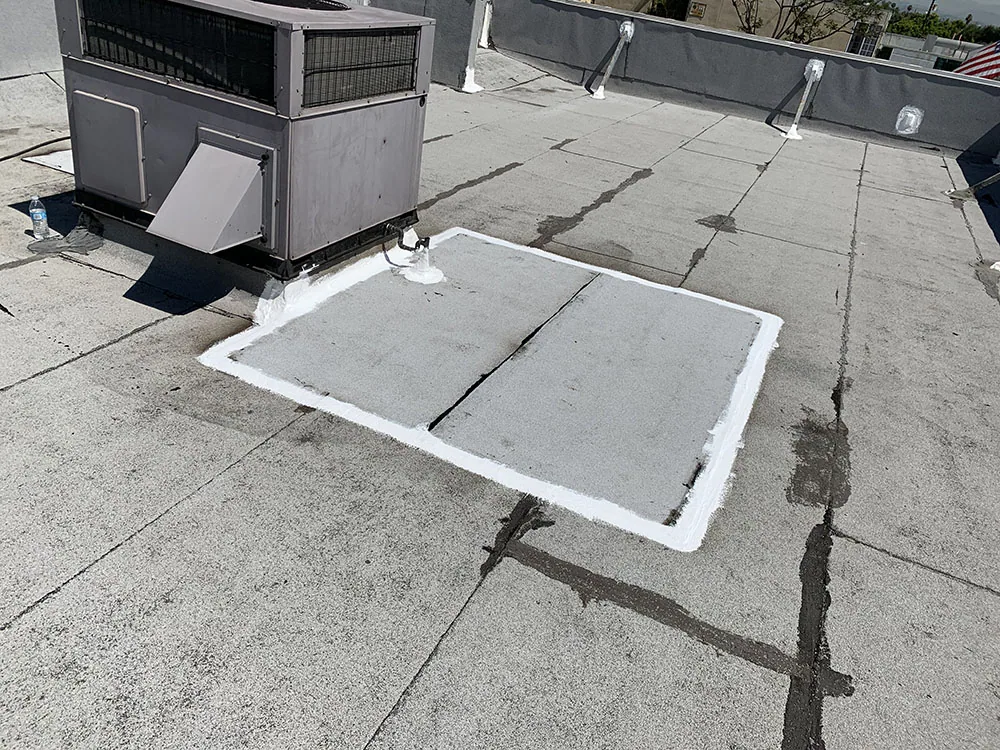
Membrane Puncture Repair
Membrane puncture repair in Queens, NY: cuts, tears and foot-traffic damage on flat roofs found, patched and protected with walk pads and service-route rules.
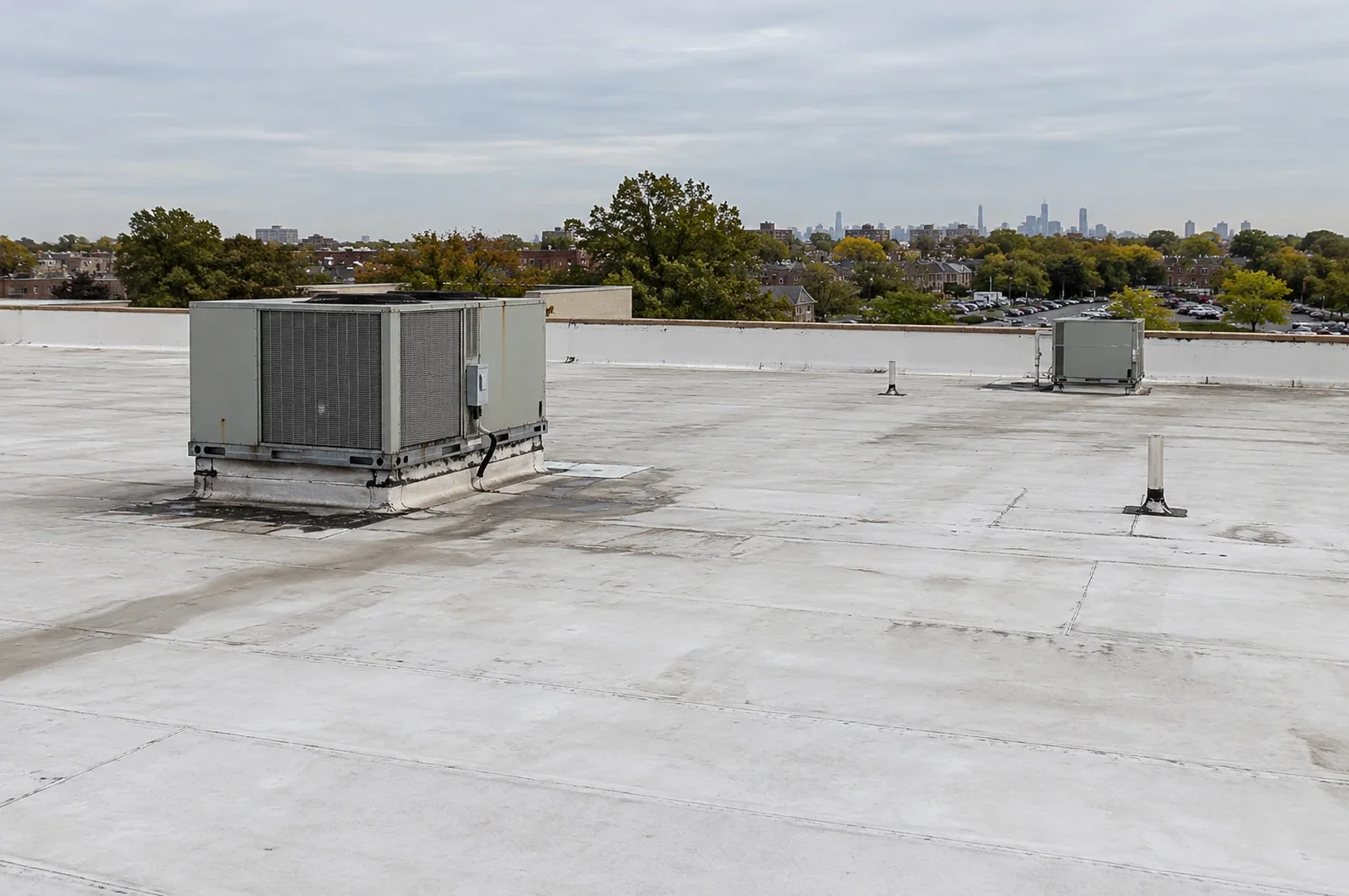
Big-Box Retail Roofing
Roof repair and replacement for big-box stores in Queens, NY: wide flat fields, rooftop units, ponding and phased work that keeps the sales floor open.
Ready to Talk About EPDM Roofing?
Tell us about the building and what you are seeing. We will schedule a roof walk and send photos and a written scope.