
Wind Damage Roof Repair
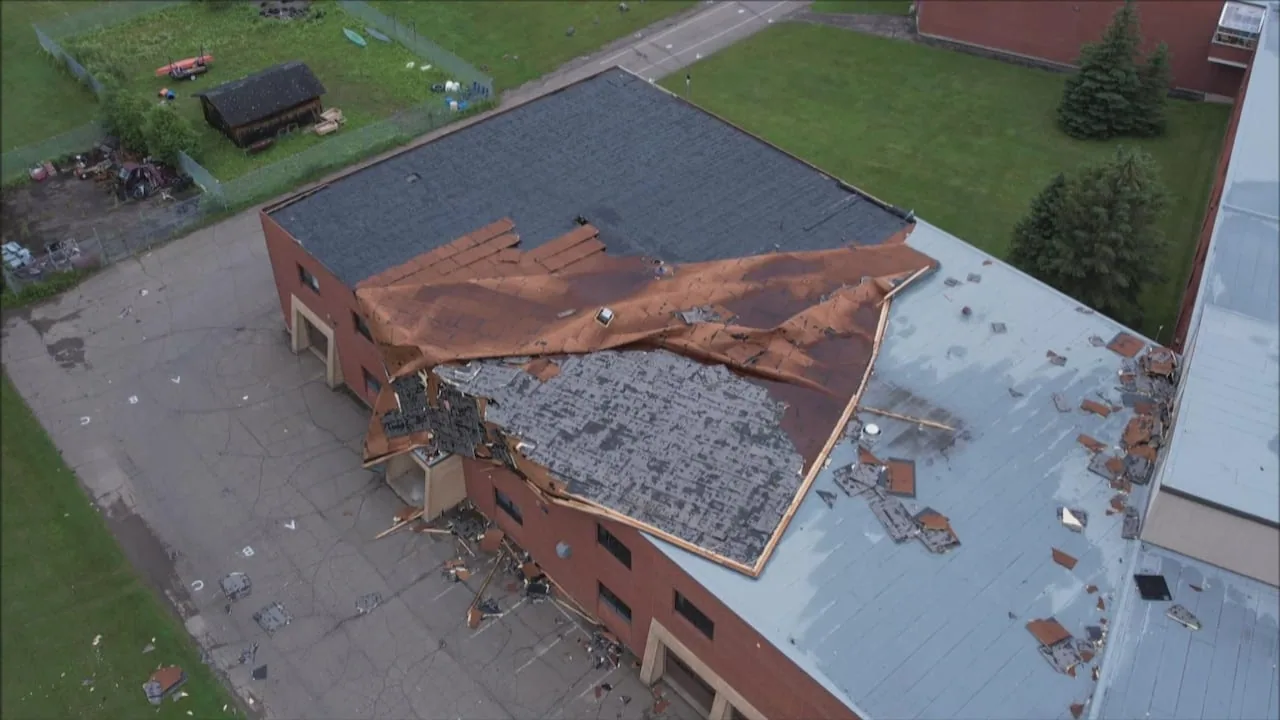
Wind damage roof repair in Queens, NY: lifted edge metal, peeled membrane and loosened fasteners found, explained in plain steps and repaired at the edge first.
Ponding Water Roof Repair
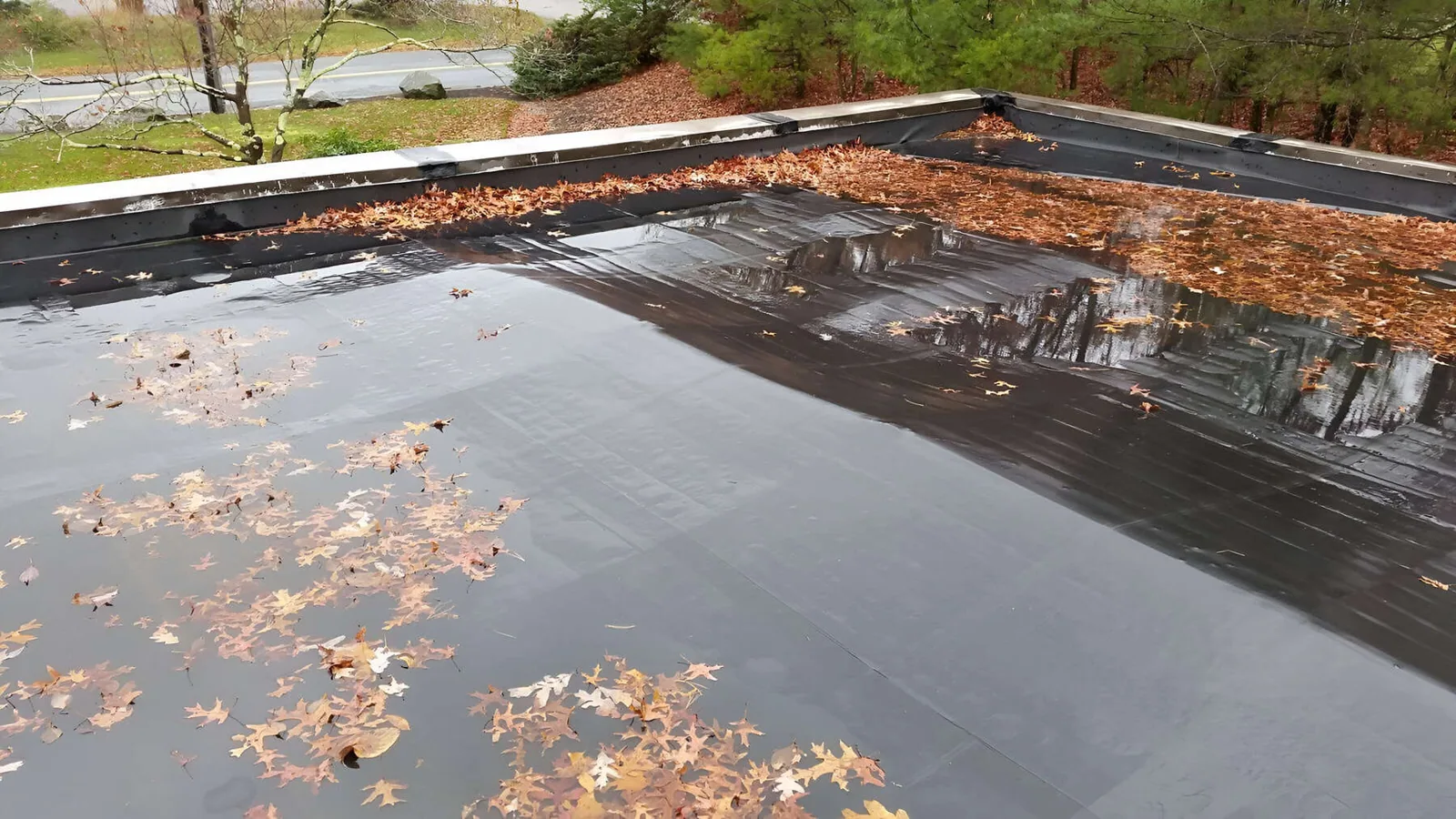
Ponding water roof repair in Queens, NY: why standing water forms on flat roofs, how it ages the membrane and the drain, slope and insulation fixes that end it.
Flashing Failure Repair
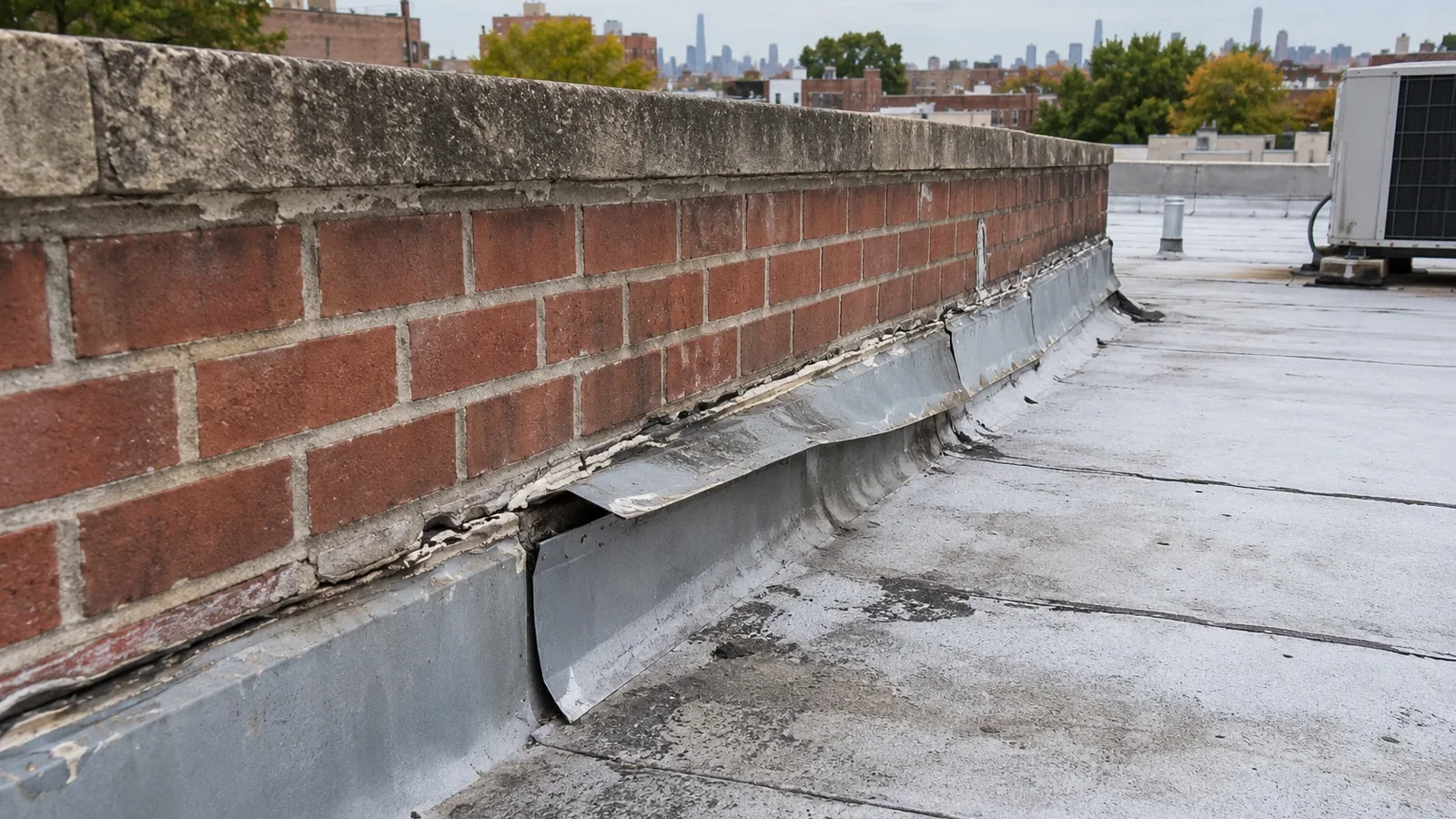
Flashing failure repair in Queens, NY: cracked tar, lifted base flashing, open counterflashing and parapet leaks traced and rebuilt on commercial flat roofs.
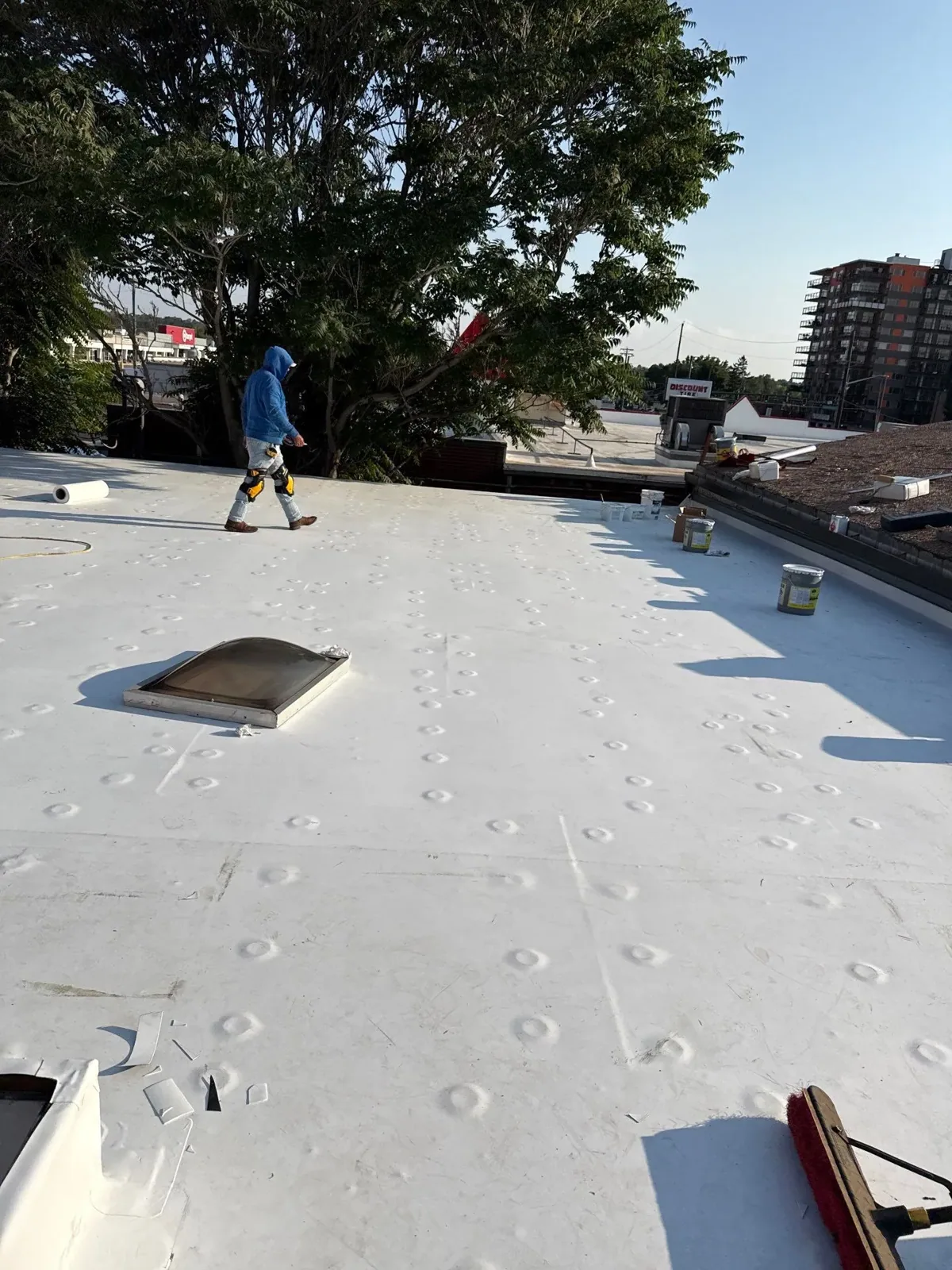
Seam Failure Repair
Seam failure repair in Queens, NY: split, open and lifted seams on TPO, PVC, EPDM and modified bitumen roofs, found by probe and repaired with strips.
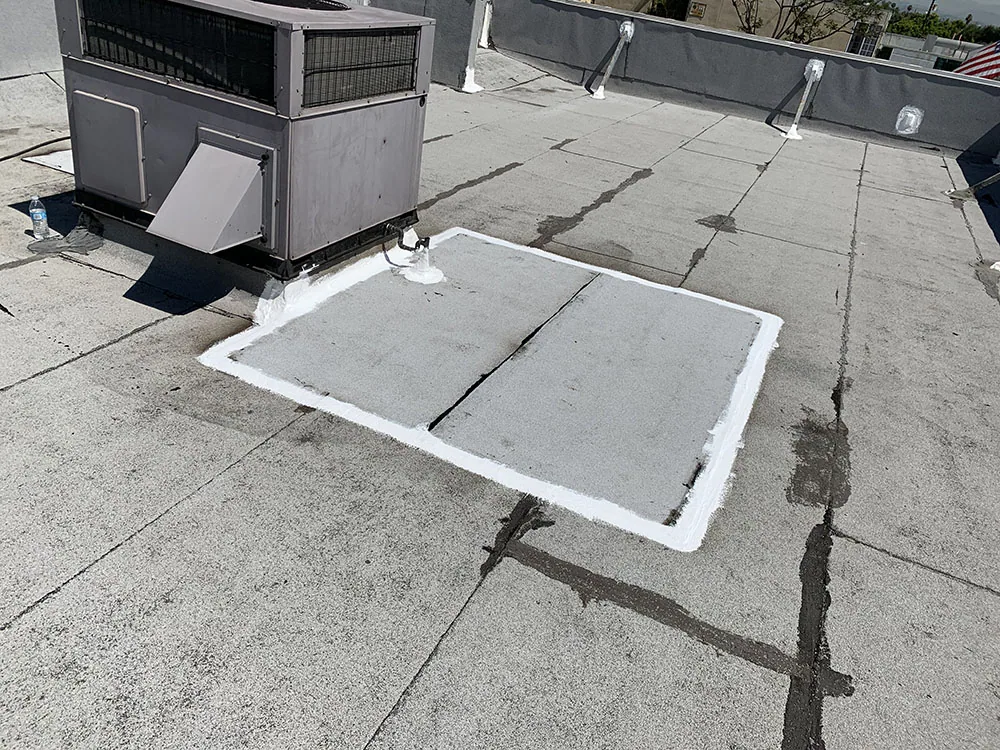
Membrane Puncture Repair
Membrane puncture repair in Queens, NY: cuts, tears and foot-traffic damage on flat roofs found, patched and protected with walk pads and service-route rules.
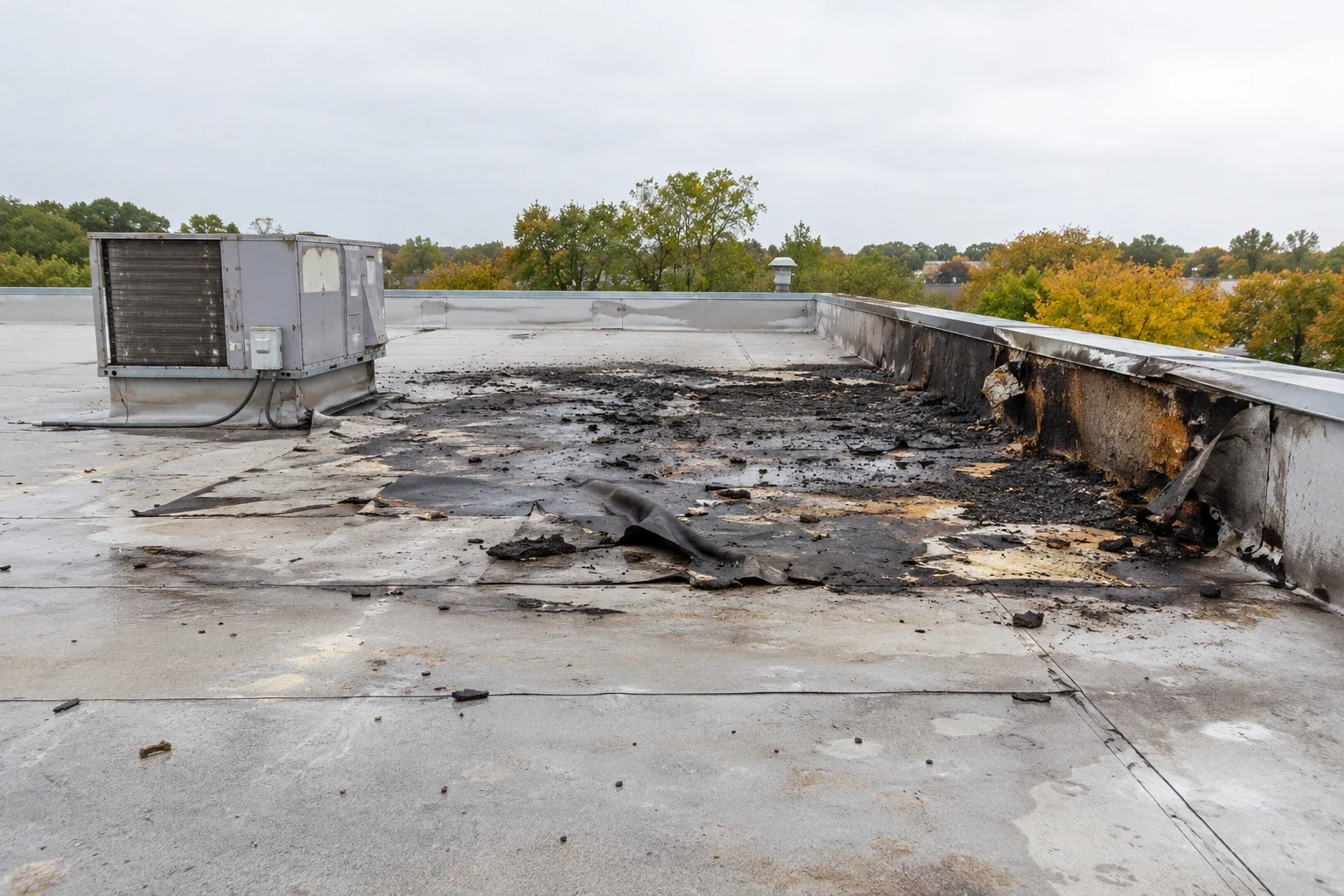
Fire Damage Roof Repair
Fire damage roof repair in Queens, NY: safety checks, temporary dry-in, heat-damaged membrane and insulation, smoke residue and a written scope for insurers.
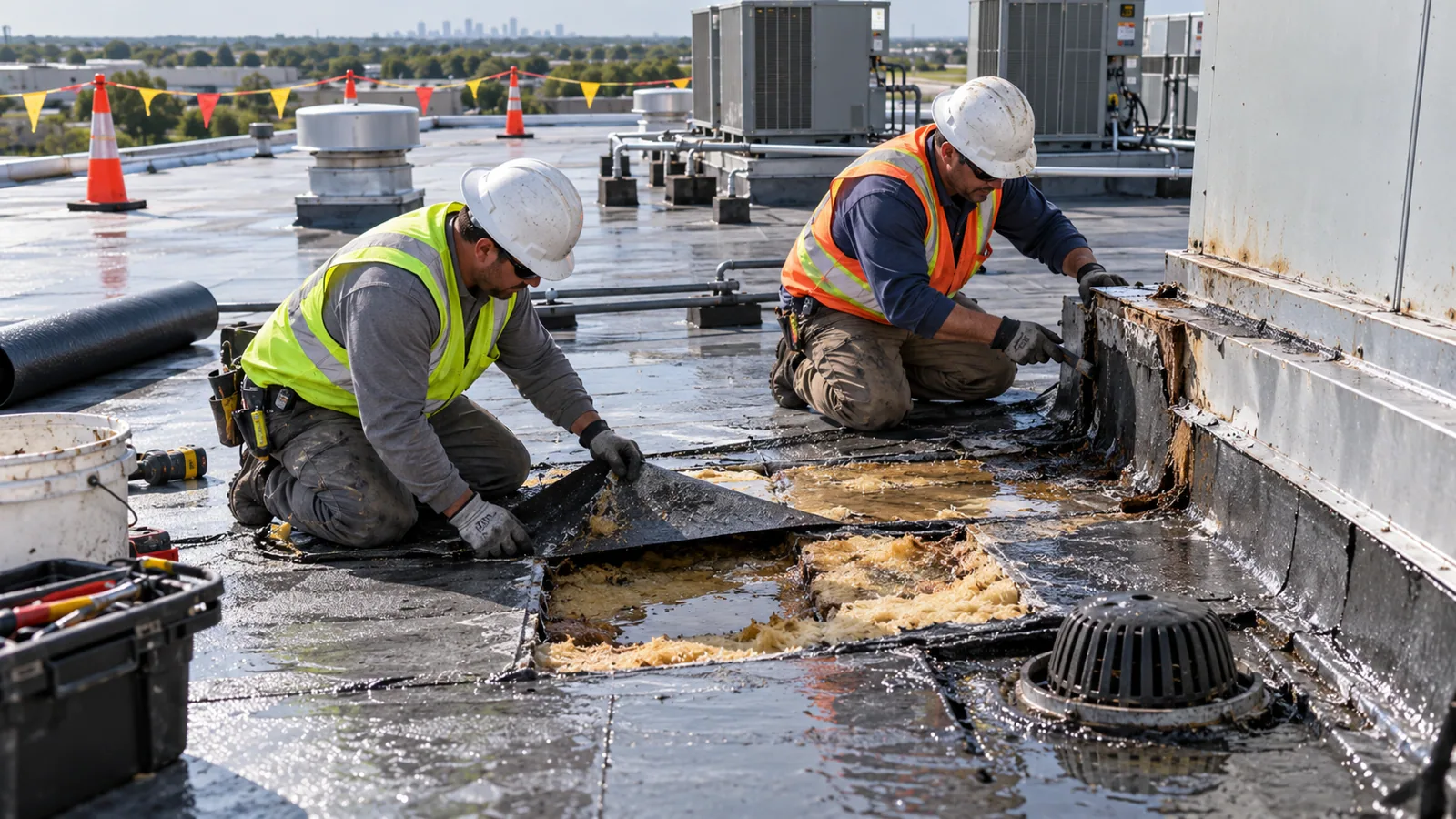
Hurricane Damage Roof Repair
Hurricane damage roof repair in Queens, NY: wind-lifted edges, wind-driven rain, flood-day drainage failures and debris damage on commercial flat roofs.
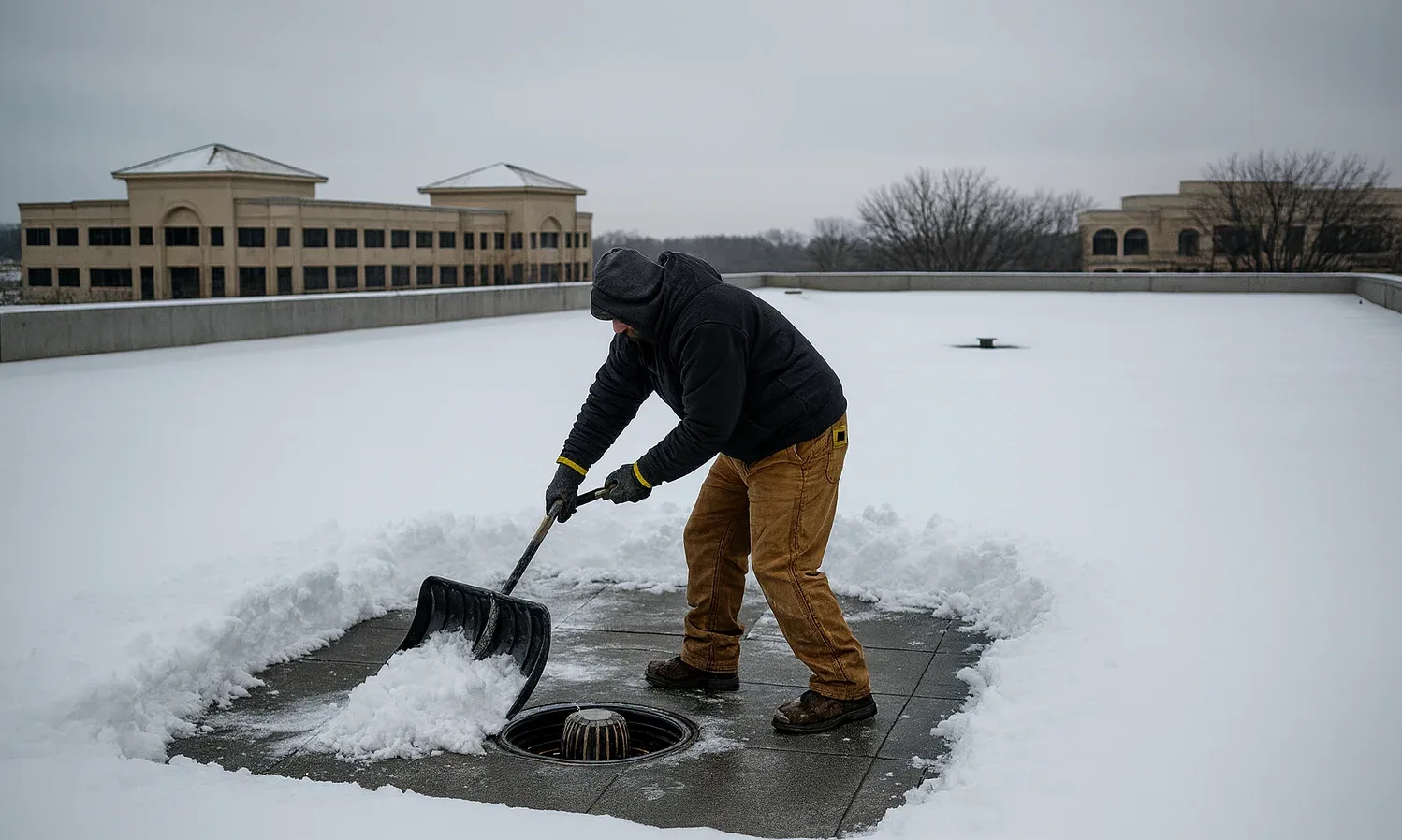
Snow and Ice Roof Damage Repair
Snow and ice roof damage repair in Queens, NY: drift loads, ice at drains and scuppers, freeze-thaw seam damage and shoveling cuts on commercial flat roofs.
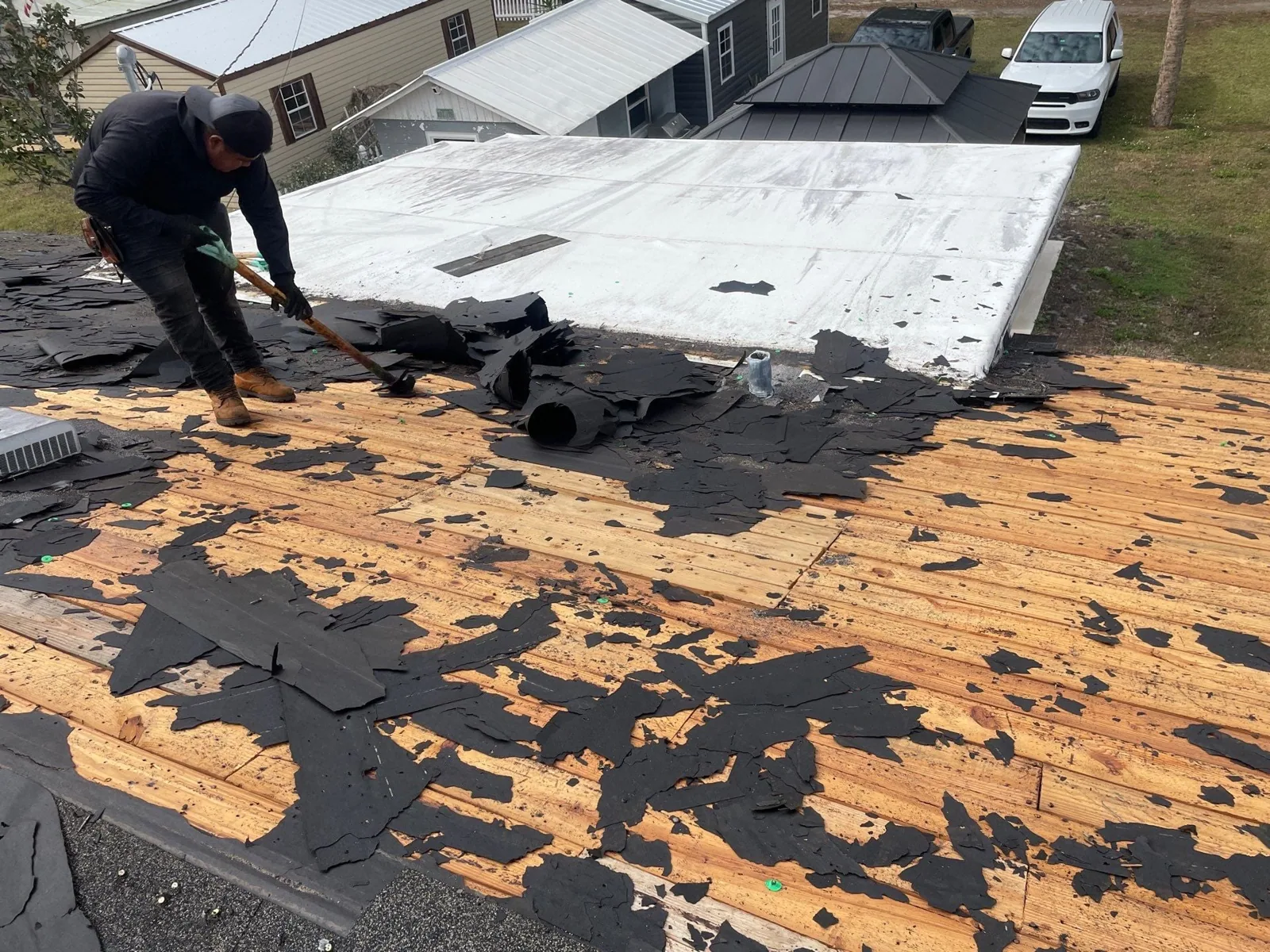
Heat and UV Roof Damage Repair
Heat and UV roof damage repair in Queens, NY: cracked surfaces, shrunken membrane, pulled flashing and brittle sealant on flat roofs, repaired and recoated.
Water on the floor tells an owner something is wrong and nothing about where. The damage that matters sits on the roof, usually far from the stain, and it has a cause that can be named: wind took an edge, a drain stopped, a seam split, a flashing aged out. We trace damage on Queens, NY roofs one step at a time, from the symptom back to the cause, and we explain each step as we go.
What do storms do to a flat roof?
Wind damage begins at the edge, and hurricane damage adds sideways rain and debris; Maspeth saw six feet of water from Hurricane Sandy in October 2012. Cloudbursts show up ponding water, and Hurricane Ida's remnants on September 1, 2021 brought the city its first flash flood emergency.
The first moves after a storm are the same each time. Keep people away from wet areas, photograph the roof and the interior, and call before anything is moved. We dry the building in, then write the permanent repair to match the cause.
What fails slowly?
Failed flashing lets water in at walls and curbs. Open seams come from movement and standing water. Punctures come from foot traffic and dropped tools. Each repair cuts back to sound material and rebuilds the detail, rather than covering it with sealant.
Failures cluster. A wall with one open flashing often has others within a few feet, and a seam that opens near a pond usually has neighbors. When we find one, we walk the whole line.
What do snow and heat do?
About 29.8 inches of snow fall on the city in an average year, and snow and ice damage shows at drains and edges, while heat and UV damage cracks surfaces and shrinks membrane; LaGuardia, in Queens, recorded 107 degrees on July 3, 1966.
Both stress the same joints in opposite seasons: freeze-thaw opens them in winter and summer sun hardens the sealant that closes them.
What changes after a fire?
Fire damage reaches past the burn. Heat softens membrane, firefighting water soaks the layers and smoke residue stops patches from bonding. The roof is cleared as safe before anyone walks it, then dried in, then documented.
Insurance paperwork runs on its own track. We supply dated photographs, a roof plan and a scope with line items, and the owner and carrier decide coverage.
Commercial Roofing Questions
How do you find where a leak starts?
We work uphill from the stain, clear the drains, probe seams and flashings, and hose-test each suspect while someone watches inside. The stain is rarely under the opening.
When is a repair enough?
When the membrane is bonded, the insulation is dry and the damage is local. A moisture scan and a core cut show whether all three hold.
What should be done right after a storm?
Photograph the roof and the interior, keep people away from wet areas and call us. We dry the building in first and plan the permanent repair after.
Can an old storm still be the cause of a new stain?
Yes. Wet insulation can sit under a membrane for years. A moisture survey finds it.
Send us the address and a photo of the problem.
Tell us about the building. We will walk the roof, explain what it is doing and write up a scope before any price is discussed.