
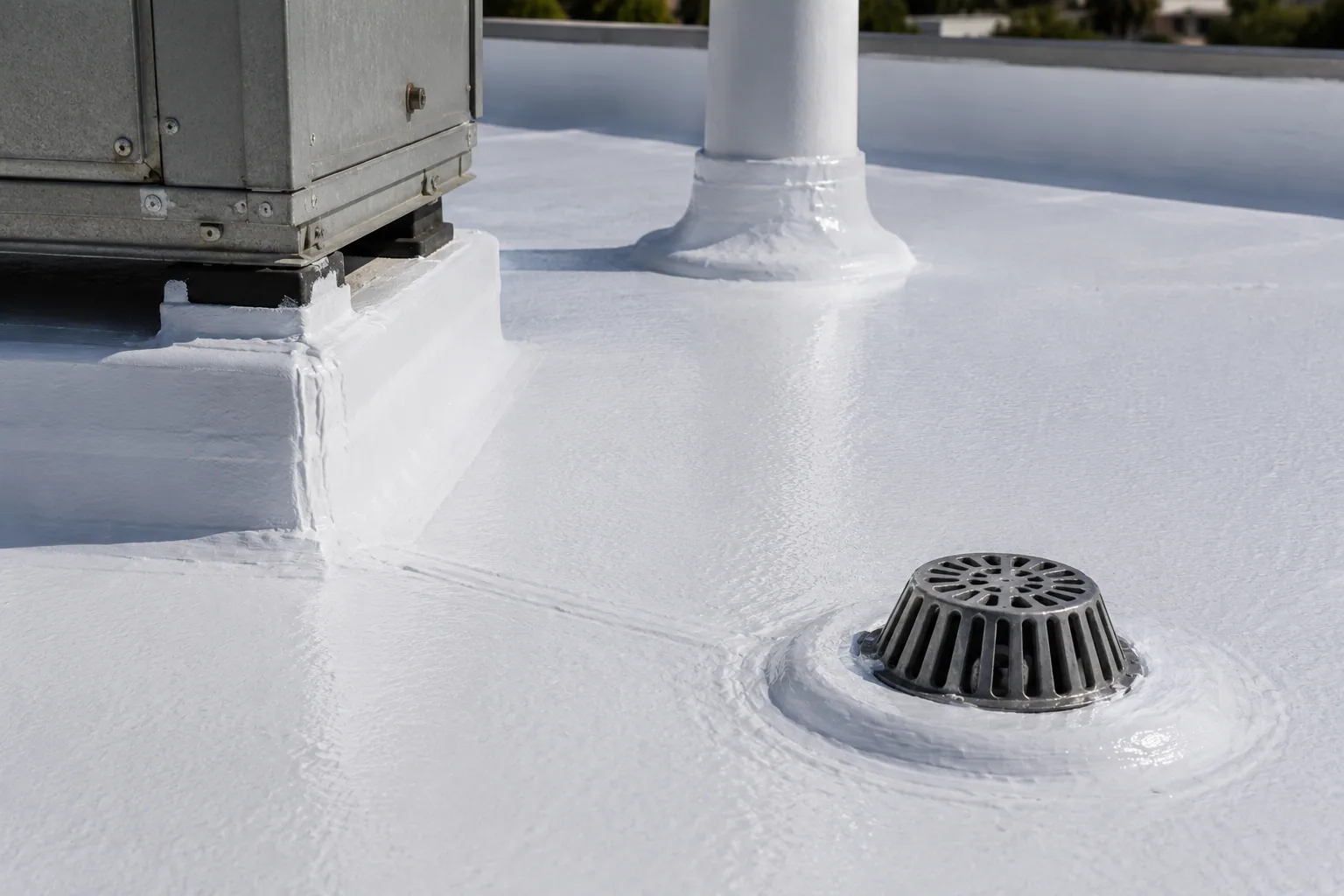
A soft, discolored patch around a kitchen exhaust fan is one of the clearest failures a roof can show. The sheet there has been sitting in grease and heat, and anything that is not built for it has swollen, wrinkled or split along the seam. Owners often assume the whole roof is finished. Usually the damage is a few feet across and the question is what to put in that spot, and around every other vent like it, so the problem does not return.
What makes PVC different from other single-plies?
PVC, or polyvinyl chloride, is a single-ply sheet whose seams are welded with hot air, like TPO, but the sheet itself is formulated to resist more of what lands on a roof. Grease, oils, many chemicals and the fumes from exhaust stacks attack some membranes and leave PVC largely alone. It also resists fire better than many alternatives, and it is naturally reflective in white.
The cost is that PVC usually costs more than TPO, and the flexibility of the sheet depends on plasticizers that can slowly leave the material over many years. The right question is whether the roof needs that resistance, which depends on what happens beneath and around it.
Side by side with TPO, the difference shows up at the vents. Two roofs of the same age, one under a quiet office and one under a busy kitchen, can age very differently, and the sheet that suits the first may not suit the second. We say so after looking, not before.
Which roofs benefit most?
Roofs under restaurants, food processors, laboratories and light industrial plants benefit most, because their exhaust lands on the membrane. So do roofs around mechanical yards where oils drip from equipment. A restaurant roof with a grease hood is the classic case, and a manufacturing plant roof with chemical vents is another.
Queens has the most diversified economy of the five boroughs, so the sources of exhaust vary widely from one building to the next. The southern part of College Point alone has oil storage facilities, a cement plant, a Pepsi-Cola distribution facility, furniture warehouses and contractors, and what reaches each roof differs building to building. Film and television facilities such as Kaufman Astoria Studios and Silvercup Studios add yet another kind of mechanical load. Wherever exhaust reaches a roof, a PVC sheet is worth pricing, and the first question for any of these buildings is what it vents.
How is a PVC roof put together?
Walk it with me. The first step is the base: insulation, usually with a cover board, fastened or adhered to a clean deck. The second is the sheet, rolled out in strips and either mechanically fastened along the seam or adhered across the field. The third is the weld. A technician runs a hot-air welder along the overlap, presses it with a silicone roller and later probes the seam for gaps.
Flashings are cut from the same material. A prefabricated boot goes over a pipe, a wrapped corner turns up a wall, and a welded cover strip closes a joint. The quality of those small pieces decides whether the roof leaks, so we check them closely. A penetration flashing is a better place to spend time than another coat on the field.
Details at the edges finish the job. Coping and edge metal are fastened to hold the sheet, and termination bars along walls keep it from peeling. We test the welds at corners and penetrations with a probe and check each termination for gaps, since those small places leak first.
How do we check an existing PVC roof?
We begin with the seams. A probe along each weld shows whether it is tight, and a quick push on the sheet around each vent shows whether it is brittle. We look for chalky surface, hardened edges and cracks at the corners. We also look at the drain strainer, since a clogged drain leaves water on the sheet that works at the seams.
Then we check below. A soft spot or a dark ring at the ceiling means water has traveled, so we scan for wet insulation. If only a small area is wet, a patch and a new flashing may carry the roof for years. If the wet zone is wide, we price a recover or replacement. A moisture survey maps the zone before work is chosen.
Age is the last thing we read. PVC roofs that have been in the sun for many years show a dull, chalky surface, harder edges and a drier feel underfoot. None of that means the roof is finished, but it tells us how much flexibility the sheet has left and whether to repair or replace.
What about heat, snow and storms?
Weather is the same for every membrane. A July afternoon at Central Park averages close to 85 degrees, the heat island adds to it, and a typical year brings around 30 inches of snow, with 27.3 inches landing in a single day in January 2016. Heat softens the sheet, cold stiffens it, and a good installation allows for both.
Storms test the drains. On September 1, 2021, Ida's remnants forced the city's first-ever flash flood emergency, and the deaths fell mostly in Queens. A PVC sheet shrugs off standing water for a time, but ponding still holds dirt and stresses the seams, so we fix the drainage as part of the roof. A ponding water repair is cheaper than the damage it prevents.
What is the next step?
Send photos of the stained area, the vent or fan beside it and the nearest drain, along with what is vented. On the walk we work out whether a PVC patch, a recover or a full PVC roof fits, and price follows. If you are comparing KEE membranes, we can weigh that option on the same visit.
Questions Owners Ask
What building owners and managers usually ask before a roof visit.
It resists grease and many oils much better than some other single-ply sheets. It does not make a roof immune, so a grease tray under the fan and regular cleaning still matter. We check what is vented and select the sheet to match. Cleaning the sheet near a vent twice a year keeps residue from building up and lets us see the weld clearly at the same time.
Often not. If nothing aggressive reaches the roof, a TPO or EPDM sheet may do the job at a lower price. PVC earns its cost where exhaust, chemicals or fire rules are a concern.
Sometimes. The old roof must be dry, and PVC must be separated from certain old materials by a barrier. We cut cores and scan for moisture before recommending a recover. Where the old roof is wet, we remove it, because covering moisture shortens the life of any new sheet.
We clean the seam, weld a cover strip across the split and probe the new weld. If the sheet around it has hardened, we cut out the weak section and weld in a new piece. We test again after a week, once the weld has settled.
Send photos of the stained patch, the nearest vent and drain, a note on what is vented and the roof's age. A record of past repairs is useful.
Related Roofing Work
Other pages that connect to PVC Roofing.
TPO Roofing
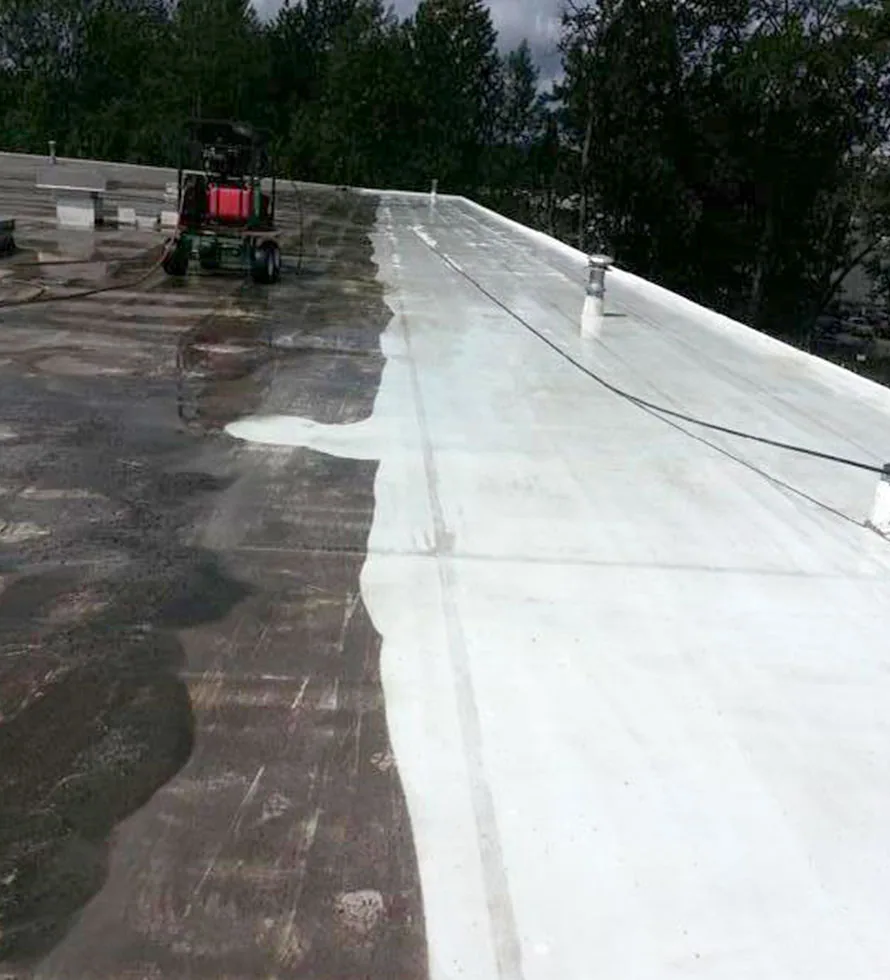
TPO roofing in Queens, NY: heat-welded white single-ply membranes for flat commercial roofs, with seam checks, repair and replacement explained step by step.
Restaurant Roofing
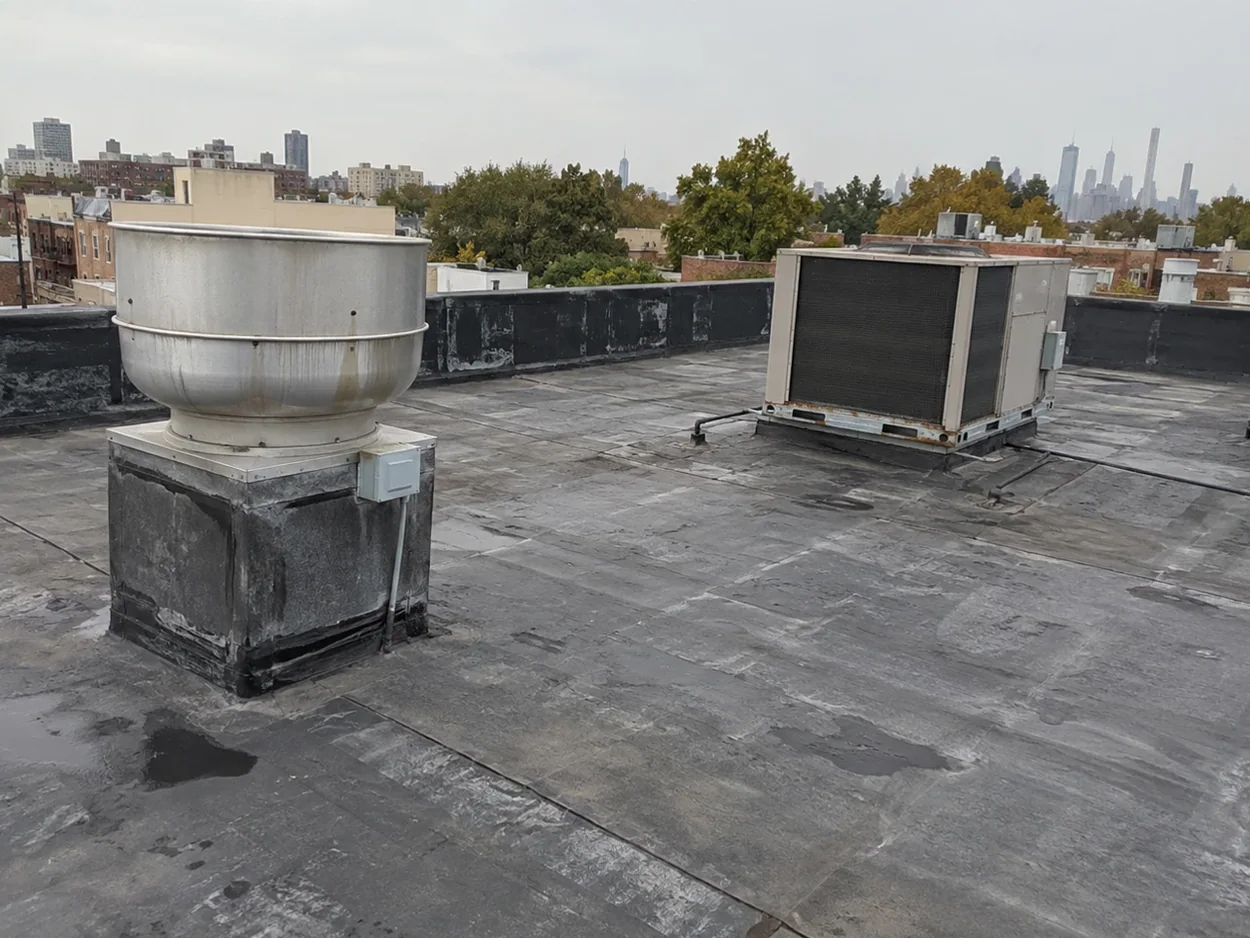
Roof repair for Queens, NY restaurants: grease on the membrane, exhaust curbs, small flat roofs and work scheduled around service so the kitchen keeps cooking.
Manufacturing Plant Roofing
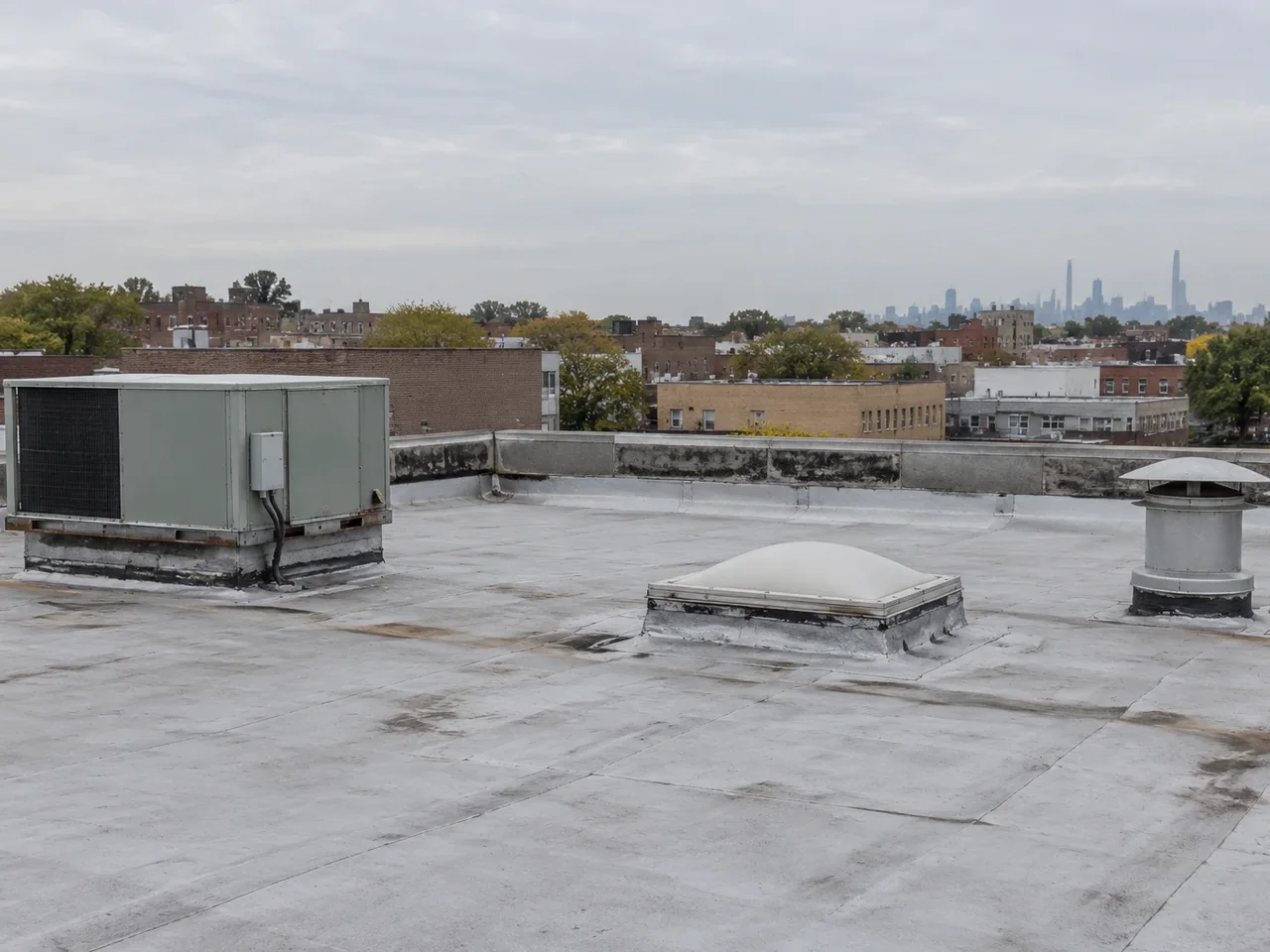
Roof repair and replacement for Queens, NY manufacturing plants, with exhaust, heat, process vents and production schedules planned into every step.
Ready to Talk About PVC Roofing?
Tell us about the building and what you are seeing. We will schedule a roof walk and send photos and a written scope.