
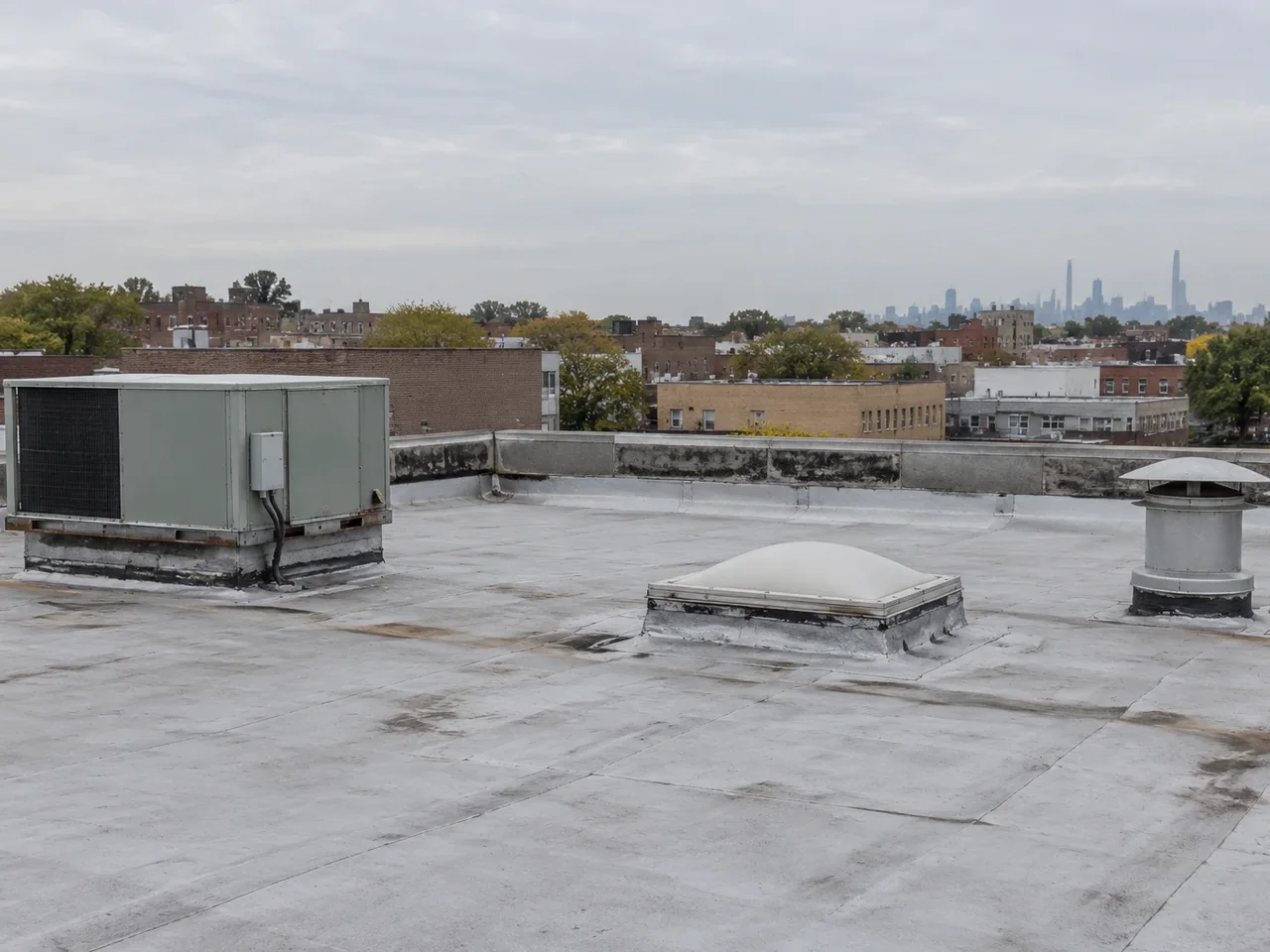
A stain on a production-floor ceiling is a scheduling problem before it is a roofing problem. The line supervisor wants to know whether to move product, whether the drip will reach a machine and how long the stain has been growing. The roofer needs a different set of answers: where the water entered, how far it traveled and what the roof is made of. In Queens, NY, plants range from converted brick factories to big modern sheds, and we start every plant job the same way, by walking the roof beside the owner and explaining each step as we go.
What does the owner see, and what is the roof doing?
The visible signs on a plant roof are specific. A yellowed ring around an exhaust stack means process vapor is landing on the membrane. A bubbled coating near a vent means heat is cooking it from below. A soft spot beside a fan curb means the insulation has taken on water. A sagging line along the deck means a long-term leak has rusted the steel beneath it.
Each sign points to a cause we can confirm. We probe the seams around the stain, check the flashing at the stack, scan for wet insulation and look at the deck from below where access allows. The roof tells us which of the four it is, and the repair follows.
How do exhaust and heat change the roof?
Process exhaust is the main thing that separates a plant roof from a storage roof. Vapors, oils and fine residue settle on the membrane, soften some materials and attack some sealants. Heat from ovens, furnaces or compressors raises the temperature under the roof, so the membrane works against a hotter deck in summer. In the borough's strong heat island, with the July daily high near 85 degrees, a plant roof can run well above that at the surface.
We match the membrane to the exposure. Where residue lands, we recommend a chemically resistant sheet or a splash zone around the stack. Where heat is high, we specify reflective surfaces and check the insulation for compression.
What kinds of plants are in Queens?
Manufacturing in Queens spans eras. College Point Corporate Park was founded in 1974 on about 550 acres and counted more than 200 companies by 2003, and the New York Times printing plant opened on the Whitestone Expressway in 1997. Long Island City has factories converted to new uses, among them the 1919 Standard Motor Products building. Beside Sunnyside Yard stands the rail-served Degnon Terminal, largely built out by 1912, and the Atlas Terminal in Glendale, a park of 16 factories, was demolished in 2004 and replaced by a shopping center.
The mix of newer sheds and older masonry means roofs of very different ages, and each age has its own failure pattern.
Some plants share a roof with other uses. A building with a finishing line at one end and a warehouse bay at the other has two roofs in one, and the repair on each follows its own rule. Food and beverage makers, such as those that operate or have operated in Whitestone, add washdown moisture and vent condensate, and a plant with a cooling plant on the roof, like a cold storage building, adds refrigeration lines to the list of details.
How do we confirm the cause before repairing?
On any roof we take drains first, equipment details second and seams third. A plant adds two steps: a close look at the stack and vent flashings, and a test of the surface for chemical damage. An infrared moisture survey maps the wet insulation without opening the roof, and cores confirm the layers.
Where the building is older, we also check the parapet and the roof-to-wall junction, because masonry walls that have shed water for a century often have open mortar joints behind the metal. The inspection report lists every finding with a photograph and a location.
What are the repair options?
Where the membrane is sound and only a few details have failed, the work is quick: new stack flashings, resealed curbs, refilled seams. A worn surface over dry insulation can take a coating or a recover. Replacement is the answer when insulation is wet, the deck is damaged or the membrane does not suit the exhaust, and we pick the system to suit the process below it, whether it is PVC for chemical exposure or another sheet for general use.
Plants cannot always stop. We stage the work in sections and keep the line running.
What does it cost to wait?
Product and equipment are what delay puts at risk. Water reaching a control cabinet or a conveyor motor costs far more than the repair that would have stopped it, and wet insulation spreads, rusts the deck and turns a repair into a replacement. Hurricane Ida's cloudburst in September 2021 left most of the city's deaths in Queens, which gives a plant owner with a flat roof good reason to ask how fast water arrives. Planning ahead puts the work into a quiet week and leaves the choice with the owner.
The insurance side matters too. A dated inspection report from before a storm lets the owner show what the roof looked like and separates storm damage from long-standing wear.
What is the next step?
Start with photographs of the stain and the nearest stack or fan, the plant's street and the roof age. We go up with you, say in plain steps what is happening and hand over a repair order before any price. Plants in College Point and Long Island City are scheduled around shifts.
Questions Owners Ask
What building owners and managers usually ask before a roof visit.
Usually yes. The roof is opened in sections, equipment below is covered and adhesive fumes are kept off the air intakes. Noisy tasks are scheduled for shift changes or lighter periods. We agree the sequence with the plant manager first, and a safety walk of the roof comes before the crew starts. Where a line cannot tolerate any dust or odor, we use cold-applied methods.
We look for discoloration, softening, blistering and cracked sealant near the stacks, and we test a small sample if needed. Residue often shows as a ring that fades with distance from the vent. When the membrane is affected, the fix is a chemically suited sheet, a splash pad or a taller stack. We check the exhaust discharge direction as well, since wind can push vapor onto the roof.
Yes. Older masonry plants have parapets, brick coping and flashings that carry more water than the field does. Newer sheds have long metal edges and large fields where ponding and wind matter. We inspect each building against its own weak points and write the repair order accordingly. The membrane choice also changes, since a heavy masonry wall allows methods that a light metal edge does not.
We coordinate with the plant's engineers. Units that must stay running are supported and flashed in place, and units that can be shut down are lifted and reset on new curbs. Pipes and conduit get new supports. We never leave an open penetration overnight. The closeout includes a photograph of every curb and a check that the units are sealed and level.
Twice a year is reasonable for a plant with process exhaust: once in spring after winter wear and once in fall before leaves and weather. Each visit takes a few hours and costs far less than a leak over production equipment. The written report becomes part of the plant's maintenance file and helps with insurance if a storm damages the roof.
Related Roofing Work
Other pages that connect to Manufacturing Plant Roofing.
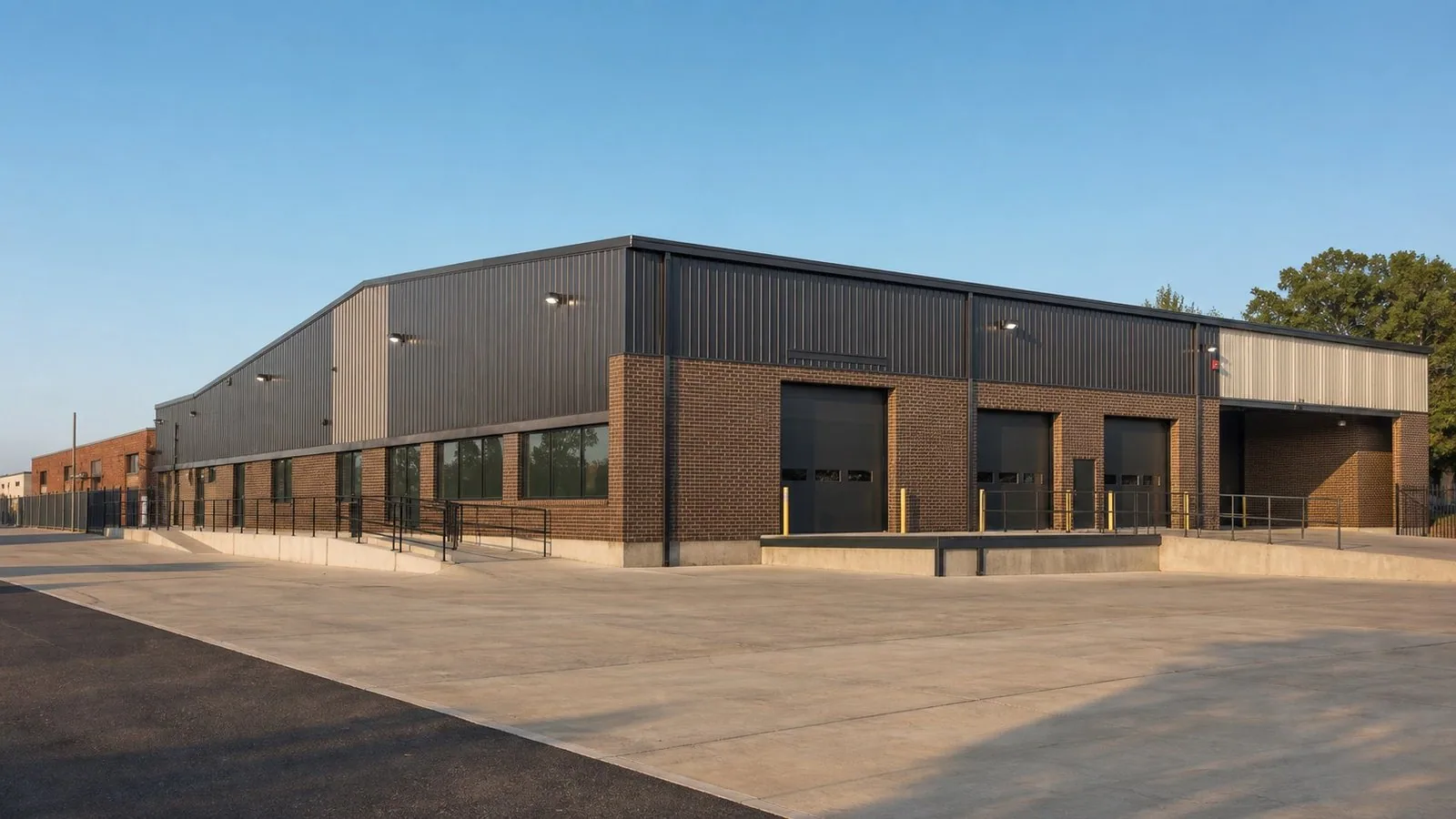
Warehouse Roofing
Warehouse roof repair, recovery and replacement in Queens, NY, from Maspeth and Long Island City to Glendale, with drainage and tie-in details explained.
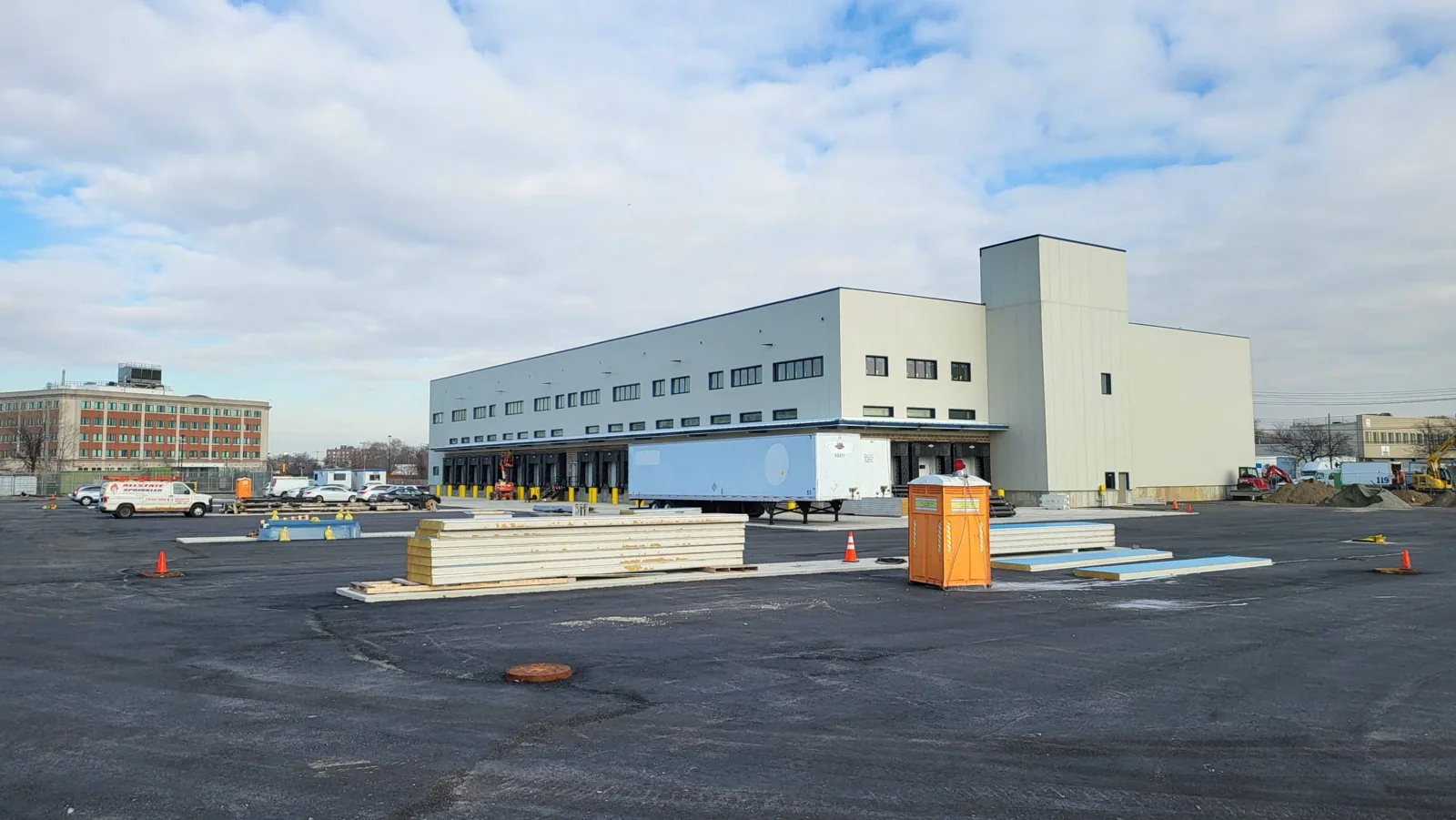
Cold Storage Roofing
Roofs for cold storage and freezer buildings in Queens, NY: frost, vapor control, wet insulation and the penetration details that decide how long they last.
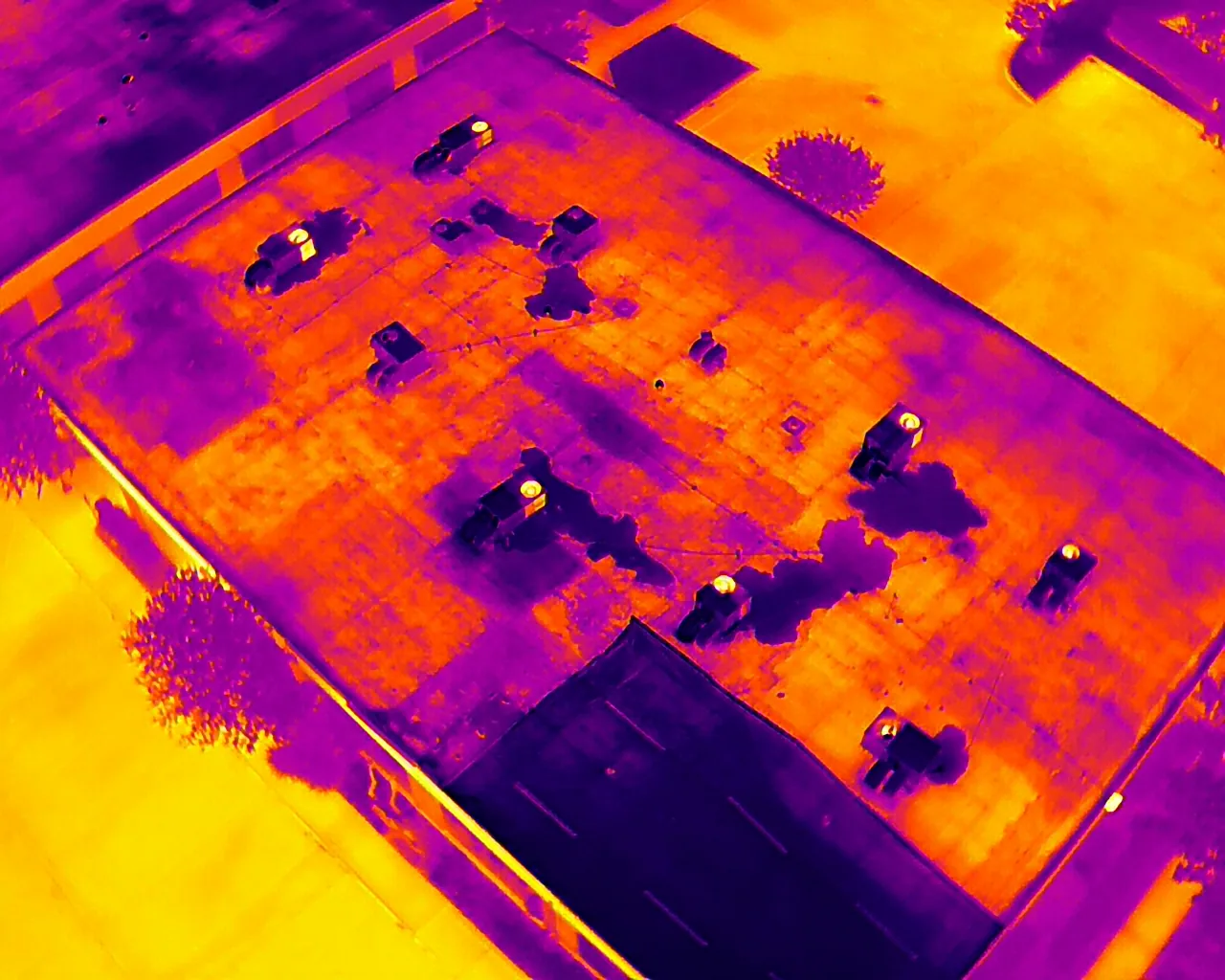
Infrared Roof Moisture Surveys
Infrared scans and core-cut moisture surveys for Queens, NY commercial roofs that locate wet insulation before the owner commits to repair or replacement.
Ready to Talk About Manufacturing Plant Roofing?
Tell us about the building and what you are seeing. We will schedule a roof walk and send photos and a written scope.