
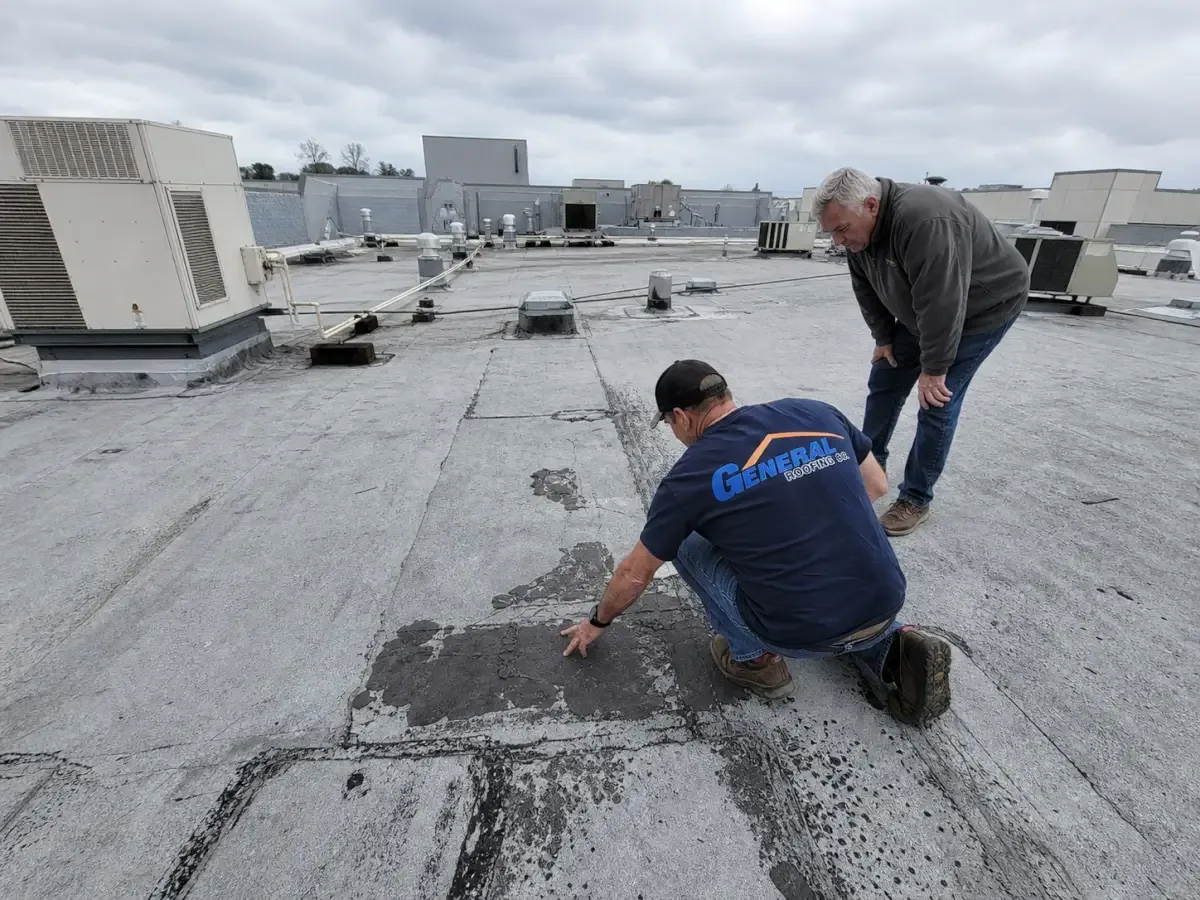
A repair that holds is one that treats the cause, and the cause is rarely where the stain shows. Water travels along a deck, a seam or a pipe before it drops onto a ceiling tile, so the brown ring below can sit thirty feet from the opening above. We repair commercial roofs in Queens, NY by working backward from the damage to the entry point, confirming it with a probe or a water test, and then fixing the detail that failed rather than smearing sealant over the place where the water appeared.
Planned repair is different from emergency patching. It is scheduled, scoped and priced with the whole roof in view. The owner learns which findings are quick fixes, which are signs of a larger problem, and which are cosmetic. That sorting is the most useful part of the visit, because it keeps a small budget pointed at the places that matter.
Where does the water actually get in?
We start at the stain and move uphill. A ceiling stain is a clue, not a location. We check the nearest drain, then the closest seams, then every penetration and wall tie-in within reach. A seam probe, a small blunt tool run along a welded or lapped seam, tells us quickly whether the bond has lifted. Flashing is checked by hand, because a gap of a few millimeters at a counterflashing joint is enough to let in a driving rain.
When the entry point is still unclear, we use a controlled water test on the roof. Sections are wet one at a time, upstream first, while someone watches the interior. This takes patience, but it prevents the all-too-common outcome in which three patches are placed around the real opening. Our leak tracing process follows the same steps when a leak is active.
Which failures show up most on flat roofs?
Flashing is the first suspect. Walls, curbs, pipes and parapets all end in a vertical flashing that is exposed to sun, wind and movement, and it fails far more often than the field of the membrane. Seams are second: a welded seam on a single-ply roof can open at a corner or a T-joint, and a lapped seam on a modified bitumen roof can lift where the surface granules were not properly embedded. Punctures from foot traffic or dropped tools come third, followed by blistering and alligatoring where a built-up surface has aged.
Each of these has a specific repair. Flashing may need new counterflashing set into a reglet. A seam may need a heat-welded cover strip. A puncture needs a patch sized to the damage with the corners rounded so that it does not peel. For flashing failure and seam failure in particular, the repair method matters as much as the material.
What do Queens roofs ask of a repair?
Three conditions shape the work. First, mill-era masonry. Ridgewood has early factories and yellow face brick rowhouses, Glendale's historic districts hold Kreischer brick, and a flat roof behind a brick parapet leans on the wall flashing at its edge. A repair there can mean repointing the brick above the flashing before new metal goes in, because a failing mortar joint feeds water behind the new work.
Second, heavy rooftop equipment. Retail centers in Rego Park and Elmhurst, where Rego Center has 950,000 square feet of retail and Queens Center has about a million square feet of gross leasable area, are the kind of buildings that carry rooftop units, and every curb and support is a place where a repair can be needed. Third, storms. Hurricane Sandy put six feet of water in Maspeth in 2012, and Hurricane Ida's remnants brought the city its first flash flood emergency in September 2021. After either event, the first check is whether drains were clear and whether debris loosened any flashing.
When is a repair the wrong answer?
Repair stops making sense when the damage is wide and the insulation is wet. A cheap patch over saturated insulation lets the problem continue underneath, and the next leak shows up a few feet away. We document the roof with an infrared moisture survey when the repair history suggests this is happening, and we show the owner where the wet areas are.
The decision to move to replacement is the owner's, and it is usually a financial one. We put the numbers side by side: what the repairs have cost over the past few years, what the next set is likely to involve, and what a replacement would involve. A roof that needs one repair a year is a good candidate for continued repair. A roof that needs five is asking for a different plan, and a maintenance program may be a better route between the two.
What does a planned repair visit look like?
The crew arrives with the scope already marked on a roof plan. They protect the interior below where needed, clear debris from drains, and make the repair in the order that keeps the roof watertight throughout. Each repair is photographed before and after so the owner has a record. Where the weather is changing, we set a temporary closure and finish on the next dry day rather than leaving a repair half done.
We keep the visit short for the people in the building. Noise is limited to the work area, access is arranged with the property manager, and for buildings like those in Long Island City, where mixed-use buildings may have residential floors beneath a commercial roof, we coordinate timing around quiet hours. The roof is walked once more at the end, and the owner receives a short written summary of what was done and what remains to watch.
Questions Owners Ask
What building owners and managers usually ask before a roof visit.
Usually because the patch sealed the symptom and not the entry point. Water enters at a seam or flashing joint, runs along the deck, and exits somewhere else, so a patch placed over the exit does nothing about the opening. We confirm the entry point with a probe or water test before repairing, and we check the nearby drains. If a spot keeps failing, the likely cause is wet insulation spreading the problem underneath.
Often, with the right materials. Cold weather limits adhesives and some sealants, and a frozen roof surface is difficult to bond to. Heat-welded single-ply patches and mechanically fastened details work in colder conditions, and temporary measures keep the roof tight until warmer weather allows a permanent repair. New York City has seen snow of up to 27.3 inches in a single day, and repairs after a storm like that start with safe access and drain clearing.
It can, if the repair is done outside the manufacturer's requirements. Many warranties specify who may repair the roof, which materials may be used and how repairs are documented. We read the warranty before work starts, follow the manufacturer's repair details, and keep the photos and records the manufacturer would need. If a warranty has already lapsed, the repair can follow standard best practice for the system.
Access can be a significant share on a tall building or a roof with limited edge protection. Fall protection, ladder or hoist setup and protection of the area below are real line items, and we price them separately so the owner can see where the money goes. A large roof with ground-level access costs less to reach than a high-rise podium.
Related Roofing Work
Other pages that connect to Commercial Roof Repair.
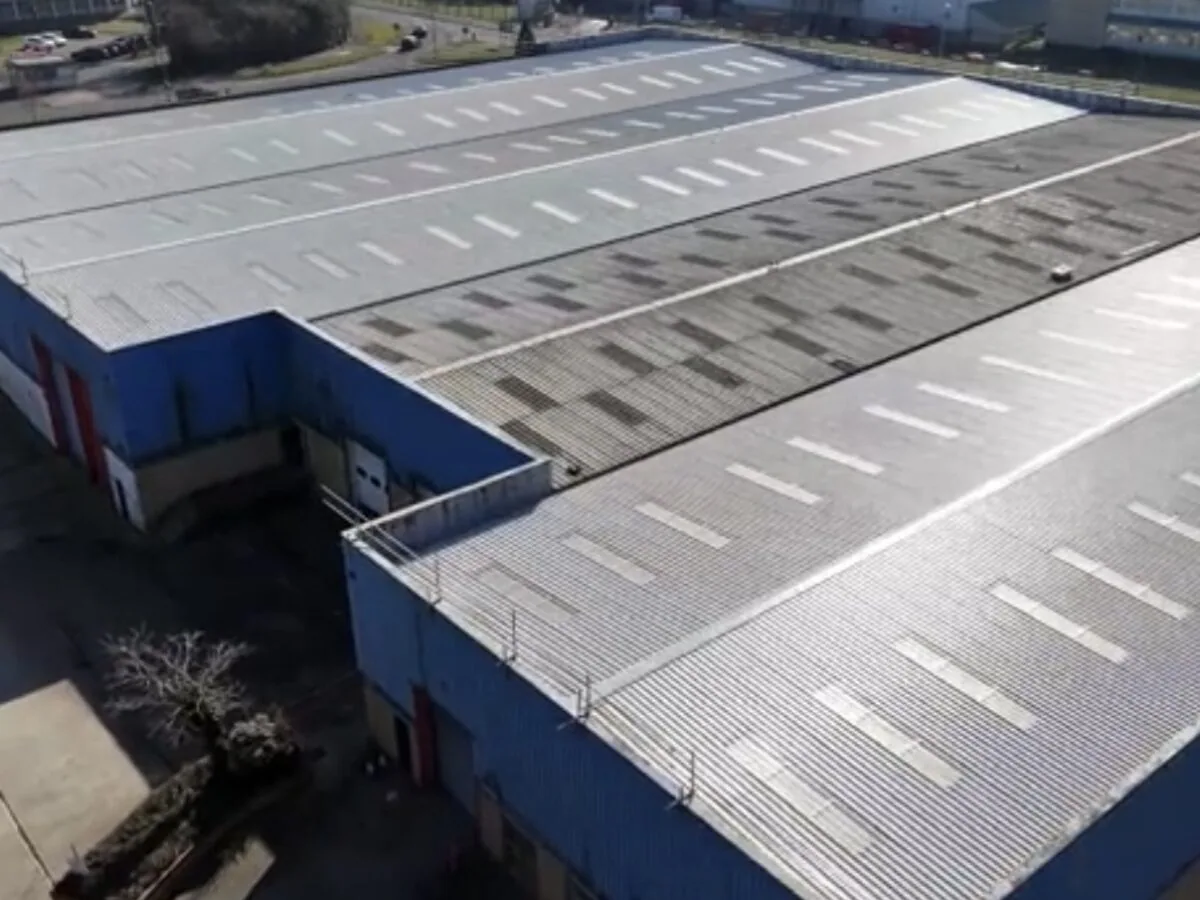
Commercial Roof Leak Repair
Tracing and stopping active commercial roof leaks in Queens, NY, using moisture mapping, water testing and targeted repair, explained in plain steps.
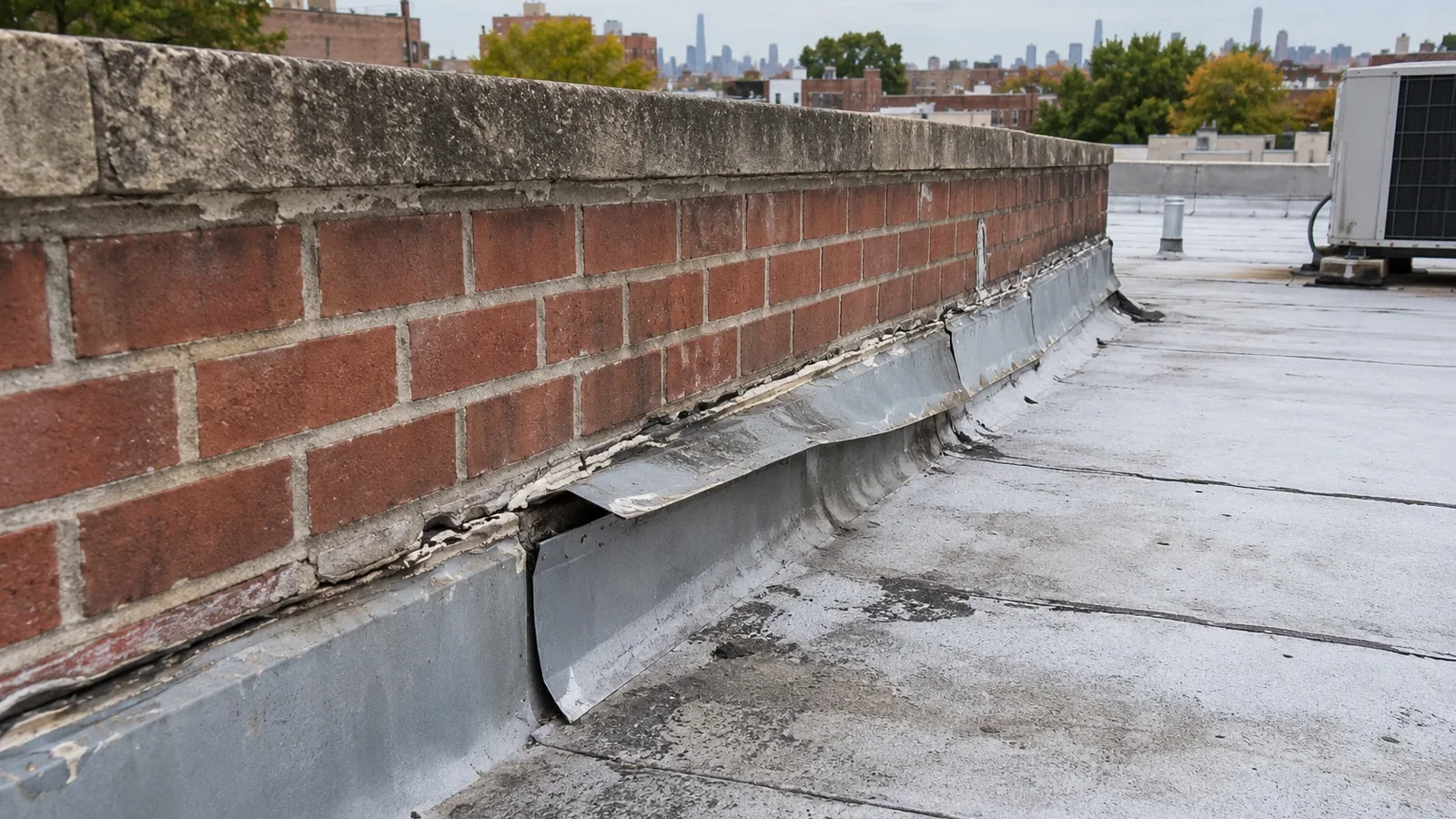
Flashing Failure Repair
Flashing failure repair in Queens, NY: cracked tar, lifted base flashing, open counterflashing and parapet leaks traced and rebuilt on commercial flat roofs.
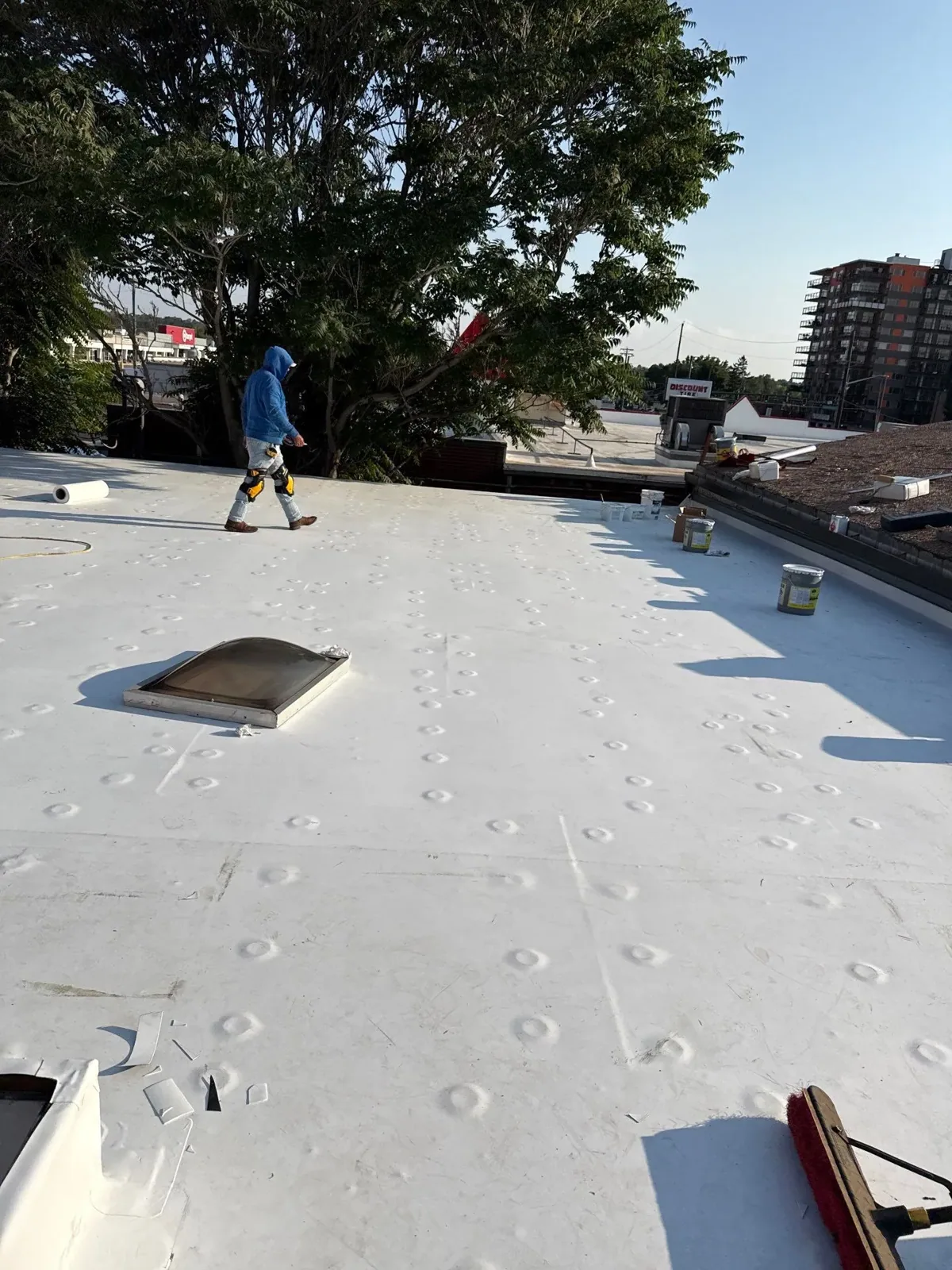
Seam Failure Repair
Seam failure repair in Queens, NY: split, open and lifted seams on TPO, PVC, EPDM and modified bitumen roofs, found by probe and repaired with strips.
Ready to Talk About Commercial Roof Repair?
Tell us about the building and what you are seeing. We will schedule a roof walk and send photos and a written scope.