
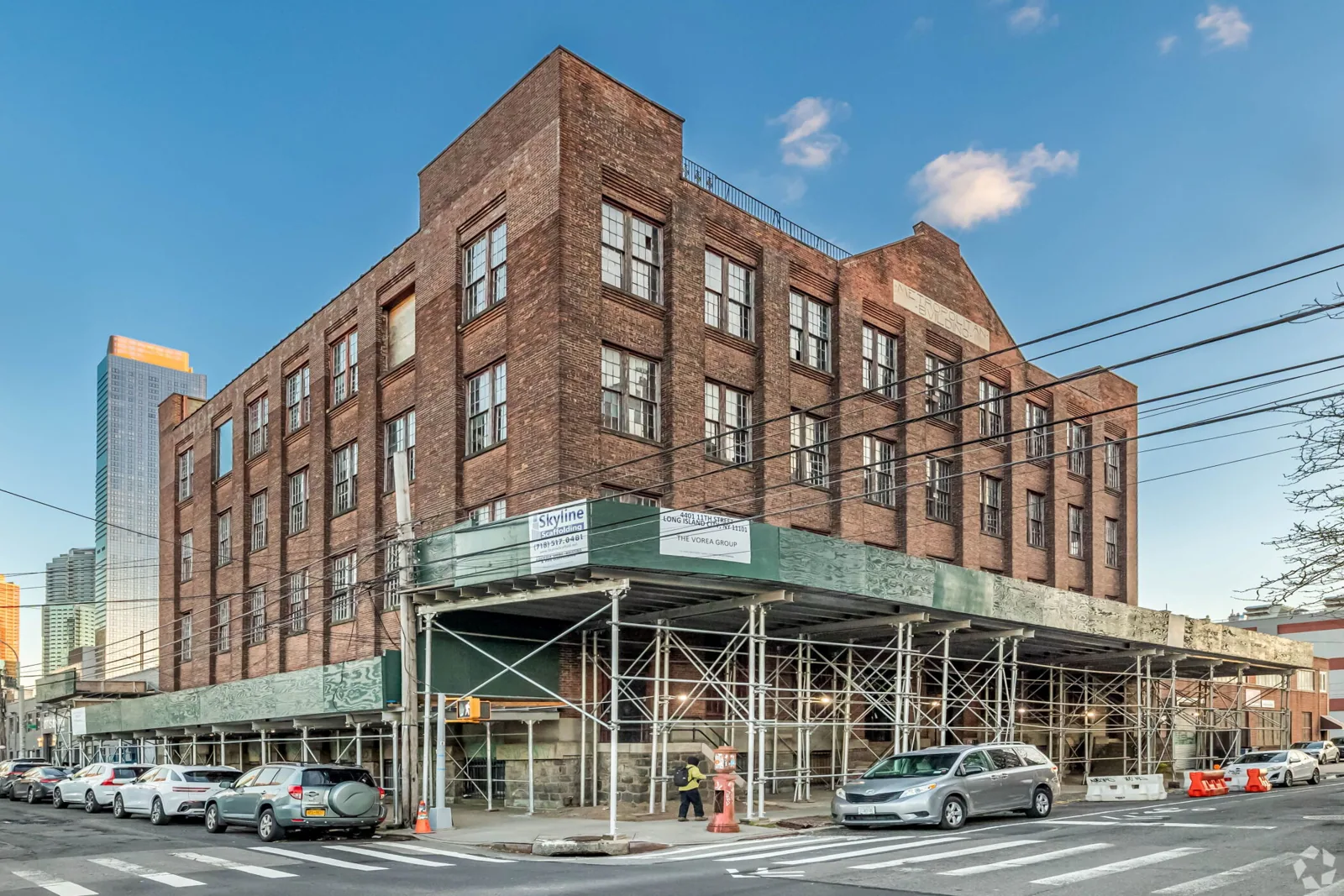
Standing water two days after the rain has stopped is the first thing a flex building owner sees, and the question is whether that pond is a nuisance or a sign of trouble. A pond gone by the second morning suggests a slow outlet. One still there on the third day suggests a sagging deck, a failed drain or insulation squeezed flat by years of water. Because a flex building can carry several roofs of different ages on one footprint, the answer may change from one bay to the next. Flex space in Queens, NY gets our commercial roof repair and replacement beginning at the pond and working back a step at a time.
Look at the lowest point first.
What does the owner see, and what does it mean?
Owners tell us about ponding, a stained ceiling in one tenant bay, a soft spot underfoot, a patch that has failed twice or a rusted drain bowl. Ponding says water has nowhere quick to go. A stain over one bay and not its neighbor says the entry is close by. A soft spot says wet insulation, and a patch that keeps repeating says nobody ever treated the cause.
We ask for a floor plan with the leaking bays and dates marked on it. Set against a roof plan, it shows which roof section sits over each bay. Flex buildings often have a newer addition beside an older core, so the tie-in between them is the junction to read first.
Lenders and insurers read the same record. A dated rating with photographs shows the roof as it stood on the day of the survey, which counts if a claim or a refinancing follows.
What is happening on a flex roof?
Tenants come and go, and each may add a rooftop unit, an exhaust fan or a run of conduit. Every addition is a penetration with a sealant line, and sealant has a short life. After a few years the roof holds more openings than it needs, and some no longer connect to anything.
Our survey numbers every penetration, checks each curb's base flashing and marks the abandoned ones for removal and capping. Drains come next, then seams, then the tie-ins where an addition meets older roofing. A tie-in carries water from two surfaces, and a ponding water problem there is the commonest reason a stain keeps returning.
Skylights and roof hatches are the other repeat offenders on an aging flex roof. When a hatch curb is too short, water runs beneath its cap, and a skylight whose sealant has cracked will drip onto one spot storm after storm. A hose test from the low side locates the joint, and the flashing is rebuilt in a single run.
How do Maspeth, College Point and Sunnyside inform the work?
Industrial lowlands carry the Maspeth Industrial Center, and Hurricane Sandy once left Maspeth under six feet of water. College Point's corporate park spans about 550 acres, and at the neighborhood's south end sit contractors, furniture warehouses, a Pepsi-Cola distribution facility, a cement plant and oil storage. Sunnyside's rail-served Degnon Terminal, beside the 192-acre yard, was mostly built out by 1912, while Glendale's Atlas Terminal, 16 factories in one park, came down in 2004 and gave way to a shopping center.
Industrial buildings of many ages sit side by side, and a scan with a few cores shows what any one of them carries. Owners in Maspeth, College Point and Sunnyside can rate each building on one scale and fund the worst first.
Conversions add history. Long Island City's former factories and bakeries have new uses now, Silvercup Studios in a bakery among them, yet a converted building still wears the roof it had before its use changed. A studio or office below an old industrial roof wants a dry, quiet space that the roof was never designed to protect, so we check the assembly against the new use.
How do we confirm the cause before pricing a fix?
An infrared scan maps wet insulation. Probing the seams and flashings finds the open spots, and a few cores count the layers on the deck and say whether the bottom one is dry. Together they separate a roof that needs repair from one that needs replacement.
Where insulation is dry and the deck sound, a roof recover may save a tear-off, once weight and the existing layer count are checked. Where insulation is wet, it comes out. A built-up roof that has already been recovered several times is the typical case in which the cores decide everything.
Do not overlook the deck beneath the membrane. If it has sagged, water collects at the drain, and if a steel deck has rusted it will not hold a new fastener, which is why the cores and a view from underneath decide whether the deck stays or is repaired first.
What do storms, snow and heat do to these roofs?
Ida's remnants hit on September 1, 2021, the city's first flash flood emergency, and Queens bore most of the loss of life. Drains that handle ordinary rain choke in a cloudburst, and on a big flat roof the water rises up the parapet. The city's snow averages about 29.8 inches a year, and 27.3 inches fell on January 23, 2016.
July afternoons near 85 degrees at Central Park, kept warm by the heat island, are hard on tenants under a dark membrane in a bay without air conditioning, and seams open further in a hot summer. Blisters and open laps go on the plan after each season.
Perimeter fastening and coping joints get a hard look on every walk, photographed and dated, because Sandy's October 2012 gusts reached hurricane force across the metro area.
What is the next step for a flex owner?
The next step is a walk and a written rating, one roof section at a time. Repairs follow in order of urgency: drains and tie-ins, then curbs, then seams and edges. Work proceeds by zone so tenants keep operating, and the property manager approves the timing of noisy stages. Nearby manufacturing plant roofs carry heavier equipment, and a warehouse roof beside a flex building shares many failure points.
Price follows access, penetrations and the state of the deck. Winter work is mostly repair and dry-in, since membranes need dry surfaces and moderate temperatures to go down well.
Questions Owners Ask
What building owners and managers usually ask before a roof visit.
Not beyond the next day. A pond that lingers two or three days points to a slow drain, a sagging deck or compressed insulation. We measure its depth and record how long it lasts, since both say what is wrong.
No. The crew works zone by zone and closes each one in before leaving, loading areas and doors stay open, and the space below any open area is covered. A schedule reaches every tenant before the first day.
The flashing has to climb the old wall, sit under a counterflashing and survive movement between two roofs. When any part is skipped or thin, water finds it first.
It is marked on the plan, confirmed disconnected and, with the owner's agreement, removed, with the curb or penetration capped. That takes away a leak point and lightens the roof.
Photos of the pond or stain and the nearest drain, with the building address, are enough. With those we can explain the pond in plain steps before anyone prices a repair.
Related Roofing Work
Other pages that connect to Flex and Light-Industrial Roofing.
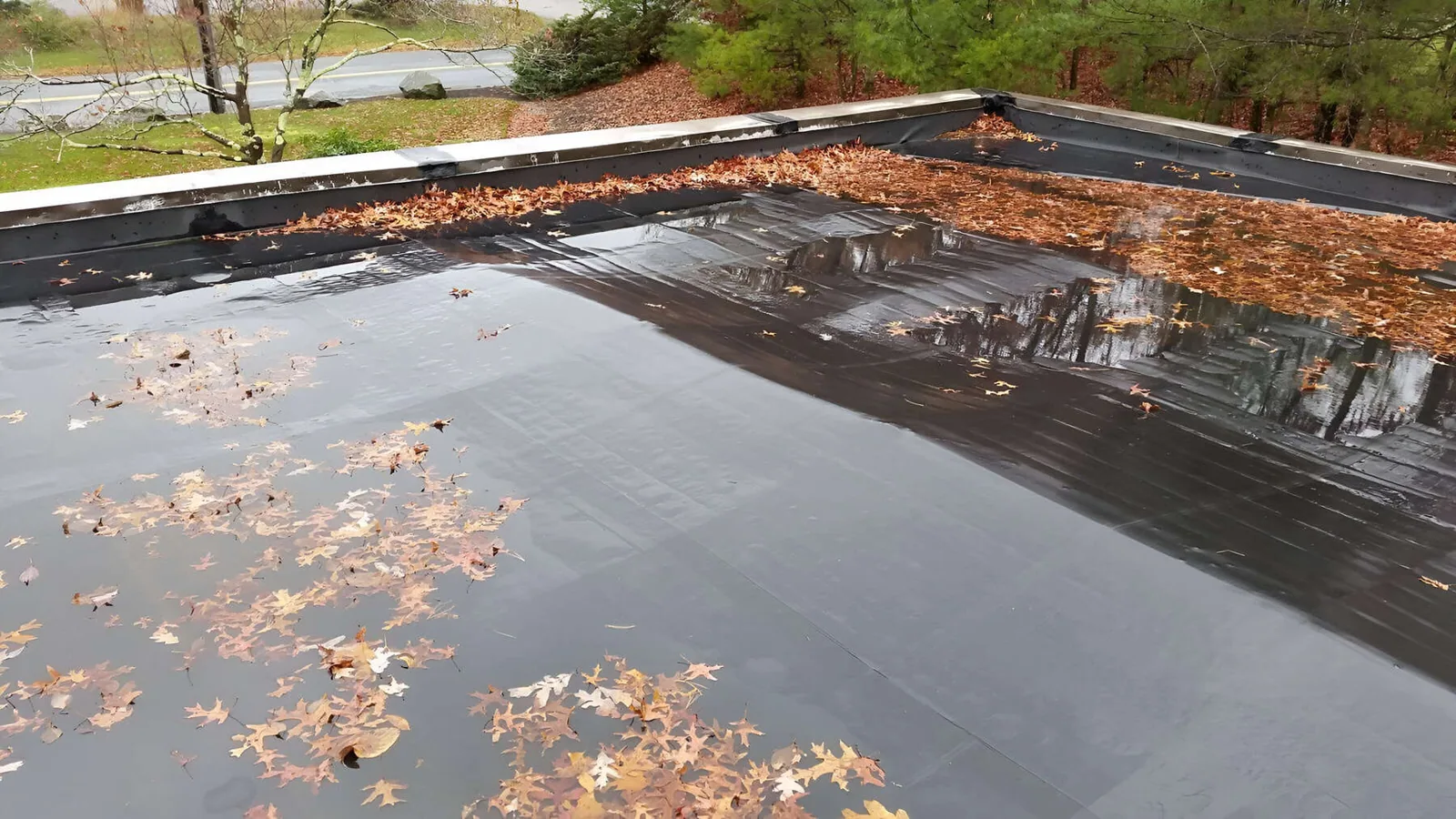
Ponding Water Roof Repair
Ponding water roof repair in Queens, NY: why standing water forms on flat roofs, how it ages the membrane and the drain, slope and insulation fixes that end it.
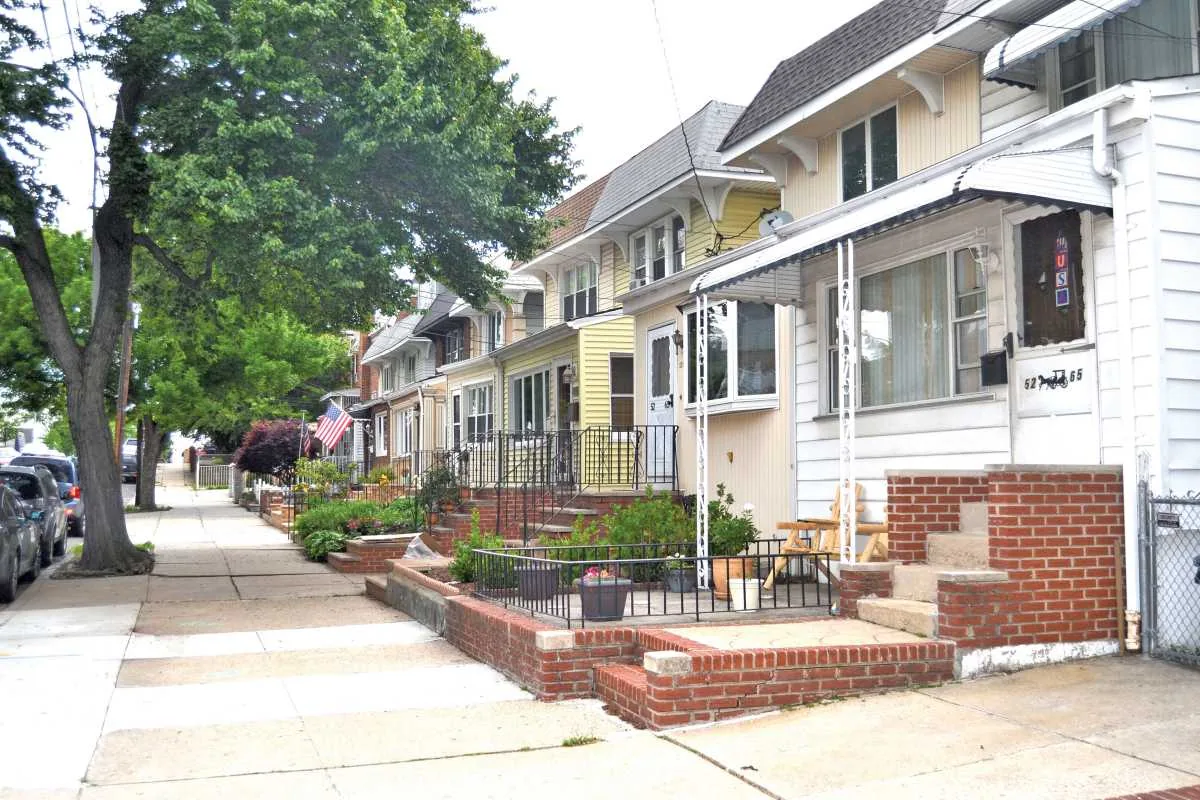
Maspeth
Commercial roof repair, recover and replacement in Maspeth, Queens, NY, for industrial lowland buildings, warehouses and Grand Avenue businesses.
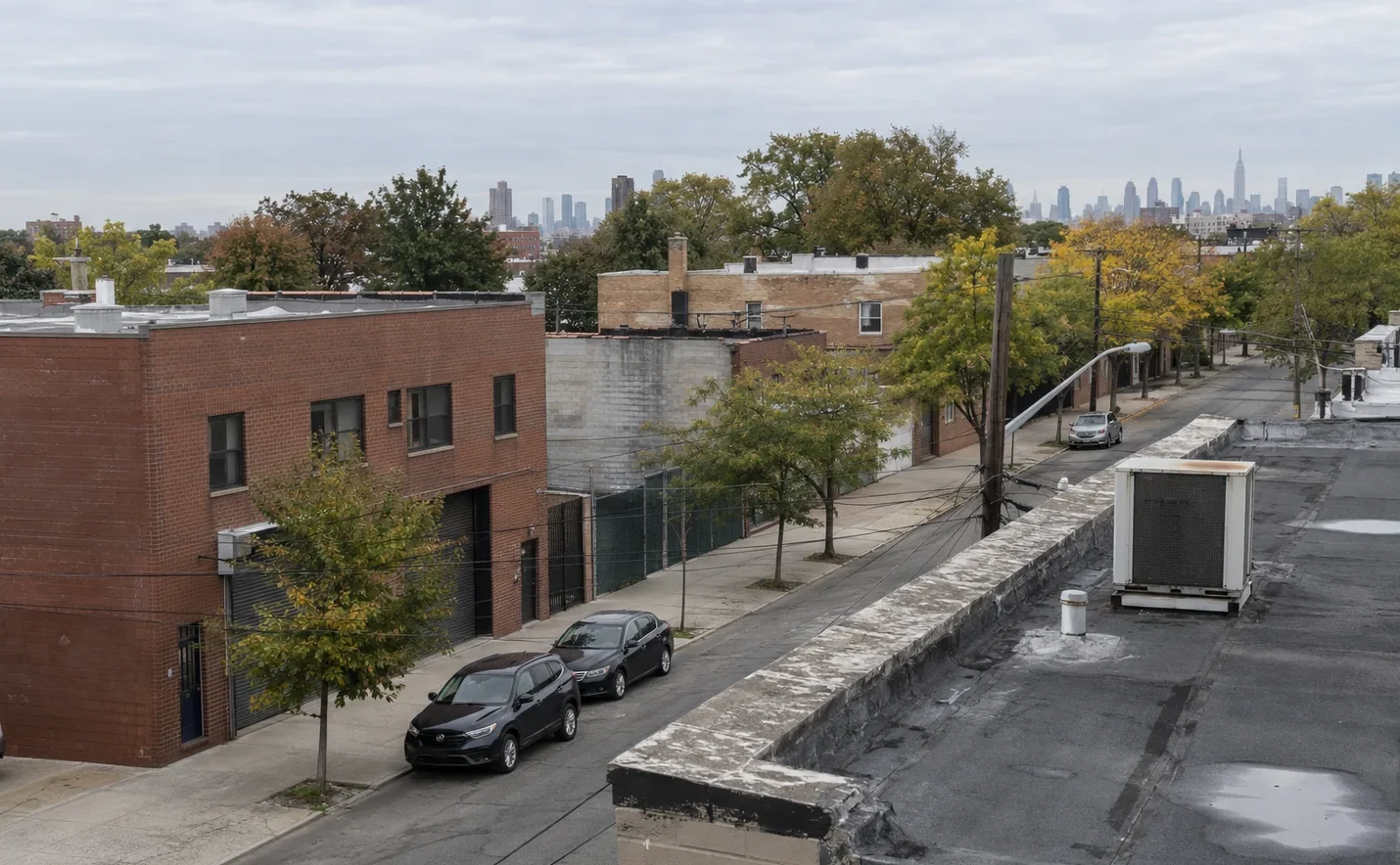
College Point
Commercial roof repair and replacement in College Point, Queens, NY: corporate park industrial roofs, distribution and warehouse buildings and strip retail.
Ready to Talk About Flex and Light-Industrial Roofing?
Tell us about the building and what you are seeing. We will schedule a roof walk and send photos and a written scope.