
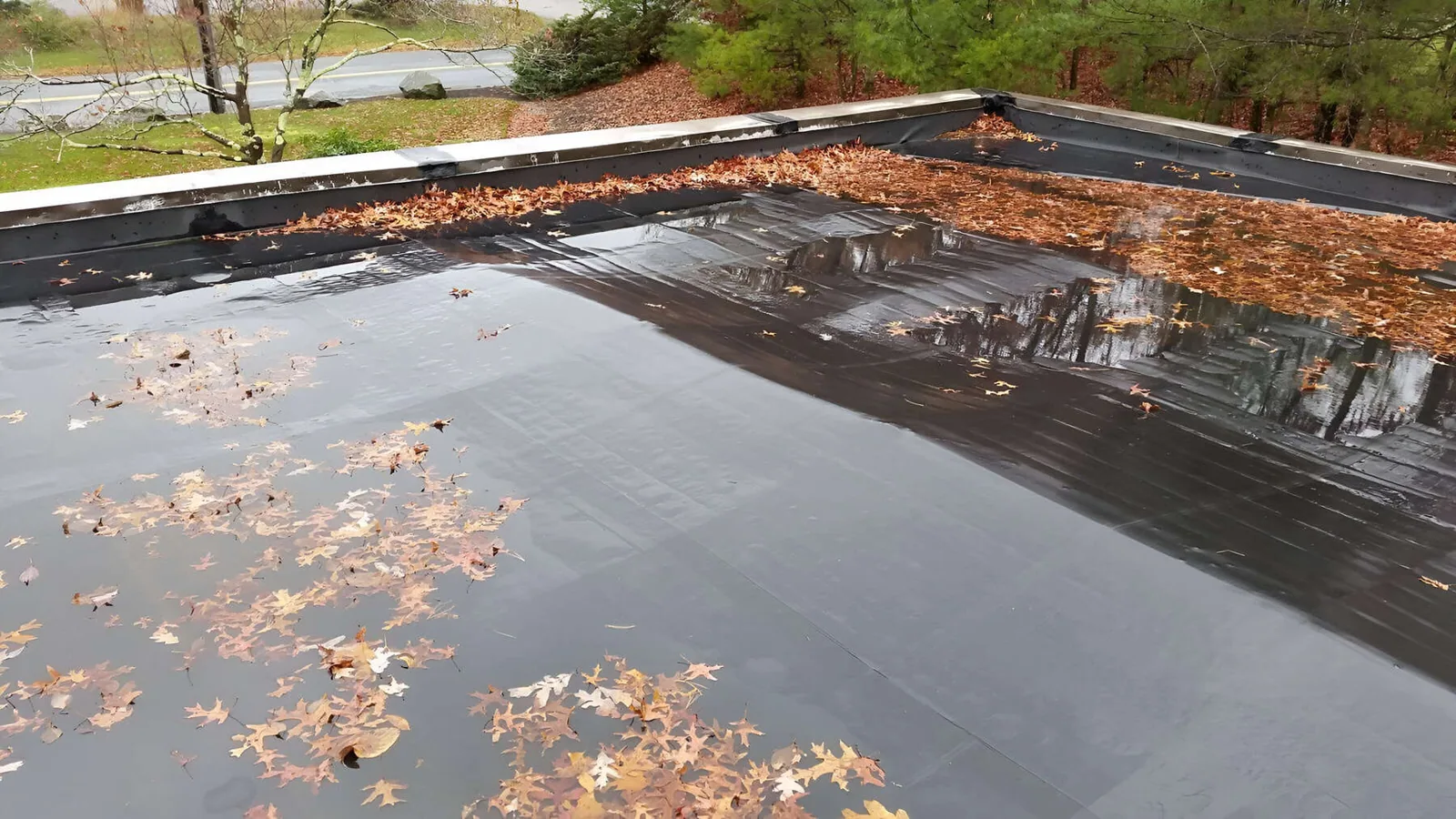
Two days after the last rain, the sky is still mirrored in a patch of the roof. That reflection is the most reliable sign of ponding an owner will ever see, and it is easy to wave off because the roof has not leaked yet. Standing water is not a leak. It is the condition that makes a leak likely, because every seam, flashing and pinhole under it is under constant pressure instead of a few hours of rain.
The long explanation is that a flat roof is supposed to shed water within a day or two, that a number of things can stop it from doing so, and that each cause has a different fix. The short version is that a pond tells us where the roof has gone low, and we trace it back to the reason one step at a time. We do this work on Queens, NY roofs of every size, from a corner shop to a large industrial building.
What counts as ponding, and what does not?
Water that stands for more than about two days after rain has stopped counts as ponding. A film of moisture that dries by evening does not. Ponds show as darker, dirtier or algae-stained areas with a clear edge, sometimes ringed with dried grit. The membrane inside the ring may look different from the rest, with a chalky or sticky surface, or a thin film of green growth.
The pond's location is a clue in itself. Water beside a drain suggests the drain sits high, the strainer is clogged or the sump was never cut. Water in the middle of a field suggests a sagging deck or crushed insulation, and water behind a rooftop unit suggests a missing cricket. Water collecting at the far end of a long run suggests the roof was given too few drains.
Why does water stop leaving?
There are five common reasons. The drain is blocked or sits above the surrounding membrane. The deck has deflected under load or age. The insulation has compressed or become wet and soft. Equipment or additions have changed where water goes. Or the roof was never given enough slope in the first place. Several can combine, and a roof with one pond often has a second cause underneath the first.
Cloudbursts make it worse. Ponding is worst after a storm like Hurricane Ida's remnants on September 1, 2021, when the city issued its first flash flood emergency and Queens counted most of the deaths. A roof that keeps an inch of water after ordinary rain can keep far more after a storm like that, and the added weight can push a deck lower still. Drain and scupper work is usually the first stop for that reason.
Low-lying neighborhoods ask more of a roof. Hurricane Sandy left six feet of water in Maspeth, and although a surge never reaches a roof, an owner who has lived through one often wants a roof that sheds water faster than the minimum. We can add drains or overflow scuppers so that a roof does not rely on a single outlet.
What does standing water do to a roof?
Water is heavy, and a large pond puts real load on a deck. It also softens and ages the membrane. Algae and dirt collect, ultraviolet light and moisture work on the surface together, and seams that sit underwater are tested constantly. In winter, a pond freezes and thaws, and ice lifts laps and splits sealant. Over time the area under the pond can become a seam failure, then a leak, then a wet insulation problem that spreads along the deck.
Manufacturer warranties often limit or exclude warranty coverage for ponding beyond a set depth or duration. We read the warranty before recommending a fix, since correcting ponding can protect coverage on the rest of the roof.
Foot traffic worsens ponding. A technician wading through a pond to reach a unit risks scuffing or puncturing the membrane, and a dropped tool is hard to spot underwater. Crews who service rooftop equipment are asked to report ponds along their route, and we lay walk pads where paths cross low areas.
How do we find the cause?
Measurement comes first. A level, laser or string line reveals how the surface falls, and after rain, while the ponds show, the low points get chalked. Drain heights are compared with the surrounding membrane, soft insulation is probed and a core is cut wherever the surface feels spongy. An infrared moisture survey then tells whether the pond has already wet the insulation underneath.
On a broad roof, such as one in a business park like College Point Corporate Park, which covers about 550 acres, the number of ponds and their spacing show whether the problem is local or systemic. A walk in College Point or any similar district settles it for the roof in question.
What are the fixes?
The simplest is to clear the drain and reset a strainer. Next is to lower or rebuild a high drain, or to cut a sump so water has a place to go. Where a roof is flat between drains, tapered insulation or a tapered system over the old surface builds a slope. A cricket behind a unit sends water around it. Where the deck itself has sagged, repair may require structural attention first, and a design professional should look at it.
For roofs with minor ponding and sound membrane, a silicone coating can tolerate standing water better than most surfaces. It does not cure the ponding, but it protects the surface while the owner plans the slope correction for a later budget year.
The order of work matters. Drains are corrected first, because a tapered system laid to a drain that sits high will not shed water. Slope work follows, then membrane repairs in the low areas, and a coating last, if the owner wants one. After the work we wait for a rain and return to see the result. A roof that is dry within a day or two of rain is a roof that has been fixed, and we photograph it that way.
Questions Owners Ask
What building owners and managers usually ask before a roof visit.
A pond a few inches wide that clears within a day is normal. If it grows, lingers or leaves a dark ring, the drain is likely sitting high or partly blocked. It is a cheap thing to correct early.
A patch repairs a hole but does not remove the water. The cause stays, and the patch sits under the same pressure. The patch is worth doing if the membrane has failed, but the slope or drain correction is what stops the problem.
Manufacturers set their own limits, and warranties often specify a depth and a duration. We read the warranty on the roof and measure the ponds against it before suggesting a fix.
It can. That is why we measure thresholds, door sills and parapet heights before drawing the taper plan. Where height is limited, we reduce the taper or add drains.
Send photos of the pond, the drain area and any stain below, and tell us when it last rained. Ahead of any talk about price, we explain in plain steps what the roof is doing.
Related Roofing Work
Other pages that connect to Ponding Water Roof Repair.
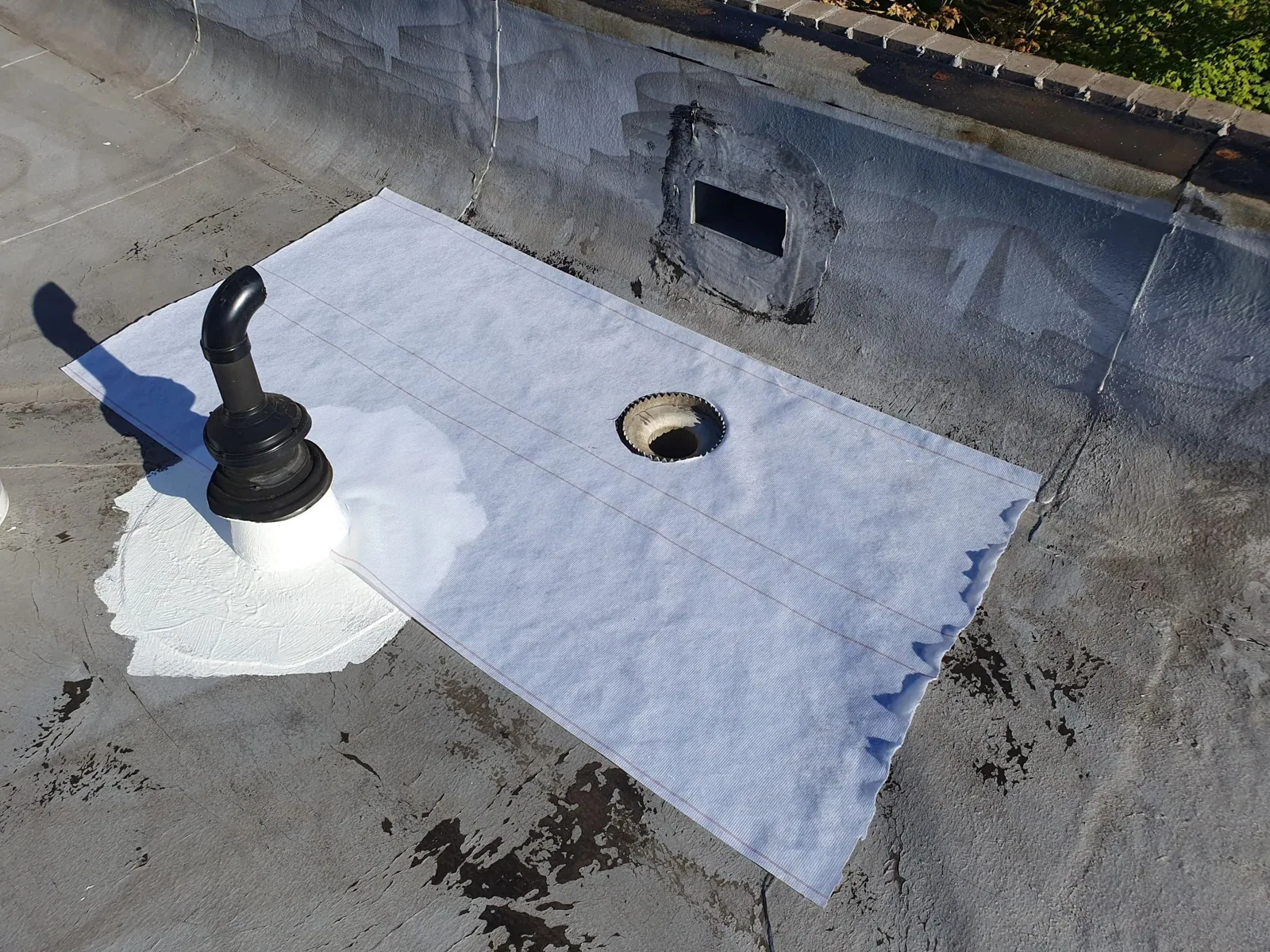
Roof Drains and Scuppers
Roof drain, scupper, cricket and ponding correction in Queens, NY: sizing, strainers, overflow paths and tapered fixes for flat roofs hit by cloudbursts.
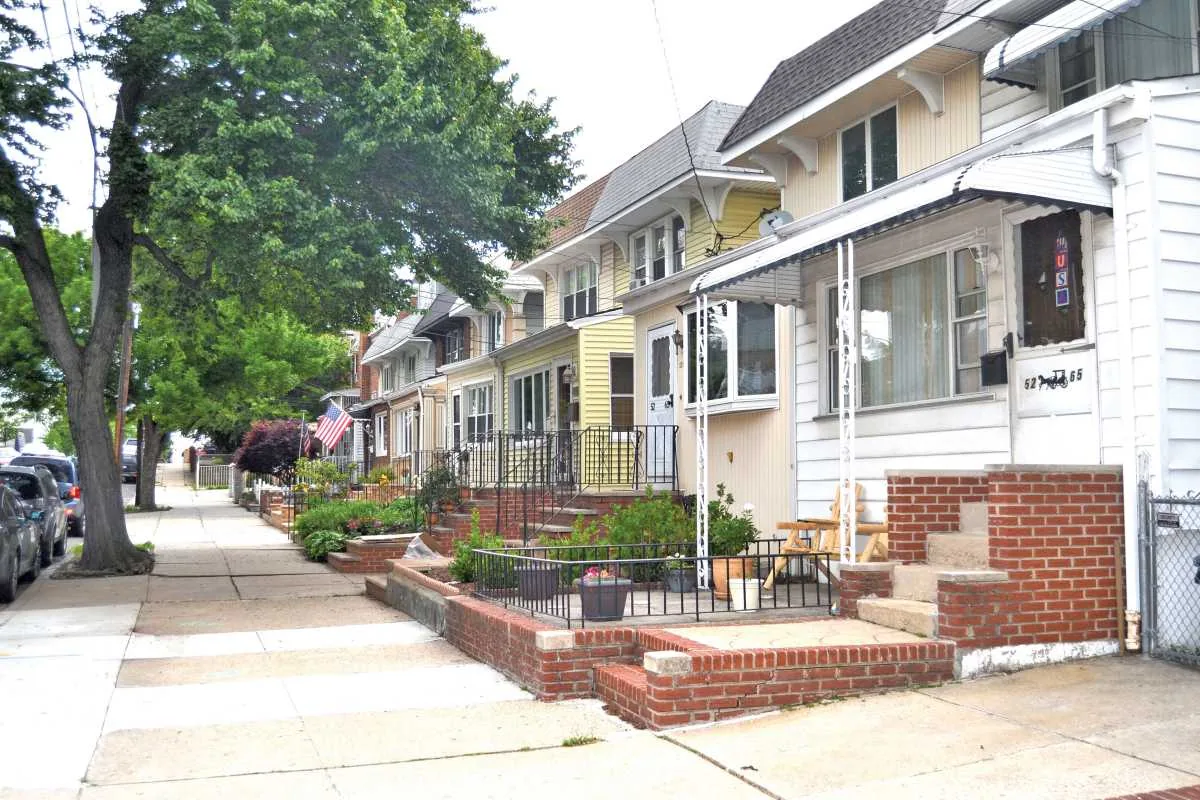
Maspeth
Commercial roof repair, recover and replacement in Maspeth, Queens, NY, for industrial lowland buildings, warehouses and Grand Avenue businesses.
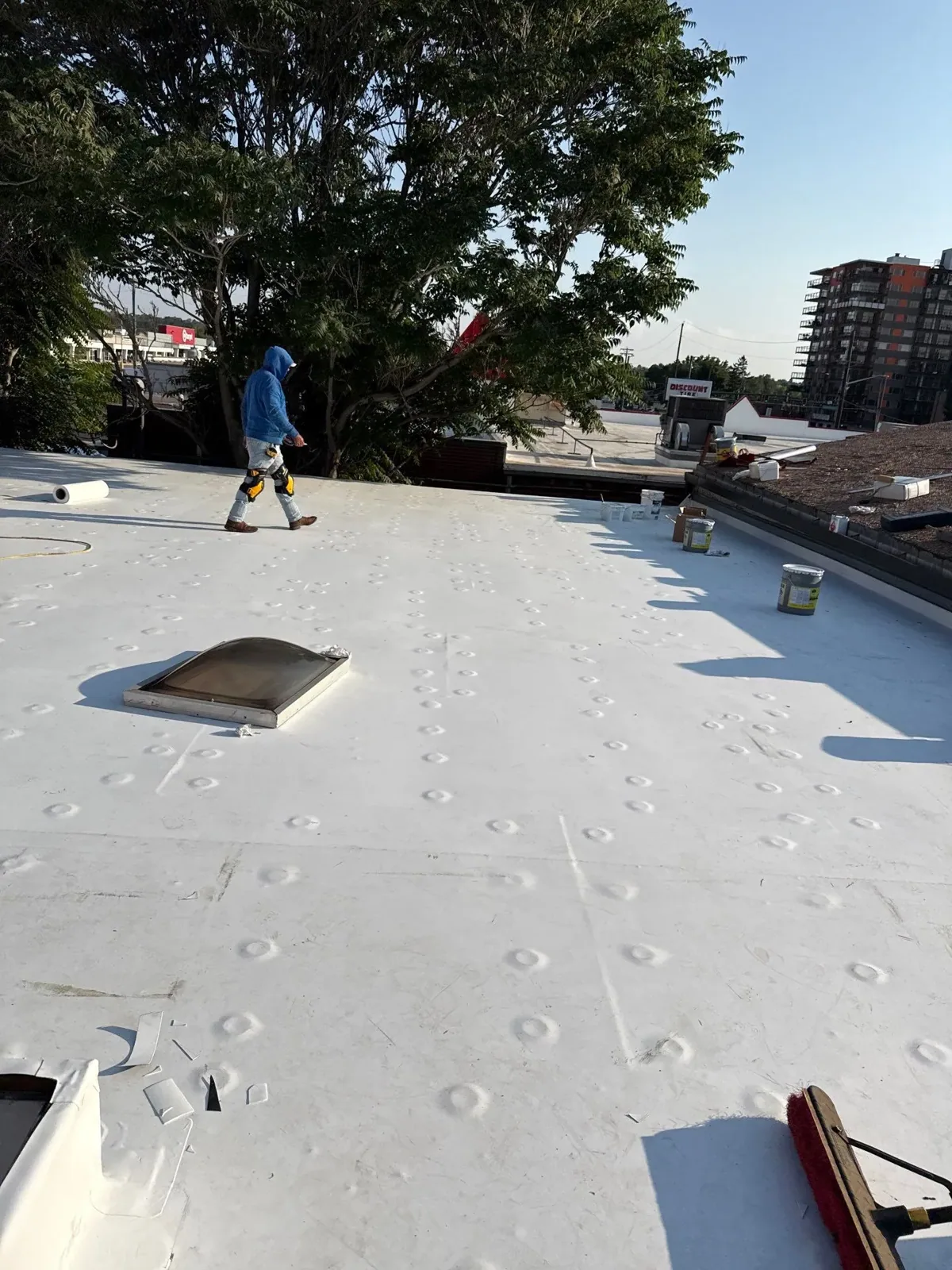
Seam Failure Repair
Seam failure repair in Queens, NY: split, open and lifted seams on TPO, PVC, EPDM and modified bitumen roofs, found by probe and repaired with strips.
Ready to Talk About Ponding Water Roof Repair?
Tell us about the building and what you are seeing. We will schedule a roof walk and send photos and a written scope.