
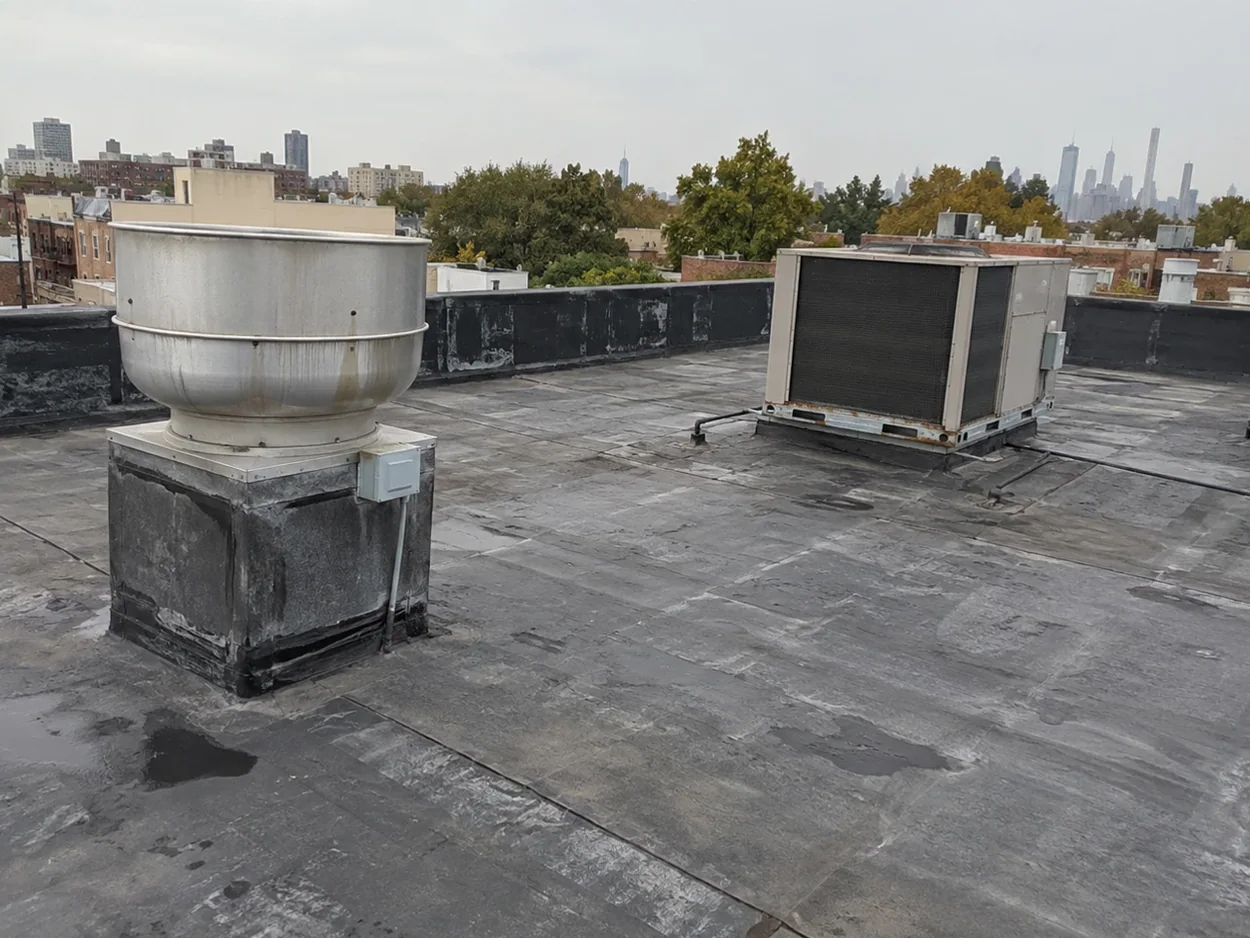
Line cooks who mop the same drip by the pass-through every wet Saturday know something the owner may not: the water is coming from above, and it is arriving at the busiest hour of the week. In Queens, NY, restaurants sit under small flat roofs packed with exhaust fans, makeup air units and grease-stained membrane, and we start with that drip and trace the water back up in order: the drain, the seam, then the curb and flashing around the exhaust, where grease and weather do the most damage together.
What does the owner see, and what is the roof doing?
Restaurant roofs have a few repeating signs. A drip near the kitchen hood points to the exhaust curb or the duct penetration. Brown stains in the dining room ceiling point to a drain or seam. A greasy film on the roof surface points to an exhaust fan with no grease catch. A damp smell in the storeroom points to wet insulation. Each sign leads to a place on the roof, and the first thing to check is the exhaust curb.
Grease is the main difference between a restaurant roof and any other. It lands on the membrane, softens some materials and hides seams from view.
Summer makes it worse. In a July that reaches 85 degrees inside the city's heat island, a roof over a working kitchen runs hotter than the air around it, and the sealant at the curb dries out faster than it would on a quieter building.
What is happening up there?
Hot, greasy air leaves a kitchen through the exhaust fan, and part of it drifts back down as a film on the membrane. Month after month the film softens the surface, collects dirt and lets the sheet blister or wear thin. The curb under the fan runs hot, which dries out and cracks its sealant.
Size is the second issue. A one-story restaurant may have only a few thousand square feet of roof, yet it carries hood exhaust, makeup air, plumbing vents, a walk-in cooler condenser and sometimes a dining deck. With that many openings in so little area, a leak at any one of them reaches the kitchen or the dining room fast.
Grease also raises a fire question. Built-up residue around the fan curb is fuel, and a torch or a stray spark meeting years of it is a real hazard. So we clean first, choose cold or welded methods near exhaust wherever the system permits, and station an extinguisher on the roof while we work.
Where are Queens restaurants, and what do they face?
Queens restaurants gather along its commercial strips. Roosevelt Avenue is the busiest commercial street in Woodside, and the Main Street and Roosevelt Avenue intersection in Flushing is the third busiest in New York City. Stores line Steinway Street in Astoria, Austin Street is the commercial heart of Forest Hills, and Cross Bay Boulevard is the commercial hub of Howard Beach, where chain stores and franchises have multiplied since the 1990s.
A small roof with a single drain has no reserve in a cloudburst, and Ida's remnants made the city's first flash flood emergency in September 2021 a lesson in that, with Queens counting most of the deaths.
Many restaurants lease their space and do not control the roof above. In a small shopping center the roof belongs to the landlord and the exhaust to the tenant, which means the fan curb is where responsibility tends to get muddy, and a restaurant inside a hotel shares a roof with a much larger system. We record who installed each fan and who maintains it, so a leak does not turn into a dispute.
How do we confirm the cause?
We walk the roof at an off hour, map every penetration and check the exhaust curb first. We probe the seams around it, test the surface for softening and look at the sealant on the duct. The drain is next, and then the parapet and the flashing where the roof meets the wall. If the leak is intermittent, a hose test on one section at a time, with someone watching inside, pins down the source. The findings go into an inspection report with photographs.
Because the kitchen cannot close for long, we photograph the roof in advance, agree on the access route through the building and bring the right materials on the first visit, so a short window is enough to stop an active leak.
What are the repair options, and how do we work around service?
A new curb flashing, fresh sealant or a rebuilt boot counts as a leak repair. A clean, dry membrane that has worn can take a coating, and a roof with a single layer may take a recover, though wet insulation ends that conversation, and a grease-resistant sheet such as PVC may suit the exposure. Work happens before opening or after closing, fumes are kept away from the dining room intake, and each section is finished the same day.
What does it cost to wait?
A leak in a restaurant costs a night of service. A wet ceiling over the line closes the kitchen, and a drip over the dining room loses covers and reviews. Grease on a failing roof is also a fire concern, because it collects in places where heat from the exhaust can reach it. A planned repair on a quiet weekday costs far less than an emergency call on a Saturday night.
The same walk that finds the leak also finds the next one. A cracked boot on a plumbing vent, a lifted corner on the curb or a clogged scupper at the back is cheaper to fix on a quiet Tuesday than on a wet Saturday.
What is the next step?
Photograph the worst stain and the exhaust fan above the kitchen and send them with the restaurant's street and the roof age. We go on the roof with you, describe in order what it is doing and leave a repair order before any price. Restaurants in Woodside and Flushing are scheduled around service.
Questions Owners Ask
What building owners and managers usually ask before a roof visit.
The fan is where it starts. A grease catch or tray on the exhaust, emptied on schedule, holds back most of it. Mild detergent clears a film that builds up; harsh solvents do harm. Where the sheet has already gone soft, a grease-resistant replacement is the cure, and cleaning dates belong in the maintenance plan.
Generally. We start before service or on a day the restaurant is closed, keep fumes clear of the dining room intake and wrap up each section before we leave. If an exhaust fan must be lifted, we bring in the hood contractor. Noise and smell are the concerns, and the timetable is agreed with the owner in advance.
They do. Every post, planter and railing leg passes through or rests on the waterproofing and can leak. We open the deck in strips to inspect the membrane and rebuild the flashing at each post, and we lay walkway pads to keep foot traffic off the sheet.
Clear the drains, contain the grease, fix small defects fast and have the roof walked in spring and fall. Penetrations take up a large share of a small roof's area, so it ages faster than a big one, and two cheap visits a year catch trouble while it is minor.
Related Roofing Work
Other pages that connect to Restaurant Roofing.
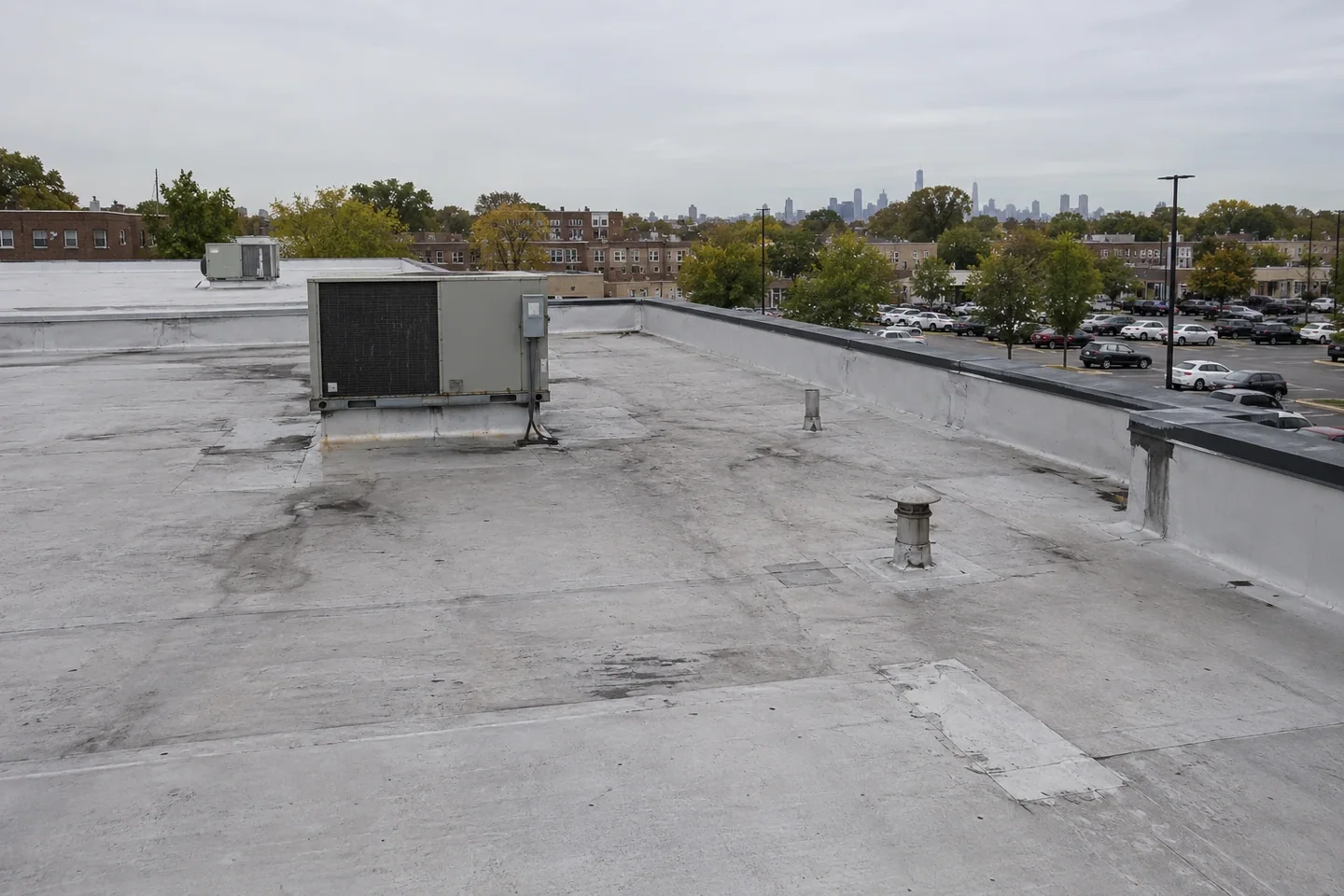
Shopping Center Roofing
Roofing for Queens, NY shopping centers and strip retail: tenant leaks, shared roofs, parking-deck tie-ins and repairs sequenced around store hours.
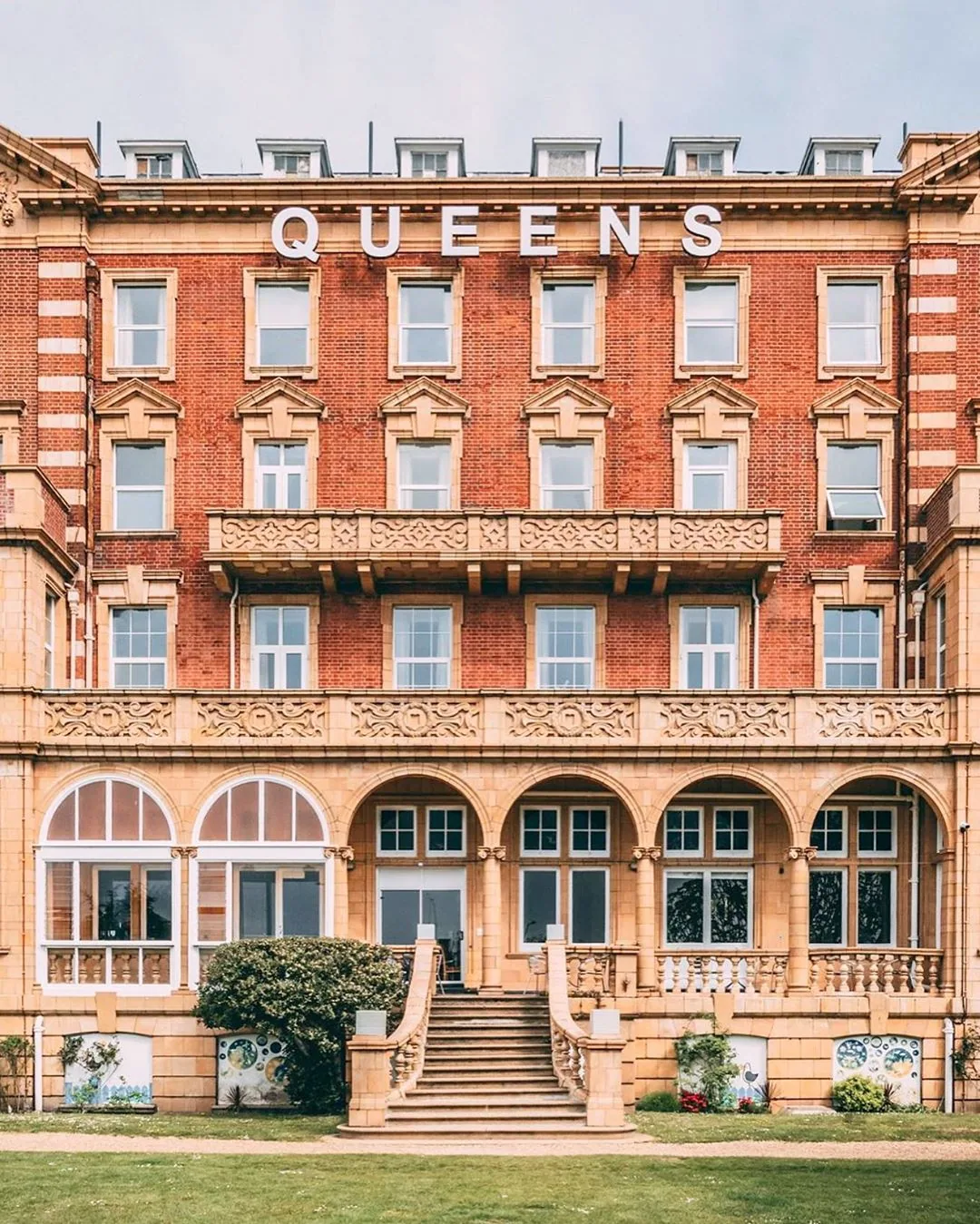
Hotel Roofing
Roofing for Queens, NY hotels: musty top floors, rooftop mechanical, terraces and work phased so rooms stay sold and guests stay undisturbed.
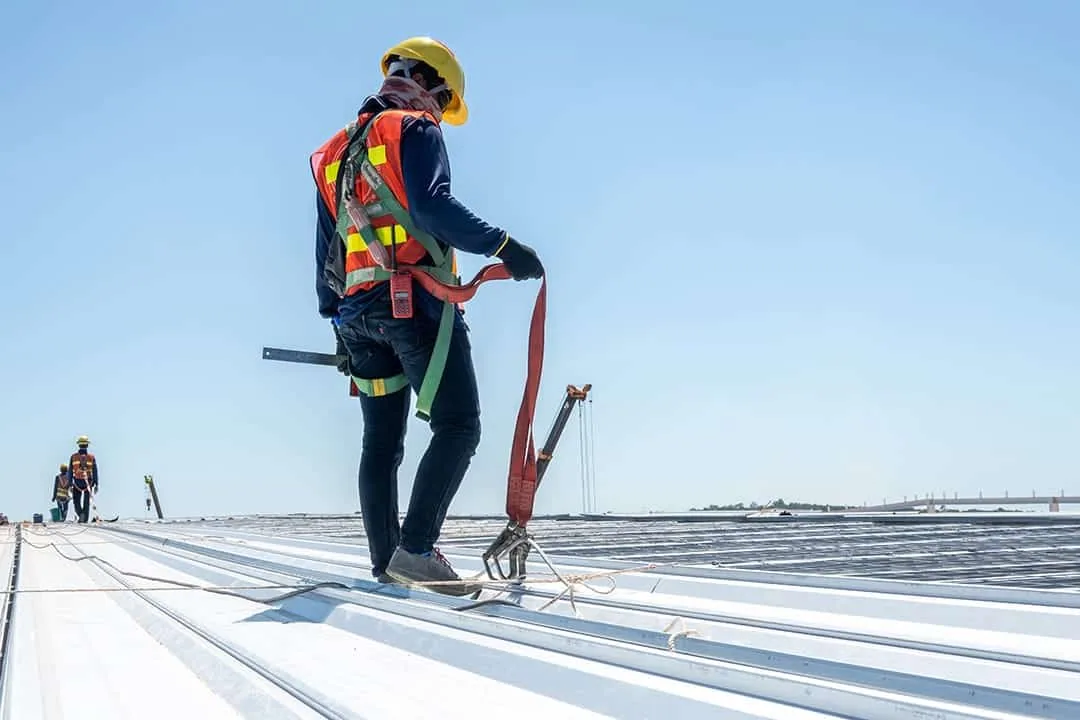
Commercial Roof Inspections
Hands-on commercial roof inspections in Queens, NY, with written findings, photographs and a ranked list of what to fix now and what can wait.
Ready to Talk About Restaurant Roofing?
Tell us about the building and what you are seeing. We will schedule a roof walk and send photos and a written scope.