
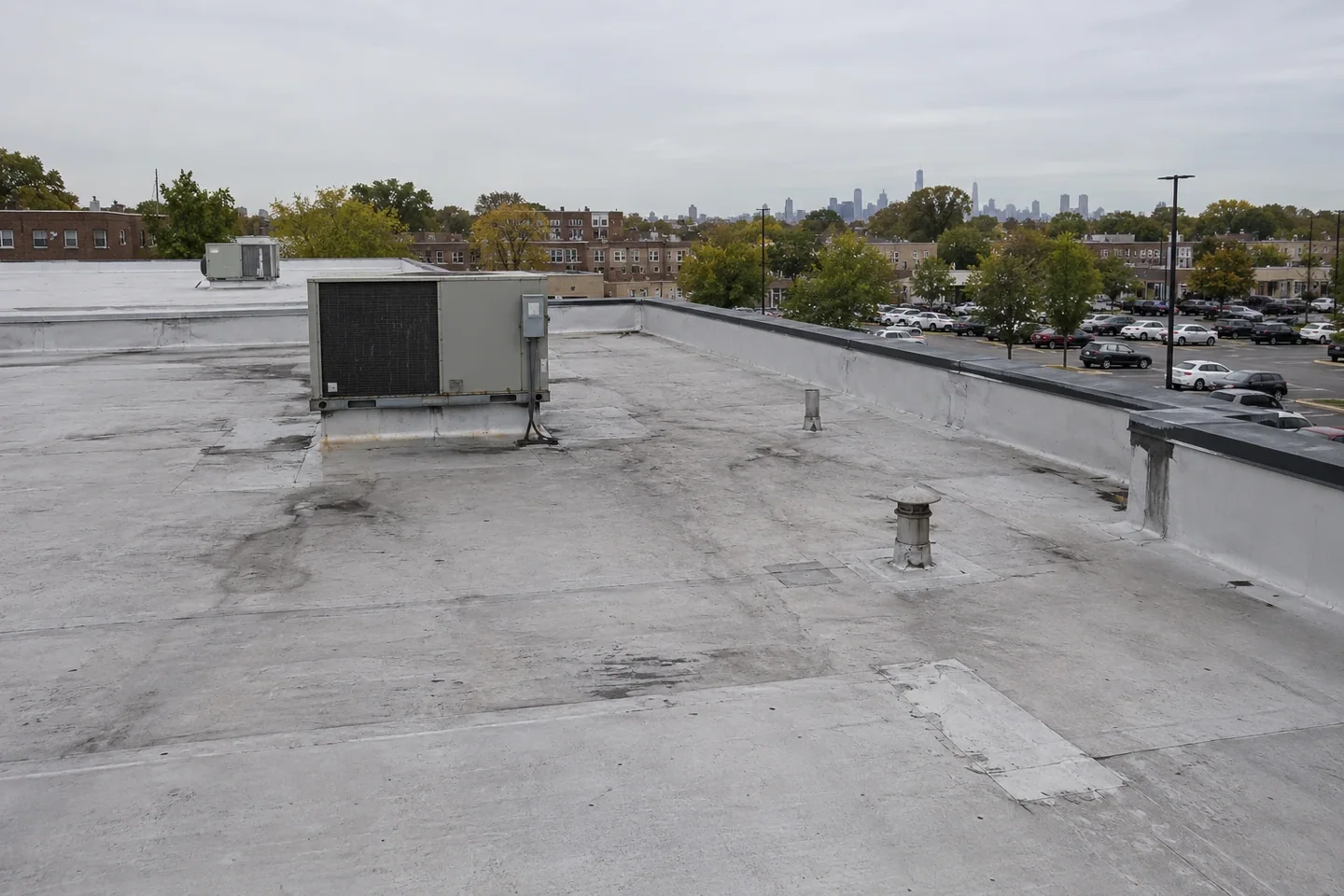
One tenant's stockroom has a bucket on the floor while the unit two doors down stays dry, and that is the first clue on a shopping center roof. The water did not fall straight down. It came in at one point, ran along the deck or a purlin and dropped where it found a gap. Centers in Queens, NY range from small strips to multi-level malls, and in each we start with the bucket and walk the water back across the roof, through the drain, the seam and the wall flashing and finally the line between one tenant's roof section and the next.
What does the property manager see, and what is the roof doing?
Retail roofs show their trouble at the storefront. Stains in the back rooms point to roof drains or scuppers. Stains near the front point to the canopy and parapet. Stains beside a rooftop unit point to a curb. Stains that move from one tenant to another over several storms point to water traveling along the deck. Each pattern points to a place on the roof we check first.
Shopping center roofs also collect restaurant exhaust, signage mounts and tenant-added equipment. Each addition is a penetration, and many were added without a roofer present.
The weather adds its own pattern. Black membranes bake in July, when the city's daily high nears 85 degrees, and the soft spots collect around the units. In winter, freeze-thaw opens seams along the back lane where snow slides off and drains ice over. A walk in spring and a drain check in fall catch most of it.
What is happening up there?
A center is rarely built all at once. A strip grows by phases, a large tenant is added, a pad site is attached and a mall gets a new wing. Each phase has its own roof, built at its own time with its own materials, and the tie-ins between them crack as the buildings settle. The long, shallow roofs of a strip center drain toward the back, so the rear scuppers and downspouts carry most of the water.
The mix of tenants adds complexity. Restaurants put grease on the membrane, supermarkets put condensers on the roof and clinics put exhaust fans there. The roof has to serve all of them and the landlord has to decide who pays when something fails.
Big tenants change the roof too. A big-box store brings a wide, flat field with heavy equipment, and a grocery store brings a bank of condensers and refrigeration lines. If either occupies the end of a strip, the wall it shares with the next unit is where two roofs meet, and that wall is where we look first when a leak crosses between tenants.
What do Queens centers look like?
The borough ranges from compact strips to large retail buildings. Rego Center Phase II, which opened in 2010, offers 950,000 square feet of retail on 62nd Drive under a 312-unit residential tower, while Rego Center Phase I is a 277,000-square-foot, four-floor retail center with a multilevel parking garage. In Elmhurst, Queens Center offers about 1,000,000 square feet of gross leasable area, and the smaller Queens Place Mall opened back in 1965. In Middle Village, Metro Mall was built in 1972 to 1974, and in College Point a 20th Avenue strip mall includes Waldbaum's, Target and BJ's Wholesale Club. Atlas Terminal in Glendale was replaced by a shopping center after its demolition in 2004.
How do we confirm the cause?
We begin with the stain map from the tenants and the property manager, since it shows where water appears and when. On the roof, we trace each stain back across the deck, probe the seams, check the drains and scuppers and map every unit, curb and penetration. Wet insulation shows up under an infrared moisture survey without any opening of the roof, and the findings go into an inspection report the landlord can share with tenants.
In a center with many tenants the roof is divided into zones that match the leases, so responsibility for repairs is clear.
A restaurant on the ground floor gets its exhaust and grease path checked too. Grease on a membrane softens some materials and hides seams, and a cleaning schedule goes into the maintenance plan.
What are the repair options, and how do we work around store hours?
New boots, a rebuilt tie-in and cleared scuppers are a repair, and often that is all a strip roof needs. A worn membrane over dry insulation can gain more years from a coating or a recover. Where the insulation is wet, only replacement stops the cycle. We schedule noisy work before opening or after closing, keep customer entrances and fire lanes clear and stage materials in service areas, not in the parking field. The plan is written with the property manager and shared with the tenants so no one is surprised.
What does it cost to wait?
A retail leak costs sales. A wet stockroom loses inventory, and a wet sales floor loses customers. Tenants start to withhold rent or ask for concessions, and a center with a reputation for leaks has trouble keeping its tenants. Ida's cloudburst in 2021 left most of the city's deaths in Queens, and retail roofs with few scuppers have little margin in a storm like it. A planned repair costs less than a series of emergency calls.
Lenders and buyers also look at the roof. A center with a dated inspection, a repair history and a funded replacement date shows well in a sale or a refinance, and the written report we leave behind is made for that use.
What is the next step?
Send photographs of the worst stain and the nearest drain or scupper, with the center's street and the roof age. We go onto the roof with you, describe step by step what is going on and hand over a repair order before any price. Centers in Rego Park and Elmhurst are scheduled around store hours.
Questions Owners Ask
What building owners and managers usually ask before a roof visit.
Lease terms decide that, and we leave the reading of them to you. What we can supply is a roof drawn in zones, the leak traced to its source and a record of where it began. A report that shows which section failed and why lets landlord and tenants sort out the bill against the lease, and the repair can go ahead without waiting.
Generally yes. Loud tasks run outside opening hours, entrances and fire lanes stay open, and storefronts and sidewalks are protected. Strong-smelling materials are kept away from restaurants and food tenants. A short notice to each tenant before work begins gives them time to plan, and we leave a contact for the crew lead.
The landlord should keep a list of every unit on the roof with its owner, curb and service route, and should require notice before anything new goes up so a roofer can review the curb and penetrations. A unit nobody checked is a frequent source of fresh leaks on a retail roof, and the review costs a fraction of the repair.
Where a parking deck covers occupied retail space, the job is waterproofing as much as roofing, and a leak harms the space below and the structure. The membrane under the deck surface needs inspection, drains must stay open and joints must be sealed. The deck and the retail roof are reviewed as a single system so that the junction between them is not left as the weak point.
Two walks a year work well, one in spring after the thaw and one in fall before the leaves, plus another after any storm that drops a lot of water. Each visit is short, and the written report builds a record that serves tenants, lenders and insurers.
Related Roofing Work
Other pages that connect to Shopping Center Roofing.
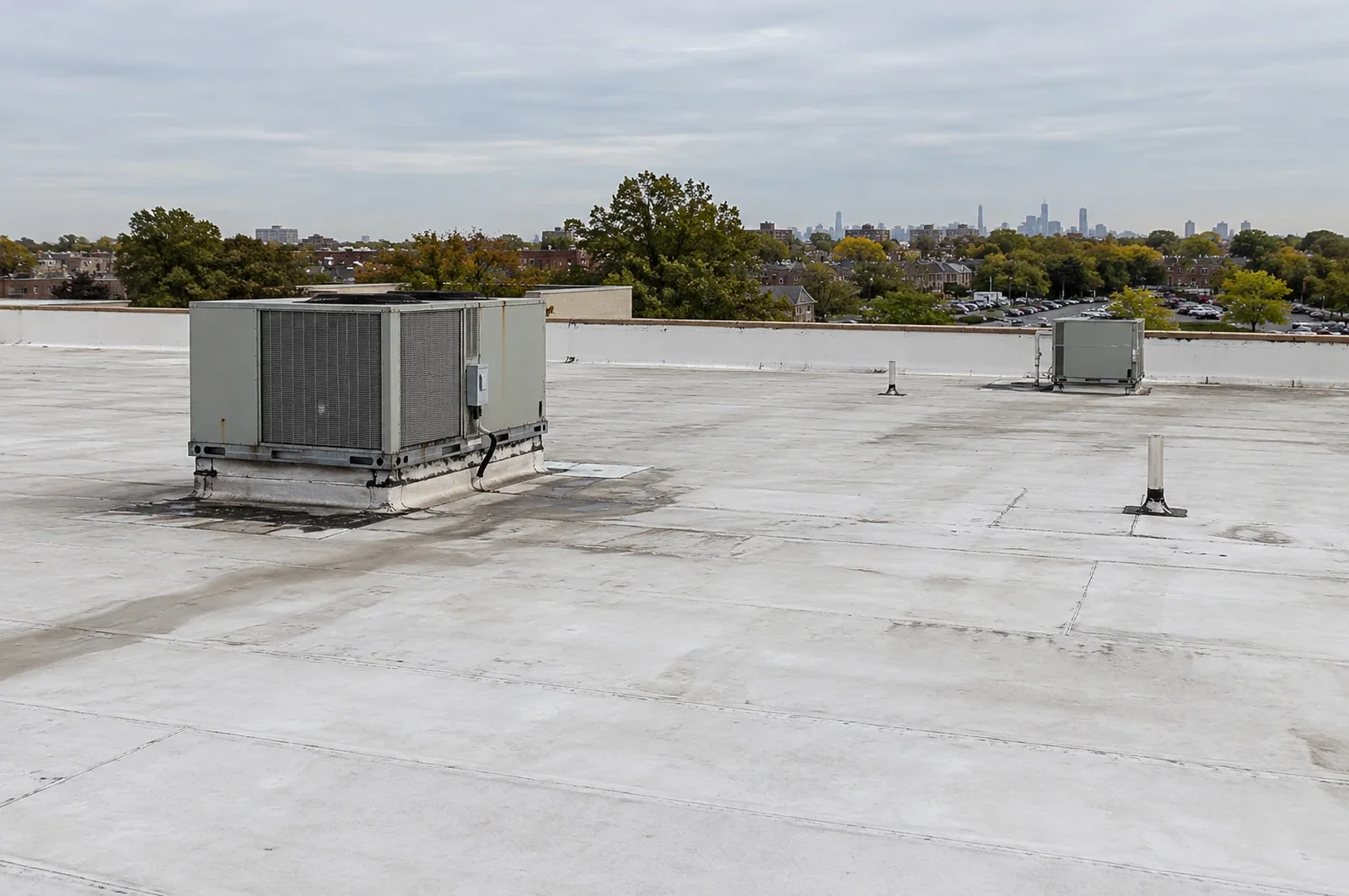
Big-Box Retail Roofing
Roof repair and replacement for big-box stores in Queens, NY: wide flat fields, rooftop units, ponding and phased work that keeps the sales floor open.
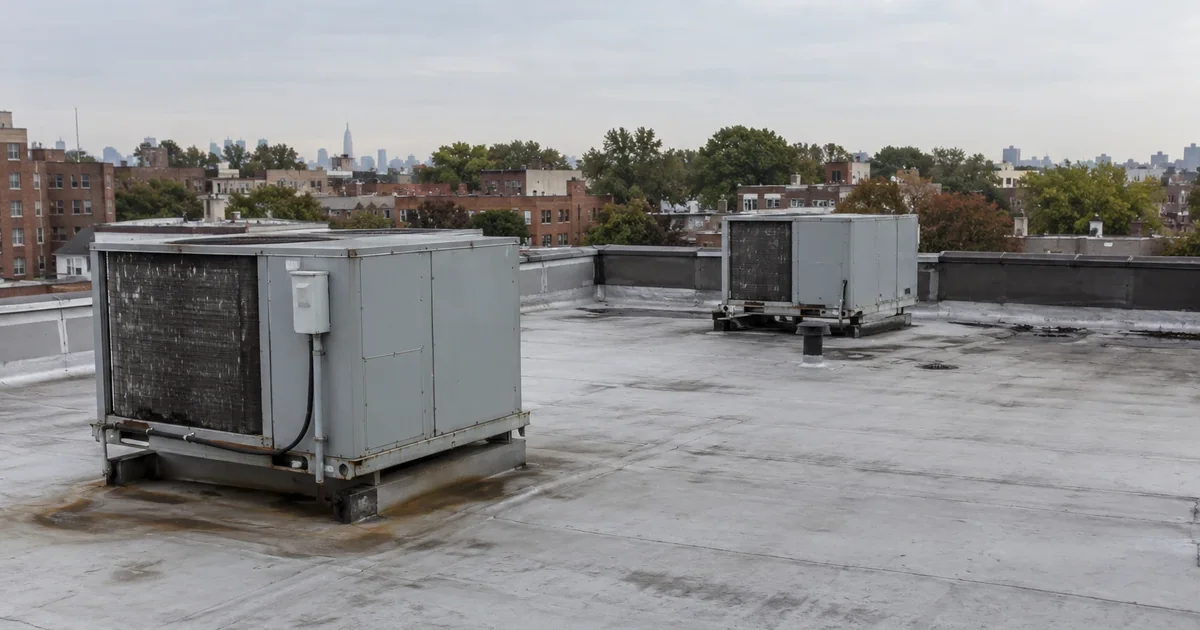
Grocery Store Roofing
Roofing for Queens, NY grocery stores: condenser decks, refrigeration lines, drains and quiet scheduling that protects food, floors and shoppers.
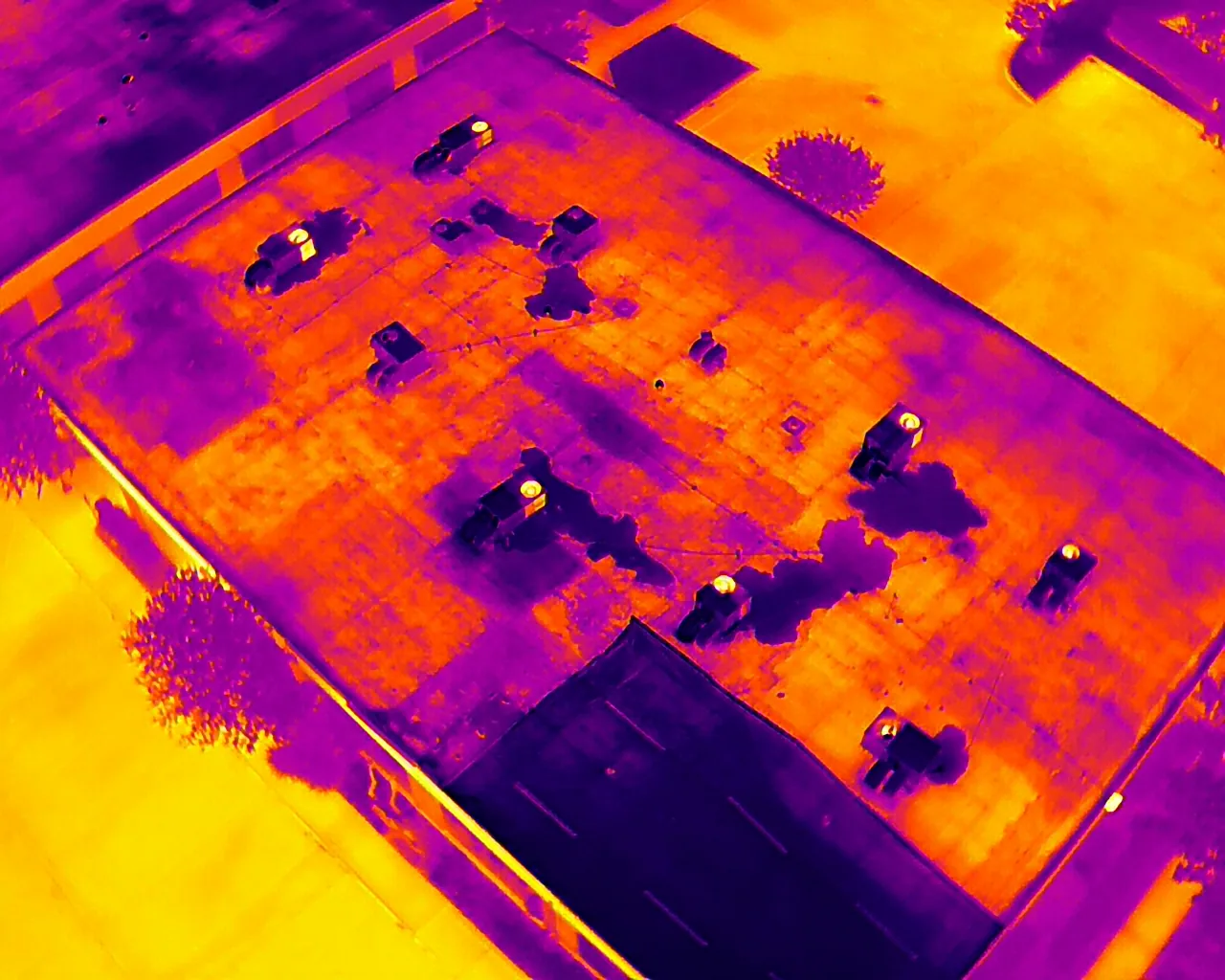
Infrared Roof Moisture Surveys
Infrared scans and core-cut moisture surveys for Queens, NY commercial roofs that locate wet insulation before the owner commits to repair or replacement.
Ready to Talk About Shopping Center Roofing?
Tell us about the building and what you are seeing. We will schedule a roof walk and send photos and a written scope.