
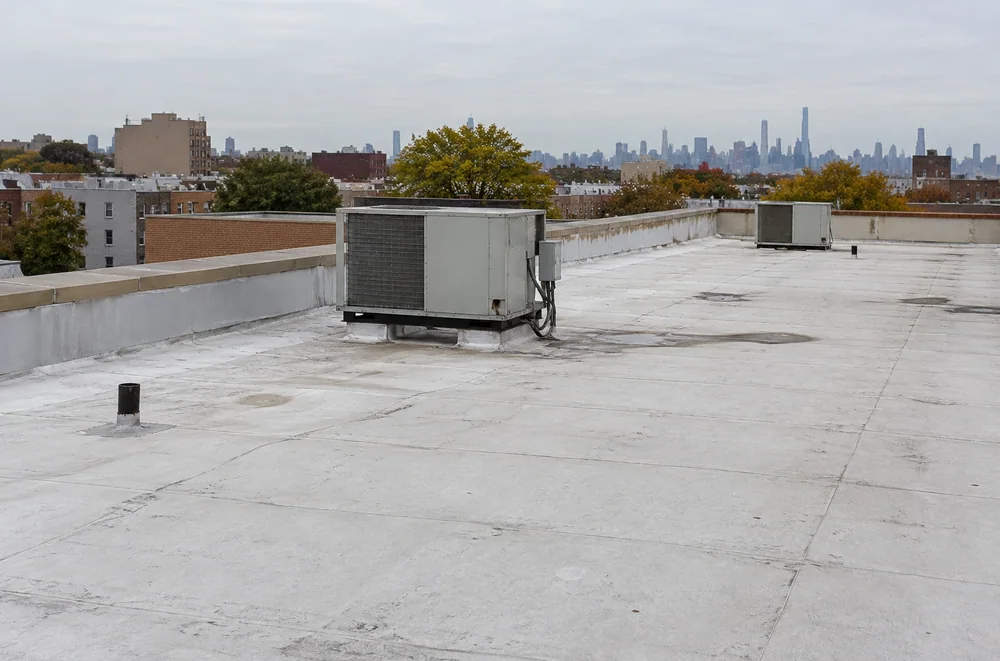
A customer stands at an open unit door holding a ruined box and pointing at a dark stain on the ceiling, and the manager cannot say whether the water came through a seam, along a pipe or from a drain that has been blocked for a month. That moment is when a roof investigation really begins. The stain is the last step in a path that started higher up and can run a long way along the deck before it drops. For storage buildings in Queens, NY, commercial roof repair and replacement means following the water's path backward one step at a time.
Little interrupts a storage roof, which is mostly open field with few penetrations, and that plainness hides the trouble.
What does the manager see, and what does it tell us?
The manager sees a stain, a swollen box or rust on a door track, and each points somewhere different. A stain over the same unit after every rain says the entry is close and fixed. A stain that wanders from unit to unit says water is traveling along the deck, and a rust streak below a roof seam says the metal is leaking at a fastener or a lap.
A simple log helps: unit number, date, weather and a photograph. After a few entries a pattern shows, and we lay it against the roof plan to mark likely entry points before anyone climbs the ladder, so the first walk tests a theory instead of searching blindly.
The unit itself adds evidence. Water that runs down a wall leaves a vertical streak, and water that drips from a ceiling leaves a ring on the floor, so both deserve a photograph for the direction they reveal.
What is happening on a big, quiet roof?
A storage roof sheds a lot of water through very few drains, so the strainer is the first thing we check. One packed with grit and leaves holds water on the deck for a day after a storm, and a seam that sits wet that long will find any pinhole it can. Ponding is the symptom, and the cause is a blocked drain, a sagging deck or insulation compressed by repeated loading.
The seams come next. Single-ply laps and bitumen side laps open through hot summers and freezing winters. After them we look at the edge, where wind lifts loose metal, and then at the few penetrations, vents, hatches and fans, each with a curb and a sealant line. Every defect is photographed along the way.
A long, low parapet is the last stop. A storage block may have many feet of coping, and each open joint feeds water into the wall behind it. A wall that stays wet pushes damage back toward the roof edge, so coping joints and counterflashing are read before we leave the perimeter.
Why do industrial parks matter to a storage roof?
Storage buildings often sit in or beside industrial districts. The Maspeth Industrial Center lies on industrial lowlands and is crossed by the freight-only LIRR Bushwick Branch, and water stood six feet deep in Maspeth during Hurricane Sandy. By 2003 College Point Corporate Park, about 550 acres in all, held more than 200 companies. Long Island City has many former factories and bakeries converted to new uses.
That describes the setting, not any roof in it. A converted factory may have an older built-up roof with recovers stacked on top, while a purpose-built block may carry single-ply, and a core cut shows which. Owners near Maspeth, College Point or Long Island City can rate each building on a single scale and fund the worst first.
Neighbors in an industrial park may share drainage. If a downspout empties into a line the neighbors also use, that line can back up in a storm. Where access allows we follow the leaders outward from the roof drain, so the fix reaches the whole path and not only the bowl.
How do we confirm the cause before spending anything?
An infrared moisture scan on the evening after a warm day maps wet insulation. Open spots show up when seams and flashings are probed, and a core cut at the worst area reveals how many layers sit on the deck and whether the lowest is dry.
The owner learns from this whether the problem is local or general. With dry insulation and a sound deck, a roof recover or a restoration coating can add years, while insulation that is wet through has to come out. A scan ahead of the decision costs far less than a tear-off ordered on a guess.
Equipment on a storage roof is light: a few exhaust fans for climate-controlled floors, a vent stack or two, a hatch and perhaps a sign frame. A frame bolted through the membrane years ago, with its sealant long gone, can leak for a season before anyone connects it to a stain, so every penetration is numbered on the plan.
What do storms and heat do to a large flat roof?
September 1, 2021 was the day of Ida's remnants and the first flash flood emergency the city had ever issued, and Queens took the heaviest toll. A roof drain that manages ordinary rain chokes in a cloudburst, and the water climbs the parapet. Winter adds snow, about 29.8 inches in an average year, with its weight and ice.
Heat reaches stored goods too. July afternoons at Central Park average close to 85 degrees, the heat island adds to the total, and under a dark roof the upper-floor units can turn into ovens. A reflective membrane such as TPO cuts surface heat, provided the roof beneath is dry and sound.
What is the next step for a storage owner?
A walk and a written rating come next. Drains are cleared, soft spots marked, the roof scanned and cored, and then sorted into repair, recover and replacement. A storage building is easy to work around because customers come and go in daylight and most of it is empty space; we keep the loading area and office entrance clear and dry in at the end of each shift.
Yearly drain clearing and a walk after storms keep the roof in the condition the project left it. A warehouse roof or flex industrial building in the same park shares many seam and drain problems. Price follows access, penetration count and the state of the deck.
Questions Owners Ask
What building owners and managers usually ask before a roof visit.
A leak tracks rainfall, and its marks grow after storms. Condensation follows cold, humid weather and forms on metal and uninsulated surfaces. A moisture scan after rain and a check under the roof deck separate them.
Yes. Work goes in zones, the loading area and office entrance stay clear, each shift ends dry and the space below any open area is protected.
It can, if the insulation is dry and the deck is sound, and the coating adds reflectivity. If the scan finds trapped water, the wet layers must come out first, and the core log settles which case applies.
Twice a year, once in late fall after the leaves and once in early spring after the thaw, plus after any major storm. Photographs before and after go into the roof file.
The building address and photos of the stain and the nearest drain are all it takes. From those we can tell you, in order, whether the path begins at a drain, a seam or an edge.
Related Roofing Work
Other pages that connect to Self-Storage Roofing.
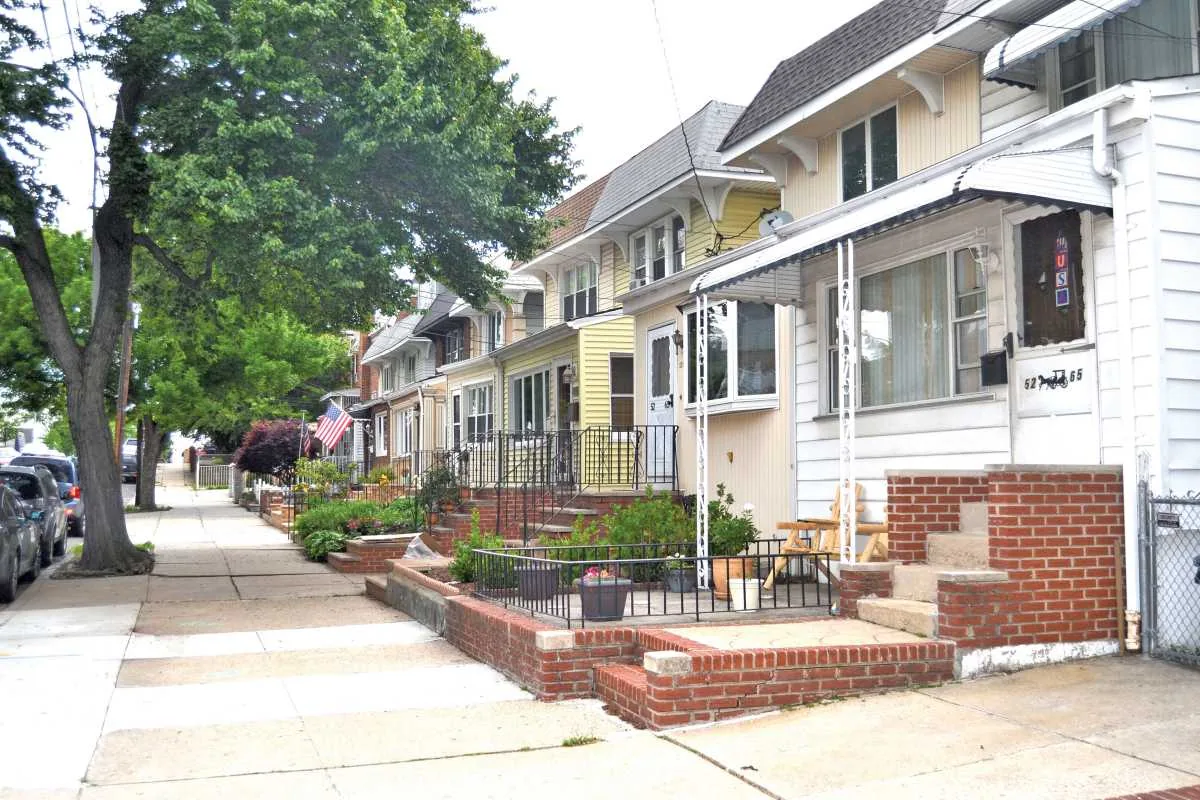
Maspeth
Commercial roof repair, recover and replacement in Maspeth, Queens, NY, for industrial lowland buildings, warehouses and Grand Avenue businesses.
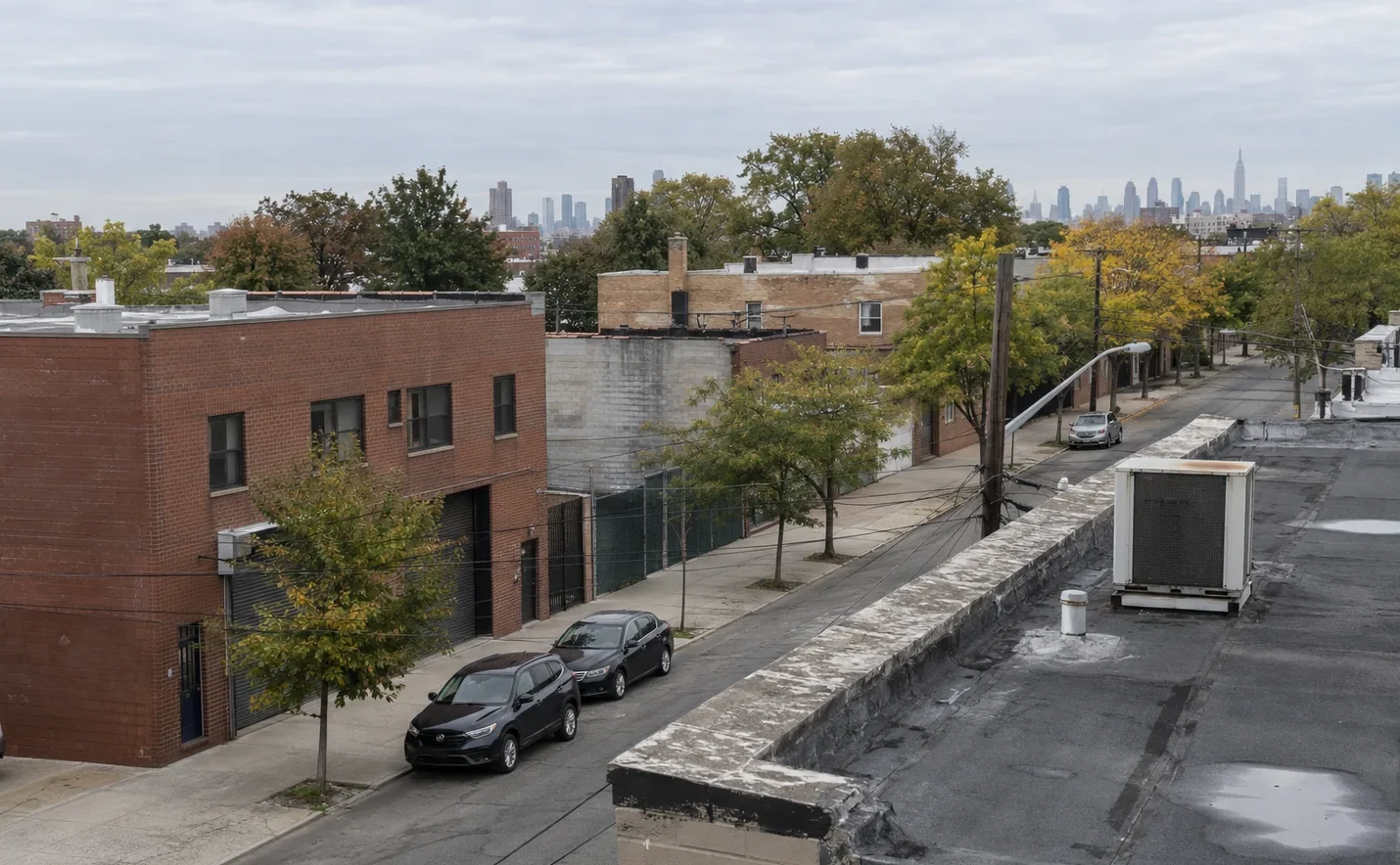
College Point
Commercial roof repair and replacement in College Point, Queens, NY: corporate park industrial roofs, distribution and warehouse buildings and strip retail.
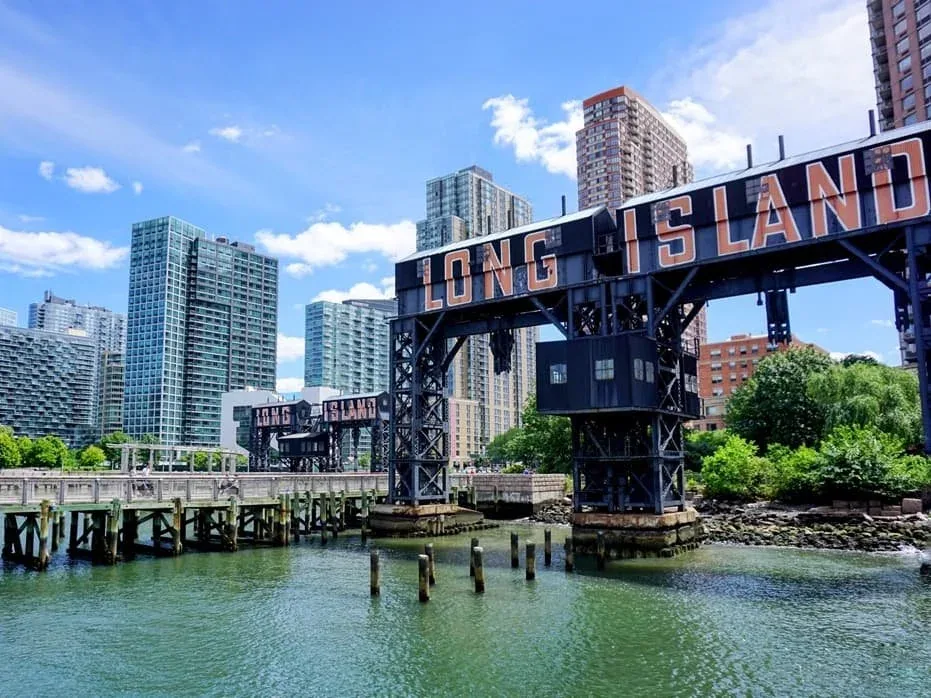
Long Island City
Commercial roof repair and replacement in Long Island City, Queens, NY, for masonry industrial buildings, converted factories and newer mixed-use roofs.
Ready to Talk About Self-Storage Roofing?
Tell us about the building and what you are seeing. We will schedule a roof walk and send photos and a written scope.