
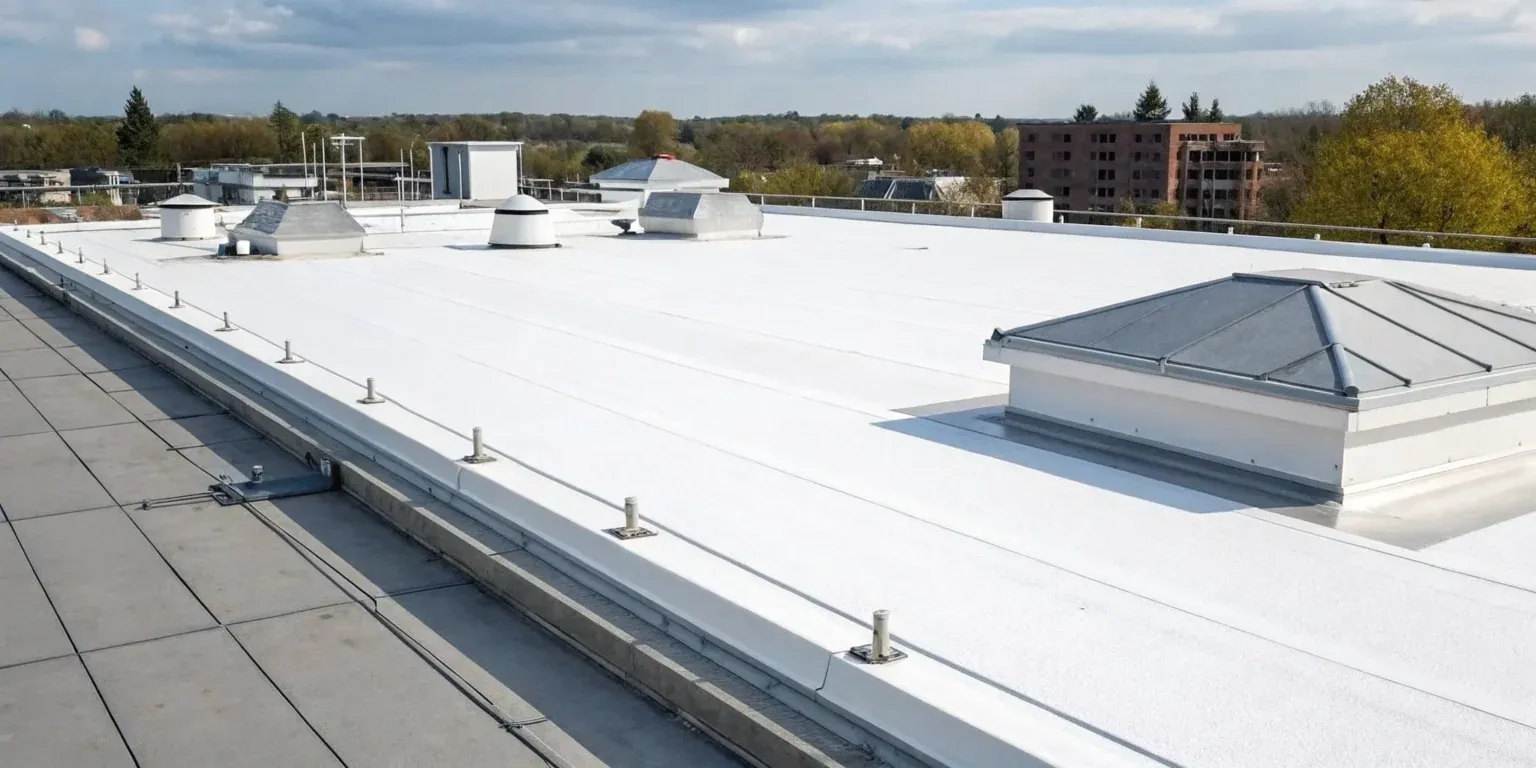
Owners often arrive with a roof that carries one manufacturer's name on the paperwork and a stain on the ceiling. The first question is rarely about the brand. It is about what kind of roof it is, because a single-ply sheet, a modified bitumen roof and a built-up roof fail in different ways and are repaired in different ways. GAF makes commercial roofing in all three of those families, so the practical answer to "what do I have?" starts with finding which one is on the building.
What kinds of roofing does GAF make for commercial buildings?
GAF is a large roofing manufacturer, and its commercial line spans three broad system categories. The first is single-ply membrane, a factory-made sheet joined at the seams, with TPO as a major type. The second is modified bitumen, layered rolls of polymer-modified asphalt. The third is built-up roofing, multiple plies with a cap sheet or surfacing. Alongside those it offers insulation, cover boards, accessories and roof coatings.
The specific products and warranty programs change over time, so the owner's own documents and the manufacturer's current literature are the authority. What does not change is the physics of each family, which is what we work from on the roof. We read the system first and the name second.
Choosing among the families starts with the building. A big, open roof with few penetrations suits a single-ply sheet. A roof that sees heavy foot traffic, or one tied into an old built-up roof, may suit modified bitumen. A roof that must match an existing layered system may stay with a built-up assembly. Other makers offer similar families, and the choice between brands often comes down to availability, detail drawings and the warranty program, so owners compare Carlisle SynTec and Johns Manville alongside this one.
How do we handle a single-ply roof?
Walk it with me. On a single-ply roof, the first step is the seams: we probe every welded lap for gaps. The second is the flashing at curbs, walls and drains, where the sheet turns and stress concentrates. The third is the surface, looking for chalking, cracking and ponding stains. A TPO roof that shows open seams usually needs welded cover strips, and a roof with shrinking flashings needs those details rebuilt.
Installation follows the same logic. The sheet is attached to the deck or insulation by fasteners or adhesive, seams are welded and details are formed from matching material. The quality of each weld decides how long the roof lasts, so the weld is probed, not assumed.
Beneath the sheet, insulation and cover board deserve attention too. Polyiso board is common under single-ply, and a cover board shields it from fasteners and foot traffic. No sheet performs over wet insulation, so we scan for moisture, cut out wet board and replace it before anything new goes on.
What about modified bitumen and built-up roofs?
These are layered systems. A modified bitumen roof has a base ply and a cap sheet, joined by torch, adhesive or self-adhering backing. A built-up roof has several plies of felt and asphalt with a surface. Both are thick, tolerate foot traffic and patch well, and both fail at laps, flashings and surfaces rather than in the middle of a sheet.
When a GAF roof of either type ages, we check granule loss, blisters, splits and the edge metal. Repairs follow the roof's own method: cut out the blister, dry the area and patch with matching layers. Replacement uses the same family or a different one, depending on what the building needs. Tie-ins between old and new systems get a transition detail, because a join between different roofs is a common leak.
The surface is the other lever. A reflective coating can lower roof temperature in a city where Central Park averages near 85 degrees on July afternoons and the heat island is strong, and a worn cap sheet or gravel surface can sometimes be renewed with one, adding service life when the layers beneath are dry.
Where do these systems turn up in Queens?
They can turn up anywhere in the borough's mixed stock. Long Island City's converted factories and bakeries leave older masonry industrial roofs beside newer mixed-use buildings. Ridgewood and Glendale are largely early twentieth-century yellow-brick rowhouses and mill-era buildings, and the Maspeth Industrial Center lies on industrial lowlands. These buildings carry everything from layered asphalt systems to newer single-ply sheets.
Layered roofs may sit on older masonry buildings, while the large flat roofs of retail centers such as Rego Center Phase II, which offers 950,000 square feet on 62nd Drive, tend toward single-ply. On a job in Long Island City or Glendale, each roof is read by its family before it is touched.
Weather tests every family. Snow totals about 29.8 inches in a normal year for the city, and January 23, 2016 alone left 27.3 inches. Queens had most of the deaths when Hurricane Ida's remnants hit on September 1, 2021 and the city issued its first flash flood emergency. Whatever a roof is made of, its drains and flashings decide how it handles such events.
How do warranties and records fit in?
A manufacturer's warranty is a contract with conditions, and the terms vary by program. Owners who want to keep one in force should keep the warranty document, the installation records, inspection reports and repair records, and should notify the right parties before any rooftop work. A roof warranty management file keeps those items together.
Repairs follow the system's published details and are documented with photographs and notes, and leaks should be reported in writing promptly. Only the manufacturer or the administrator named on the document can say what a given warranty covers, so coverage questions go to them.
What is the next step?
Include photos of the roof, the stain, any paperwork that names the system and the roof's age. On the roof we identify which family it belongs to, then describe in plain steps what repair or replacement would involve, and price comes afterward.
Questions Owners Ask
What building owners and managers usually ask before a roof visit.
Look at the paperwork first, then at the roof. A white sheet with welded seams is a single-ply, a roll roof with granules is modified bitumen and a roof with gravel over asphalt is built-up. Cores confirm the layers. We can identify it on a walk. Cutting a small core and counting the layers settles any doubt in an hour.
A qualified roofer can repair the system following its published details. If a warranty is in force, its terms may name who can do the work. Check the document or ask the manufacturer before repairs start.
In some cases. The old roof must be dry and sound, a separation layer or cover board normally goes between them, and fire rating and weight limits shape the answer. Cores and a moisture scan show whether a recover can go ahead.
Many buildings do, because additions were roofed at different times. We map each area, rate it and detail the joints between them. Each section may call for a different action. Each joint between systems gets its own flashing detail, tested with water after the repair.
Send photos of the roof, the stain and the paperwork, including any warranty letters. The roof's age and repair history are helpful.
Related Roofing Work
Other pages that connect to GAF Commercial.
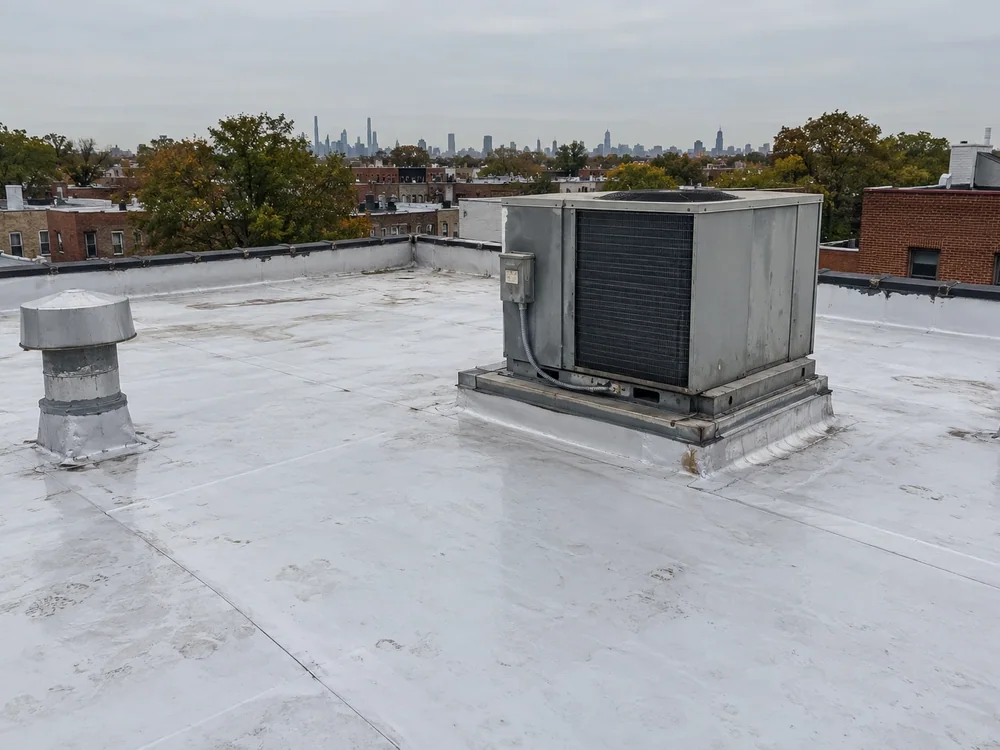
Carlisle SynTec
Carlisle SynTec single-ply roofing in Queens, NY: EPDM, TPO and PVC categories, how each is installed, repaired and maintained, and how to read the paperwork.
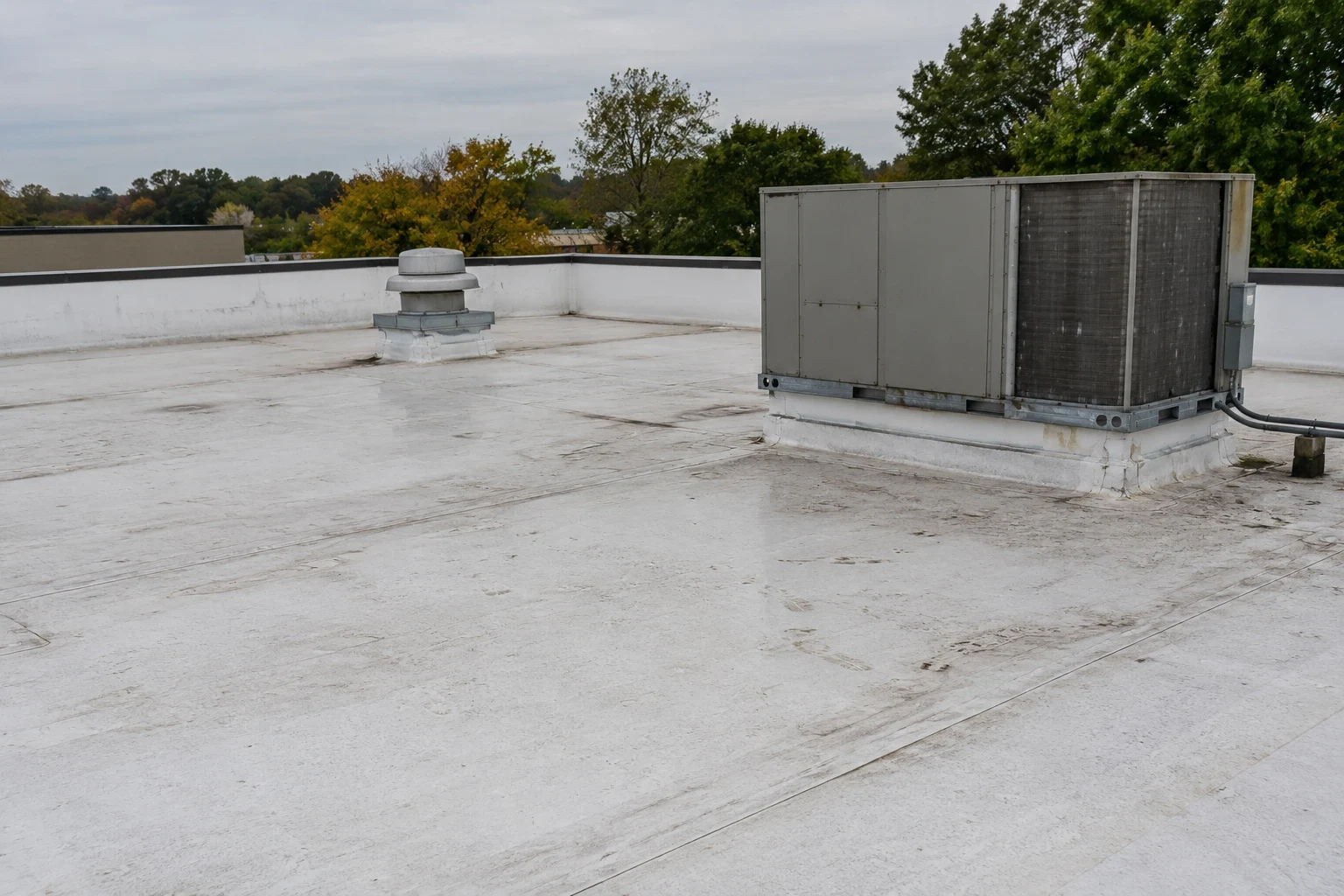
Johns Manville
Johns Manville roofing in Queens, NY: single-ply, built-up and modified bitumen system categories plus roof insulation, with installation and repair explained.
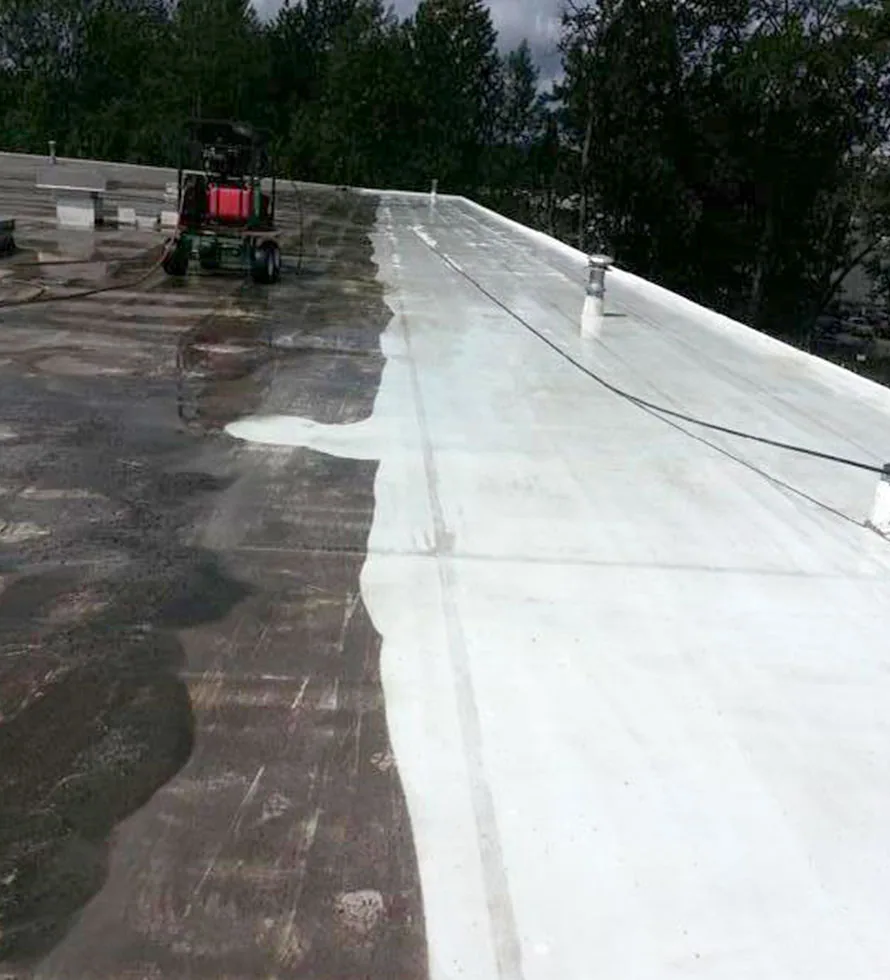
TPO Roofing
TPO roofing in Queens, NY: heat-welded white single-ply membranes for flat commercial roofs, with seam checks, repair and replacement explained step by step.
Ready to Talk About GAF Commercial?
Tell us about the building and what you are seeing. We will schedule a roof walk and send photos and a written scope.