
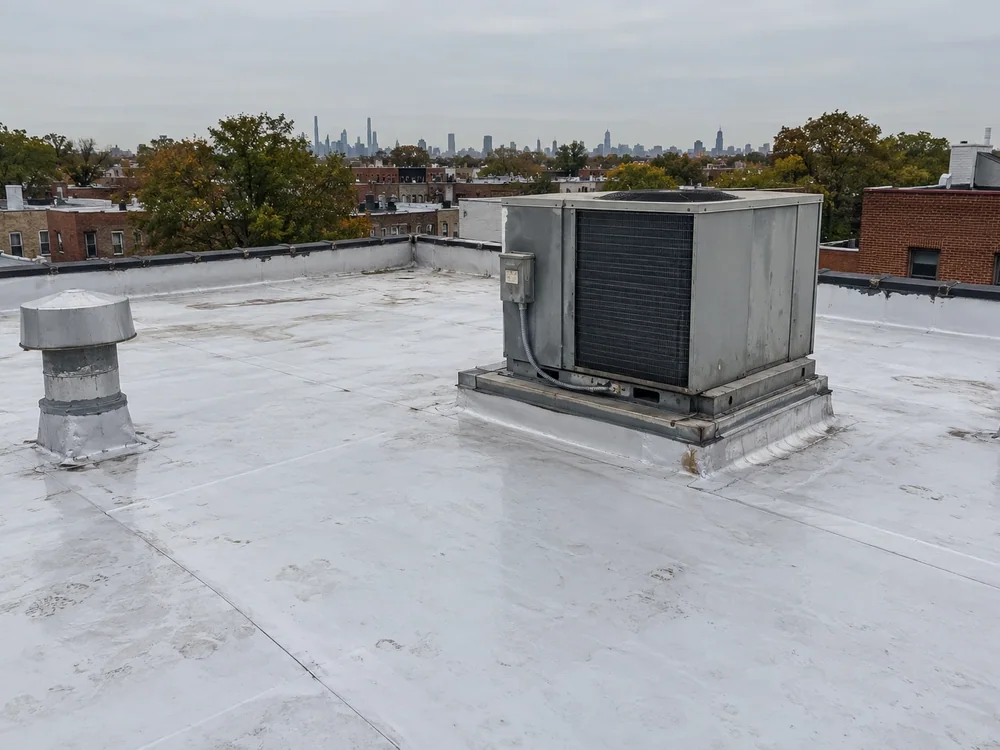
A wrinkle running across a flat roof, with a dark line where two sheets meet, is a common sight on single-ply roofs, and it raises a question before it raises a worry. Is the line a seam that has failed, or a seam that has only shifted? The answer depends on whether the sheet is rubber, with glued or taped laps, or thermoplastic, with welded laps. Carlisle SynTec makes single-ply systems in both camps, so the first task on its roofs is to tell which camp the roof belongs to.
Which single-ply systems does Carlisle SynTec make?
SynTec is a commercial roofing maker whose line centers on single-ply membranes. The main types are EPDM, a synthetic rubber; TPO, a thermoplastic polyolefin; and PVC, a thermoplastic vinyl. It also supplies insulation, fasteners, adhesives, flashings and accessories that complete a system, along with roof coatings.
The three sheets behave differently. EPDM seams are glued or taped and the sheet stays flexible in the cold. TPO and PVC seams are welded with hot air, which makes a continuous sheet that depends on the weld. The right choice for a building follows what the roof is exposed to, and the specifics of each product are in the manufacturer's current literature.
Other makers offer the same three sheet types, which is why owners compare brands. Versico and Holcim Elevate both sell single-ply systems, and the roofing is judged less by the logo than by the details: how the seams are made, how the edges are secured and how the flashings are formed. We read those details on the roof.
How do we handle a rubber roof?
Walk it with me. On an EPDM roof, the first step is to press every seam and tape strip, feeling for slack and lifted edges. The second is to check the flashing at walls and curbs, where shrinkage pulls the rubber away. The third is the field, for punctures and worn spots. A rubber patch with primer is a simple repair on a clean, dry surface.
If stone ballast is on the roof, we rake it back at several spots to read the sheet and clear the drains. Installation uses one of three methods: fully adhered, mechanically attached or ballasted. The choice depends on the deck, the wind exposure and the weight the structure can carry. Each has its own seams, fasteners and edge details, which we follow.
Rubber roofs reward maintenance of the edges. Termination bars along walls should be tight and sealed, and the top edge should shed water over the sheet. A loose bar lets water behind the flashing, and the stain shows up inside weeks later. We re-fasten bars, replace failed sealant and check that the counterflashing overlaps the top by an inch or more.
And a welded roof?
On TPO or PVC, the seam probe is the key tool. We run it along every weld and mark gaps. Welded cover strips repair open seams, and prefabricated boots repair pipe flashings. PVC adds chemical resistance, which matters near kitchens and plants, while TPO adds reflectivity at a lower price.
Installation here is a welding job: the crew lays the sheet, fastens or adheres it and welds the laps with hot air, then probes the result. Flashings are cut from matching material. We check that welding temperatures and speeds suit the weather, since a cold, windy day makes a weak weld. A good crew stops when the conditions are wrong.
Scale and traffic influence the choice. A large roof with few penetrations can use wide sheets and long welds, which are efficient and have fewer seams. A small roof with many curbs needs more custom pieces. Rooftop foot traffic adds walkway pads, and heavy traffic may call for a thicker sheet. We specify those when the traffic pattern is known.
How does this fit Queens roofs?
Single-ply sheet suits wide flat roofs, and Queens has districts full of them. Single-ply roofs here range from the Maspeth Industrial Center's industrial lowlands to the 550 or so acres of College Point Corporate Park and Elmhurst's Queens Center, which covers about 1,000,000 square feet of gross leasable area. Wherever roofs are that wide, the same issues come back: ponding, curb flashings and seams. A warehouse roof with a lot of open field is a classic single-ply candidate.
Weather adds its own tests. Weather tests single-ply: Central Park averages near 85 degrees on July afternoons with the heat island strong, and a typical year leaves about 29.8 inches of snow. Drains are the first check on any single-ply roof, whether in College Point or elsewhere, since Hurricane Ida's remnants on September 1, 2021 triggered the first flash flood emergency in city history and Queens had most of the deaths.
Rooftop equipment is the other constant. Retail roofs on the scale of Rego Center Phase II, with its 950,000 square feet on 62nd Drive, are likely to carry many units with curbs, pipes and conduit. Each is inspected, since a sheet is only as tight as its flashing at the nearest unit.
What paperwork matters?
A single-ply roof often carries a manufacturer warranty with conditions on maintenance, notice and rooftop work, so the warranty document, the installation records and every inspection and repair report should be kept. Coverage questions go to the manufacturer or the administrator named on the document. A warranty file held with the roof's asset record makes the answer easy to find.
We document every repair with photographs and notes and follow the system's published details. If a warranty names who may do the work, we say so before starting. The next step for any single-ply owner is to send what they have and let us read it.
Inspection frequency is simple: after winter, after summer and after any major storm. Each visit follows the same checklist so the record builds up over time. Drains are cleaned, seams and flashings are probed and photographs are taken from marked spots. A preventive maintenance visit costs little compared with the damage it prevents.
Questions Owners Ask
What building owners and managers usually ask before a roof visit.
None is best for every roof. TPO suits clean, reflective roofs at a lower price, PVC suits roofs with grease or chemicals, and EPDM suits roofs that need flexibility and a long record. Exposure, traffic and budget drive the choice, and all three are weighed before a sheet is named.
Generally no. A rubber patch does not weld to a thermoplastic sheet and vice versa. Repairs use matching materials and the method the system calls for, and joints between types get a transition detail. A repair that mixes materials can look tight on day one and open within a season.
Waviness can be harmless movement or the start of a lift. We probe it. If the seam is tight, we leave it and note it. If it gives, we re-weld or re-tape it and test. Photographs of the seam before and after repair go into the file.
Possibly, when the old roof is dry and a separation layer goes between the two. A moisture scan and cores decide whether a recover can go ahead.
Send photos of the roof, the seams near any stain and any paperwork that names the system. The roof's age helps.
Related Roofing Work
Other pages that connect to Carlisle SynTec.
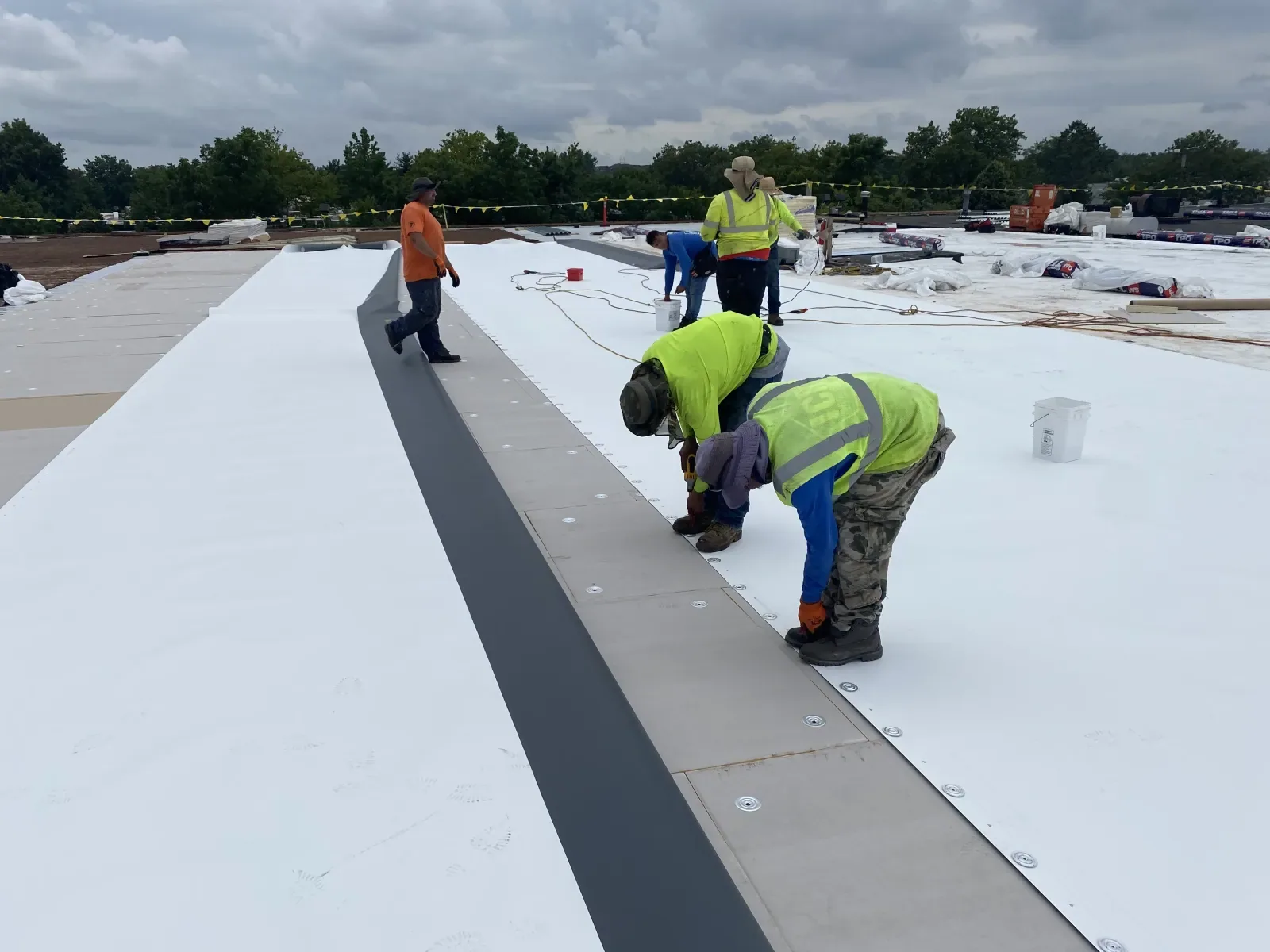
Versico
Versico single-ply roofing in Queens, NY: EPDM, TPO and PVC system categories, attachment methods, fastener checks and repair of wind-lifted sheets.
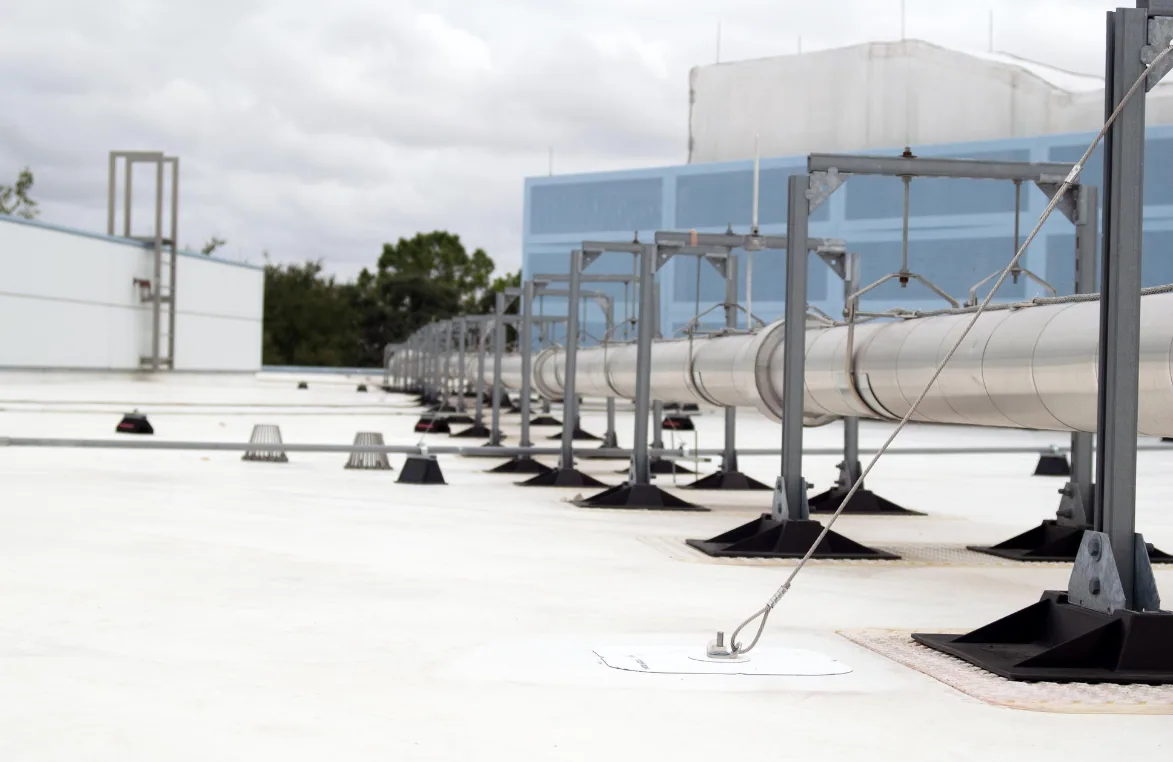
Holcim Elevate
Holcim Elevate (formerly Firestone Building Products) roofing in Queens, NY: EPDM, TPO and PVC categories, older roofs under the former name and repair.
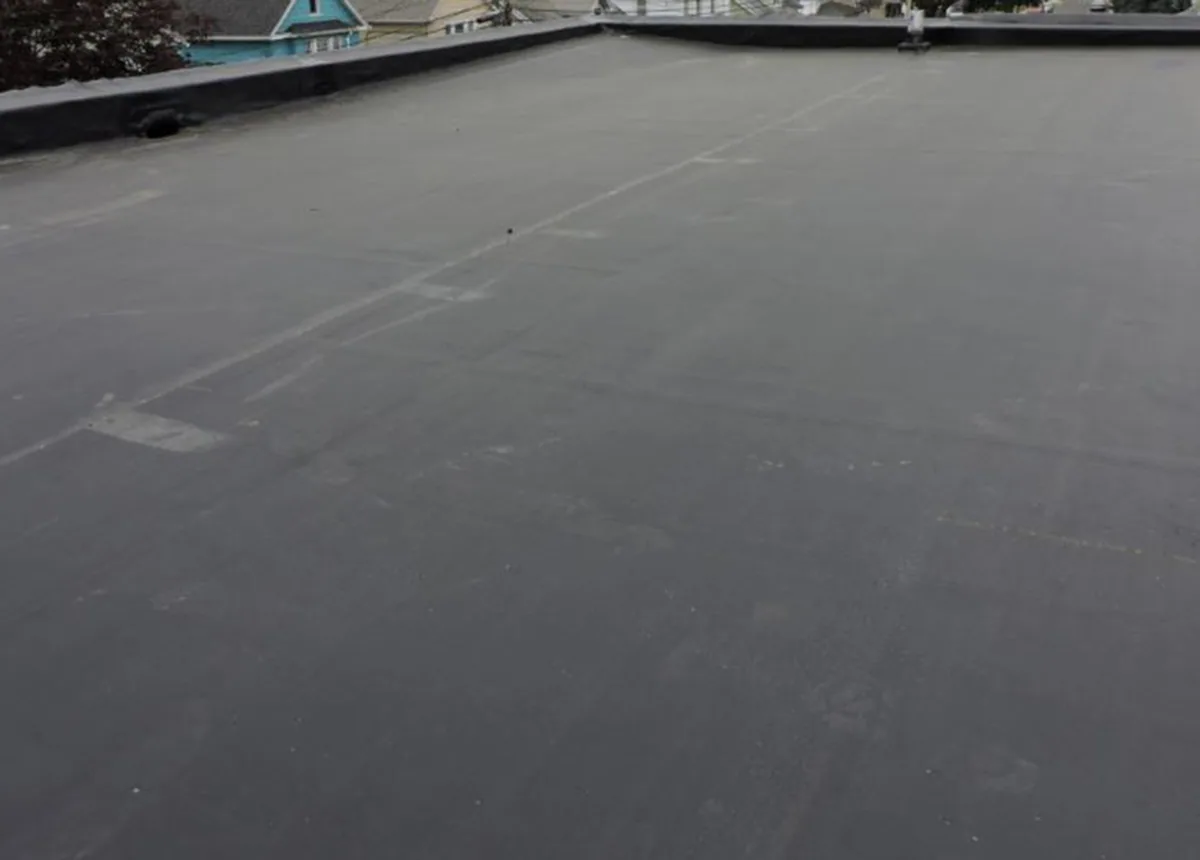
EPDM Roofing
EPDM rubber roofing in Queens, NY: adhered and ballasted membranes, seam and flashing repair, and when a black rubber roof is the right choice for a flat roof.
Ready to Talk About Carlisle SynTec?
Tell us about the building and what you are seeing. We will schedule a roof walk and send photos and a written scope.