
A rust-colored streak running down a wall below the roofline is usually the first thing an owner sees, and it is almost never about the wall. The streak is water leaving the roof by the wrong route, carrying rust from a fastener or dirt from a failed joint in the metal above. Follow it up and you arrive at the coping, the edge metal or the gutter, which are the parts of a roof that meet the weather first.
These pieces look like trim. In fact they hold the membrane down at the edge, shed water away from the wall, and take the wind load where the roof is most exposed. On a Queens, NY building they also protect the masonry beneath, which is why a small failure at the top of a parapet can turn into a larger repair on the face of the building. We treat the roof edge as a system and examine every part of it together.
What are these parts, and what does each one do?
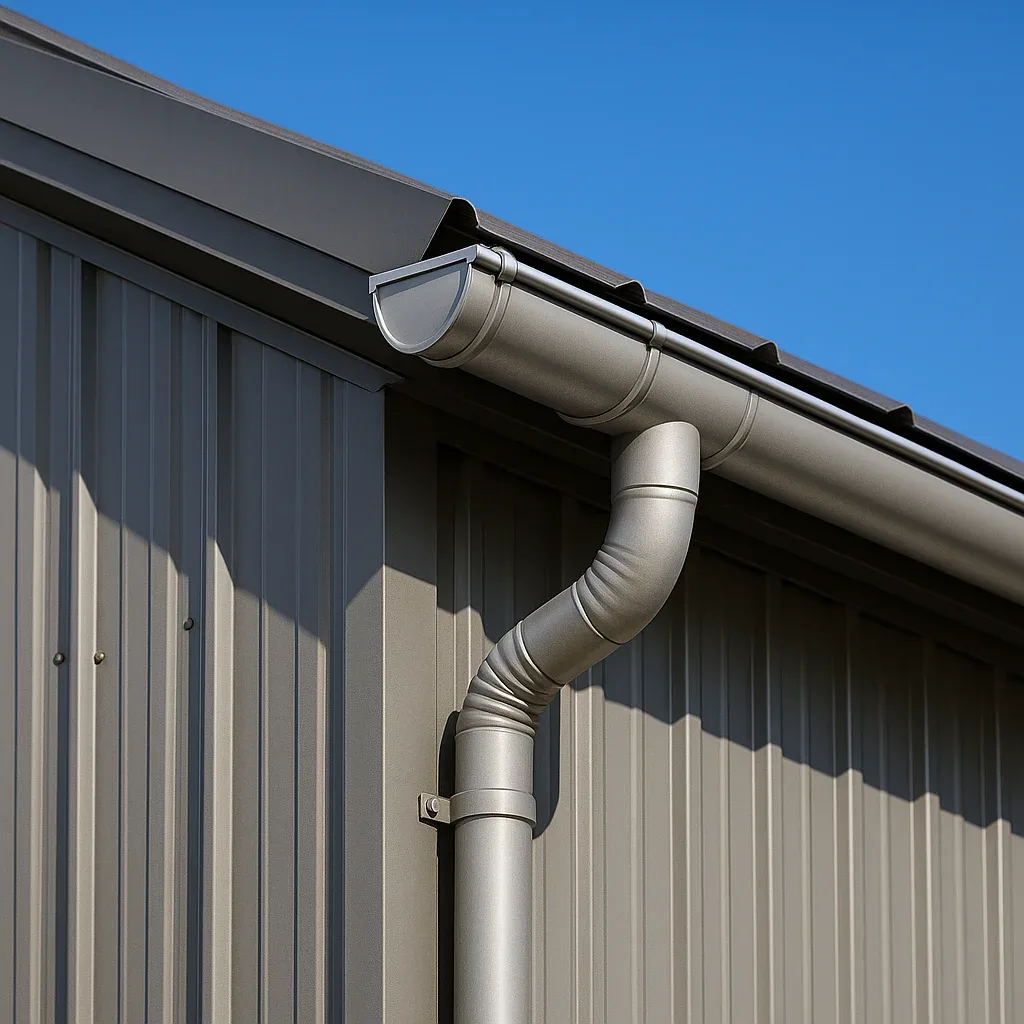
Coping is the cap on top of a parapet wall. It sheds water outward and keeps rain from entering the wall at the top. Edge metal, sometimes called a drip edge or gravel stop, finishes the roof at its perimeter where there is no parapet, and it clamps the membrane's edge. Gutters collect water from a sloped or flat edge and move it to downspouts, which carry it down the wall. Each is made of metal sections joined at laps, and each lap is a place where water can enter.
The fastening matters as much as the metal. Coping is held by cleats and fasteners, sealed at joints, and set on a membrane or waterproofing layer that sits beneath. If the cleats loosen, the cap lifts. If the joints open, water gets under it. If the layer beneath has failed, the wall below takes the water.
Why do old brick parapets suffer most?
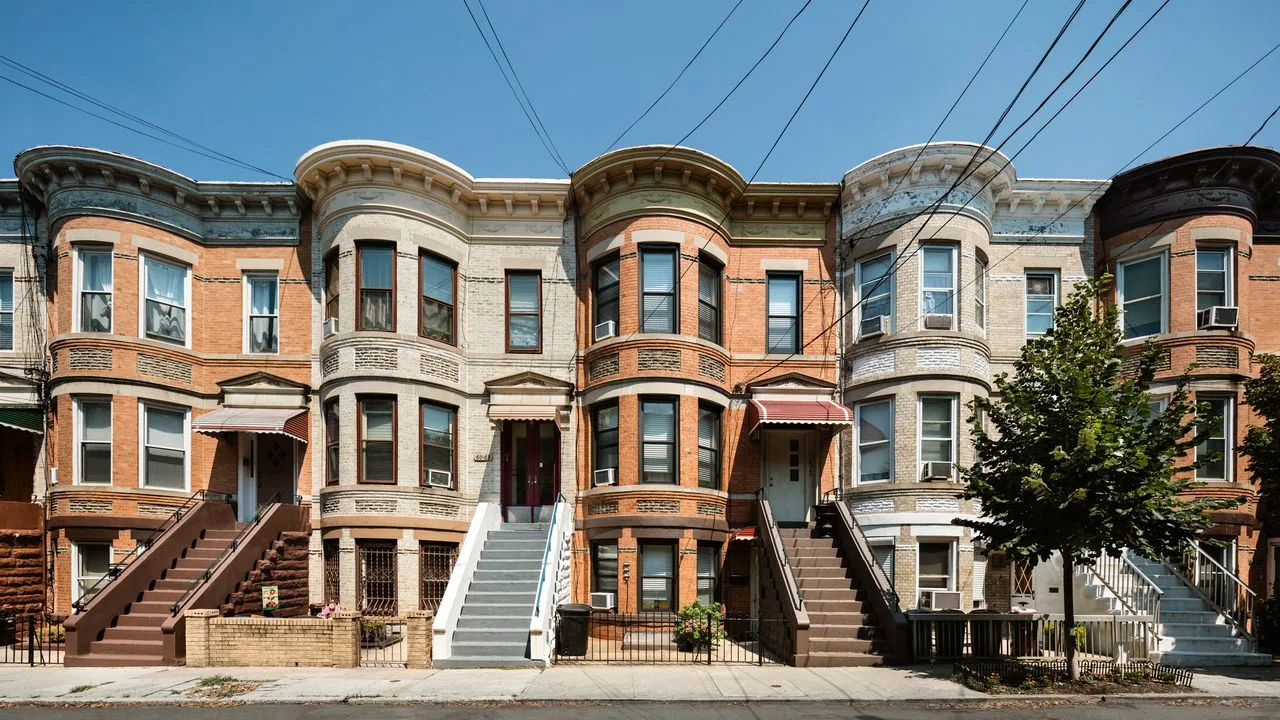
The yellow-brick rowhouses and mill-era buildings of Ridgewood and Glendale, many of them inside historic districts, put brick parapets in the weather. A parapet on masonry of that kind is exposed on three sides: the face, the back and the top. When coping joints open, rain soaks into the top of the wall, freezes and expands in winter, and slowly pushes mortar and brick apart. The result is loose pointing, spalling brick and a coping stone or metal cap that no longer sits level.
We probe the wall with a screwdriver tip and a hammer tap, looking for hollow sounds and soft mortar. We check the flashing behind the cap, since old tar often dries and pulls away from the wall. If the masonry needs repointing, we coordinate with the mason before the metal is replaced, because new coping over a failing wall hides the problem for only a season. A building in Ridgewood or Glendale with a lifted cap is a candidate for this kind of staged repair.
Some owners ask whether a coping stone can be reset instead of replaced with metal. Where the stone is sound, it can be lifted, the bed rebuilt with a waterproofing layer beneath it, and the stone reset on fresh mortar with sealed joints. Where it is cracked or spalled, metal coping over a sloped base is the practical choice. Either way, the waterproofing layer under the cap is what keeps the wall dry, not the cap itself.
What does wind do to a roof edge?
Wind flowing over a roof speeds up at the edge and corner, and the suction there is the highest on the roof. Edge metal that is thin, loosely fastened or poorly lapped can peel away in a strong gust, and once the edge has opened, the membrane beneath it is the next to lift. Hurricane Sandy carried hurricane-force gusts across the metro area in October 2012, and the Rockaway peninsula had been ordered to evacuate beforehand. A building at the shoreline, in Far Rockaway for instance, faces open Atlantic wind.
Our remedy is to strengthen the edge: heavier gauge metal where the existing is light, closer fastener spacing, continuous cleats and sealed laps. The first rows of membrane at the perimeter get extra attachment. The same edge details apply to a new roof and to wind damage roof repair after a storm has already lifted a corner.
What about gutters and downspouts?
A gutter that holds water is a gutter that is out of slope or full of leaf litter, and standing water in it rusts the metal and overflows at the seams. Downspouts clog at their bends. In winter, ice in a gutter or downspout can split a joint, and meltwater that cannot leave backs up under edge flashing. We clear and flush the system, check slope with water, replace split sections and reseal joints. Where a downspout discharges against a wall or onto a walkway, we redirect it, since water falling on the same spot stains masonry and freezes on a path.
Where a roof drains through scuppers instead, the scupper opening is checked together with the downspout below it, as part of roof drain and scupper work. A scupper that is lined and sloped sends water clear of the wall.
What drives the cost of an edge repair?
Length of edge is the first driver, since metal and labor are priced by the foot. Access follows, because a repair on a street-side parapet may need a lift or sidewalk protection while one on a rear edge may not. The condition of the substrate matters, as does the material chosen: formed aluminum, galvanized or coated steel, or a heavier gauge in exposed locations. Repairs that fall under commercial roof repair are priced by the section, while a full edge replacement is priced by the foot of perimeter.
Timing follows the weather and the wall. Metal work can go on in cold weather, but sealants need a minimum temperature to cure, so a winter repair relies on mechanical fastening and a temporary seal, with the final sealing done in milder weather. Masonry repair comes first when the wall is loose. On an occupied building, we protect the sidewalk below, stage materials away from entrances and finish each section the same day, so no open edge is left overnight. A short punch list closes the job, and we walk it with the owner.
Questions Owners Ask
What building owners and managers usually ask before a roof visit.
Caulk is a short-term measure. Joints in coping move with temperature, and a sealant bead cracks again within a season or two. The lasting fix is a joint cover or splice plate sealed beneath the cap, with the cap refastened to cleats that hold it down.
That crust is usually efflorescence, salts carried out of the masonry by water. It means water is moving through the wall, often from the top. The crust itself is cosmetic, but the source is worth tracing, and the coping is the first place to look.
It can. Many manufacturers specify edge details, and a roof can be penalized if its edge metal does not meet them. We check the manufacturer's requirements during the scope, and we install edge metal that matches the membrane system on the roof.
As soon as it is safe to reach. A lifted cap lets rain into the wall and gives wind a hold on the membrane. If a full repair must wait, we can fasten and seal the cap temporarily so the next storm does not finish the job.
Send photos of the streak, the parapet or edge, and the nearest drain or downspout, and we will go through what the roof edge is doing before price is mentioned.
Related Roofing Work
Other pages that connect to Edge Metal, Coping and Gutters.
Ridgewood
Commercial roof repair and replacement in Ridgewood, Queens, NY: mill-era masonry, Myrtle Avenue storefronts and mixed-use rows in historic districts.

Glendale
Commercial roof repair and replacement in Glendale, Queens, NY: Woodhaven Boulevard big-box roofs, rail-yard industrial buildings and historic Kreischer brick.
Far Rockaway
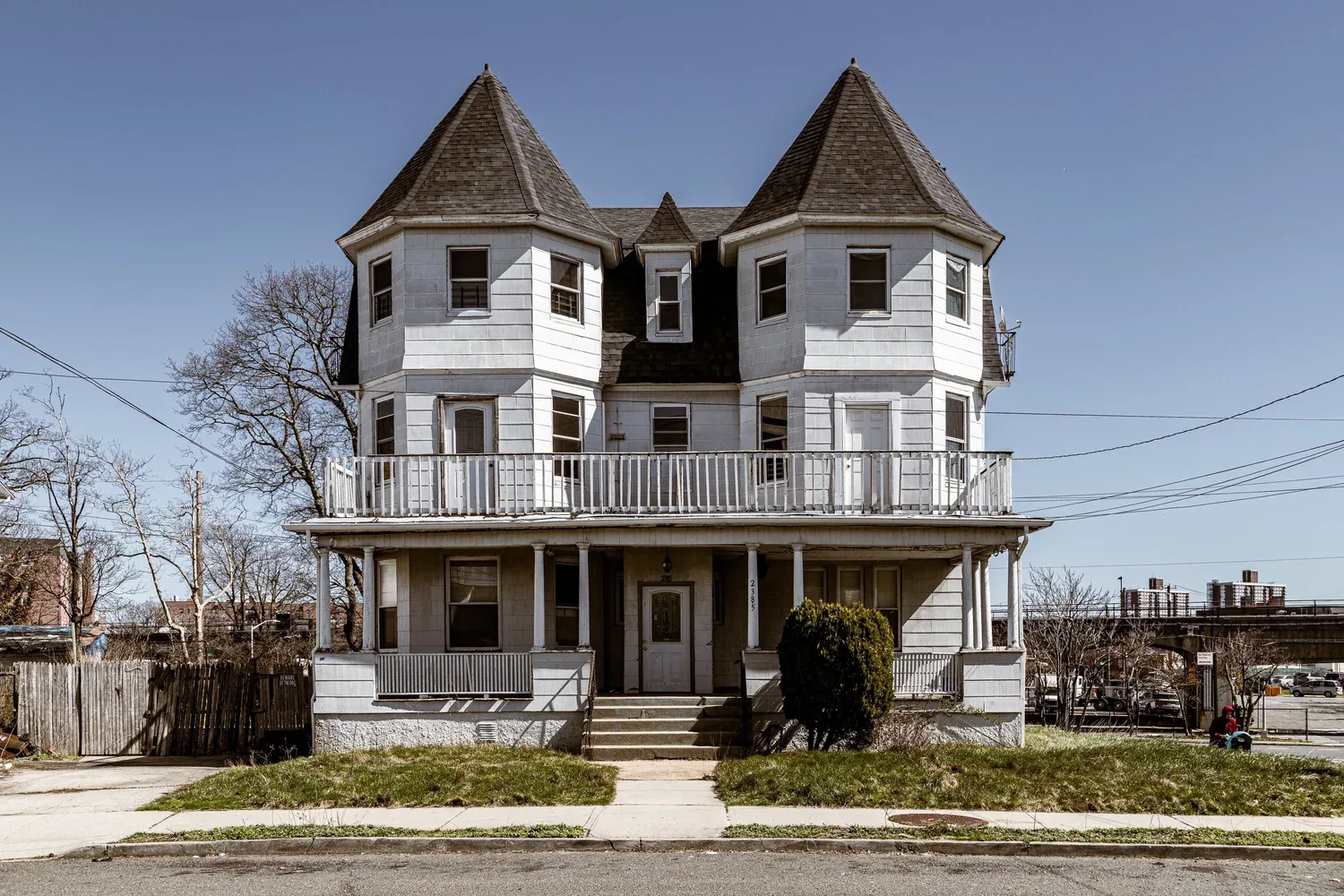
Commercial roof repair, coating and replacement in Far Rockaway, Queens, NY, for oceanfront-exposed mixed-use, retail and apartment buildings.
Ready to Talk About Edge Metal, Coping and Gutters?
Tell us about the building and what you are seeing. We will schedule a roof walk and send photos and a written scope.