
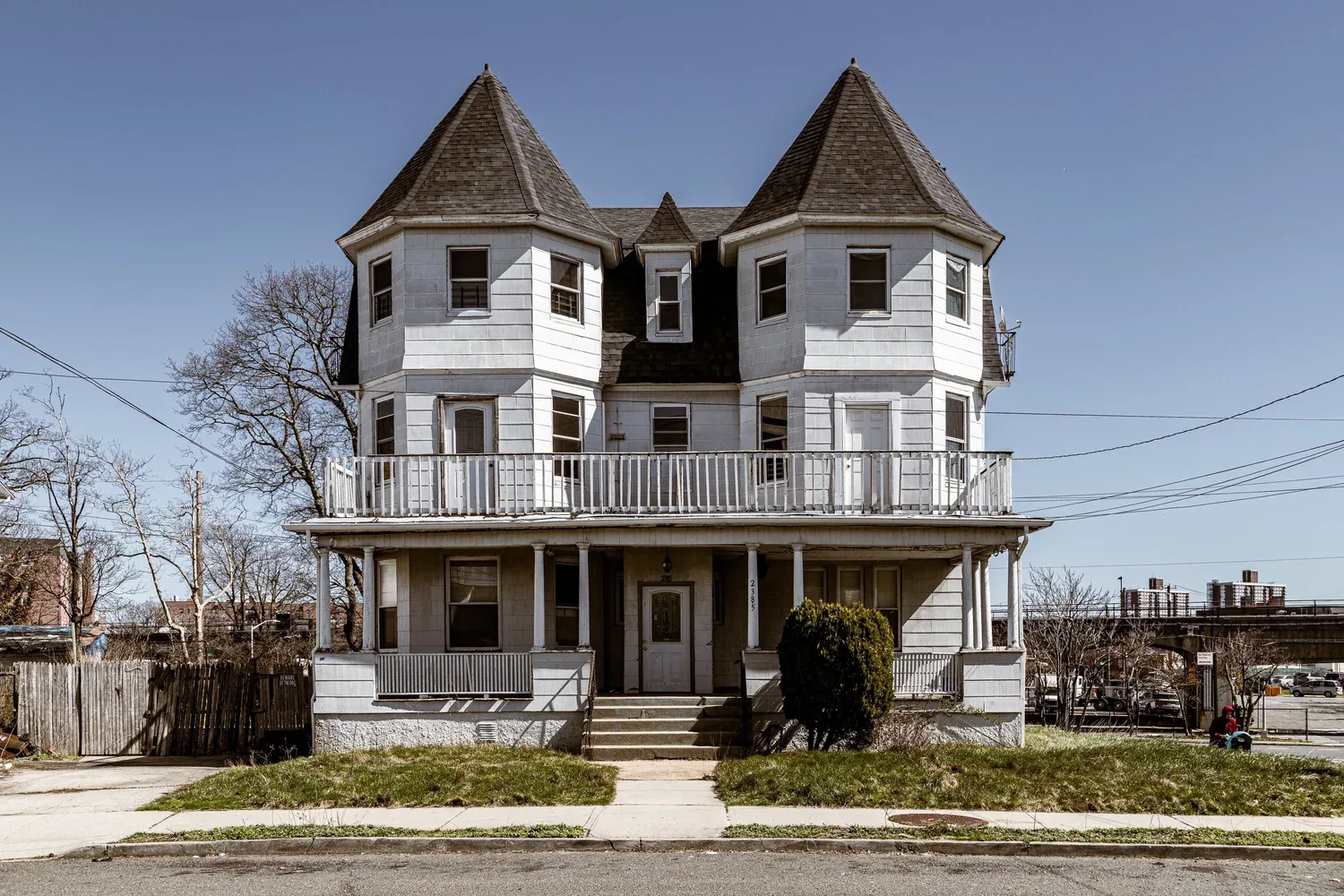
Orange rust bleeding down a parapet wall, or a fastener head that has lifted a little more each year, is what a salt-exposed roof shows before it leaks. Far Rockaway, Queens, NY sits on the Atlantic, with Rockaway Beach forming its southern edge at an elevation of only 20 feet, so wind, spray and standing water all reach the roofs here sooner than they reach buildings inland. We repair, coat and replace commercial roofs on mixed-use blocks, apartment buildings and retail properties in this part of Queens, and we begin by tracing each stain back to the detail that let water in.
What commercial buildings does the center of the neighborhood hold?
A 2017 rezoning covered 23 blocks in the center of Far Rockaway to allow retail and community space alongside up to 3,100 residences. That points to a district where ground-floor shops and upper-floor apartments share one building, and for a roof, that pairing matters. Residents live directly under the membrane, so a leak is a tenant complaint within hours rather than a stockroom problem found on the next inventory.
On a roof over shops and apartments, we look at every place a trade has cut through the membrane: mechanical curbs, exhaust and vent pipes, antenna and sign supports, and the parapet wall itself. Each is a joint where two trades meet, and each depends on flashing that was detailed correctly when it went in. We inspect those joints before water finds them, and we note which ones share a wall with a neighboring building, since that edge is hard to reach later.
What does the ocean do to a roof?
Salt air attacks metal first. Galvanized edge flashing, steel fasteners, rooftop equipment frames and the screws in a sign mount corrode faster beside an ocean than they do in an inland yard, and the corrosion sends rust stains over the wall below. Once a fastener head weakens, the membrane it holds can lift in wind. Long before a leak appears, an owner will see loosened coping, flaking paint on pipe supports or a gritty residue across the surface.
We specify stainless or coated fasteners and heavier edge metal where the exposure justifies it, and we look at flashing failures early, since flashing is the first part the ocean damages. Wind off the water also pulls on corners and perimeters, which is why edge metal gets attention before the field of the roof does.
What did Sandy teach about low-lying roofs?
The entire Rockaway peninsula was under a mandatory Zone A evacuation before Hurricane Sandy in October 2012, and two stations recorded flood depths of 5.4 feet in Far Rockaway. A roof is above the water line, but a flood still reaches it indirectly. Roof drains fill with debris, rooftop units move on their curbs and wind-driven rain finds its way past coping and flashing never designed for hurricane gusts.
At The Battery, the surge from Sandy topped any earlier record at 14.06 feet above average low tide, and hurricane-force gusts crossed the metro area. Following a storm of that class, we look for membrane lifted at corners, rooftop units that have moved and drains that have blocked, and a hurricane damage repair begins with a dry roof and a written record for the insurer.
Do the historic bungalows change the roof work?
The Far Rockaway Beach Bungalow Historic District preserves older bungalows, and any building inside a historic district may face review of exterior changes. For a commercial or multi-unit owner, the question is whether the roof edge, a visible material or a rooftop addition would be reviewed. We confirm district status at the outset so that approval time becomes part of the schedule rather than a surprise.
A newer building shows the other side. The Central Avenue library, which opened in 2024, has a blue roof that collects rainwater, a design that holds water on purpose and releases it slowly. Drainage can be engineered rather than merely endured, and on any roof here the drains and scuppers decide how fast a cloudburst leaves the surface.
Which roof systems cope best beside the ocean?
A single-ply membrane such as TPO or PVC, fully adhered, handles wind well because there are no fasteners in the field to work loose. Seams are heat-welded, so they do not depend on adhesive that salt and sun can age. Where an owner wants a thicker, more forgiving surface, modified bitumen in two plies gives a second line of defense if the top layer is scuffed by foot traffic around equipment.
Whatever the membrane, the edge is where wind starts its work, so the perimeter gets heavier metal, closer fastener spacing and sealed laps. Rooftop equipment sits on curbs that are tied into the deck, not on loose blocks. These details cost little compared with the membrane itself and they decide whether a roof survives its first hard coastal storm.
What are the repair options, and what do they cost?
No option is priced before the walk. We climb from the stain upward, probe the seams with a flat tool, run a hose into suspect drains and read the edge metal for rust. If the surface looks fine and the ceiling still stains, an infrared survey at dusk maps wet insulation so test squares need not be cut across the roof. The written report marks each finding with a photo as patch, repair or replace, and an apartment board can plan several years from it.
A leak repair answers a few failed details, a coating restoration answers a worn membrane over dry insulation, and a full replacement with a corrosion-resistant fastening plan answers wet insulation or a roof past its service life. Near the coast, fully adhered or mechanically fastened sheets with high-wind edge details are a frequent choice.
Cost follows roof size, access, penetrations, tear-off depth, edge metal and the hours an occupied building allows. Chapter 15 of the NYC Building Code, which covers roof assemblies and rooftop structures, sets the assembly requirements for any option.
What is the next step?
Photograph the stain, the nearest drain and any rust at the edge, and send them over. First comes a plain-steps account of what the roof is doing, and then price. Owners in Howard Beach and Jamaica begin the same way.
Questions Owners Ask
What building owners and managers usually ask before a roof visit.
Scrape a small spot and look at the metal under the surface. Flaking paint over solid metal is cosmetic, but pitted or thinned steel has lost strength. We check the fasteners holding the coping and edge metal, because a corroded fastener cannot hold against wind even if the cap looks fine from the street.
A roof sits above flood water, so the lesson from Sandy is about what rides with it: rooftop equipment, drains, and electrical lines. We recommend securing units to the curb, keeping drains oversized and clear, and noting where overflow scuppers exit so a blocked drain cannot load the roof.
Often it does. Shops below tend to add exhaust fans, grease vents and heavier mechanical units, and each is a penetration. Greasy exhaust also degrades some membranes, so the material near a kitchen vent may differ from the rest of the roof.
Emergency response runs around the clock, holidays included. We tarp or seal the opening, dry the area as far as conditions allow and document the damage with dated photographs. A permanent repair follows once the roof can be worked on safely.
A silicone or acrylic coating can slow surface wear and reflect heat when the membrane below is sound and the insulation is dry. We confirm that with a moisture scan and an adhesion test. It does not stop a corroded fastener or a failed flashing, so those get repaired before any coating goes down.
Related Roofing Work
Other pages that connect to Far Rockaway.
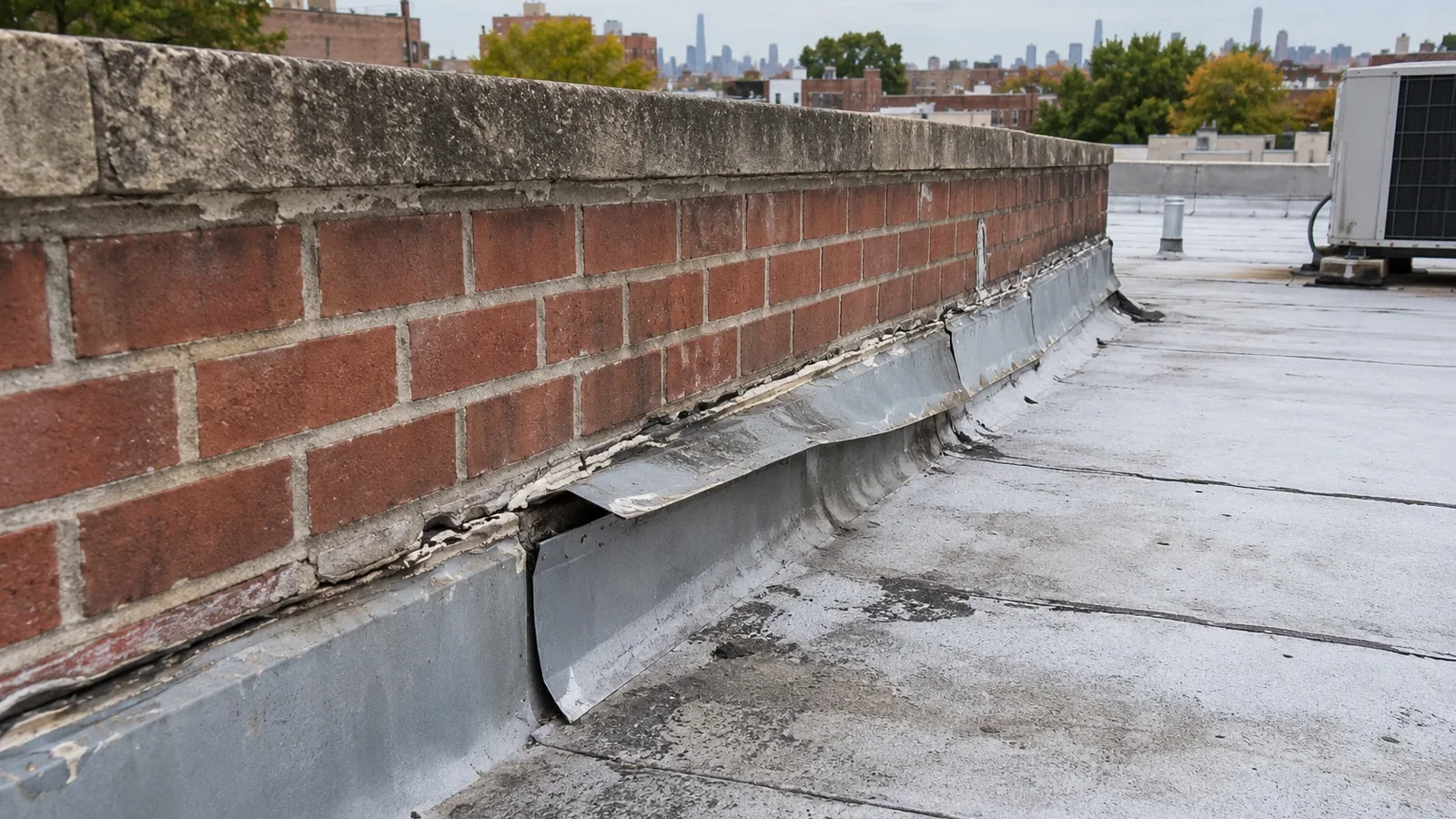
Flashing Failure Repair
Flashing failure repair in Queens, NY: cracked tar, lifted base flashing, open counterflashing and parapet leaks traced and rebuilt on commercial flat roofs.
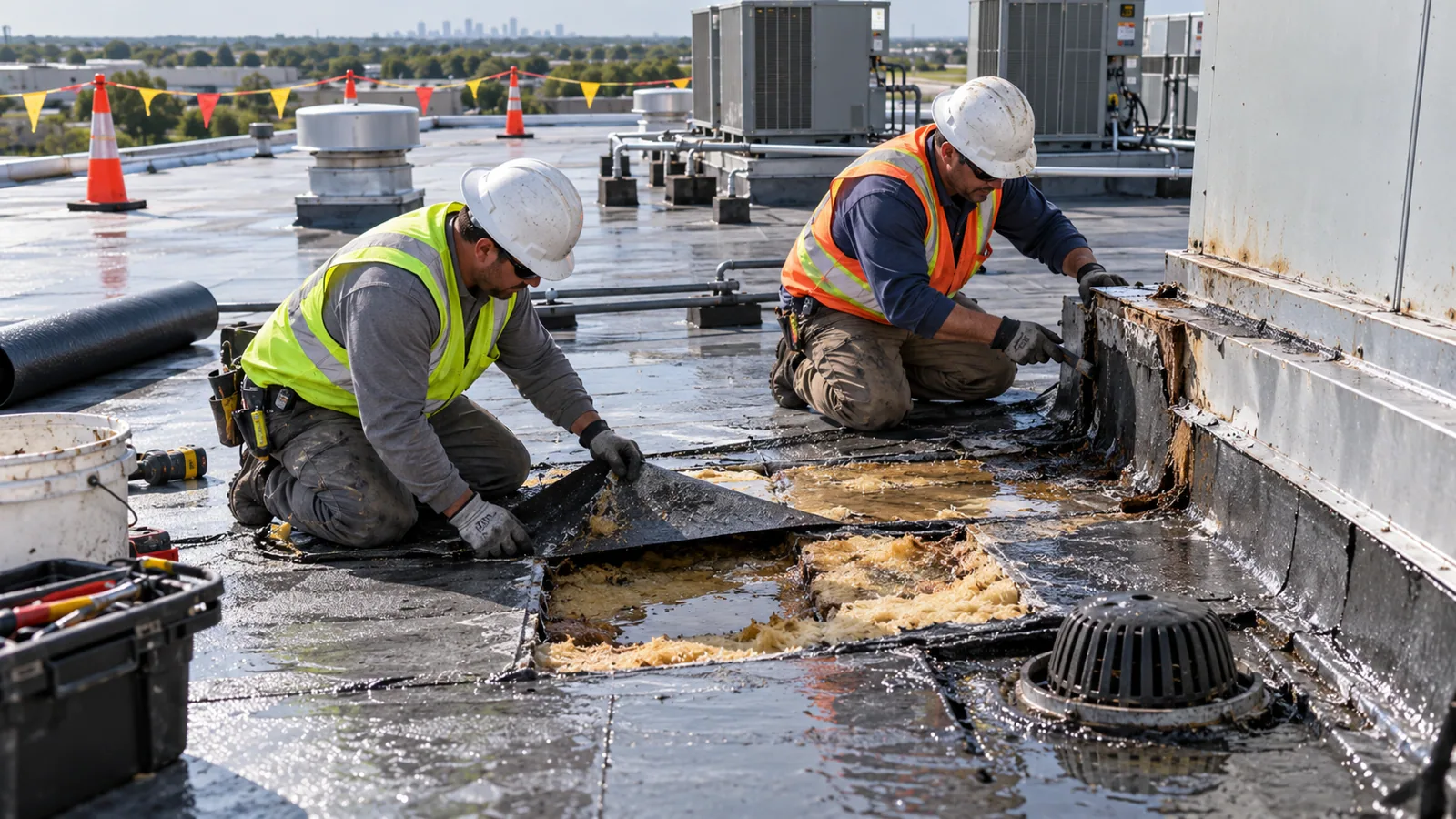
Hurricane Damage Roof Repair
Hurricane damage roof repair in Queens, NY: wind-lifted edges, wind-driven rain, flood-day drainage failures and debris damage on commercial flat roofs.
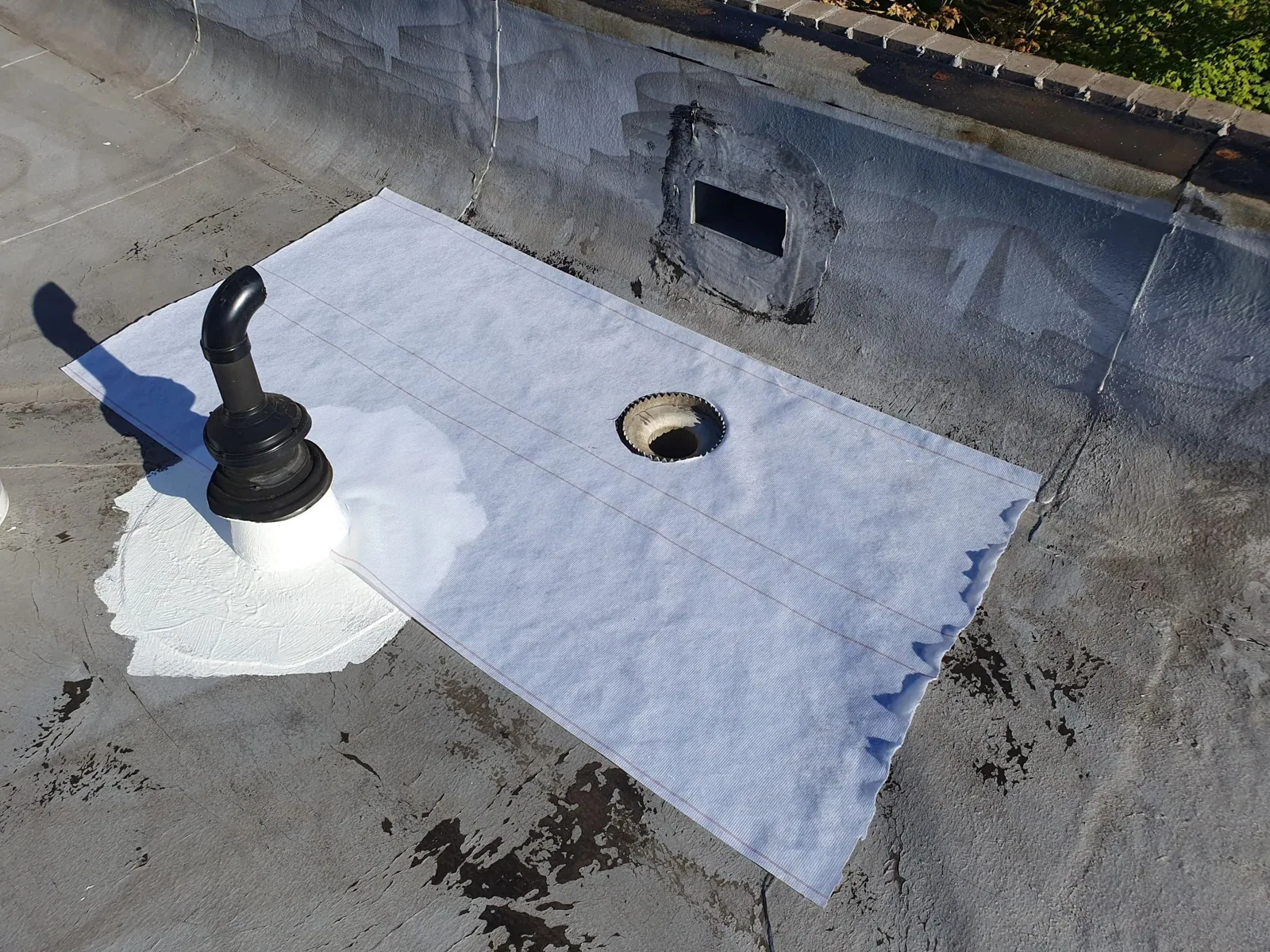
Roof Drains and Scuppers
Roof drain, scupper, cricket and ponding correction in Queens, NY: sizing, strainers, overflow paths and tapered fixes for flat roofs hit by cloudbursts.
Ready to Talk About Far Rockaway?
Tell us about the building and what you are seeing. We will schedule a roof walk and send photos and a written scope.