
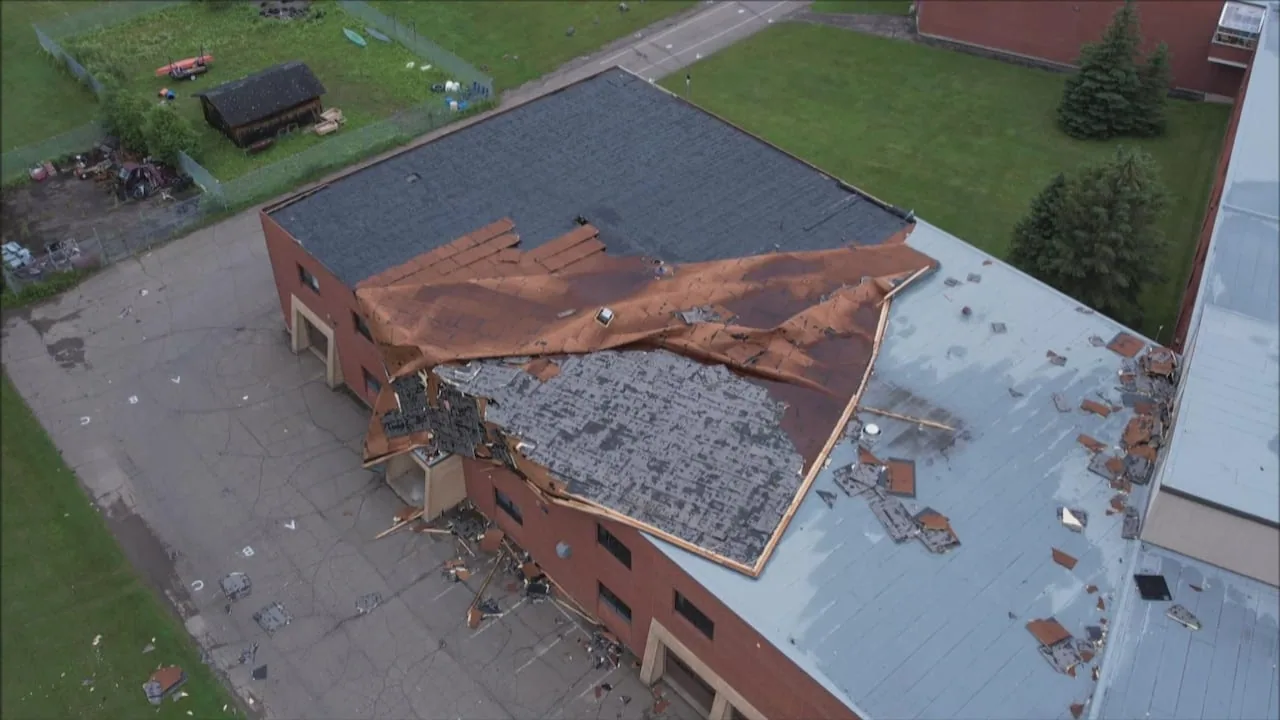
A banging sound above the ceiling on a gusty night is usually the first sign an owner gets, and by morning it has often turned into a length of edge metal swinging on its last few fasteners. Once that metal is loose, the membrane beneath it has nothing holding its edge down, and the next gust has something to grab. The damage starts small and moves inward, which is why the early hours matter.
Wind damage on a flat roof is a mechanical problem. Air moving over the roof creates suction, and suction is strongest at the corners and along the perimeter. Anything held down weakly at those points is lifted, bent or peeled. Our work on Queens, NY roofs starts at the perimeter for that reason, then moves to the field, and we explain each step as we go.
What does wind damage look like?
The signs sit in a short list. Edge metal stands away from the parapet or has bent outward. Coping is displaced or missing. The membrane near a corner has wrinkled, rolled or pulled toward the edge. Seams have opened along a line that runs in the direction of the gusts. Debris from elsewhere has landed and cut the surface, and a rooftop unit may have shifted on its curb and taken its flashing with it.
From inside the building, signs are subtler: a stain that appears under a corner a day after the storm, a ceiling tile damp along one wall, a drip that follows the wind direction. We ask when the water showed up and which way the wind blew, since those two facts shorten the search.
Wind rarely works alone. Gusts that lift an edge are usually followed by rain, and rain finds the opening the wind made. A split seam near a corner or a flashing that has pulled away from a parapet is often the wind's real signature, and the interior stain is the second chapter. Tracing the order of events tells us what to repair first and what can be checked at the next visit.
Why does the edge fail first?
Air that hits the side of a building is forced up and over the roofline, and as it passes the edge it speeds up and drops in pressure. That pressure difference pulls up on whatever covers the roof, with the greatest force at corners. A membrane that is fastened evenly across the field can still lift at the perimeter if its edge is held by thin metal or too few fasteners. Once a corner lifts, air gets beneath the sheet and the pull spreads inward.
In October 2012 Hurricane Sandy swept the New York metro area with hurricane-force gusts, and the whole Rockaway peninsula had been ordered to evacuate. Buildings in Far Rockaway and other places beside open water face wind with little to break it, which makes their perimeter details matter most.
The layout of the building changes the pattern. A roof beside open ground, a rail yard or a wide road catches wind with no break, while a roof sheltered by taller neighbors sees it swirl and gust from several directions. We note surroundings on the walk and draw the wind-exposed edges on the roof plan, so repair effort goes where the suction is strongest.
How is wind damage repaired?
Dry-in goes first: loose metal is secured or taken off, lifted membrane is fastened or weighted and sealed, and openings are covered to keep rain out. The permanent repair follows, which depends on what the wind did. Bent or missing edge metal and coping is replaced, preferably with heavier gauge and closer fastener spacing than before. Peeled membrane is cut back to sound material and a new piece is welded or adhered with the edge reinforced. Damaged insulation under a torn area is removed, since it will have taken on water.
The repair should leave the edge stronger than it was. That can mean continuous cleats, a perimeter strip of added attachment, or a new edge detail the membrane maker specifies. If the same corner has failed twice, we explain why the detail is not working and propose a different one.
Temporary measures are worth a word. Tarps tied to a roof edge can catch wind and make matters worse, so we secure them to framing or weights with a plan, not a rope. Sandbags and ballast are placed where they hold the membrane, never where they load a damaged deck. If a corner is open, we seal it with a temporary membrane patch that survives until the permanent work, and we photograph it for the record.
How do we check for hidden damage?
A roof that has been lifted and set back down can hide damage. We walk the field with a seam probe, check every fastener row near the affected area and look for loosened plates. If wet insulation is possible, an infrared moisture survey maps it. Rooftop equipment is checked for movement, and curbs and flashings are tested. Drains are cleared of debris blown onto the roof, since a clogged drain after a storm turns the next rain into a second problem.
Where wind damage affects many roofs in an area, the same crews are in demand. Owners in College Point or elsewhere in Queens who call early get a place in the sequence and a temporary dry-in while permanent materials are ordered.
When a storm is forecast and the roof is known to be weak at its edges, a pre-storm visit can help. Fasteners are checked, loose metal is secured and drains are cleared. It costs far less than the repair that follows an unprepared storm, and it is a natural part of a spring and fall walk.
What does it cost to wait?
Wind damage that is left alone gets worse with every gust and every rain. A lifted corner that could be refastened in an hour becomes a torn section needing a patch, and then a wet section needing insulation replacement. We describe the cost drivers plainly: length of edge affected, area of membrane lost, amount of wet insulation, access and the weather window. If the building has insurance, the next step is claim documentation, and our records of dated photographs help there. For the immediate emergency, emergency roof repair can dry the building in at any hour.
Questions Owners Ask
What building owners and managers usually ask before a roof visit.
In some cases, when edge metal hangs off the building or a big section of membrane has lifted. More often the damage shows only up close: loosened fasteners, small tears and flashing that has moved. Walking the roof is the dependable check.
It depends on the roof's age, its attachment and the state of its edges. A well-fastened new roof withstands strong gusts, while an older roof with weak edge metal can fail in a storm that is unremarkable to people on the ground. The condition of the perimeter matters more than the exact wind speed.
Edge strengthening adds material and labor but is a small part of a roof's total cost. It addresses the failure that happens first, so it is one of the more cost-effective parts of a repair.
Only if the damage is widespread, the insulation is wet over much of the roof or the membrane has lost its attachment across the field. Most wind damage is local and repairable, and the scan and cores tell us which case we have.
Photos of the damaged edge, any stain inside and the drain area, with the day of the storm, are what we need. We will say in plain steps what the wind did, ahead of any price.
Related Roofing Work
Other pages that connect to Wind Damage Roof Repair.
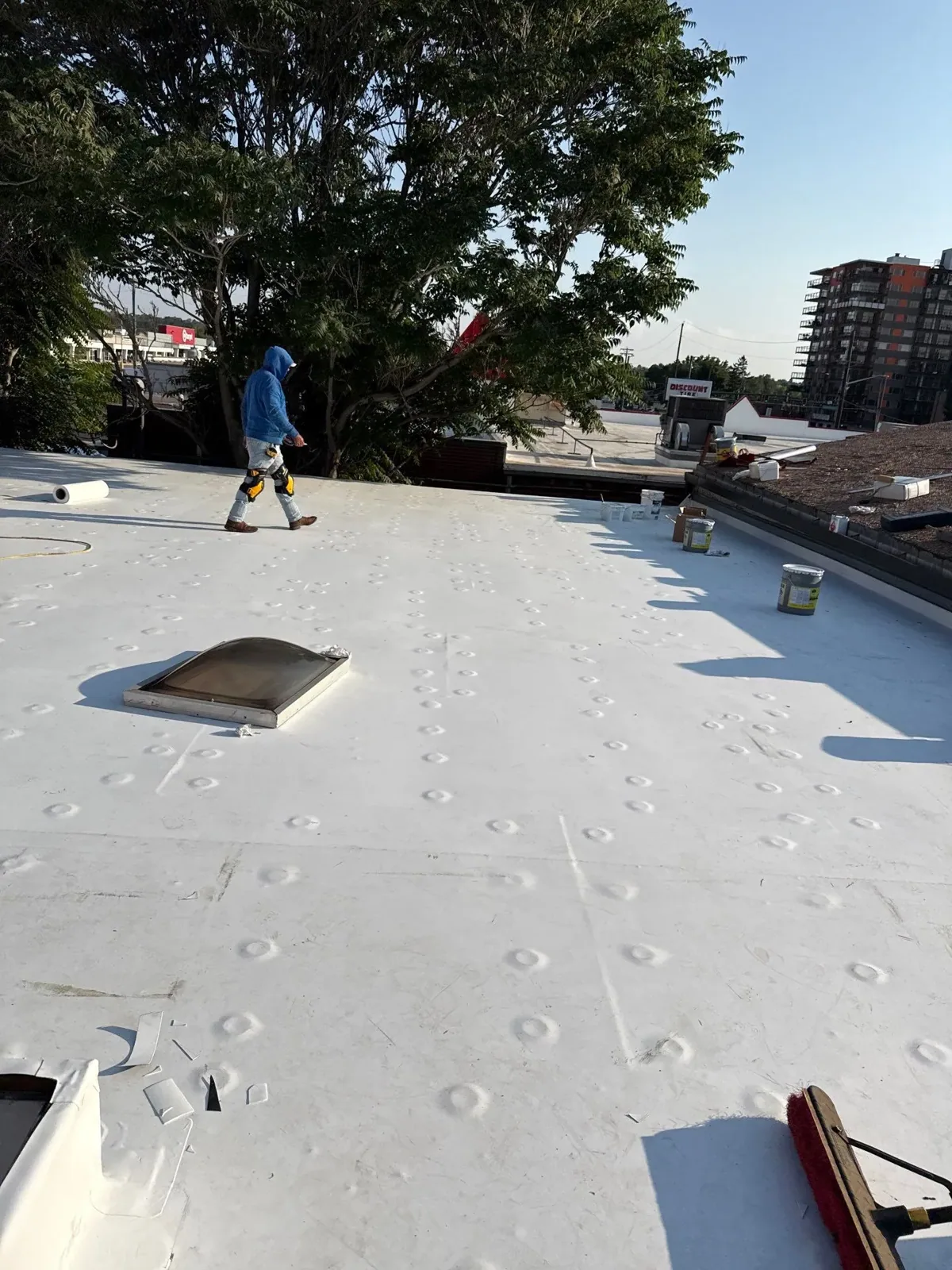
Seam Failure Repair
Seam failure repair in Queens, NY: split, open and lifted seams on TPO, PVC, EPDM and modified bitumen roofs, found by probe and repaired with strips.
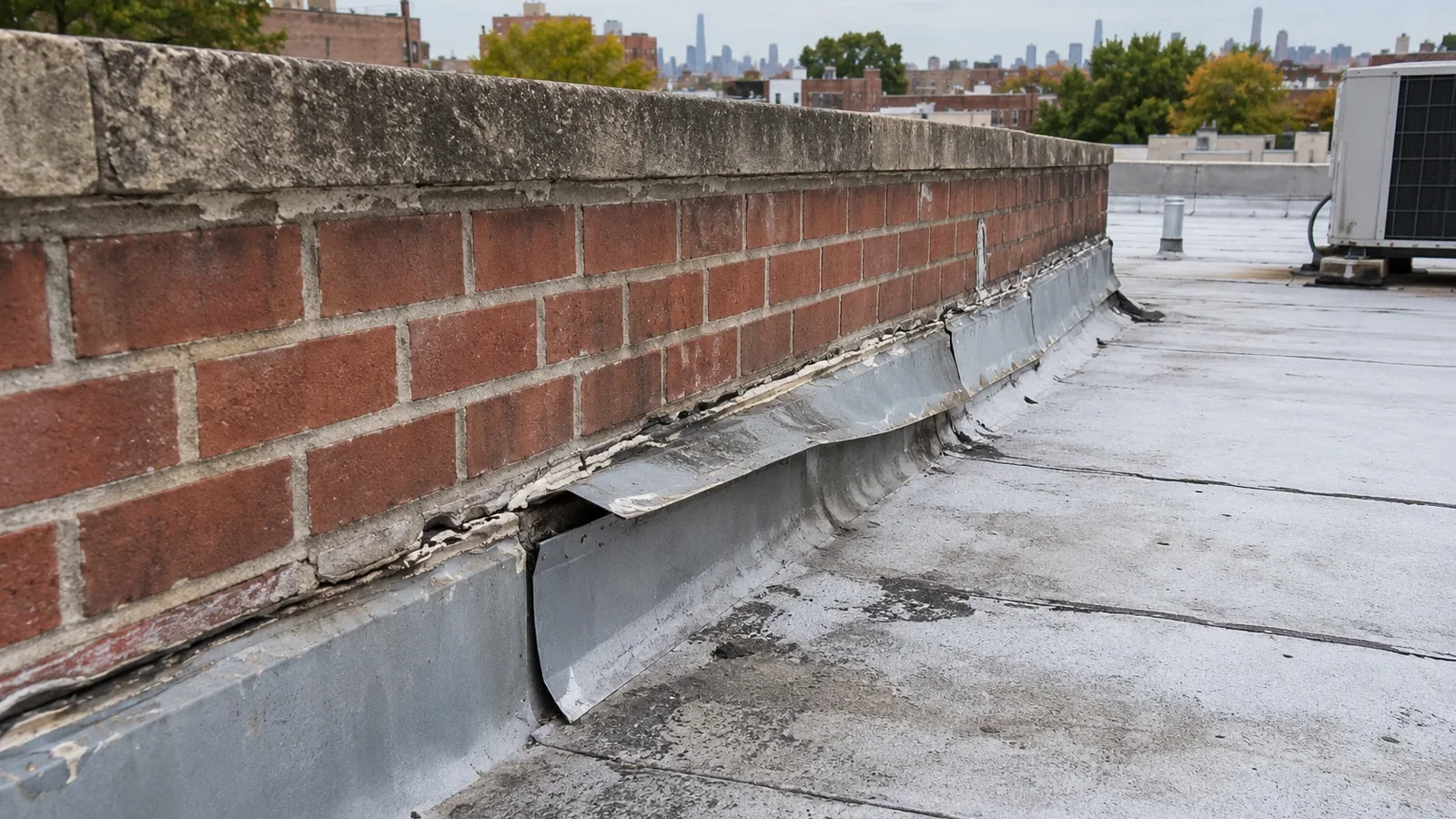
Flashing Failure Repair
Flashing failure repair in Queens, NY: cracked tar, lifted base flashing, open counterflashing and parapet leaks traced and rebuilt on commercial flat roofs.
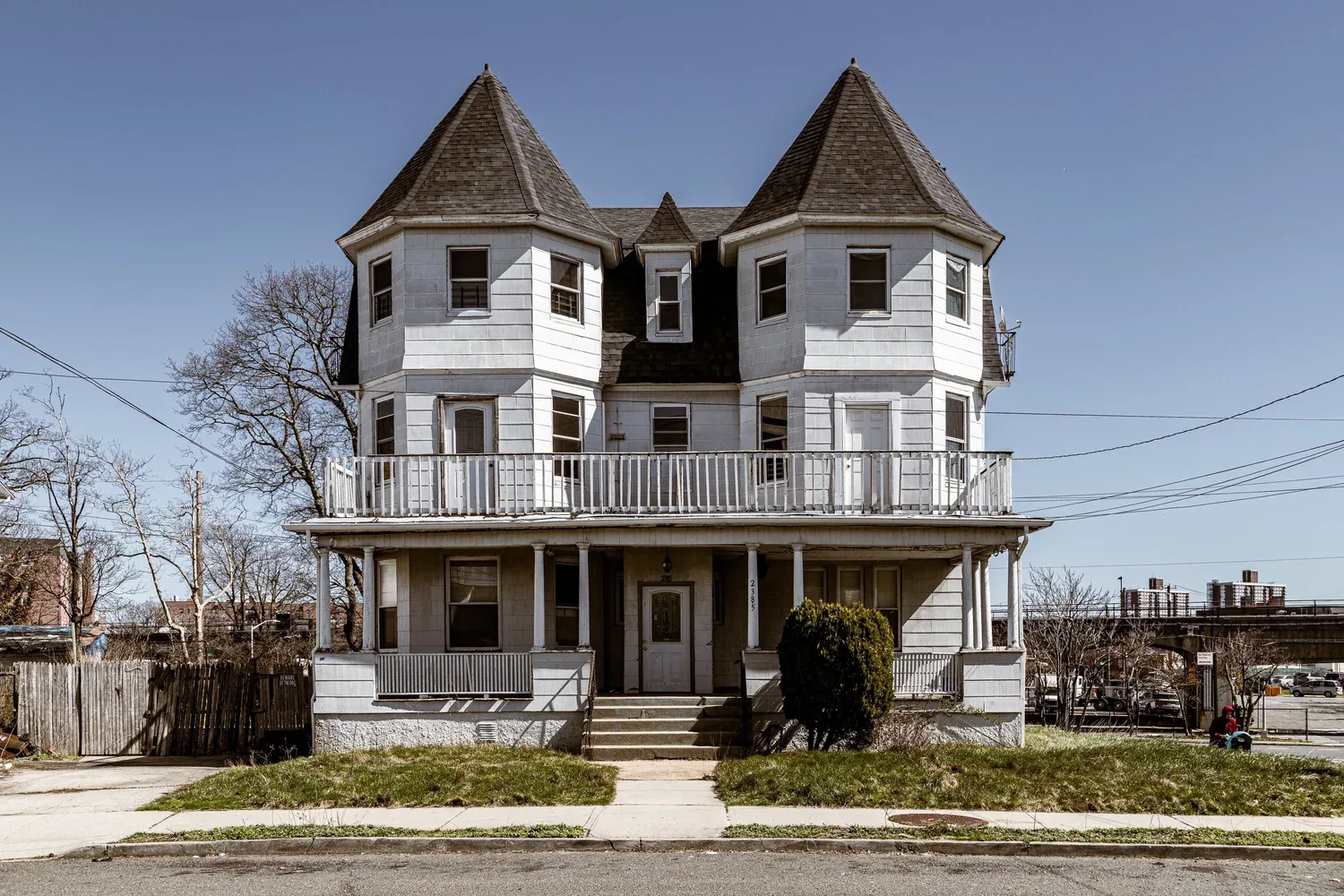
Far Rockaway
Commercial roof repair, coating and replacement in Far Rockaway, Queens, NY, for oceanfront-exposed mixed-use, retail and apartment buildings.
Ready to Talk About Wind Damage Roof Repair?
Tell us about the building and what you are seeing. We will schedule a roof walk and send photos and a written scope.