
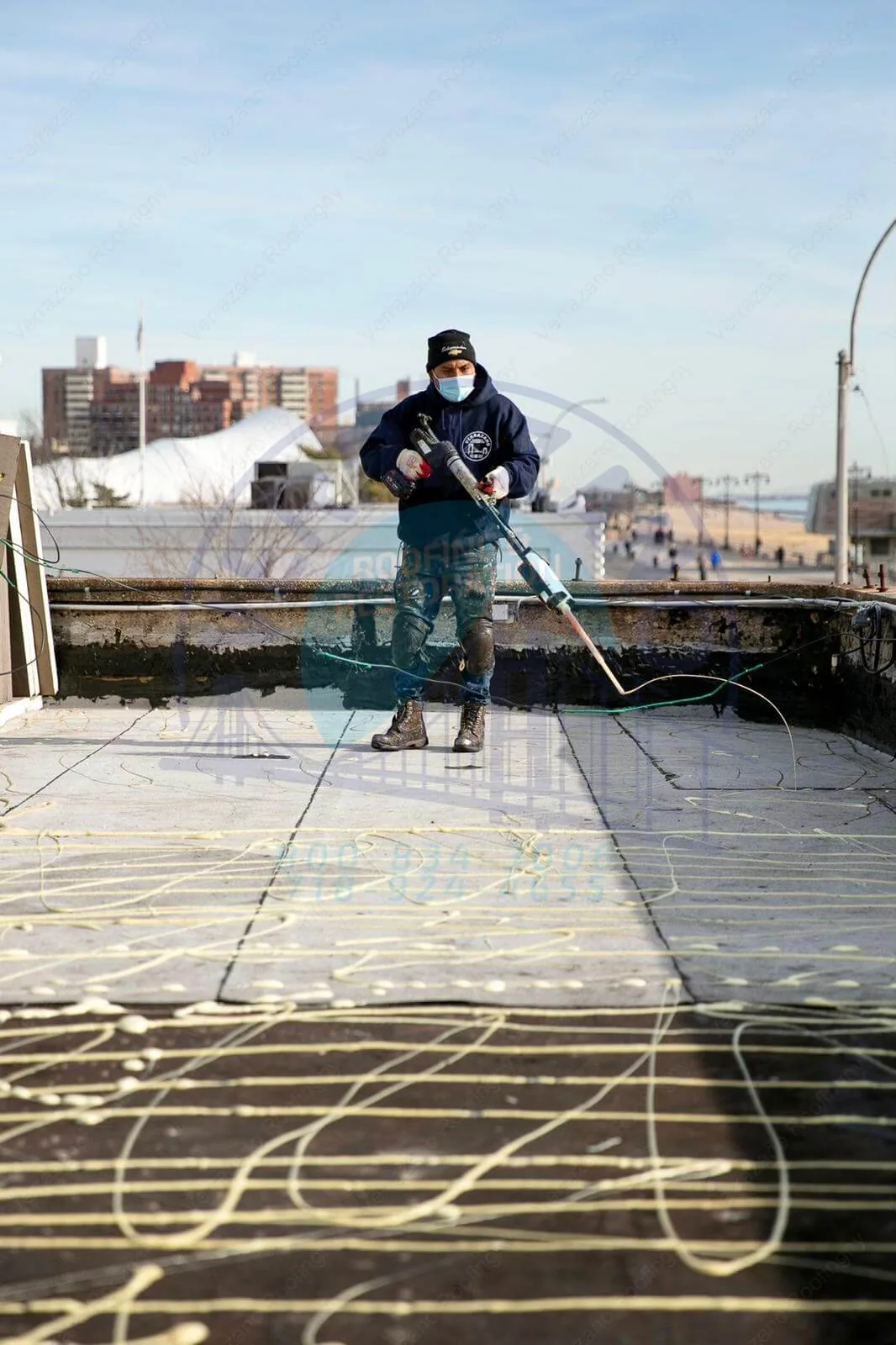
The tenant complaint that sinks a roof job is rarely about the roof. It is a smell that drifted into the third-floor suite, a thump overhead during a client call, or a dumpster blocking the loading door at ten in the morning. Reroofing over a working building is a scheduling problem as much as a construction one, and the plan has to answer those complaints before they happen. Every step is written down, and every tenant knows what to expect on which day.
What goes into the plan before work starts?
The first step is a walk of the building with the manager, to list every use below the roof: offices, a clinic, a kitchen, a data closet, a stockroom. The second step is to rank those uses by how much a noise, a smell or a drip would cost. The third step is to build the schedule so the most sensitive areas get the most notice and the quietest hours.
We write that into a short plan the manager can hand to tenants. It names the work area for each day, the hours of noise, the routes crews will use and a single phone number. A tenant who knows that the loud steps happen between nine and noon on Tuesday can plan around it, and a tenant who knows nothing will call the owner.
One more item belongs on the list: the people who are not tenants. Delivery drivers, patients, students and neighbors all pass near the work, and we mark their routes with fencing and signs. A flag person watches the busiest door.
How is the roof kept dry while it is open?
Walk it with me. A roof is replaced in sections, never all at once. A crew removes the old membrane in a strip, repairs or replaces the insulation underneath, installs the new membrane and seals the edge before the end of the shift. At night, the open edge is closed with a temporary tie-in that sheds water into the finished roof. If rain is forecast, the section is smaller or the work waits.
The tie-in made at shift end is the detail we watch most. It must be sealed well enough to survive a cloudburst, since Queens has seen what that looks like. When Ida's remnants crossed the city on September 1, 2021, officials declared a flash flood emergency for the first time, and Queens recorded most of the deaths. A temporary seal that holds in drizzle will not hold in rain like that, so we build for the worse case and keep dry-in material on the roof.
How do we limit noise, smell and dust?
Noise comes mostly from tear-off, cutting and fastening. We schedule the loudest steps for hours the tenants choose and use cut-and-lift methods in sensitive areas. Smell comes from hot materials and adhesives. We favor cold-applied, mechanically attached or welded systems near intakes and keep torches off roofs above people. The TPO, PVC and EPDM sheets are usually the quietest and least smelly options.
Dust and debris need a route. We bag waste, vacuum loose gravel and run a chute or a hoist away from entrances. Air intakes near the work are covered or shut off with the facility manager's approval, and the manager gets a note when they are reopened.
Which Queens buildings call for the most care?
Hospitals and clinics call for the most. Jamaica Hospital and Queens Hospital Center are among the major employers in Jamaica, Elmhurst Hospital Center is in Elmhurst, and NewYork-Presbyterian/Queens sits in Queensboro Hill in Flushing. Work above or near care areas follows infection-control rules, and we agree on barriers, air handling and hours with the facility's staff. A hospital roof calls for the most detailed plan of any building type.
Apartment buildings come next. In Kew Gardens most buildings are apartment houses of four to ten stories, rentals and co-ops mixed, so a reroof there happens above people who live under it. A notice period, daytime hours and a clean stair matter most. Office towers such as the Joseph P. Addabbo Federal Building in Jamaica, a 12-story masonry and steel structure, add security and access rules. Our apartment roofing and office roofing routines are built on the same plan.
Retail and mixed-use blocks need a different kind of planning. A shop that cannot close during business hours needs deliveries kept clear, a covered entrance and a sidewalk shed in good order. A mall the size of Queens Center in Elmhurst, with about 1,000,000 square feet of gross leasable area, is the kind of retail building where the roof above would be worked in sections around open stores.
What about access, security and the street?
Crews need a way up that does not pass through the lobby. A stair, an exterior ladder or a hoist is set up first, and the route is cleaned each evening. Doors to the roof are locked behind us, and materials are stored so that wind cannot move them. In buildings with controlled access, the manager sets badges or escorts for the crew.
The street matters too. Queens Boulevard is the main thoroughfare through Sunnyside, Elmhurst and Forest Hills, and deliveries on a busy avenue need a permit and a flag person. We time loads for off-peak hours, keep sidewalk protection in place and clean the curb every day.
What does it cost to work around occupants?
Working around people adds time, because each day starts with setup and ends with a closing routine. Smaller sections mean more tie-ins. Limited hours mean longer schedules. Those are the cost drivers, and they are real. The savings come from avoiding relocation, lost rent and complaints, which usually outweigh the added labor.
Season and weather play a role too. Winter limits adhesives and sealants, so a full replacement runs best in the warm months, and a commercial roof replacement is planned months ahead. The recover option can reduce noise and debris when the existing roof is dry.
What is the next step?
Send photos of the roof and a list of what happens in the building below, with the hours that matter. We will walk the roof, explain in plain steps how the work could run around those uses and only then discuss price.
Questions Owners Ask
What building owners and managers usually ask before a roof visit.
In nearly every building the answer is yes. The roof is replaced in sections, each closed at the end of the shift, and the schedule follows the tenants' hours. A few uses, such as a lab or an operating room, need special planning, and we write that plan with the facility's staff.
A week for the general plan, and a day for each loud step. A written notice names the area, the hours and a phone number. Tenants with sensitive uses get a call as well.
Work stops, the open section is sealed and the crew checks the tie-ins. We watch the forecast each morning and keep tarps and dry-in material on the roof. An open section never waits for tomorrow's weather.
Not as a rule. Rooftop units stay in service except when a curb is rebuilt, and that work is scheduled with the building engineer for a mild day. A short shutdown, if needed, is announced in advance.
Keep the plan, the daily notes, the photos of each tie-in and the closeout report. They help with tenant questions, insurance and the next owner. We provide them at the end of the job.
Related Roofing Work
Other pages that connect to Occupied Building Reroofing.
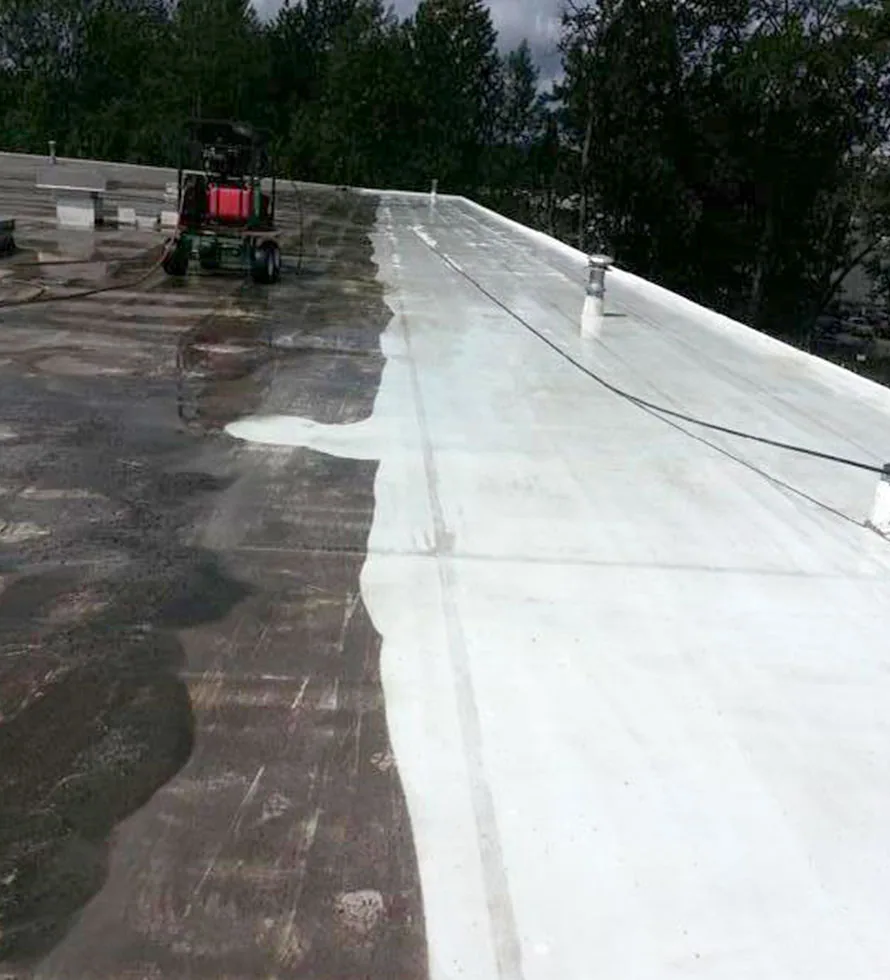
TPO Roofing
TPO roofing in Queens, NY: heat-welded white single-ply membranes for flat commercial roofs, with seam checks, repair and replacement explained step by step.
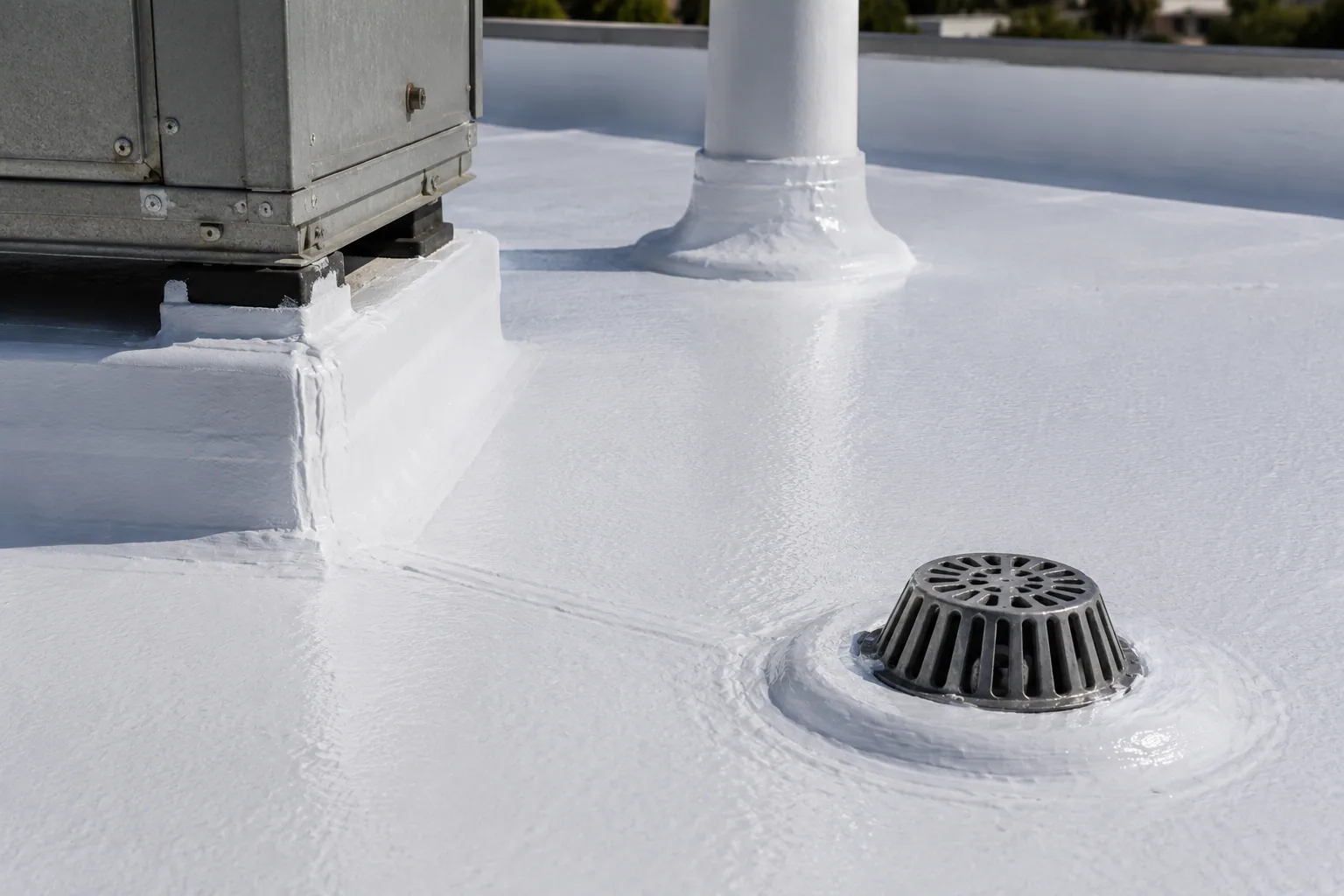
PVC Roofing
PVC roofing in Queens, NY: welded single-ply membranes for roofs that see grease, exhaust and chemicals, with repair, recover and replacement explained plainly.
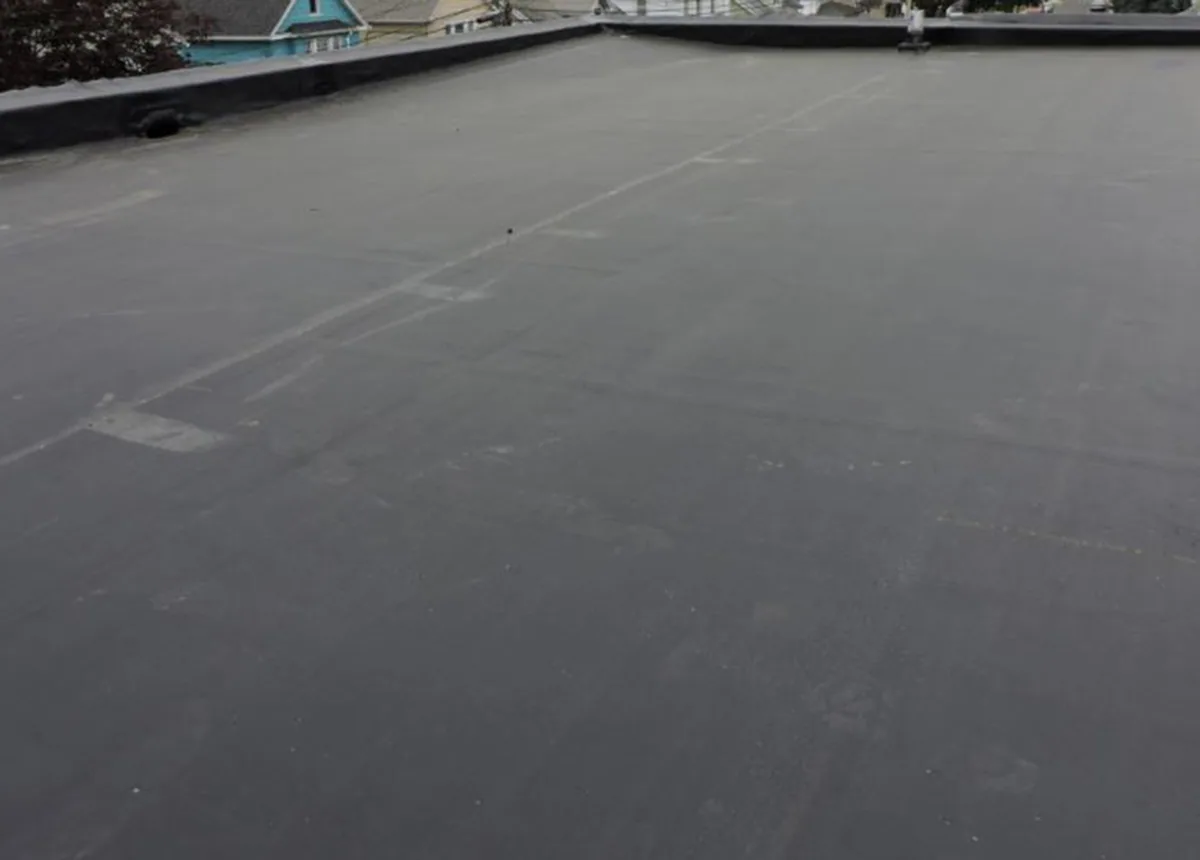
EPDM Roofing
EPDM rubber roofing in Queens, NY: adhered and ballasted membranes, seam and flashing repair, and when a black rubber roof is the right choice for a flat roof.
Ready to Talk About Occupied Building Reroofing?
Tell us about the building and what you are seeing. We will schedule a roof walk and send photos and a written scope.