
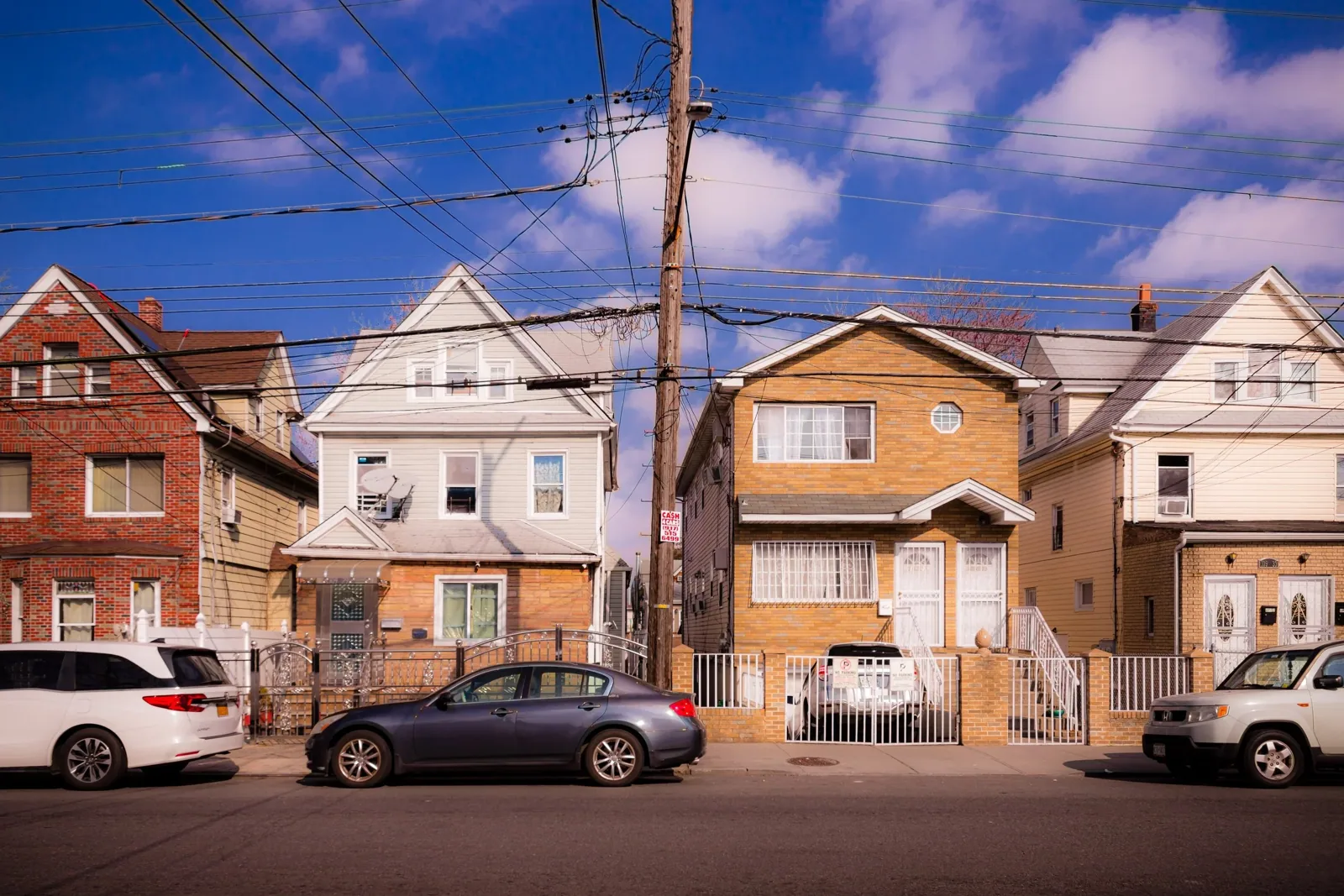
A ceiling stain that runs in a line, following a run of rooftop conduit or a duct, usually leads an office building's manager to an opening where that line passes through the roof. Jamaica, Queens, NY is a major commercial and institutional hub, and many of its roofs carry that kind of equipment. Every pipe, duct and conduit that crosses a roof is a hole, and the question for any leak is which hole.
Jamaica Center, centered on Jamaica Avenue, is a major commercial hub with banks clustered along Jamaica Avenue and Parsons, Merrick and Sutphin Boulevards. Jamaica station is a central LIRR transfer point with an AirTrain JFK link to the airport. Large employers nearby include Jamaica Hospital, Queens Hospital Center, a Social Security Administration program center and FAA regional offices. Roofs in this setting are read with occupancy and continuity in mind, starting at the drain and the penetrations.
What do bank and office roofs need?
Bank branches and offices keep records, equipment and customers under the roof, so a leak is expensive and visible. Their roofs tend to carry condensers, exhaust and communications equipment, and the penetrations multiply as tenants and systems change. The first walk counts every penetration, checks each flashing, clears the drains and probes the seams.
Continuity matters, and the building should feel almost nothing of the work. A branch cannot close for a roof job, so we plan work for approved hours, protect the interior below the work area, keep noise and fumes away from customer areas and close the roof watertight each evening. A manager gets a schedule with milestones, not just an end date.
Conduit and duct runs deserve their own step. Where a line crosses the roof, the penetration should have a formed flashing or a pitch pocket, with the line supported above the membrane on sleepers so it does not rest on the surface. Lines laid directly on the roof trap water and wear the membrane where they touch. We note each unsupported run and propose supports, and the report shows tenants which run belongs to whom.
What changes with taller buildings?
A 2007 rezoning allows buildings up to 28 stories near the transit hub and up to 7 stories along Hillside Avenue. Taller buildings put more wind on the roof edge, more equipment on the roof and more consequence on a leak. The Joseph P. The Addabbo Federal Building, built in 1989 with 12 stories of masonry and steel and about 932,000 square feet of offices, shows the scale buildings reach here, where access, fall protection and hoisting need real planning and a roof at height is walked with the right equipment.
Tall buildings put the highest loads on edge metal and coping, so at every visit we check edge metal and coping and record the condition of the fasteners.
Height changes pricing as well. Hoisting material to a high roof takes time, and a crew working there needs fall protection and clear weather, so a repair that would be simple on a low roof can take a day of planning at height. The scope states those drivers, which lets an owner see why a small repair on a tall building costs more than the same repair on a shop.
How are institutional and hospital roofs handled?
Jamaica Hospital and Queens Hospital Center are among the area's large employers, along with federal offices. Roofs on healthcare and government buildings come with rules: controlled access, infection control, security screening, noise and dust limits, and approved paperwork. Work is staged in small sections, each closed watertight before the next opens, and air intakes are located and protected before any adhesive or hot material is opened on the roof. On a hospital roof the facility team signs off on the plan, the hours and the materials before a crew goes up.
For government clients, documentation matters as much as the work. Dated photographs, a written scope and a closeout report make the paper trail that procurement staff need.
Federal and city buildings add another layer: background checks for crews, screening of tools and materials, and escorted access. We plan for that lead time and keep the crew list stable, so the same people are cleared for the whole job. Nothing in that process changes the roof itself, but it changes the calendar, and a schedule that ignores it fails before the first day.
What does the airport connection mean for local roofs?
Cargo through JFK reached 1,557,067 US tons in 2025, and the airport spreads over 5,200 acres in Jamaica. Traffic from the airport and the rail hub means a hoist, a lift or a delivery truck has to fit into a busy street, so staging and delivery windows are planned around the traffic and any restriction on crane use is confirmed before a quote is written.
Transit access helps and hinders. Crews and materials can reach Jamaica by rail and road, but the streets near the hub are busy with buses, delivery vehicles and pedestrians, and they limit where a truck can stand. We walk the block with the manager before quoting, mark the hoist location, check the curb use rules and plan deliveries for off-peak times, so that the roof job does not block the street the neighbors depend on.
How do storms and winter test these roofs?
Hurricane Ida's remnants hit on September 1, 2021, and Queens recorded most of the deaths during the first flash flood emergency the city ever declared. A large roof with several drains still depends on every drain staying clear, so overflow paths are checked. The city also averages about 29.8 inches of snow a year, and ice at a drain pushes water under flashing, which is why maintenance visits before winter and after the thaw keep drains, seams and flashings on a calendar.
What is the next step?
Send the street, the number of floors, the roof age and photos of the stain and the equipment. Walking the roof lets us say in plain steps what it is doing, and price follows. Owners in Richmond Hill and South Ozone Park follow the same sequence.
Questions Owners Ask
What building owners and managers usually ask before a roof visit.
We follow the stain's line to the nearest crossing, then hose-test each suspect from the lowest to the highest while someone watches inside. Penetrations that were added later are tested first, since they are the most likely to have weak flashing.
In most cases. Noisy steps keep to approved hours, fumes stay off the air intakes, the interior below the work is protected and the roof is closed each evening, all under a plan the branch manager approves beforehand.
Dated photographs, a roof plan, a written scope with line items and a closeout report. We prepare them in a form that can go into a procurement file.
With planned access, fall protection and the right hoisting equipment. We confirm who controls roof access and what approvals are needed before we go up, and we keep a record of each visit.
Photos of the stain, the equipment on the roof and the nearest drain will do, along with the number of floors and, if known, the roof age. We will describe what the roof is doing, in order, ahead of any price.
Related Roofing Work
Other pages that connect to Jamaica.
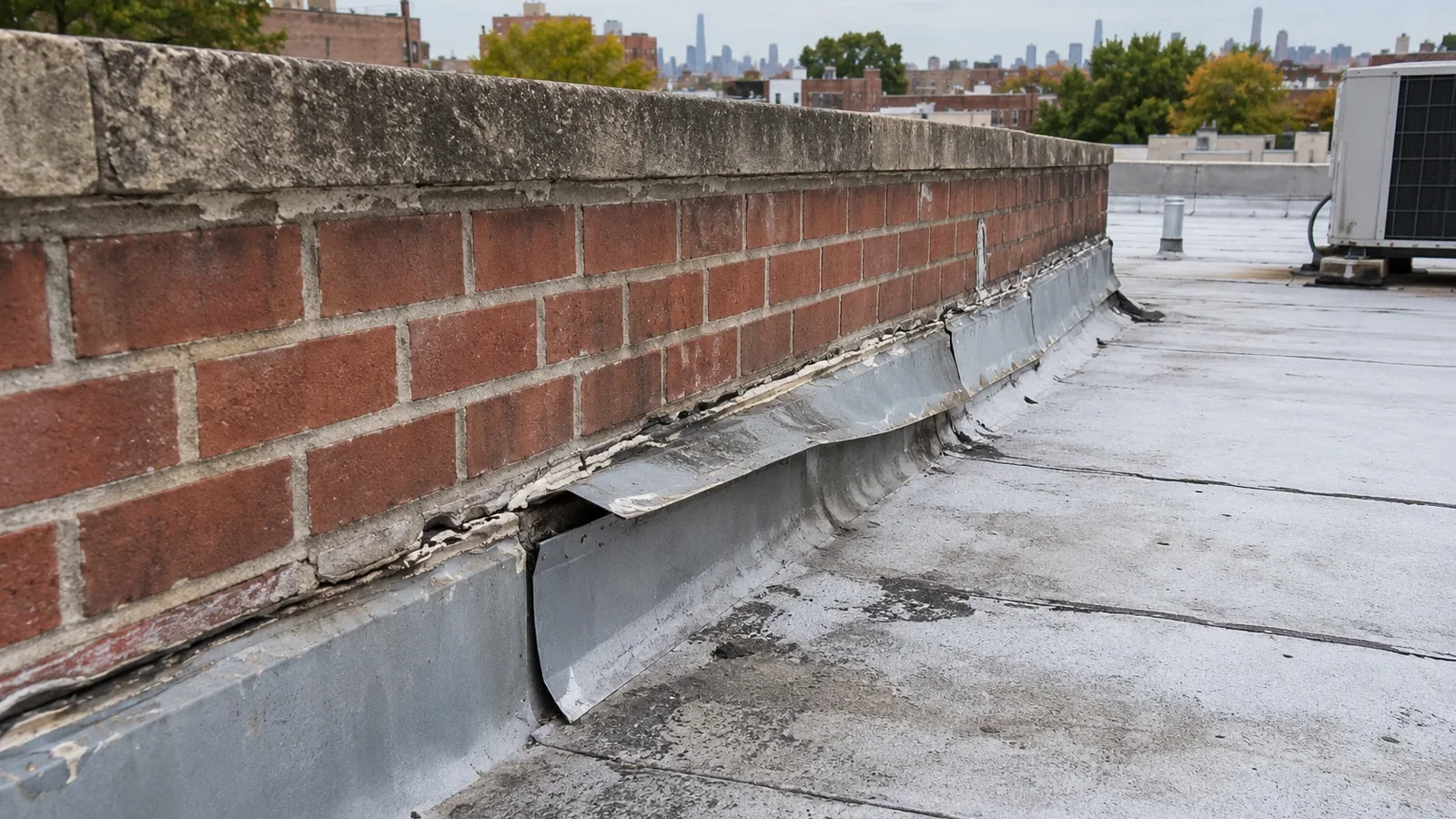
Flashing Failure Repair
Flashing failure repair in Queens, NY: cracked tar, lifted base flashing, open counterflashing and parapet leaks traced and rebuilt on commercial flat roofs.
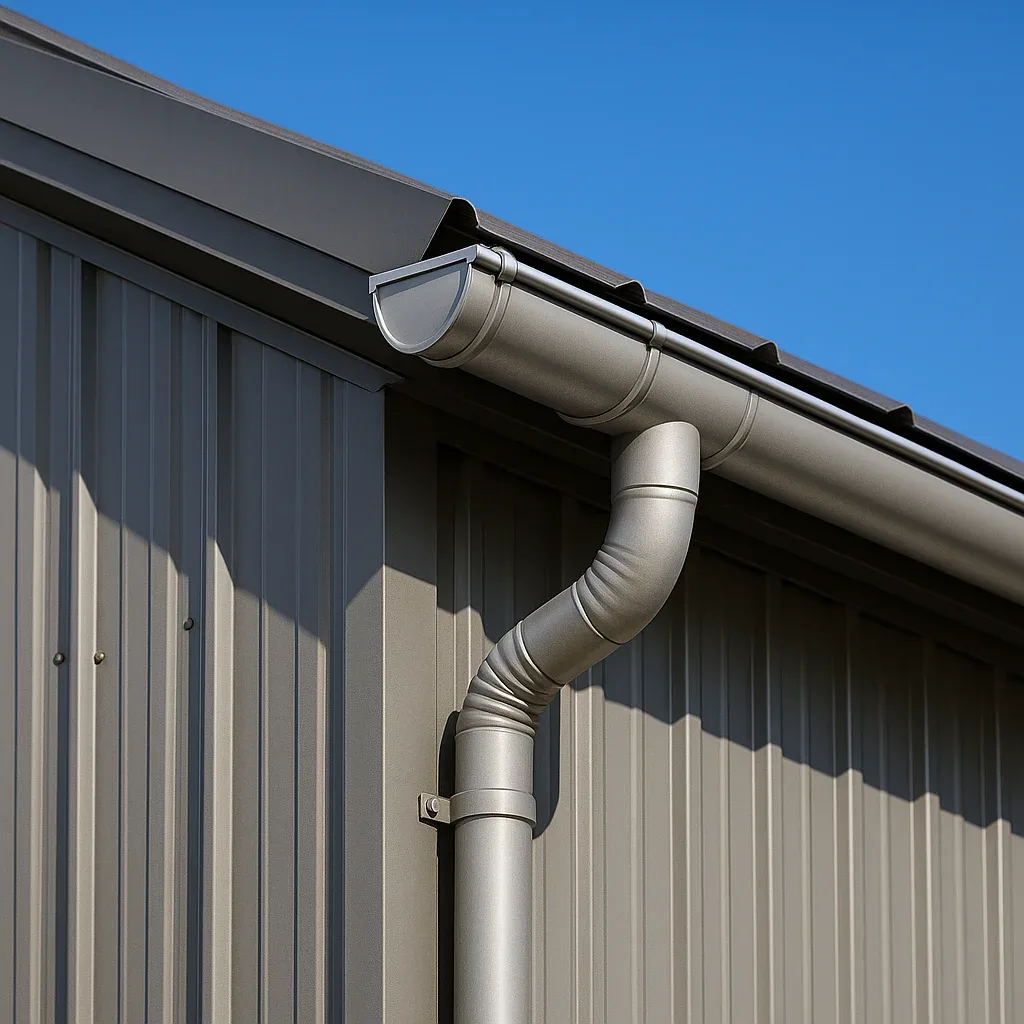
Edge Metal, Coping and Gutters
Edge metal, coping, gutter and downspout repair for commercial roofs in Queens, NY: wind uplift, open joints, brick staining and drainage at the roof edge.
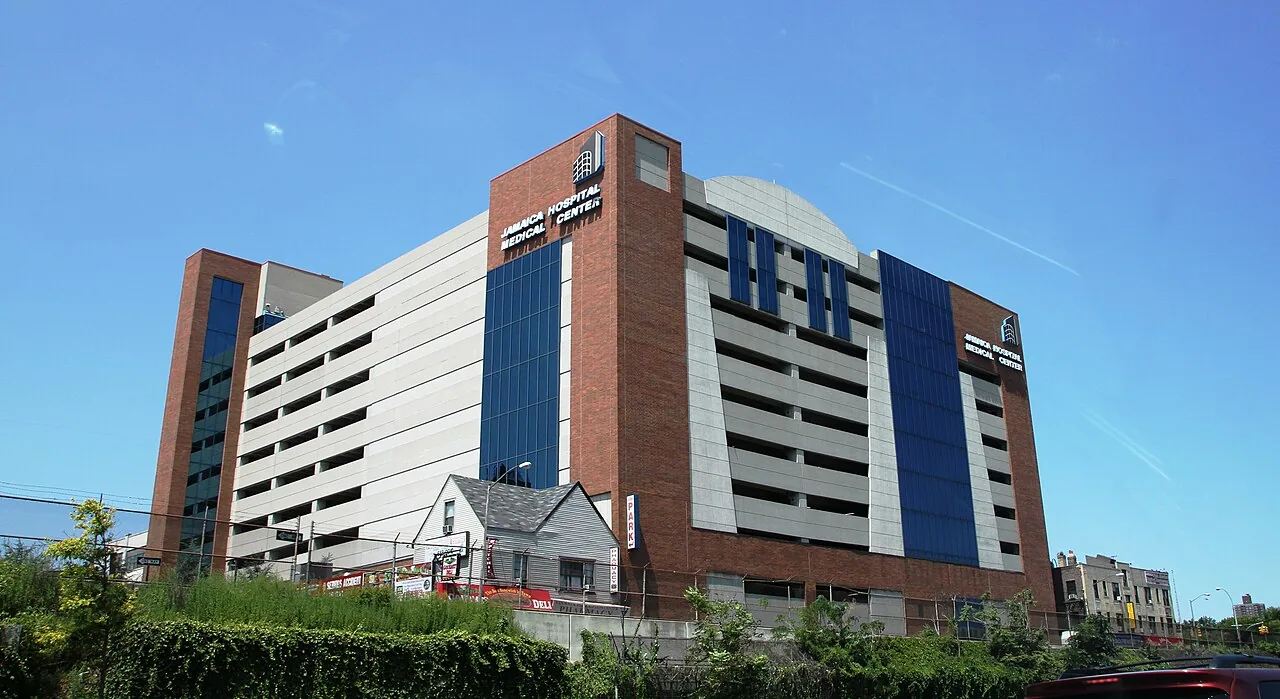
Hospital Roofing
Roofing for hospitals and healthcare campuses in Queens, NY, with infection control, air intakes and phased work planned so patient care never stops.
Ready to Talk About Jamaica?
Tell us about the building and what you are seeing. We will schedule a roof walk and send photos and a written scope.