
A ceiling tile that sags a little further after every hard rain is how most Queens owners find out their roof needed attention. By the time the tile drops, the water has usually been getting in for several storms, soaking insulation along the way, and the repair has grown from an afternoon of work into a section of roof. Maintenance exists to catch the first storm, not the fifth.
A maintenance program is a calendar of visits that look at the same short list of parts, in the same order, and write down what changed. That sounds plain, and it is. The value comes from comparison. A drain strainer, a seam, a pipe boot or a stretch of parapet flashing looks ordinary on its own, but it looks different next to the photograph from last spring. We walk those parts with the owner's goals in mind, whether the building is a warehouse in Queens, NY, a rowhouse block with shops, or a single-tenant office.
What does a maintenance visit actually cover?
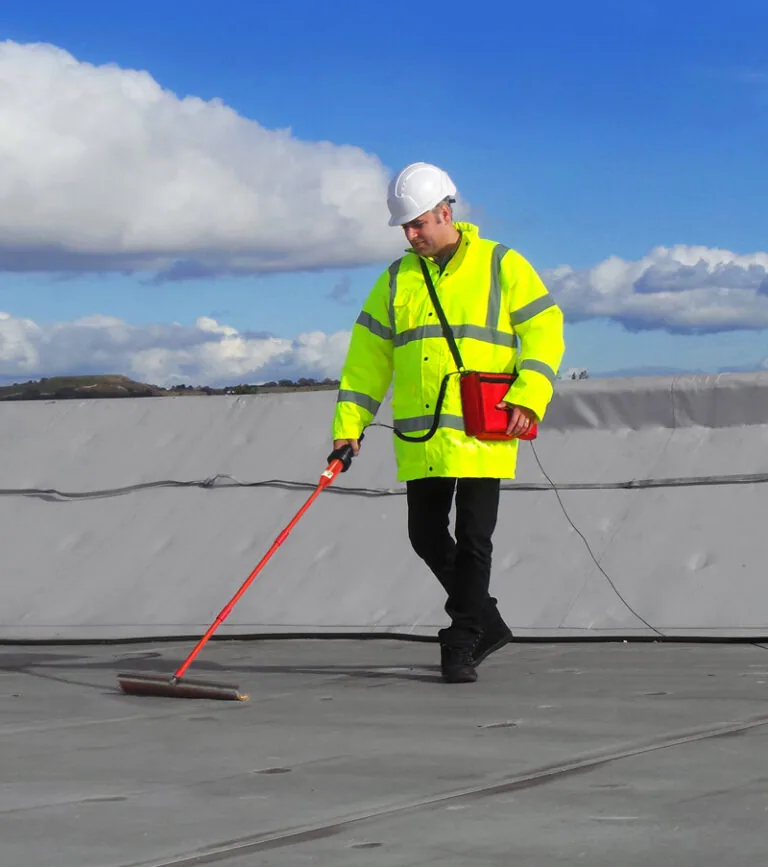
Each visit follows the same sequence. We start at the drains and scuppers, clear them, and pour water in to see how fast it leaves. Then we walk the field with a seam probe, pressing along lap edges for lifted or soft spots. Next come penetrations, curbs and rooftop units, where sealant dries out first, and then the flashing at the parapet and the edge metal. Last, we photograph each item and note anything that moved.
Small repairs are made on the spot: a bead of sealant, a fastener reset, a patch over a scuff. Larger items go on a written list with a priority and a rough range of cost drivers, so the owner can plan rather than react. This is also the point where we flag foot traffic damage from the rooftop equipment crews, since a path worn into a membrane is a leak waiting for its season.
The visit also gives us a chance to read the roof against the hands-on inspection we would do before any larger project. Where something looks off but not yet failed, such as a seam that is clean but slightly raised, we mark its position with a paint dot and photograph it. On the next visit, a dot that has grown or a seam that has opened further tells us the problem is moving, and a dot that looks the same tells us it can wait. That small habit saves owners from both rushing and ignoring.
How often should Queens roofs be visited?
Two visits a year suit most buildings: one in spring, after the freeze-thaw months, and one in fall, before leaves and snow. New York City gets about 29.8 inches of snow in an average year, and the thaw cycles open seams that looked tight in December. The spring visit finds that damage while the weather still lets us repair it properly. The fall visit clears the leaves that choke drains and gets edges and sealants tight before winter.
Add a visit after any major storm. Ida's remnants hit on September 1, 2021, and the city declared a flash flood emergency for the first time, so a roof that took a cloudburst like that should have its drains, ponding areas and flashing checked right away. A building near the water, like those in Howard Beach or the Rockaways, may justify a third visit before hurricane season, since salt and wind work on edge metal.
Does the building type change the plan?
It does. The Maspeth Industrial Center sits on industrial lowlands, crossed by the freight-only Bushwick Branch. On any wide low-slope roof in a district like that, one clogged drain can put water across a large area, so a bigger roof gets a longer drain list and a closer look at slope. College Point Corporate Park covers about 550 acres, and a business park with many buildings may want one schedule and one report across several roofs, which is how we handle multi-site roof programs.
Ridgewood and Glendale have early twentieth century yellow-brick and mill-era stock. On those buildings the parapet and the coping take more of our time, because old masonry lets water in behind the metal. A shop building in Ridgewood and a warehouse in Maspeth need different checklists even when the membrane is the same.
What does it cost to skip it?
Skipped maintenance moves cost around rather than removing it. A clogged drain that leaves a pond for a season turns into a soft area of insulation, and soft insulation turns a repair into a partial tear-off. A cracked pipe boot costs very little to replace and a great deal to ignore, because the water runs along the deck before it shows. Sunlight and heat add to the wear: Queens summers carry a strong urban heat island, with a July mean high near 85 degrees at Central Park, and heat dries out sealants and stiffens membrane.
Beyond repair costs, many warranties and insurers want to see a record. A log of dated visits, with photographs, gives an owner something to put in front of a manufacturer or an adjuster. We cover that record in our claim documentation work as well.
How does a program start?
The first visit is a baseline. We walk the whole roof, map the drains and penetrations, photograph the condition of each seam type and write a short report. Where the roof is large or we suspect hidden water, an infrared moisture survey gives the baseline more depth. After that, each visit compares against the baseline, and the owner gets a plain list: done, watching, needs a decision.
Price follows drain count, penetrations, roof area and access. A building with a stair to the roof and a clear walking path costs less per visit than one that needs a ladder and a fall-protection setup. Tenants matter as well, since some spaces below need advance notice before we are overhead. We state the visit price and the repair price separately, so the owner can see what the calendar costs and what each fix costs.
Questions Owners Ask
What building owners and managers usually ask before a roof visit.
Often it can, if the insulation is still dry. Keeping drains clear, fixing seams and flashings promptly and recoating where the surface has worn can add years. If the insulation is wet, maintenance only slows the damage, and we tell the owner that plainly, with a moisture scan to prove it.
We stop and explain it. A serious finding is shown with photographs, the likely cause is walked through, and we lay out the repair options with their cost drivers. Nothing beyond the agreed small repairs is done without the owner's approval.
Yes. A single-tenant building has fewer parts, so each visit is short. The calendar matters more than the size, and one spring and one fall visit are usually enough for a small flat roof.
Building staff can clear surface debris from drain strainers if they have safe roof access, and we show them what to look for. Anything involving the drain line, the sump or the flashing around the drain belongs to the roofer. We give a short checklist to leave with the facility manager.
Send a photograph of the worst stain, one of the drain area, and the roof age if it is known. We will describe what we expect to find on the first walk and how the baseline will be built.
Related Roofing Work
Other pages that connect to Preventive Roof Maintenance.

Commercial Roof Inspections
Hands-on commercial roof inspections in Queens, NY, with written findings, photographs and a ranked list of what to fix now and what can wait.

Multi-Site Roof Programs
Multi-site roof programs in Queens, NY: one inspection, repair and replacement program across many buildings, ranked by condition and scheduled by budget.

Ridgewood
Commercial roof repair and replacement in Ridgewood, Queens, NY: mill-era masonry, Myrtle Avenue storefronts and mixed-use rows in historic districts.
Ready to Talk About Preventive Roof Maintenance?
Tell us about the building and what you are seeing. We will schedule a roof walk and send photos and a written scope.