
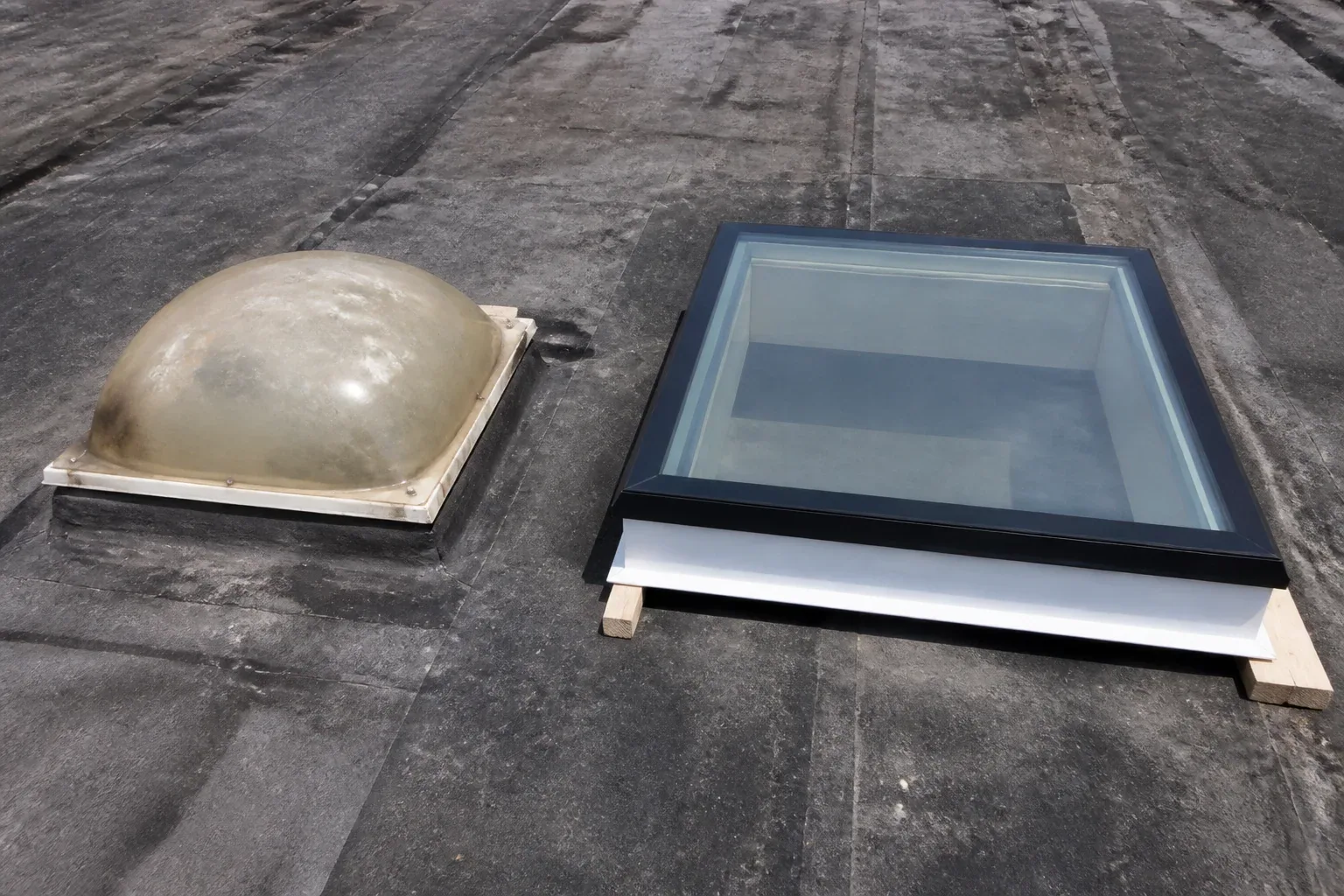
A drip that appears only when the rain comes from the east is one of the more useful clues an owner can give us. It points away from the field of the roof and toward something that stands up through it: a skylight, a vent pipe, a hatch or a rooftop unit. Rain driven sideways finds the one side of a curb where the flashing has opened, and the other three sides stay dry. The pattern repeats storm after storm, which is how owners come to believe the leak cannot be found.
Every opening in a roof is a place where the membrane stops and something else begins. The membrane cannot simply be wrapped around a pipe or a curb and left; it must be tied into the penetration with flashing that moves with the building, tolerates heat and cold, and sheds water. Because each penetration is its own small system, a roof in Queens, NY can have a sound field and a dozen weak details. We look at the details first.
What counts as a penetration?
Anything that passes through the roof surface or stands on it: plumbing vents, conduit, gas lines, exhaust fans, rooftop units, skylights, roof hatches, smoke vents, antenna mounts, sign supports and the curbs that carry equipment. Each one needs its own flashing method. A small pipe takes a boot or a pre-formed flashing. A larger curb takes base flashing that climbs the curb and a counterflashing or cap that sheds water over the top. A skylight takes both, plus a seal between the glazing and its frame.
Penetrations are added over time, and that is where trouble starts. A tenant adds a fan, a telecom company adds a mount, a new line is run for equipment. Each addition cuts a hole and, too often, is sealed with a bead of caulk instead of proper flashing. Part of our first walk is a count of the penetrations and a note of which ones were part of the original roof and which were added later.
How does penetration flashing fail?
The common failures are simple. Sealant dries and cracks after repeated heat and cold. Rubber pipe boots split from sun exposure, usually on the side that gets the most light. Metal flashing separates from a curb as the building moves. A counterflashing loosens and lets water run behind it. Pitch pans, the open boxes filled with sealant around odd-shaped penetrations, shrink and pull away from what they hold. Skylight glazing seals harden, and condensation inside the unit gets mistaken for a leak.
A flashing in this borough works through a wide swing of weather. July afternoons average about 85 degrees at Central Park, helped along by the heat island, and LaGuardia hit 107 degrees on July 3, 1966. In winter the freeze-thaw cycle takes over, and a single storm once left 27.3 inches of snow. Sealants take that whole range, which is why we prefer mechanical flashing details to caulk wherever the penetration allows it. We trace the stain upward and test with a hose, one side at a time, the way any commercial roof leak repair should start, and a curb that fails the test goes on the list for flashing failure repair.
Can a leaking skylight be repaired, or does it have to be replaced?
It depends on where the water is coming from. If the curb flashing has opened, the repair is flashing, and the skylight stays. If the glazing seal has failed, the unit may be resealed or the glazing replaced. If the frame is cracked or corroded, or if the unit is old and hazed, replacement is more economical than a series of repairs. We also check the interior side for condensation, because water on the underside of the glass in cold weather comes from the room rather than the roof.
Skylights are also a safety question. A roof access hatch or skylight on a roof where staff walk should be guarded, and we point out fall hazards we see. In converted buildings, such as the former factories and bakeries of Long Island City, a skylight or hatch may date from the old factory or from the conversion, and each one gets its own examination.
How should rooftop equipment be flashed?
A unit on a curb is flashed up the curb sides and capped, and the curb stands high enough to stay clear of ponding and snow. A unit on rails or stands wants pads under its feet, open space beneath so water can pass, and piping held off the membrane. Retail centers keep adding equipment as tenants change, and Rego Park has a good example in Rego Center Phase II, which holds 950,000 square feet of retail on 62nd Drive. When a unit is replaced, the curbs and supports are inspected and reflashed before the new unit is set.
What does a repair involve, and what does it cost?
Each repair follows the failure. A split boot is replaced with a new boot or a formed flashing. A shrunk pitch pan is refilled or replaced with a pre-formed flashing. A curb gets new base flashing, tied into the field with a welded or adhered seam, and a new counterflashing at the top. A skylight gets a new seal or a replacement unit. Cost follows the number of penetrations, their size, access, and whether the work can be done without removing equipment. Many owners schedule penetration work during a commercial roof repair visit, so one crew handles every detail on the roof at once.
After any flashing repair we wet-test the work. A hose is run on the repaired side of the curb for several minutes while someone watches the underside, and the test is repeated on each side in turn. We photograph the finished detail, with the seam, the termination and the sealant visible, and we add it to the roof's record. If the leak was intermittent, the record shows exactly what was changed, which makes any later question easy to answer.
Questions Owners Ask
What building owners and managers usually ask before a roof visit.
Wind direction and rain intensity decide it. Wind-driven rain pushes water against one side of the frame, and a hairline gap in the flashing or seal on that side lets it in, while light rain from other directions stays out. Tracing the leak means testing each side separately with a hose while someone watches inside.
Only as a short-term measure. Caulk cracks as the pipe and the roof move. A proper boot or formed flashing, with the membrane welded or adhered to it, lasts far longer. We use sealant as a secondary seal on top of mechanical flashing, not as a replacement for it.
Yes. Abandoned pipes and curbs are best removed, the deck patched and the membrane restored, rather than capped and left. Each removed penetration is one fewer place for the roof to leak.
Condensation shows as moisture on the inside surface of the glass or frame, usually on cold mornings, and it stops when the room warms or the humidity falls. A leak shows after rain, often with a stain on the surrounding ceiling. A moisture meter on the ceiling and a hose test on the roof separate the two.
Send photos of the stain and the penetration above it, and tell us which way the wind blew the day it leaked. We will go through what the roof is doing before price comes up.
Related Roofing Work
Other pages that connect to Skylight and Penetration Flashing.
Commercial Roof Leak Repair
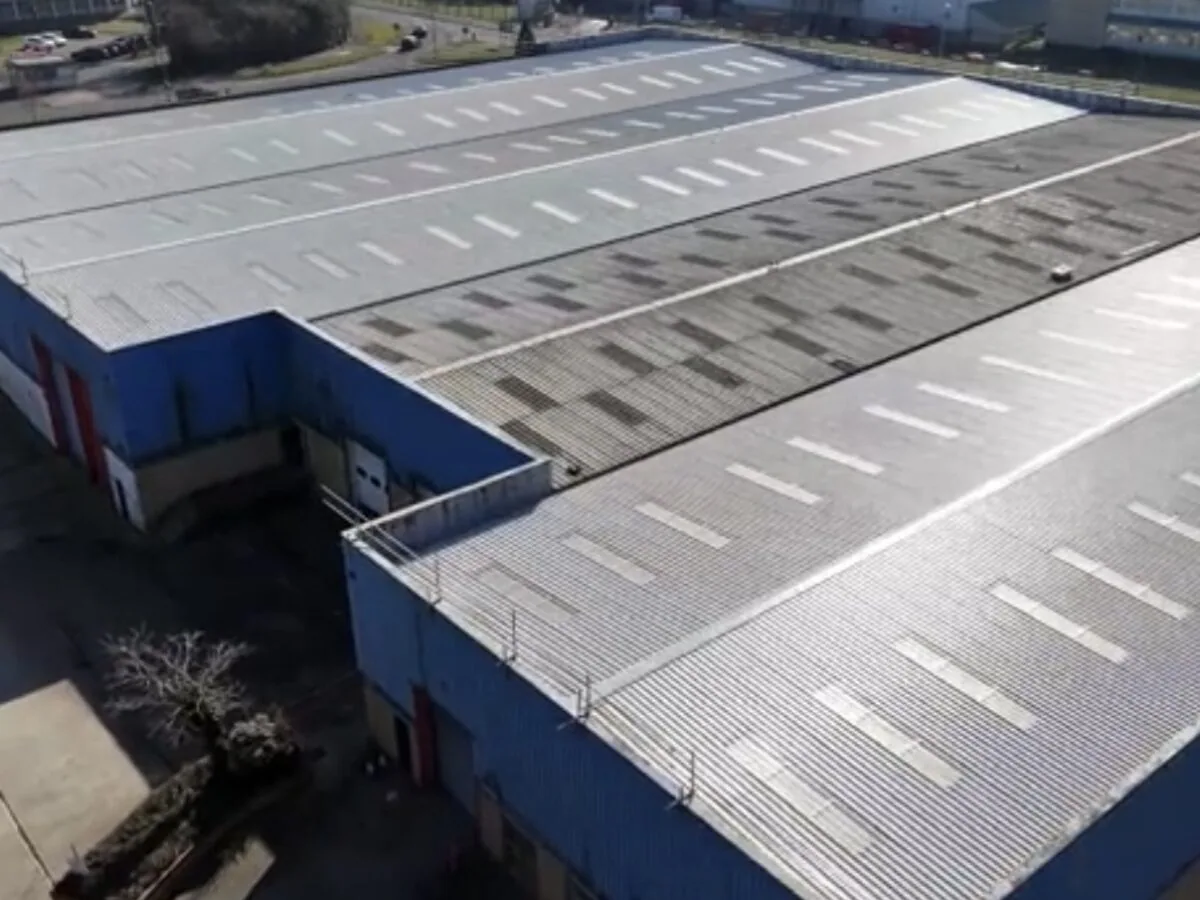
Tracing and stopping active commercial roof leaks in Queens, NY, using moisture mapping, water testing and targeted repair, explained in plain steps.
Flashing Failure Repair
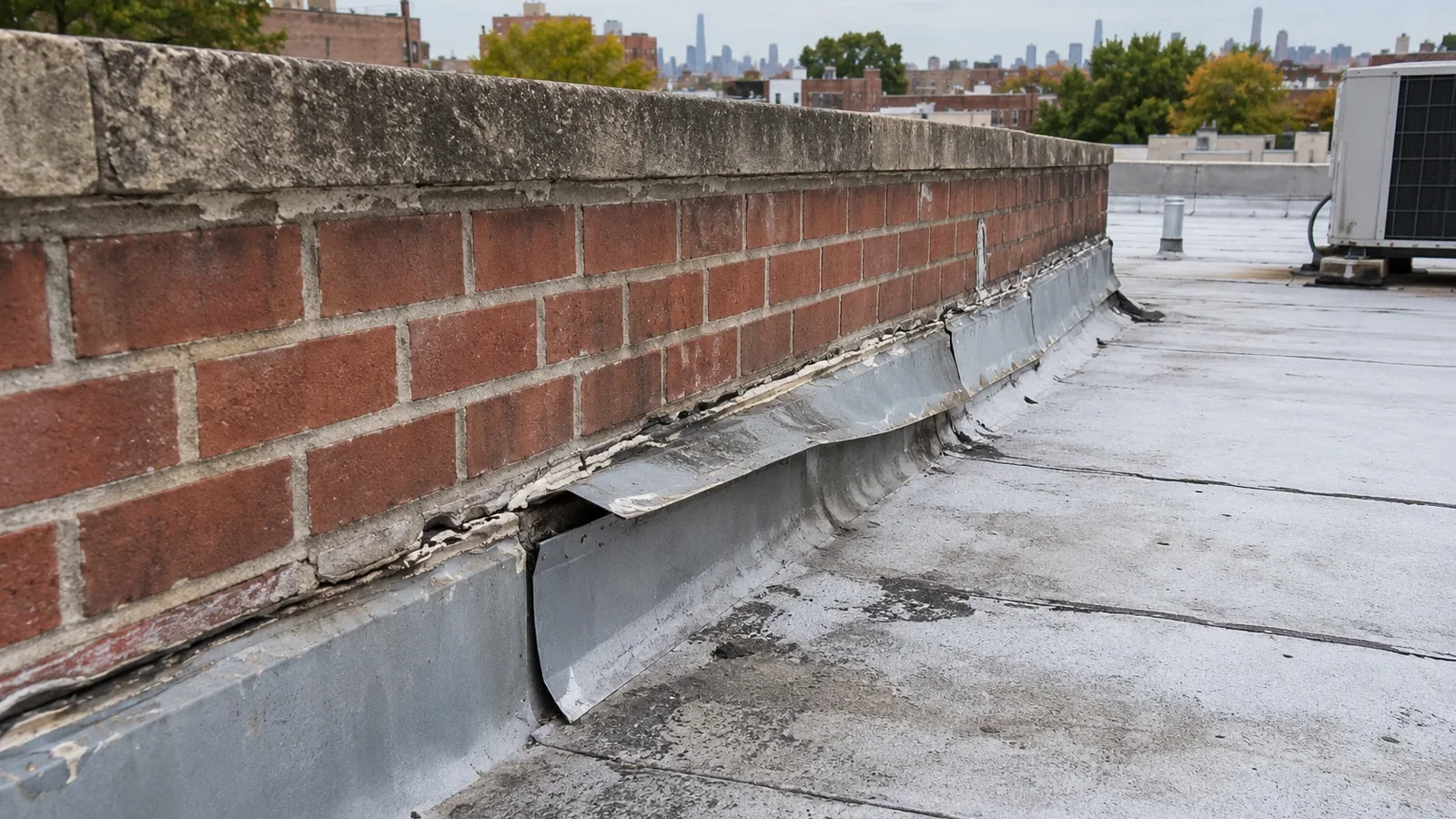
Flashing failure repair in Queens, NY: cracked tar, lifted base flashing, open counterflashing and parapet leaks traced and rebuilt on commercial flat roofs.

Long Island City
Commercial roof repair and replacement in Long Island City, Queens, NY, for masonry industrial buildings, converted factories and newer mixed-use roofs.
Ready to Talk About Skylight and Penetration Flashing?
Tell us about the building and what you are seeing. We will schedule a roof walk and send photos and a written scope.