
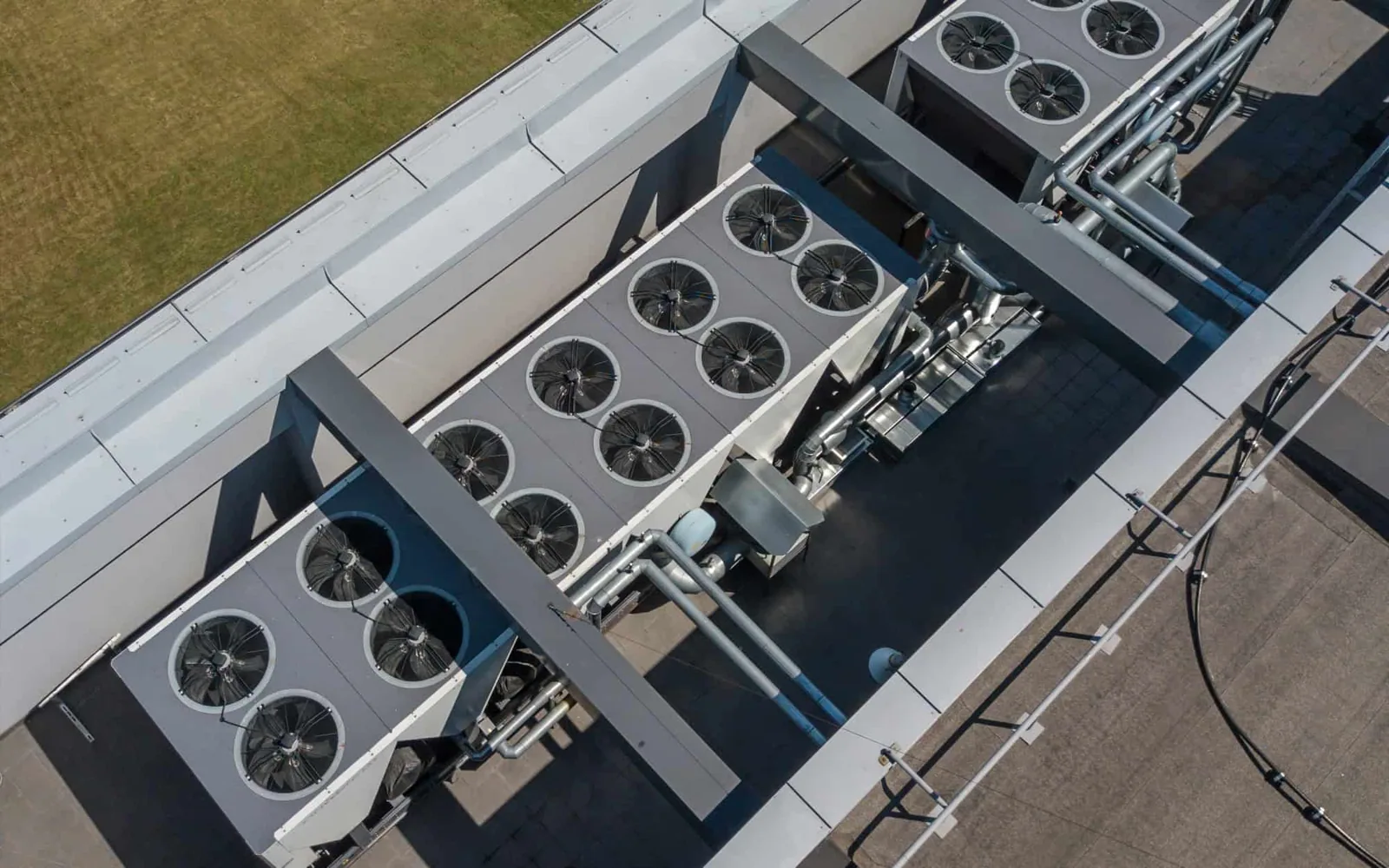
A brown ring on a ceiling tile that sits directly under a rooftop unit is a stain that tells a Queens facility manager something specific, and it rarely means the whole roof has failed. It means one curb has stopped doing its job. Water gets in where the unit meets the roof, runs along the deck and drops wherever it finds a gap. The cure is small and specific, and the first thing to check is the flashing around the base of that one unit.
Why does the leak show up near the unit?
A rooftop unit does not sit on the membrane. It sits on a curb, a raised frame that is fastened to the deck, and the roof is flashed up the side of that frame so water runs around it. When the flashing at the base cracks, when the counterflashing at the top pulls away, or when the corner seams open, rain slips behind the membrane. It then follows the insulation sideways.
That sideways travel is why a stain can sit ten feet from the cause. So before anyone talks about replacing a roof, we start with the curb and walk outward from it. If the curb is the problem, the repair is a rebuilt flashing, not a new roof.
What is the difference between a curb and a support?
A curb is a closed frame, usually around a unit that has an opening through the roof for ducts. A support is an open frame, rail or pad that holds equipment above the roof without cutting into it, which is how pipes, conduit, gas lines and small condensers are usually carried. A curb needs flashing on all four sides. A support needs a protected landing on the membrane so its feet do not wear through the sheet.
Both can fail, and they fail differently. Curbs leak at corners and tops. Supports puncture the membrane at their feet and rub holes through it when pipes expand and contract. Knowing which kind we are looking at tells us where to probe first.
How do we check one?
Walk it with me. The first step is to look at the counterflashing at the top of the curb, the metal or flexible skirt that sheds water over the membrane edge. The second step is to press the base flashing with a seam probe, feeling for lifted edges, open laps and soft spots. The third step is to check the corners, where the sheet has to fold and where almost every leak begins.
Then we look at the curb itself. Wood nailers can rot, steel curbs can rust and the fasteners can back out. If the curb is sound, we rebuild the flashing. If the curb is damaged, we repair or replace it first, because new membrane on a rotten frame will fail again. A short moisture check around the base shows whether water has already wet the insulation, and the infrared moisture survey maps how far it has traveled.
Heat matters too. A white TPO membrane around a curb reflects summer sun and slows the aging of the flashing, which is one reason curbs on reflective roofs tend to hold their seams longer than curbs on dark ones.
Which Queens roofs carry the most equipment?
Big retail and office buildings are where units multiply. Queens Center in Elmhurst runs to about 1,000,000 square feet of gross leasable area, the retail at Rego Center Phase II fills 950,000 square feet on 62nd Drive, and the Joseph P. Addabbo Federal Building in Jamaica is a 12-story masonry and steel office block. Floor area is not roof area, but a building that size will need a lot of mechanical equipment, and every unit stands on a curb that needs checking.
Business parks collect equipment too. College Point Corporate Park covers about 550 acres, and the Degnon Terminal complex stands beside Sunnyside Yard. On a warehouse roof anywhere in a district like these, exhaust fans, make-up air units and conduit runs tend to pile up over the years, and each one is looked at on its own.
What happens when a unit gets replaced?
Equipment replacement is the moment a good roof is most likely to be damaged. The new unit may not match the old curb, so an adapter is added, or the opening is enlarged, or a new curb is cut in. Each of those steps changes the flashing. If a mechanical contractor does the work and the roofer is not called, the new unit often goes in on the old flashing, and the leak starts within a season.
The next step is simple: ask for the roof to be part of the equipment plan. We set the curb, flash it, test it and then hand it back to the mechanical trade. When a unit is removed and not replaced, the abandoned opening is framed, decked and sealed with the same care as a new roof. A capped hole is not the same as a closed one.
What do pipe and conduit supports do to the roof?
Pipe supports stand on pads, and where a pad is missing the foot sits on bare membrane and rubs a little with every temperature swing. Queens can get hot enough to make that rubbing serious: LaGuardia reached 107 F on July 3, 1966, and the heat island keeps summer roofs warm, so pipes and conduit expand and slide for months at a stretch.
We add walkway-grade pads under each foot, raise low runs so they clear ponded water and use supports that let a pipe move without dragging. Where a line crosses the roof edge, we flash the penetration with a boot or a pitch pan, depending on the shape. A penetration flashing detail done well lasts through many summers.
What is the next step?
Send photos of the stain and of the unit above it, along with the age of the unit and any recent mechanical work. We will walk the roof, check each curb and support, and tell you in order what each one is doing before we get to cost. For a building with many units, a preventive maintenance visit catches the next loose flashing before it stains a ceiling on a retail roof such as those in Elmhurst.
Questions Owners Ask
What building owners and managers usually ask before a roof visit.
Usually it can. If the curb is sound and the insulation around it is dry, we rebuild the flashing and counterflashing and test it with water. If the insulation is wet, we cut out the wet section first. The roof only needs replacing when the wet area is wide or the membrane has aged out.
The roofer who will stand behind the roof. A mechanical contractor sets the unit, but the flashing is roofing work, and a mismatch between the two trades is where many leaks begin. Coordinating the two before the unit arrives costs very little.
At least once a year, and after any major storm or mechanical work. A quick pass over every curb in the spring and fall finds loose counterflashing, open corners and dirty drains before they cause a stain.
Often. The deck and insulation have to carry the weight without crushing, so we check what is below the curb. A dense board or a steel plate under the curb spreads the load. The structure itself is a question for the owner's engineer.
Have it removed and the opening closed. An abandoned curb collects water and keeps a leak path open. We frame the opening, deck it and tie the new roof into the old one, so the spot is dry for good.
Related Roofing Work
Other pages that connect to Rooftop Equipment Curbs and Supports.
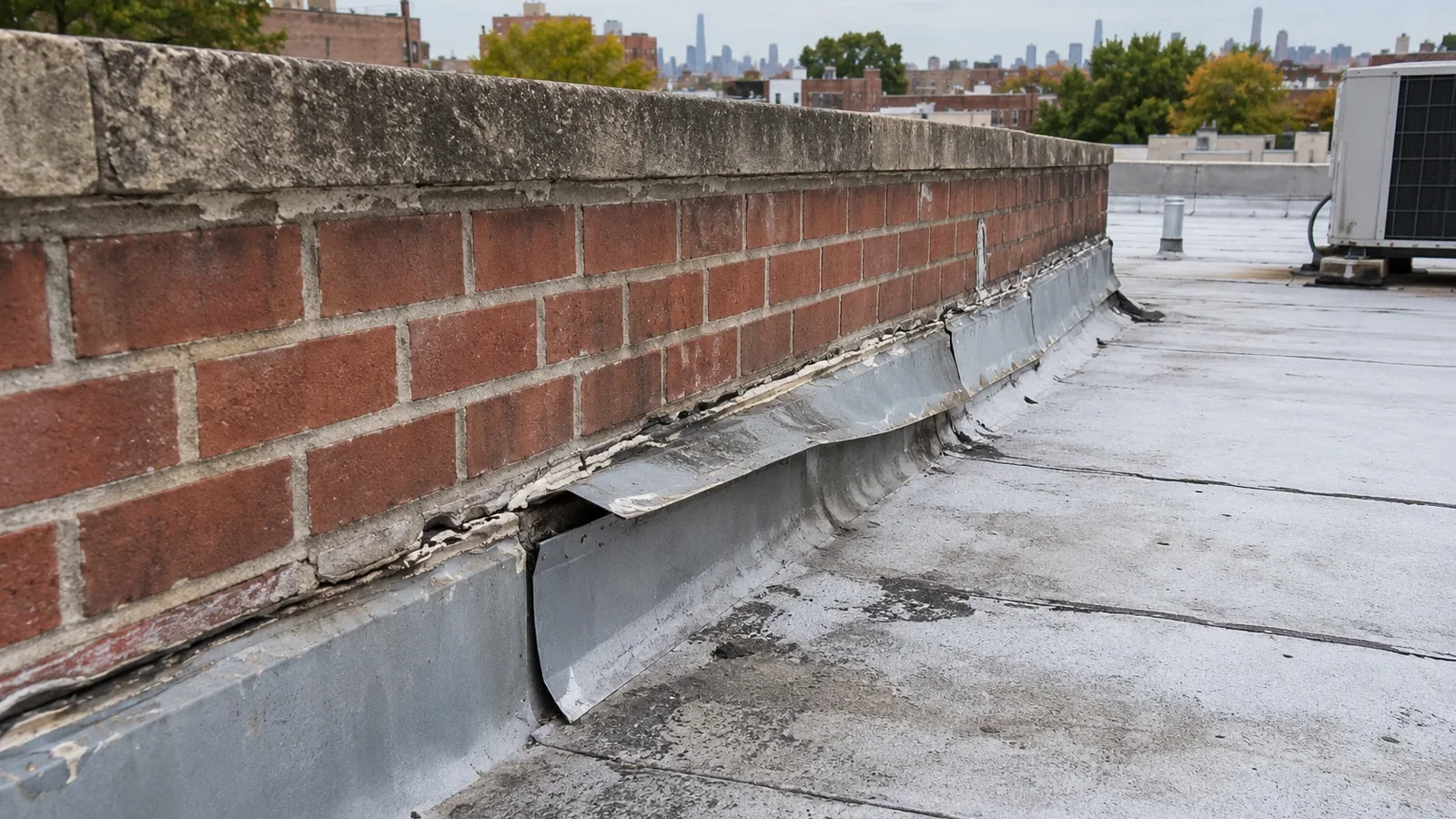
Flashing Failure Repair
Flashing failure repair in Queens, NY: cracked tar, lifted base flashing, open counterflashing and parapet leaks traced and rebuilt on commercial flat roofs.
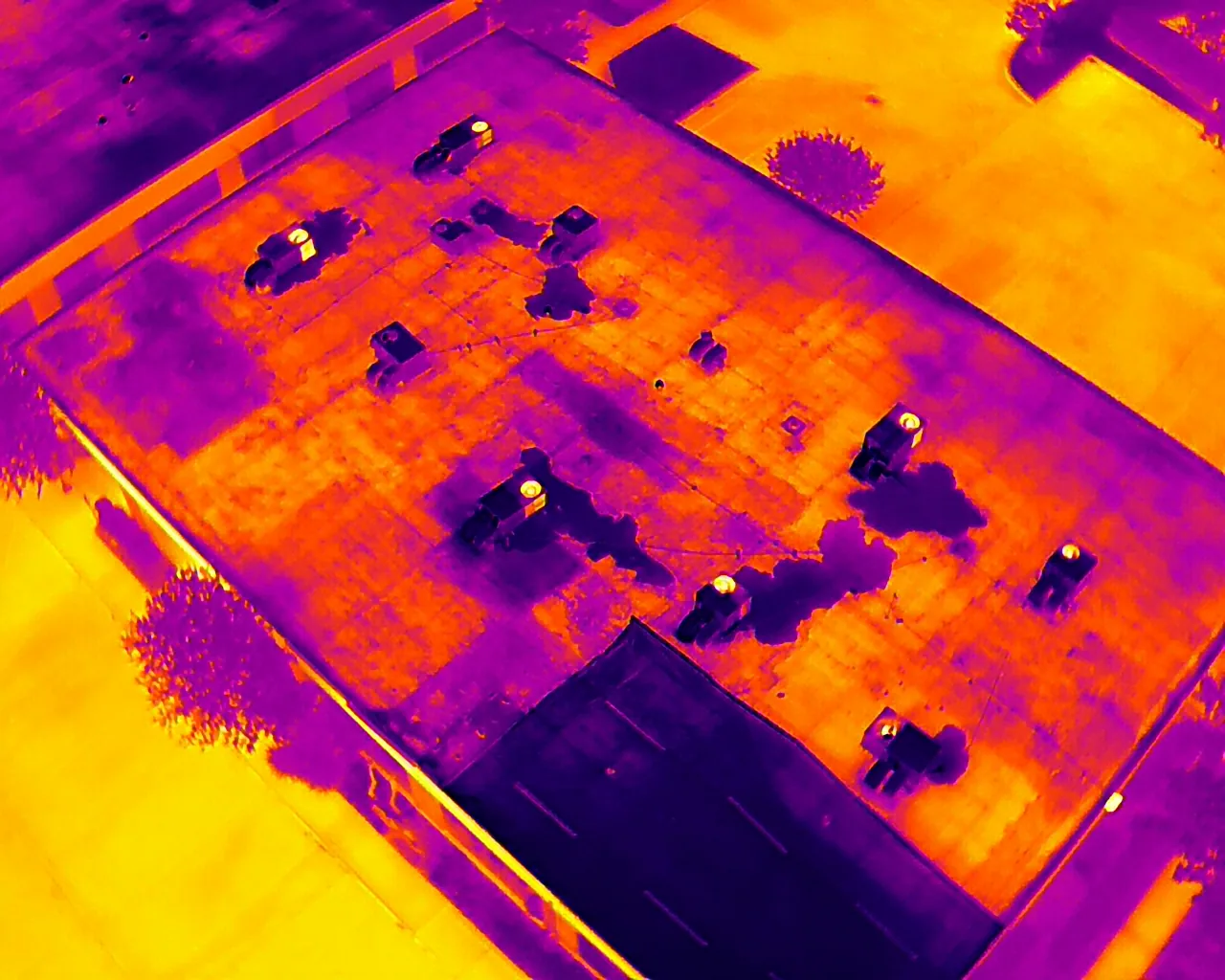
Infrared Roof Moisture Surveys
Infrared scans and core-cut moisture surveys for Queens, NY commercial roofs that locate wet insulation before the owner commits to repair or replacement.
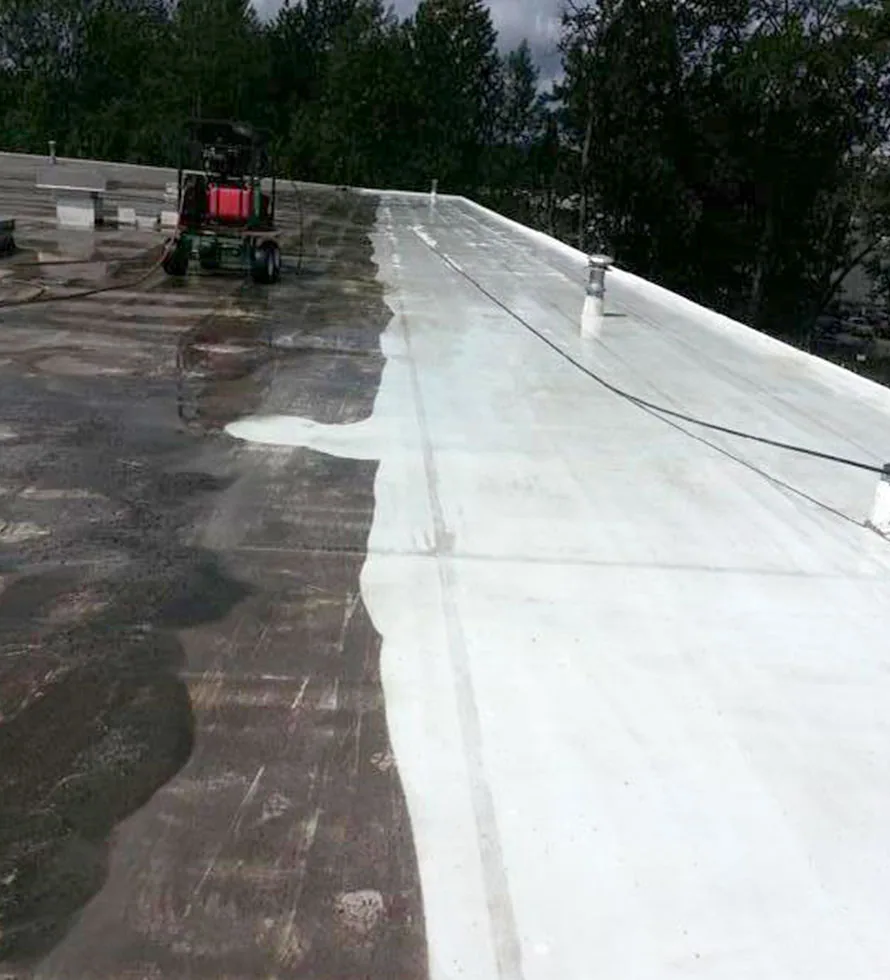
TPO Roofing
TPO roofing in Queens, NY: heat-welded white single-ply membranes for flat commercial roofs, with seam checks, repair and replacement explained step by step.
Ready to Talk About Rooftop Equipment Curbs and Supports?
Tell us about the building and what you are seeing. We will schedule a roof walk and send photos and a written scope.