
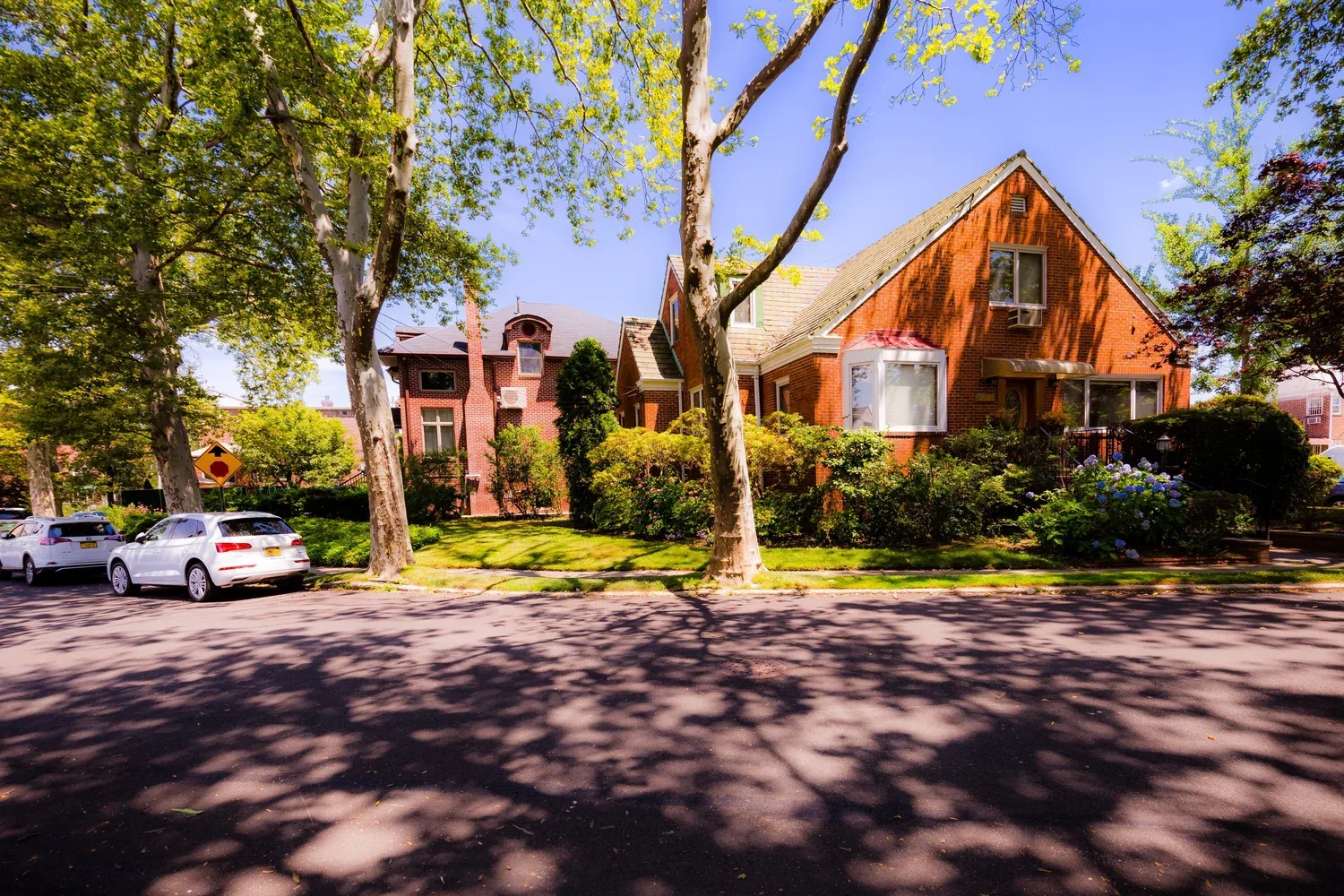
One drip landing on the same ceiling tile after every rain, in a one-story shop, is a gift to a roofer, because it means one opening and one path. The owner can usually point to the tile, and the roof above it is only a few feet away. In Rego Park, Queens, NY, where 63rd Drive is the main business thoroughfare and most businesses along it are original single-story buildings dating from the 1930s, that is a common situation.
A roof close to the ceiling is quick to trace and to repair when the work starts early. Retail here runs at a very different scale: Rego Center Phase II opened in 2010 on 62nd Drive with 950,000 square feet of retail space beneath a 312-unit residential tower by Vornado, and Rego Center Phase I is a four-floor, 277,000-square-foot retail center with a multilevel parking garage. Small and large roofs are read by the same rules, starting at the drain.
What do the single-story shop roofs need?
The roof of a one-story building gets walked on, climbed onto and attached to. Signs, awnings, vents and cables hang from it, and each fastened item is a hole. The roof system of a given building comes from a core sample and a walk, but a building of that type is likely to have a flat or nearly flat roof with a parapet, a drain or scupper, and many rooftop additions.
The first walk looks at the front parapet and sign mounts, the rear where equipment sits, and the drain. A roof that is only a few feet from the ceiling hides nothing: a stain below is nearly always a flashing, a penetration or a drain within a few feet. We hose-test the suspects one at a time, from the lowest up.
Awnings and signs deserve a special note. A bolt through a parapet or a roof is sealed with a bead of sealant that lasts a few years, then cracks. We replace failed seals with a flashed bracket or a sealed boot, and where a sign has been removed, we close the old holes properly, since an abandoned bracket is a leak that nobody remembers. A short list of every fastener through the roof, with photographs, is part of our report.
How do the large retail roofs behave?
Roofs on a retail center of hundreds of thousands of square feet are a different kind of problem. Drains are far apart, so a clog affects a wide area, rooftop units are many, so penetrations multiply, and wind reaches the edges with real force. Roofs of this kind are best served by a calendar of visits, a count of drains and penetrations, and a record that shows what changed.
Ponding is the usual first sign on a broad roof. A pond between drains shows where the deck has deflected or the slope runs out. Correcting ponding water with tapered insulation or an added drain protects the membrane across the entire field, and a moisture scan shows whether the pond has already wet the insulation below.
Foot traffic and service access need planning on a big roof. Rooftop units are serviced all year, and every trip adds wear. Walk pads from the access point to each unit, curb flashings checked at every visit and a clear rule for crews keep the membrane from collecting punctures. A membrane puncture found early is a small patch, and found late it is a wet insulation job.
What happens when a tower rises from a retail roof?
A residential tower built on top of a retail center puts roofs at more than one level, water from the upper roof reaches the lower one, and mechanical equipment sits in several places. Stacked roofs follow an extra rule: the lower roof must take the upper roof's water without ponding, and the junction where a wall rises from a lower roof is a flashing detail under continuous load. In any stacked arrangement those walls and their flashing are checked first.
Safe access is also a question. A multi-level roof with a tower above it has rules about who can go where, and fall protection is part of the plan. We confirm access with the building's management before any visit.
What about parking decks and garages?
Rego Center Phase I has a multilevel parking garage. A parking deck is not a roof in the usual sense, but its top level sheds water like one and has its own drains, joints and waterproofing. A leak from a deck into a lower level differs from a leak into a store, and the repair uses different materials because the surface has to carry vehicles. When an owner asks about a deck, we separate what a roofer can do from what belongs to a waterproofing specialist, and the two are coordinated where a retail roof and a deck meet.
How do storms and heat test these roofs?
Queens recorded most of the deaths in Hurricane Ida's remnants on September 1, 2021, which led New York City to its first flash flood emergency. Broad roofs take a great deal of water at once in a storm like that, and drains must keep up, so overflow paths and drain strainers are checked before the wet season. Sealants and seams on dark surfaces are stressed in summer by a strong heat island and July afternoons near 85 degrees at Central Park. A coating restoration in a reflective color is one option when the membrane is sound and dry.
Cost follows the number of drains, the count of penetrations, the roof area and how hard the roof is to reach. For a large roof, we price by section, so the owner can approve the worst area first and schedule the rest. For a small shop roof, a single visit and a single repair often settle the matter.
What is the next step?
Photos of the stain and the drain are the place to start, then the street and the roof age. We walk it, then lay out in plain steps what the roof is doing, and price comes after. Owners in Forest Hills and Elmhurst follow the same sequence, which starts with the drain and scupper check.
Questions Owners Ask
What building owners and managers usually ask before a roof visit.
Signs and awnings are fastened through the parapet or the roof, and each fastener is a hole. A stain below a sign mount often means the sealant around the bolts has failed. A hose test at the mount confirms it.
Twice a year, in spring and fall, plus after a major storm. A roof with many units needs its curbs and drains checked each visit, because service crews add wear and debris.
Yes, with planning. The work is staged in sections, closed watertight each day and scheduled around tenant hours. Access, fall protection and material routes are agreed with management before the first day.
It needs waterproofing suited to vehicle loads, which is a different trade from roofing. We identify whether the leak starts at the deck or at an adjoining roof, and coordinate with the right specialist.
Include photos of the stain, the drain area and any sign mount or rooftop unit nearby, and the street and roof age if you know them. In plain steps and before price, you will hear what the roof is doing.
Related Roofing Work
Other pages that connect to Rego Park.
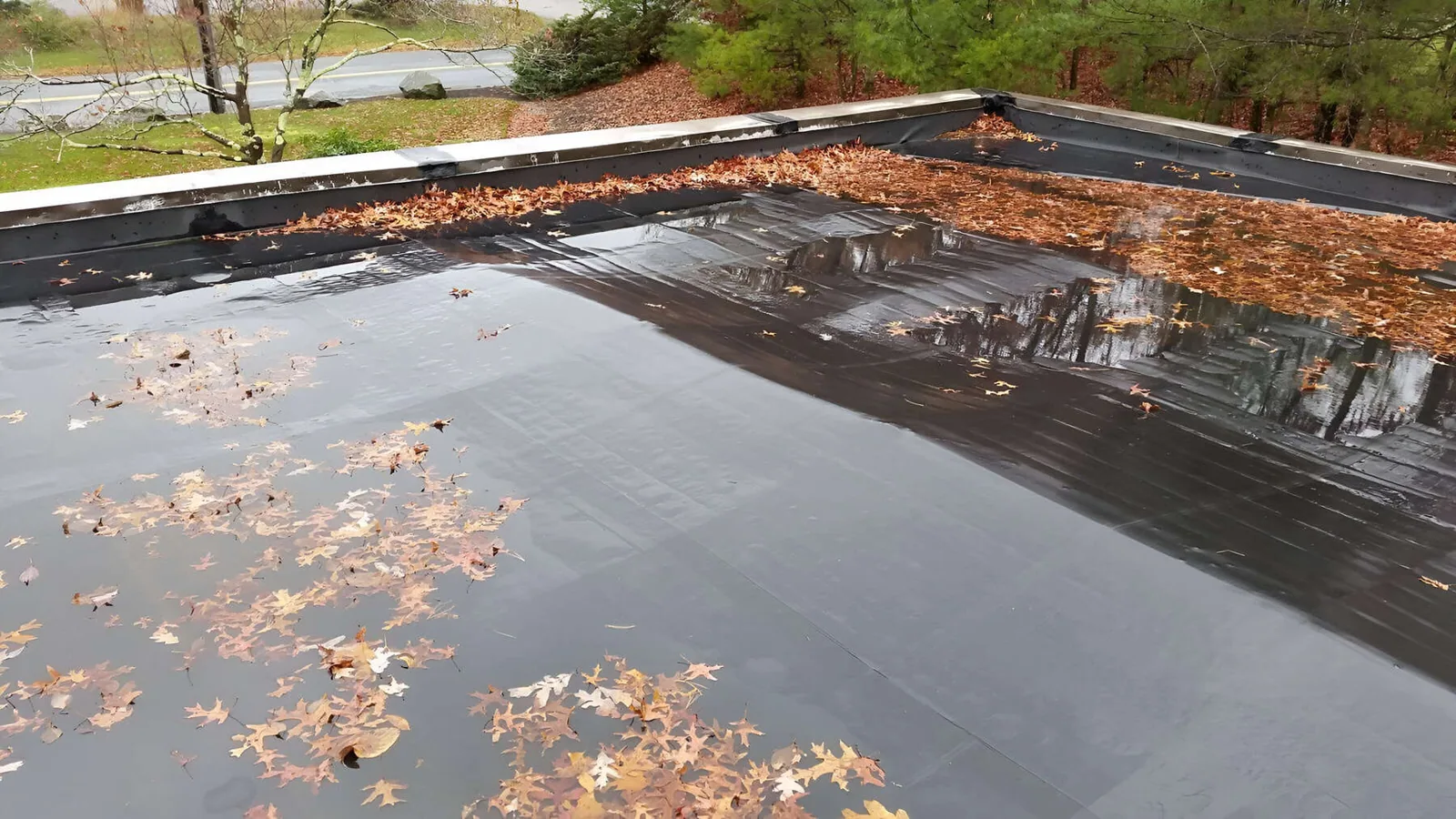
Ponding Water Roof Repair
Ponding water roof repair in Queens, NY: why standing water forms on flat roofs, how it ages the membrane and the drain, slope and insulation fixes that end it.
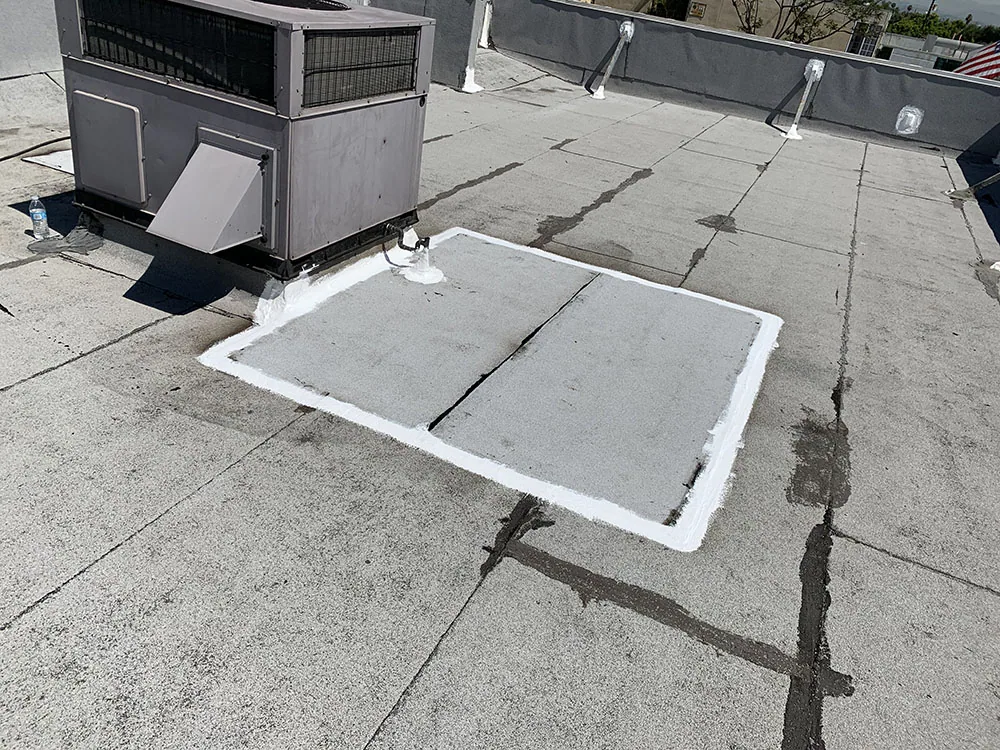
Membrane Puncture Repair
Membrane puncture repair in Queens, NY: cuts, tears and foot-traffic damage on flat roofs found, patched and protected with walk pads and service-route rules.
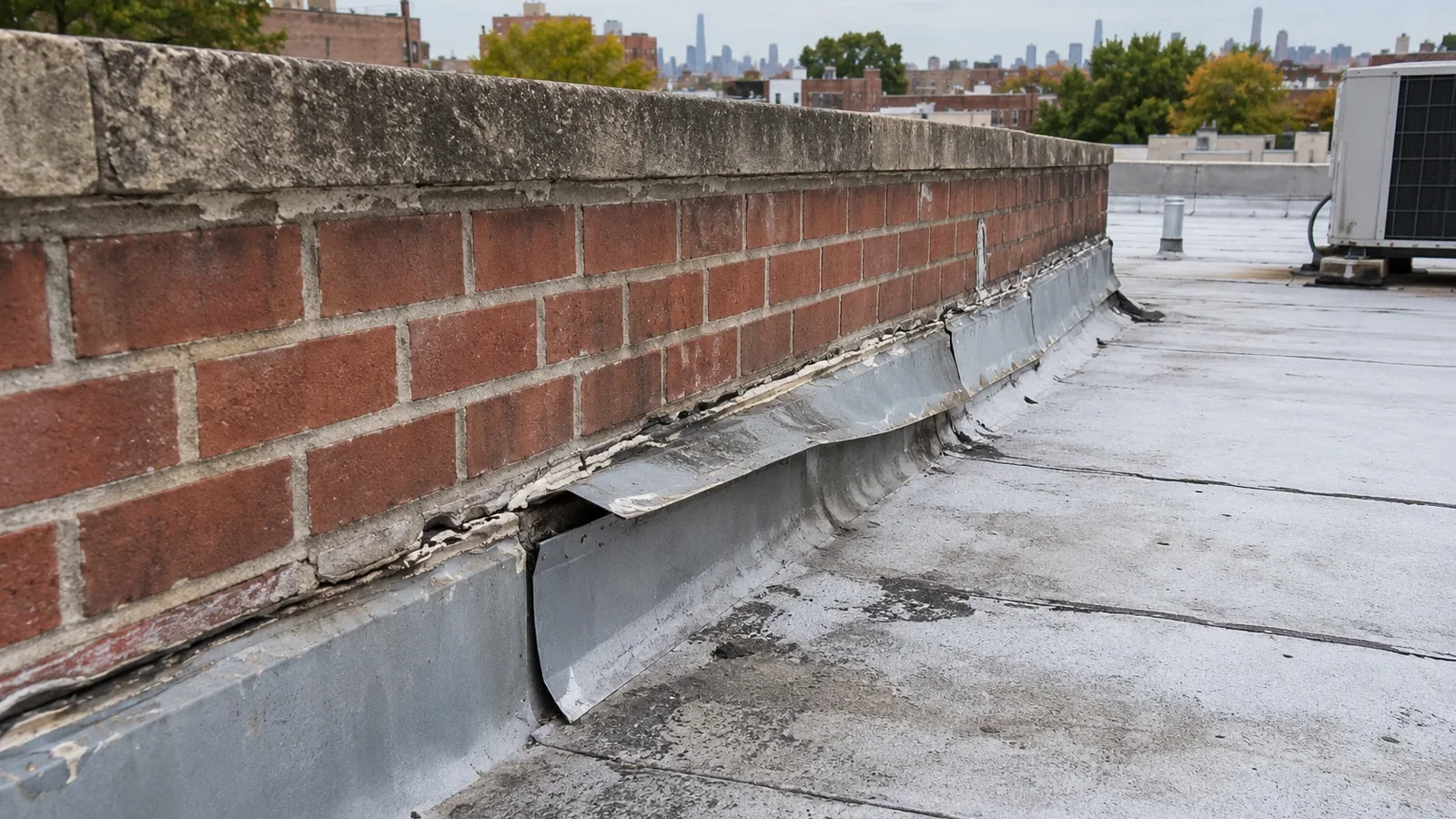
Flashing Failure Repair
Flashing failure repair in Queens, NY: cracked tar, lifted base flashing, open counterflashing and parapet leaks traced and rebuilt on commercial flat roofs.
Ready to Talk About Rego Park?
Tell us about the building and what you are seeing. We will schedule a roof walk and send photos and a written scope.