
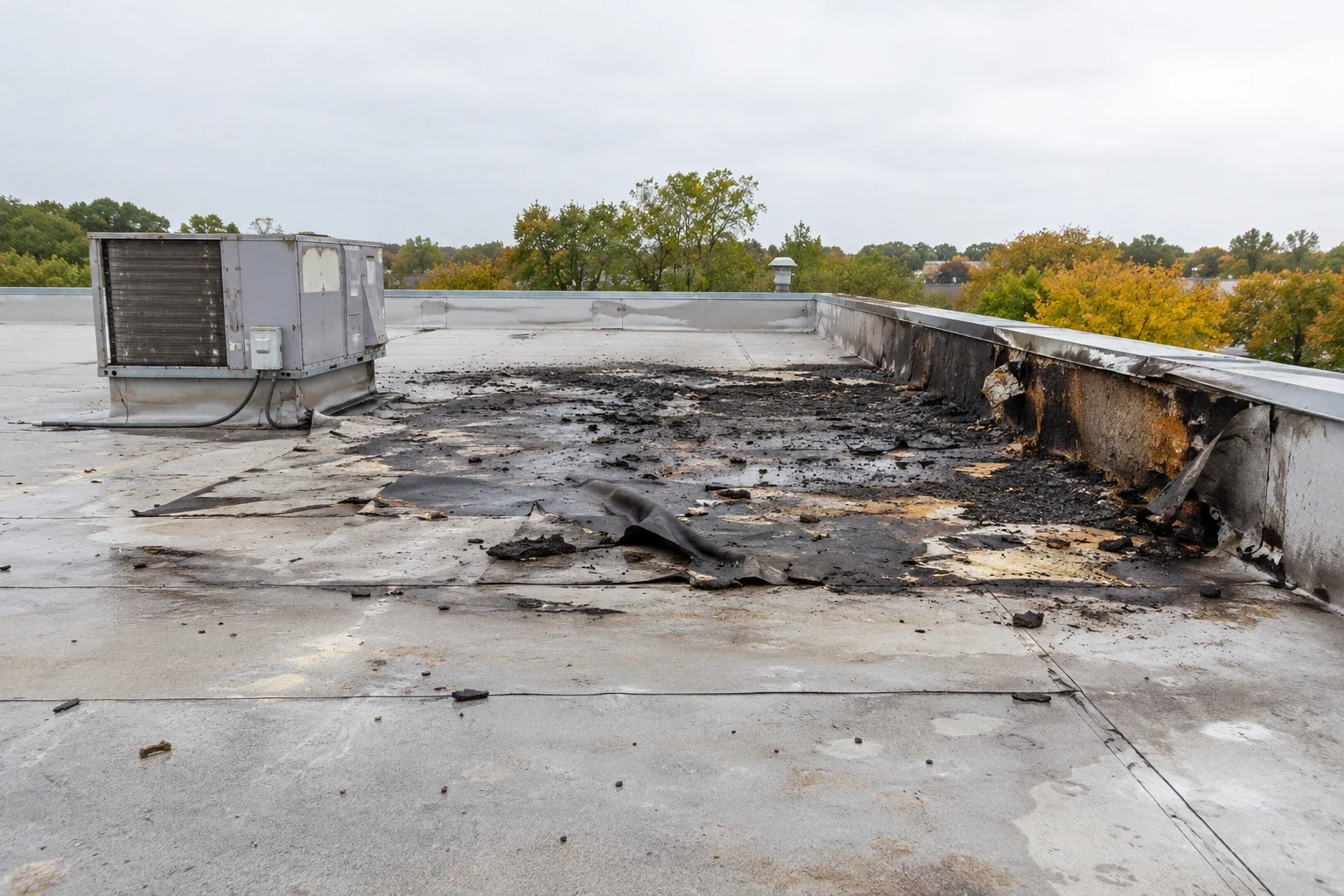
A roof that still smells of burnt tar a week after a fire is telling the owner it was cooked, whether or not any flame touched it. Fire damage to a roof rarely stops at the burned area. Heat travels through the deck, softens membrane well beyond the visible scorch, chars insulation from below and leaves residues that change how new material bonds. The smell is a clue to look past the obvious damage.
Fire work is different from other roof repair in one respect: the roof is not safe to assume. Before we step onto a fire-affected roof in Queens, NY, the building must be cleared by the people responsible for its structure, and the first job is a safety check, not a repair. After that, we follow the same plain sequence we use everywhere, explaining each step before the next one begins.
What happens in the first days?
Fire crews often cut openings in the roof to vent heat, and those cuts are the first thing a roofer has to deal with. Firefighting water adds weight and soaks the layers. The structure may be compromised, so a structural engineer or the building authority clears the roof before we go up. We do not walk a roof until that clearance exists.
Once cleared, we dry the building in. Openings are covered with temporary membrane or panels, burned material that could fall is removed and drains are cleared of debris and ash. Temporary protection is photographed and the receipts are kept, since an insurer will want them. The goal in the first days is to stop further damage, not to start the permanent repair.
Firefighting leaves other marks that look like fire damage but are not. Hose streams can puncture a membrane or lift a flashing, and the hole cut for venting often goes through insulation and deck. Each is a membrane puncture in effect, and we repair it with the same care as the burned area. Hose water can also collect in the low spots, and a ponding problem that was minor before the fire may grow worse once heat has weakened the deck.
How do we measure how far the damage goes?
The damage is mapped in zones, and the burn area itself is plain to see. Surrounding it lies a ring of membrane that looks whole but has shrunk, blistered or stiffened from the heat. Beyond that, smoke may have deposited soot and acid residue, and water may have run into insulation. Probes, cores and scans follow. An infrared moisture survey picks out insulation soaked by the firefighting, and the cores show how deep the heat went through the layers.
Insulation carries the most weight in the finding. Foam board can melt or char in heat and then loses its shape and thermal value, while fiber and perlite boards soak up water and go soft. Any damaged board is cut out to sound material and replaced.
Core samples are taken through the layers at several points: in the burned area, at its edge and well outside it. Each core shows the state of the membrane, the insulation, any vapor layer and the top of the deck. A blackened or soft deck goes to the engineer. If the deck is sound but wet, it is allowed to dry before any new insulation covers it. We keep the cores until the claim is settled, since they are physical evidence of what the fire did.
Repair or replace?
A small, local fire can be repaired by cutting the damaged section back to sound material, replacing the insulation and tying new membrane into the old with welded or adhered seams. Once heat damage spreads across most of the roof, or the deck is compromised, replacement makes more sense, because a patchwork of materials of different ages and conditions does not make a good roof. The scope runs section by section with the reason for each, so owner and insurer can see what is required and why.
Fire also raises code questions. Roof assemblies fall under Chapter 15 of the NYC Building Code, so the design professional and the Department of Buildings settle what a replacement must meet. Our part is to install the approved design and supply whatever data the reviewers ask for. Our commercial roof replacement work follows whatever assembly is approved.
Phasing is a practical matter. If part of the building is usable, the roof over that part is repaired first, so the owner can reopen it. Materials are ordered to match the approved design, and lead times can affect the schedule, so we raise them early. A fire in a building with several tenants raises questions about who has access to which roof area, and we settle those with the manager before work starts.
What does smoke do to a roof?
Smoke leaves soot and acidic residue on surfaces. On a membrane, soot blocks bonding, so every repair surface must be cleaned thoroughly, usually with a manufacturer-approved wash, before patches or coatings go on. Residue on metal flashings and edge metal can speed corrosion. Smoke damage inside the building belongs to a separate restoration trade, and we work with that team so the jobs above and below go in the right order.
In older buildings, such as the yellow-brick and mill-era stock around Ridgewood and Glendale, the framing under a roof can differ from one building to the next. The engineer's review tells us what the structure can carry before we load it with materials or crews.
How do we support the claim?
We document the damage with dated photographs, a roof plan with the zones marked, moisture maps, core results and a written scope with line items. Temporary protection costs are listed separately. The report is written to be read by an adjuster, a public adjuster, a lender or an attorney without translation. Our approach to insurance claim documentation applies fully here. We do not interpret the policy. We supply the physical record, and the owner and insurer decide the rest.
The report also records what was not damaged. A roof section that was inspected and found sound is as important to the file as one that was burned, because it narrows the scope and prevents argument about the rest of the roof. Photographs of undamaged areas, taken the same day, support.
Questions Owners Ask
What building owners and managers usually ask before a roof visit.
Only after the structure has been cleared by an engineer or the building authority. Our crew will not walk on the roof until that clearance is in writing, and we help arrange the review when the owner does not yet have one.
No. A small, local fire may be repaired by cutting out and replacing the damaged section. The question is how far heat and water reached, and cores and a moisture scan answer it.
Frequently, once the structure is cleared and the building is safe, though the owner and the authorities make that call. We plan around the occupied areas and keep the roof watertight each day.
Smoke residue and soot in insulation usually mean the insulation is replaced in that area, since it cannot be cleaned and it can carry odor. We confirm by core samples.
Send photos of the roof from any safe vantage, the interior damage and any openings cut by the fire crew, with the date of the fire. We will describe what can be done first, step by step, ahead of price.
Related Roofing Work
Other pages that connect to Fire Damage Roof Repair.
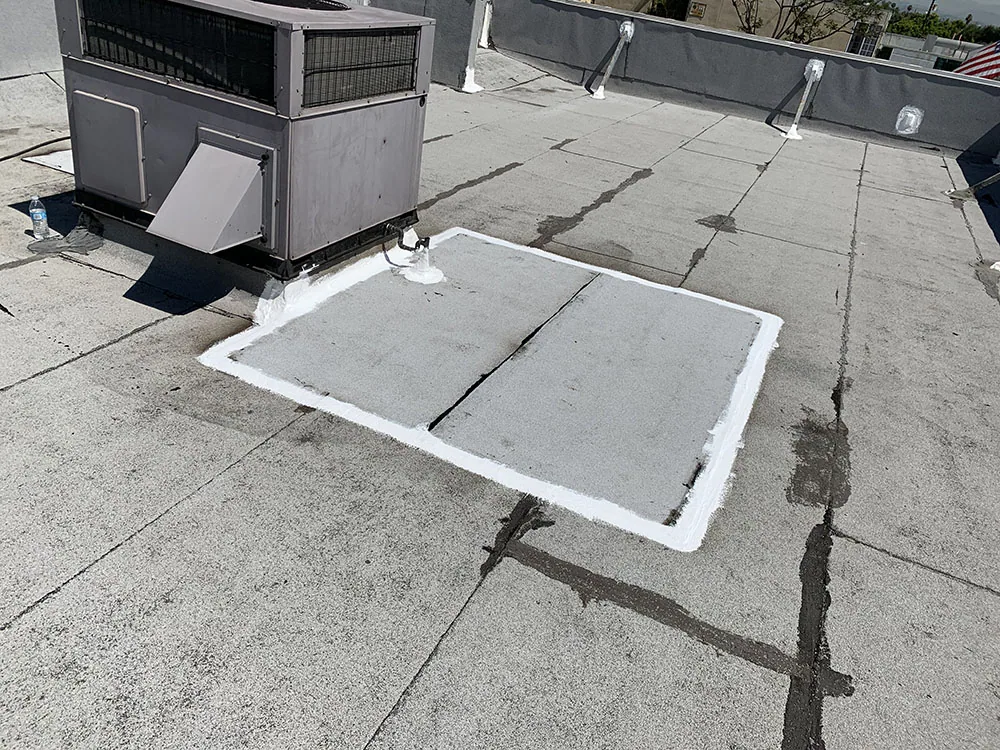
Membrane Puncture Repair
Membrane puncture repair in Queens, NY: cuts, tears and foot-traffic damage on flat roofs found, patched and protected with walk pads and service-route rules.
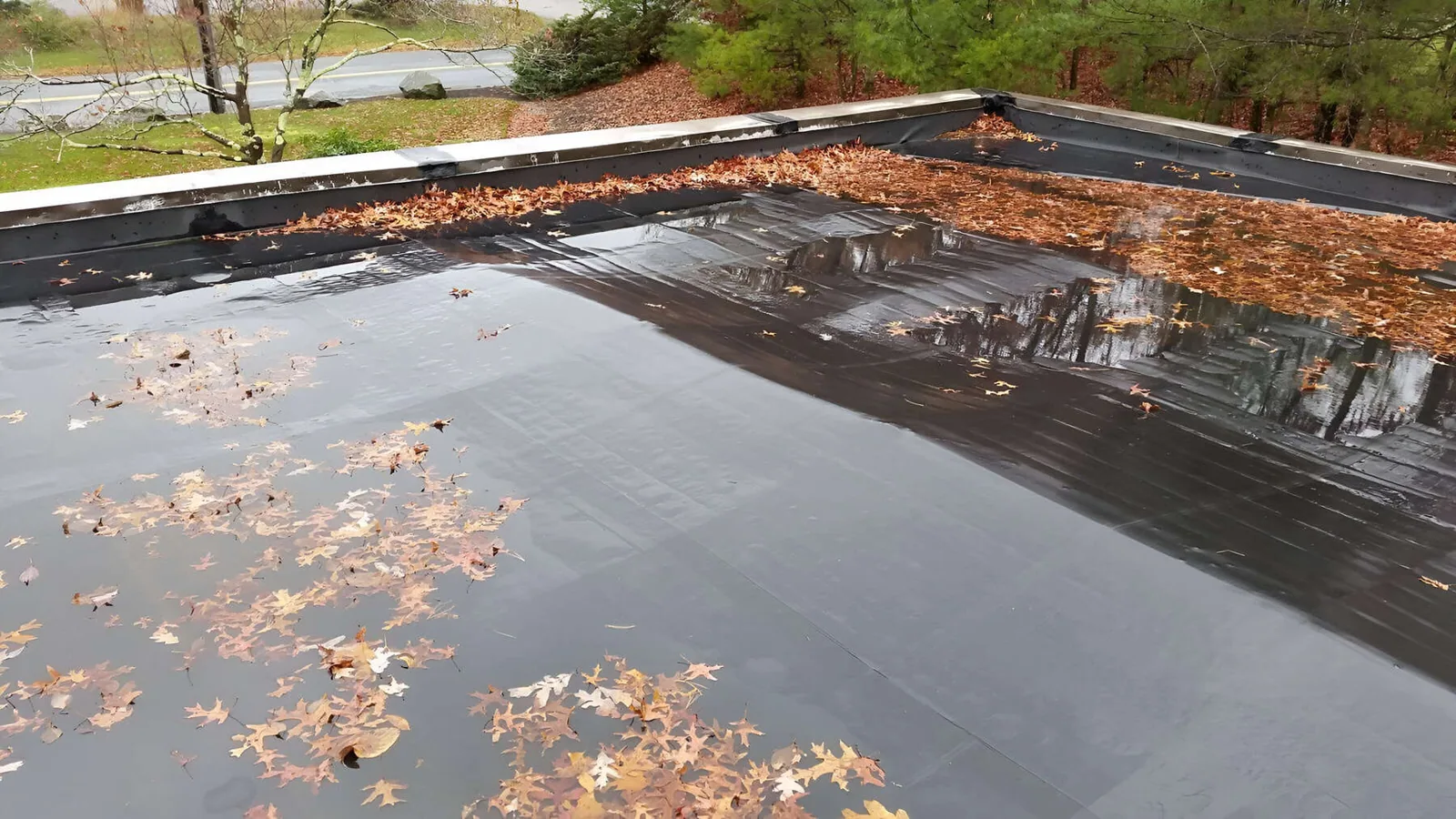
Ponding Water Roof Repair
Ponding water roof repair in Queens, NY: why standing water forms on flat roofs, how it ages the membrane and the drain, slope and insulation fixes that end it.
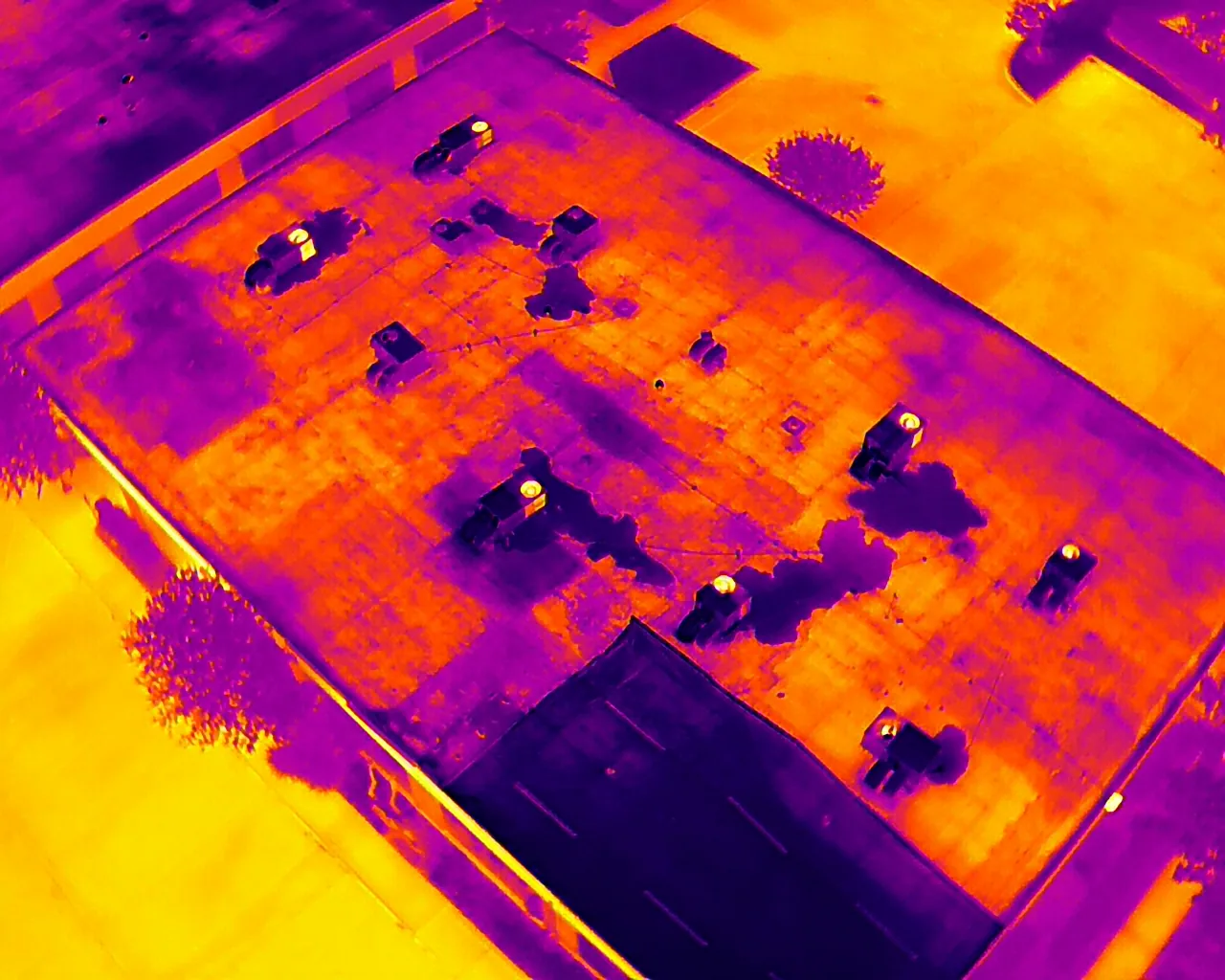
Infrared Roof Moisture Surveys
Infrared scans and core-cut moisture surveys for Queens, NY commercial roofs that locate wet insulation before the owner commits to repair or replacement.
Ready to Talk About Fire Damage Roof Repair?
Tell us about the building and what you are seeing. We will schedule a roof walk and send photos and a written scope.