
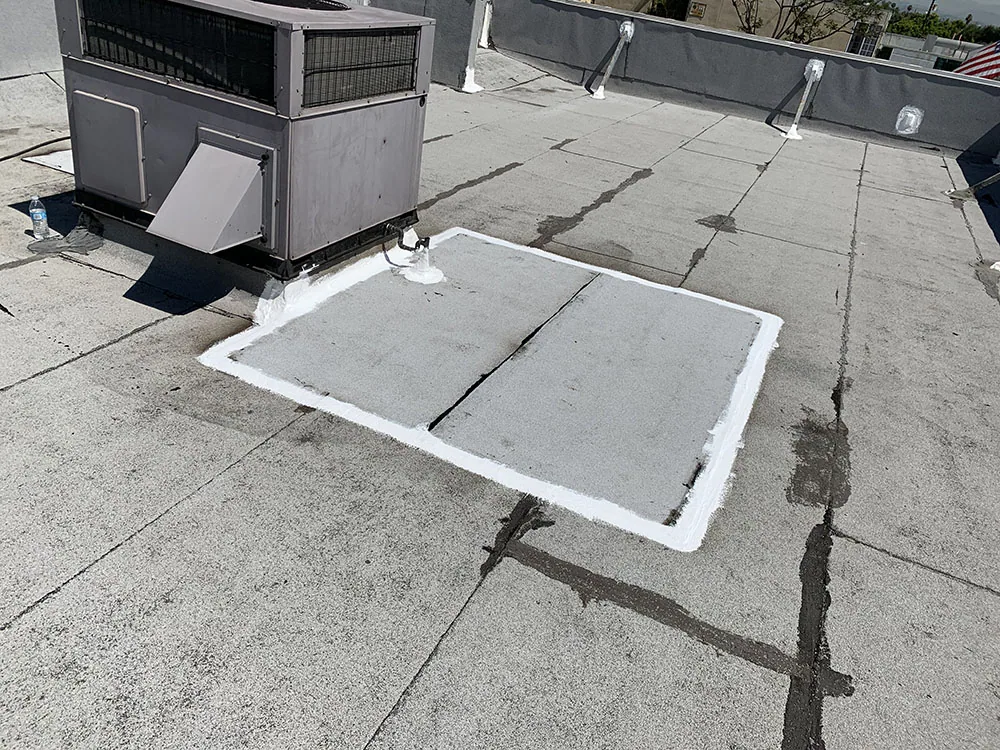
Look at the membrane between the roof hatch and the nearest rooftop unit and you will often find a line of scuffs, a worn trail that records every service visit to that unit, and each visit risked a dropped tool, a ladder foot dragged sideways or a boot heel on a seam. When water finally gets in, the stain may show up weeks afterward and a long way from the cut.
For our purposes a puncture is any hole through the membrane, from a gouge to a pinprick, and the small ones cause most of the surprise because they hide beneath dirt or a drift of leaves and only reveal themselves when a moisture scan lights up the insulation beneath. Our search on Queens, NY roofs follows a fixed order: trace the foot traffic, inspect around equipment, examine the edges of old patches, and then scan.
What causes punctures?
Five habits cause most punctures: crews walking a thin sheet, tools and ladders that drop or drag, debris blown across the roof, equipment slid into place without a pad, and metal edges left bare. Add birds picking at soft sealant. Of those, people and wind are the likeliest on any roof in this city.
Old repairs contribute. A patch cut with square corners curls in the sun, and the curl then catches a boot. A fastener that has backed out of the deck raises a bump in the sheet that wears through. Hurricane Sandy swept the metro area with hurricane-force gusts in October 2012, and wind like that throws debris onto roofs for blocks around.
The kind of membrane changes the answer to how much damage a single blow can do. Thick reinforced sheet absorbs a good deal of abuse, while thin or aged sheet scuffs through. A cut that goes through only the coating looks small yet leaves the membrane in the sun, and a sheet baked for years has lost the stretch that would let a young one shrug off the same blow. So the walk notes membrane type and age, and the protection plan is built to match.
How are hidden punctures found?
Open holes can be found by eye, by crossing the roof in a grid under good light and paying special attention to lines near equipment, drains and edges. The concealed ones need instruments. An infrared moisture survey picks out wet insulation, and a puncture frequently lies at the middle of the warm patch. Electronic leak detection runs a small current over the membrane and reads the breaks where it passes through, and on ballasted or gravel roofs we sweep stone aside for a direct look.
One hole usually has company, so we look around each find. Punctures bunch up along footpaths and beside units. Each location is marked on the roof plan and photographed beside a tape measure.
Finding a hole from indoors is harder than most owners expect, since water slides along the deck and the stain can sit across the room from the damage. That is why we start on the roof, at the equipment and the walking routes, instead of at the stain. A seam failure or flashing failure can pass for a puncture, so we eliminate those first.
How is a puncture repaired?
On single-ply, a small hole is cleaned and capped with a round-cornered patch, welded or adhered, reaching several inches beyond the damage on all sides, while a long tear is closed up and covered with a strip. Modified bitumen takes a reinforced patch that is heated and pressed down, and a coated roof has the damaged coating removed, the sheet repaired and the coating rebuilt over reinforcing fabric.
Wet insulation under the hole must come out and be replaced before any patch is set, because a patch over wet board seals the water in and fails. A moisture meter gives the answer before we close up. When the puncture sits in a pond, the ponding correction goes with it, so water cannot stand on the new patch.
A large tear, say several feet from a falling branch or a dragged object, is squared off with rounded corners and covered by a generous patch overlapping on every side. Should it cross a seam, the seam is rebuilt on both sides of the patch. We then test by probe, with a hose or small flood test where practical, and photograph the area before, during and after.
How do we stop the next one?
Nothing protects a membrane as cheaply as walk pads, and they are easy to install on a dry day without disturbing anyone below. They go along the route from the hatch to each unit and around every service area, so they absorb the wear the sheet would otherwise take. Equipment should rest on pads or on proper curbs and supports that leave room for water to pass, metal edges get covered, loose stone is swept up, and a short notice at the hatch tells people where to walk, where a ladder may stand and whom to call after a cut.
The heaviest protection belongs on roofs with heavy service traffic. Roofs get walked often on a retail center with many rooftop units, such as Elmhurst's Queens Center and its roughly 1,000,000 square feet of gross leasable area, and a maintenance program picks up new damage after each service call.
Contractors who service equipment are part of the plan. Before a heating, cooling or exhaust visit, we can show the crew the safe route and the pad positions. A sign on the equipment door and photos taken before and after the visit settle questions about who did what, and they cost almost nothing.
What does it cost to wait?
Each rain sends more water through an untreated puncture into the insulation, so a repair that took minutes grows into days of wet-insulation replacement, and the damage tends to spread along the deck toward the nearest drain or wall, where it is harder to reach. The cost depends on how many punctures there are, which roof system is involved, how much insulation has gotten wet, how the roof is reached and whether people occupy the space below. In Elmhurst and Jamaica, where buildings see steady service traffic, checking the roof after each service visit pays for itself.
Questions Owners Ask
What building owners and managers usually ask before a roof visit.
Not successfully. The patch will not bond and the water below stays put. We dry the surface and test for wet insulation, and if there is any it is replaced first.
The contracts involved decide that, and an attorney or the owner's agent should read them. What we supply is dated photographs and a written note on the likely cause, which backs up whichever claim the owner pursues.
An occasional careful walk on a sound roof does not. The same path walked repeatedly wears through, and pads along the regular routes prevent.
Not right away. One that goes only part-way into a thick sheet may stay dry for a time, but it is an opening all the same and worth patching before it does.
Photos of the scuffs, any visible cut or patch and the ceiling stain below, with the date of the last service visit, give us a place to start. Before price comes up, we will explain in plain steps what the membrane is showing.
Related Roofing Work
Other pages that connect to Membrane Puncture Repair.
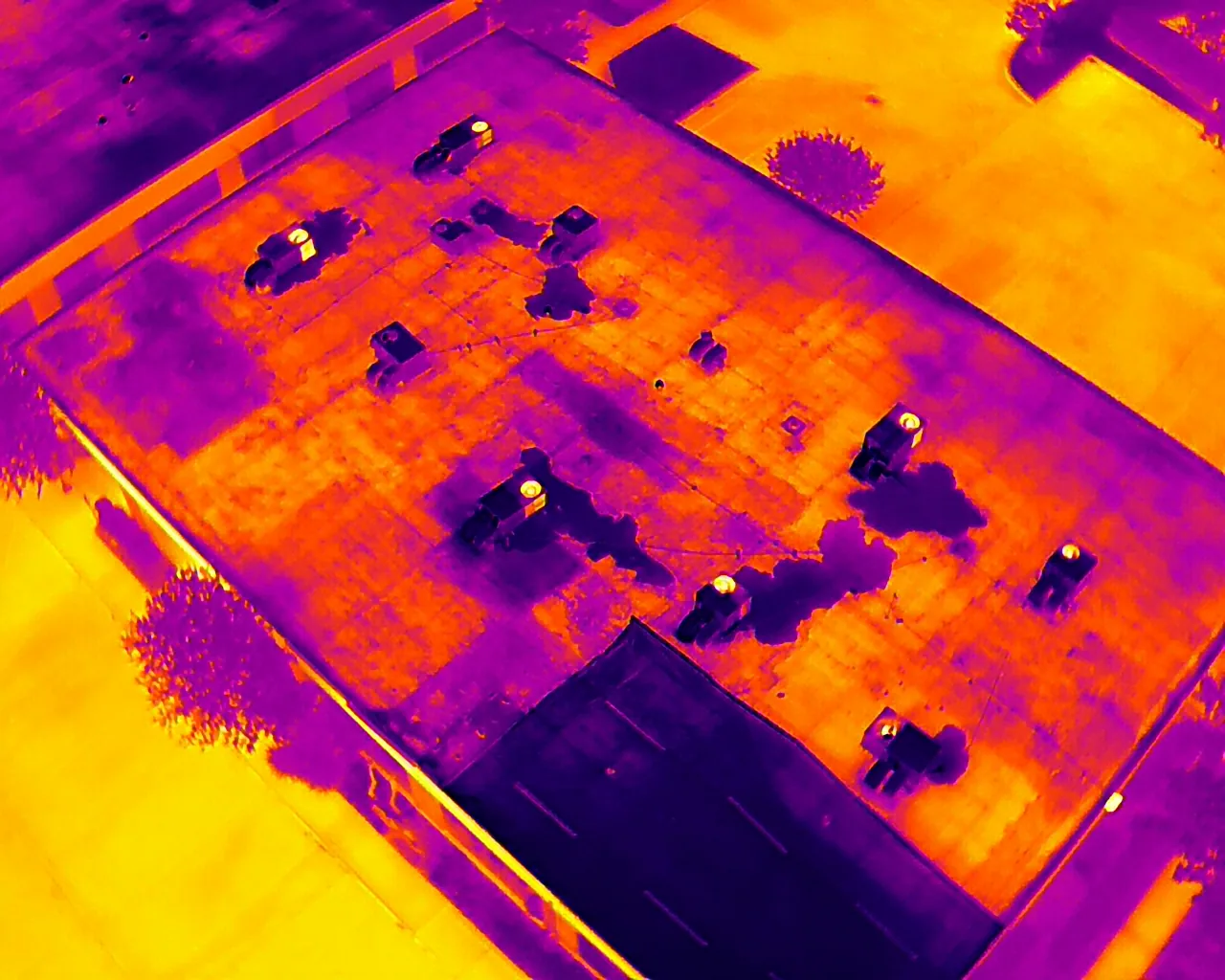
Infrared Roof Moisture Surveys
Infrared scans and core-cut moisture surveys for Queens, NY commercial roofs that locate wet insulation before the owner commits to repair or replacement.
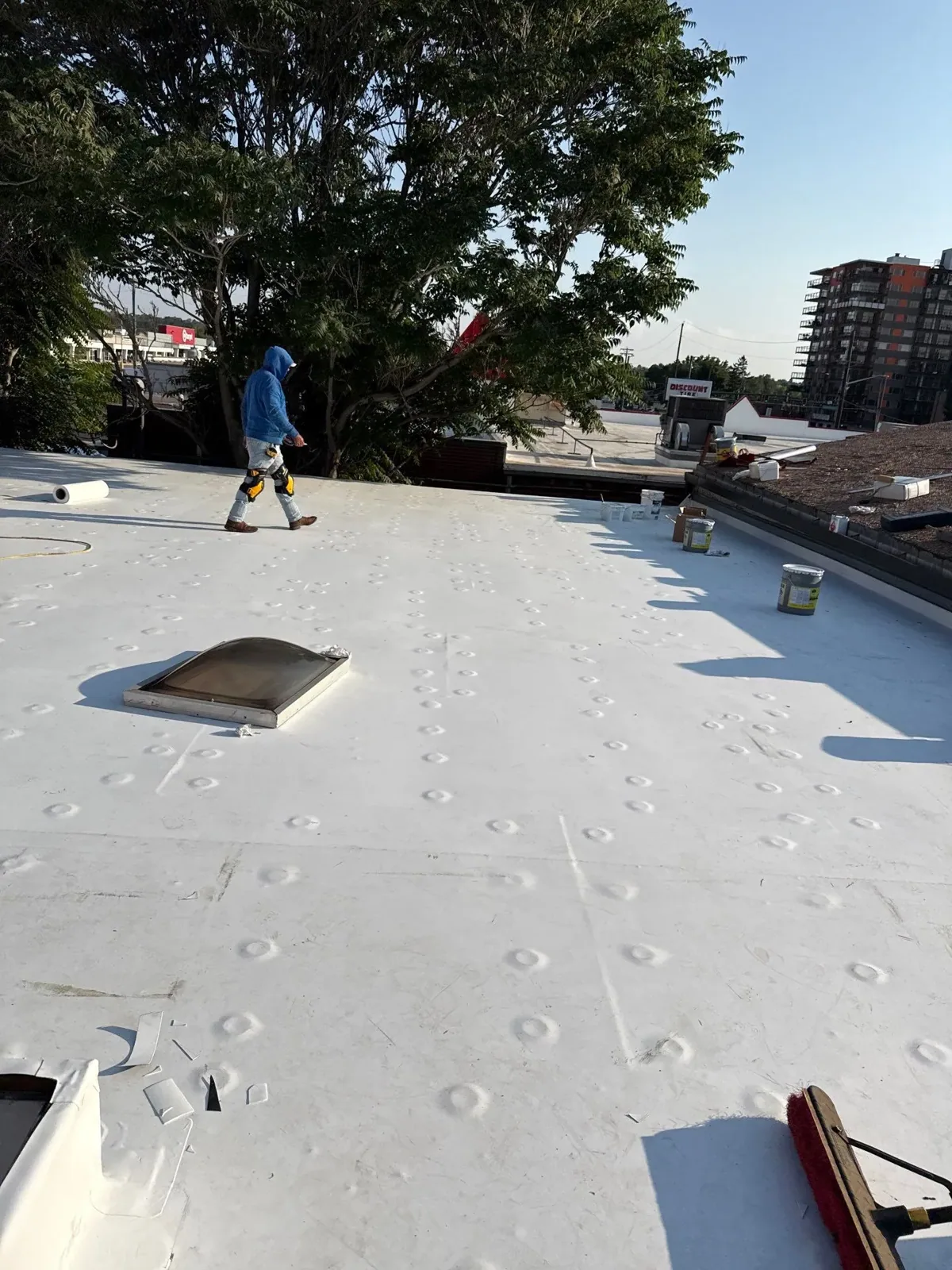
Seam Failure Repair
Seam failure repair in Queens, NY: split, open and lifted seams on TPO, PVC, EPDM and modified bitumen roofs, found by probe and repaired with strips.
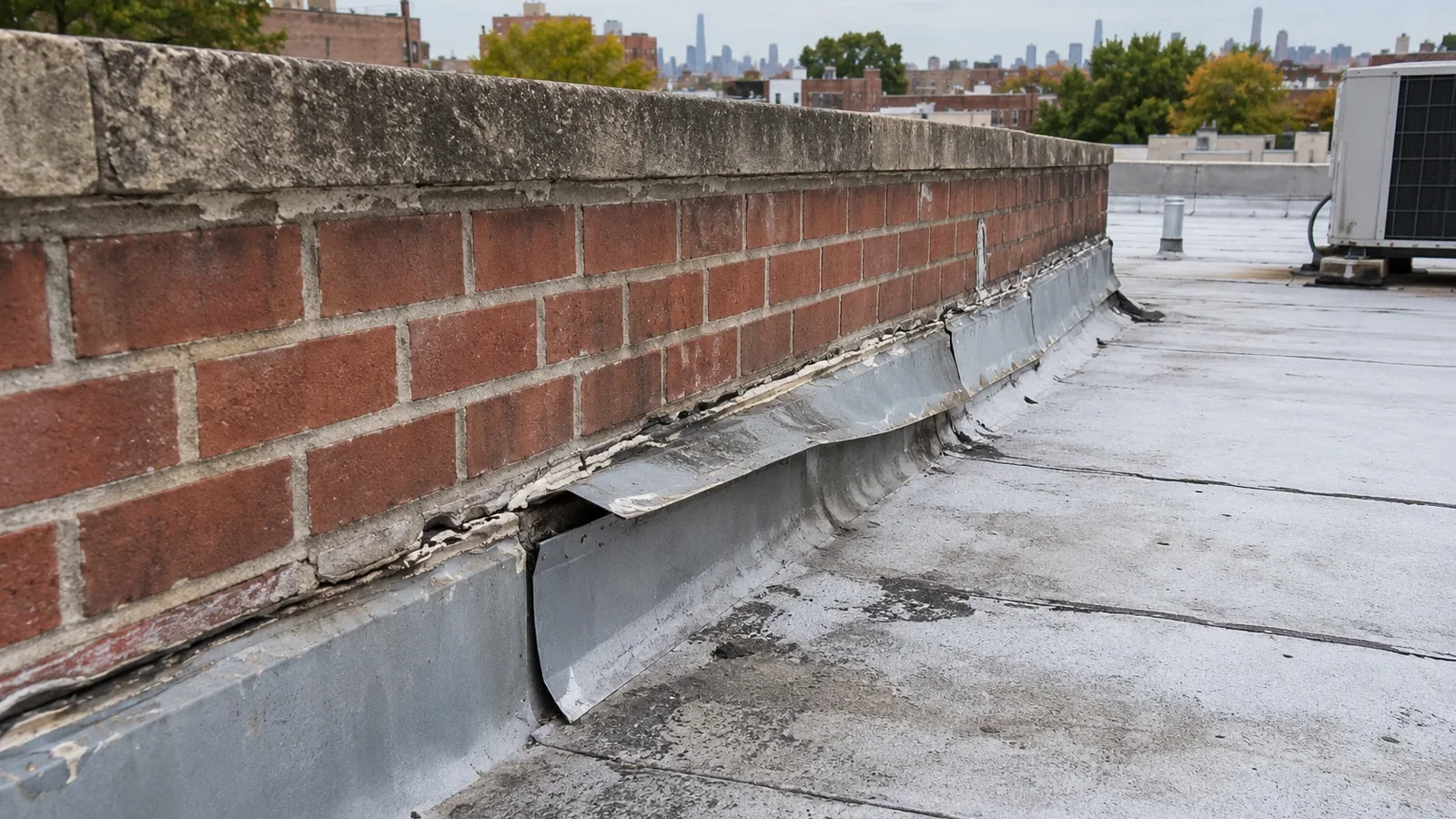
Flashing Failure Repair
Flashing failure repair in Queens, NY: cracked tar, lifted base flashing, open counterflashing and parapet leaks traced and rebuilt on commercial flat roofs.
Ready to Talk About Membrane Puncture Repair?
Tell us about the building and what you are seeing. We will schedule a roof walk and send photos and a written scope.