
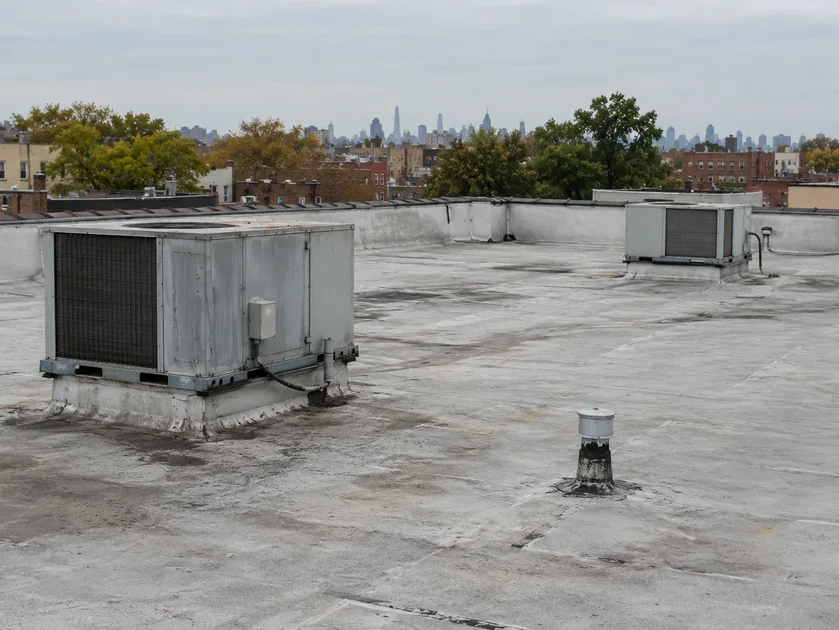
A regional facilities lead sees a pattern in the work orders before anything else: three stores in three towns, each reporting a drip over the same part of the sales floor, each fixed by a different local vendor with a different explanation. The pattern suggests the cause may not be local at all. A chain tends to build the same store many times, and a flashing detail that fails in one place is likely to fail in the next. A multi-location brand in Queens, NY brings us a pattern, and our commercial repair and replacement work starts with it, tracing the roof problem a step at a time.
Follow me from the ceiling tile to the curb above it.
What does a facilities lead see across many stores?
Work orders that cluster after storms, drips that return after patching, stains near the same fixtures and a handful of stores that account for most of the roof spending. Each cluster points to something different. A store that leaks only in wind-driven rain has an edge or a wall problem. A store that leaks after every rain has a drain or a seam problem. A store that leaks on dry days has a rooftop unit problem.
We ask for the store number, the date, the weather and a photograph for each event, collected over a season. Sorted that way, the log shows which stores need a survey, which need a repair and which can wait. It also shows whether the same detail is failing across the fleet, which is the information that saves money.
The underside of the ceiling gives one more clue. A tile that is wet at the edge nearest a wall points to the parapet. A tile wet beside a lighting fixture points to a penetration above. A tile wet under a unit on a dry day points to condensate. Each tells us where to climb first.
What is happening on a retail or restaurant roof?
A store roof is a flat area with a parapet and a handful of rooftop units. A restaurant adds kitchen exhaust, grease hoods and makeup air. Grease is hard on some membranes: it softens the surface and pools in low spots. A leak into a dining room costs a night's service, and a leak into a stockroom costs inventory.
We begin at the curb of each rooftop unit, where sealant tires, then take the drain and strainer, then the parapet flashing and the seams around the units. On a restaurant roof the exhaust area gets the closest look, and in a store the entrance canopy and sales-floor skylights follow.
Signs, lighting poles and awning supports put more openings in a store roof. A frame bolted through the membrane whose sealant has failed can leak for a season before anyone links it to a ceiling stain, which is why each one is located on the plan and resealed when needed.
What does Queens retail tell us?
Retail is everywhere in Queens. Steinway Street in Astoria is a major commercial street lined with stores. About 1,000,000 square feet of gross leasable area make up Queens Center in Elmhurst, and Rego Center Phase II has 950,000 square feet of retail on 62nd Drive. The strip mall on College Point's 20th Avenue counts Waldbaum's, Target and BJ's Wholesale Club among its stores. Glendale's Woodhaven Boulevard hosts big-box retailers such as Home Depot and Staples, and chains and franchises have become more common along Howard Beach's Cross Bay Boulevard since the 1990s.
The range runs from mall tenants to strip centers to single-store pads. Each roof has its own landlord, its own age and its own lease terms, and each is read for what it actually has. A chain with stores in Astoria, Glendale or Howard Beach starts with a core and a scan at each.
Who owns the roof, and who pays?
The first question in a leased store is whose roof it is. Many leases give the landlord responsibility for the roof and the tenant responsibility for rooftop equipment, and the line between them is a curb. A leak at a tenant's unit may be the tenant's cost; a leak in the field may be the landlord's. The numbered roof plan marks every curb and every area, so the argument is settled by the document.
For chains that own their stores, the question is capital planning. A multi-site roof program rates every roof on one scale and sorts them by need, so the chain can fund the worst first and bundle similar repairs into one contract. Insurance reads the same file, since a dated rating and photographs from before a storm separate old wear from new damage.
Rooftop solar and cell equipment add another party. A lease for an antenna or an array usually carries its own access and penetration rules, and every addition is recorded on the plan with the date and the installer so the membrane warranty is not voided by accident.
How is work done without losing sales?
Retail and restaurants make their money in a few busy hours, so the roof plan is a calendar. Noisy stages run early or after closing. Rooftop equipment that must be shut down is coordinated with the manager, usually for an hour or two. Each section of roof is dried in by day's end, and interior protection goes over sales areas and kitchens below any open zone.
Kitchens add fire safety: torches only where the building allows, a fire watch after hot work and clear access to the hood suppression system. Parking and delivery areas stay open, and material staging is placed away from entrances. Occupied building reroofing is a schedule problem as much as a roofing one.
What do Queens storms and heat do to store roofs?
The heaviest loss of life was in Queens when Ida's remnants hit on September 1, 2021 and the city had its first flash flood emergency. Roof outlets that handle ordinary rain can overflow in a cloudburst. Snow in a typical year totals around 29.8 inches, and the January 2016 storm left 27.3 inches in a single day.
Summer heat reaches the sales floor and the kitchen. Roofs stay warm into the night under the heat island, with July afternoons near 85 degrees at Central Park, and a reflective membrane reduces surface heat where the roof beneath is dry and sound. Before each season the outlets, curbs and sealants are checked and photographed.
What is the next step for a brand?
We start with a walk at the store with the most calls and a written rating that becomes the template for the rest. The same file serves landlords and investors who own the centers, and hospitality groups that run kitchens on the roof of a hotel.
Questions Owners Ask
What building owners and managers usually ask before a roof visit.
Compare the work orders by store. If the same spot fails in several stores, the common detail is the suspect. A survey of two or three stores, with scans and cores, confirms it, and one repair design can then be applied to the rest.
The membrane around the exhaust should be cleaned on a schedule, the fan's grease trap checked, and a resistant sheet or protective pad chosen wherever the roof is replaced. We note what each unit discharges and look for softening.
Yes. Work goes in sections and each shift ends dry; noisy stages are scheduled for early mornings or after closing, and the interior below any open area is protected.
The lease says. Most put the roof on the landlord and the rooftop units on the tenant. The numbered plan marks the line, which keeps repairs from stalling over who pays.
Send the store numbers with the most roof calls, photos of the stains and the nearest drain or unit, and the addresses. With those we can describe, step by step, what each roof is doing store by store.
Related Roofing Work
Other pages that connect to Retail and Restaurant Chains.
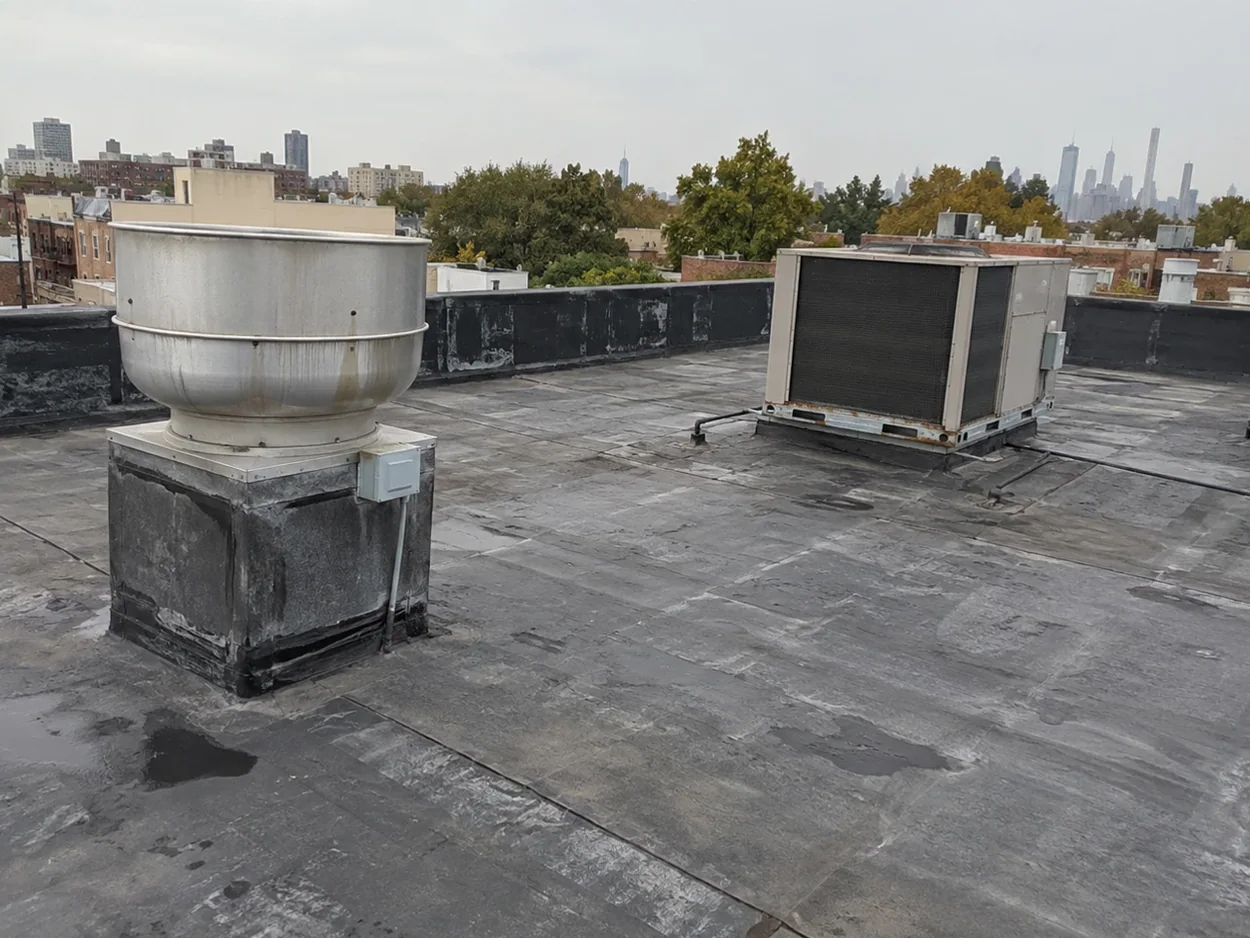
Restaurant Roofing
Roof repair for Queens, NY restaurants: grease on the membrane, exhaust curbs, small flat roofs and work scheduled around service so the kitchen keeps cooking.
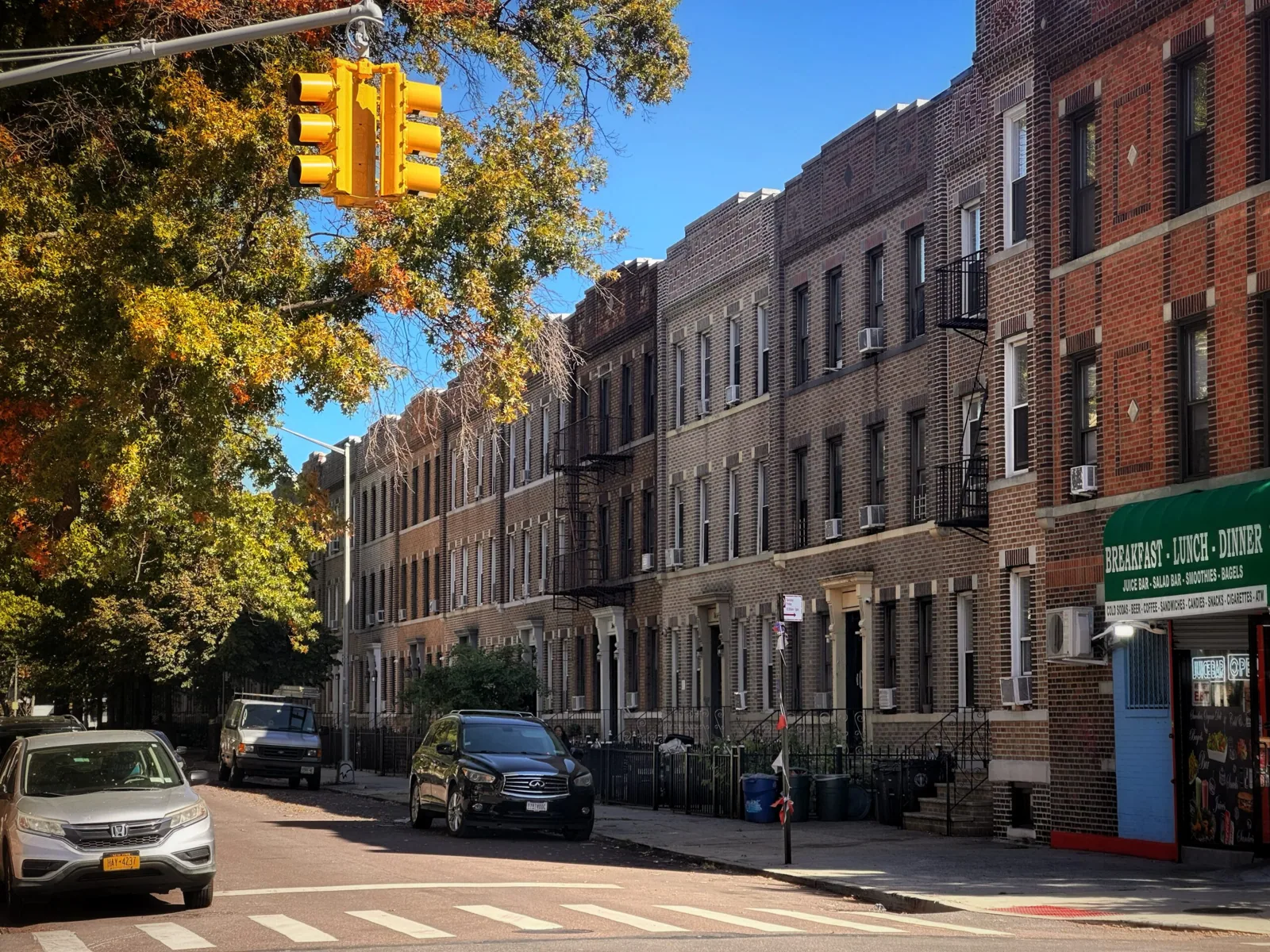
Astoria
Commercial roof repair and replacement in Astoria, Queens, NY: studio and industrial roofs, Steinway Street storefronts and 21st Street mixed-use buildings.
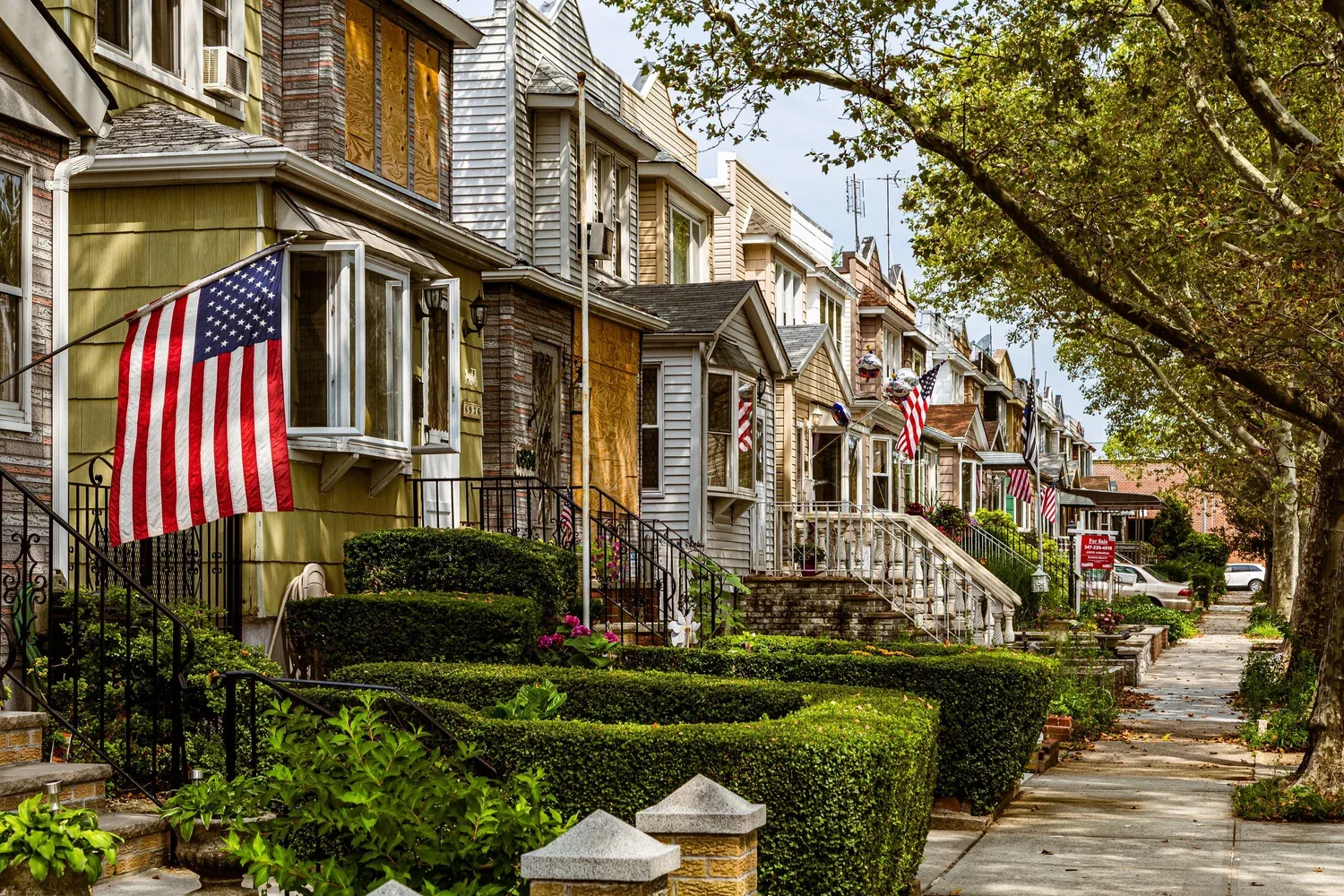
Glendale
Commercial roof repair and replacement in Glendale, Queens, NY: Woodhaven Boulevard big-box roofs, rail-yard industrial buildings and historic Kreischer brick.
Ready to Talk About Retail and Restaurant Chains?
Tell us about the building and what you are seeing. We will schedule a roof walk and send photos and a written scope.