
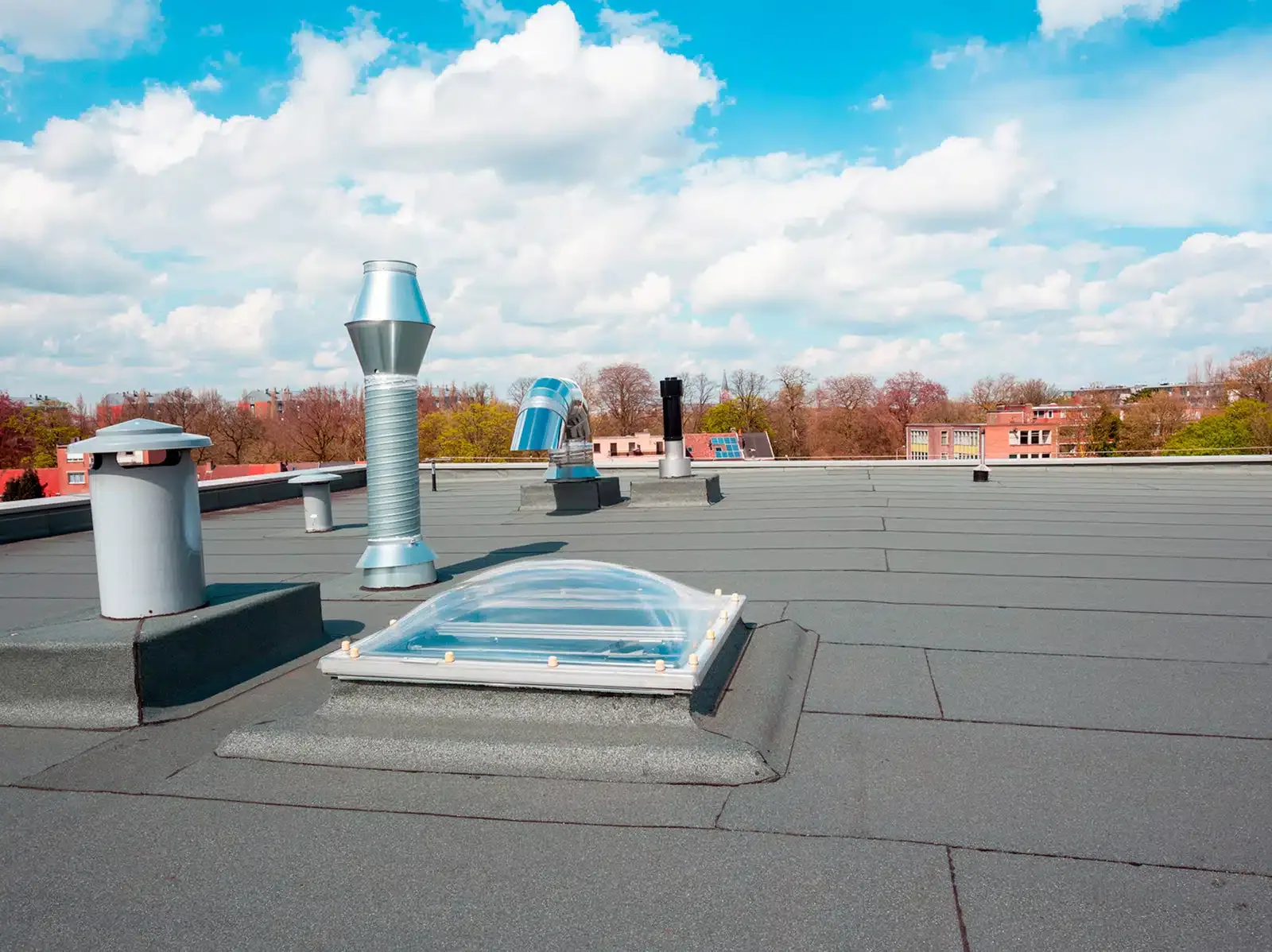
The stain on a loft ceiling sits right below a chimney stack that no longer carries smoke, and the roof around it is a patchwork of cap sheets, tar and caulk. Nobody remembers who did which patch. On an old masonry building with a layered roof, that is the normal state of affairs, and the repair is not another dab of sealant. It is a rebuilt flashing at the stack, set into a dry, sound base. Soprema makes the kind of materials such a rebuild calls for, from rolled bitumen sheets to liquid-applied membranes.
What does Soprema make for commercial roofs?
Several system categories make up the commercial offering of Soprema, a roofing and waterproofing maker. Modified bitumen is a long-standing strength, in layered rolls that are torched, mopped or self-adhered. Liquid-applied membranes are rolled or sprayed on and cure into a continuous layer, and they are used on roofs, flashings and waterproofing. It also supplies insulation and accessories, along with other roofing and waterproofing products.
Which materials suit a given roof depends on the building, and the owner's papers and the manufacturer's current literature say what is available. On the roof, we start with what is there and what it is attached to. A modified bitumen roof repair follows the method of the layers already on the building.
Next to a thermoplastic maker such as Sika Sarnafil, the contrast is in the materials. A thermoplastic sheet is welded; a bitumen roof is layered and bonded; a liquid roof is cured in place. Each suits different buildings, and the best choice is the one whose weak points the building can live with.
How do we handle a modified bitumen roof?
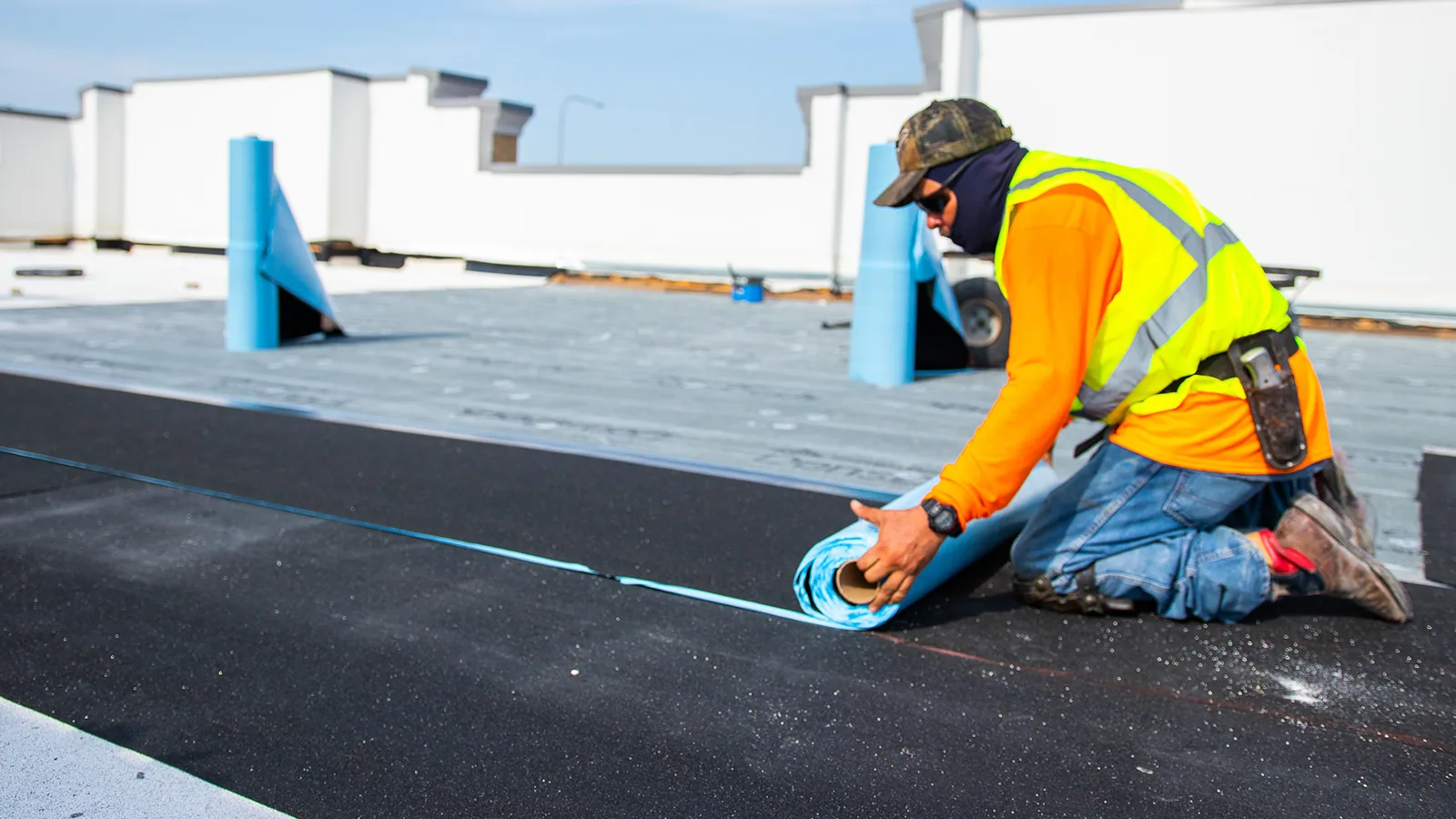
Walk it with me. The first step is the surface: granule loss, cracks and bare patches. The second is the laps, pressed one by one for open edges. The third is blisters and splits. The fourth is the flashings, where a base flashing climbs a wall and meets a metal edge. Repairs follow the roof's own logic: cut out the blister, dry the area, patch with matching layers and seal the edges.
Installation uses a base ply and a cap sheet joined in one of three ways. Torch-applied joints are strong but need fire watch. Cold adhesive and self-adhered sheets avoid flame, which suits occupied buildings and old framing. We choose by the building, the neighbors and the fire rules, and we install torch-free where the situation calls for it.
Edge metal and gravel stops deserve a check on any layered roof. The membrane is stripped in under the metal, and the metal is fastened and sealed. When the metal is loose or open at a lap, water runs behind it and into the wall. We re-fasten, replace failed sections and reseal, and we confirm that the metal sheds water over the membrane rather than behind it.
When is liquid-applied roofing the right tool?
Liquid-applied materials shine where sheet material struggles. Around a cluster of pipes, a stack, an old vent or a curved parapet, a liquid flashing can be brushed or troweled into every corner and cure into one continuous piece. It can also coat an entire roof, bonding to sound substrates and forming a membrane without laps.
It needs a clean, dry and compatible surface, a measured thickness and the right weather. Rain during curing ruins it, and cold slows it. We test adhesion on a small area, check thickness with gauges and keep a reserve day. For a whole-roof coating, the product competes with an acrylic coating or a silicone one, and we weigh them roof by roof.
Reinforcement is part of the method. At corners, joints and penetrations, a fabric is embedded in the wet coat to bridge movement, and a second coat locks it in. We keep photographs of each reinforced detail before it is covered, so the file shows what lies under the finished surface. That record is useful when a later repair has to cut through it.
Where do these systems fit in Queens?
They are a natural fit for old masonry and industrial buildings with complicated details. Long Island City's former bakeries and factories have been turned to new uses, which leaves older masonry industrial roofs standing by newer mixed-use buildings. Mill-era stock and early twentieth-century yellow-brick rowhouses make up most of Ridgewood and Glendale, and ten Ridgewood districts joined the National Register in 1983. Roofs on buildings like these carry parapets, stacks and bulkheads that suit layered and liquid details.
Historic status can matter. Parts of these neighborhoods sit in historic districts, and visible changes to a roofline may need review, so repairs are planned to respect the building. On a roof in Ridgewood or Long Island City, the details are read before a material is chosen.
Masonry buildings need dry walls behind any flashing. A parapet with open mortar joints lets water in behind even a perfect flashing. We repoint where joints are open, reset loose coping and add counterflashing, then flash the roof to a sound wall. That order saves repeating the job in two years.
What do storms and seasons ask of these roofs?
Seasons set the work calendar. Layered and liquid roofs need dry, mild days to bond, so the main season runs from spring to early fall. Snow adds up to roughly 30 inches in a typical year, and 27.3 came on January 23, 2016 alone, while the heat island pushes July afternoons at Central Park, which average near 85 degrees, higher.
Storms test drainage. Hurricane Ida's remnants did their damage on September 1, 2021, when the city's first flash flood emergency left deaths that were mostly in Queens. Drains are cleared, leaders tested and overflow routes added, because even the best flashing cannot cope with water that has no way off the roof. A flashing failure repair comes with a drain check.
What is the next step?
Include photos of the stain, the stack or wall flashing closest to it, the roof's age and any paperwork that names the system. The roof is walked first, and then we explain in plain steps what repair, recoat or replacement would involve; price is discussed only after you have seen the findings. An owner comparing makers may also look at GAF, whose commercial line covers similar layered roofs.
Questions Owners Ask
What building owners and managers usually ask before a roof visit.
Yes. Cold adhesive and self-adhered sheets avoid open flame and suit occupied buildings and old framing. We choose the method that fits the building and the fire rules. The seams are checked by probe after the sheet has set.
It is a liquid material applied by brush, trowel or roller that cures into a continuous flashing. It is used at awkward shapes where a sheet boot is hard to fit. Surface preparation and thickness decide how well it lasts. A fabric reinforcement is often embedded at corners and joints.
Often, if the old roof is dry, clean and compatible. We scan for moisture, cut cores and test a patch for adhesion first. A wet roof must be repaired before it is coated.
We rebuild the base flashing, repair or remove the stack above the roof and seal the opening. A capped, flashed stack is easier to keep dry than a patched one. Dated photographs show the work before the flashing is covered.
Send photos of the stain, the flashing nearest it and any papers naming the system, plus the roof's age and repair history. Tell us whether the chimney or stack is still used.
Related Roofing Work
Other pages that connect to Soprema.
Modified Bitumen Roofing
Modified bitumen roofing in Queens, NY: SBS and APP rolled membranes for old masonry and mill-era buildings, with lap, blister and flashing repair explained.
Sika Sarnafil
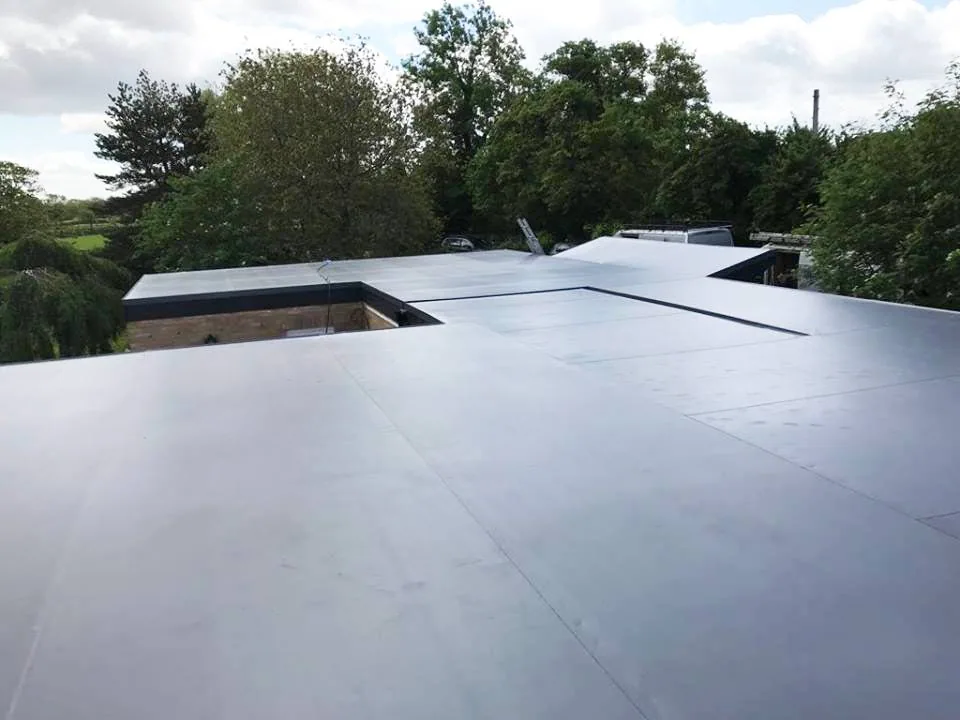
Sika Sarnafil roofing in Queens, NY: thermoplastic single-ply and liquid-applied categories, with welded-seam, detail and drain care explained step by step.
Acrylic Roof Coatings
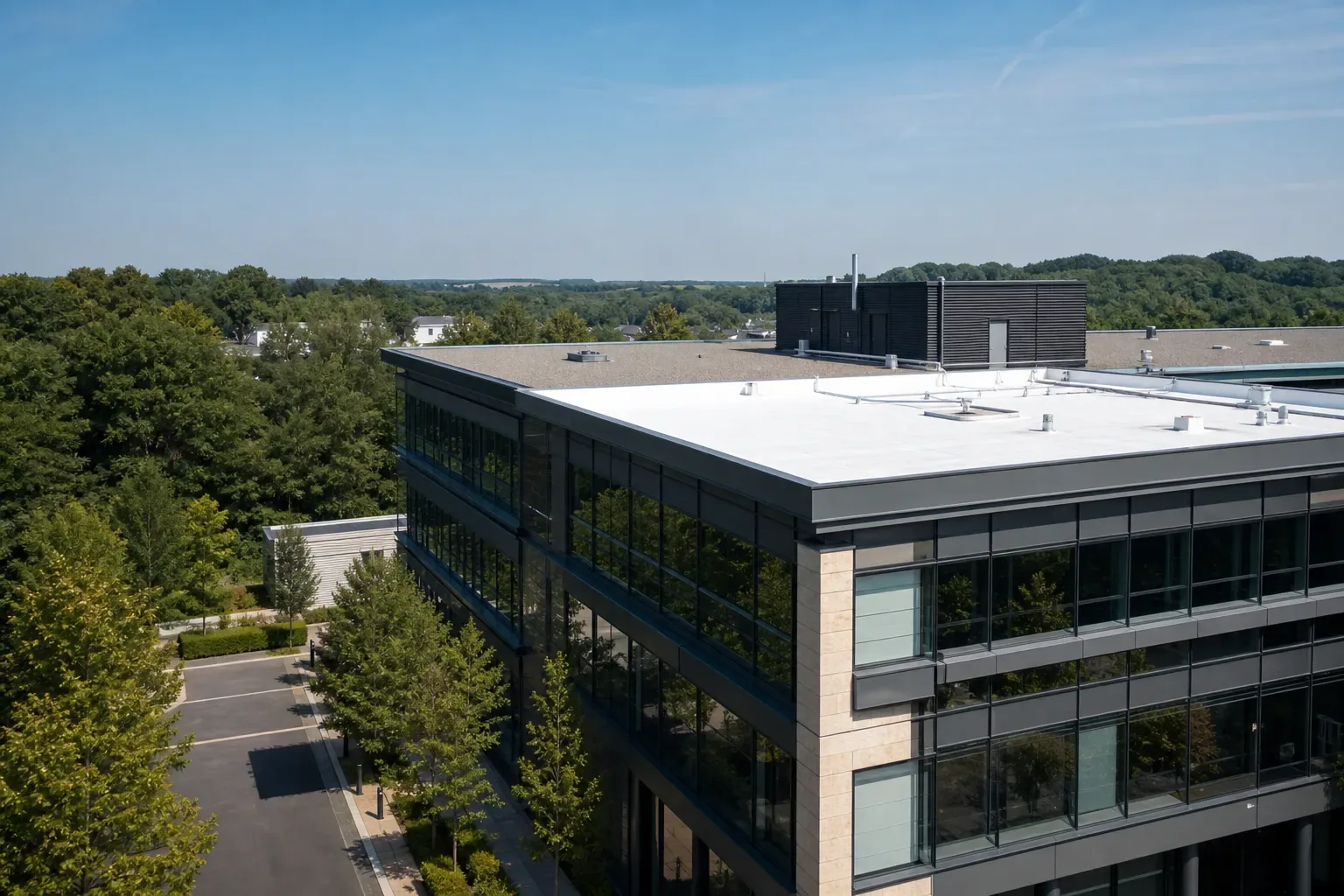
Acrylic roof coatings in Queens, NY: water-based reflective coatings for dry, sound flat roofs, with weather windows, prep and recoat timing explained.
Ready to Talk About Soprema?
Tell us about the building and what you are seeing. We will schedule a roof walk and send photos and a written scope.