
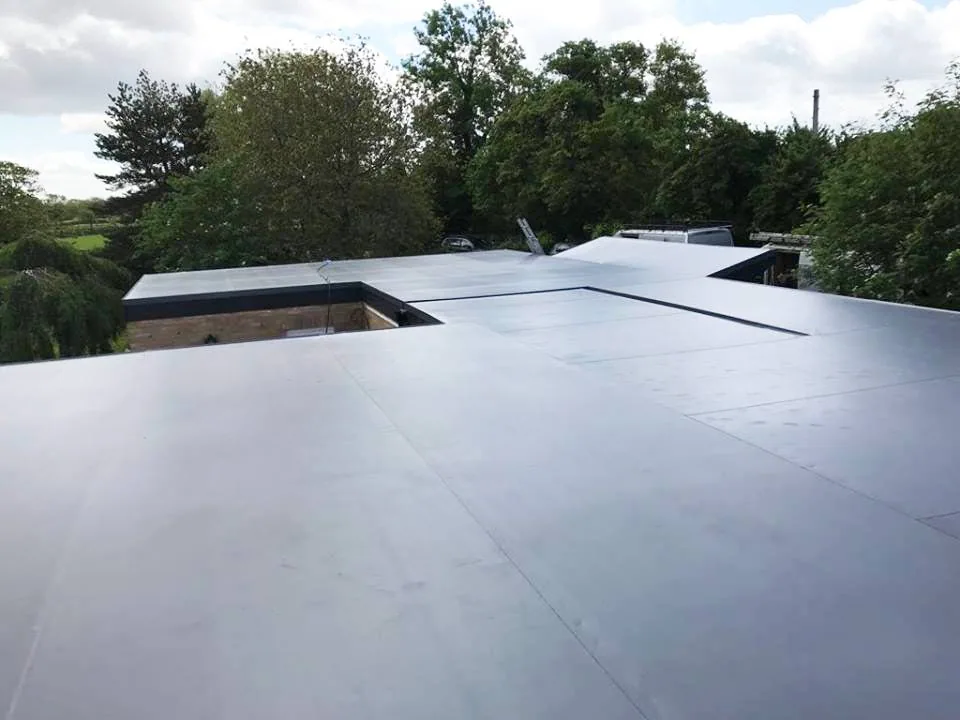
A leaking thermoplastic roof almost never leaks in the open sheet. It sits at a detail: a pipe boot, an inside corner, a wall termination or a drain. A welded single-ply roof has so few seams in the field that the water goes looking for the places where a flat sheet has to bend, and those are made by hand on the roof. Sika Sarnafil is known for thermoplastic membranes, so the first thing we do on one of its roofs is walk the details.
What kinds of systems does Sika Sarnafil make?
The company is best known for thermoplastic single-ply roofing, a family of welded sheets with PVC-based types at its center. It also supplies liquid-applied waterproofing and roofing products, along with accessories such as prefabricated flashings, edge metal and insulation. Together they cover flat and low-slope roofs on commercial, institutional and industrial buildings.
The specifics change over time and with the project, so the owner's own papers and the manufacturer's literature are the authority. On the roof, we deal with the sheet itself: how thick it is, how it is attached, how the seams were welded and what was done at each detail. A PVC roof shares many traits with the thermoplastics described here.
Thickness and reinforcement matter. Thermoplastic sheets are made in several thicknesses, often with a polyester or glass-fiber scrim inside for strength, and the choice affects puncture resistance, wind performance and cost. A thicker sheet takes foot traffic better. We note the thickness on the roof plan, since it affects how the sheet should be patched and how long it should be expected to serve.
Why do the details leak first?
Walk it with me. In the open field, a welded sheet is a continuous skin. Where it meets a wall, a curb, a pipe or a drain, it must change direction, and that is where welds, corners and terminations take stress. An inside corner is cut and folded. An outside corner is formed with a patch. A pipe gets a boot, and the boot gets a clamp and sealant.
We check each one with a probe and a light. The common problems are open welds at corners, pulled terminations at walls and aged sealant at boots. Repairs use matching material: a welded patch at a corner, a new termination bar and sealant at a wall, a new prefabricated boot at a pipe. Each is tested after the repair, and the location goes on the roof plan.
Termination at walls deserves its own look. The top edge of the flashing is held by a bar or a metal counterflashing, sealed against water. Over time sealant dries and the bar loosens, and water slips behind the sheet and down the wall. We re-fasten, reseal and, where the wall allows, add a reglet and counterflashing. The wall behind the flashing is checked as well, since a cracked masonry joint can feed water around even a perfect termination.
Where does liquid-applied roofing fit?
A liquid-applied product is rolled or sprayed on and cures into one continuous layer. It earns its place at awkward shapes, around tight clusters of pipes or on small, cluttered roofs where cutting and welding sheet is difficult, and as a flashing it can seal a penetration that a sheet boot cannot reach.
They also have limits. The substrate must be clean, dry and compatible, and the product must be applied to the thickness it calls for. We test adhesion on a small patch first and check thickness as we go. For a larger roof, a coating system such as a silicone coating serves a related purpose, and we compare the options for each roof.
What do Queens waterfronts and flats ask of the roof?
Wind and water are the main questions. The East River forms the northern edge of Whitestone and exposes waterfront properties to wind off open water. Far Rockaway ends at the Atlantic along Rockaway Beach, at an elevation of 20 feet, and Howard Beach sits beside Jamaica Bay. A roof near open water needs strong perimeter attachment and edge metal, as the hurricane-force gusts across the metro area with Hurricane Sandy in October 2012 showed.
Inland, water is the larger concern. The lesson of September 1, 2021 is drainage: Hurricane Ida's remnants produced the city's first flash flood emergency, and Queens recorded most of the deaths. Willets Point, as of 2013, lacked sidewalks and sewers and flooded often in heavy rain. On a roof in Whitestone or Far Rockaway, the work starts with the edge and the drains.
Edges at Queens waterfront roofs carry the load, but so do the corners of any tall flat roof. Perimeter and corner zones see the highest wind uplift, so extra fasteners and heavier edge metal go there. We check the existing attachment with a pull test before deciding how much to add, and we record the result.
What care keeps a thermoplastic roof healthy?
Cleaning and checking. Dirt holds water against seams, so an annual rinse helps. Drains and scuppers are cleared before storm season. Seams, terminations and boots are probed each spring and fall, and a photograph record builds up over time. A preventive maintenance visit costs little and often finds a small issue before it becomes a stain.
Warranty papers belong in the same file. Coverage depends on the program and the terms on the document, and only the manufacturer or its administrator can say what is covered. We keep our repair records in the format that such a claim would need. Owners comparing makers also look at Duro-Last and Carlisle SynTec, which offer related systems.
Chemical exposure is the other watch item. Kitchens, plants and mechanical equipment can send oils and vapors onto the sheet, and some thermoplastics stand up to them better than others. We ask what is vented, look for staining and softening, and protect the sheet with pads or trays in those zones.
What is the next step?
Include photos of the stain, the nearest corner, boot or termination, any paperwork that names the system and the roof's age. Our visit covers the roof walk and a probe of the details, followed by a plain-steps explanation of what repair or replacement would involve, and then price.
Questions Owners Ask
What building owners and managers usually ask before a roof visit.
With sound welds, good details and regular care, it can last many years. Ponding, rooftop traffic, chemical exposure and neglected drains shorten that. We judge by what we find. A roof with a scrim-reinforced sheet and tight terminations tends to age more slowly than a thin, lightly detailed one.
Yes. We cut out the old boot, weld in a new prefabricated one and test it. If the surrounding sheet is brittle, we replace a larger section. We weld a test strip first to confirm the sheet accepts a weld.
It depends on the detail. Liquid products seal awkward shapes well, while welded sheet is stronger across large, simple areas. We pick for each detail. We often use both on one roof.
Often. Perimeter and corner zones see the highest uplift, so we increase fastening there and use heavier edge metal. The design team sets the requirements. A pull test on a sample of fasteners shows what is already there.
Photos of the stain, the nearest corner or boot, any papers naming the system and the roof's age will start us off.
Related Roofing Work
Other pages that connect to Sika Sarnafil.
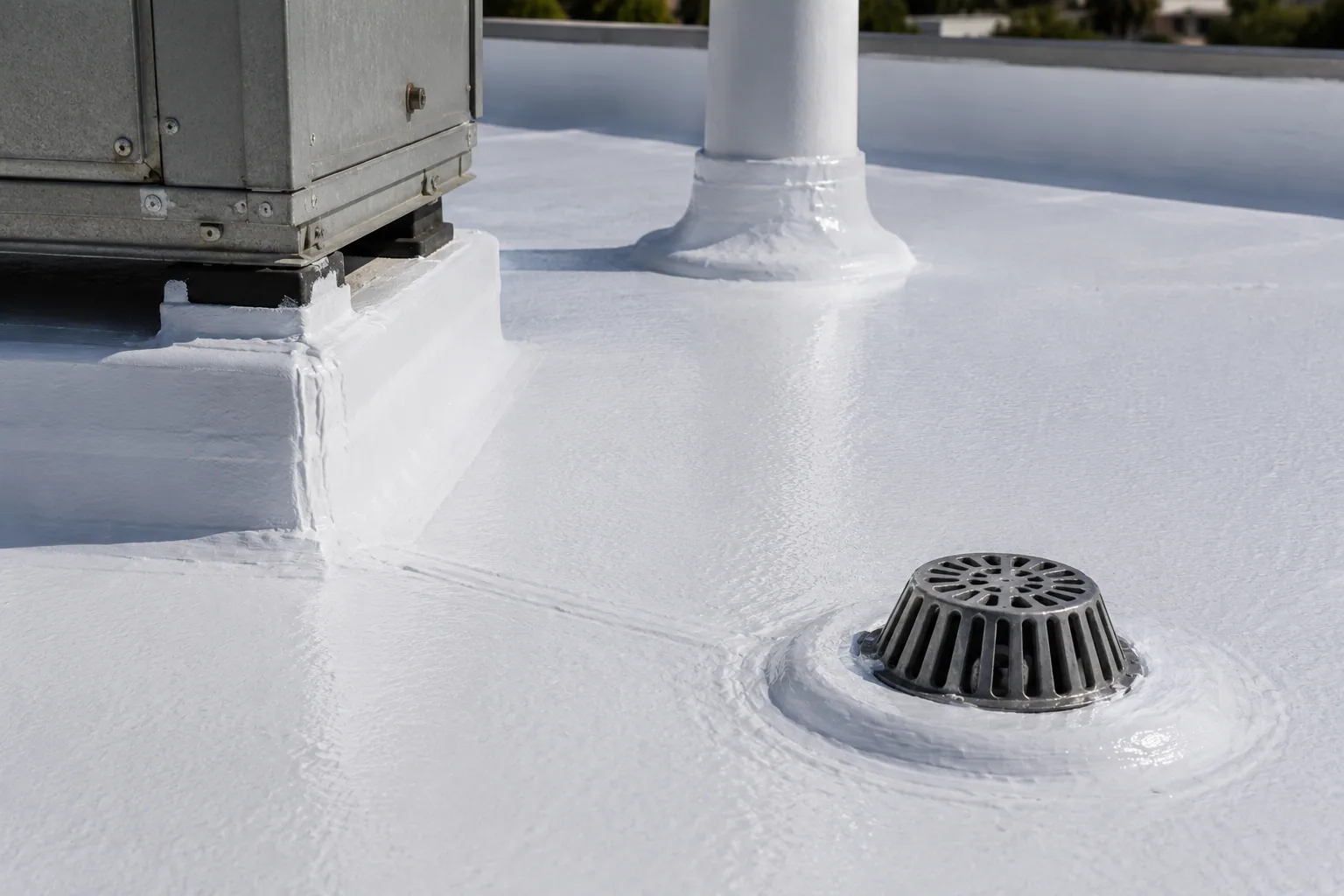
PVC Roofing
PVC roofing in Queens, NY: welded single-ply membranes for roofs that see grease, exhaust and chemicals, with repair, recover and replacement explained plainly.
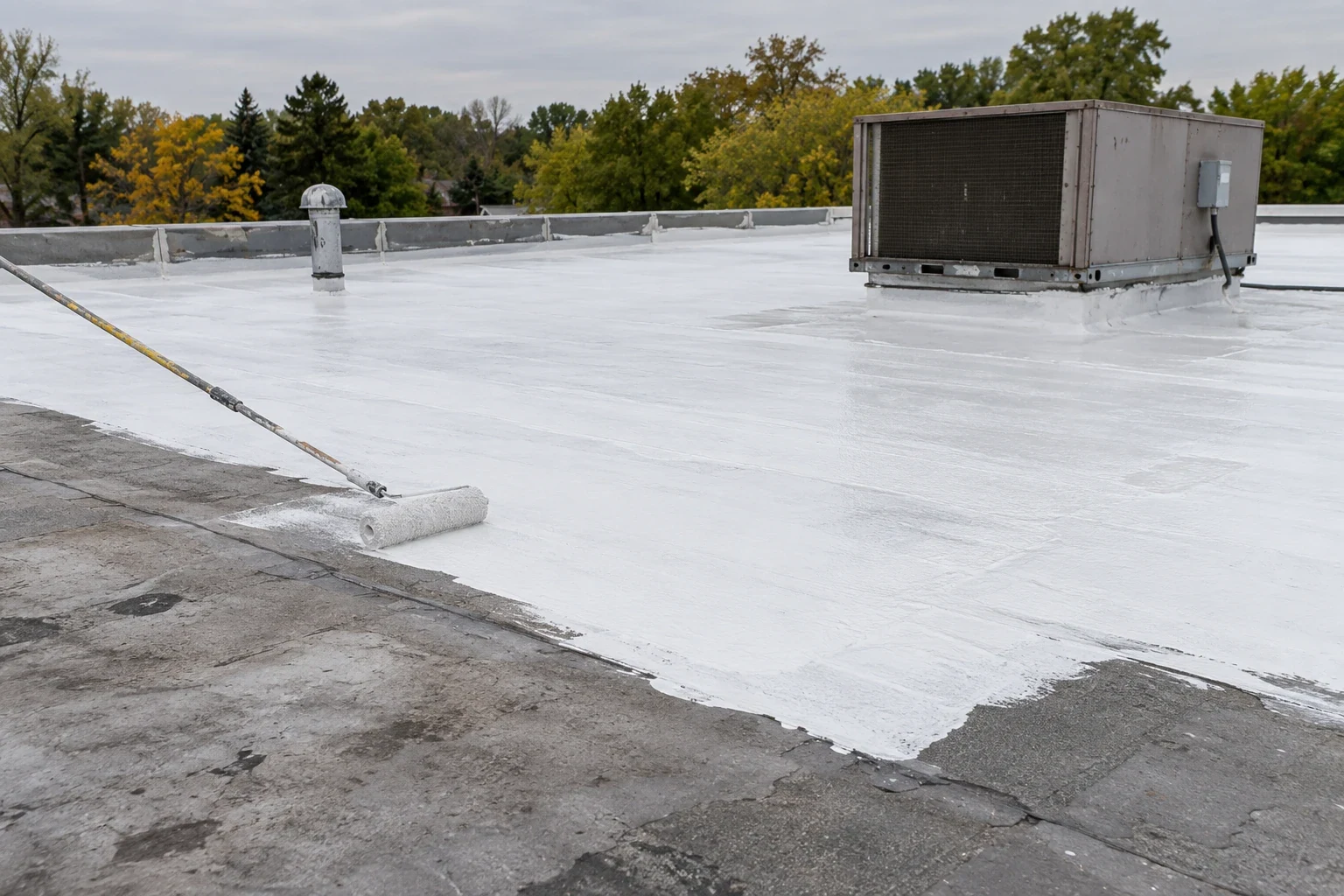
Silicone Roof Coatings
Silicone roof coatings in Queens, NY: liquid-applied reflective coatings for flat roofs that hold water, with testing, prep and recoat timing explained.

Whitestone
Commercial roof repair and replacement in Whitestone, Queens, NY: waterfront wind exposure, food and beverage buildings and expressway-corridor roofs.
Ready to Talk About Sika Sarnafil?
Tell us about the building and what you are seeing. We will schedule a roof walk and send photos and a written scope.