
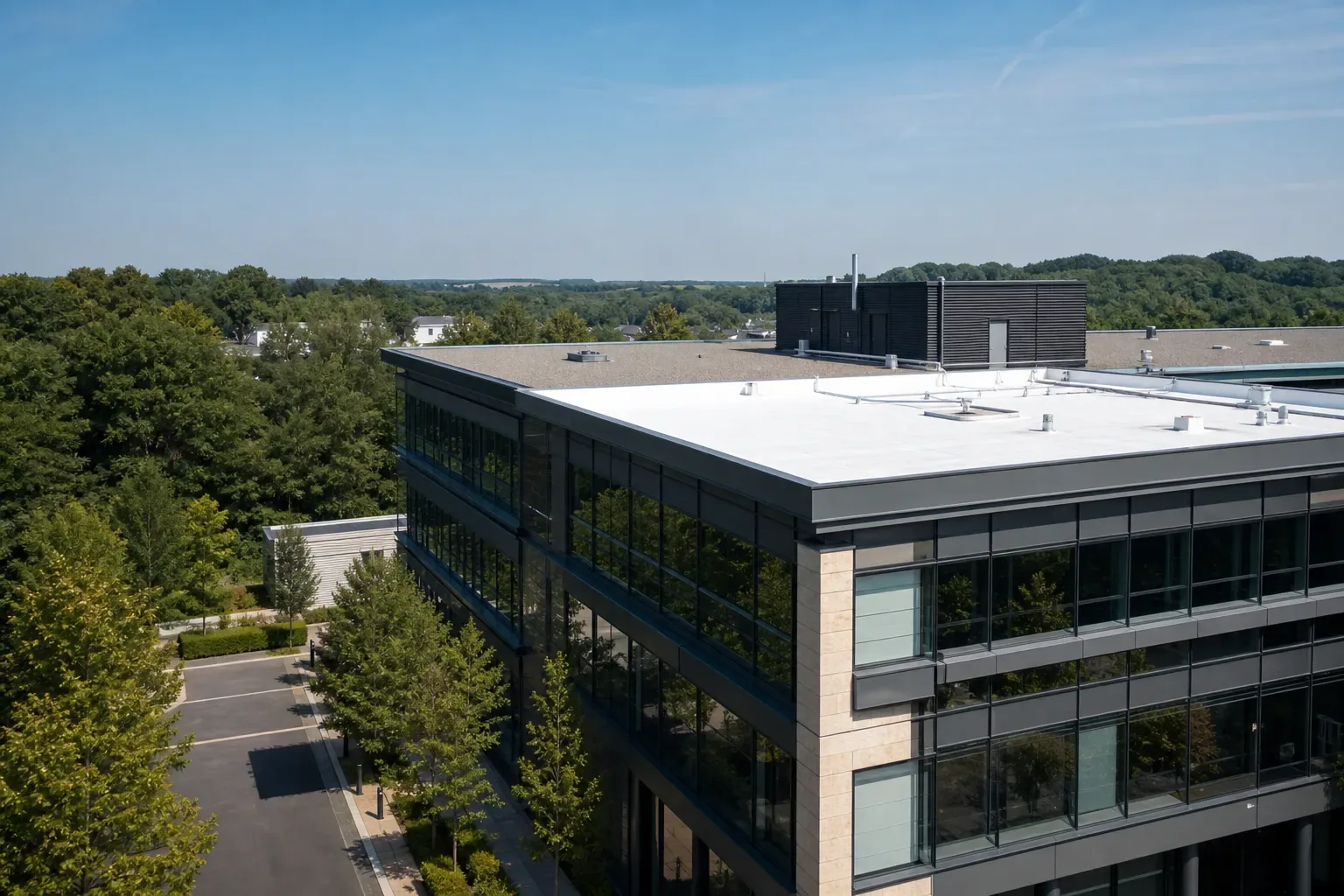
A white coating that has gone chalky, with a sandpaper feel and gray streaks running toward the drain, is an acrylic coating nearing the end of one cycle. That is a normal stage rather than a failure. Acrylic is a surface layer that wears over time, and the wear shows first as chalk, then as thin spots, then as bare membrane. The fix at the chalky stage is a cleaning and a new coat, which costs a fraction of replacement.
What is an acrylic roof coating?
An acrylic coating is a water-based liquid, rolled or sprayed onto a roof, that dries into a flexible, reflective film. It is usually white, and it bonds to many sound surfaces: metal, modified bitumen, built-up roofs, single-ply sheets and foam. Because it is water-based, it washes off tools with water, gives off little odor and is easier to handle than solvent-based products.
Its strengths are reflectivity, ease of application and the ability to be recoated again and again. Its main weakness is water. Acrylic does not like to sit wet, and a ponded roof will break it down. For that reason acrylic suits roofs that drain well, while roofs with permanent ponds are better served by other products.
Because it recoats so easily, acrylic is a good fit for a maintenance plan. A roof can be washed and given a fresh topcoat every several years without stripping what is underneath, which stretches the roof's life one step at a time. It works over an EPDM sheet with the right primer, over a restored metal roof and over old asphalt-based roofs once they are clean and dry.
Why does weather matter so much during application?
Walk it with me. Acrylic cures by drying, so the surface must be dry, the air must be warm enough and rain must hold off long enough for the film to set. A shower in the first hours can wash fresh coating off the roof and into the drains. A cold night can leave the film soft. A hot, windy day can dry it too fast and make it crack.
That is why acrylic is a spring-to-early-fall job in Queens. The city averages about 29.8 inches of snow in a year, and one day in January 2016 brought 27.3 inches, so the cold months are out. We watch the forecast, keep a day in reserve and apply in thin, even coats rather than one heavy pass. A heavy coat traps moisture and blisters.
Dew and morning damp also matter. A roof that looks dry at nine in the morning can still hold moisture in the laps and low spots, so we check with a moisture meter before the first pass and wait for the surface to warm. Evening is as risky as morning, because a coat applied late can be wet overnight and wash out with dew. We time the work to give the film several dry hours to set before dusk.
What preparation decides whether it lasts?
Preparation is most of the job. The roof is cleaned of dirt, chalk, algae and loose coating. Cracks, open seams and failed flashings are repaired. Rust on metal is wire-brushed and primed. Fasteners are reset and sealed. A moisture scan confirms the roof is dry underneath, because a coating over a wet roof only hides the wet. An infrared moisture survey is the starting point.
Then we test adhesion. A small area is cleaned, coated and checked after it cures. If the coating peels, the surface needs more preparation or a different primer. Skipping the test is how coatings fail in the first year, so we do not skip it. The written scope lists each repair item and its location.
Thickness is how we judge the result. The product calls for a measured amount per square foot, and we check it with wet-film gauges as we go. Edges, flashings and penetrations get a reinforcing fabric and extra coating, since a thin edge is the first place a coating fails. At the end we walk the roof, look for pinholes and runs and touch them up while the film is still workable.
Where does it fit in Queens?
It fits dry, well-drained roofs where the surface is aging but the layers below are sound. In Fresh Meadows, a roughly 12-acre retail center sits along 188th Street near the Horace Harding Expressway, and about forty stores line a mile of Union Turnpike in neighboring Hillcrest. On 63rd Drive in Rego Park, most businesses are original single-story buildings from the 1930s. A retail roof in any of those places is a candidate once a scan shows the insulation is dry.
Heat is the Queens reason to coat. A July afternoon at Central Park averages near 85 degrees, the heat island adds to it, and LaGuardia once hit 107 F, on July 3, 1966. A white surface cuts the heat load on shopping center roofs and on a self-storage roof. On a strip in Fresh Meadows we would start with the drains for the same reason.
What about ponding and storms?
Water is the enemy of acrylic, so drainage comes first. Hurricane Ida's remnants prompted the city's first flash flood emergency on September 1, 2021, and Queens suffered most of the deaths. After a cloudburst like that, a roof that holds water will break down an acrylic coating within a season. We check strainers, test the slope and fix the ponding before coating.
Where some ponding cannot be avoided, a silicone coating may be the better product, and where the roof is simply old and tired, a recover or replacement may be better still. A ponding water repair corrects the cause. The next step is a plan that matches the product to the roof.
Cost drivers are easy to list. Roof size, the amount of repair before the coating, the number of penetrations and the number of coats all move the price. A clean roof with simple details costs far less than a patched roof with many curbs, and the scope that follows our test shows where each dollar goes.
What is the next step?
Send photos of the roof surface, the chalky or bare areas and the nearest drain, plus the roof's age and what it is made of. We will test it and tell you, step by step, whether an acrylic coat, a repair or a new roof fits. Price comes after you have seen the results.
Questions Owners Ask
What building owners and managers usually ask before a roof visit.
It depends on the product, the thickness and the exposure. With regular cleaning and spot repair, a coating can last many years before a full recoat is needed. Chalking and thin spots are the signs.
Once the entry points are repaired and any wet insulation is cut out, yes. Coating a wet roof only hides the problem.
It works on a well-drained flat roof. If the roof ponds, silicone or a new membrane is a better choice. We measure ponding a day after rain before choosing.
Mild, dry weather is best, with surface and air temperatures above the product's minimum and no rain forecast for the cure time. That limits the season to spring through early fall.
Send photos of the roof surface, any chalky or bare areas, the drains and the roof's age. If it has been coated before, tell us with what.
Related Roofing Work
Other pages that connect to Acrylic Roof Coatings.
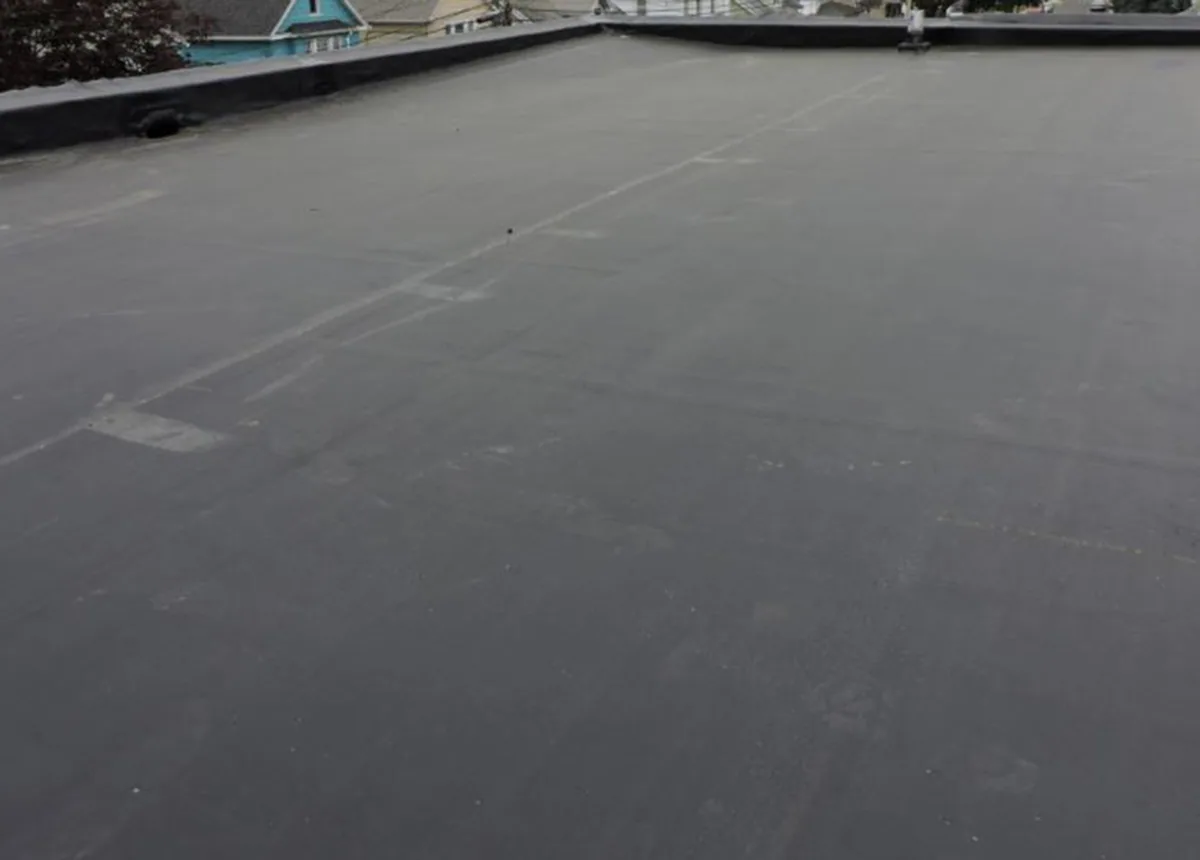
EPDM Roofing
EPDM rubber roofing in Queens, NY: adhered and ballasted membranes, seam and flashing repair, and when a black rubber roof is the right choice for a flat roof.
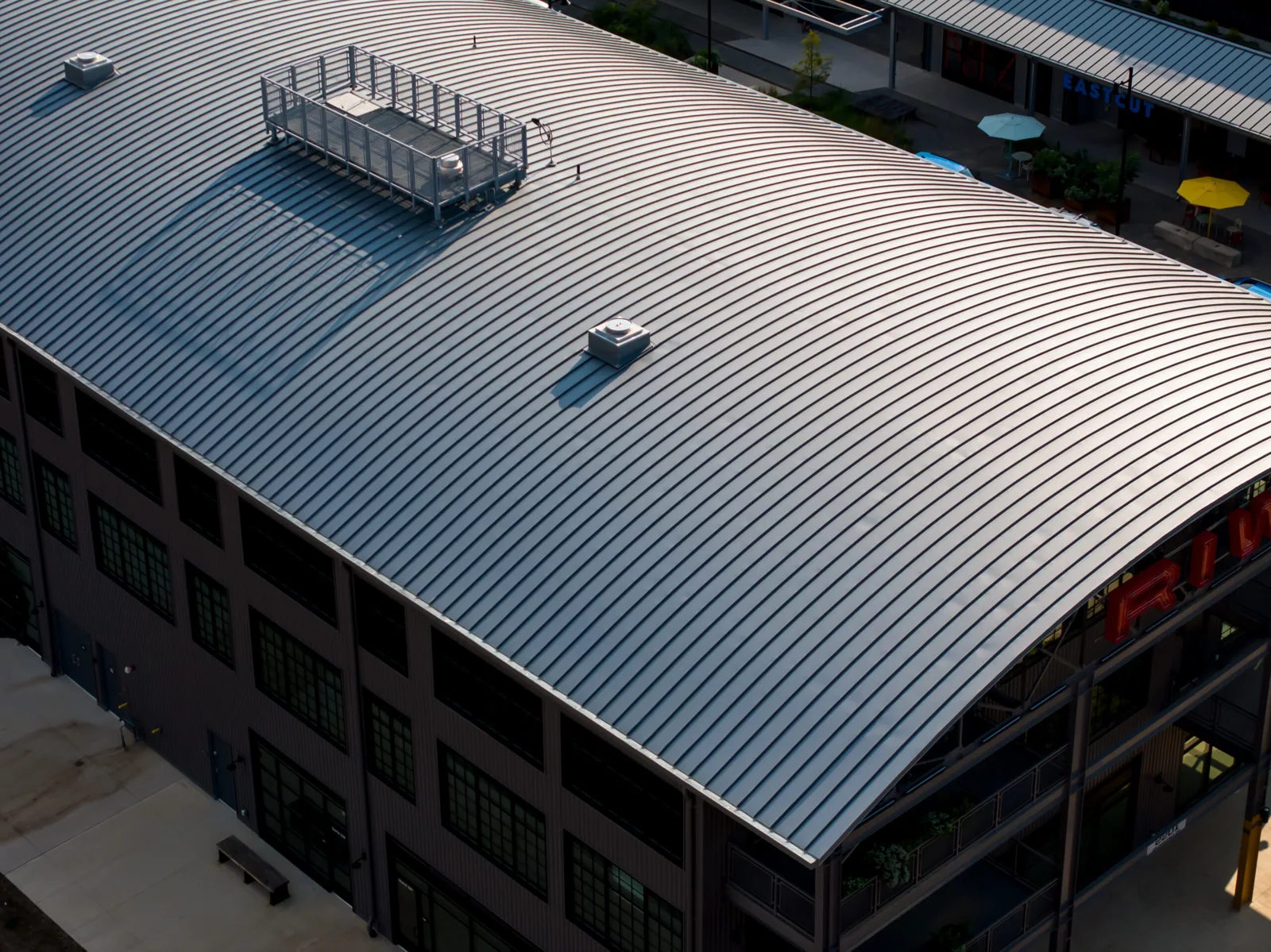
Metal Roof Retrofit and Restoration
Metal roof retrofit and restoration in Queens, NY: fixing backed-out fasteners and rusted laps on exposed-fastener roofs, or covering them with a new system.
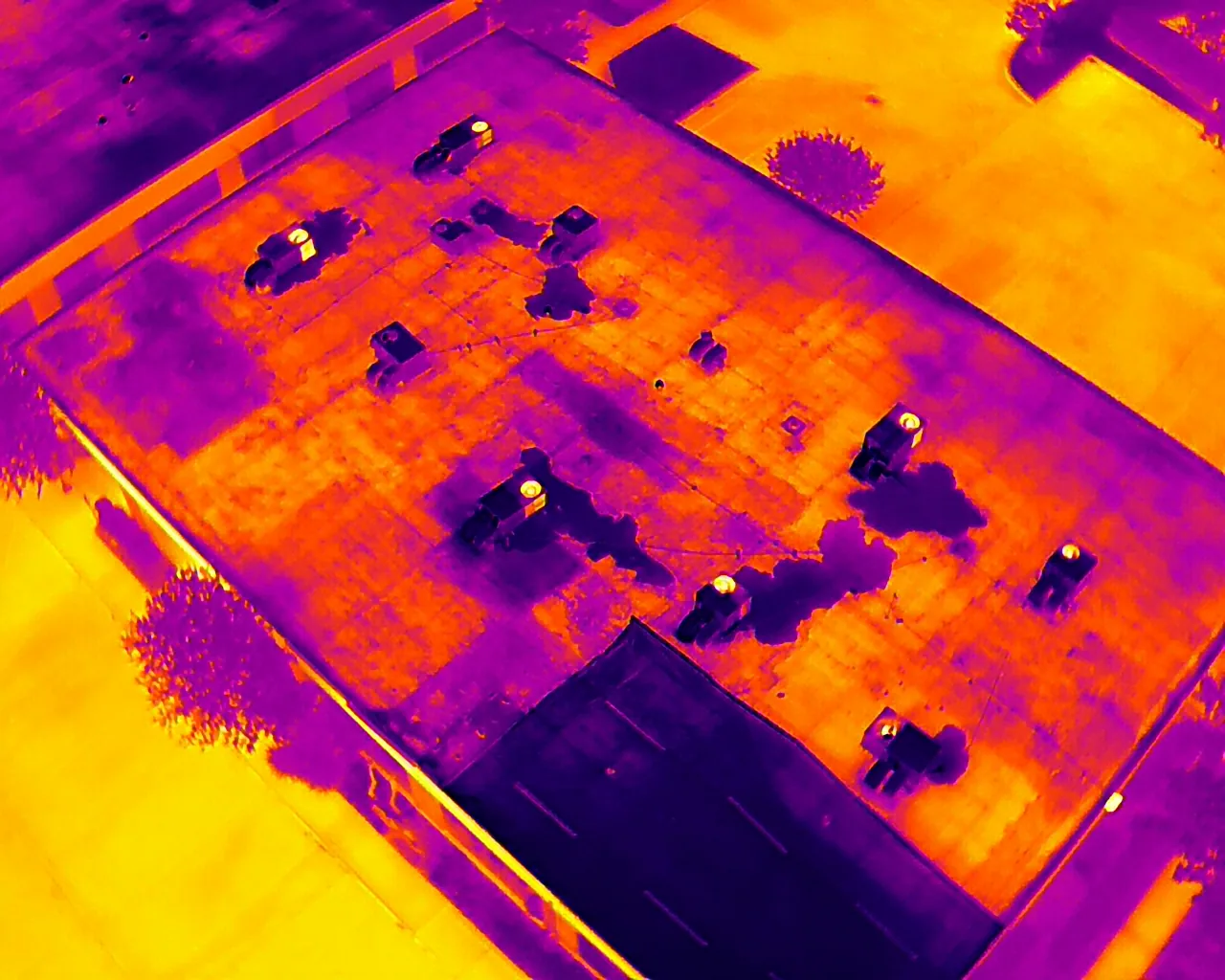
Infrared Roof Moisture Surveys
Infrared scans and core-cut moisture surveys for Queens, NY commercial roofs that locate wet insulation before the owner commits to repair or replacement.
Ready to Talk About Acrylic Roof Coatings?
Tell us about the building and what you are seeing. We will schedule a roof walk and send photos and a written scope.