
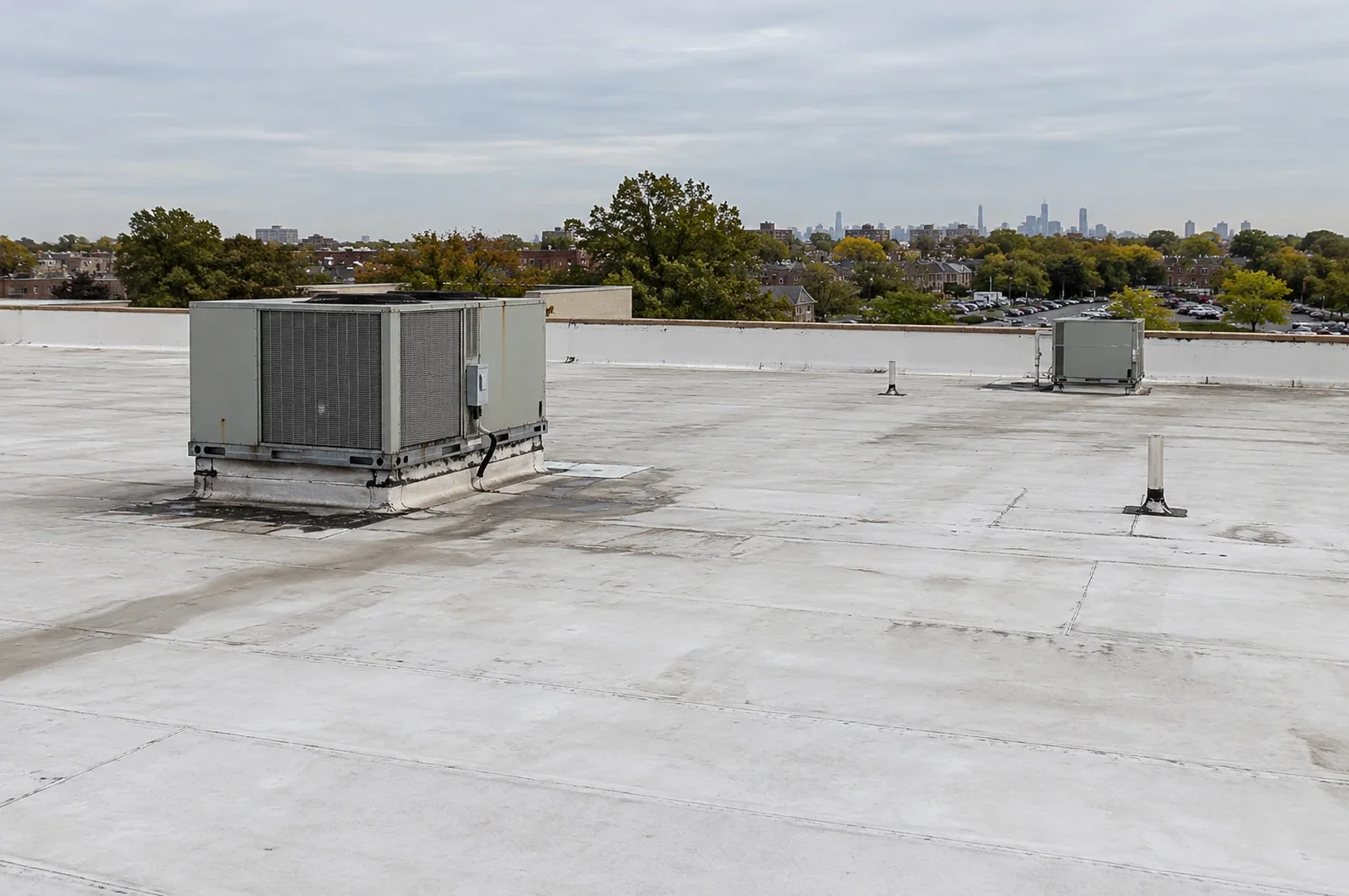
A forklift driver reports a puddle in the stock aisle two days after the last rain. The water on the floor is the slow end of a storm that collected on a wide roof, sat against a seam and found a small gap to leak through. Big-box stores in Queens, NY sit behind parking fields along the busy boulevards, and a roof that covers one store can cover an acre or more of flat ground, so water has a long way to travel to a drain. We start with that puddle and trace it back in order: the drain, the seam, then the flashing where the roof meets the wall.
What does the store manager see, and what is the roof doing?
A big-box roof shows trouble in a few places, and each has a different cause. Drips over the sales floor point to ponding or a failed seam. Stained tiles in the stock room point to a curb or a drain. Dampness at the front vestibule points to the canopy and parapet, and puddles at the dock point to the back edge of the roof.
The drain is the first thing to check. A wide roof leans on a few drains to move a great deal of water, and one blocked outlet can hold a large pond against the membrane.
Heat counts on a roof this wide. A dark membrane over the sales floor raises the cooling bill in a city where July afternoons reach near 85 degrees and a heat island keeps the warmth. In winter, freeze-thaw opens seams along the parapet, where snow gathers and melts against the wall.
What is happening up there?
The roof of a big-box store is one long field of membrane carrying a bank of rooftop units, a few skylights and a ring of parapet wall. Over that distance the deck flexes slightly under load, and low spots form between drains. A low spot holds water, the water ages the membrane, and the aged membrane opens at a seam.
The units are the second factor. Heating and cooling equipment, refrigeration condensers and exhaust fans stand on curbs across the field, and service crews walk the same routes week after week. Those routes wear first, so we map them, add pads where the traffic is heavy and rebuild any curb flashing that has cracked.
Skylights come up often. Many big boxes have rows of them to bring daylight to the floor, and each curb and glazing gasket is a repeat source of leaks. We rebuild the curb flashing, replace gaskets that have dried out and, if a skylight is no longer needed, suggest a solid cover that removes the path.
Where do Queens big-box stores sit?
Woodhaven Boulevard in Glendale hosts big-box retailers such as Home Depot and Staples. Metro Mall in Middle Village, a three-story mall built in 1972 to 1974, now holds BJ's Wholesale Club and Raymour and Flanigan after Kmart and Toys R Us left. A strip mall on 20th Avenue in College Point includes Waldbaum's, Target and BJ's Wholesale Club, and the Whitestone Expressway bounds that neighborhood on the south. Green Acres Mall lies partly in Valley Stream, just over the Nassau line. A store set back behind an open parking field has little between its roof edge and the wind, so the perimeter metal and the edge attachment get checked first after a windy week.
Roof questions repeat at a neighboring grocery store or a row of stores in a shopping center, but a big box has the longest spans and the fewest drains for its area, which is why ponding gets so much of our attention.
How do we confirm the cause?
On a wide roof the first pass is from the air. A drone survey shows ponding patterns, stained seams and failed flashings across the whole field in minutes. A walk of the problem areas follows, then an infrared scan for wet insulation and cores at the suspect spots. We measure pond depth after rain, test each drain and probe the seams around it. Every finding goes into the report with a photograph and a position on the plan.
What are the repair options, and how do we keep the store open?
Fresh curb flashing, rebuilt drains and welded seams add up to a quick repair. A worn membrane over dry board can take a coating or a recover, and soaked insulation across a broad area means replacement. The roof is worked in sections so the store never spends a night uncovered, the crane and hoist stay clear of customer entrances and materials are staged at the back. Noisy steps are scheduled for early morning, and the store manager signs off on the sequence first.
What does it cost to wait?
A leak over the sales floor costs sales, and a leak over the stock room costs inventory. Wet insulation spreads and ponded water ages the membrane faster, while merchandise claims can run high and a store that blocks off an aisle for a day loses revenue. In September 2021 Hurricane Ida's remnants set off the city's first flash flood emergency, and rain at that rate collects on a wide flat roof with few drains. A planned repair costs far less than a pile of emergency calls.
A dated inspection and repair record also helps when a lender, an insurer or a buyer asks about the roof, because it can be handed over without being rewritten. It gives the next walk a baseline, so any change stands out.
What is the next step?
Tell us the street, the roof age and send photos of the worst stain and the drain nearest it. We walk the roof beside you, describe in plain steps what it is doing and hand you a repair order before price comes up. Stores in Glendale and Middle Village are scheduled around trading hours and truck deliveries.
Questions Owners Ask
What building owners and managers usually ask before a roof visit.
Width and load. A wide roof depends on a few drains to move a large volume, and the deck flexes a little between supports, which forms low spots. Rooftop units deepen those spots over time. We measure the ponds after rain, test the drains and add tapered insulation or extra outlets to move the water.
Usually. The roof is done in sections, each sealed by the end of the day, with the hoist and staging kept away from entrances. Noisy steps happen early and the manager approves the plan. Customers rarely notice more than some sound overhead.
Call the roofer before the crane lifts. A new curb, refrigerant line or conduit run needs its own flashing, and unreviewed equipment is a leading cause of new leaks on a retail roof. A short review of the location and the walk path prevents a repair later, and a photo of the finished detail goes in the roof file.
Often. Over a sound membrane and dry insulation, a coating adds reflectivity and seals small defects, which helps in a city with a strong heat island. It does not cure wet insulation or open seams, so scanning and an adhesion test come first. Across a wide roof, cost per square foot makes it one of the cheaper ways to add years.
Record where it sits and how long it stays, and photograph it from the access point. Water gone within a day is a drainage nuisance, while water left after two days points to a blocked drain or a low spot in the deck. Send us the photos and we check the drain first, then measure depth on the roof.
Related Roofing Work
Other pages that connect to Big-Box Retail Roofing.
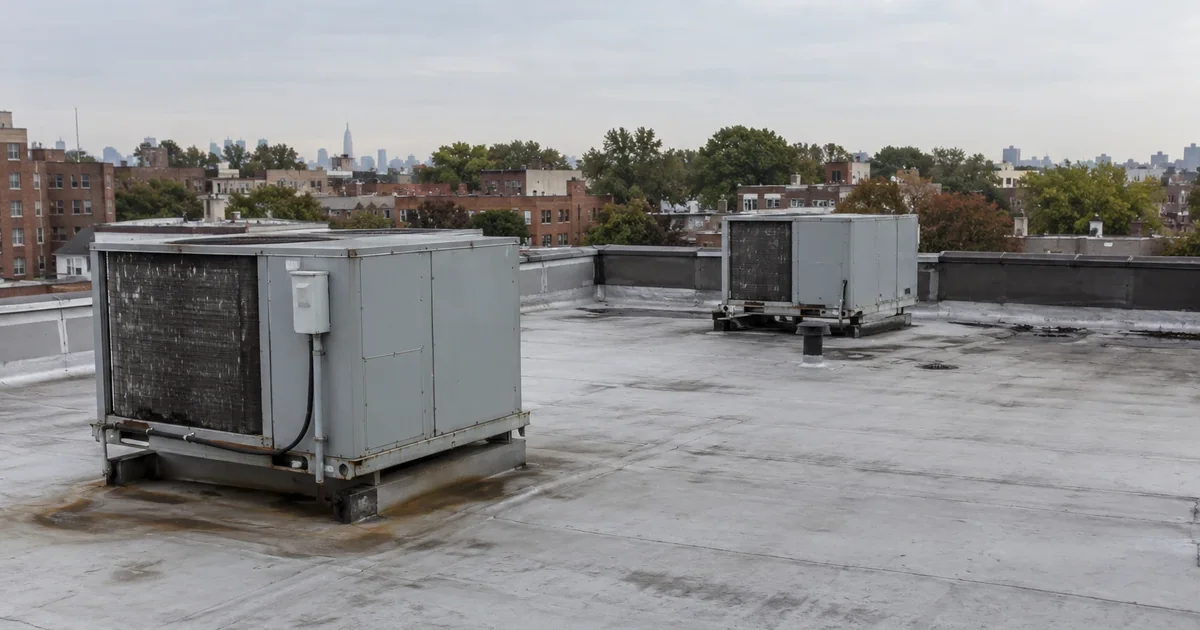
Grocery Store Roofing
Roofing for Queens, NY grocery stores: condenser decks, refrigeration lines, drains and quiet scheduling that protects food, floors and shoppers.
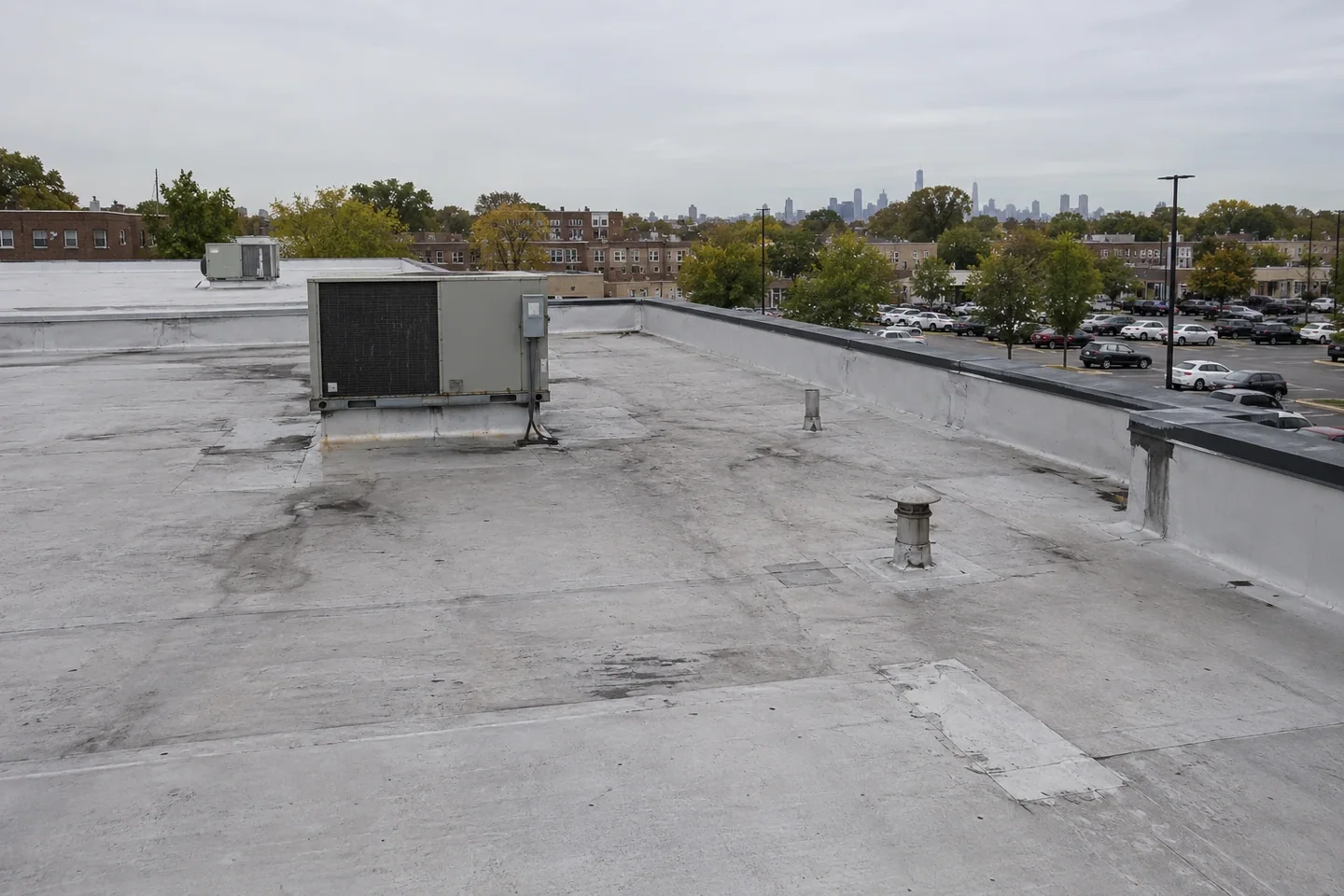
Shopping Center Roofing
Roofing for Queens, NY shopping centers and strip retail: tenant leaks, shared roofs, parking-deck tie-ins and repairs sequenced around store hours.
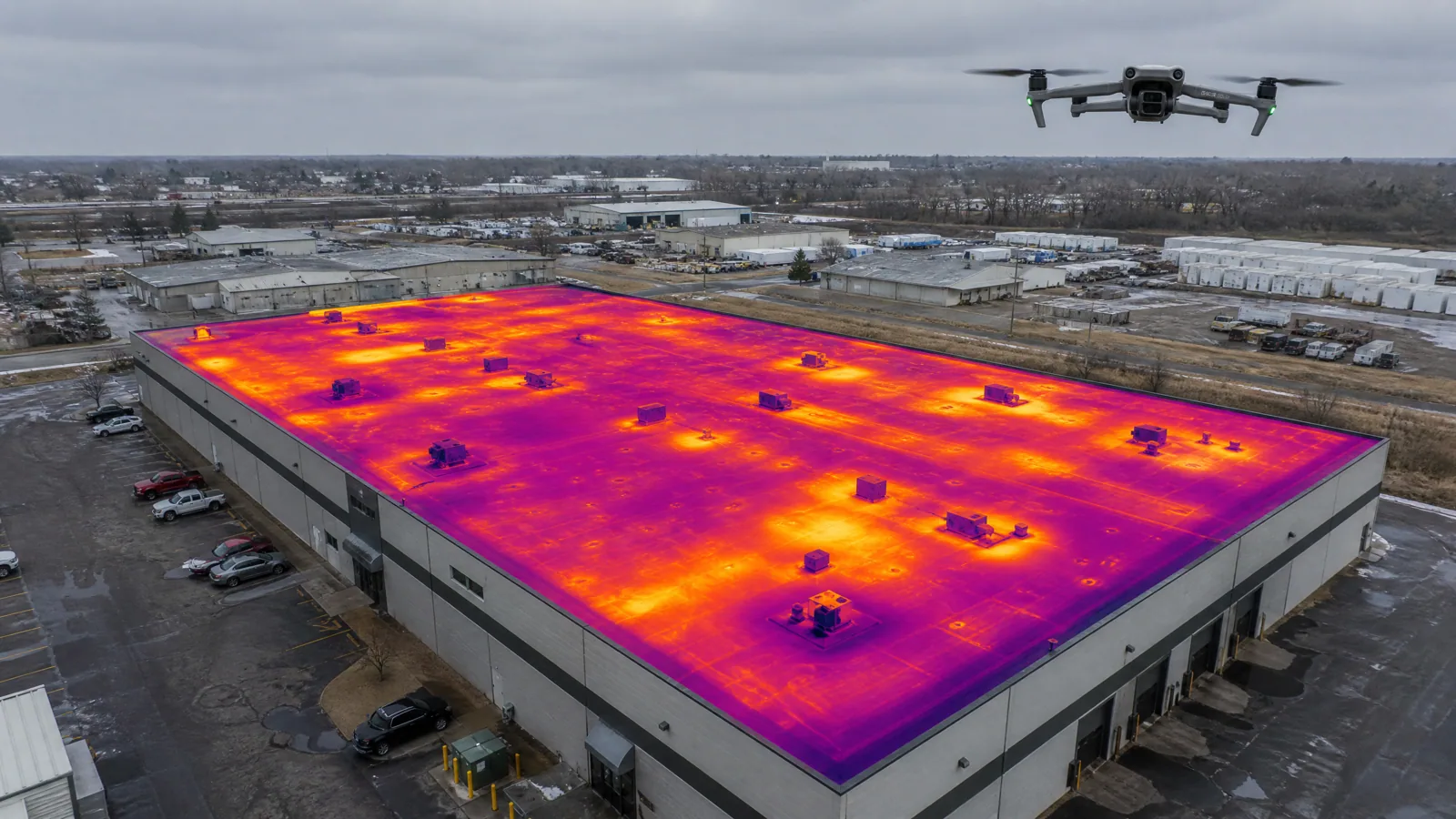
Drone Roof Inspections
Drone imaging for large or hard-to-reach commercial roofs in Queens, NY, with photographs and thermal data that guide a safer hands-on follow-up.
Ready to Talk About Big-Box Retail Roofing?
Tell us about the building and what you are seeing. We will schedule a roof walk and send photos and a written scope.