
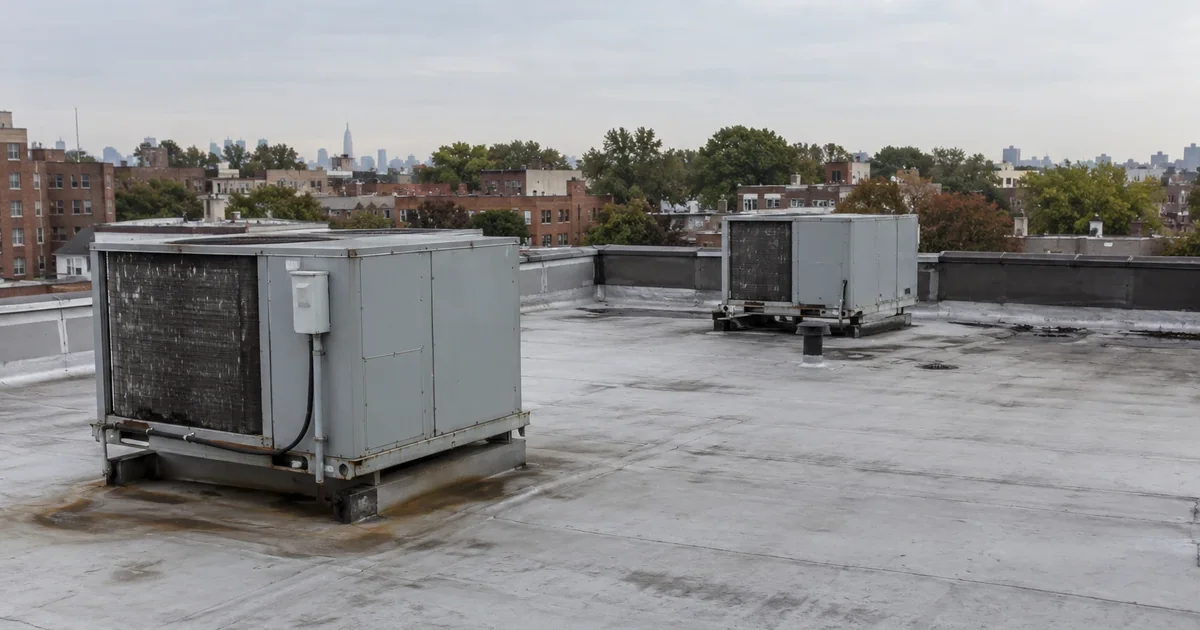
Nobody can explain a puddle beneath the dairy case when nothing was spilled, and it sends a store manager up the roof ladder faster than a ceiling stain would. The water may come from the case, or it may come from above, where a condenser line, a curb or a seam has opened. In Queens, NY, where grocery stores sit under roofs crowded with refrigeration equipment, we begin with that puddle and trace the water upward in order: the drain, the seam, then the flashing at each line that crosses the membrane.
What does the store manager see, and what is the roof doing?
Grocery roofs announce trouble in a few ways. Drips over produce or frozen aisles point to penetrations and curbs. Stained tiles in the receiving room point to the back edge and drains. Damp spots over the bakery or deli point to exhaust fans and grease. A sagging tile at the front points to the canopy and parapet. Each leads to a place on the roof that we can check first.
The condenser deck is where we look first. Refrigeration equipment drips condensate, vibrates its mounts and drags lines across the membrane, and those details wear faster than anything else on the roof.
What is happening up there?
A grocery roof carries the building's refrigeration. Condensers, compressors and rack lines stand on rails and sleepers, and refrigerant and drain lines cross the membrane between them, each crossing needing a boot or a pipe support. Over the years vibration works the mounts loose, sun cracks the boots and condensate finds its way onto the surface, while ice can load the lines in winter and strain the supports.
Refrigeration technicians walk the same routes across the membrane all year. We rebuild worn boots, replace failed supports, lay walkway pads and send condensate to a proper outlet instead of the surface.
Heat is a second stress. A hot roof raises the air temperature around the condensers, and a condenser in hot air has to work harder, so a reflective membrane or coating that keeps the surface cooler pays back. Clean coils help too, though that belongs to the refrigeration contractor, and we keep the roof around the units clear of debris and standing water so air moves freely.
What do Queens grocery roofs face?
Storms test any roof that carries refrigeration. In October 2012 Hurricane Sandy sent a ten-foot surge from Jamaica Bay into Howard Beach, damaging homes and businesses along Cross Bay Boulevard and leaving power out for up to three weeks. September 2021 brought Ida's remnants and the city's first flash flood emergency, with Queens recording the larger share of deaths. Heat counts too: LaGuardia, in Queens, reached 107 degrees on July 3, 1966, and the heat island is strong. A strip mall on 20th Avenue in College Point includes Waldbaum's, and stores line Steinway Street, a major commercial street in Astoria.
Set a grocery roof beside a restaurant roof, where grease is the chief enemy, and a big-box store roof, where span and ponding rule. A grocery store combines both concerns in a smaller space and adds refrigeration, which makes a regular roof walk worth more here than on either.
How do we confirm the cause?
The roof is mapped first, with every unit, rail, curb, pipe and drain marked. Then we walk the deck, with the refrigeration contractor if one is on call, probing seams and checking boots. An infrared moisture survey finds wet insulation without opening the roof, and cores confirm what the scan suggests. Findings go into an inspection report with photographs, so the store and the refrigeration contractor see the same facts.
Where the leak is intermittent, we run a hose test, one section at a time, with someone watching from inside.
What are the repair options, and how do we protect the food?
Cracked boots and tired supports on the condenser deck call for a repair. A weathered membrane over dry board may take a coating or a recover, but wet board means the roof comes off. Any equipment that has to be lifted or shut down is handled with the refrigeration contractor, and the plan is written so the store never loses control of its temperatures. Openings are covered overnight, and debris and fumes are kept away from air intakes to protect both food and shoppers.
Trucks arrive on their own schedule, so delivery windows are agreed with the receiving manager. The hoist and staging go where trucks do not, and loads are lifted before the first delivery of the day.
What does it cost to wait?
A leak in a grocery store is a food-safety issue as well as a repair. Water on the floor closes an aisle. Water in a case spoils product. A damaged condenser line can shut down refrigeration, and a lost day of perishables costs far more than the repair would have. Wet insulation spreads, and the refrigeration plant works harder against heat that leaks in through a damaged roof. A planned repair costs less than the first spoiled delivery.
The regulators and insurers who visit a store care about its building as well as its food. A dated roof inspection and a record of repairs show that the owner is looking after the building, and the report we leave behind is written so that it can be handed to either one.
What is the next step?
We ask for a photograph of the worst stain, another of the nearest condenser, the street and the roof age. We climb up with you, explain in order what the roof is doing and hand you a repair order, with price afterward. Stores in College Point and Astoria are scheduled around deliveries and shopping hours.
Questions Owners Ask
What building owners and managers usually ask before a roof visit.
Mostly. We work with the refrigeration contractor so that only the equipment that has to move is lifted or shut down, and only for as long as it must be. Lines stay supported and temporary covers protect openings overnight. If a rack has to go offline, the store arranges temperature holds and product moves before the day starts, and afterward we photograph every opening that was touched.
Moisture condenses on a cold line and freezes where its insulation has failed. Ice loads the supports, and the meltwater then spills across the membrane. New line insulation, securing the supports and checking where condensate drains takes care of it, and a store with a large refrigeration deck should expect this to be a spring and fall chore.
Every air intake on the roof is located first, and the work is placed downwind of them. Close to an intake we pick methods that give off little odor, such as welded seams or cold-applied products, and the store shuts or filters that intake during the work. A short walk with the manager before the first day settles the plan.
It deserves to be. Twice a year is a sensible rhythm, with another look at the condenser deck after a severe storm or heat wave. Refrigeration adds penetrations and foot traffic, so the roof ages faster than a simple retail one. A visit before summer catches loose boots and cracked sealant while the fix is still small.
New racks and condensers usually bring new rails, lines and penetrations. We ask to be there before the lift so we can check the old curbs, plan the new flashings and photograph the finished work. That one step prevents a common source of leaks after a refrigeration upgrade.
Related Roofing Work
Other pages that connect to Grocery Store Roofing.
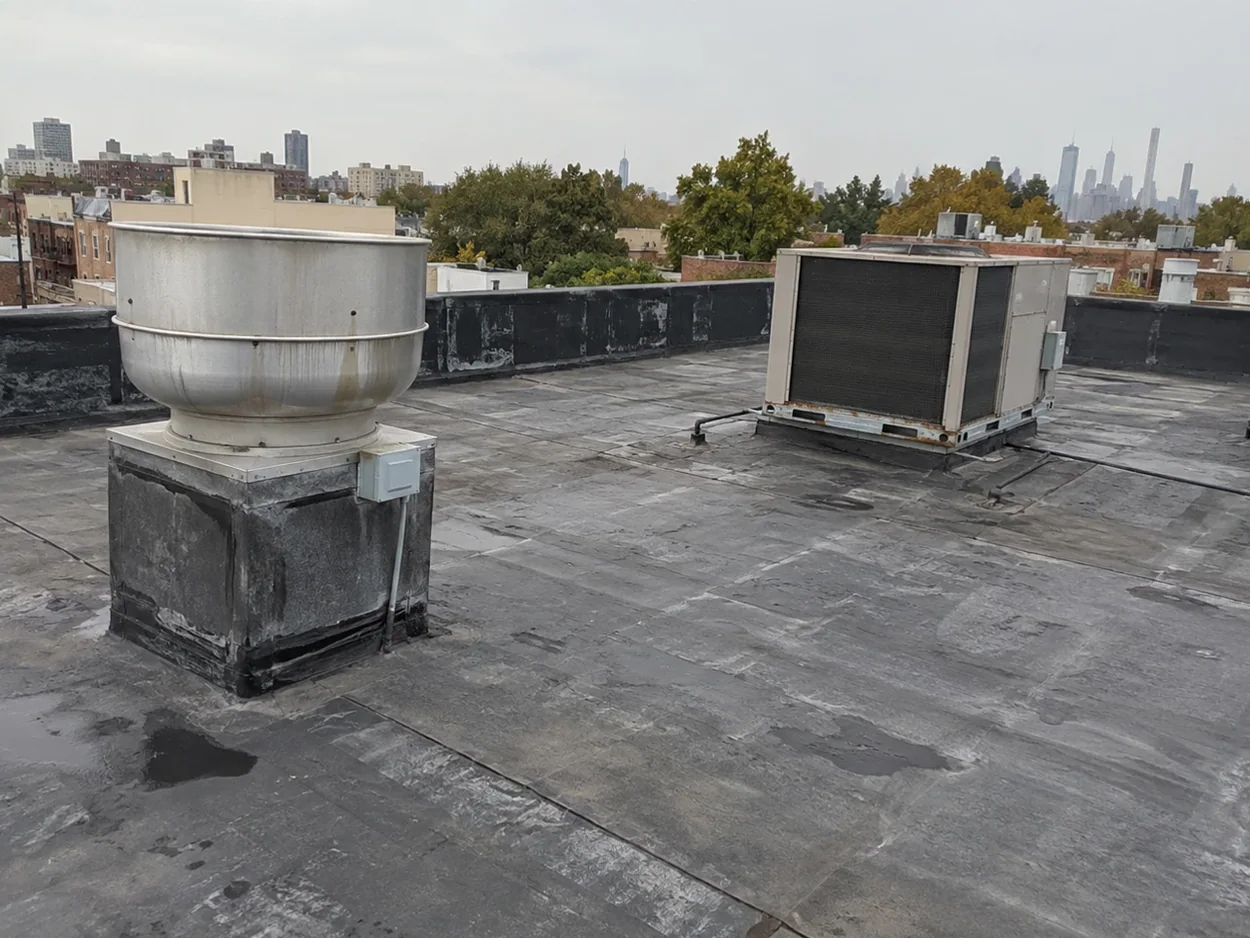
Restaurant Roofing
Roof repair for Queens, NY restaurants: grease on the membrane, exhaust curbs, small flat roofs and work scheduled around service so the kitchen keeps cooking.
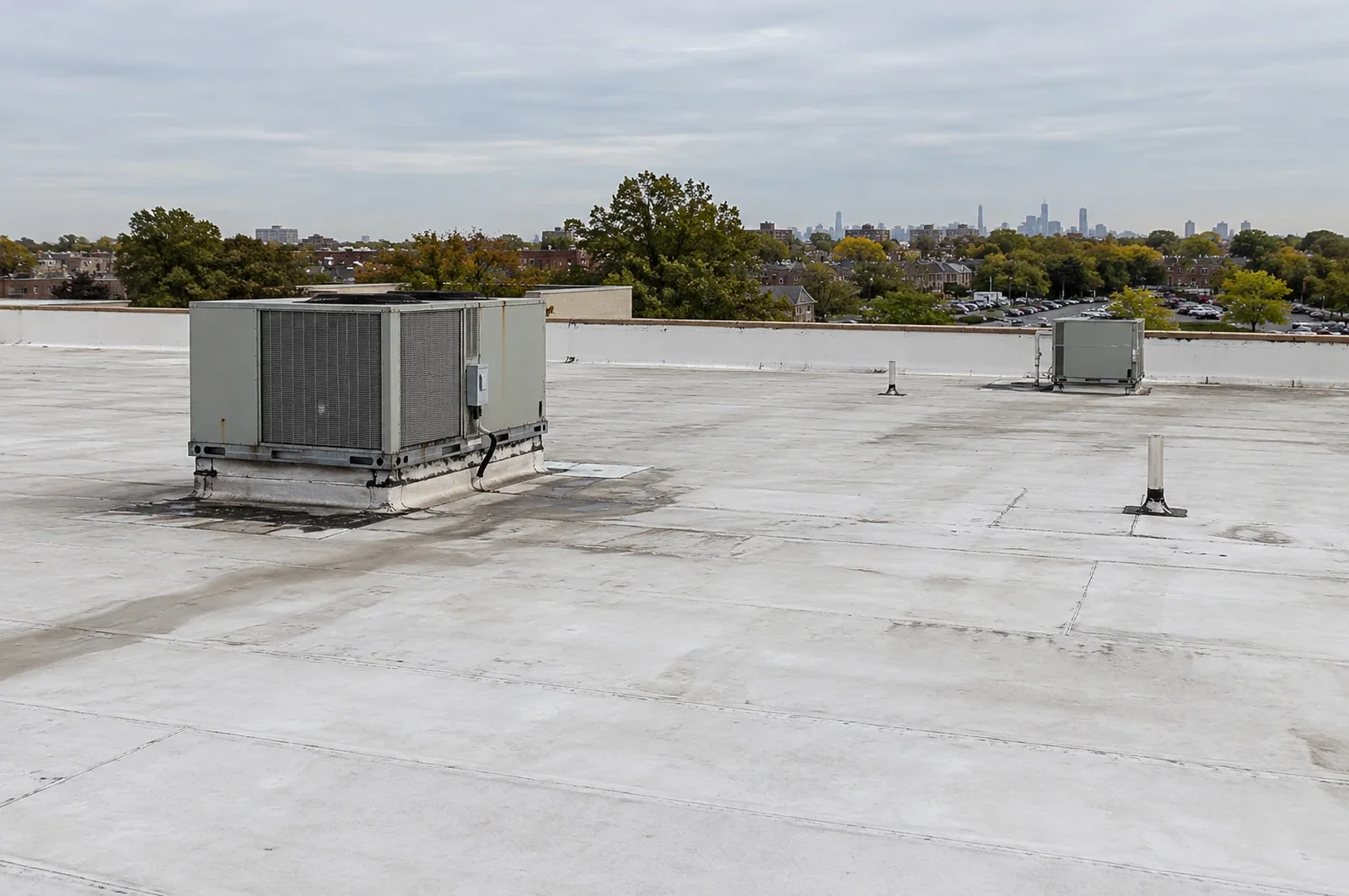
Big-Box Retail Roofing
Roof repair and replacement for big-box stores in Queens, NY: wide flat fields, rooftop units, ponding and phased work that keeps the sales floor open.
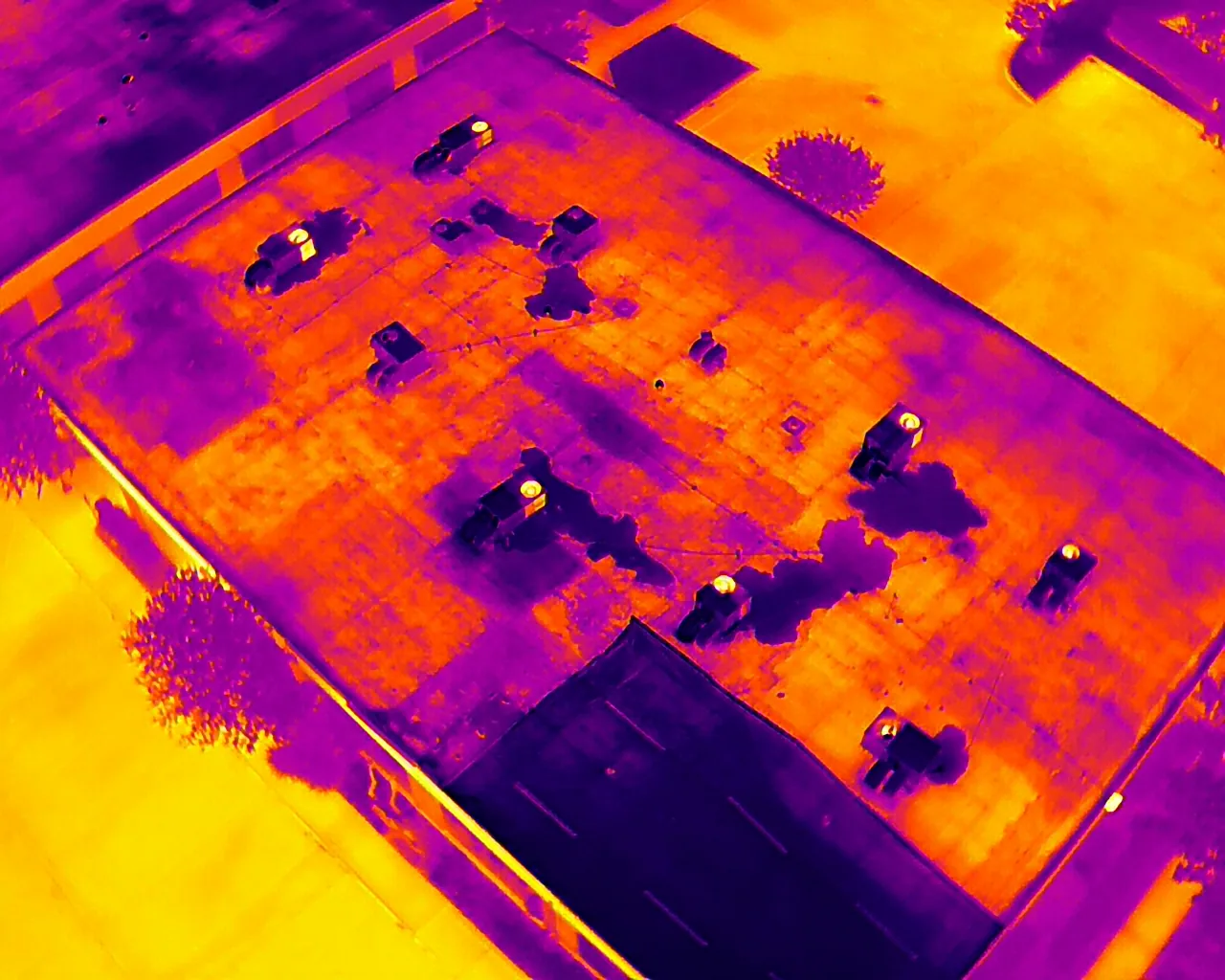
Infrared Roof Moisture Surveys
Infrared scans and core-cut moisture surveys for Queens, NY commercial roofs that locate wet insulation before the owner commits to repair or replacement.
Ready to Talk About Grocery Store Roofing?
Tell us about the building and what you are seeing. We will schedule a roof walk and send photos and a written scope.