
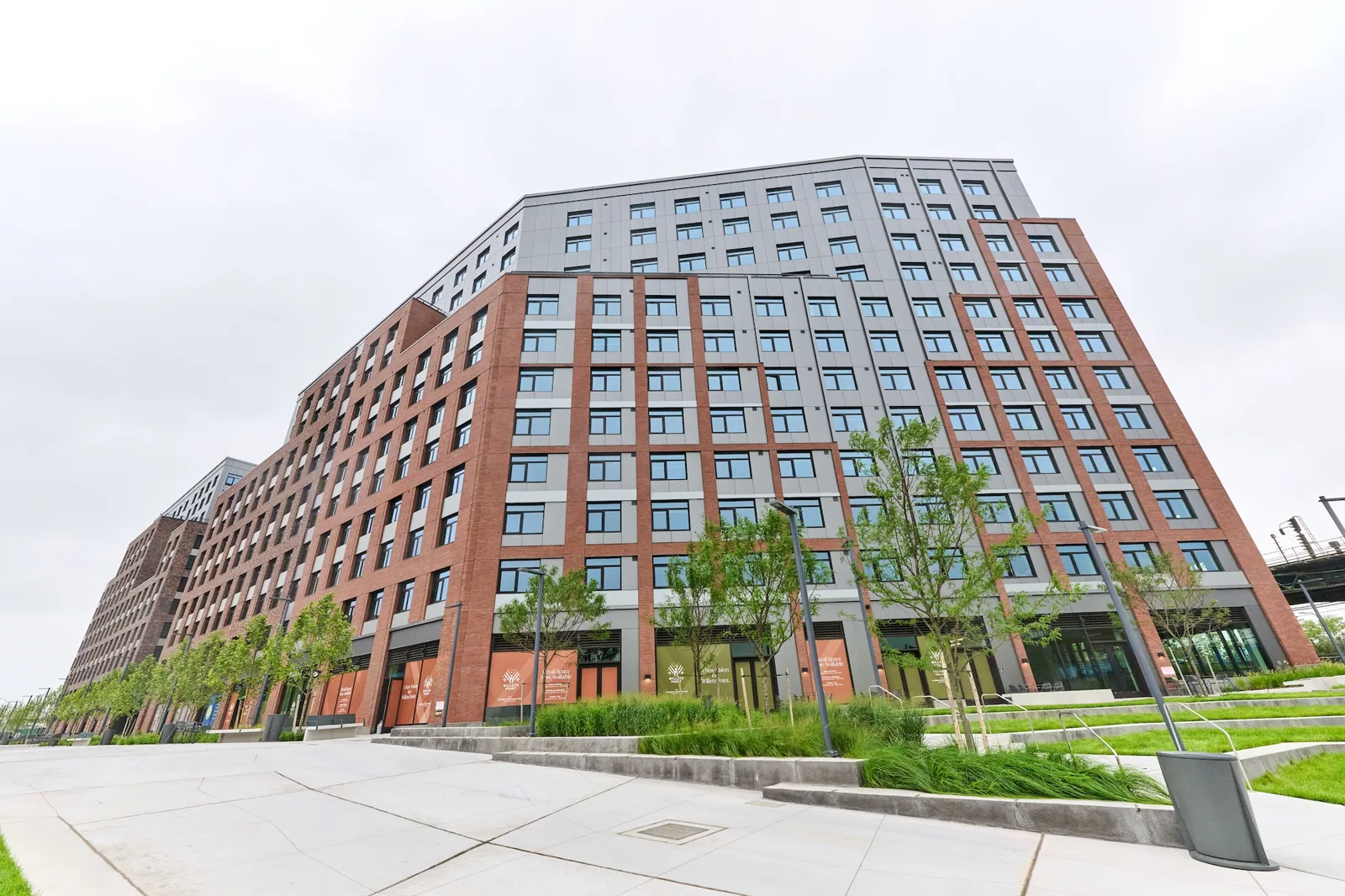
Flooding in heavy rain is a fact of life at Willets Point, Queens, NY, and it explains a lot about the roofs. When the ground cannot shed water, the roof is the only dry surface a building has, and every drip through it lands on something already sitting in a wet place. Owners here have good reason to care about the roof, and to get the water off it quickly.
Auto junkyards and repair shops made Willets Point known, nicknamed the Iron Triangle, and a 2006 Hunter College study counted 225 businesses there with roughly 1,400 to 1,800 employees. The area is bounded by Northern Boulevard, Citi Field, Roosevelt Avenue and the Flushing River. The roofs we expect here belong to shop and light-industrial buildings, and each is treated by what it carries and by the ground it stands on.
Why does the ground matter to a roof?
The area lacked sidewalks and sewers as of 2013, and flooding is common during heavy rains. A roof drains to downspouts or scuppers, and those need somewhere to discharge. If the ground at the foot of the wall is already under water, the downspout backs up and the roof drain backs up behind it, so water stands on the roof longer than it should, loading seams and flashings designed for a quick run-off.
We look at where each downspout ends, whether it discharges clear of the wall and whether the ground slopes away. The drain and scupper check covers the top of that path, and sometimes a roof problem is a grade problem, and the fix is a splash block, an extension or a different discharge point. We say so, because replacing a roof that is fine and leaving its downspout under water would leave the owner no better off.
The grade question is simple to test. After a rain, we look at the downspout outlet and the ground around it, and we pour water into a roof drain to see how fast it clears. A drain that empties slowly while the ground outside is dry points to a pipe problem. A drain that empties slowly while the ground outside is flooded points to a discharge problem. The difference tells us whether the roofer, a plumber or a site contractor should act, and we say so plainly.
What do shop roofs need?
Auto repair and body shops run exhaust fans, vents and sometimes spray booth ducts through the roof, and every one is a penetration. Grease, solvent vapor and heat are hard on some membranes and many sealants, and the area around a fan is where we look first. A pipe boot that has split in the sun, a curb flashing that has lifted and a fan base without a pan all let water in. We map each one, replace the weak ones and add containment where discharge lands on the membrane.
The roof system and age of a given building come out of the first walk. A core sample shows what sits over the deck, and a moisture scan shows whether the insulation is dry. A commercial roof repair is often enough on a shop building, since the damage is usually local to a penetration or an edge.
Heat and fumes from work inside a shop rise to the underside of the deck, and condensation can collect there in winter. A stain that appears on a cold morning and fades by noon may be condensation rather than a leak. A hose test on the roof and a moisture reading on the ceiling separate the two, which prevents an owner from paying for roof work that will not solve the problem. Where the cause is inside, the answer may be ventilation or insulation at the deck.
What does redevelopment mean for an owner's roof?
Etihad Park began construction in December 2024, after the redevelopment plan won approval in 2013 and demolition of the industrial section started in 2016. For an owner planning around change, the roof decision is about time. A building with a few years of use ahead needs a roof that holds for that period at the lowest cost, whether a repair, a patch program or a coating, while a building with a longer horizon justifies more.
We help owners size the decision. We write the scope in sections with a price for each, mark what must be done now to keep water out and what can wait, and note what a repair buys in years. Nearby construction brings dust, vibration and crane traffic, and we photograph the roof's condition as a baseline for any later question about damage.
If a building is to stay for years, a recover over a dry and sound base can be a measured step. A coating can extend a bonded membrane. If the insulation is wet or the membrane is failing everywhere, a replacement is the cost of keeping water out, and we show the comparison on one sheet.
How do storms test these roofs?
Queens recorded most of the deaths on September 1, 2021, when Hurricane Ida's remnants led to the first flash flood emergency in New York City. Where flooding is common in heavy rain, a roof that sheds water quickly is the first defense, so strainers are put in place, drains cleared and an overflow route confirmed. A roof that ponds is one that will leak, so a ponding water repair is a priority where we find it.
Wind is the other test. Flat roofs beside open ground catch gusts, and loose edge metal is the first thing to go. We check edge metal and gutters and fasten them as needed.
What is the next step?
Photographs of the standing water, the downspout and any stain inside are the way to begin, with the street and, if known, the roof age. We walk the roof and the ground around it and say in plain steps what is happening, then turn to price. Owners in neighboring Flushing and Corona will recognize the sequence.
Questions Owners Ask
What building owners and managers usually ask before a roof visit.
Yes. A flooded yard says nothing about roof condition by itself. But a downspout that discharges into standing water can back water up onto the roof. We check both, and the fix may be a longer downspout rather than a new roof.
It depends on the time horizon. If the building will be used for only a few years, a repair or a coating may be the sensible choice. If it will stay, a replacement may pay for itself. We lay out the options with costs and expected years of service.
Grease, vapor and heat can soften some membranes and degrade sealants. We check the area around each fan, replace damaged material, and add a pan or a curb flashing to keep discharge off the surface.
Vibration, dust, debris and crane loads can all affect a roof. A dated set of photographs of the membrane, drains and edges before work starts lets us show later what changed.
Standing water, the downspout and the stain inside are what to photograph, and add the street and, if you know it, the roof age. What is happening will be explained in plain steps before price.
Related Roofing Work
Other pages that connect to Willets Point.
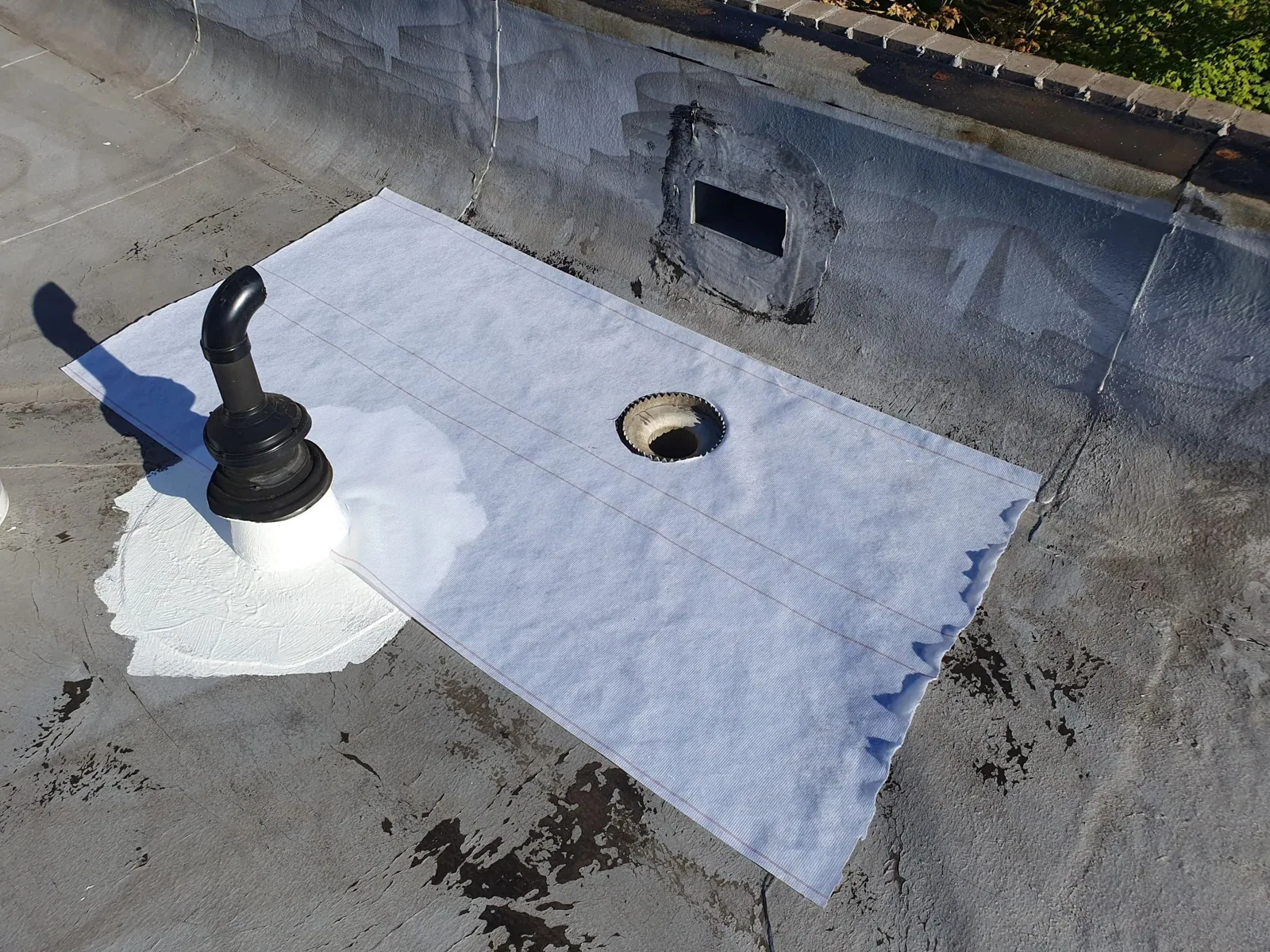
Roof Drains and Scuppers
Roof drain, scupper, cricket and ponding correction in Queens, NY: sizing, strainers, overflow paths and tapered fixes for flat roofs hit by cloudbursts.
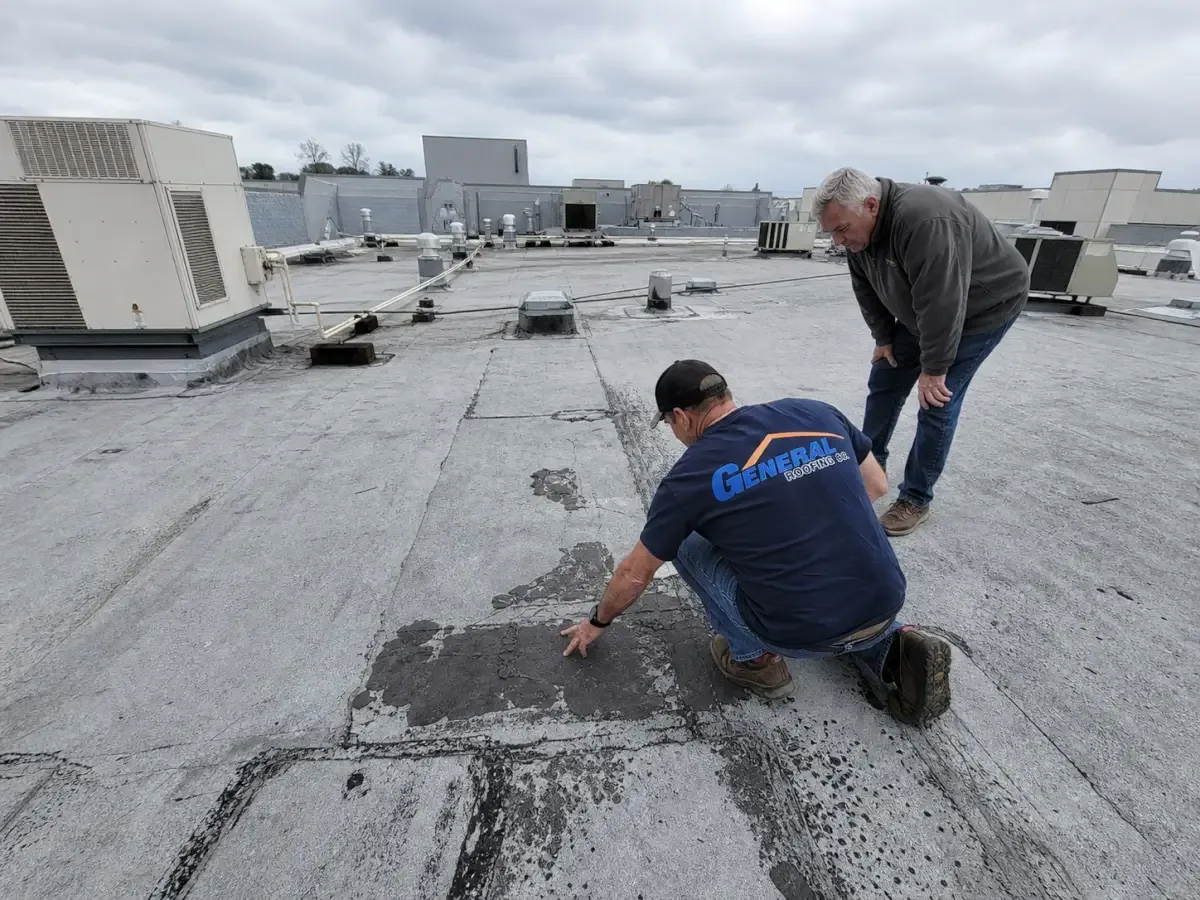
Commercial Roof Repair
Planned repair of membranes, seams, flashing and details on Queens, NY commercial roofs, with each fix explained before the crew picks up a tool.
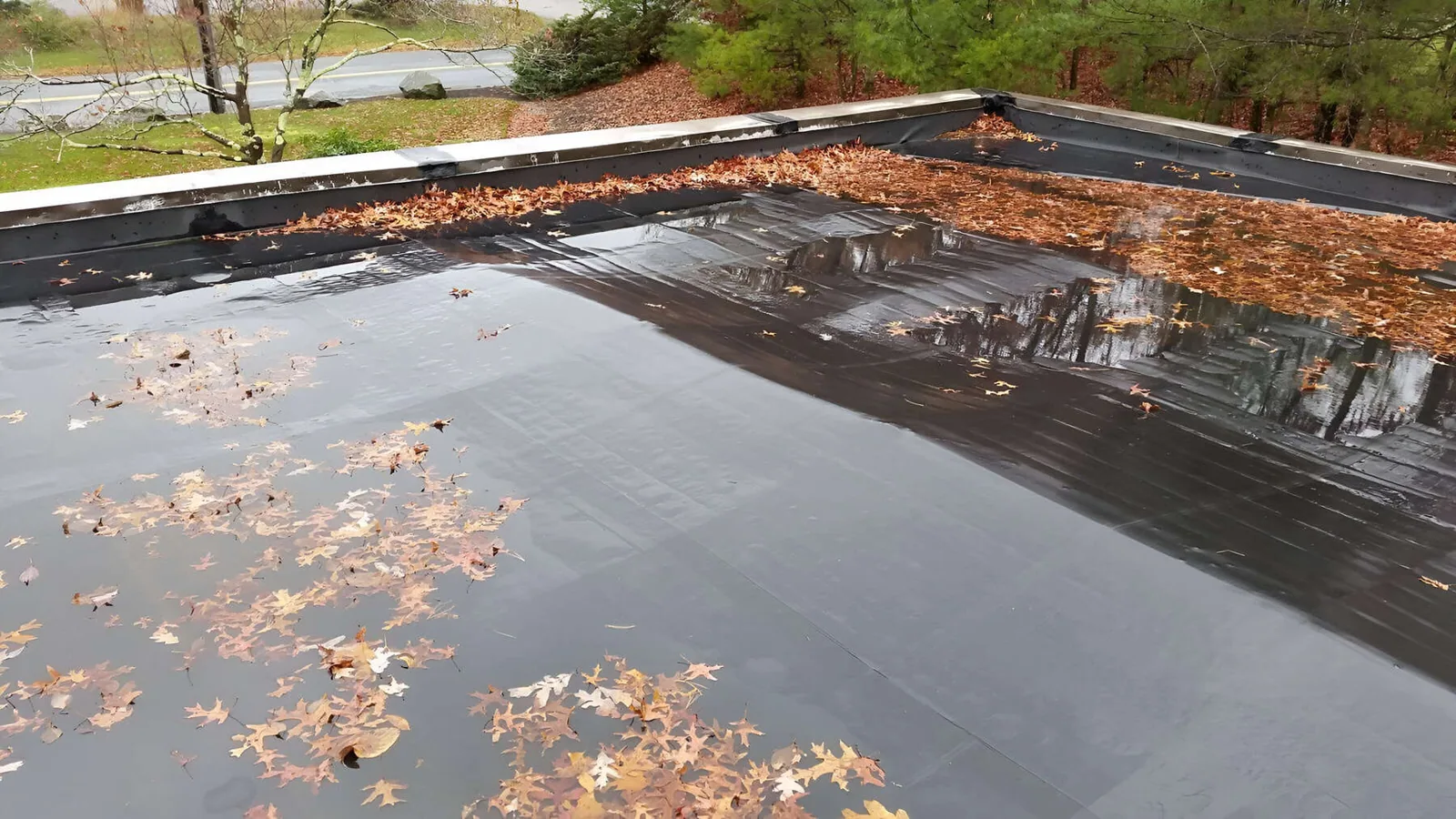
Ponding Water Roof Repair
Ponding water roof repair in Queens, NY: why standing water forms on flat roofs, how it ages the membrane and the drain, slope and insulation fixes that end it.
Ready to Talk About Willets Point?
Tell us about the building and what you are seeing. We will schedule a roof walk and send photos and a written scope.