
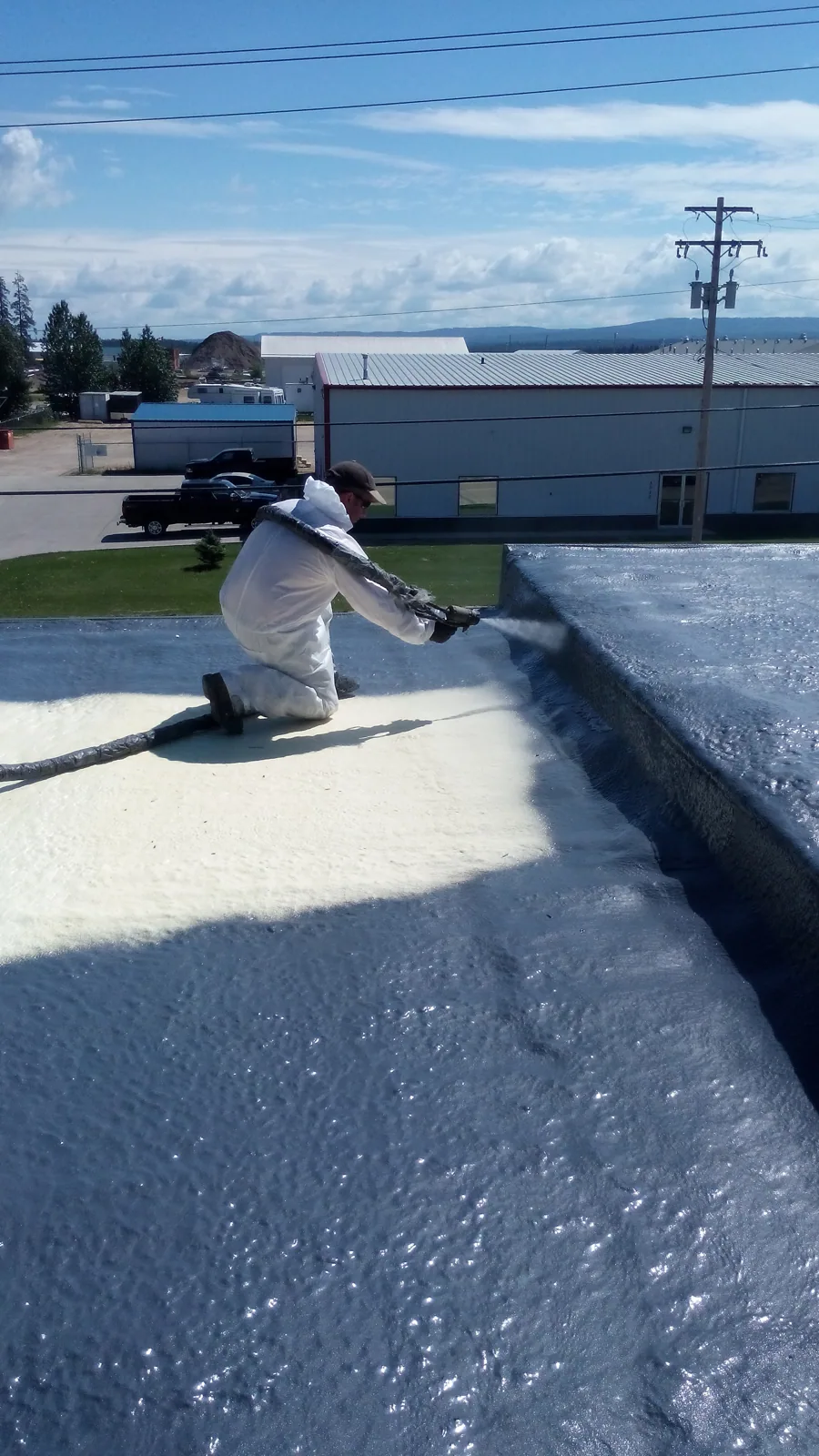
A foam roof that has begun to show its yellow-orange skin through the coating is a roof asking for attention. The foam itself is not waterproof against sun; it is the thin coating over it that keeps weather out, and when that coating wears through, ultraviolet light starts to eat the surface. The decay is slow and visible, which is lucky, because a recoat caught early costs a small fraction of what a failed foam roof costs.
What is a spray foam roof?
Spray polyurethane foam, or SPF, is made by mixing two liquids on the roof and spraying them onto the surface, where they expand into a rigid foam in seconds. The foam is applied in thin lifts to build thickness, and it fills dips, wraps around curbs and bonds to the deck without laps. A protective coating, usually acrylic or silicone, is applied over the foam to shield it from sun and water.
The result is a roof that is both insulation and waterproofing. Because it is sprayed, it follows the shape of the building, which suits roofs with many penetrations, curves and awkward corners. The tradeoff is that it needs a skilled crew, dry weather and a clean, dry substrate.
Compared with a sheet membrane, foam has no seams to open and no laps to lift, and that is its chief advantage on roofs full of curbs and pipes. It also adds slope: the sprayed layer can be built up to move water toward the drain, which makes it a way to correct a shallow dip. Where a sheet roof needs tapered insulation, foam can do the same work in the same pass.
How is it applied?
Walk it with me. The first step is preparation: the old roof is cleaned, dried and checked for moisture, and loose material is removed. The second step is masking, to protect cars, windows and neighbors from overspray. The third is spraying the foam in lifts, controlling thickness and slope as it goes. The fourth is the coating, which must go on soon after the foam cures. The fifth is a final inspection, checking thickness, coverage and edge details.
Weather decides the day. Wind carries overspray, rain ruins the foam and cold surfaces keep it from bonding. We watch the forecast closely, schedule spraying for stable days and keep the area clear of people. In an occupied building, the smell of the chemicals while spraying is a planning item, and we coordinate with the building manager.
Thickness is checked as the work goes, with depth gauges pushed through the foam at a grid of points. A thin spot becomes a wet spot later, so we mark and add foam where the gauge reads low. Edges, curbs and walls get extra attention because the foam has to climb them and be coated right to the top, where the detail ends under metal or a termination.
Why must the substrate be dry?
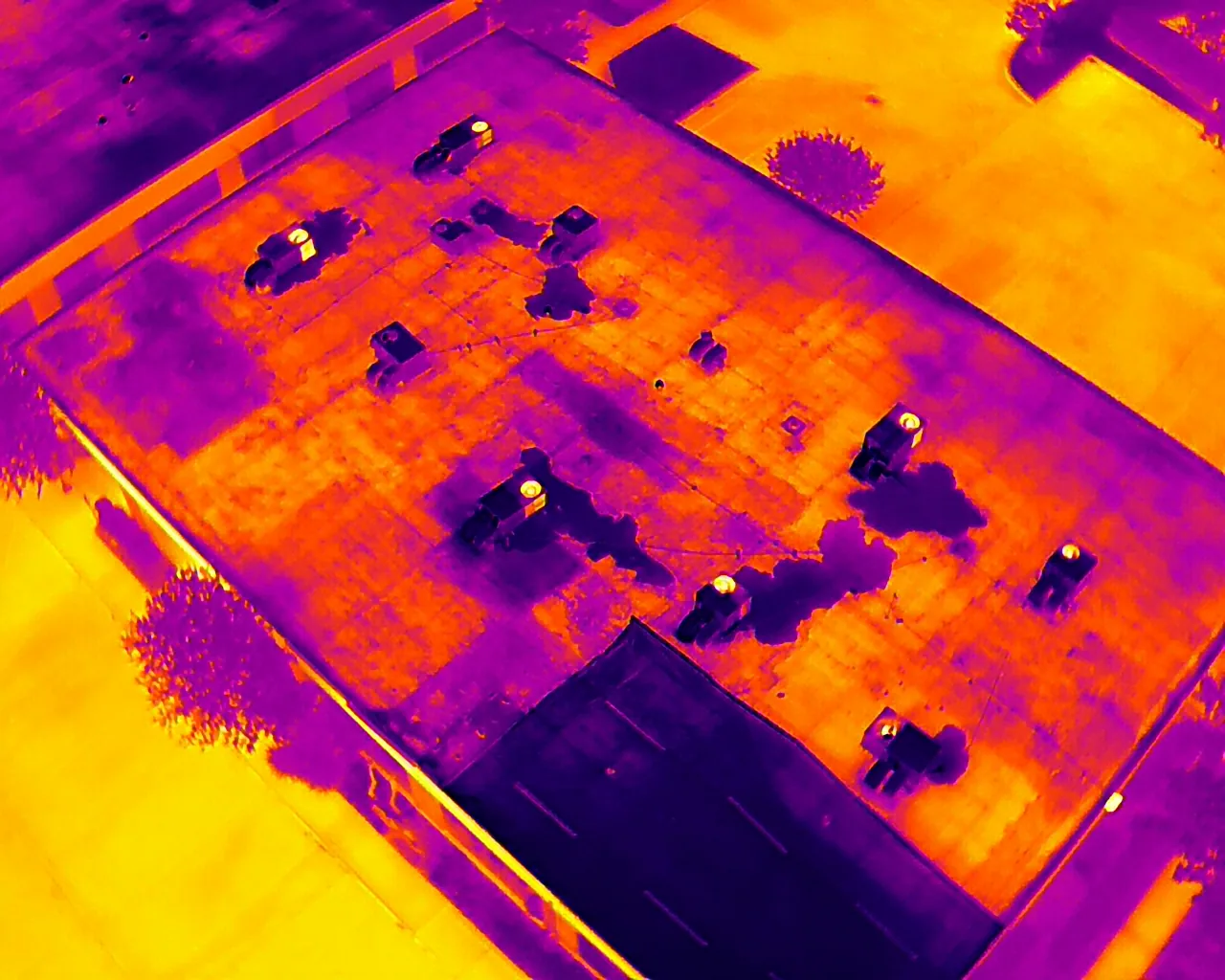
Foam sprayed over wet insulation or a wet deck traps the water, and the water finds a way out through the foam. Blisters appear, the foam delaminates and the coating cracks. Before any foam is sprayed, we scan the roof for moisture, cut cores to read the layers and fix or remove any wet material. An infrared moisture survey is the standard first step.
When foam goes over an old roof, the old surface must be sound, clean and compatible. Some old coatings and membranes interfere with adhesion. We test a small area for bond before spraying the whole roof, and we record the result. If the test fails, the old surface comes off.
Foam is also fussy about what is around it. Fumes and overspray can drift, so we mask cars and glass, shut intakes and tell the neighbors. Fire safety matters too, since uncoated foam is combustible until covered, and we keep ignition sources off the roof and follow the project's fire watch rules until the coating is done.
Where does it fit in Queens?
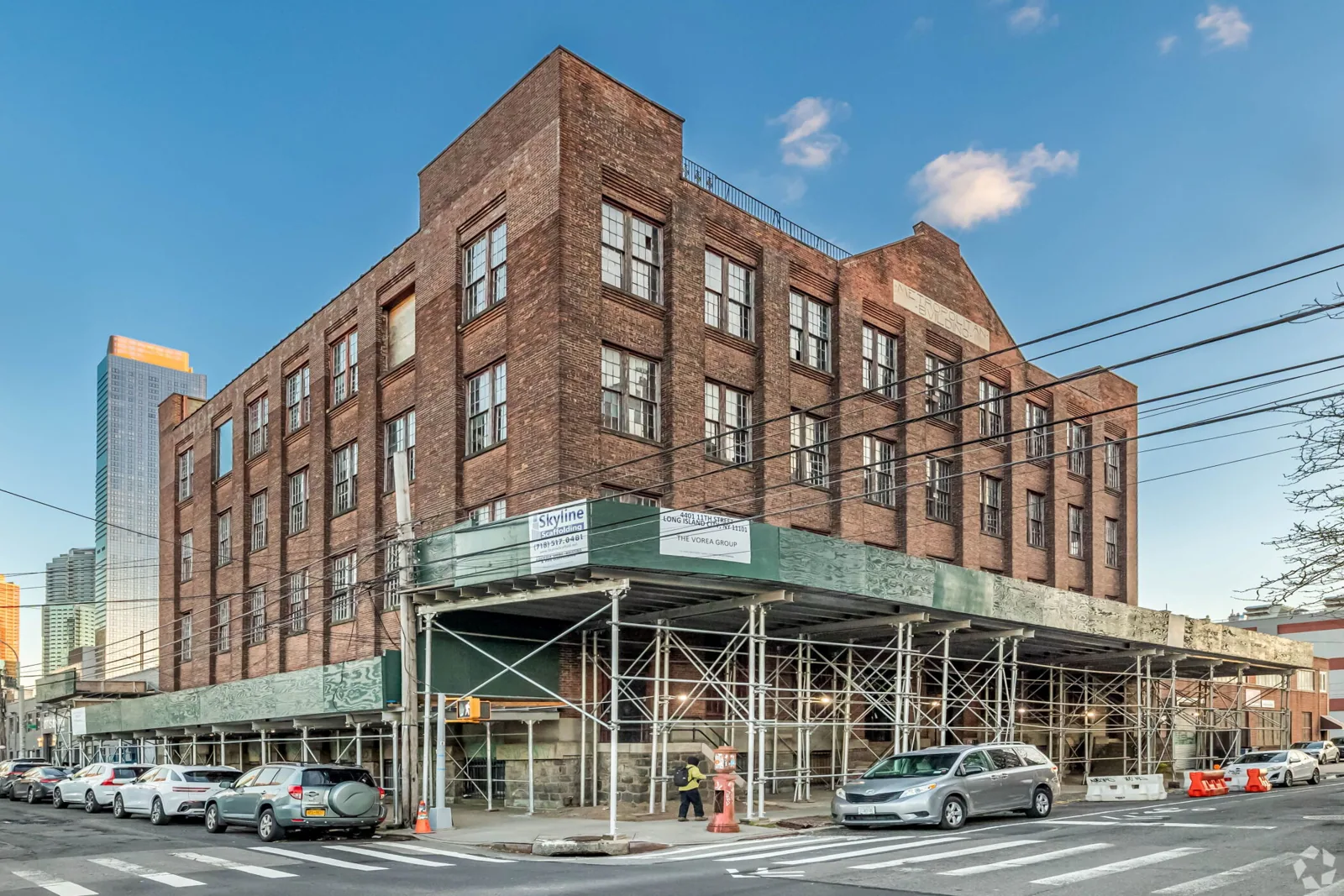
It suits irregular roofs and low-slope roofs where continuous insulation is useful. Former factories and bakeries in Long Island City have been converted to new uses, so an older masonry roof there may now carry vents, skylights and mechanical equipment that a sprayed layer can wrap around without a seam. A flex industrial roof or a loft conversion is a natural candidate.
Foam also appeals where water management matters. The Central Avenue library in Far Rockaway opened in 2024 with a blue roof that collects rainwater, proof that a roof can be designed to hold and release water on purpose. In Howard Beach, where Hurricane Sandy brought a ten-foot surge up from Jamaica Bay in 2012, a joint-free, sloped roof is one less path for water into a building already contending with flooding at street level, and the same logic applies to a converted loft in Long Island City.
How do we keep a foam roof healthy?
The coating is the part to maintain. We inspect it each year for cracking, chalking, thin spots and punctures, and we recoat on a schedule that matches the product and the exposure. Foot traffic damages foam, so walkway pads protect the paths to equipment. Dropped tools and sharp debris can dent or puncture it, and a quick patch of foam and coating restores the surface.
Heat and snow wear on the coating too. Central Park averages near 85 degrees on a July afternoon, with the heat island adding to it, and a normal winter brings about 30 inches of snow, 27.3 of them in one day in January 2016. A white acrylic coating over foam reflects heat, while a silicone coating handles ponding better. Drains belong in the plan because Hurricane Ida's remnants caused the city's first flash flood emergency on September 1, 2021.
What is the next step?
Send photos of the roof, its coating and any exposed foam, plus the roof's age. We will scan it, check the substrate and say, step by step, whether to recoat, repair or replace. Price follows.
Questions Owners Ask
What building owners and managers usually ask before a roof visit.
With a sound foam layer and a maintained coating, it can serve for many years. The coating needs renewal on a regular schedule. Neglect shortens the life more than anything else. A yearly look at the coating catches wear while it is still a recoat.
Frequently, when the old roof is dry, clean and compatible. We test for moisture and adhesion first. A wet roof must be repaired or removed before foam goes on. Where an old roof has several layers, the weight of the foam is usually small compared with a new membrane.
It adds continuous insulation with no seams, which reduces heat flow. The coating adds reflectivity. The exact effect depends on thickness, the building and its mechanical systems, and an energy engineer can estimate it.
There is a chemical smell during spraying and curing. We schedule it for times the building can handle, close nearby intakes and ventilate as needed. Occupants with breathing concerns get advance notice and a plan to stay elsewhere during spraying.
Send photos of the roof surface, the coating, any exposed foam and the nearest drain, plus the roof's age and any recent leaks. Tell us if a coating has been applied before and what product was used.
Related Roofing Work
Other pages that connect to Spray Polyurethane Foam Roofing.
Infrared Roof Moisture Surveys
Infrared scans and core-cut moisture surveys for Queens, NY commercial roofs that locate wet insulation before the owner commits to repair or replacement.
Flex and Light-Industrial Roofing
Roof surveys, repair and replacement for flex and light-industrial buildings in Queens, NY, from Maspeth to College Point, with ponding, tie-in and curb work.
Howard Beach
Commercial roofing in Howard Beach, Queens, NY: Cross Bay Boulevard retail roofs, Lindenwood apartment roofs, bay-edge wind and salt, drain and edge repair.
Ready to Talk About Spray Polyurethane Foam Roofing?
Tell us about the building and what you are seeing. We will schedule a roof walk and send photos and a written scope.