
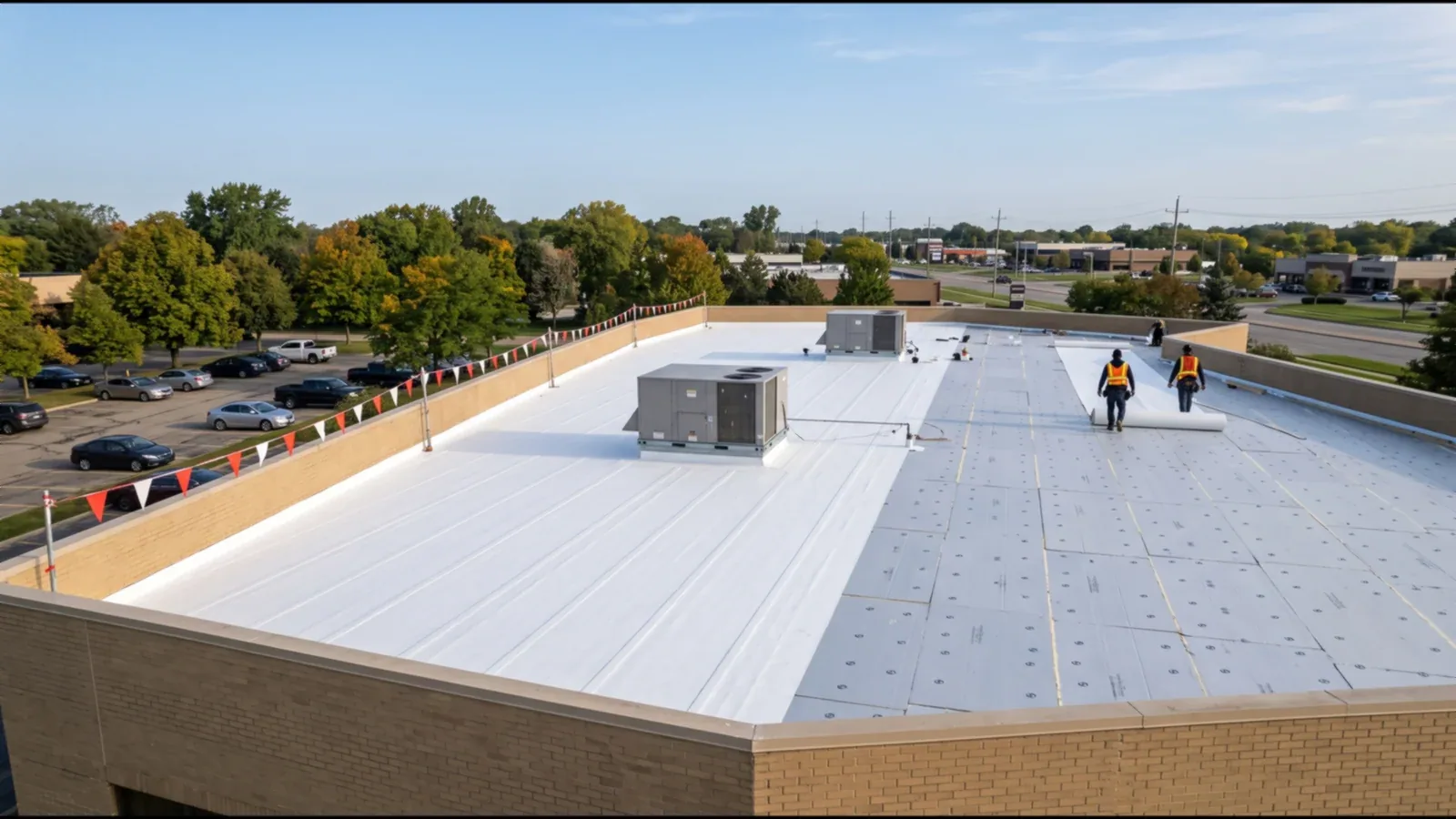
A soft step on an otherwise sound-looking roof is how many owners first learn about insulation. The membrane may be unbroken and the seams tight, yet the surface gives underfoot like a damp sponge. That feeling means the layer beneath the membrane has taken on water and lost its strength, and everything above it is resting on something that no longer holds a shape.
Insulation is the thickest layer of most commercial roofs and the one that does the most for the building. It holds heat in during winter and out during summer, it gives the surface a slope toward the drains, and it carries the membrane. Cover board is the thin, hard layer between insulation and membrane that protects it from traffic, dropped tools and heat. On a Queens, NY roof, we look at all three layers together because their jobs overlap, and a failure in one shows up in the others.
How do I know the insulation is wet?
The signs are mostly indirect. Soft or spongy areas underfoot, blisters in the membrane, ponding in places that used to drain, rust on deck fasteners seen from inside, and ceiling stains that return after a repair all point to wet insulation. Heating bills that climb without explanation can also be a clue, since wet insulation conducts heat instead of resisting it.
To confirm, we use an infrared moisture survey, ideally on a clear evening when a roof that absorbed heat during the day releases it. Wet insulation stays warm longer than dry, so it shows up as bright patches on the scan. We then cut a core at each suspect area and check the material by hand and with a moisture meter. The scan guides us to the places, and the core tells us what is there. We mark the wet boundary in paint on the roof, so the owner can see its extent with their own eyes.
What are the choices of insulation and cover board?
The common rigid boards on commercial roofs are polyisocyanurate, expanded or extruded polystyrene, and in some older assemblies, perlite, fiberboard or foam glass. Polyiso has a high thermal value for its thickness and is widely used under single-ply membranes. Polystyrene is lighter and resists moisture better but is less fire-resistant without a cover. Spray polyurethane foam, a sprayed system that cures in place, makes its own slope and seals as it goes, which is why spray polyurethane foam roofing suits roofs with awkward shapes.
Cover boards are made of gypsum-based material, high-density fiberboard or similar hard products. They add puncture resistance, a smoother and more even surface for adhesives, and in some systems a measure of fire protection. We recommend them where the roof sees foot traffic, rooftop equipment service or demanding membranes, and where the budget allows for a longer service life.
Why does slope matter so much in Queens?
Flat roofs are never perfectly flat in design, but they often are in practice, and that is where ponding begins. When Hurricane Ida's remnants reached the city on September 1, 2021, officials issued the first flash flood emergency New York had ever seen, and Queens counted most of the deaths. A roof that has to shed a cloudburst like that needs every square foot pointed at an outlet. Tapered insulation does that: boards cut at a gentle slope are laid so that water runs to the drain, with crickets behind curbs and units.
Where an existing roof ponds, a tapered layer added during a recover or replacement can correct it for good, and the work belongs next to any ponding water roof repair that has already been tried. We design the layout on paper first, with a plan that marks drain locations, slope and the thickness at each point. Thickness must stay within what the parapet, doors and equipment will allow, so we measure those limits before the plan is drawn.
What do codes and energy goals ask of the insulation?
The 2022 NYC Construction Codes bring the Building Code and the Energy Code together, and Chapter 15 of the Building Code, on roof assemblies, governs how a roof is put together. The design professional and the Department of Buildings interpret those rules for the property. We install to the approved design and supply what the reviewer needs: board thickness, attachment method and cover type. Where an owner wants better thermal performance, we price the options side by side, including a reflective membrane through cool roof installation, because July highs near 85 degrees at Central Park and a strong heat island make cooling load a real cost. Owners planning solar can ask us about solar-ready roofing at the same time.
Should wet insulation be dried or replaced?
Replaced, in nearly every case. Insulation that has been wet for a season rarely returns to its thermal value or its strength, and trying to dry it in place by venting or heating seldom works through a sealed membrane. We cut out the wet section back to dry material, replace it with new board of equal or better thermal value, add cover board if the system calls for it, and flash the new membrane into the old. A small area is a repair. A broad area becomes a recover question, and a roof where most of the insulation is wet is a replacement. Cost follows the area removed, the board thickness, the cover choice and access.
Large business parks raise their own version of the question. College Point Corporate Park covers about 550 acres and had more than 200 companies by 2003, so owners of buildings in College Point may hold several roofs of different ages at once. The insulation under each membrane is its own question. A scan and a few cores on each tell us which roofs carry dry insulation worth keeping and which need the board replaced, and we write one plan that ranks them. That ranking lets an owner spend on the roof with wet insulation first and watch the others on a calendar.
Questions Owners Ask
What building owners and managers usually ask before a roof visit.
We advise against it. A new membrane over wet insulation traps the moisture, shortens its own life and can void the manufacturer's coverage on the new work. We scan and core first. If only small areas are wet, they are replaced and the recover proceeds.
It is not always required, but it earns its cost on roofs with foot traffic, rooftop equipment and thin or delicate membranes. It protects the insulation from impact and gives adhesives a better surface. We show the owner the added cost against the added protection and let the building's use decide.
Thickness follows the thermal target in the design, the room available at parapets and doors, and the slope plan. We take the measurements and propose a build-up, which the design professional confirms against the code.
Often yes. We lay tapered boards to build a slope toward a drain, and where there is no drain near enough we add one or build a cricket that sends the water around an obstruction. The plan is drawn from measured low points, not guesses.
Send photographs of the stain, any soft spots and the drain area, with a rough roof age if you have one. We will describe what is going on beneath the membrane before we turn to cost.
Related Roofing Work
Other pages that connect to Roof Insulation and Cover Board.
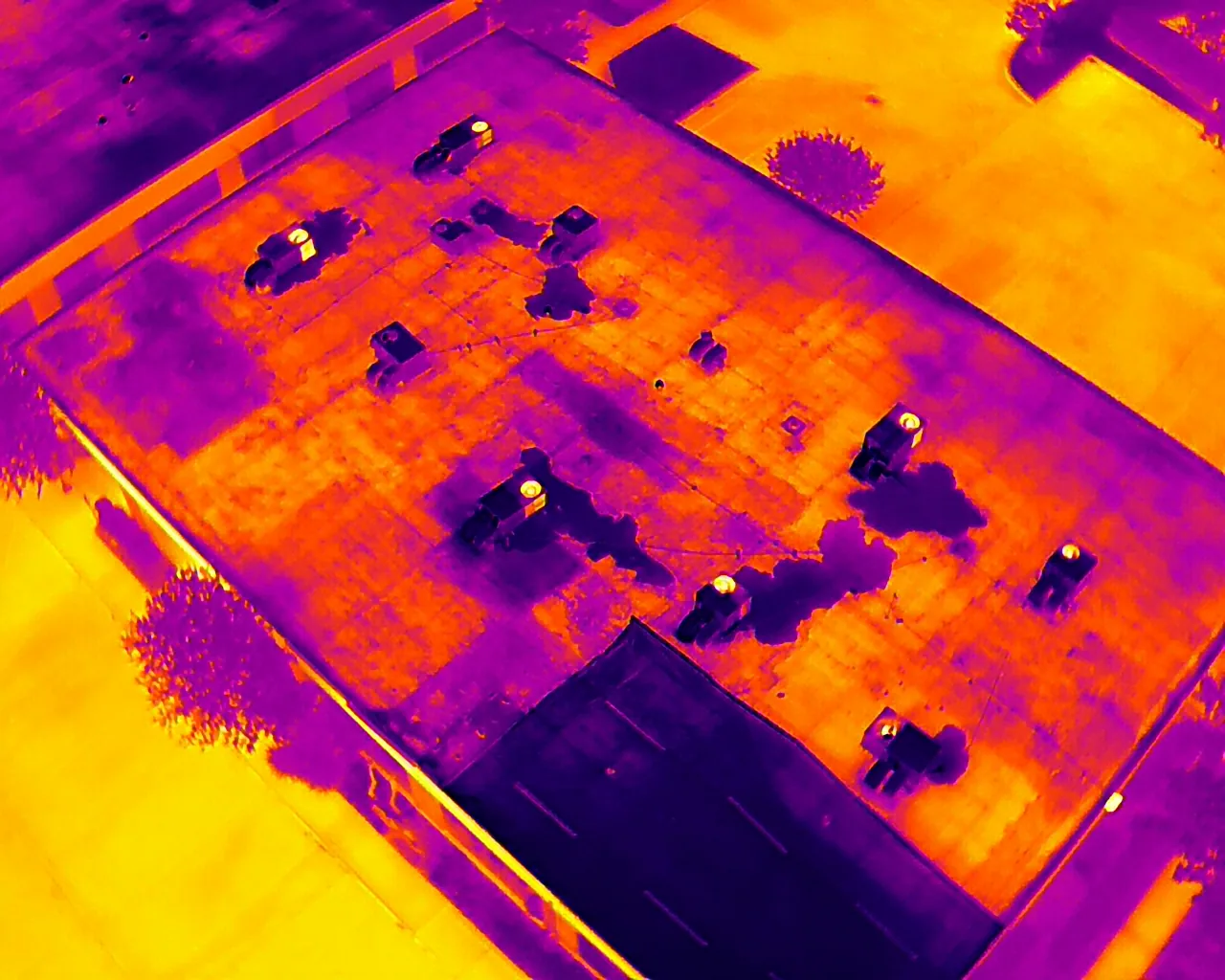
Infrared Roof Moisture Surveys
Infrared scans and core-cut moisture surveys for Queens, NY commercial roofs that locate wet insulation before the owner commits to repair or replacement.
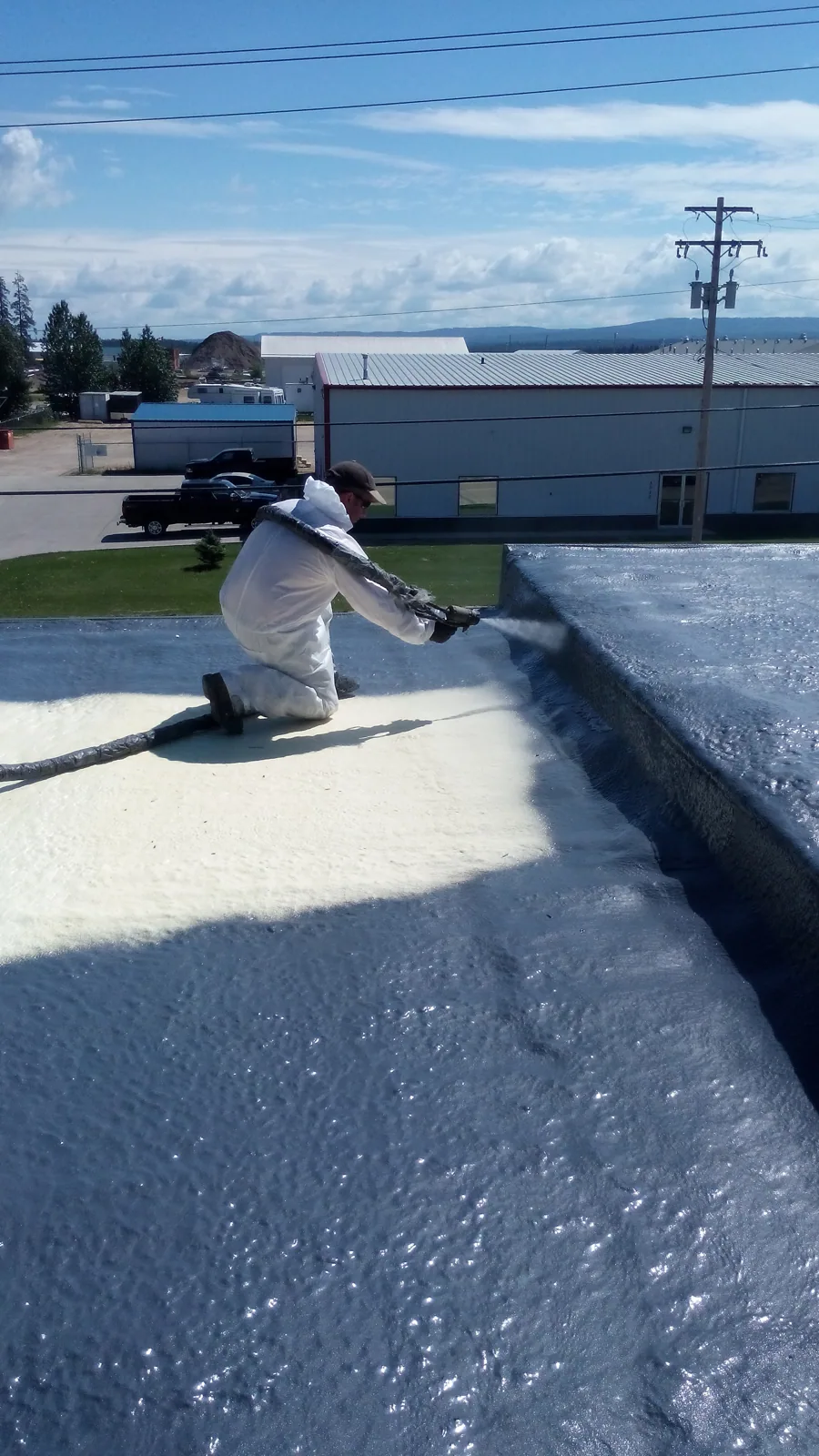
Spray Polyurethane Foam Roofing
Spray polyurethane foam (SPF) roofing in Queens, NY: continuous insulating roofs for odd shapes and tight details, with coating care and moisture checks.
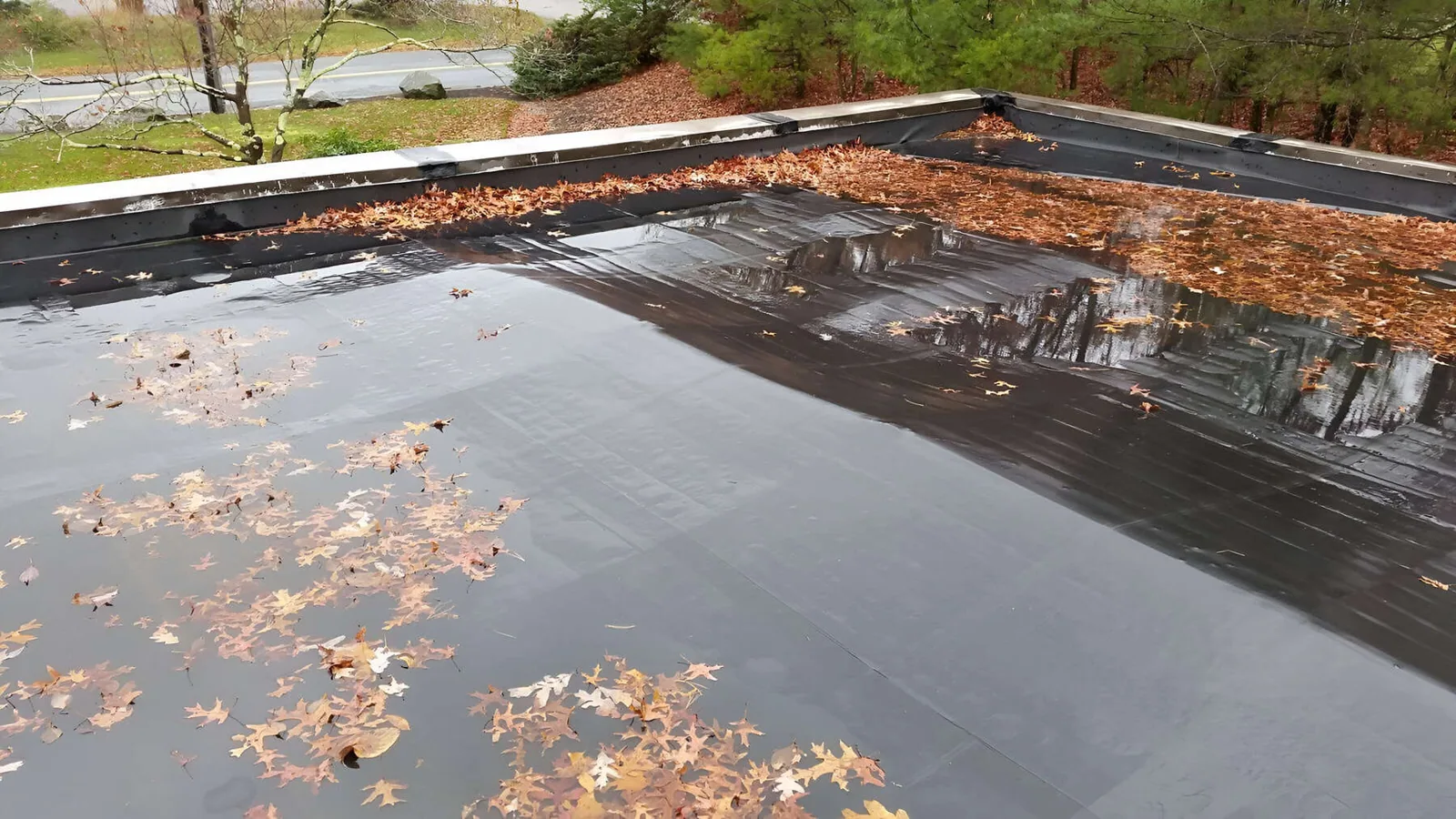
Ponding Water Roof Repair
Ponding water roof repair in Queens, NY: why standing water forms on flat roofs, how it ages the membrane and the drain, slope and insulation fixes that end it.
Ready to Talk About Roof Insulation and Cover Board?
Tell us about the building and what you are seeing. We will schedule a roof walk and send photos and a written scope.