
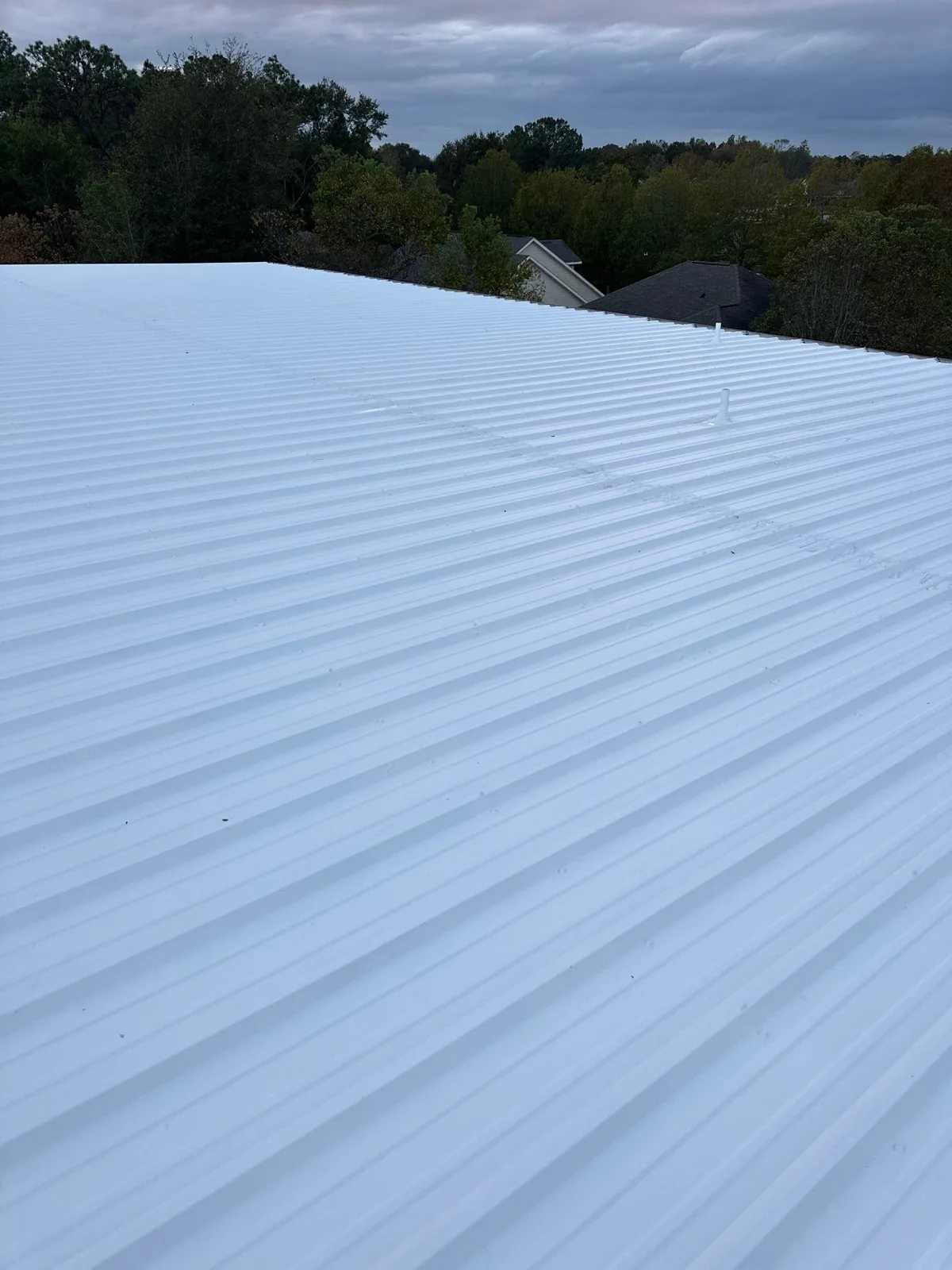
Water that is still standing on a flat roof two days after a storm is usually what brings an owner to the coating question, and it is also what decides the answer. A coating is a skin, not a structure. It can seal a membrane that is still sound, but it cannot dry out insulation, flatten a sagging deck or hold a seam that has already let go. So the first step in any restoration is to learn what is under the skin.
When the roof is in good enough shape, coating is one of the most useful tools an owner has. It adds service life at a fraction of the disruption of a tear-off, it keeps the building open while work goes on, and it can lower the surface temperature of the roof in a borough with a strong urban heat island. On a roof in Queens, NY we take the decision in a fixed order: test first, repair second, coat last.
How do I know if my roof can take a coating?
Three conditions have to hold. The insulation must be dry, the membrane must be bonded to what is under it, and the roof must drain, or at least be correctable where it does not. We check dryness with an infrared moisture survey, usually at dusk when wet insulation gives off heat more slowly than dry. We follow with core samples at the cold spots, because a scan shows where to look and a core shows what is there.
Bond is tested by hand. We press and pull at seams and field areas, looking for blisters, wrinkles and areas that lift. Where the membrane has fully released, a coating will not hold, since it can only be as well attached as the surface beneath it. The roofs that pass are generally those with a clean membrane and wear that is on the surface only.
What is done before the coating goes on?
Preparation is most of the labor, and it decides how long the coating lasts. The roof is cleaned, often with pressure washing, to remove dirt, chalk and biological growth. Then we repair what the survey found: open seams, cracked flashings, failed pipe boots, loose fasteners and punctures. Ponded areas are corrected where possible, with a patch of tapered material or a re-formed drain sump.
Primer follows where the surface needs it, and then comes the base coat, reinforced at seams, corners and penetrations with fabric. The finish coat goes on in a measured thickness, and we check it with a gauge, since a coating that is too thin wears early. Cure time depends on the product and the weather, so the work is scheduled around forecast rain and temperature.
Weather windows deserve a word. Coatings need a dry surface and a temperature range, so a job started on a clear morning can be stopped by an afternoon thundershower. We check the forecast, apply in sections that can be closed up quickly, and keep the edges and penetrations sealed first, so an unexpected cloudburst never reaches an open detail. If rain comes before the coating cures, we inspect the area and recoat any washed-out section before moving on.
Silicone or acrylic?
The two common choices behave differently on a flat roof. A silicone coating tolerates standing water better, which suits roofs that cannot be fully re-sloped, and it holds up under ultraviolet exposure. An acrylic coating is easier to apply and often costs less, but it prefers a roof that sheds water and it needs more attention to dry weather. Neither suits every substrate, and compatibility with the existing membrane must be checked before a product is chosen.
Both can be reflective, which matters in a city with a mean July high near 85 degrees at Central Park, a strong heat island and a record of 107 degrees recorded at LaGuardia in 1966. A reflective surface keeps the roof cooler, which reduces thermal expansion stress on the membrane and can lower the cooling load beneath it. Where the owner wants that benefit as a goal on its own, a new reflective system through cool roof installation is the other route.
Which Queens roofs are good candidates?
Broad, low-slope roofs with few penetrations tend to suit coating, because the cost of preparation spreads across a large area. A business park like College Point Corporate Park, about 550 acres in all, or the Degnon Terminal complex beside Sunnyside Yard, is where an owner is most likely to be weighing that question for a wide industrial roof, and retail on the scale of Rego Center Phase II, with 950,000 square feet on 62nd Drive, raises it too. Whether any one roof qualifies is settled by the moisture scan and the cores, not by the address.
Older mill-era masonry buildings in Ridgewood and Long Island City may have built-up roofs with several layers. Coating over a dry, well-bonded built-up surface can work, but the parapet and wall flashings frequently need rebuilding first, since those are the places where old tar gives out.
What drives the cost, and when is replacement the better answer?
Cost follows the area, the amount of repair needed before coating, the product chosen, the film thickness, access, and how many penetrations and curbs need detail work. A roof that needs a lot of seam and flashing repair will cost more to prepare than one that needs only washing. The coating itself is only part of the price.
Replacement becomes the better answer when the insulation is wet over a large share of the roof, when the membrane has released from the substrate, or when the deck is damaged. In those cases a coating would trap water and shorten the life of what is below. When the numbers are close, we compare the coating, a recover and a full replacement on a plain sheet, so the owner sees the trade in years of service and cost drivers rather than slogans.
Questions Owners Ask
What building owners and managers usually ask before a roof visit.
Only if the leak comes from the surface or a seam that the coating system bridges. Active leaks from flashing or fasteners are repaired first, then coated. A coating applied over wet insulation hides the symptom and keeps the water in place, which is why the moisture scan comes first.
Less than during a tear-off. There is no demolition noise or debris, and tenants usually stay in place. Cleaning and repair take the longest, and the coating is applied in sections so that rain forecasts can be managed. We agree access times and rooftop equipment shutoffs with the manager beforehand.
Often, yes, if the old coating is bonded and compatible. We test adhesion with a small patch, and we clean and prime as needed. A coating that is peeling or has lost adhesion is removed or scraped back first, since a new layer will only be as secure as the one beneath it.
Yes. Drains need clearing, seams and flashings need an annual look, and the surface needs cleaning now and then to keep it reflective. A short visit each spring is enough for most roofs, and a maintenance program keeps the record in one place.
Send photos of the stain, the drain area and any ponding, with the roof age if you know it. We will talk through what the roof is doing, one step at a time, before price comes up.
Related Roofing Work
Other pages that connect to Roof Coating Restoration.
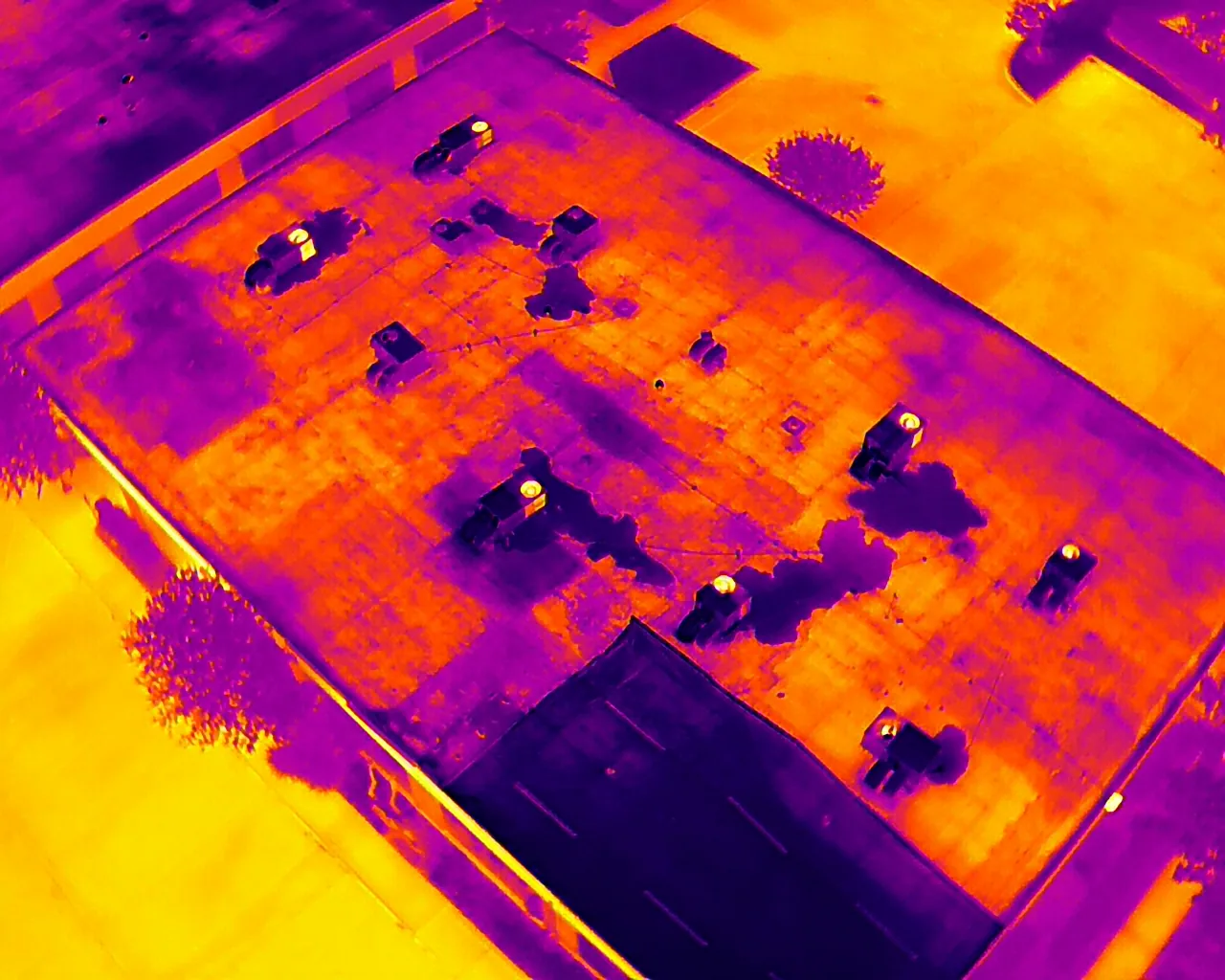
Infrared Roof Moisture Surveys
Infrared scans and core-cut moisture surveys for Queens, NY commercial roofs that locate wet insulation before the owner commits to repair or replacement.
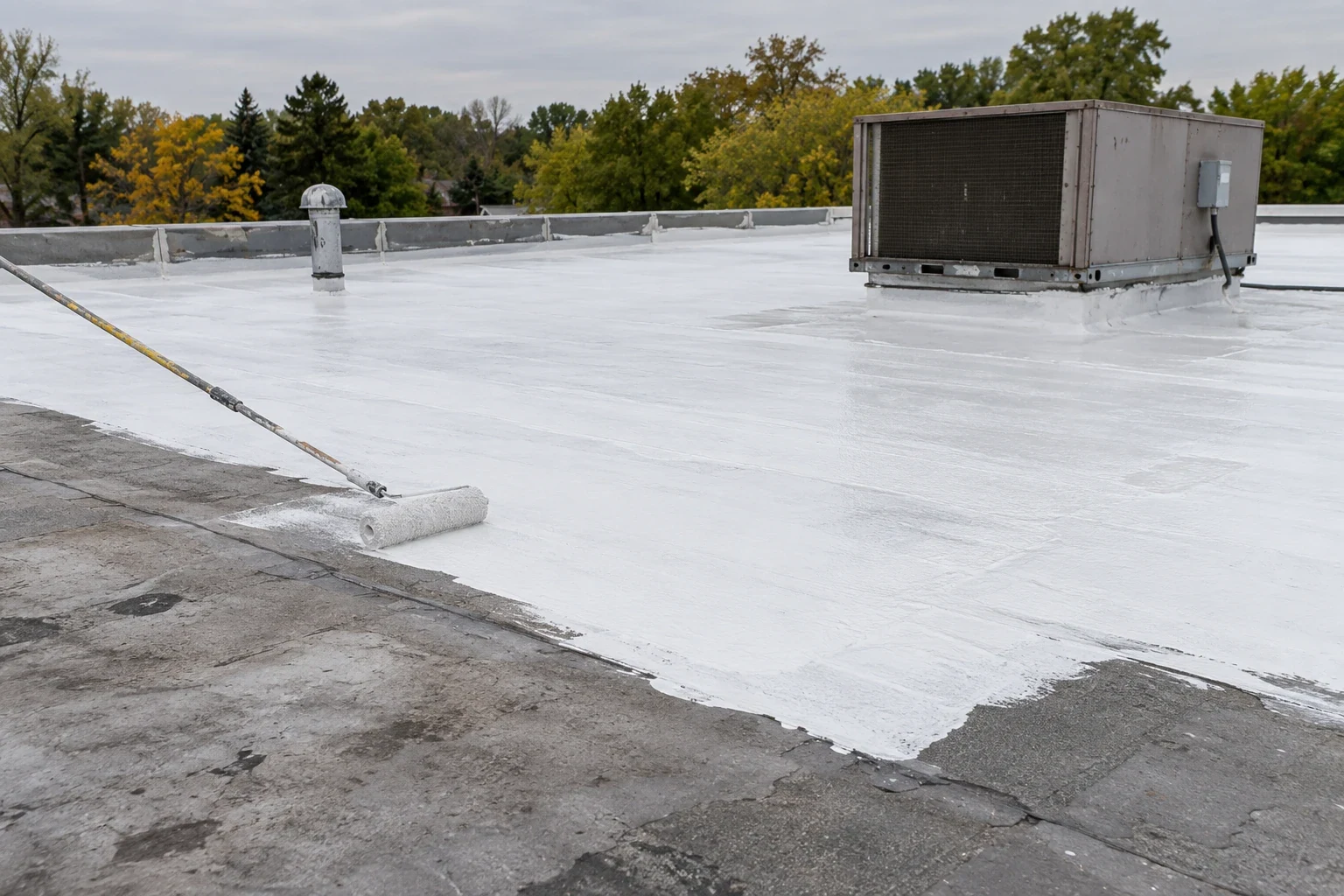
Silicone Roof Coatings
Silicone roof coatings in Queens, NY: liquid-applied reflective coatings for flat roofs that hold water, with testing, prep and recoat timing explained.
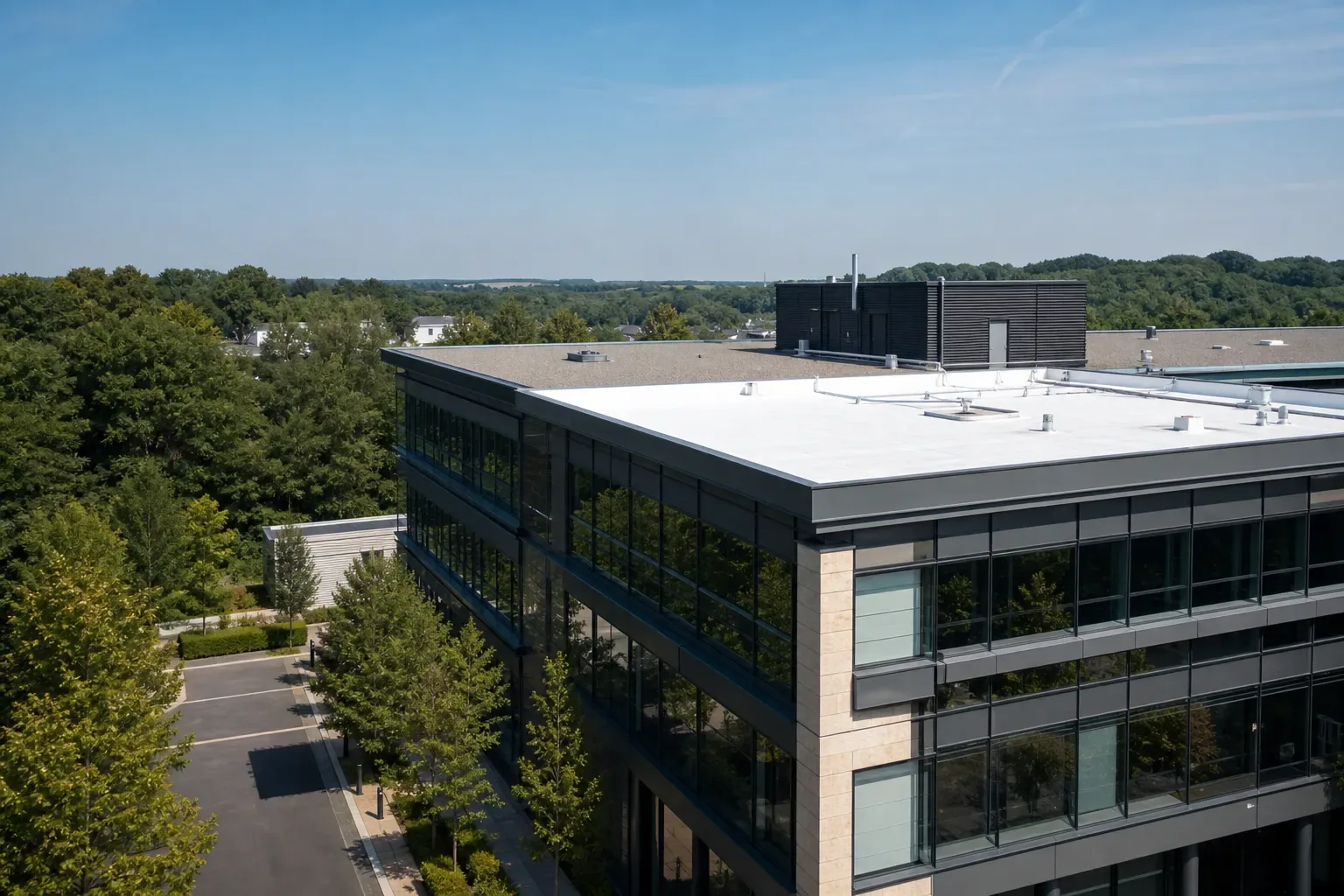
Acrylic Roof Coatings
Acrylic roof coatings in Queens, NY: water-based reflective coatings for dry, sound flat roofs, with weather windows, prep and recoat timing explained.
Ready to Talk About Roof Coating Restoration?
Tell us about the building and what you are seeing. We will schedule a roof walk and send photos and a written scope.