
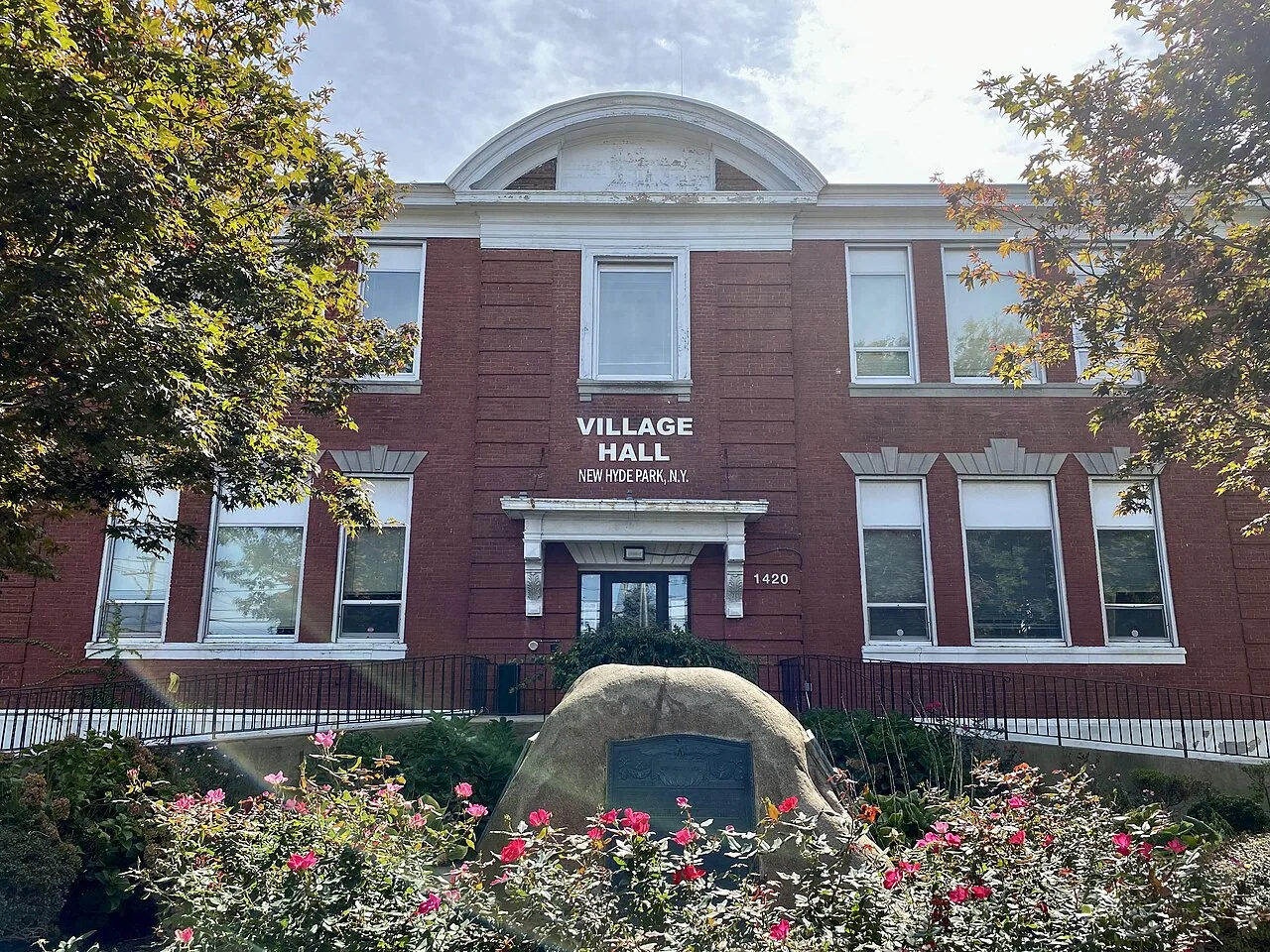
A forklift driver who notices a dark patch on a warehouse floor after a rainy night has found a roof problem the hard way. New Hyde Park, NY has warehouses near the Long Island Rail Road station, retail districts along Jericho Turnpike (Route 25) and light manufacturing, and each of those building types fails from water in its own pattern. We repair, coat and replace commercial flat and low-slope roofs here, and we start at the wet spot, then follow the water back to the opening one step at a time.
Which commercial buildings are here, and what do they ask of a roof?
Three kinds of building define the village. Warehouses stand near the LIRR station, where rail and road access meet. Retail districts run along Jericho Turnpike, and making things is still part of the local economy: Stock Drive Products makes mechanical components, as does Sterling Instrument, which Designatronics now owns. Just outside the village limits, in North New Hyde Park, is the headquarters of Northwell Health, described as the largest employer on Long Island.
A walk is needed to establish what any single roof is made of, so here is what each building type demands. A warehouse needs a large, low-slope surface that drains well and keeps stored goods dry. A manufacturer needs a roof that tolerates rooftop exhaust and equipment and does not drip onto a production line. A retail row needs tidy flashing at many small penetrations. Healthcare and office buildings add the need to keep work going without interruption.
What goes wrong over a warehouse floor?
The failure an owner sees first is a wet spot on the slab or a stain on stacked cartons. Behind it, the roof usually shows one of three things: a drain that has clogged, a seam that has opened along a long run, or a penetration such as a skylight, roof hatch or exhaust fan curb with failed flashing. A large flat roof has long runs of seam, so even a very small percentage of failure means a number of leak points.
The second concern is the deck. Warehouse roofs are often supported on a steel or concrete deck with insulation fastened above it. When insulation gets wet, it loses strength and the fasteners can pull. Walking the roof, we feel for soft spots underfoot, then confirm with an infrared moisture survey before opening anything. A warehouse roof that is wet in one corner can often be repaired locally rather than torn off.
How does a manufacturing building change the roof plan?
A building where mechanical parts are made may carry rooftop exhaust, makeup air units and process piping, and each is a hole in the roof. The important questions are what the vents discharge, how hot it is and whether it can attack the membrane. Some membranes tolerate heat and oils better than others, and the area around an exhaust stack may need a different material than the rest of the surface.
Disruption matters as much as the material. Production schedules cannot always stop, so we plan the work in sections, close each at day's end and protect equipment below with drops and temporary covers. For a manufacturing plant or a smaller shop, we also locate roof drains and overflow scuppers before work starts, so water has a route out if rain arrives mid-job.
What should a Jericho Turnpike storefront owner check?
Retail strips along a turnpike share parapets, and the roof behind the parapets collects water at the same few spots: the drain, the scupper, the base of each air conditioner. A tenant who reports a stain should be answered by a roof walk, not a bucket. We probe the seams around the stain, test the drain and read the flashing, then give the owner a short written plan.
On a strip patched many times, the patches become the weak points. A coating restoration is worth pricing when the membrane is sound and the insulation dry, since it ties the patches into one surface and reflects heat.
Tenant turnover adds its own wear. A new restaurant moves an exhaust fan, a new carrier adds an antenna, a new sign goes up on the parapet, and each change is made by a trade that does not own the roof. We keep a sketch of every penetration so the next change can be compared against it, and we recommend that landlords require roof access permission in each lease so repairs are not left to chance.
What does the weather in the New York City region do to a roof?
New York City, the nearest record, averages about 49.5 inches of precipitation a year, and storms that hit the city reach New Hyde Park too. Hurricane Ida's remnants gave the city its first flash flood emergency on September 1, 2021. The city's snow averages about 29.8 inches, and the 27.3 inches of January 23, 2016 put a heavy load on flat roofs. The heat island pushes roof temperatures higher still, with July afternoons at Central Park near 85 degrees on average; in October 2012 Hurricane Sandy's hurricane-force gusts crossed the metro area and tested every edge detail.
Taken together, the weather asks three things of a flat roof: shed water fast, carry snow and ice without sagging, and survive repeated heating and cooling without opening seams. A roof that does the first poorly will struggle with the other two, since standing water adds weight and freezes at drains.
What are the repair options, and what do they depend on?
A leak repair fits a roof with a few failed details. A coating suits a worn but sound membrane. A recover or full replacement suits wet insulation or an aged roof. Cost follows size, access, penetrations, tear-off depth, edge metal and tenant hours, and a large warehouse spreads the fixed costs of mobilization over more area than a small row does.
Wind uplift, fire rating and insulation requirements all come from the building code that governs the property, and the governing code is confirmed for each property before the system is specified.
For a healthcare or office tenant in a multi-use building, we add moisture monitoring after the work is done: a follow-up scan at the end of the first season confirms that the insulation is dry and the details are holding. That small step catches a slow leak before it reaches a ceiling.
What is the next step?
Send a photograph of the stain or wet spot and the nearest drain, with the roof age if you know it. Plain steps come first, on what the roof is doing; price after. Owners in nearby Elmont and Valley Stream start the same way.
Questions Owners Ask
What building owners and managers usually ask before a roof visit.
It can be either, and the quick test is a hose. We wet the roof edge first, then the wall, and watch the interior. If the leak appears with the roof test, the flashing at the parapet or the edge metal is the cause. If it only appears with the wall test, the repair is masonry or sealant. Either way, we mark the path on a sketch.
We cover and drop-cloth sensitive machines, keep open areas small, and close each section at day's end. Where production cannot stop, we schedule work for slow hours. Temporary protection is a standing part of the plan, not an afterthought.
Yes, if the discharge is hot or oily. The area around the outlet can soften or crack some membranes. We look at what the vent expels, then use a compatible material or a protective pad at that spot.
That depends on the lease, so we ask the owner or property manager for the roof clause before writing a scope. We document the condition for whichever party pays and can scope the work in stages if the budget is split.
Related Roofing Work
Other pages that connect to New Hyde Park.
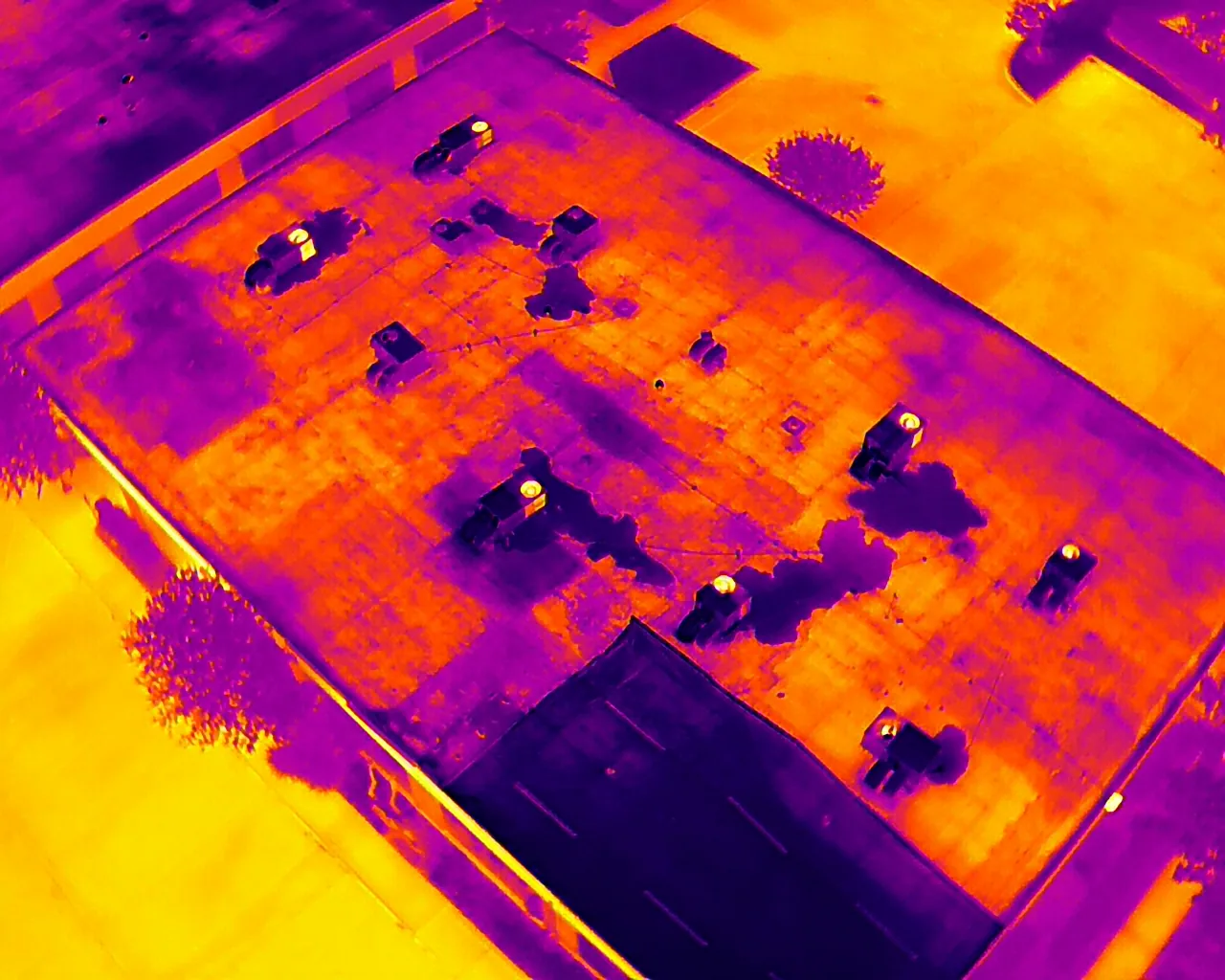
Infrared Roof Moisture Surveys
Infrared scans and core-cut moisture surveys for Queens, NY commercial roofs that locate wet insulation before the owner commits to repair or replacement.
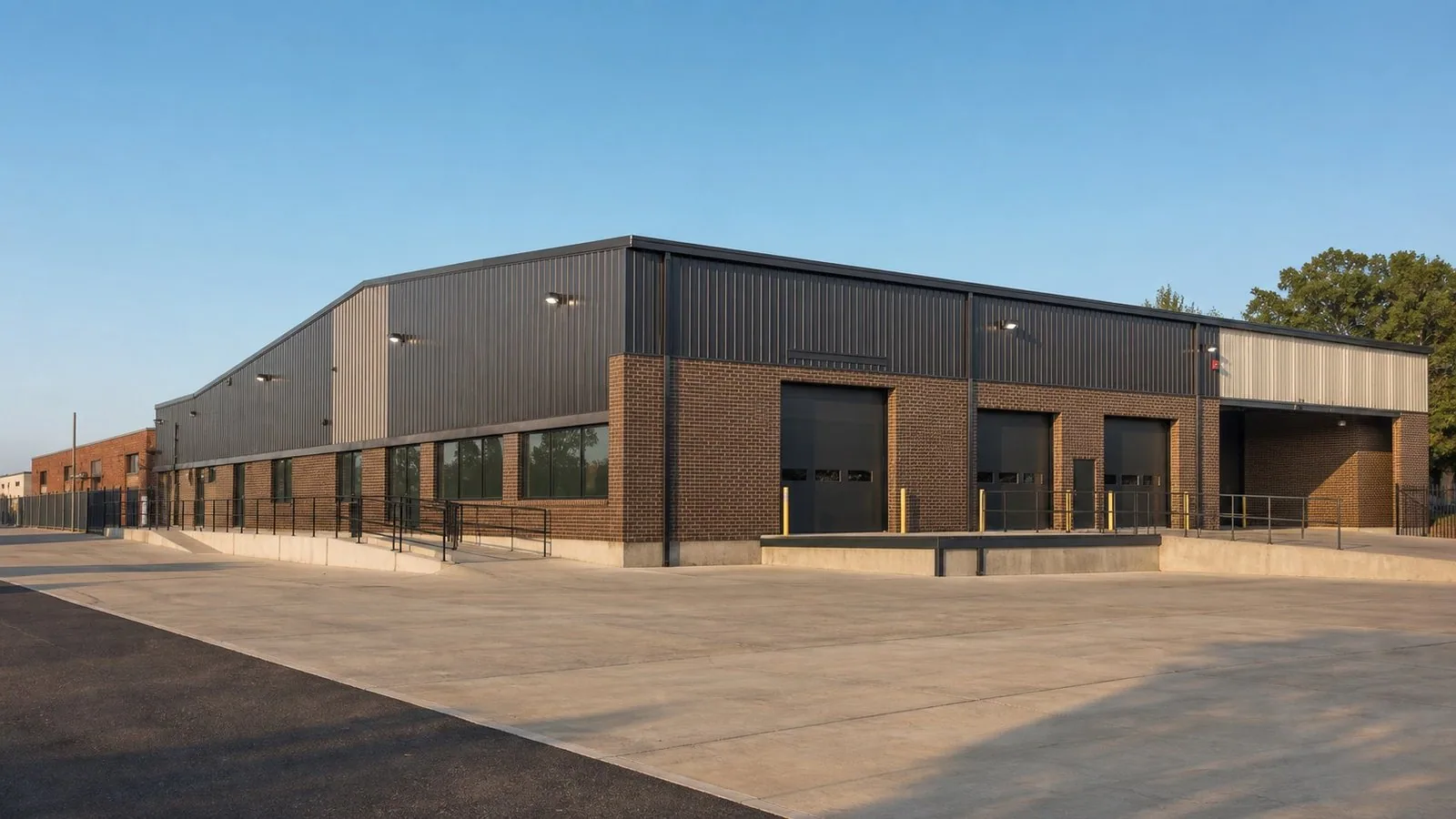
Warehouse Roofing
Warehouse roof repair, recovery and replacement in Queens, NY, from Maspeth and Long Island City to Glendale, with drainage and tie-in details explained.
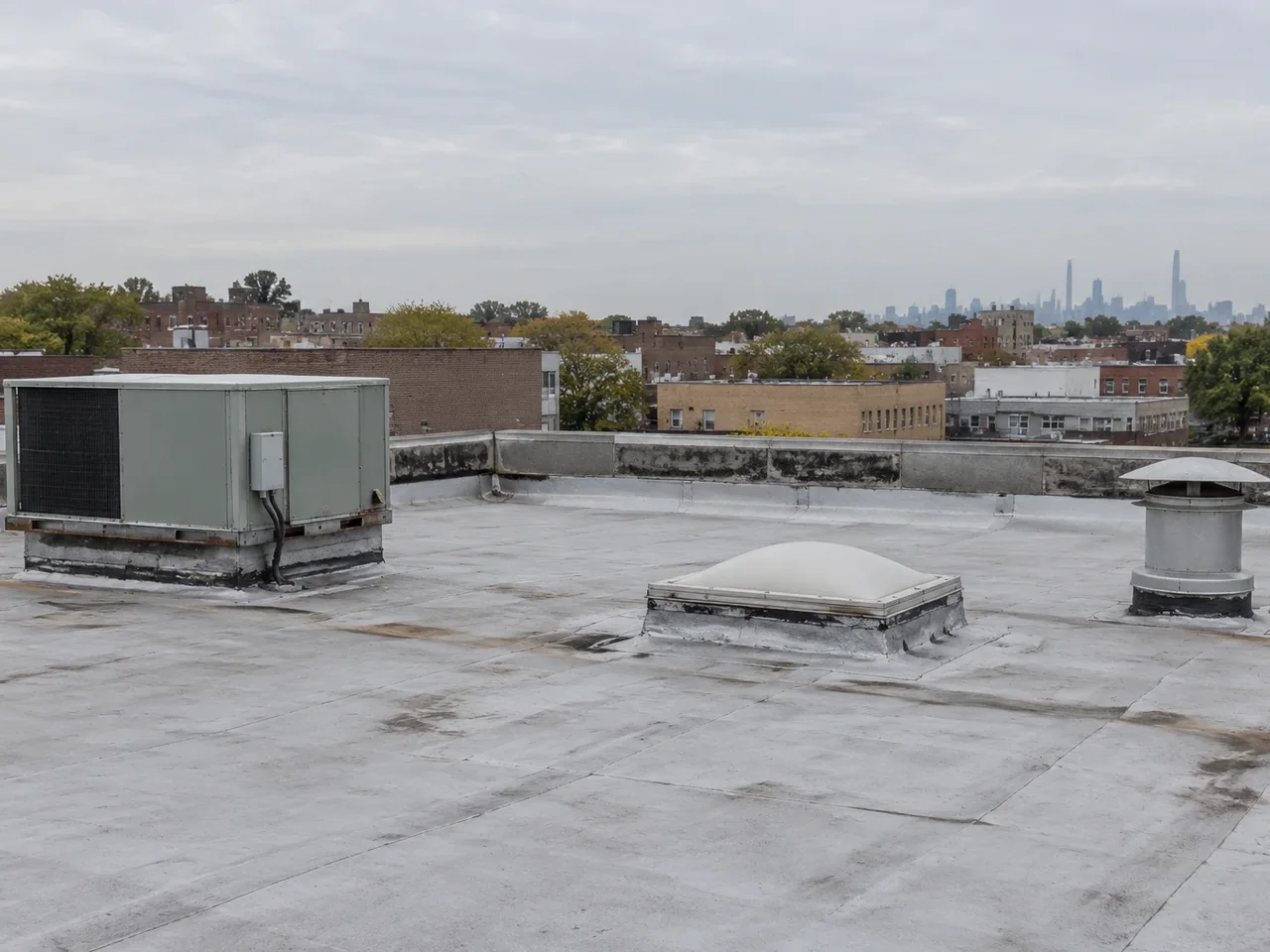
Manufacturing Plant Roofing
Roof repair and replacement for Queens, NY manufacturing plants, with exhaust, heat, process vents and production schedules planned into every step.
Ready to Talk About New Hyde Park?
Tell us about the building and what you are seeing. We will schedule a roof walk and send photos and a written scope.